
Migration Physiology Guest Lecturer Eddy Price What is
- Slides: 27
Migration Physiology Guest Lecturer: Eddy Price
• What is migration? Best described as a syndrome of traits: 1. Persistent prolonged movement 2. Straightened course of movement 3. Undistracted by usual stimuli (e. g. food, mates) 4. Distinct departure and arrival behavior 5. Reallocation of energy in advance of migration
What is Migration Physiology? • Migration is a complex syndrome of traits; involves many physiological changes. • Exercise physiology – Migratory Birds: – Metabolic rates twice those achievable by mammals of similar size high intensity exercise! – Up to 11 days without stopping to rest!! – Migrants are extreme endurance athletes • Also: Endocrine system, biological clocks, navigation mechanisms, specialized structures
3 Metabolic Fuels • Carbohydrate (mostly glucose) is stored as glycogen in liver and muscle. • Protein has no storage form. It is all functional (enzymes, transporters, structural). • Fat is stored as triacylglycerol in adipose and muscle. • There are limitations to storing fuels in muscle
Exercise Physiology • Movement of oxygen and substrate to the muscle mitochondria. • Mammals also use substantial INTRACELLULAR glycogen (and lipid) stores
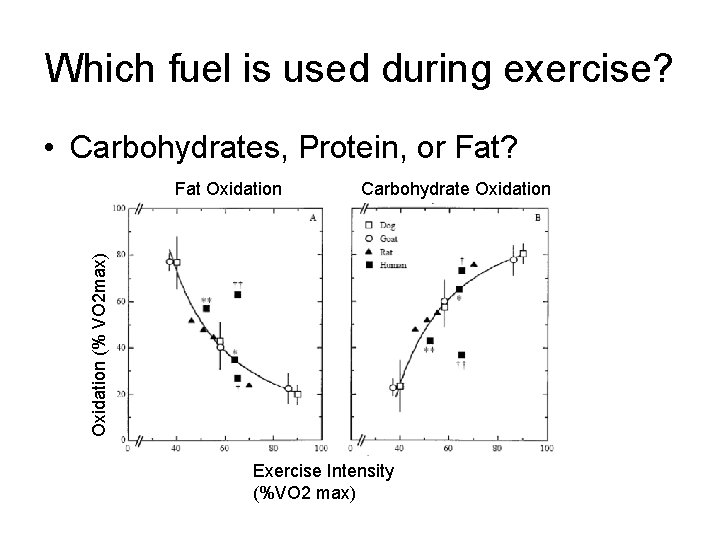
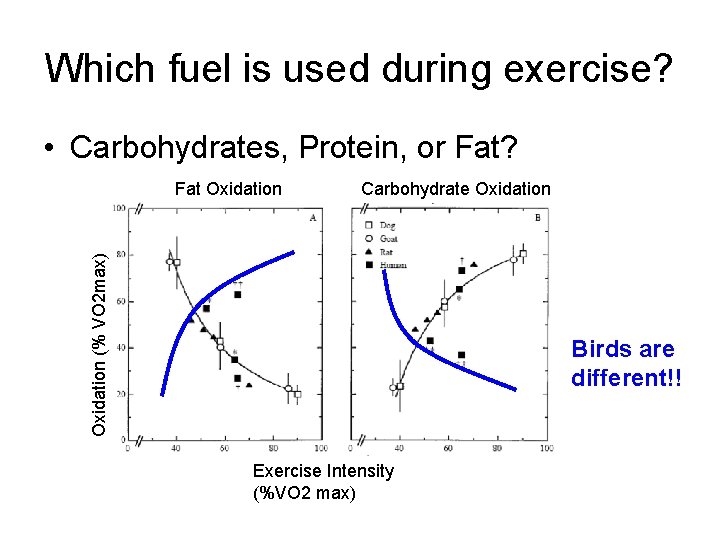
Which fuel is used during exercise? • Carbohydrates, Protein, or Fat? Carbohydrate Oxidation (% VO 2 max) Fat Oxidation Exercise Intensity (%VO 2 max)
Exercise in mammals • “Carbo loading” by human endurance athletes fills intramuscular and liver glycogen stores • “Hitting the wall” occurs when glycogen stores are exhausted. Only fat is left, and only LOW intensity exercise is possible.
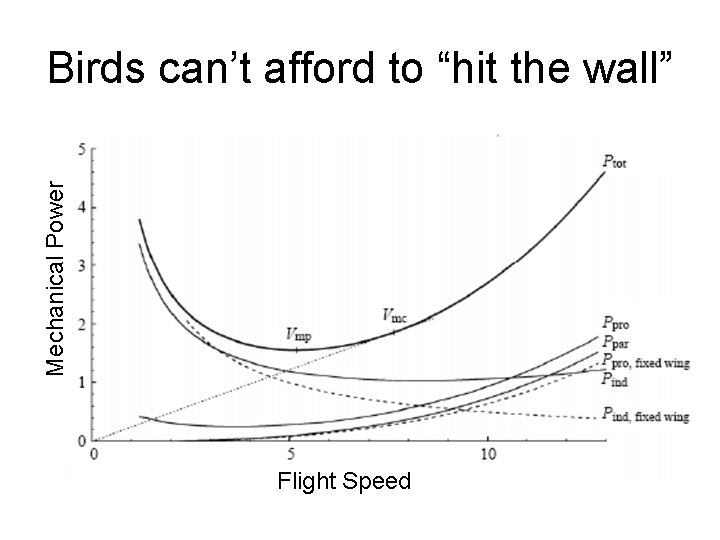
Mechanical Power Birds can’t afford to “hit the wall” Flight Speed
Which fuel is used during exercise? • Carbohydrates, Protein, or Fat? Carbohydrate Oxidation (% VO 2 max) Fat Oxidation Birds are different!! Exercise Intensity (%VO 2 max)
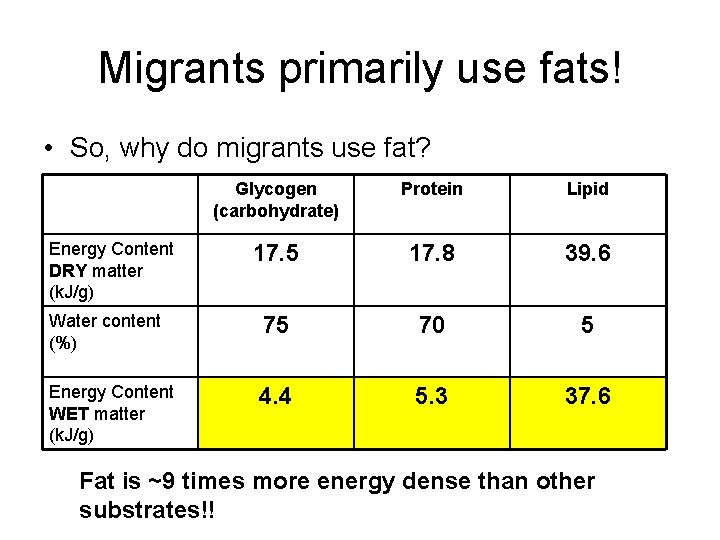
Migrants primarily use fats! • So, why do migrants use fat? Glycogen (carbohydrate) Protein Lipid 17. 5 17. 8 39. 6 Water content (%) 75 70 5 Energy Content WET matter (k. J/g) 4. 4 5. 3 37. 6 Energy Content DRY matter (k. J/g) Fat is ~9 times more energy dense than other substrates!!
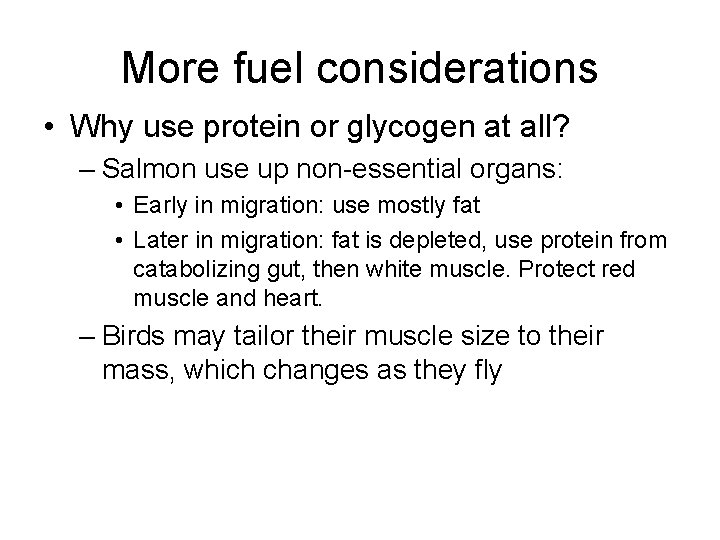
More fuel considerations • Why use protein or glycogen at all? – Salmon use up non-essential organs: • Early in migration: use mostly fat • Later in migration: fat is depleted, use protein from catabolizing gut, then white muscle. Protect red muscle and heart. – Birds may tailor their muscle size to their mass, which changes as they fly
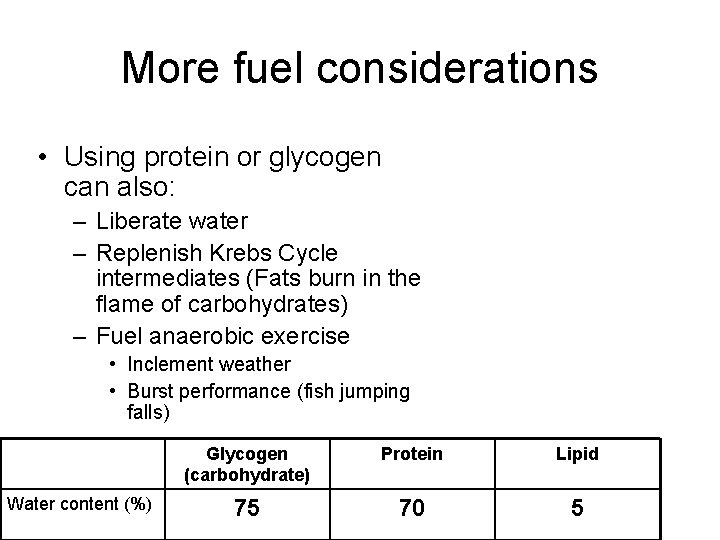
More fuel considerations • Using protein or glycogen can also: – Liberate water – Replenish Krebs Cycle intermediates (Fats burn in the flame of carbohydrates) – Fuel anaerobic exercise • Inclement weather • Burst performance (fish jumping falls) Water content (%) Glycogen (carbohydrate) Protein Lipid 75 70 5
Making use of fat • In order to use lots of fat, a migrant needs to: – Store lots of fat! – Increase fat transporters
Gaining Weight • Generally, longer distance migrants have higher % body fat. • Monarchs can carry 60% of body mass as fat, Aphids only about 30%.
Gaining Weight • Generally, longer distance migrants have higher % body fat. • Monarchs can carry 60% of body mass as fat, Aphids only about 30%. • Birds up to 50% body mass) • Behavior changes, predation risk
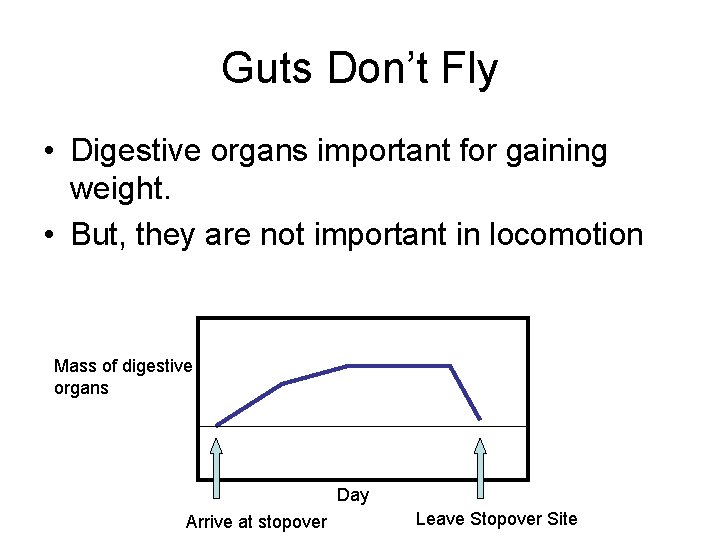
Guts Don’t Fly • Digestive organs important for gaining weight. • But, they are not important in locomotion Mass of digestive organs Day Arrive at stopover Leave Stopover Site
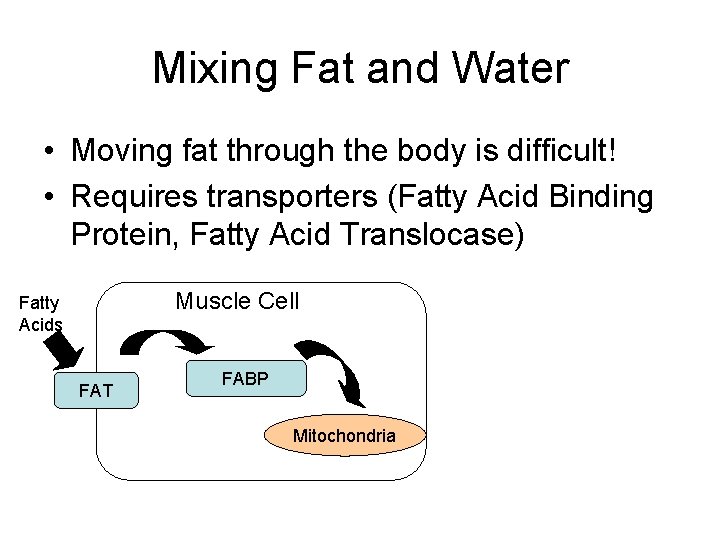
Mixing Fat and Water • Moving fat through the body is difficult! • Requires transporters (Fatty Acid Binding Protein, Fatty Acid Translocase) Muscle Cell Fatty Acids FAT FABP Mitochondria
• Locusts can develop into a migratory form when conditions are right
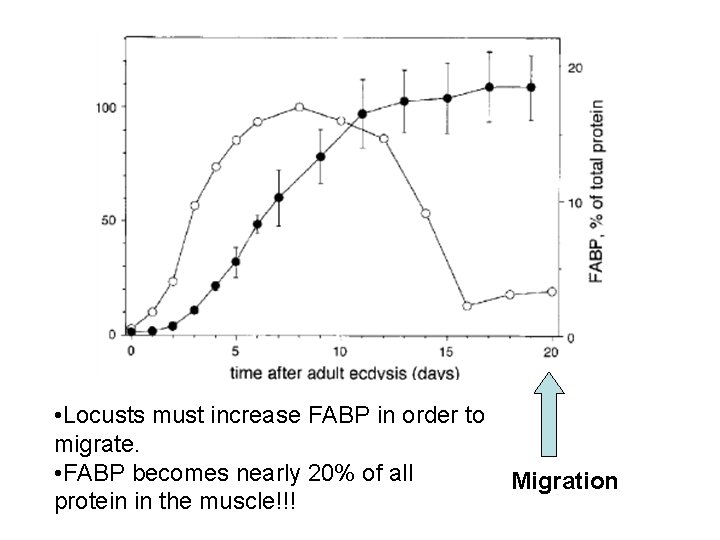
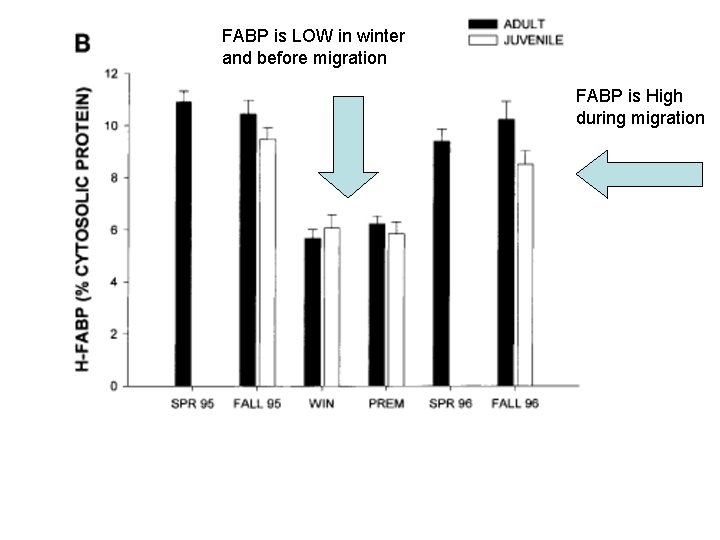
• Locusts must increase FABP in order to migrate. • FABP becomes nearly 20% of all protein in the muscle!!! Migration
• Western Sandpipers migrate from Canada to Panama • Also require increases in FABP
FABP is LOW in winter and before migration FABP is High during migration
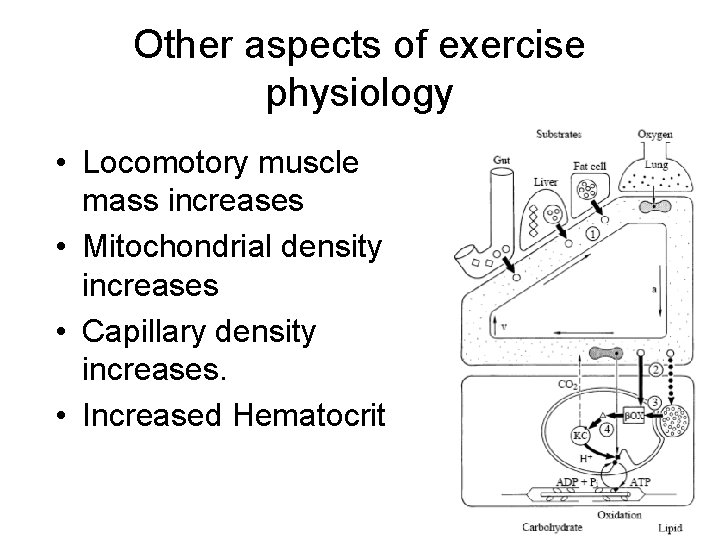
Other aspects of exercise physiology • Locomotory muscle mass increases • Mitochondrial density increases • Capillary density increases. • Increased Hematocrit
More migration physiology • Biological Clocks – Circadian rhythms: • Birds generally migrate at night, must coordinate daily pattern of feeding and catabolism (feeding time vs. departure time). – Circannual rhythms: • Most animals migrate at particular times of the year.
Seasonality • Seasonality – behavior and physiology vary over the year. – Reproduction, migration, hibernation, fat cycles, molt. – Photoperiod is a major cue • Absolute Day Length (predominant cue) • Changing Day Length
Seasonality • Invertebrates – May enter diapause, cease reproduction, and migrate. Insects at high latitudes may diapause at longer day lengths • Vertebrates – Photorefractoriness: • Animals become insensitive to an absolute day length that has an effect at a different time. • Has to be reset by short days
Circannual Rhythms • Circannual Rhythms are free-running without environmental cues. • Stronger in species that have unreliable cues or where seasonal timing is very important – Long-distance migrants – Underground hibernators
More migration physiology • Endocrine system – Coordination of behavior and physiology – Examples: • Insects: Juvenile Hormone can stimulate flight at intermediate levels, but suppress migration at high levels • Fish: Thyroid Hormone (T 4) increases swimming activity and lipid mobilization. Cortisol stimulates lipid metabolism and stimulates salt water tolerance • Birds: Thyroid Hormone increases fattening and restlessness. Corticosterone is major metabolic regulator.