
Migration of Slavs and Avars Labe Ancient homeland
Migration of Slavs and Avars

Labe Ancient homeland of Slavs and Avars lived between the Elbe, Oder, Baltic Sea, the Dnieper and the Carpathians.
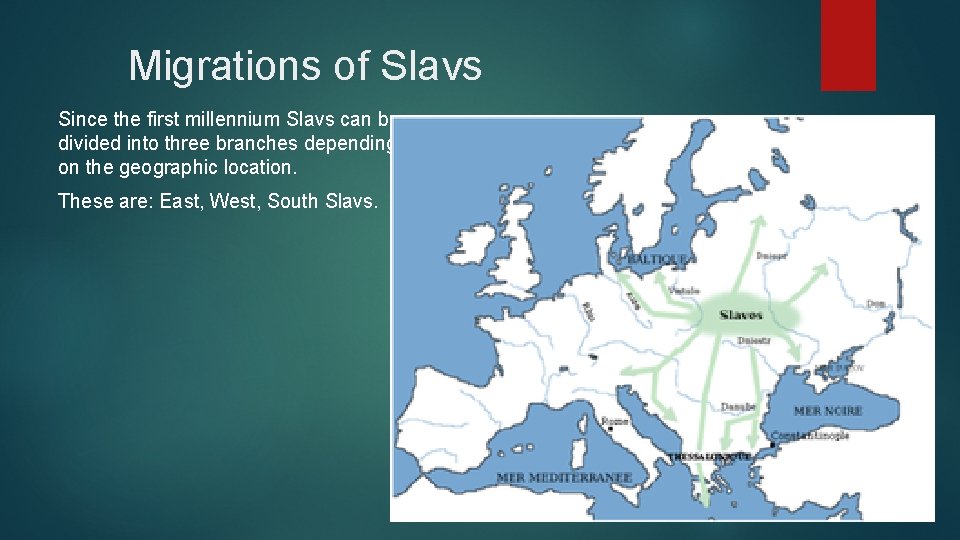
Migrations of Slavs Since the first millennium Slavs can be divided into three branches depending on the geographic location. These are: East, West, South Slavs.
In the second half of the 4 th century Slavs were subjected to Huns and some of them went with Huns to the Pannonian Plain. After the death of King Attila (mid 5 th century) and the collapse of Hun’s country, Slavs began to organize themselves. As they learned formthe Huns, Slavs were using wagons and, as the Byzantine writers from 6 th century said, thanks to those wagons they could go on long migrations, over the entire European continent.
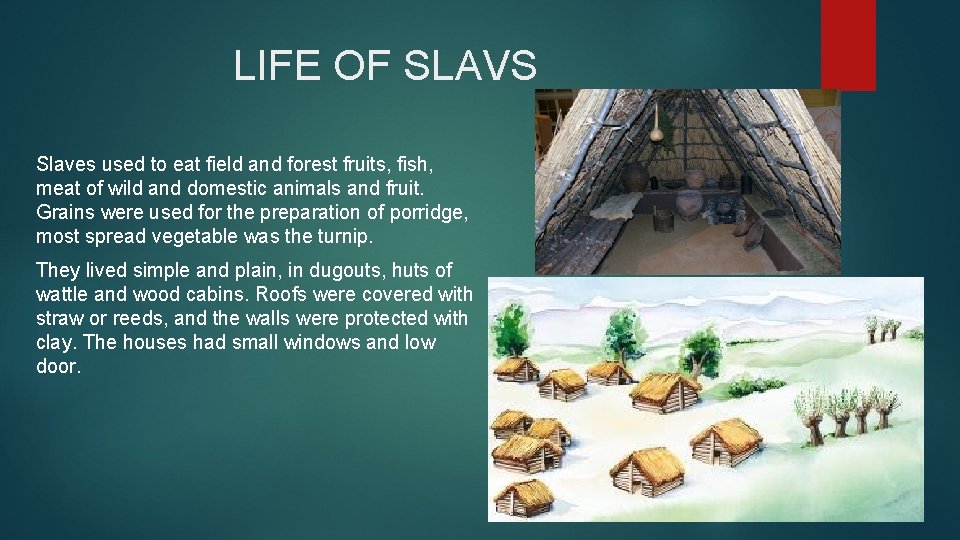
LIFE OF SLAVS Slaves used to eat field and forest fruits, fish, meat of wild and domestic animals and fruit. Grains were used for the preparation of porridge, most spread vegetable was the turnip. They lived simple and plain, in dugouts, huts of wattle and wood cabins. Roofs were covered with straw or reeds, and the walls were protected with clay. The houses had small windows and low door.
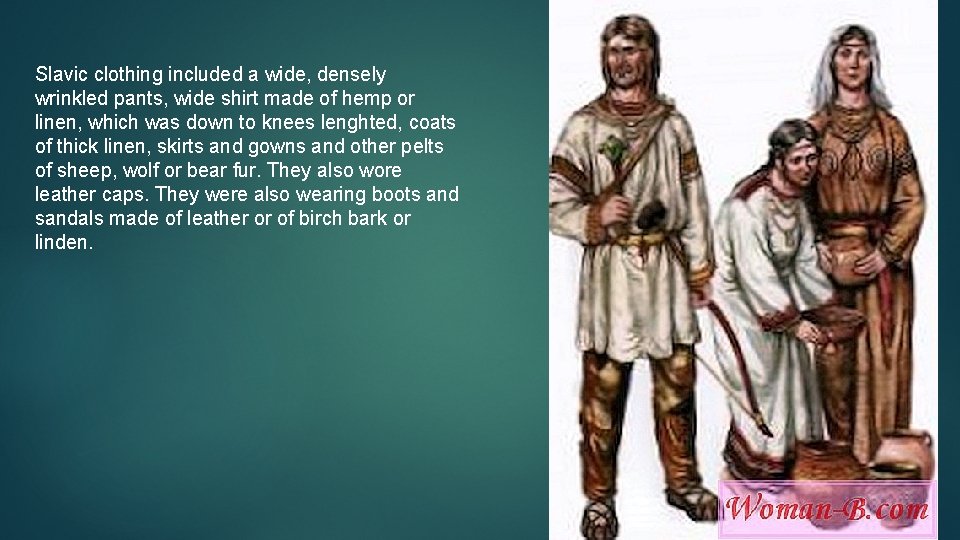
Slavic clothing included a wide, densely wrinkled pants, wide shirt made of hemp or linen, which was down to knees lenghted, coats of thick linen, skirts and gowns and other pelts of sheep, wolf or bear fur. They also wore leather caps. They were also wearing boots and sandals made of leather or of birch bark or linden.
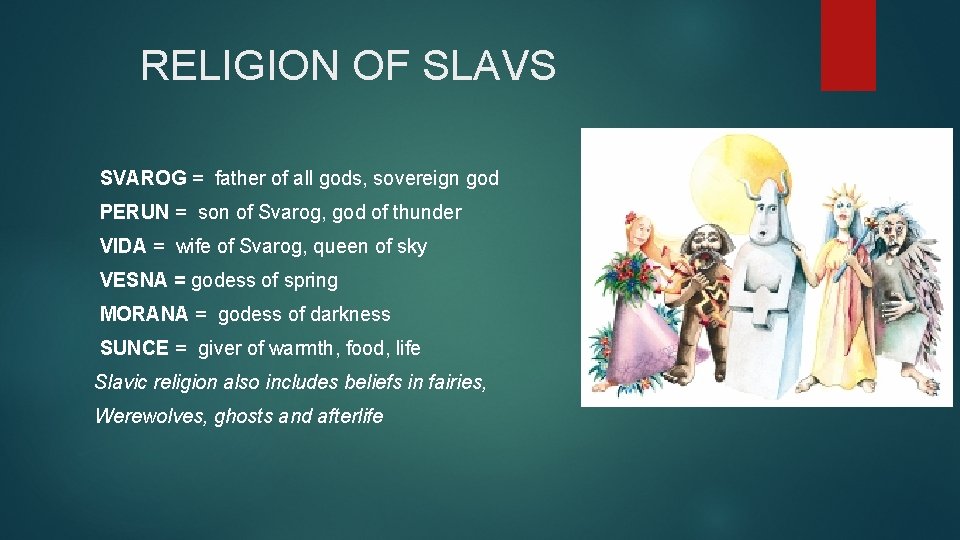
RELIGION OF SLAVS SVAROG = father of all gods, sovereign god PERUN = son of Svarog, god of thunder VIDA = wife of Svarog, queen of sky VESNA = godess of spring MORANA = godess of darkness SUNCE = giver of warmth, food, life Slavic religion also includes beliefs in fairies, Werewolves, ghosts and afterlife
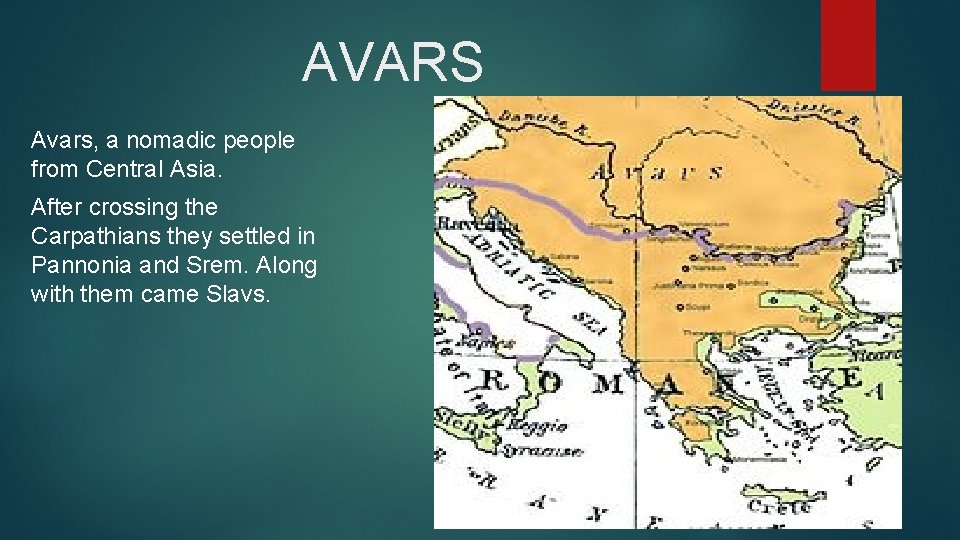
AVARS Avars, a nomadic people from Central Asia. After crossing the Carpathians they settled in Pannonia and Srem. Along with them came Slavs.
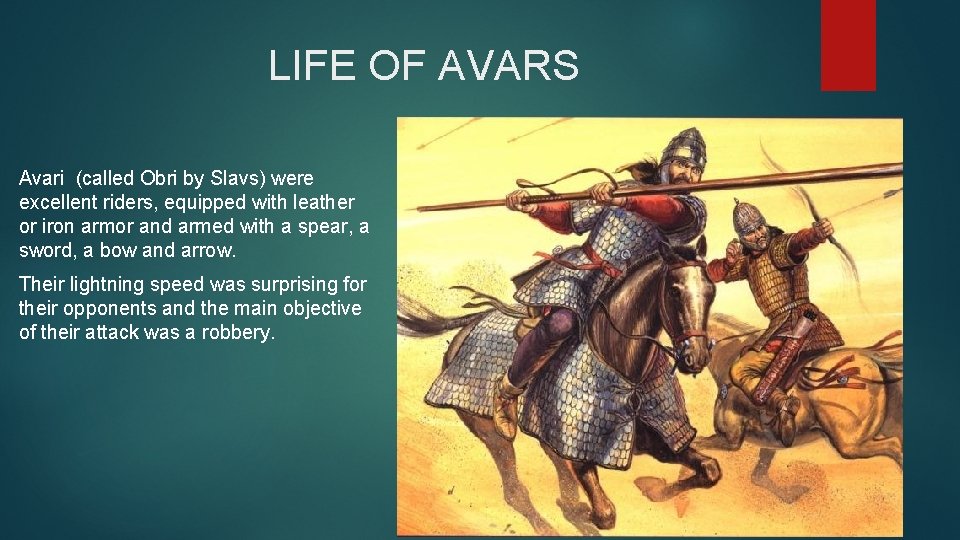
LIFE OF AVARS Avari (called Obri by Slavs) were excellent riders, equipped with leather or iron armor and armed with a spear, a sword, a bow and arrow. Their lightning speed was surprising for their opponents and the main objective of their attack was a robbery.
BELIEFS OF AVARS Avars believed in sorcerers, and with the supreme god who was the master of lightning and everything else they had less important deities and family idols.
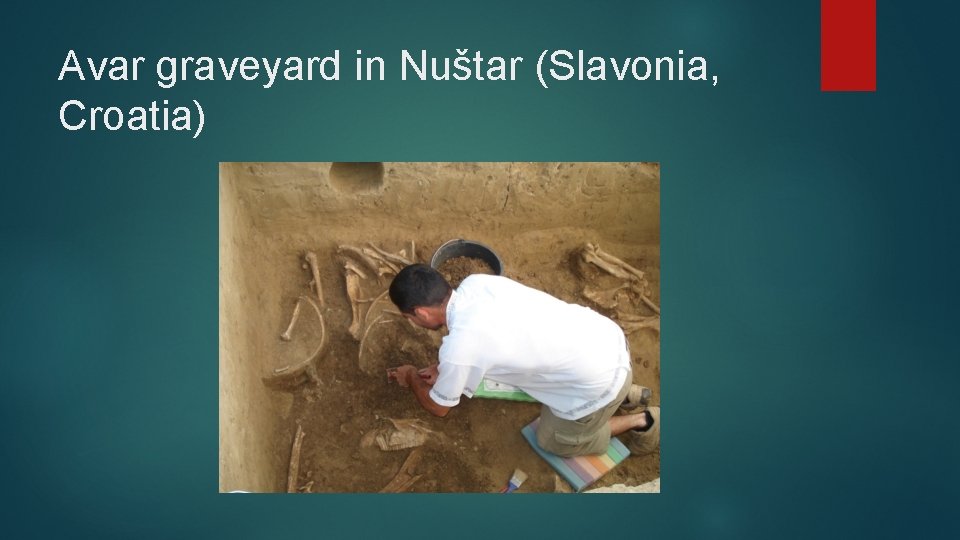
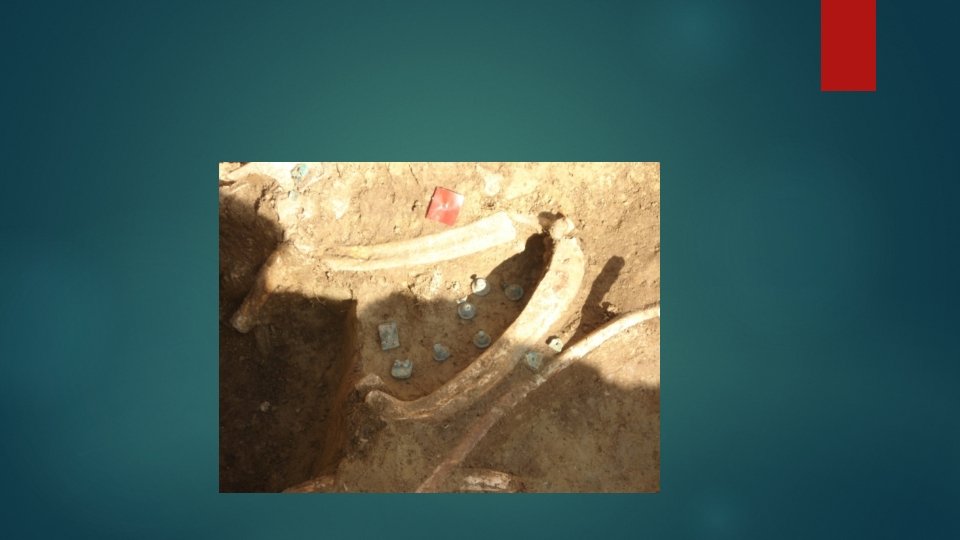
Avar graveyard in Nuštar (Slavonia, Croatia)
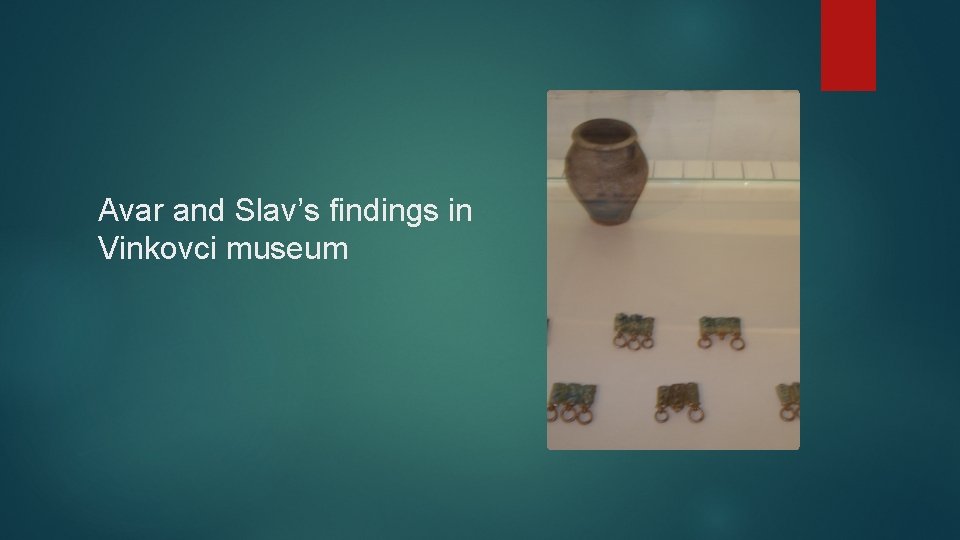
Avar and Slav’s findings in Vinkovci museum
SOURCES: Bodo Anke, László Révesz, Tivadar Vida: Reitervölker im Frühmittelalter: Hunnen – Awaren – Ungarn, Theiss Verlag, Stuttgart 2008. Walter Pohl: Die Awaren. Ein Steppenvolk in Mitteleuropa 567 -822 n. Chr. , Verlag Beck, München 2002. Web page: http: //www. bosliterni. ba/avarska-drzava-i-slavenizacija- istocne-europe/ Hrvoje Gračanin: Kratka povijest Hrvatske za mlade, Sys. Print, Zagreb
- Slides: 14