
Migration Its Causes A MIGRATION migration the permanent




- Slides: 44
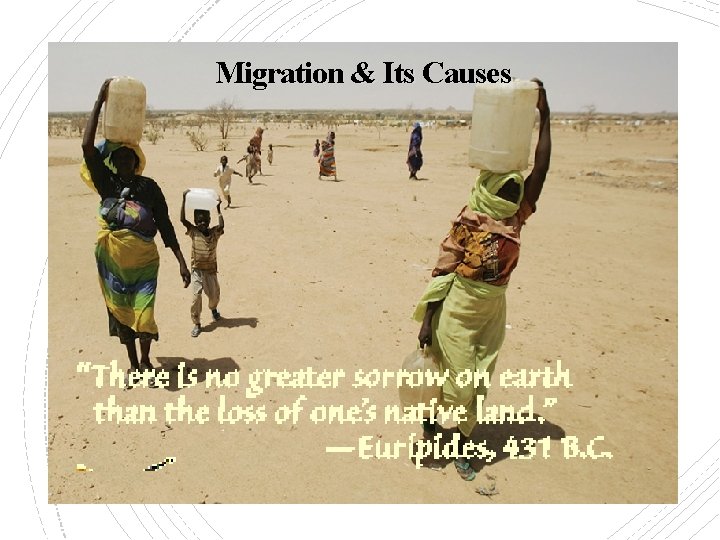
Migration & Its Causes
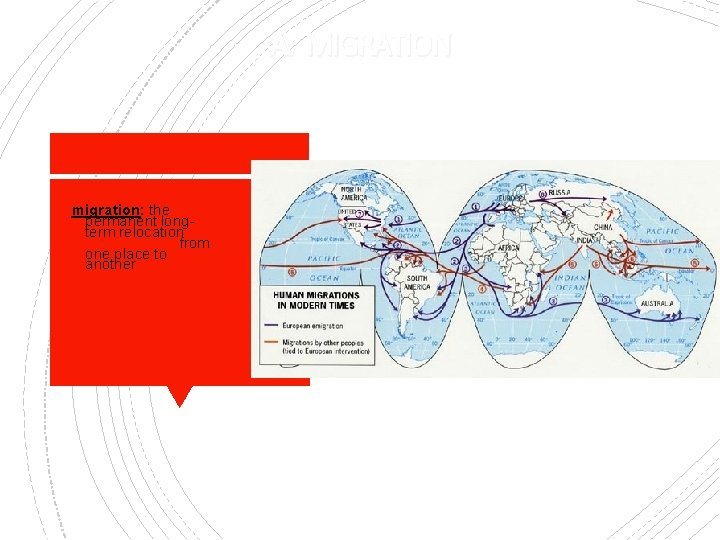
A. MIGRATION migration: the permanent longterm relocation from one place to another
voluntary migration: people have a choice to move or stay reluctant migration: less than fully voluntary, but not forced Exs. : - any economic migrant - 75 million people from Europe to Americas (1835 -1935) - Indonesia: resettlement from overcrowded Java
§ Can be: • § Internal—within a country Migrations occur on all scales— local to global • Interregional (between regions) • Intraregional (within one region) International • Forced (involuntary) • Voluntary (choose to move)
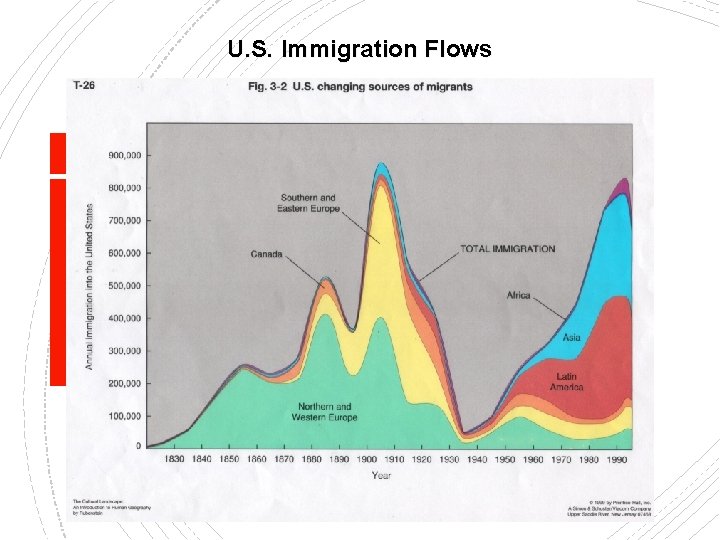
U. S. Immigration Flows
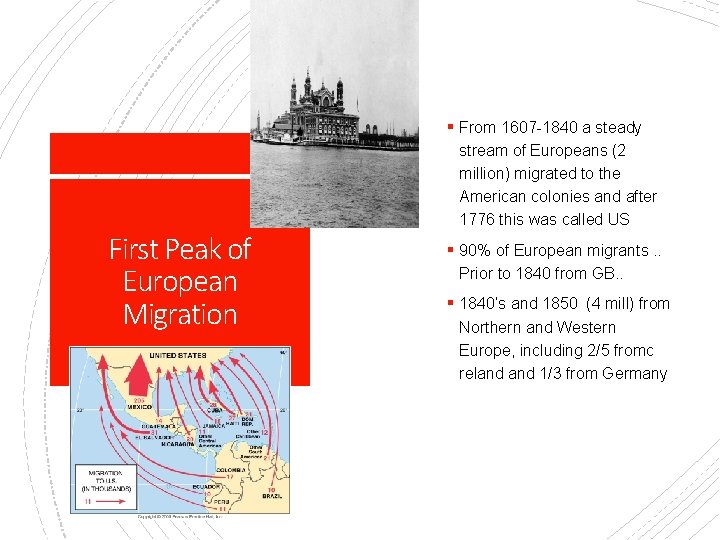
§ From 1607 -1840 a steady First Peak of European Migration stream of Europeans (2 million) migrated to the American colonies and after 1776 this was called US § 90% of European migrants. . Prior to 1840 from GB. . § 1840’s and 1850 (4 mill) from Northern and Western Europe, including 2/5 fromc reland 1/3 from Germany
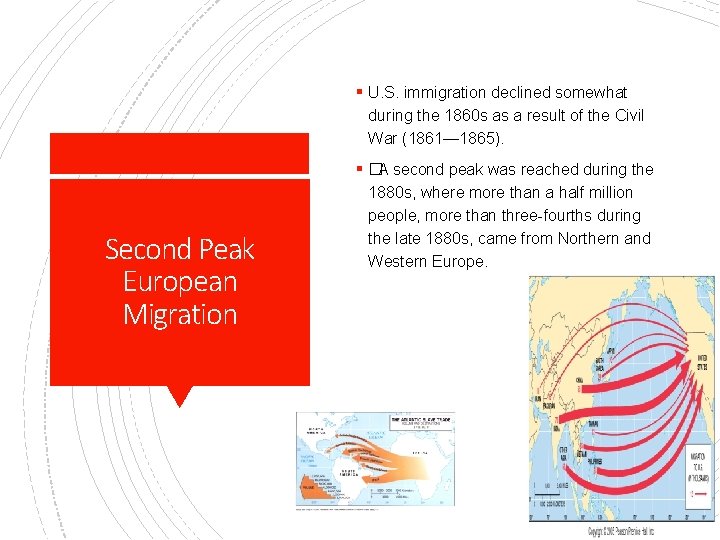
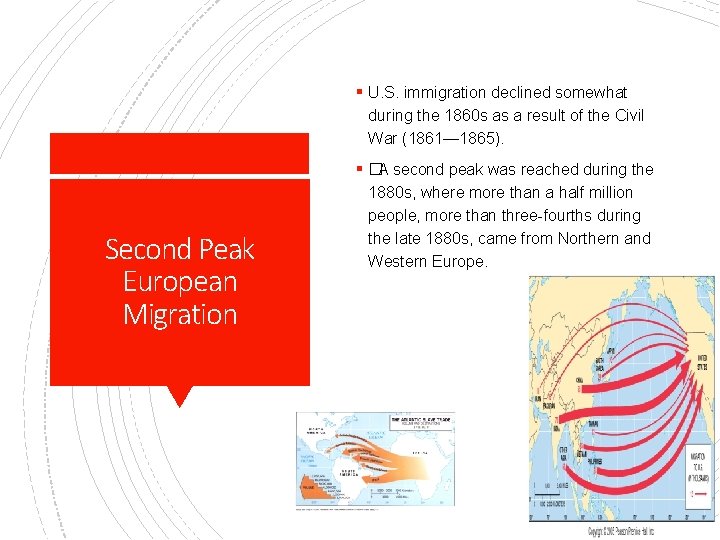
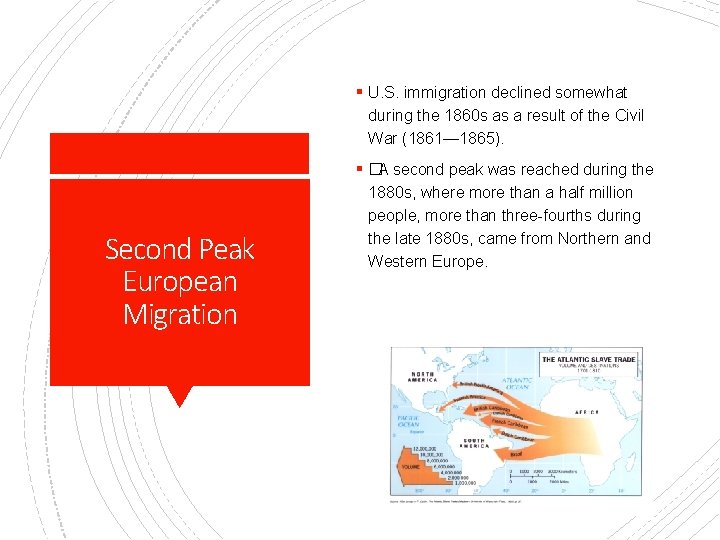
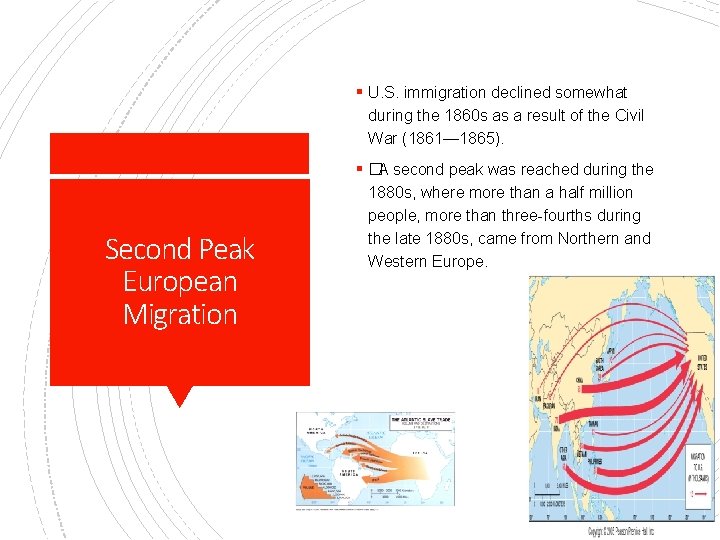
§ U. S. immigration declined somewhat during the 1860 s as a result of the Civil War (1861— 1865). § �A second peak was reached during the Second Peak European Migration 1880 s, where more than a half million people, more than three-fourths during the late 1880 s, came from Northern and Western Europe.
§ U. S. immigration declined somewhat during the 1860 s as a result of the Civil War (1861— 1865). § �A second peak was reached during the Second Peak European Migration 1880 s, where more than a half million people, more than three-fourths during the late 1880 s, came from Northern and Western Europe.
§ U. S. immigration declined somewhat during the 1860 s as a result of the Civil War (1861— 1865). § �A second peak was reached during the Second Peak European Migration 1880 s, where more than a half million people, more than three-fourths during the late 1880 s, came from Northern and Western Europe.
§ U. S. immigration declined somewhat during the 1860 s as a result of the Civil War (1861— 1865). § �A second peak was reached during the Second Peak European Migration 1880 s, where more than a half million people, more than three-fourths during the late 1880 s, came from Northern and Western Europe.
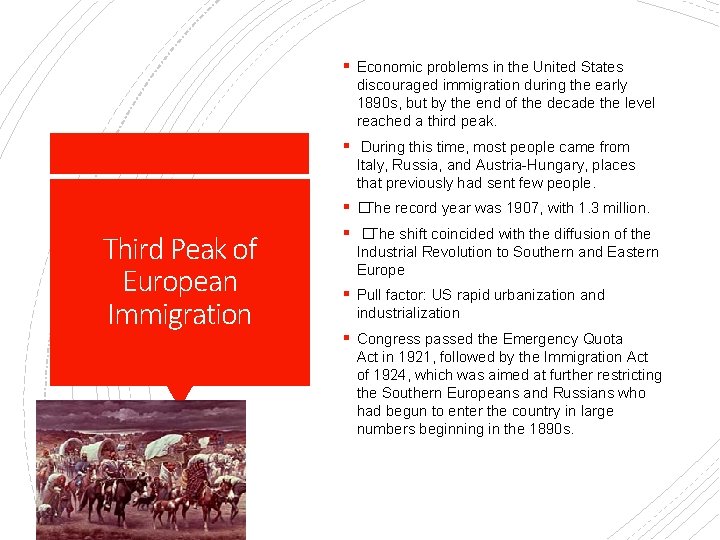
§ Economic problems in the United States discouraged immigration during the early 1890 s, but by the end of the decade the level reached a third peak. § During this time, most people came from Italy, Russia, and Austria-Hungary, places that previously had sent few people. Third Peak of European Immigration § �The record year was 1907, with 1. 3 million. § �The shift coincided with the diffusion of the Industrial Revolution to Southern and Eastern Europe § Pull factor: US rapid urbanization and industrialization § Congress passed the Emergency Quota Act in 1921, followed by the Immigration Act of 1924, which was aimed at further restricting the Southern Europeans and Russians who had begun to enter the country in large numbers beginning in the 1890 s.
§ Immigration to the United States dropped Recent Immigration from LD Regions sharply in the 1930 s and 1940 s, during the Great Depression and World War II, then it steadily increased during the 1950 s, 1960 s, and 1970 s. § It surged during the 1980 s and 1990 s to historically high levels.
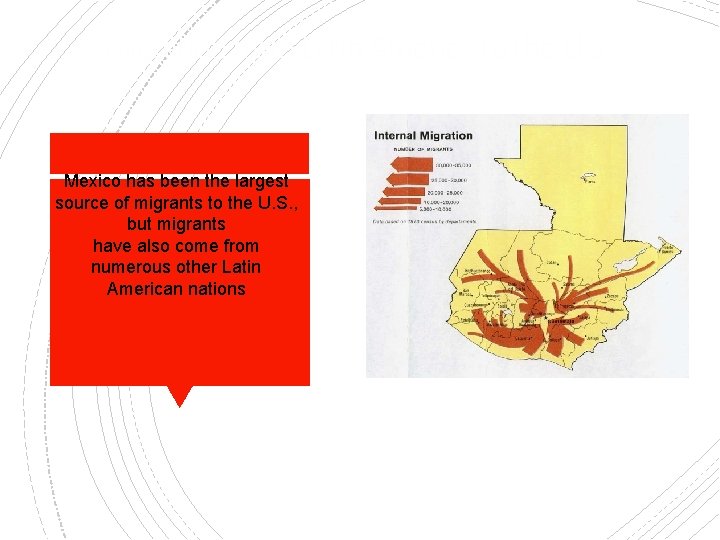
Migration from Latin America to the U. S. Mexico has been the largest source of migrants to the U. S. , but migrants have also come from numerous other Latin American nations
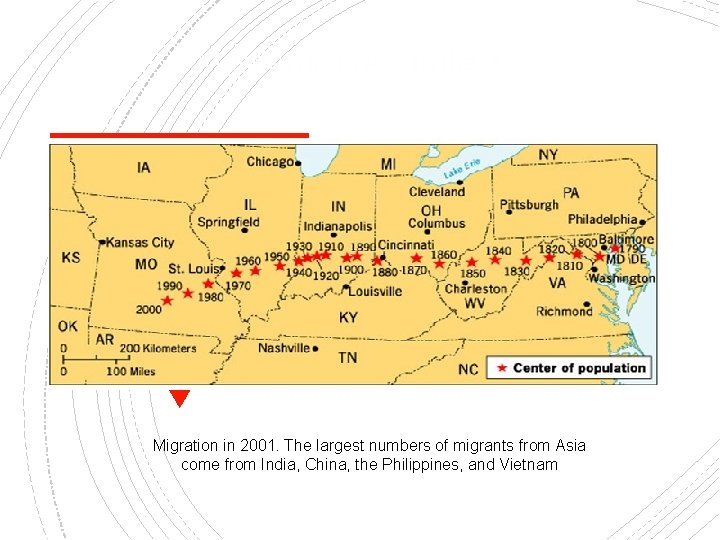
Migration from Asia to the U. S. Migration in 2001. The largest numbers of migrants from Asia come from India, China, the Philippines, and Vietnam
§ The U. S. population has been built up Impact of Immigration on the United States through a combination of emigration from Africa and England primarily during the eighteenth century, from Europe primarily during the nineteenth century, and from Latin America and Asia primarily during the twentieth century. �In the twenty-first century, the impact of immigration varies around the country. �Massive European migration ended with the start of World War I.
§ Europe’s Demographic Transition. � Europe’s Demographic Transition. Rapid population growth in Europe fueled emigration, especially after 1800. � Application of new technologies pushed much of Europe into stage 2 of the demographic transition. § To promote more efficient agriculture, some European governments forced the consolidation of several small farms into larger units. § Displaced farmers could choose between working in factories in the large cities or migrating to the United States or another country where farmland was plentiful.
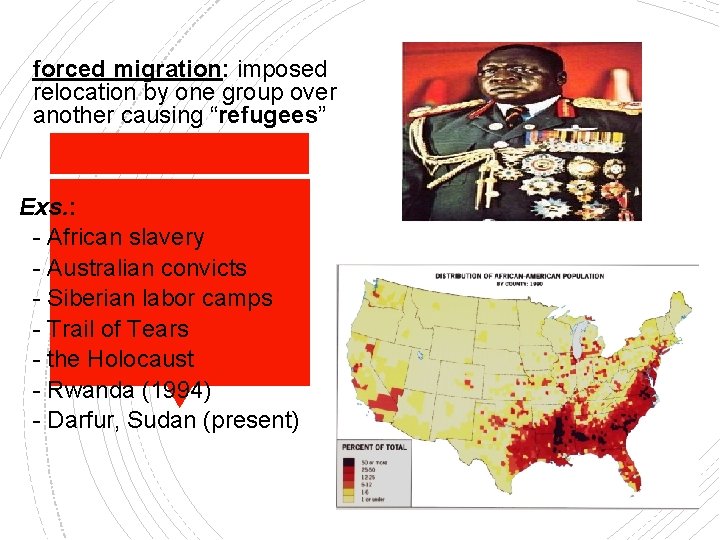
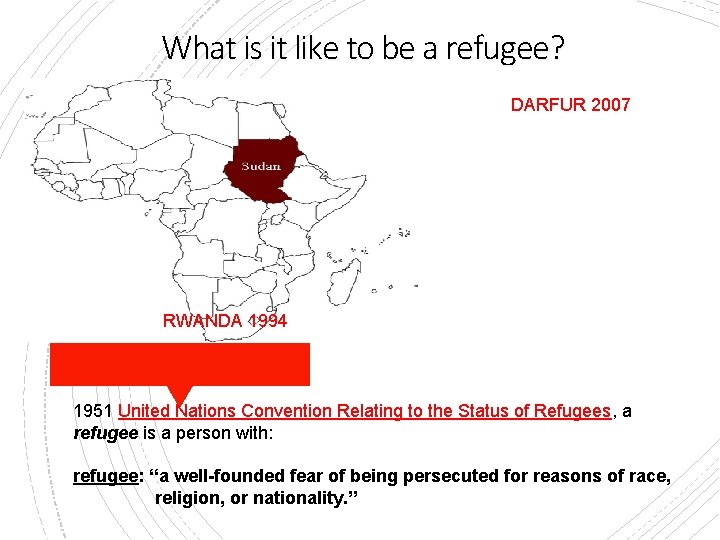
forced migration: imposed relocation by one group over another causing “refugees” Exs. : - African slavery - Australian convicts - Siberian labor camps - Trail of Tears - the Holocaust - Rwanda (1994) - Darfur, Sudan (present)
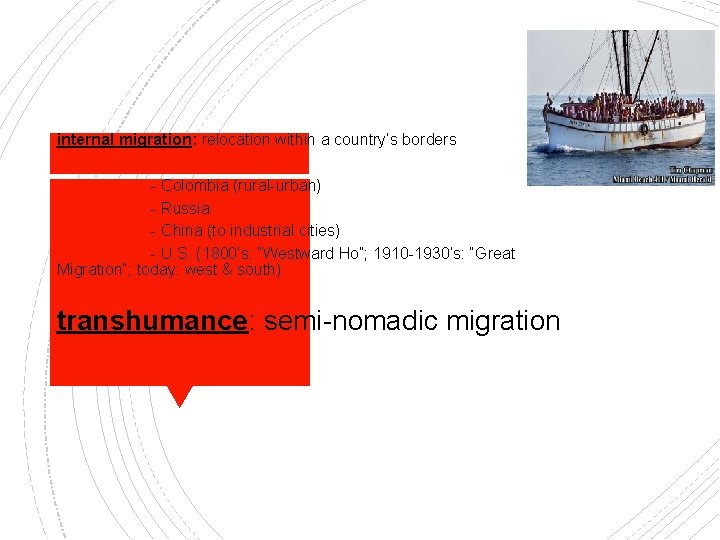
internal migration: relocation within a country’s borders - Colombia (rural-urban) - Russia - China (to industrial cities) - U. S. (1800’s: “Westward Ho”; 1910 -1930’s: “Great Migration”; today: west & south) transhumance: semi-nomadic migration
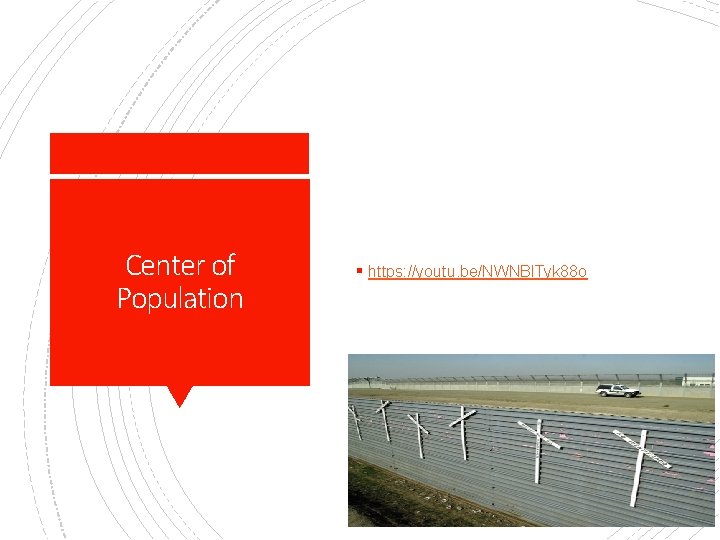
Center of Population § https: //youtu. be/NWNBl. Tyk 88 o
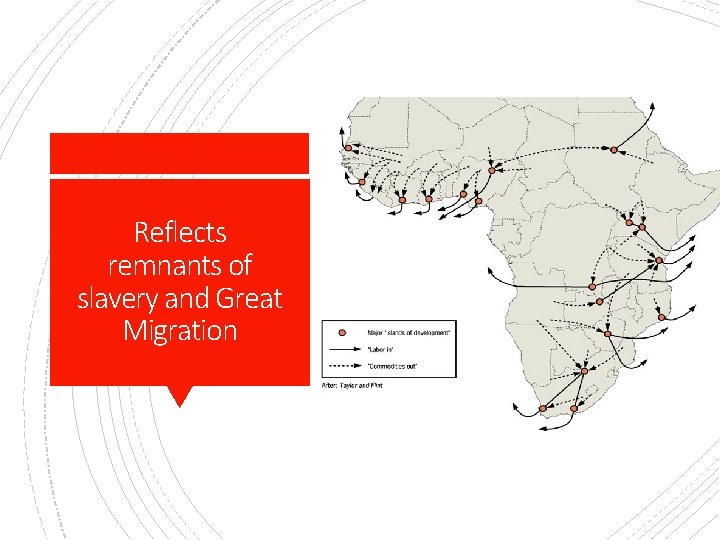
Reflects remnants of slavery and Great Migration
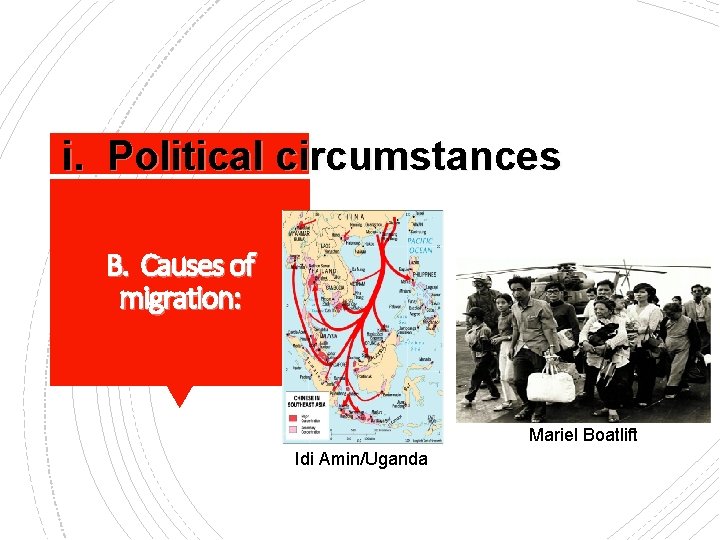
i. Political circumstances B. Causes of migration: Mariel Boatlift Idi Amin/Uganda
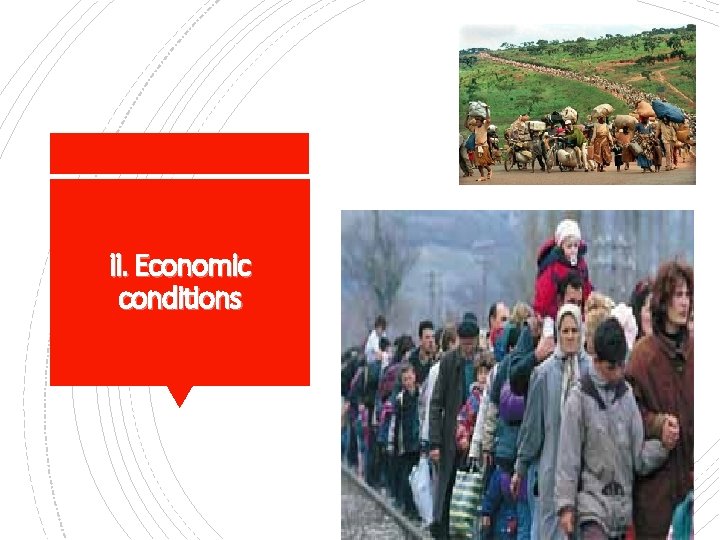
ii. Economic conditions
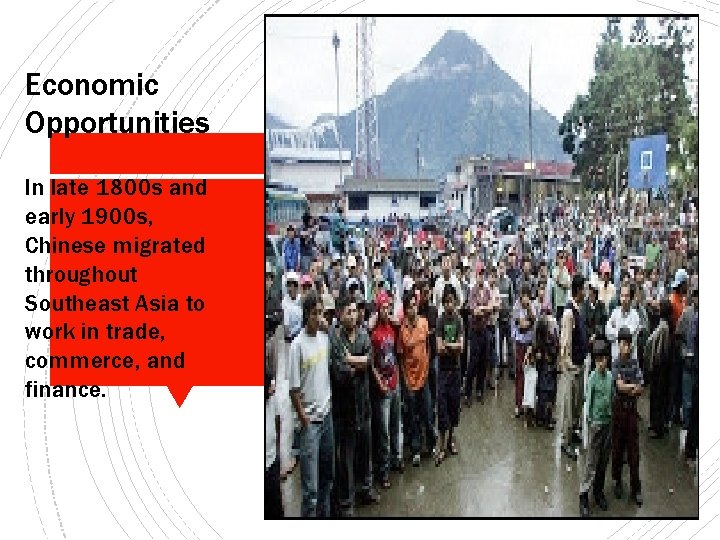
Economic Opportunities In late 1800 s and early 1900 s, Chinese migrated throughout Southeast Asia to work in trade, commerce, and finance.
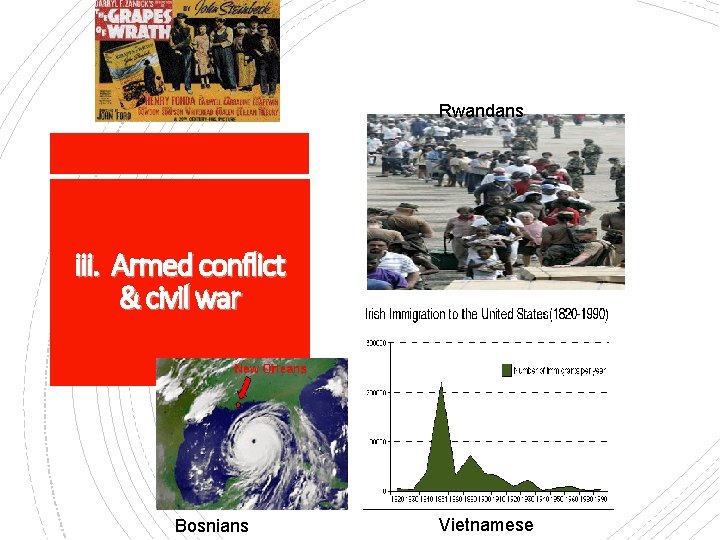
Guatemalans Rwandans iii. Armed conflict & civil war Bosnians Vietnamese
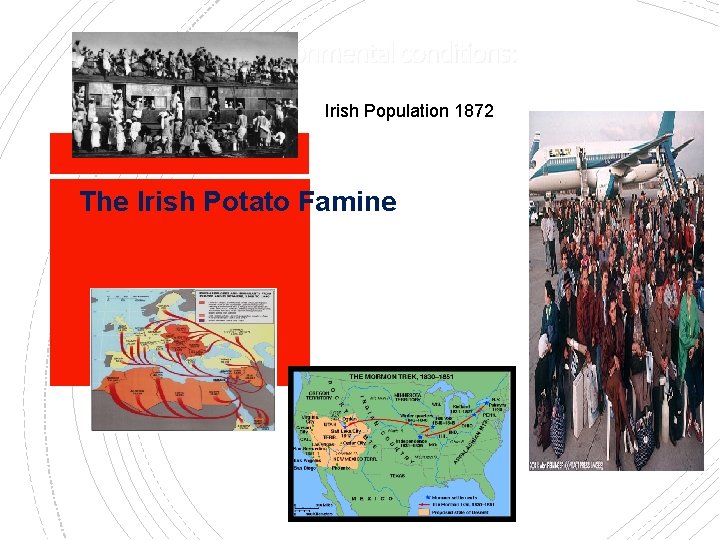
iv. Environmental conditions: Irish Population 1872 The Irish Potato Famine
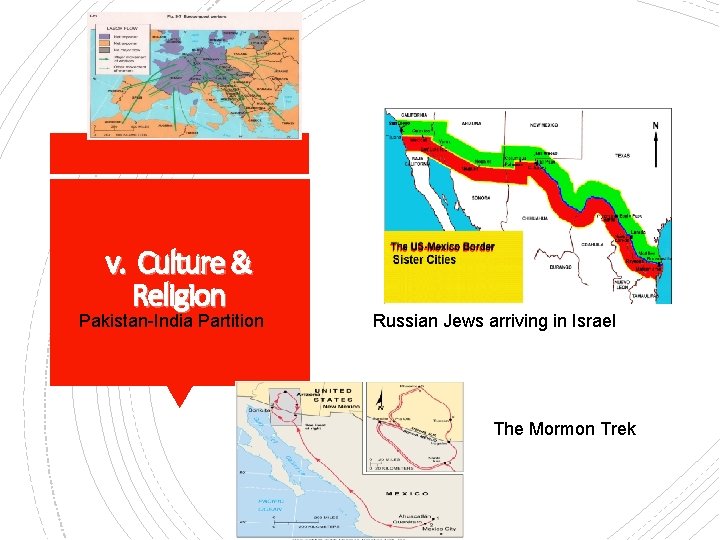
v. Culture & Religion Pakistan-India Partition Russian Jews arriving in Israel The Mormon Trek
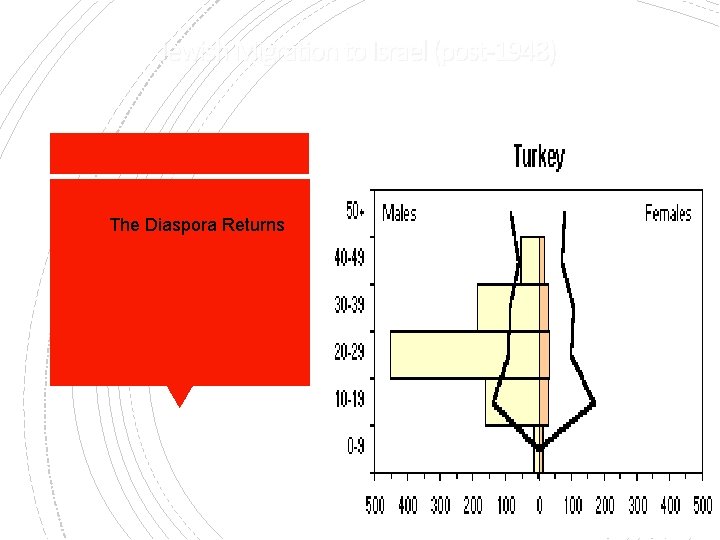
Jewish Migration to Israel (post-1948) The Diaspora Returns
Push Factors: negative home conditions that “push” the decision to migrate (loss of job, lack of opportunities, overcrowding, famine, war, disease) C. Push & Pull Factors: positive attributes perceived to exist at the new location (jobs opportunities, better climate, lower taxes, more room, safer) place utility: degree of satisfaction with a place The decision to migrate: is it better to stay or to go?
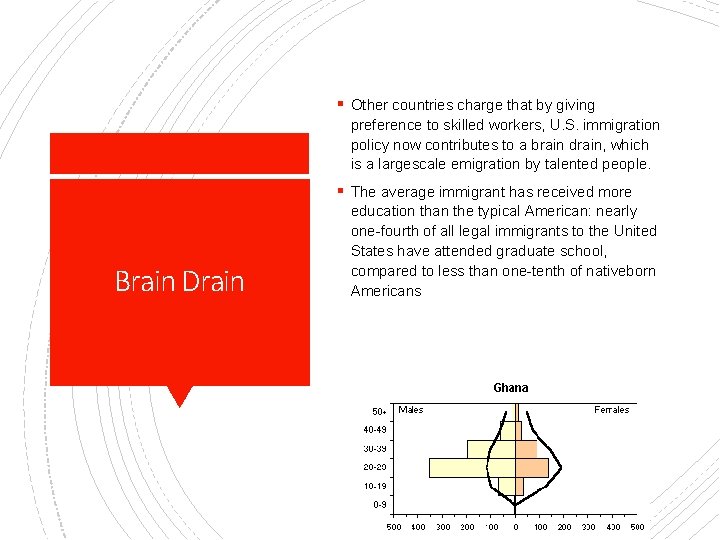
§ Other countries charge that by giving preference to skilled workers, U. S. immigration policy now contributes to a brain drain, which is a largescale emigration by talented people. § The average immigrant has received more Brain Drain education than the typical American: nearly one-fourth of all legal immigrants to the United States have attended graduate school, compared to less than one-tenth of nativeborn Americans
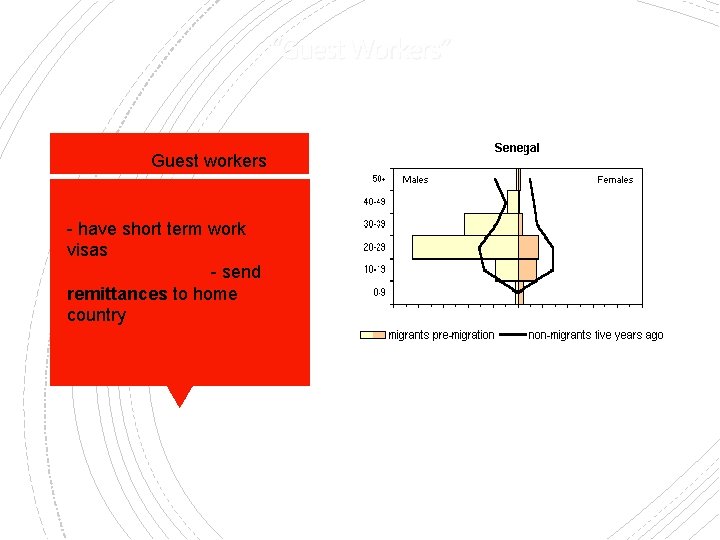
“Guest Workers” Guest workers - have short term work visas - send remittances to home country
§ In Europe, many guest workers suffer Attitudes towards Guest Workers from poor social conditions. �Both guest workers and their host countries regard the arrangement as temporary. �In reality, however, many guest workers remain indefinitely, especially if they are joined by other family members. �As a result of lower economic growth rates, Middle Eastern and Western European countries have reduced the number of guest workers in recent years. �Political parties that support restrictions on immigration have gained support in France, Germany, and other European countries, and attacks by local citizens on immigrants have incre
§ Millions of Asians migrated in the nineteenth century as time-contract laborers, recruited for a fixed period to work in mines or on plantations. � § More than 29 million ethnic Chinese Time Contract Workers currently live permanently in other countries, for the most part in Asia. �In recent years people have immigrated illegally in Asia to find work in other countries. § Estimates of illegal foreign workers in Taiwan range from 20, 000 to 70, 000. � Most are Filipinos, Thais, and Malaysians. F
D. Migration Patterns Step migration: smaller, less extreme moves Ex. : farm to village—to small town—to major city Chain migration: an established linkage or chain for future migrants (creates a “migration field”) § Migrants provide information, money, place to stay, a job for other family/friends
Channel Migration: clear pathways & travel routes are established - Ex. : The Oregon Trail
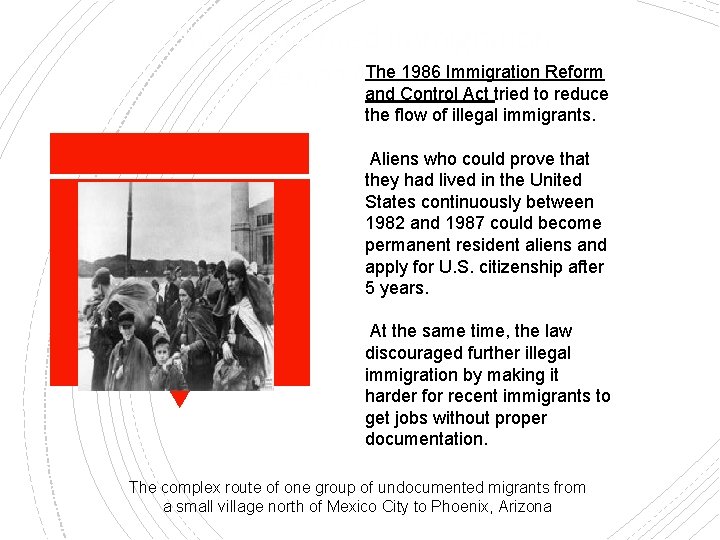
Undocumented Immigration: 1986 Immigration Reform Mexico to. The Arizona and Control Act tried to reduce the flow of illegal immigrants. Aliens who could prove that they had lived in the United States continuously between 1982 and 1987 could become permanent resident aliens and apply for U. S. citizenship after 5 years. At the same time, the law discouraged further illegal immigration by making it harder for recent immigrants to get jobs without proper documentation. The complex route of one group of undocumented migrants from a small village north of Mexico City to Phoenix, Arizona
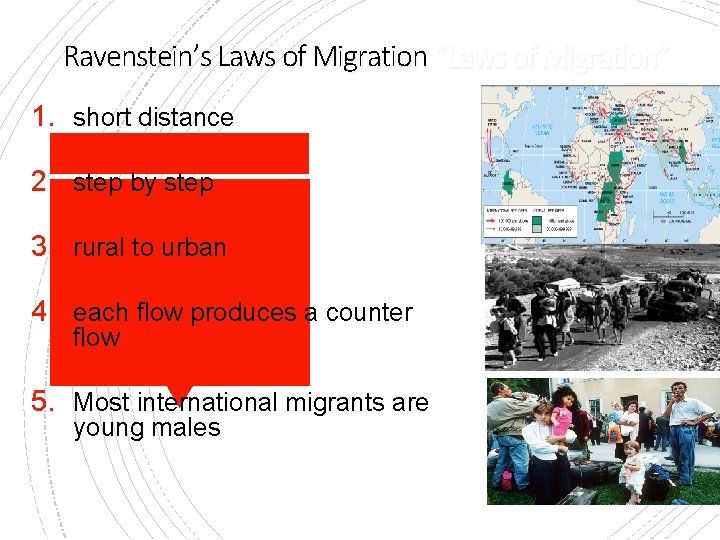
Ravenstein’s Laws of Migration “Laws of Migration” 1. short distance 2. step by step 3. rural to urban 4. each flow produces a counter flow 5. Most international migrants are young males
§ Immigration policies of host countries � Obstacles to Migration U. S. quota laws �Temporary migration for work �Time-contract workers § Economic migrants or refugees? � Cultural problems living in other countries �U. S. attitudes toward immigrants § Attitudes toward guest workers
What is it like to be a refugee? DARFUR 2007 RWANDA 1994 1951 United Nations Convention Relating to the Status of Refugees, a refugee is a person with: refugee: “a well-founded fear of being persecuted for reasons of race, religion, or nationality. ”
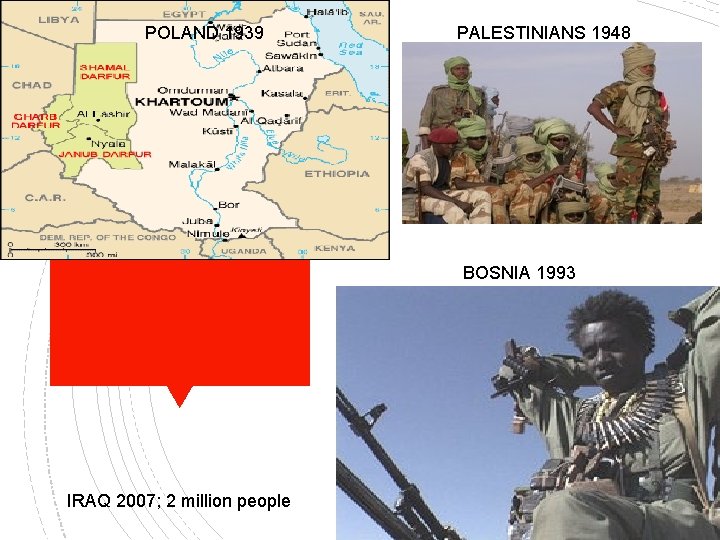
POLAND 1939 PALESTINIANS 1948 BOSNIA 1993 IRAQ 2007; 2 million people
Genocide in Darfur The conflict in Darfur has led to the death of at least 350, 000 and the displacement of 1. 8 million people.
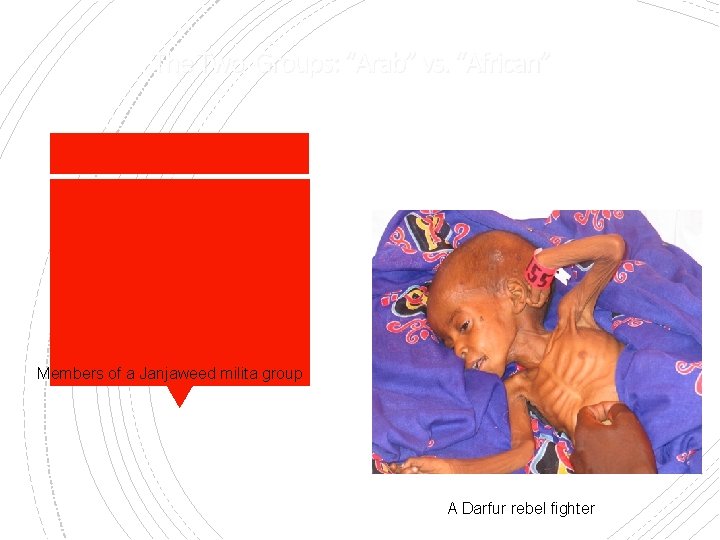
The Two Groups: “Arab” vs. “African” Members of a Janjaweed milita group A Darfur rebel fighter
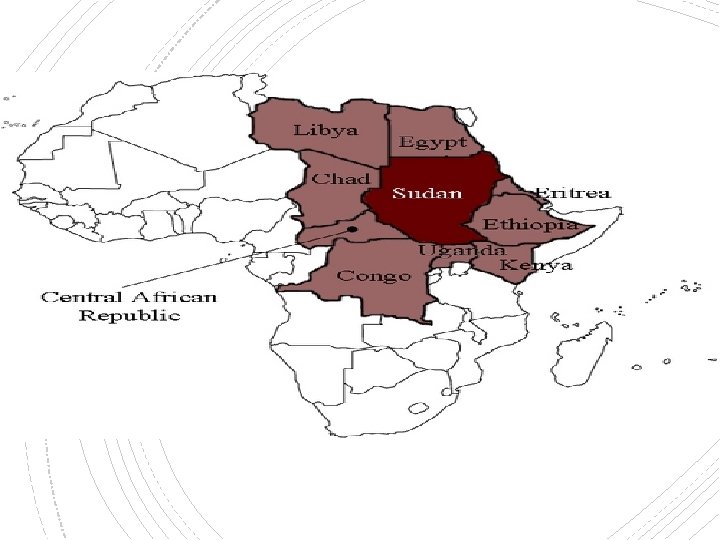
International Migration from Darfur
Displaced People within Darfur