
Migration European and Global Patterns Internal Migration within
Migration: European and Global Patterns
Internal Migration within the EU • Citizenship in EU member states – the right to live and work anywhere within the EU.
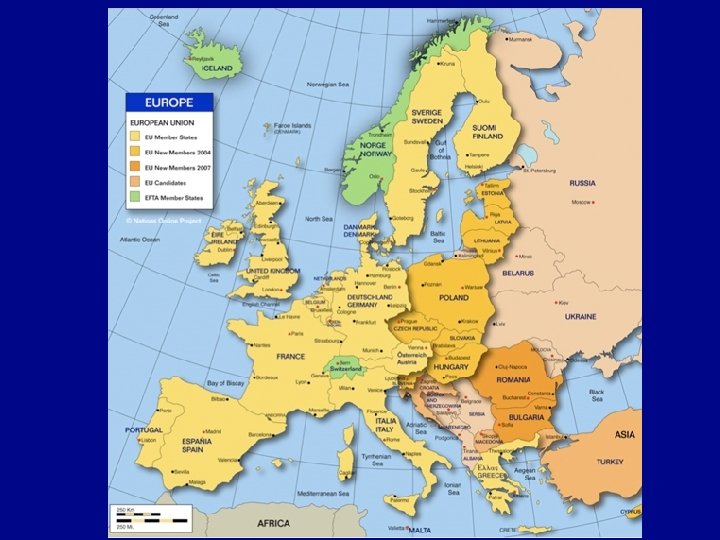
Internal Migration within the EU • Citizenship in EU member states – the right to live and work anywhere within the EU. • General migration pattern within EU: – East West – South North – From poorer to more wealthy • Many immigrants in Western Europe have come from former eastern (communist) bloc states in the 1990‘s – Poles UK and Ireland • accused of driving down wages – Romanians/Bulgarians Spain and Italy
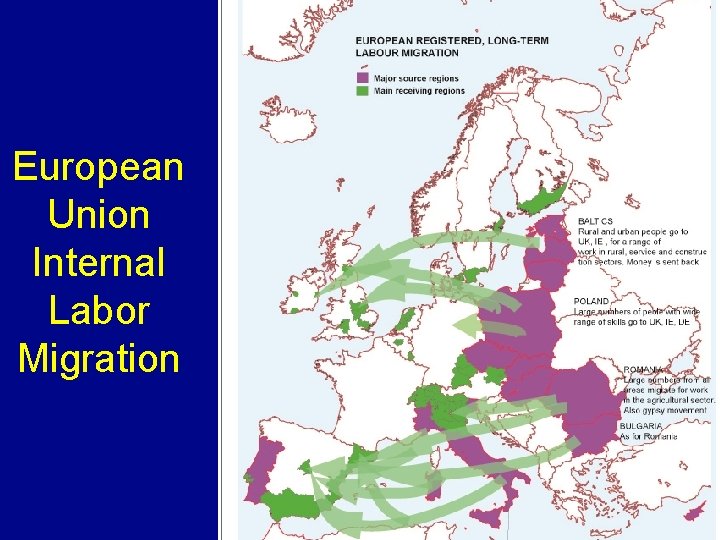
European Union Internal Labor Migration
Internal Migration within the EU • Citizenship in EU member states – the right to live and work anywhere within the EU. • General migration pattern within EU: – East West – South North – From poorer to more wealthy • Many immigrants in Western Europe have come from former eastern (communist) bloc states in the 1990‘s – Poles UK and Ireland • accused of driving down wages – Romanians/Bulgarians Spain and Italy • Recently some Northern Europeans are moving South – Example of “countermigration” (Ravenstein) – Retirees and others want warmer climate, more affordable lifestyle – European “snowbirds”
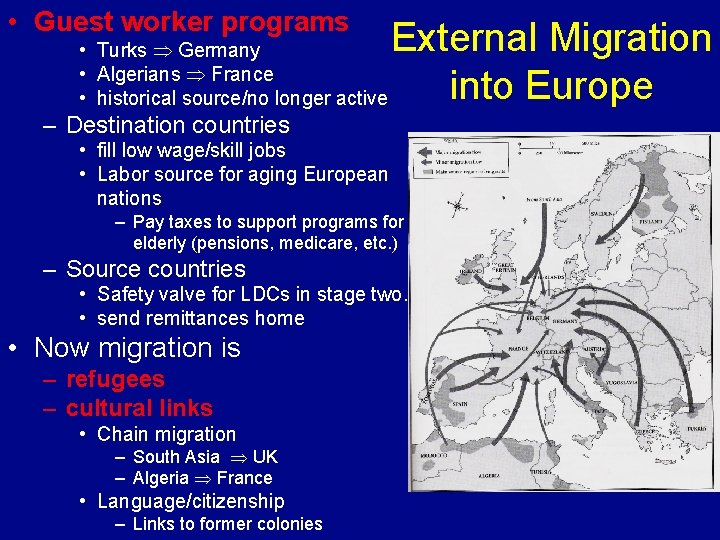
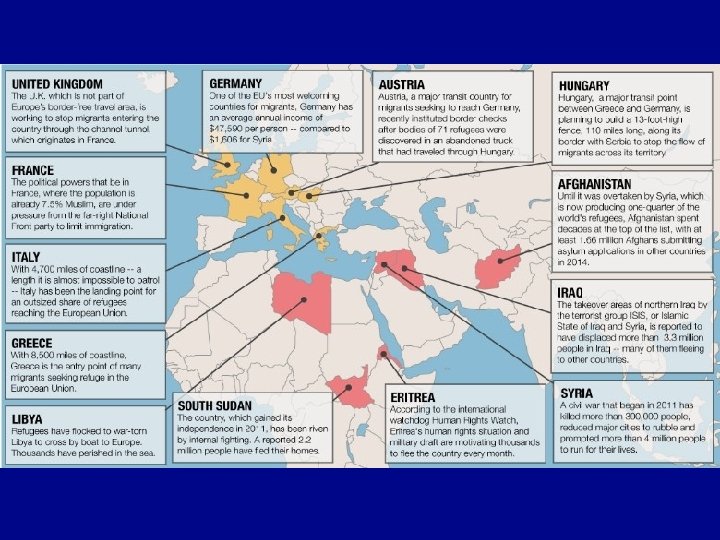
• Guest worker programs • Turks Germany • Algerians France • historical source/no longer active External Migration into Europe – Destination countries • fill low wage/skill jobs • Labor source for aging European nations – Pay taxes to support programs for elderly (pensions, medicare, etc. ) – Source countries • Safety valve for LDCs in stage two. • send remittances home • Now migration is – refugees – cultural links • Chain migration – South Asia UK – Algeria France • Language/citizenship – Links to former colonies
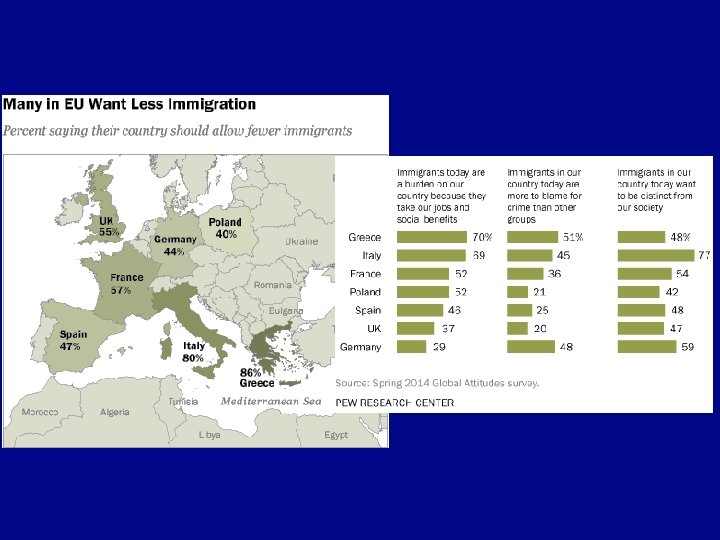
Problems faced by immigrant populations • ghettoization • immigrants clustered in urban areas/projects on edge of cities. • limited contact with general society • concentrated poverty → high crime – higher unemployment – immigrant unemployment in France = 13% (> 2 x native pop. ) • identity • migrants no longer “temporary” but – resistance to assimilation “incubator for radicalism” – has multiculturalism been a failure? – culture clash » Non- acceptance of European values (secularism, womens’ rights vs. traditional, religious values, sharia law) • right-wing reaction against immigrants/immigration • Brexit, Marine La Pen (France), Jobbik party (Hungary) – similar to anti-immigration arguments (Trump) in the U. S. – rise of nativism (policies that favor native born) » xenophobia = fear or hatred of foreigners » extremists aim to alienate moderate Europeans
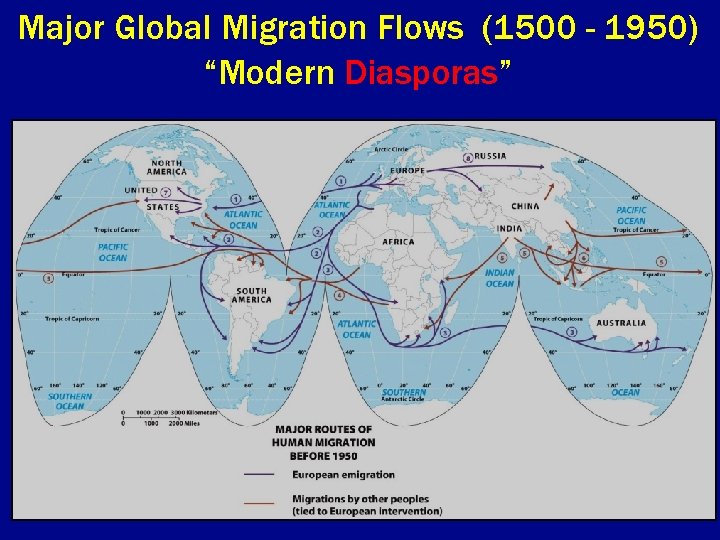
Major Global Migration Flows (1500 - 1950) “Modern Diasporas”
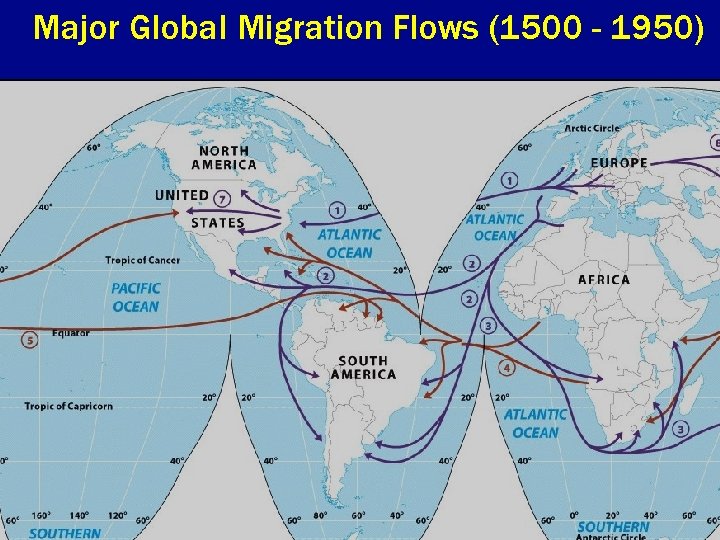
Major Global Migration Flows (1500 - 1950) • 1: Europeans to North America – 65 - 75 million? Europeans to New World – English culture, later industrial workers create ethnic diversity but on an English cultural foundation • 2: “Iberian” colonists to New World – Latin American cultural identity – 1 st Wave of Imperialism
Major Global Migration Flows (1500 - 1950)
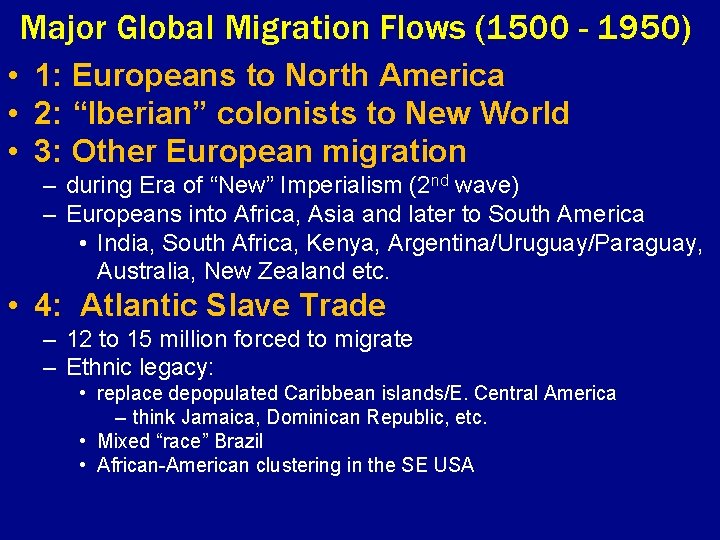
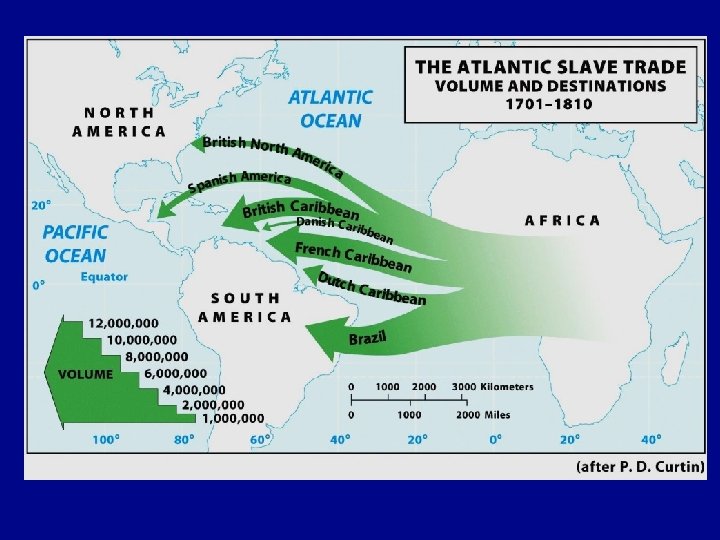
Major Global Migration Flows (1500 - 1950) • 1: Europeans to North America • 2: “Iberian” colonists to New World • 3: Other European migration – during Era of “New” Imperialism (2 nd wave) – Europeans into Africa, Asia and later to South America • India, South Africa, Kenya, Argentina/Uruguay/Paraguay, Australia, New Zealand etc. • 4: Atlantic Slave Trade – 12 to 15 million forced to migrate – Ethnic legacy: • replace depopulated Caribbean islands/E. Central America – think Jamaica, Dominican Republic, etc. • Mixed “race” Brazil • African-American clustering in the SE USA
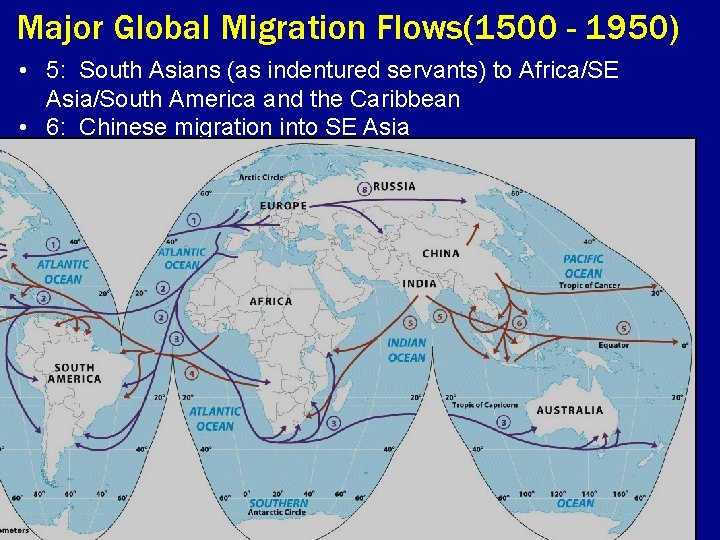
Major Global Migration Flows(1500 - 1950) • 5: South Asians (as indentured servants) to Africa/SE Asia/South America and the Caribbean • 6: Chinese migration into SE Asia
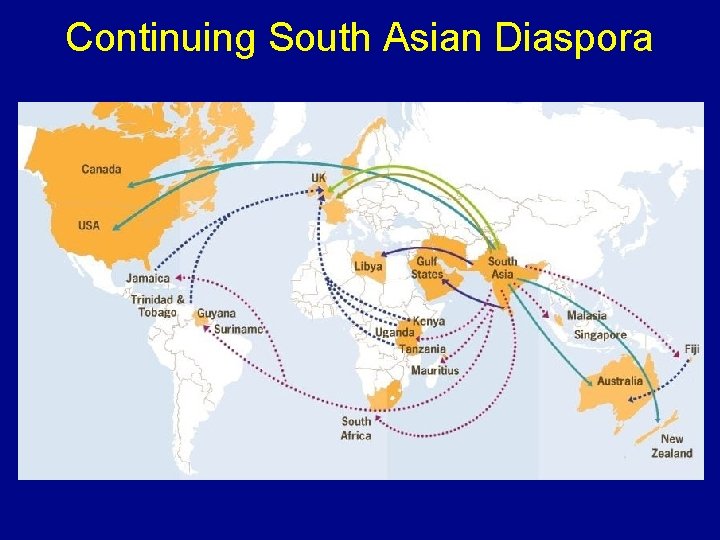
Continuing South Asian Diaspora
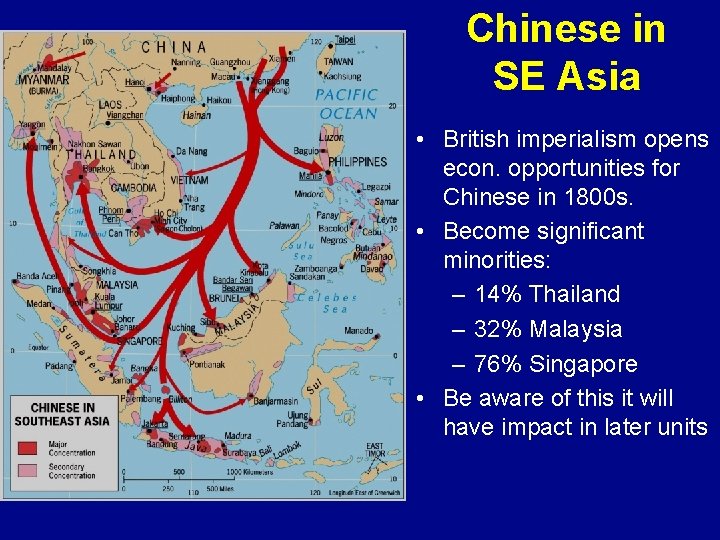
Chinese in SE Asia • British imperialism opens econ. opportunities for Chinese in 1800 s. • Become significant minorities: – 14% Thailand – 32% Malaysia – 76% Singapore • Be aware of this it will have impact in later units
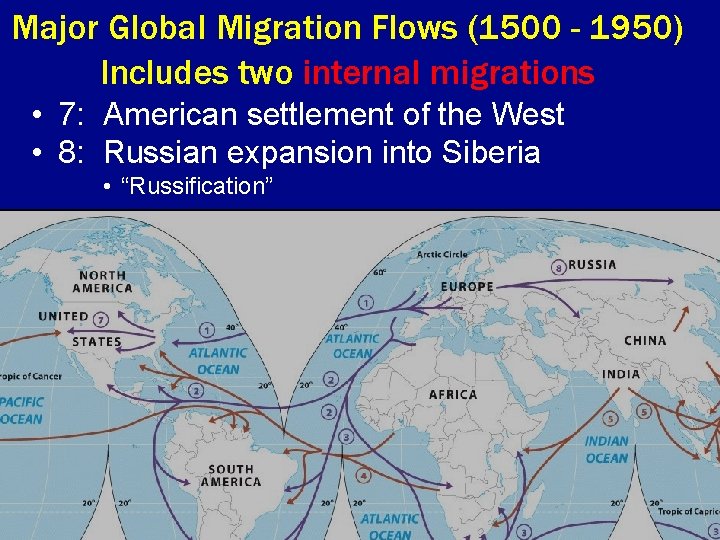
Major Global Migration Flows (1500 - 1950) Includes two internal migrations • 7: American settlement of the West • 8: Russian expansion into Siberia • “Russification”
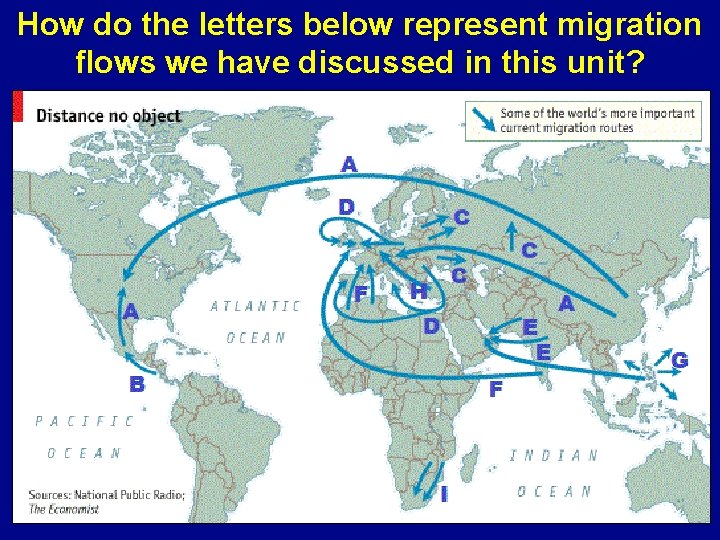
How do the letters below represent migration flows we have discussed in this unit?
- Slides: 20