
Migration Basic Questions Framework Vilm Semerk Ph D
Migration: Basic Questions & Framework Vilém Semerák, Ph. D. vilem. semerak@fsv. cuni. cz
Where is this text from? Give me your tired, your poor, Your huddled masses yearning to breathe free, The wretched refuse of your teeming shore. To spread the light of liberty world-wide for every land.
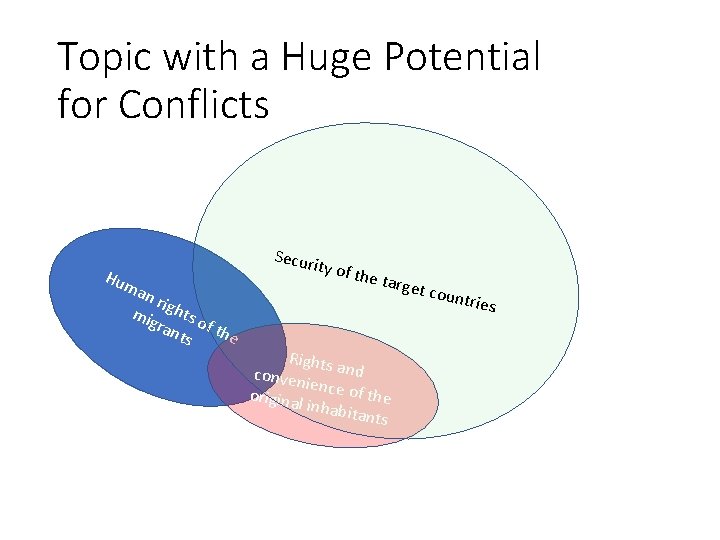
Topic with a Huge Potential for Conflicts Hu ma n ri mig ghts o f ran ts the Secur ity of the ta Rights a nd conven ience o ft origina l inhabi he tants rget c ountr ies
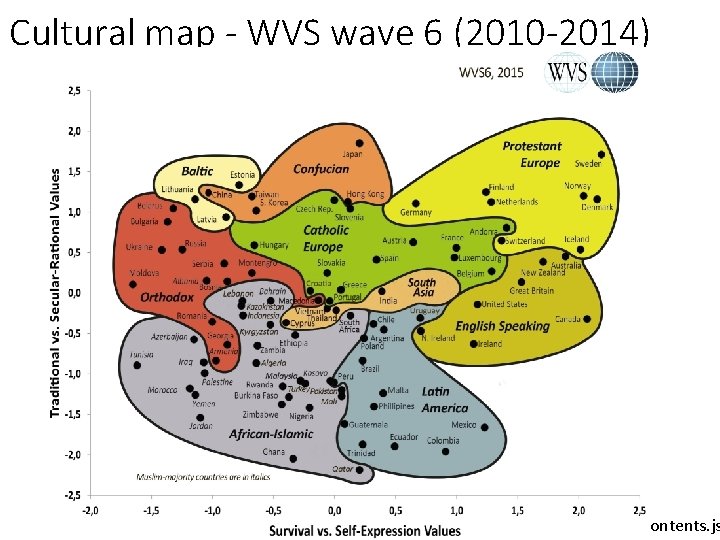
Cultural map - WVS wave 6 (2010 -2014) Source: http: //www. worldvaluessurvey. org/WVSContents. js
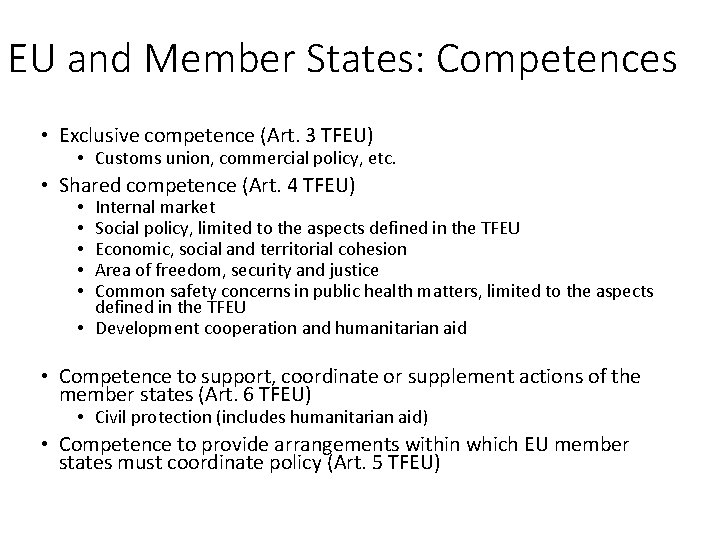
EU and Member States: Competences • Exclusive competence (Art. 3 TFEU) • Customs union, commercial policy, etc. • Shared competence (Art. 4 TFEU) Internal market Social policy, limited to the aspects defined in the TFEU Economic, social and territorial cohesion Area of freedom, security and justice Common safety concerns in public health matters, limited to the aspects defined in the TFEU • Development cooperation and humanitarian aid • • • Competence to support, coordinate or supplement actions of the member states (Art. 6 TFEU) • Civil protection (includes humanitarian aid) • Competence to provide arrangements within which EU member states must coordinate policy (Art. 5 TFEU)
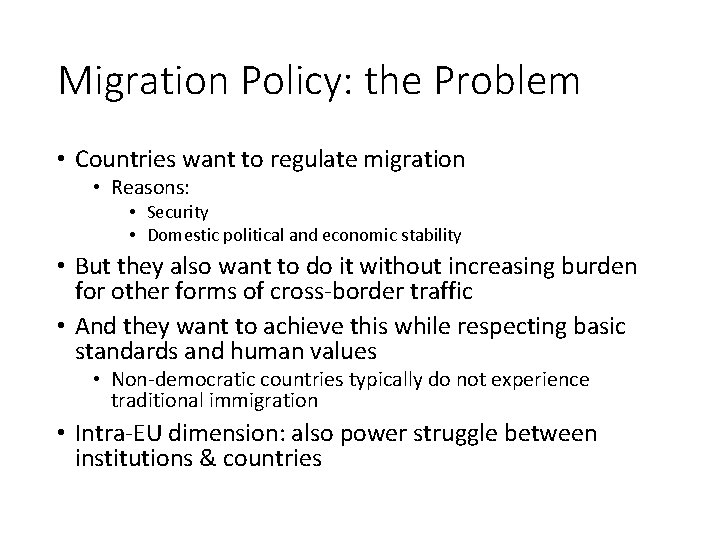
Migration Policy: the Problem • Countries want to regulate migration • Reasons: • Security • Domestic political and economic stability • But they also want to do it without increasing burden for other forms of cross-border traffic • And they want to achieve this while respecting basic standards and human values • Non-democratic countries typically do not experience traditional immigration • Intra-EU dimension: also power struggle between institutions & countries
Topics Shrouded in Many Half-truths and Myths • Implications: • Please, be factual! • Use reliable sources of data and arguments • We need to start discussing the topic systematically • Avoid ad hominem attacks, etc.
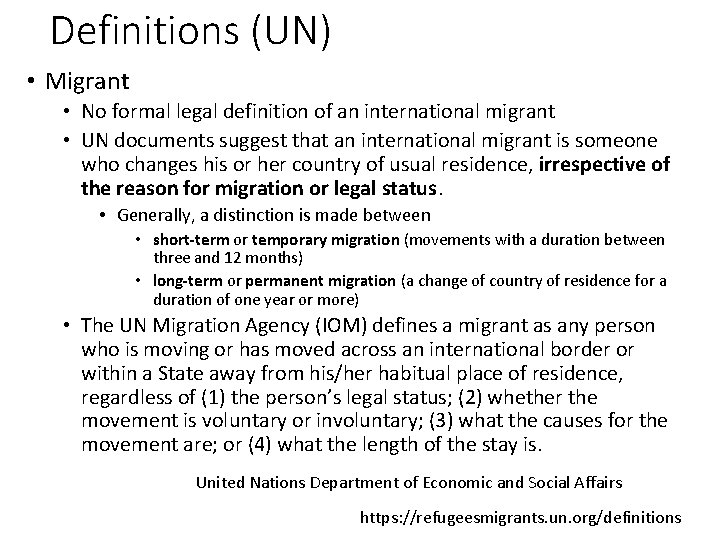
Definitions (UN) • Migrant • No formal legal definition of an international migrant • UN documents suggest that an international migrant is someone who changes his or her country of usual residence, irrespective of the reason for migration or legal status. • Generally, a distinction is made between • short-term or temporary migration (movements with a duration between three and 12 months) • long-term or permanent migration (a change of country of residence for a duration of one year or more) • The UN Migration Agency (IOM) defines a migrant as any person who is moving or has moved across an international border or within a State away from his/her habitual place of residence, regardless of (1) the person’s legal status; (2) whether the movement is voluntary or involuntary; (3) what the causes for the movement are; or (4) what the length of the stay is. United Nations Department of Economic and Social Affairs https: //refugeesmigrants. un. org/definitions
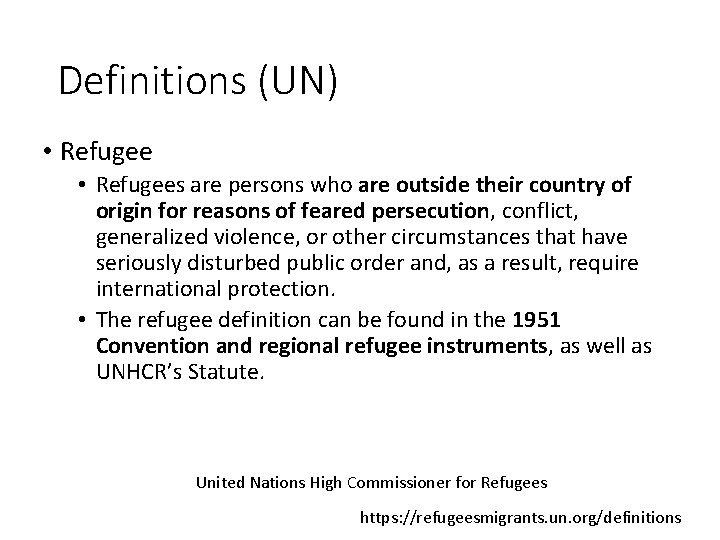
Definitions (UN) • Refugees are persons who are outside their country of origin for reasons of feared persecution, conflict, generalized violence, or other circumstances that have seriously disturbed public order and, as a result, require international protection. • The refugee definition can be found in the 1951 Convention and regional refugee instruments, as well as UNHCR’s Statute. United Nations High Commissioner for Refugees https: //refugeesmigrants. un. org/definitions
If you are not sure about meaning/context: • https: //www. iom. int/key-migration-terms
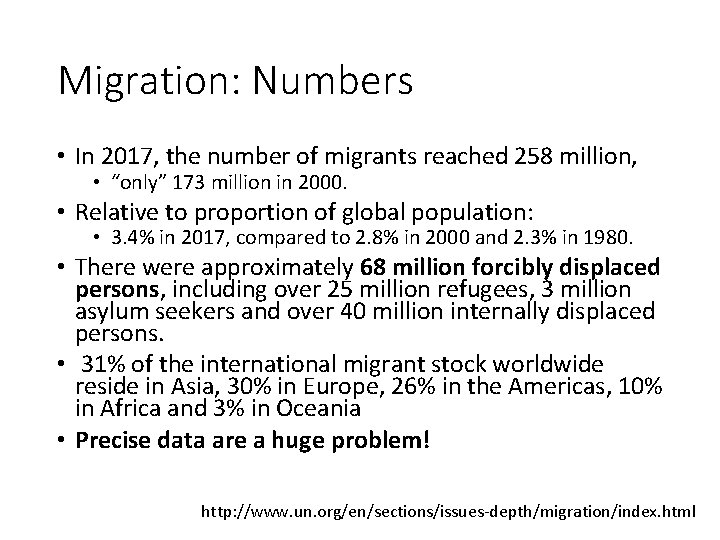
Migration: Numbers • In 2017, the number of migrants reached 258 million, • “only” 173 million in 2000. • Relative to proportion of global population: • 3. 4% in 2017, compared to 2. 8% in 2000 and 2. 3% in 1980. • There were approximately 68 million forcibly displaced persons, including over 25 million refugees, 3 million asylum seekers and over 40 million internally displaced persons. • 31% of the international migrant stock worldwide reside in Asia, 30% in Europe, 26% in the Americas, 10% in Africa and 3% in Oceania • Precise data are a huge problem! http: //www. un. org/en/sections/issues-depth/migration/index. html

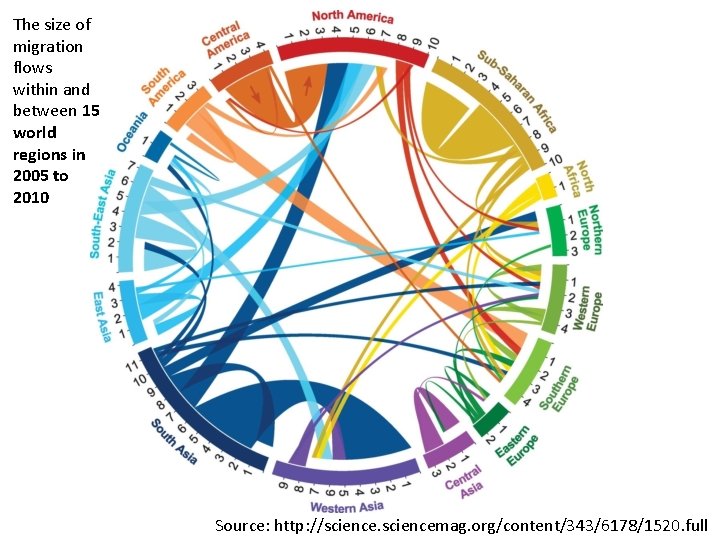
The size of migration flows within and between 15 world regions in 2005 to 2010 Source: http: //sciencemag. org/content/343/6178/1520. full
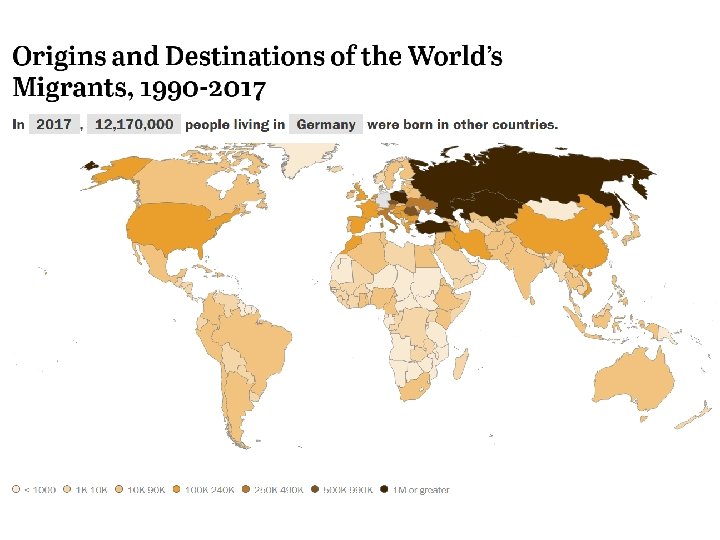
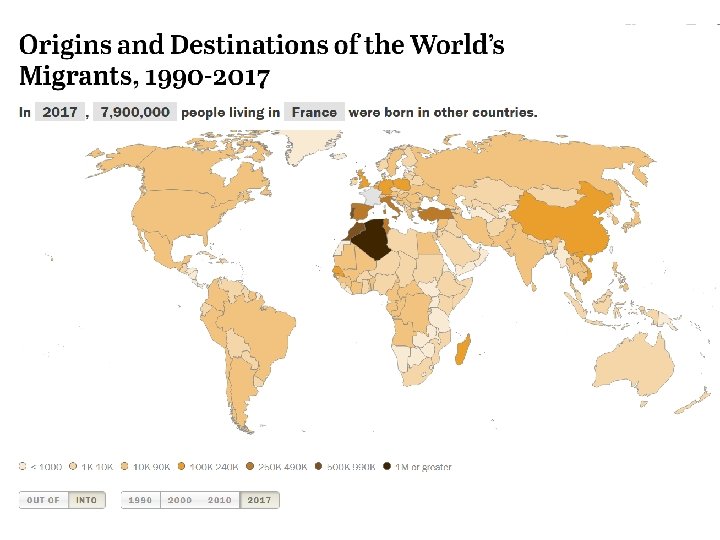
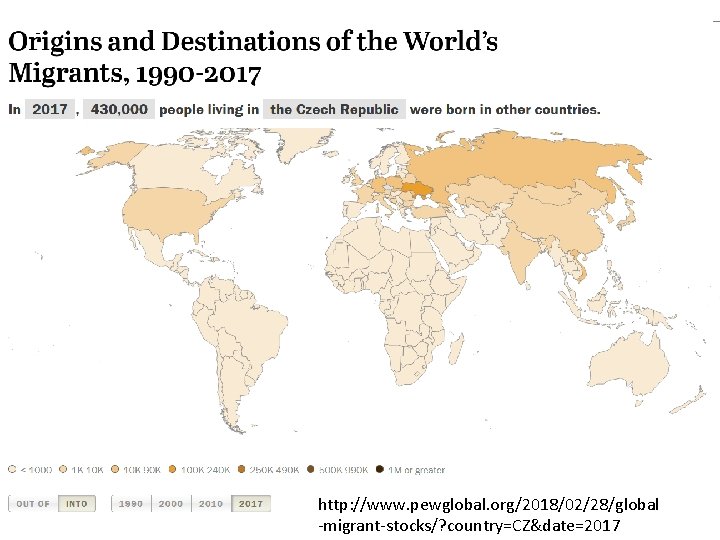
http: //www. pewglobal. org/2018/02/28/global -migrant-stocks/? country=CZ&date=2017
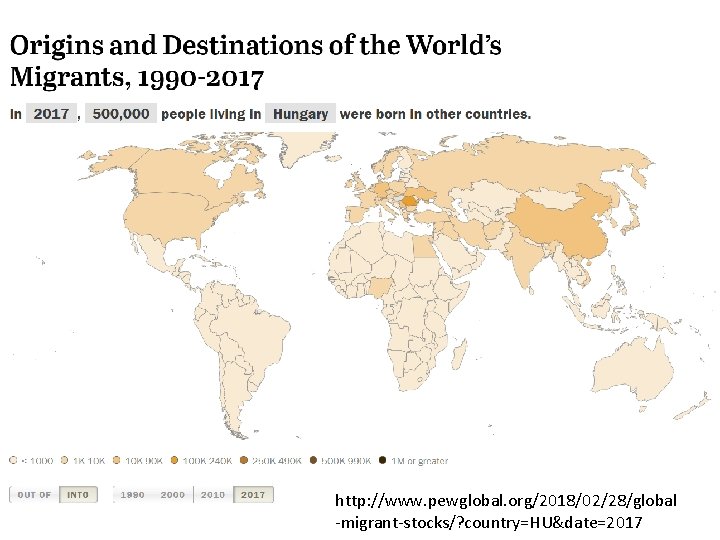
http: //www. pewglobal. org/2018/02/28/global -migrant-stocks/? country=HU&date=2017
Basic Framework • International law • EU level National level
The Right of Asylum • Ancient juridical concept • A person persecuted by one's own country may be protected by another sovereign authority, such as another country or a church official • This right was recognized by the Egyptians, the Greeks, and the Hebrews, from whom it was adopted into Western tradition: • René Descartes - the Netherlands • Voltaire - England • Thomas Hobbes - France
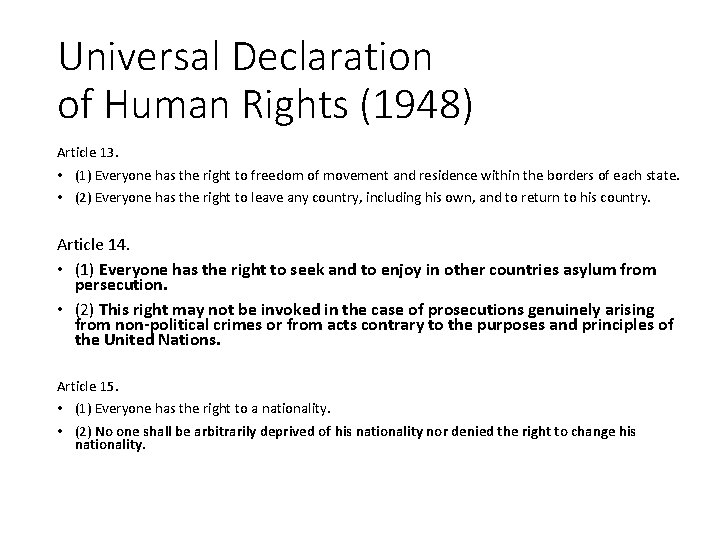
Universal Declaration of Human Rights (1948) Article 13. • (1) Everyone has the right to freedom of movement and residence within the borders of each state. • (2) Everyone has the right to leave any country, including his own, and to return to his country. Article 14. • (1) Everyone has the right to seek and to enjoy in other countries asylum from persecution. • (2) This right may not be invoked in the case of prosecutions genuinely arising from non-political crimes or from acts contrary to the purposes and principles of the United Nations. Article 15. • (1) Everyone has the right to a nationality. • (2) No one shall be arbitrarily deprived of his nationality nor denied the right to change his nationality.
Additional Documents • The 1951 Refugee Convention • Ratified by 145 State parties • Defines the term ‘refugee’ and outlines the rights of the displaced, as well as the legal obligations of States to protect them. • 2016: New York Declaration for Refugees and Migrants • 2018: The Global Compact on Refugees • 2018: The global compact for safe, orderly and regular migration • The Comprehensive Refugee Response Framework. • Documents with contents available at the moodle site
The Global Compact on Refugees • The Compact was affirmed by the member states of the UN General Assembly on 17 December 2018 in the annual resolution on the work of UNHCR. • The global compact on refugees aims to strengthen the international response to large movements of refugees and protracted refugee situations. • Its four key objectives are to: • • Ease the pressures on host countries; Enhance refugee self-reliance; Expand access to third-country solutions; Support conditions in countries of origin for return in safety and dignity.
Migration Compact • The compact: • Aims to mitigate the adverse drivers and structural factors that hinder people from building and maintaining sustainable livelihoods in their countries of origin; • Intends to reduce the risks and vulnerabilities migrants face at different stages of migration by respecting, protecting and fulfilling their human rights and providing them with care and assistance; • Seeks to address the legitimate concerns of states and communities, while recognizing that societies are undergoing demographic, economic, social and environmental changes at different scales that may have implications for and result from migration; • strives to create conducive conditions that enable all migrants to enrich our societies through their human, economic and social capacities, and thus facilitate their contributions to sustainable development at the local, national, regional and global levels. Source: https: //refugeesmigrants. un. org/migration-compact
Global and EU Level: Perspectives • State-centric approaches • Supranational solutions • Reality: • both immigration to and movement within Europe is now governed by a complex amalgam of institutions and processes operating on local, national, European, and international scales; • in short, European migration governance is a paradigm of ‘multilevel governance’ (Hooghe and Marks 2001).
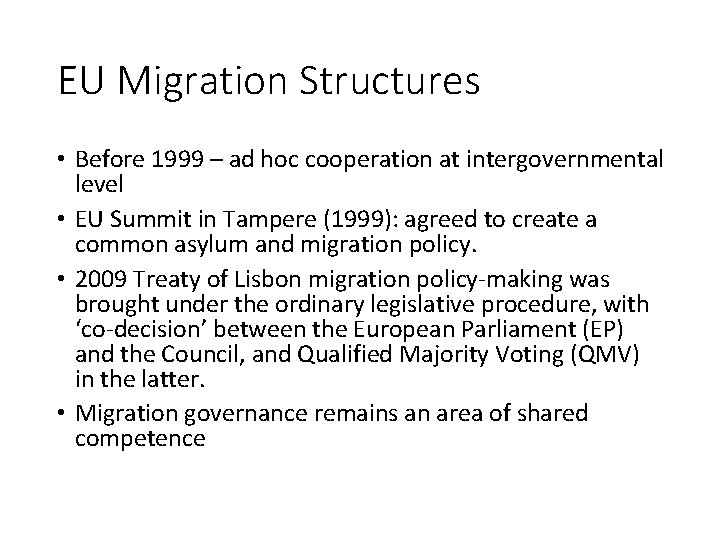
EU Migration Structures • Before 1999 – ad hoc cooperation at intergovernmental level • EU Summit in Tampere (1999): agreed to create a common asylum and migration policy. • 2009 Treaty of Lisbon migration policy-making was brought under the ordinary legislative procedure, with ‘co-decision’ between the European Parliament (EP) and the Council, and Qualified Majority Voting (QMV) in the latter. • Migration governance remains an area of shared competence
• More details: • Hampshire (2016): European migration governance since the Lisbon treaty: introduction to the special issue. • Provided at Moodle
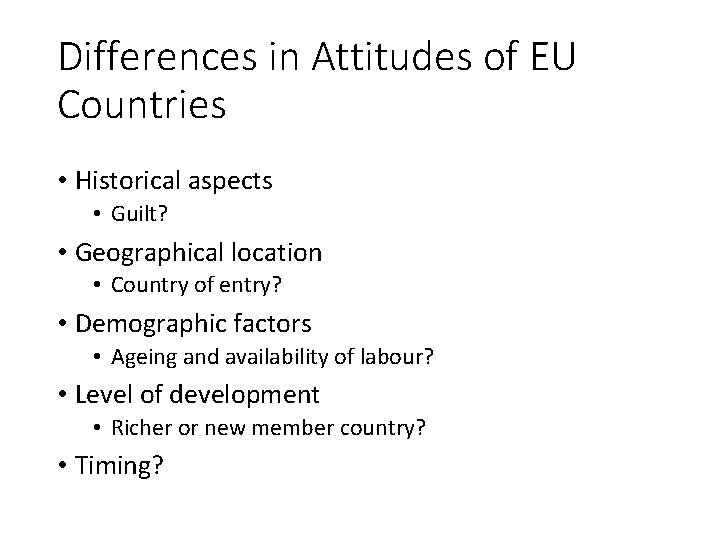
Differences in Attitudes of EU Countries • Historical aspects • Guilt? • Geographical location • Country of entry? • Demographic factors • Ageing and availability of labour? • Level of development • Richer or new member country? • Timing?
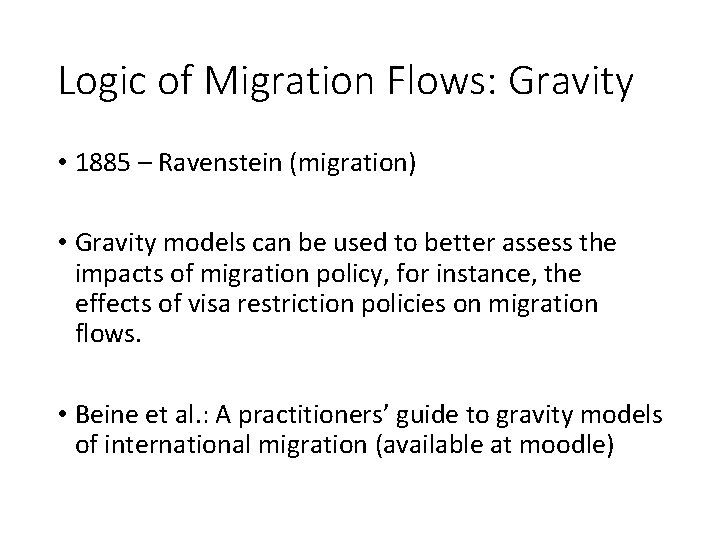
Logic of Migration Flows: Gravity • 1885 – Ravenstein (migration) • Gravity models can be used to better assess the impacts of migration policy, for instance, the effects of visa restriction policies on migration flows. • Beine et al. : A practitioners’ guide to gravity models of international migration (available at moodle)
What next? • Next week we will discuss: • Economic models • Migration flows and their sensitivity: gravity model • Economic effects of economic migration • Cultural differences between nations • How much different are we?
References • Hill – chapter 12 Managing Cultural Differences • Pew data on migration http: //www. pewglobal. org/2018/02/28/global-migrant -stocks/? country=HU&date=2017 • Universal Declaration of Human Rights • https: //refugeesmigrants. un. org/definitions • Hampshire (2016): European migration governance since the Lisbon treaty: introduction to the special issue. JOURNAL OF ETHNIC AND MIGRATION STUDIES, 2016 VOL. 42, NO. 4, 537– 553 • Global compact for migration - draft
- Slides: 31