
Migration and Navigation Migration examples Navigational strategies Piloting
- Slides: 29
Migration and Navigation • Migration examples • Navigational strategies – Piloting – Path integration – Compass orientation • Navigational mechanisms – Compass cues
Why migrate? • Increase availability of food • Avoid cold weather • Decrease risk of predation on juveniles
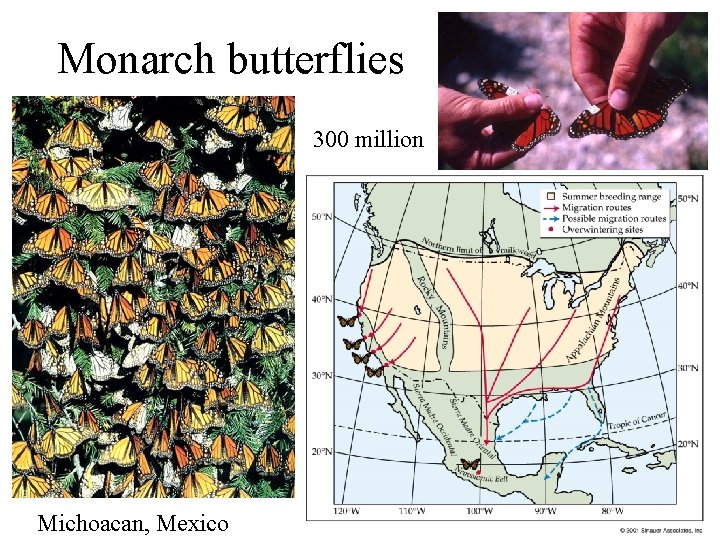
Monarch butterflies 300 million Michoacan, Mexico
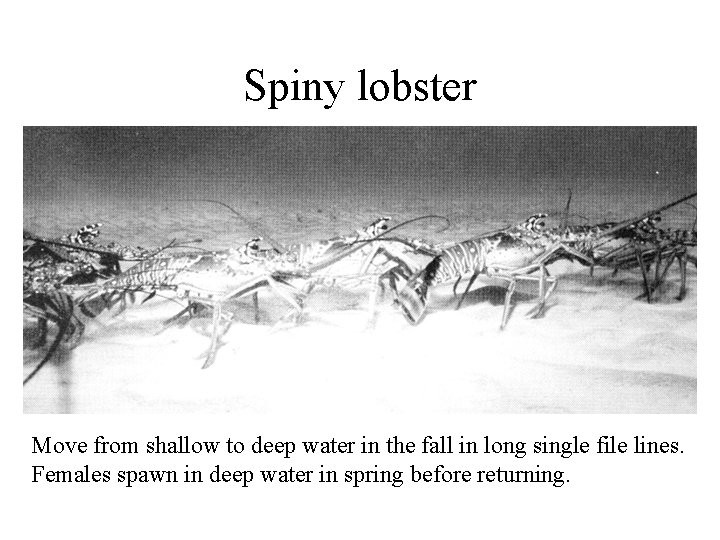
Spiny lobster Move from shallow to deep water in the fall in long single file lines. Females spawn in deep water in spring before returning.
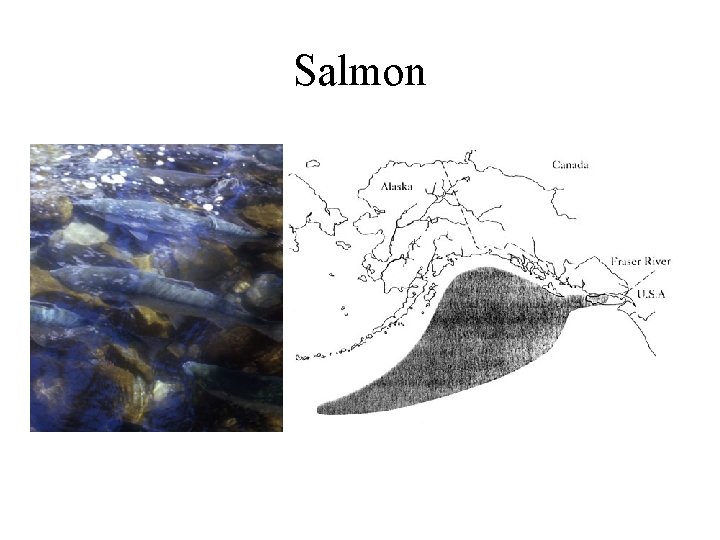
Salmon
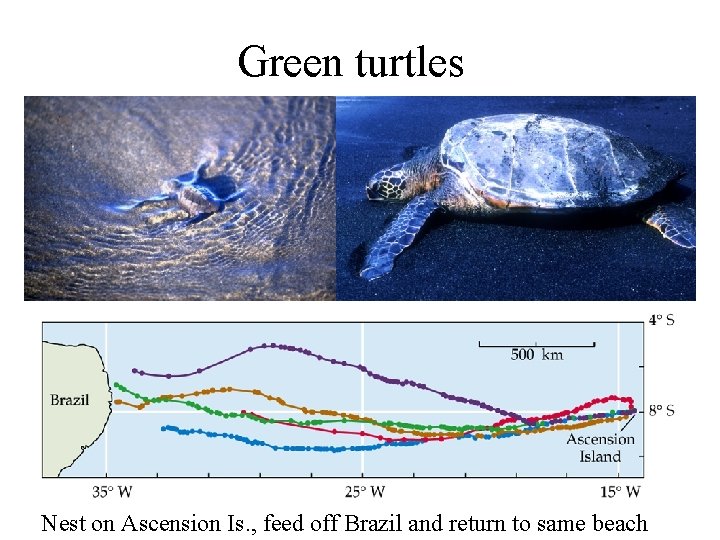
Green turtles Nest on Ascension Is. , feed off Brazil and return to same beach
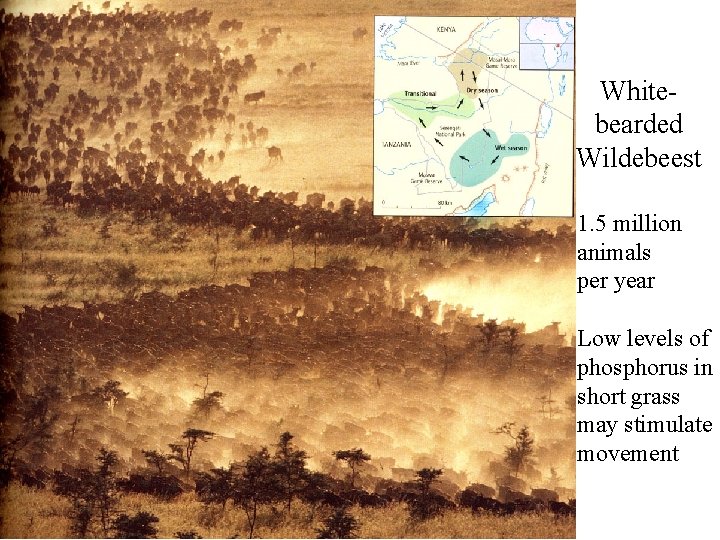
Whitebearded Wildebeest 1. 5 million animals per year Low levels of phosphorus in short grass may stimulate movement
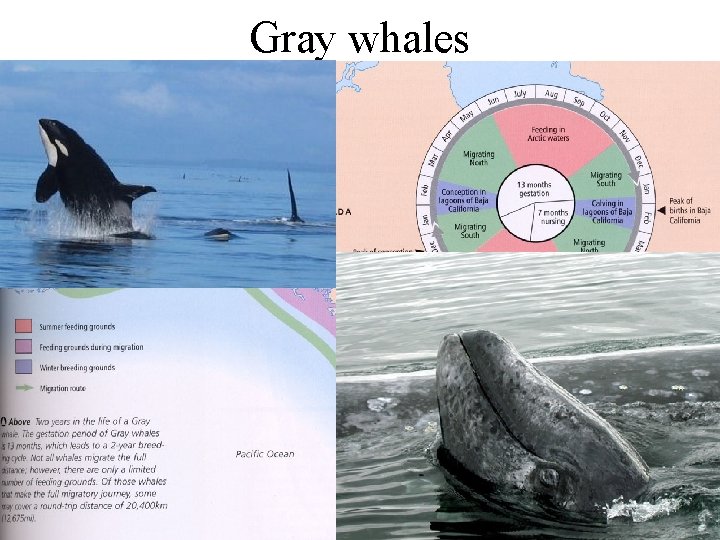
Gray whales
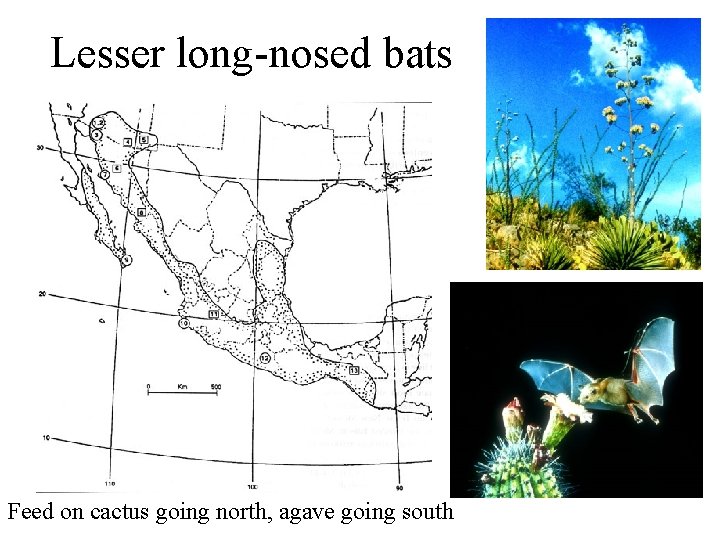
Lesser long-nosed bats Feed on cactus going north, agave going south
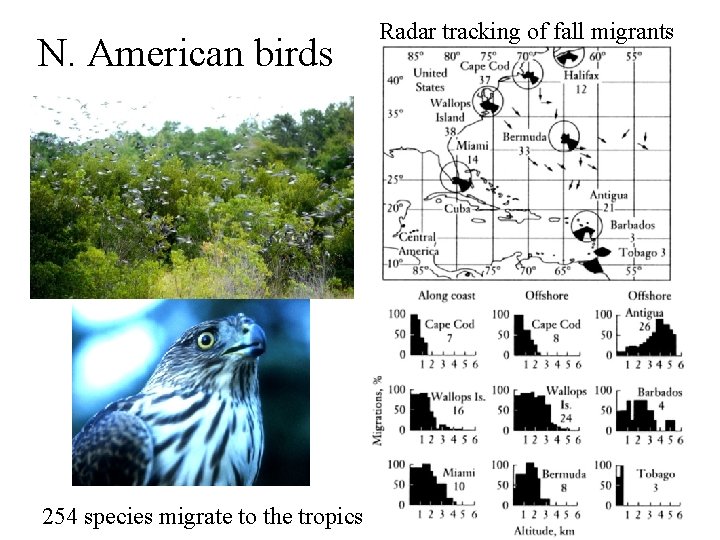
N. American birds 254 species migrate to the tropics Radar tracking of fall migrants
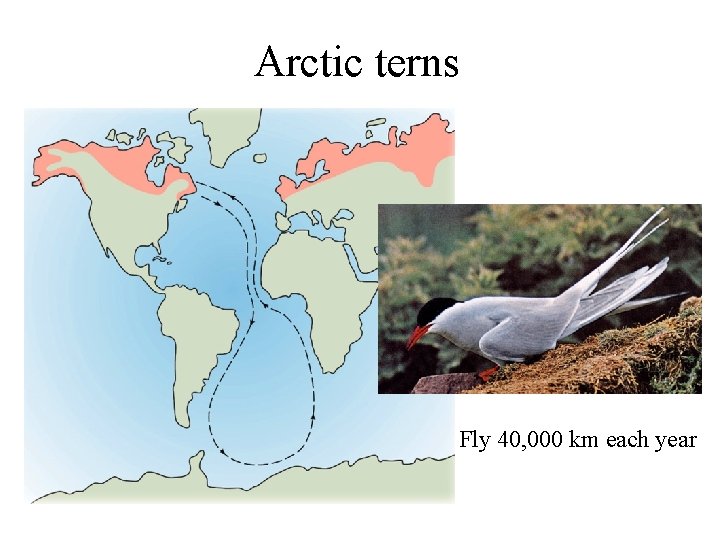
Arctic terns Fly 40, 000 km each year
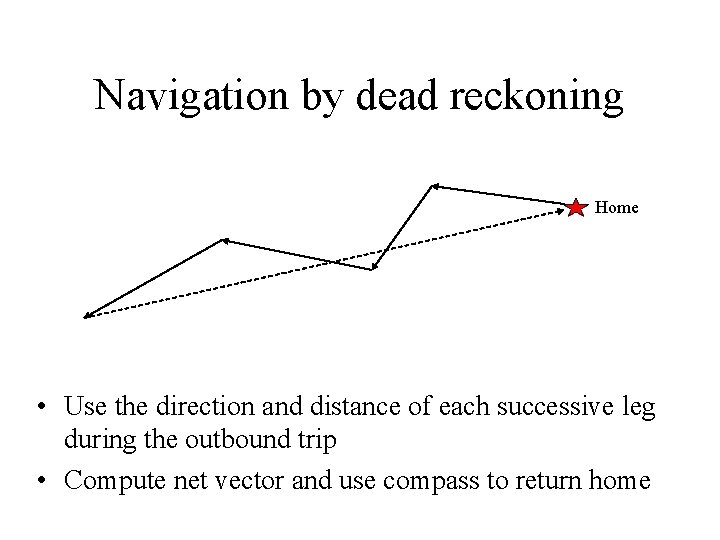
Navigational strategies • Piloting – Use landmark to locate goal (nest, etc. ) • Path integration (dead reckoning) – compute net vector by integrating distance traveled with compass direction – Accumulates errors, only good for short distances • Compass orientation – follow compass heading to goal or landmark • True navigation – Use compass and map (cognitive) to plot route
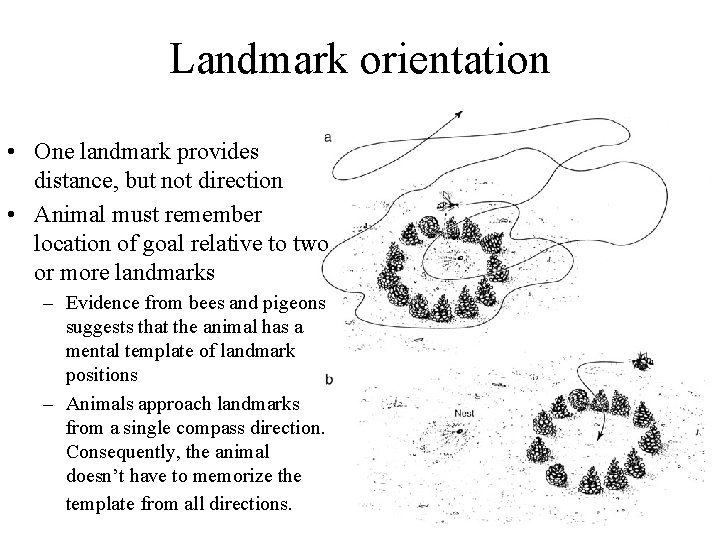
Landmark orientation • One landmark provides distance, but not direction • Animal must remember location of goal relative to two or more landmarks – Evidence from bees and pigeons suggests that the animal has a mental template of landmark positions – Animals approach landmarks from a single compass direction. Consequently, the animal doesn’t have to memorize the template from all directions.
Navigation by dead reckoning Home • Use the direction and distance of each successive leg during the outbound trip • Compute net vector and use compass to return home
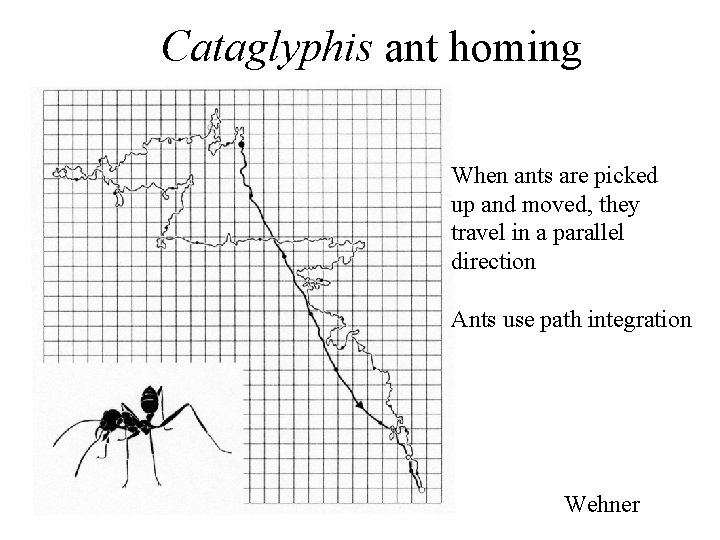
Cataglyphis ant homing When ants are picked up and moved, they travel in a parallel direction Ants use path integration Wehner
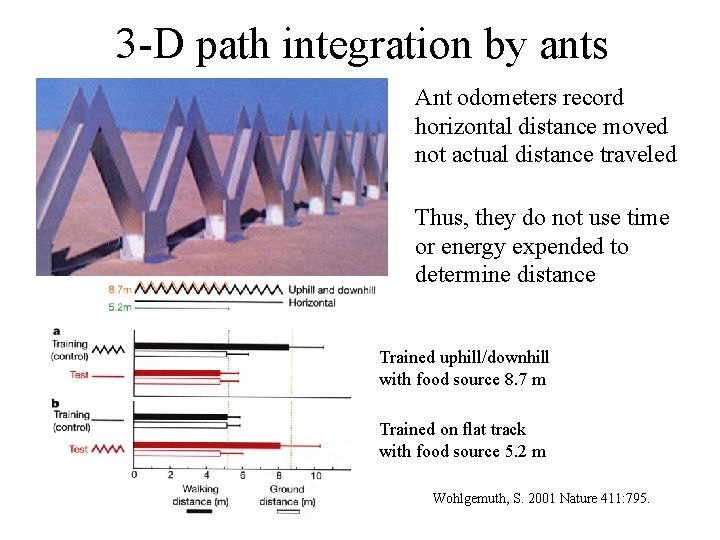
3 -D path integration by ants Ant odometers record horizontal distance moved not actual distance traveled Thus, they do not use time or energy expended to determine distance Trained uphill/downhill with food source 8. 7 m Trained on flat track with food source 5. 2 m Wohlgemuth, S. 2001 Nature 411: 795.
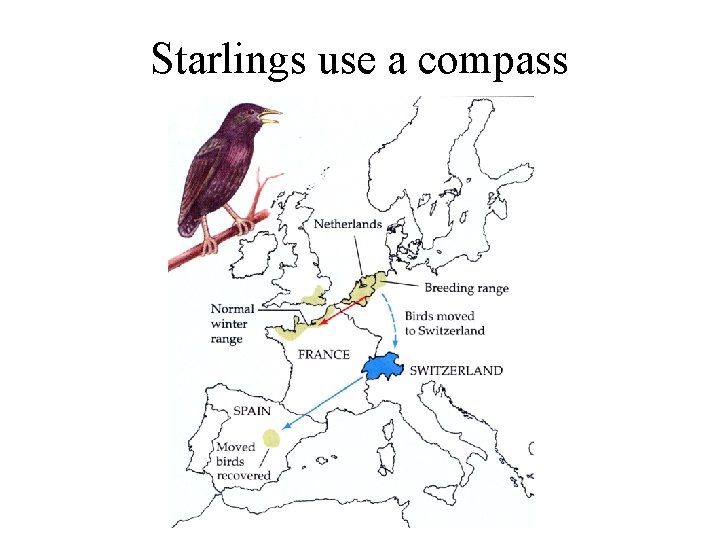
Starlings use a compass
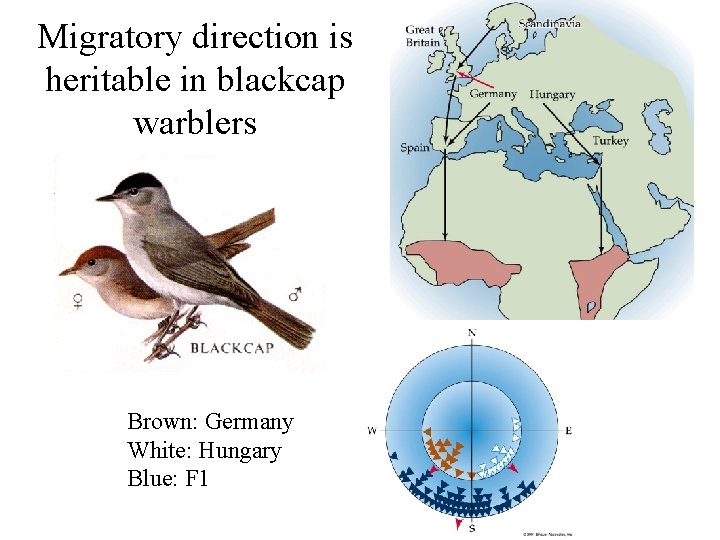
Migratory direction is heritable in blackcap warblers Brown: Germany White: Hungary Blue: F 1
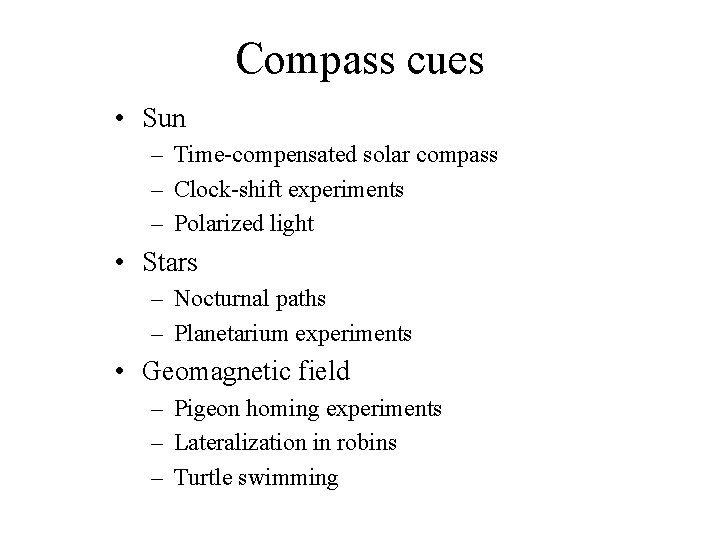
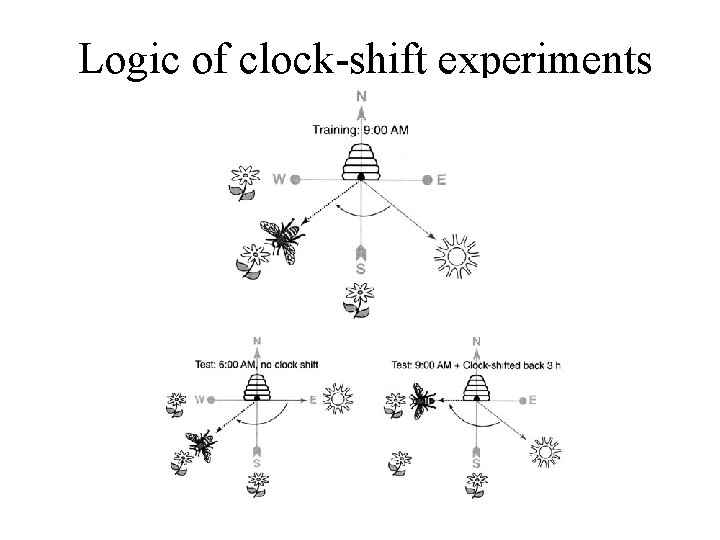
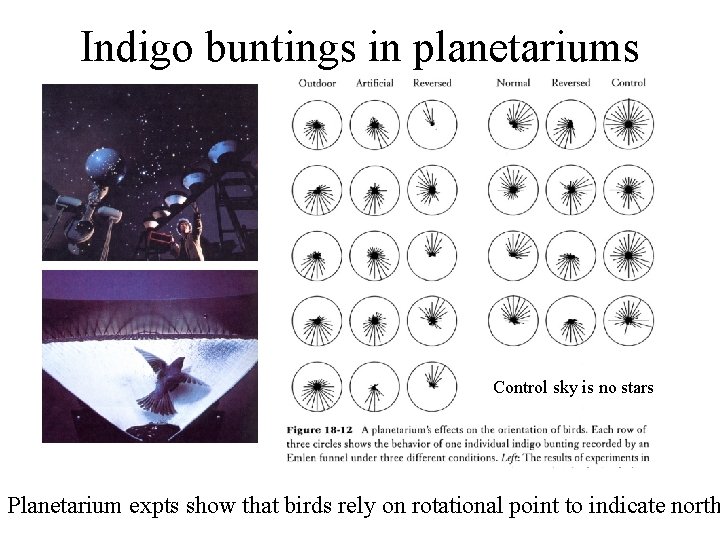
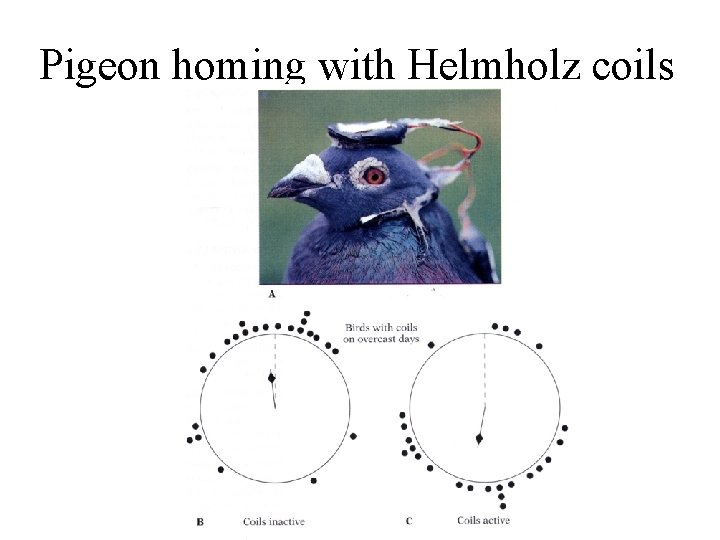
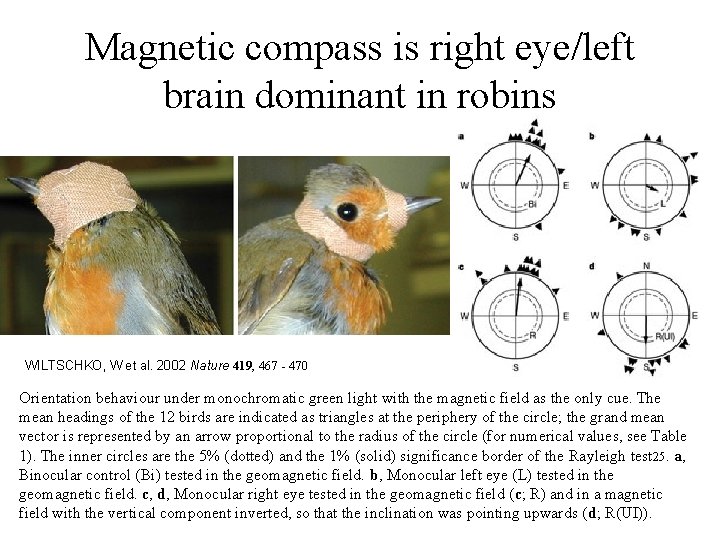
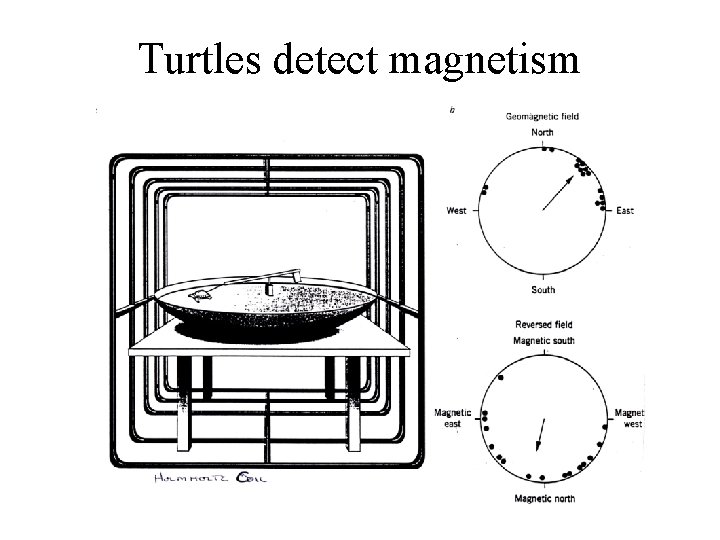
Compass cues • Sun – Time-compensated solar compass – Clock-shift experiments – Polarized light • Stars – Nocturnal paths – Planetarium experiments • Geomagnetic field – Pigeon homing experiments – Lateralization in robins – Turtle swimming
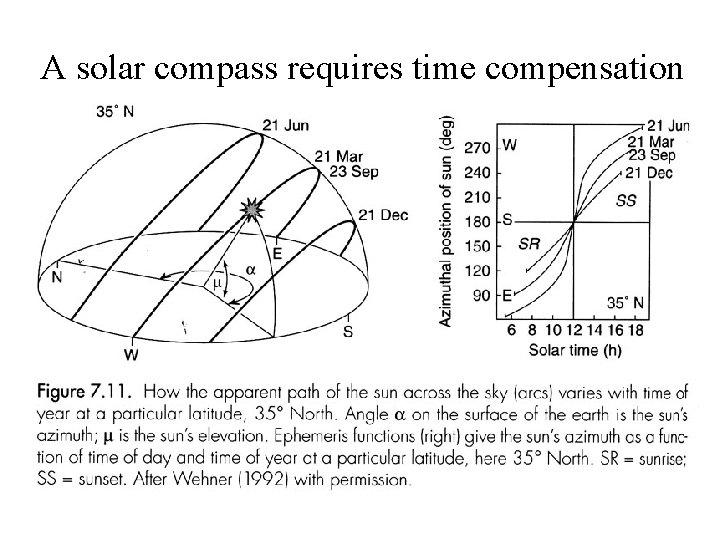
A solar compass requires time compensation
Logic of clock-shift experiments
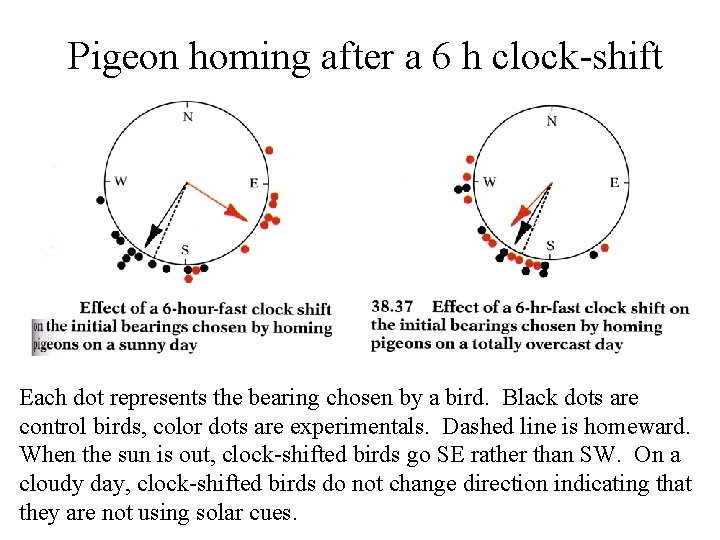
Pigeon homing after a 6 h clock-shift Each dot represents the bearing chosen by a bird. Black dots are control birds, color dots are experimentals. Dashed line is homeward. When the sun is out, clock-shifted birds go SE rather than SW. On a cloudy day, clock-shifted birds do not change direction indicating that they are not using solar cues.
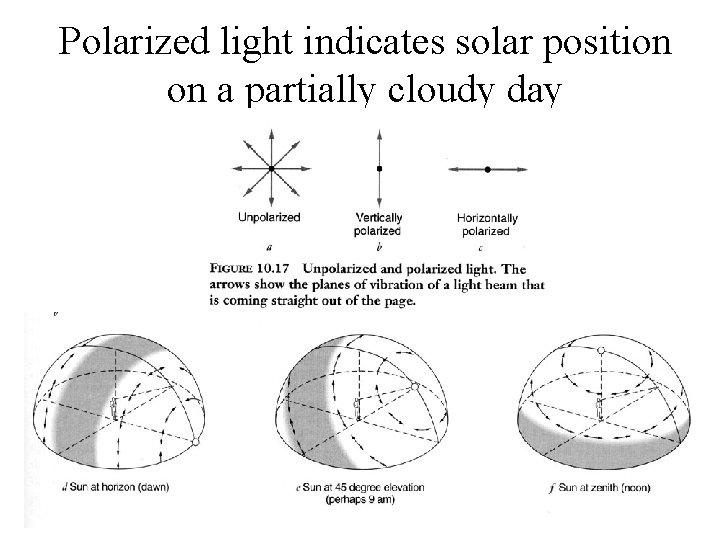
Polarized light indicates solar position on a partially cloudy day
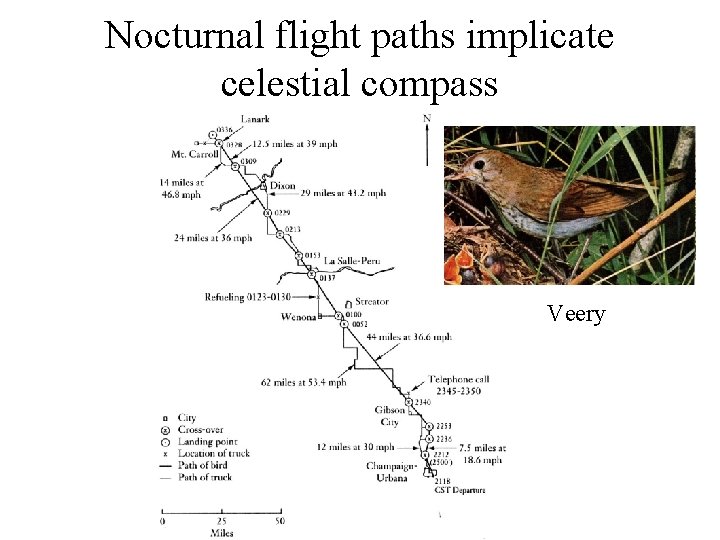
Nocturnal flight paths implicate celestial compass Veery
Indigo buntings in planetariums Control sky is no stars Planetarium expts show that birds rely on rotational point to indicate north
Pigeon homing with Helmholz coils
Magnetic compass is right eye/left brain dominant in robins WILTSCHKO, W et al. 2002 Nature 419, 467 - 470 Orientation behaviour under monochromatic green light with the magnetic field as the only cue. The mean headings of the 12 birds are indicated as triangles at the periphery of the circle; the grand mean vector is represented by an arrow proportional to the radius of the circle (for numerical values, see Table 1). The inner circles are the 5% (dotted) and the 1% (solid) significance border of the Rayleigh test 25. a, Binocular control (Bi) tested in the geomagnetic field. b, Monocular left eye (L) tested in the geomagnetic field. c, d, Monocular right eye tested in the geomagnetic field (c; R) and in a magnetic field with the vertical component inverted, so that the inclination was pointing upwards (d; R(UI)).
Turtles detect magnetism
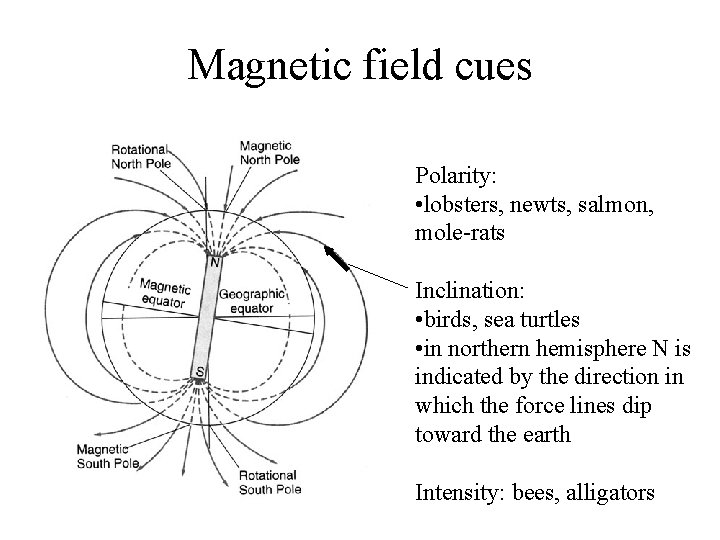
Magnetic field cues Polarity: • lobsters, newts, salmon, mole-rats Inclination: • birds, sea turtles • in northern hemisphere N is indicated by the direction in which the force lines dip toward the earth Intensity: bees, alligators