
Migration Analysis Impacts on Host and Receiving Countries

- Slides: 16
Migration Analysis Impacts on Host and Receiving Countries Holy Cross College Geography Form 6 Wednesday 16/10/14
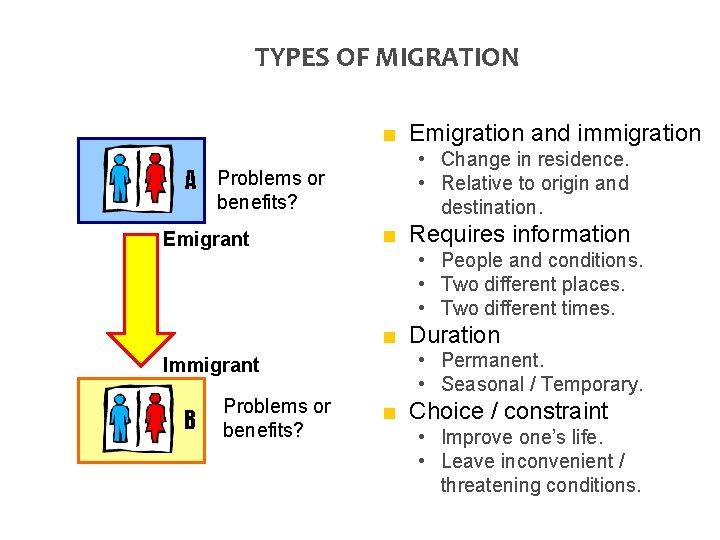
TYPES OF MIGRATION ■ Emigration and immigration A Problems or benefits? Emigrant • Change in residence. • Relative to origin and destination. ■ Requires information • People and conditions. • Two different places. • Two different times. ■ Duration Immigrant B Problems or benefits? • Permanent. • Seasonal / Temporary. ■ Choice / constraint • Improve one’s life. • Leave inconvenient / threatening conditions.
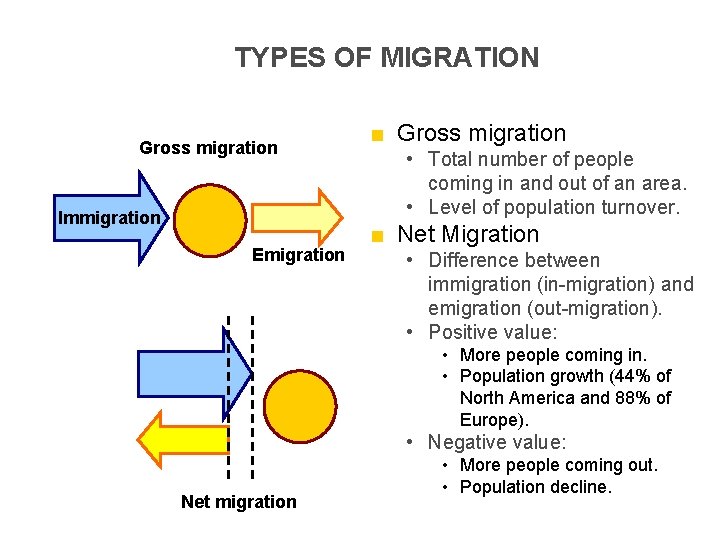
TYPES OF MIGRATION Gross migration Immigration Emigration ■ Gross migration • Total number of people coming in and out of an area. • Level of population turnover. ■ Net Migration • Difference between immigration (in-migration) and emigration (out-migration). • Positive value: • More people coming in. • Population growth (44% of North America and 88% of Europe). • Negative value: Net migration • More people coming out. • Population decline.
TYPES OF MIGRATION ■ International Migration • • • Emigration is an indicator of economic and/or social conditions of a society. Crossing of a national boundary. Easier to control and monitor. Laws to control / inhibit these movements. Between 2 million and 3 million people emigrate each year. In 2013, the number of international migrants worldwide reached 232 million, up from 175 million in 2000 and 154 million in 1990 . ■ Internal Migration • • • Within one country. Crossing domestic jurisdictional boundaries. Movements between states or provinces. Little government control. Factors: • Employment-based. • Retirement-based. • Education-based. • Civil conflicts (internally displaced population).
TYPES OF MIGRATION ■ Voluntary migration • The migrant makes the decision to move. • Most migration is voluntary. ■ Involuntary • Forced migration in which the mover has no role in the decision-making process. For example: • Transatlantic Slave trade • Refugees. • Military conscription. • Children of migrants. • Situations of divorce or separation.
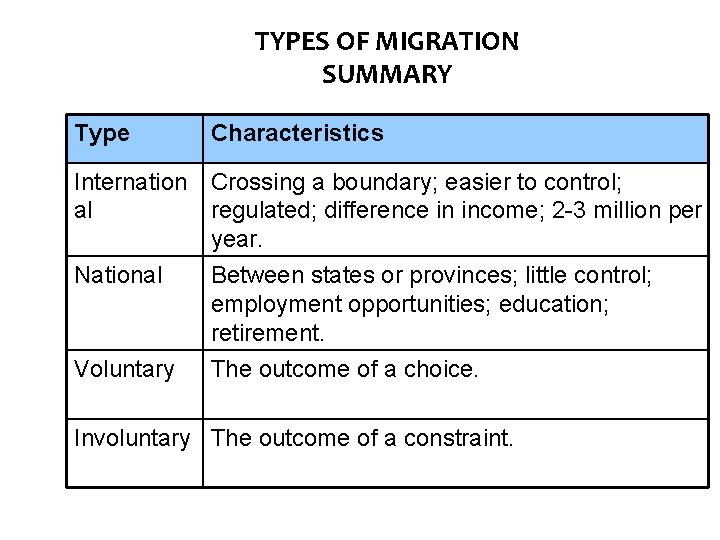
TYPES OF MIGRATION SUMMARY Type Characteristics Internation Crossing a boundary; easier to control; al regulated; difference in income; 2 -3 million per year. National Between states or provinces; little control; employment opportunities; education; retirement. Voluntary The outcome of a choice. Involuntary The outcome of a constraint.
Consequences Of Migration On The Country Of Origin (Source Country)
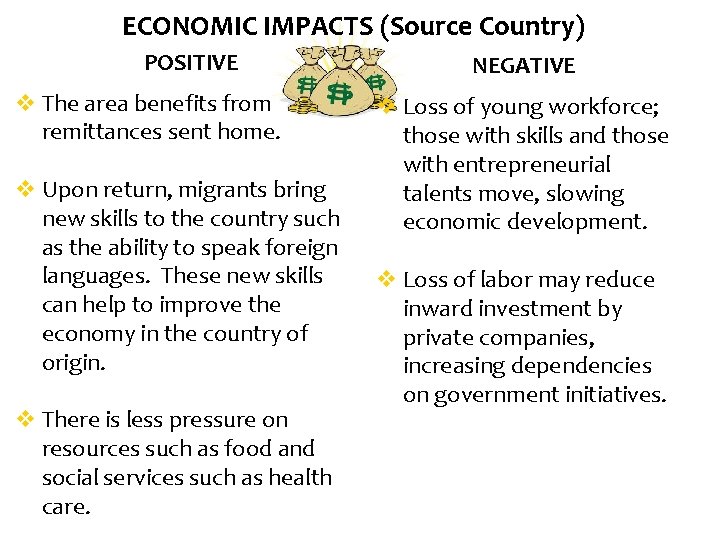
ECONOMIC IMPACTS (Source Country) POSITIVE v The area benefits from remittances sent home. v Upon return, migrants bring new skills to the country such as the ability to speak foreign languages. These new skills can help to improve the economy in the country of origin. v There is less pressure on resources such as food and social services such as health care. NEGATIVE v Loss of young workforce; those with skills and those with entrepreneurial talents move, slowing economic development. v Loss of labor may reduce inward investment by private companies, increasing dependencies on government initiatives.
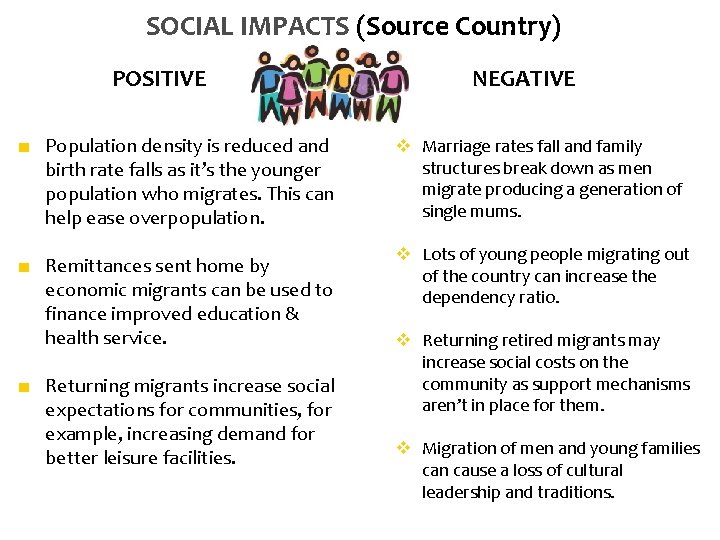
SOCIAL IMPACTS (Source Country) POSITIVE ■ Population density is reduced and birth rate falls as it’s the younger population who migrates. This can help ease overpopulation. ■ Remittances sent home by economic migrants can be used to finance improved education & health service. ■ Returning migrants increase social expectations for communities, for example, increasing demand for better leisure facilities. NEGATIVE v Marriage rates fall and family structures break down as men migrate producing a generation of single mums. v Lots of young people migrating out of the country can increase the dependency ratio. v Returning retired migrants may increase social costs on the community as support mechanisms aren’t in place for them. v Migration of men and young families can cause a loss of cultural leadership and traditions.
POLITICAL IMPACTS (Source Country) ■ Policies to encourage natural increase can be developed. ■ Policies to encourage immigration to counteract outflow. ■ Requests for international aid.
Consequences Of Migration On the Host Country (Receiving Country)
ECONOMIC IMPACTS (Receiving Country) POSITIVE NEGATIVE v Migrants take up less desirable, menial jobs which natives would not take but need filling. v Migrant children must be educated, they won’t necessarily speak the native language of the host country. v The host country can gain skilled labour for cheap. v There is an over dependency in some industries on migrant labour, leading to a lack of jobs for people native to the host country. v There is a labour surplus; those with skills and education fuel the economy. v The “skill gap” in many host countries can be filled by migrants. v Costs of retirement can be transferred to the country of origin. v Much of the money earned by the migrants isn’t spent in the host country and is instead sent back to the country of origin. v More people increase the pressure on resources and services such as health care systems.
SOCIAL IMPACTS (Source Country) POSITIVE ■ The creation of a multiethnic society increases understanding and tolerance of other cultures. ■ There is an influx of new or revitalized services e. g. Kebab shops & Turkish baths. ■ People from other countries can encourage the learning of new languages, helping people develop skills for working internationally. NEGATIVE ■ The dominance of males is reinforced (due to the large number of male migrants), especially in cultures where women already have a low status. ■ Aspects of cultural identity are lost, especially in second generation children. ■ Segregated ethnic areas are created e. g. China Town. Schools become dominated by migrant children.
POLITICAL IMPACTS (Source Country) ■ Discrimination against ethnic groups & minorities which can lead to civil unrest and extremism. ■ Calls for control on immigration. ■ Entrenchment of attitudes which may encourage fundamentalism.
ACTIVITY ■ You are to conduct additional research on the Consequences Of Migration On the country of origin (Source) and Host Country (Receiving Country) ■ Peruse ALL available resources ( including the handout provided) to make all notes in your NOTEBOOKS ■ I have given you an OVERVIEW of the main points. When writing your OWN notes, categorize the impacts for both INTERNAL and INTERNATIONAL migration on both SOURCE and HOST countries ■ Due : Tuesday 21 st October, 2014
ESSAY ■ Assess the economic impact and social impact of international migration on an area of origin and an area of destination. Include at least 3 points for EACH impact on EACH area (18 marks) ■ Due : Friday 24 th October, 2014