
MIFP March Meeting 2017 Thursday 9 March 2017
![ester bond The bond made from hydroxyl (-ΟΗ) of an alcohol [or sugar] and](https://slidetodoc.com/presentation_image_h/15e66e9b034c54e5384862f3523ecc06/image-12.jpg "ester bond The bond made from hydroxyl (-ΟΗ) of an alcohol [or sugar] and")
- Slides: 87
MIFP March Meeting 2017 Thursday 9 March 2017, 10: 00 -10: 30 Dubium sapientiae initium. Memento audere semper. Charge transfer - THz oscillations in DNA segments Constantinos Simserides National and Kapodistrian University of Athens (aka University of Athens), Department of Physics, Greece http: //www. phys. uoa. gr Κόμης Ιωάννης Καποδίστριας (граф Иоанн Каподистрия, Conte Giovanni Capodistria) 1 st Governor of Modern Greece
Physics of nanostructures and biomaterials http: //users. uoa. gr/~csimseri/physics_of_nanostructures_and_biomaterials. html Constantinos Simserides, B. Sc. , Ph. D. , Assistant Professor of Theoretical Solid State Physics Maria Tassi, B. Sc. , M. Sc, Ph. D. , post-doctoral researcher Andreas Morfis, B. Sc. , M. Sc. , Ph. D. student Konstantinos Lambropoulos, B. Sc. , M. Sc. , Ph. D. student Georgios Georgiadis, B. Sc. , M. Sc. Christina Zacharaki, B. Sc. , M. Sc. Konstantinos Kaklamanis, B. Sc. , M. Sc. student Marilena Mantela, B. Sc. , M. Sc. student Marina Theodorakou, M. Sc. Student Maria Chatzieleftheriou, B. Sc. , (now M. Sc. Student at the University of Copenhagen) Richard Lopp (RISE Student from Georg-August-Universität Göttingen, Fakultät für Physik, Germany => now M. Sc. Student at Perimeter Institute, Canada) Biophysics Spintronics Quantum Optics (in low-dimensional structures) Charge Transport, Thermodynamics, Subband structure (in low-dimensional structures) Ab initio
Contents 1) Introduction to DNA 2) Three approaches 3) Monomers 4) Dimers 5) Trimers 6) Polymers 7) Conclusion
Title 1. Introduction to DNA
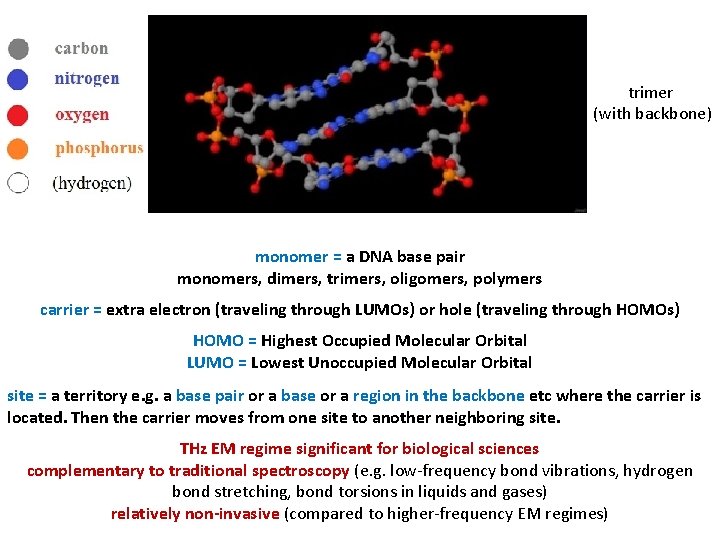
Title trimer (with backbone) monomer = a DNA base pair monomers, dimers, trimers, oligomers, polymers carrier = extra electron (traveling through LUMOs) or hole (traveling through HOMOs) HOMO = Highest Occupied Molecular Orbital LUMO = Lowest Unoccupied Molecular Orbital site = a territory e. g. a base pair or a base or a region in the backbone etc where the carrier is located. Then the carrier moves from one site to another neighboring site. THz EM regime significant for biological sciences complementary to traditional spectroscopy (e. g. low-frequency bond vibrations, hydrogen bond stretching, bond torsions in liquids and gases) relatively non-invasive (compared to higher-frequency EM regimes)
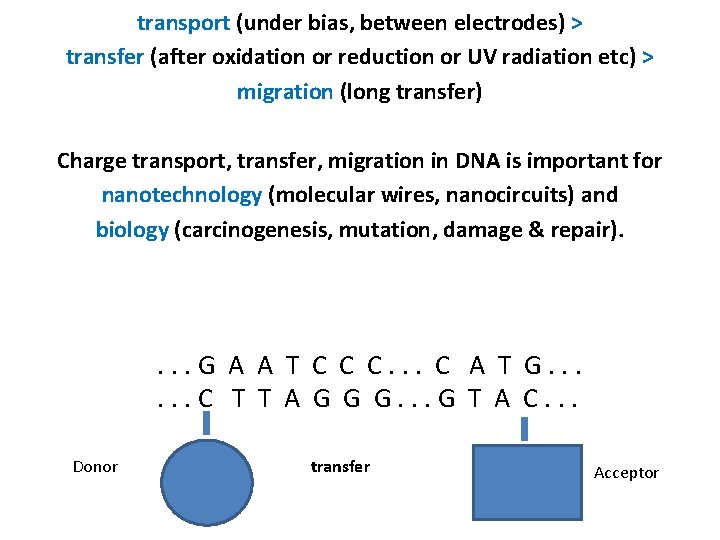
transport (under bias, between electrodes) > transfer (after oxidation or reduction or UV radiation etc) > migration (long transfer) Charge transport, transfer, migration in DNA is important for nanotechnology (molecular wires, nanocircuits) and biology (carcinogenesis, mutation, damage & repair). . G A A T C C C. . . C A T G. . . . C T T A G G G. . . G T A C. . . Donor transfer Acceptor
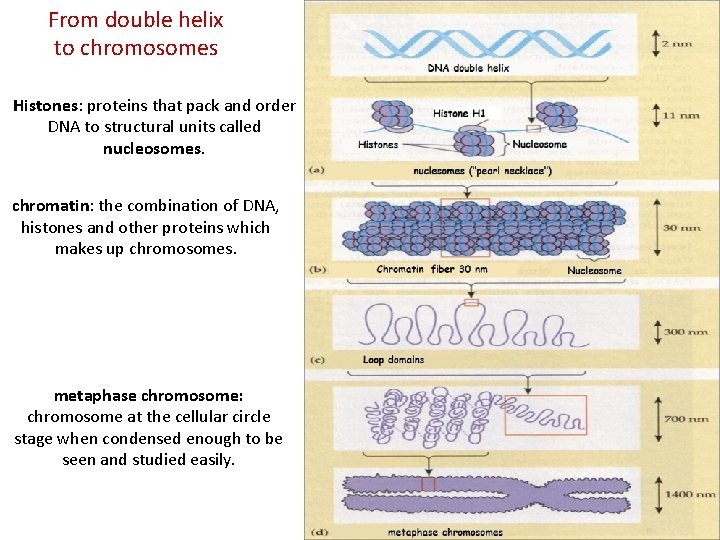
From double helix to chromosomes Histones: proteins that pack and order DNA to structural units called nucleosomes. chromatin: the combination of DNA, histones and other proteins which makes up chromosomes. metaphase chromosome: chromosome at the cellular circle stage when condensed enough to be seen and studied easily.
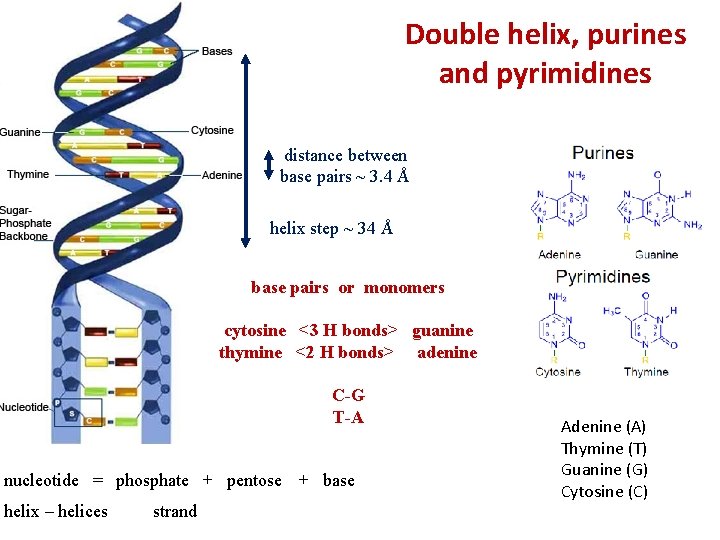
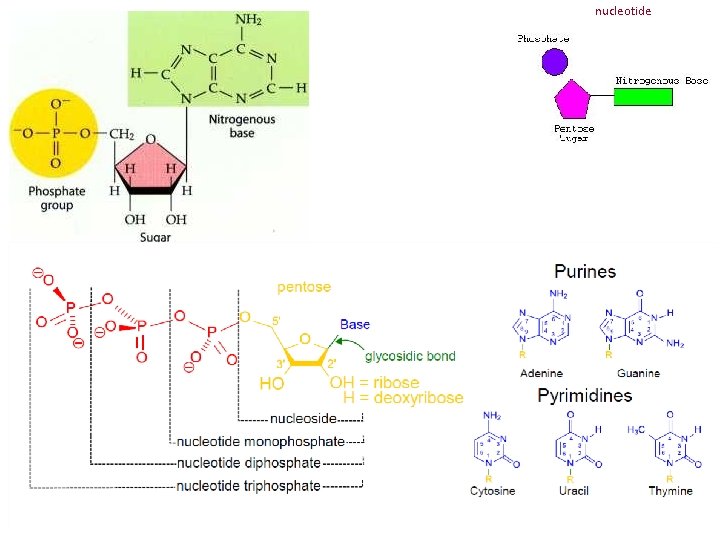
Double helix, purines and pyrimidines distance between base pairs ~ 3. 4 Å helix step ~ 34 Å base pairs or monomers cytosine <3 Η bonds> guanine thymine <2 H bonds> adenine C-G T-A nucleotide = phosphate + pentose helix – helices strand + base Adenine (A) Thymine (T) Guanine (G) Cytosine (C)
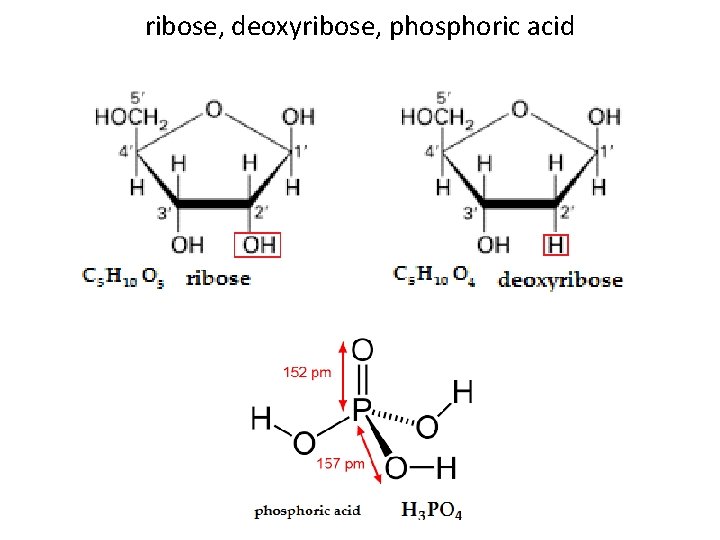
ribose, deoxyribose, phosphoric acid
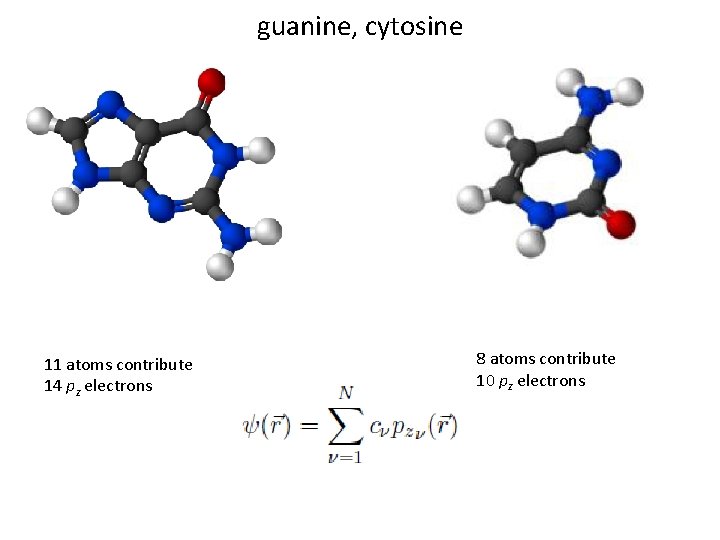
guanine, cytosine 11 atoms contribute 14 pz electrons 8 atoms contribute 10 pz electrons
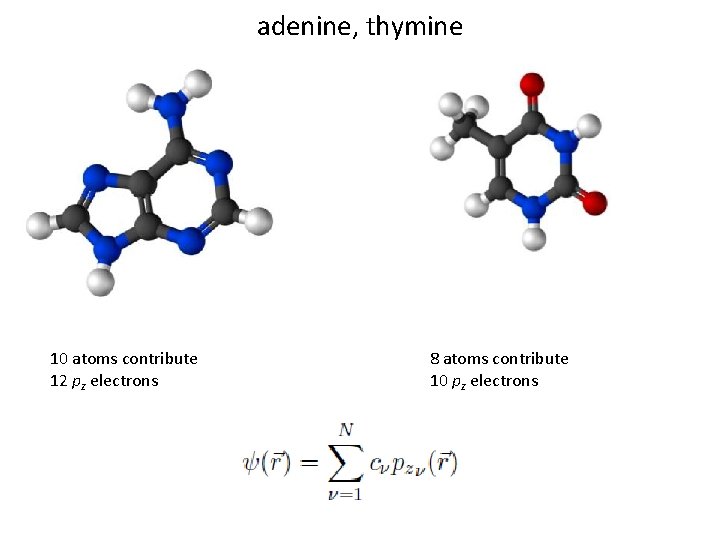
adenine, thymine 10 atoms contribute 12 pz electrons 8 atoms contribute 10 pz electrons
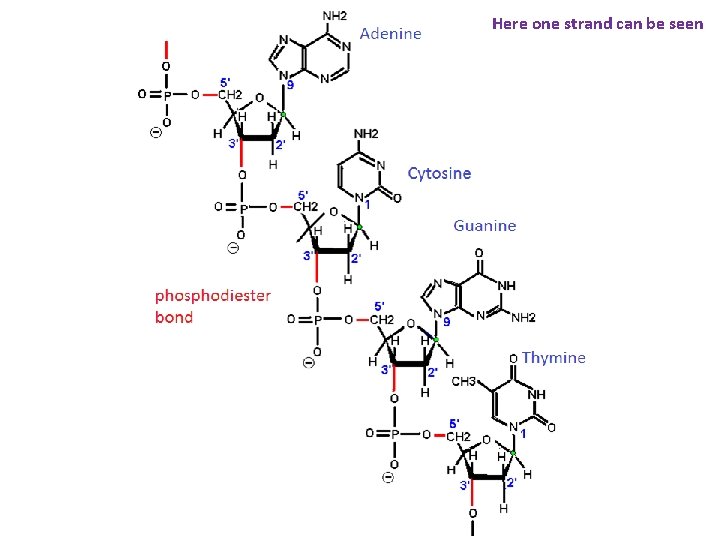
ester bond The bond made from hydroxyl (-ΟΗ) of an alcohol [or sugar] and H of carboxyl (-COOH) of an organic acid [or the functional group of an inorganic acid] with simultaneous production of a water molecule
Here one strand can be seen
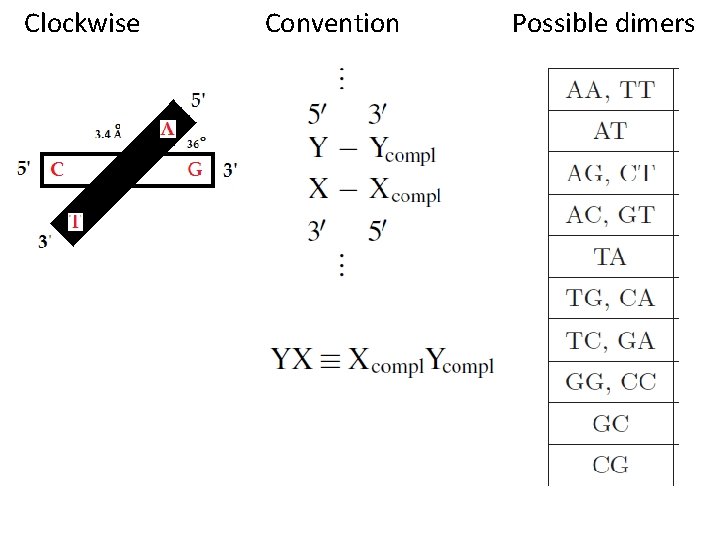
Clockwise Convention Possible dimers
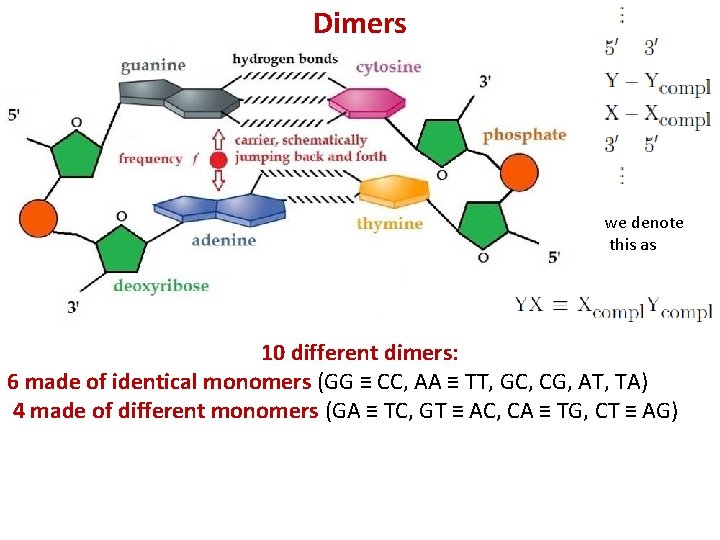
Dimers Title we denote this as 10 different dimers: 6 made of identical monomers (GG ≡ CC, AA ≡ TT, GC, CG, AT, TA) 4 made of different monomers (GA ≡ TC, GT ≡ AC, CA ≡ TG, CT ≡ AG)
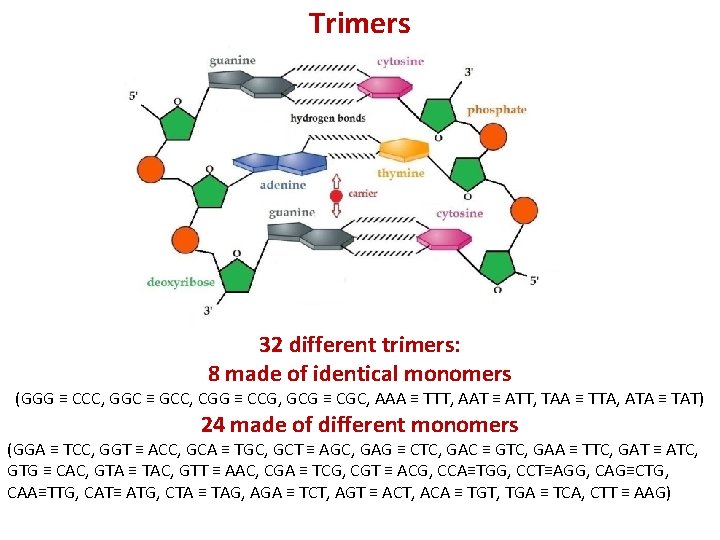
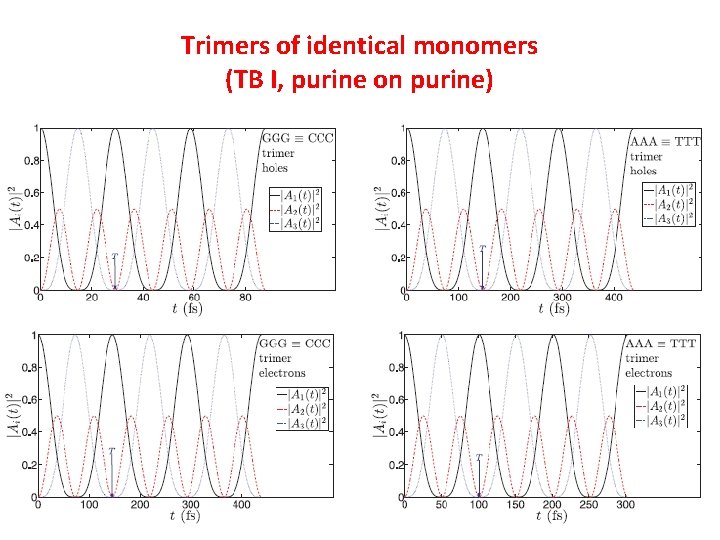
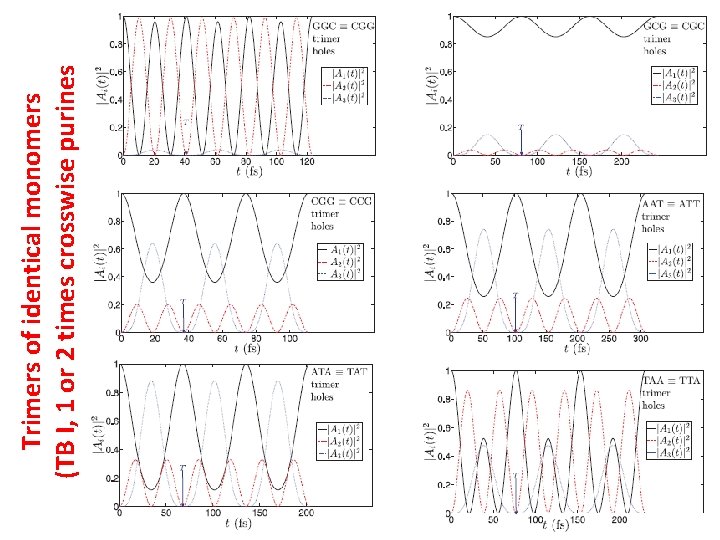
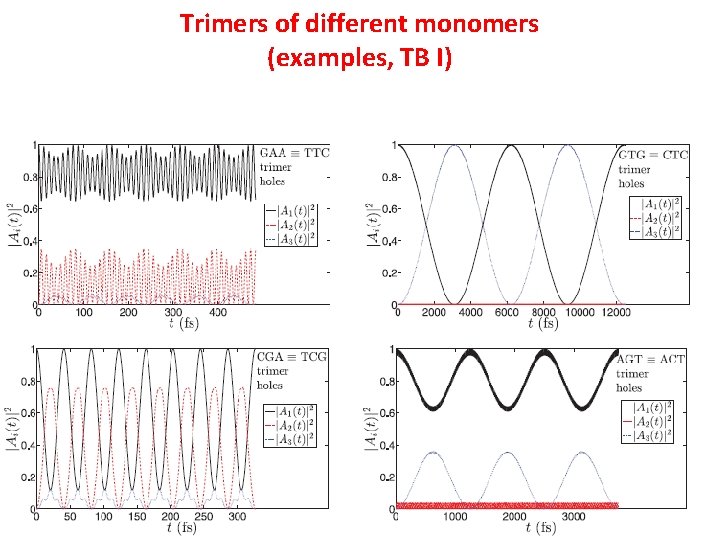
Trimers Title 32 different trimers: 8 made of identical monomers (GGG ≡ CCC, GGC ≡ GCC, CGG ≡ CCG, GCG ≡ CGC, AAA ≡ TTT, AAT ≡ ATT, TAA ≡ TTA, ATA ≡ TAT) 24 made of different monomers (GGA ≡ TCC, GGT ≡ ACC, GCA ≡ TGC, GCT ≡ AGC, GAG ≡ CTC, GAC ≡ GTC, GAA ≡ TTC, GAT ≡ ATC, GTG ≡ CAC, GTA ≡ TAC, GTT ≡ AAC, CGA ≡ TCG, CGT ≡ ACG, CCA≡TGG, CCT≡AGG, CAG≡CTG, CAA≡TTG, CAT≡ ATG, CTA ≡ TAG, AGA ≡ TCT, AGT ≡ ACT, ACA ≡ TGT, TGA ≡ TCA, CTT ≡ AAG)
2. Three Approaches
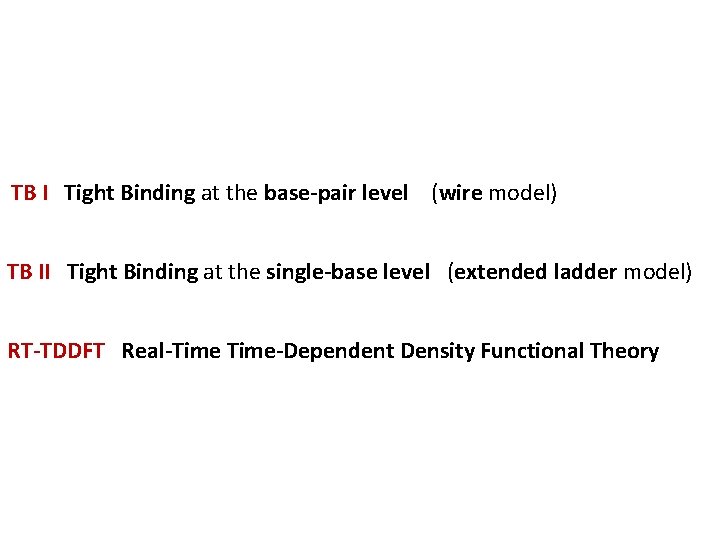
TB I Tight Binding at the base-pair level (wire model) TB II Tight Binding at the single-base level (extended ladder model) RT-TDDFT Real-Time-Dependent Density Functional Theory
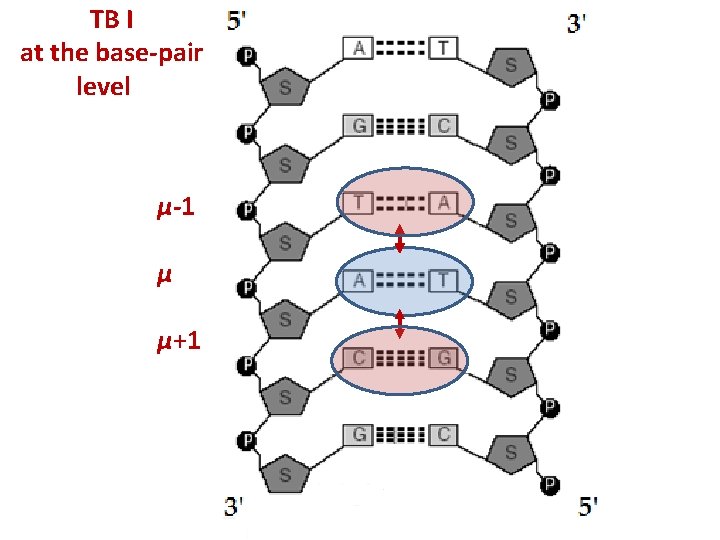
TB I at the base-pair level μ-1 μ μ+1
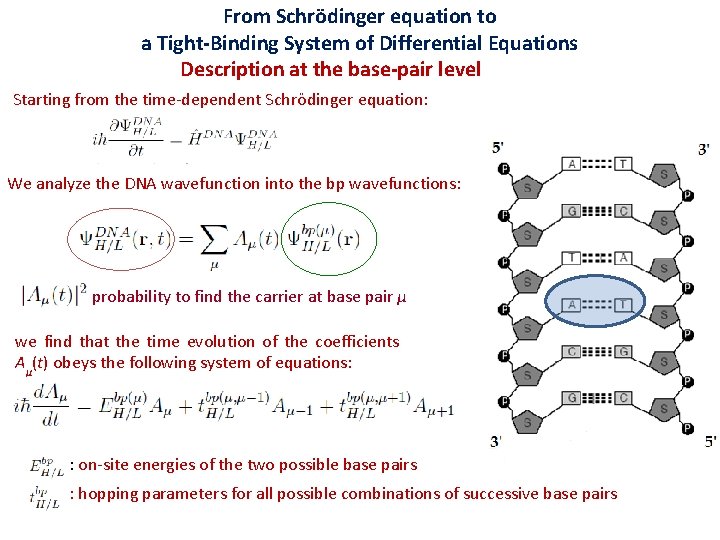
From Schrödinger equation to a Tight-Binding System of Differential Equations Description at the base-pair level Starting from the time-dependent Schrödinger equation: We analyze the DNA wavefunction into the bp wavefunctions: probability to find the carrier at base pair μ we find that the time evolution of the coefficients Aμ(t) obeys the following system of equations: : on-site energies of the two possible base pairs : hopping parameters for all possible combinations of successive base pairs
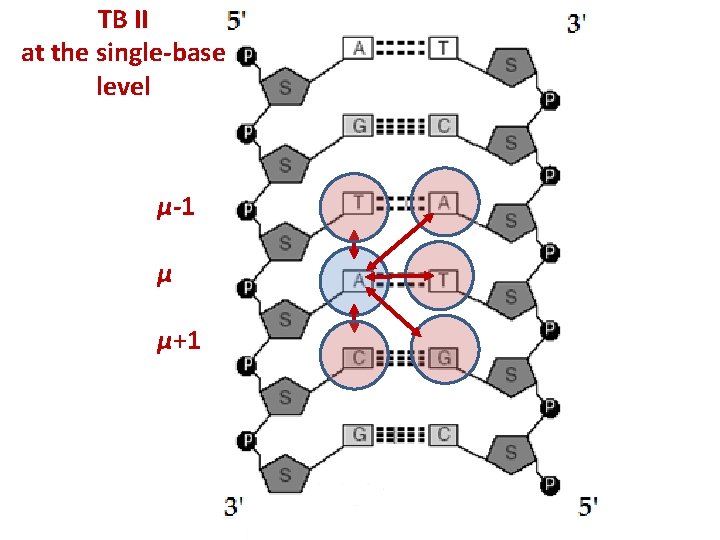
TB II at the single-base level μ-1 μ μ+1
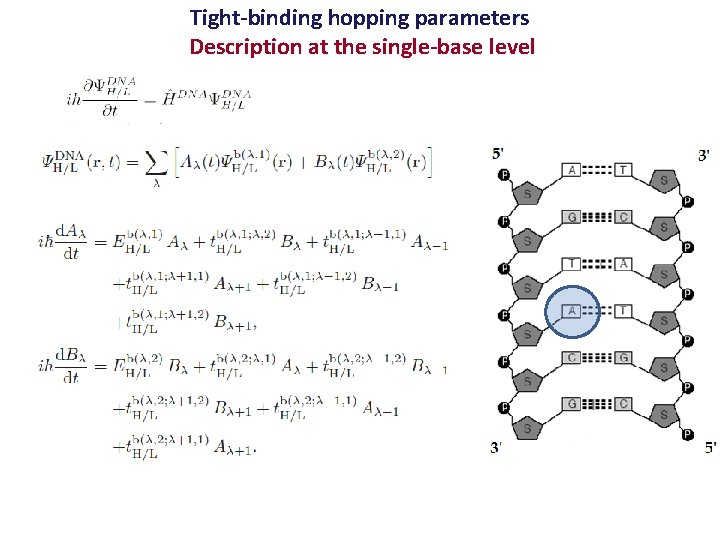
Tight-binding hopping parameters Description at the single-base level
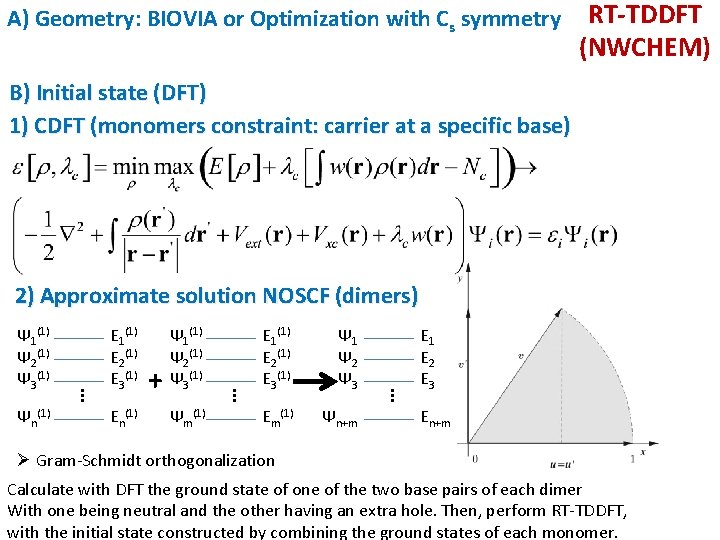
A) Geometry: BIOVIA or Optimization with Cs symmetry RT-TDDFT (NWCHEM) B) Initial state (DFT) 1) CDFT (monomers constraint: carrier at a specific base) 2) Approximate solution NOSCF (dimers) Εn(1) + Ψ 1(1) Ψ 2(1) Ψ 3(1) Ψm(1) Ε 1(1) Ε 2(1) Ε 3(1) Ψ 1 Ψ 2 Ψ 3 Εm(1) Ψn+m … Ε 1(1) Ε 2(1) Ε 3(1) … Ψn(1) … Ψ 1(1) Ψ 2(1) Ψ 3(1) Ε 1 Ε 2 Ε 3 Εn+m Ø Gram-Schmidt orthogonalization Calculate with DFT the ground state of one of the two base pairs of each dimer With one being neutral and the other having an extra hole. Then, perform RT-TDDFT, with the initial state constructed by combining the ground states of each monomer.
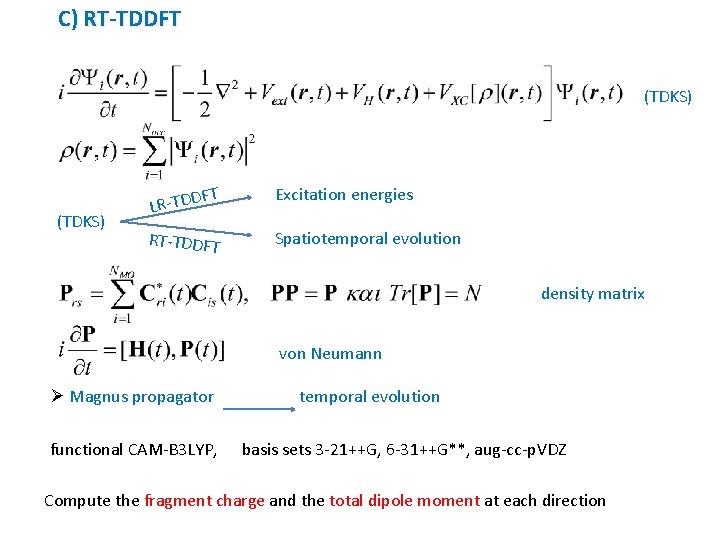
C) RT-TDDFT (TDKS) FT LR-TDD Excitation energies RT-TDDFT Spatiotemporal evolution density matrix von Neumann Ø Magnus propagator temporal evolution functional CAM-B 3 LYP, basis sets 3 -21++G, 6 -31++G**, aug-cc-p. VDZ Compute the fragment charge and the total dipole moment at each direction
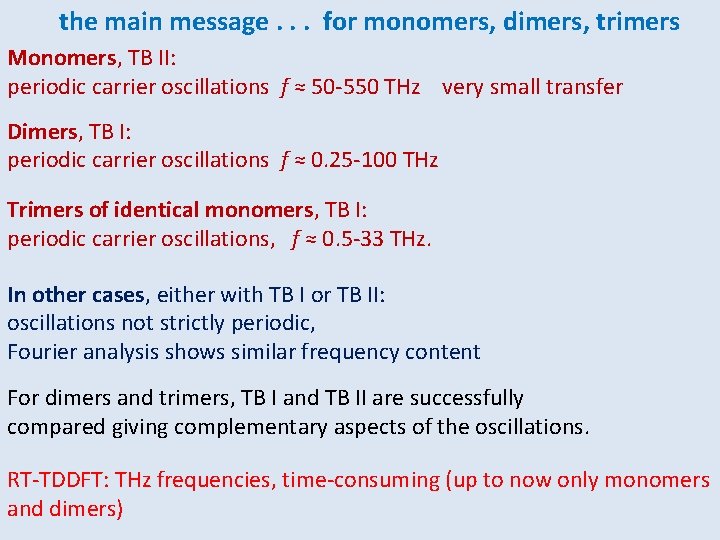
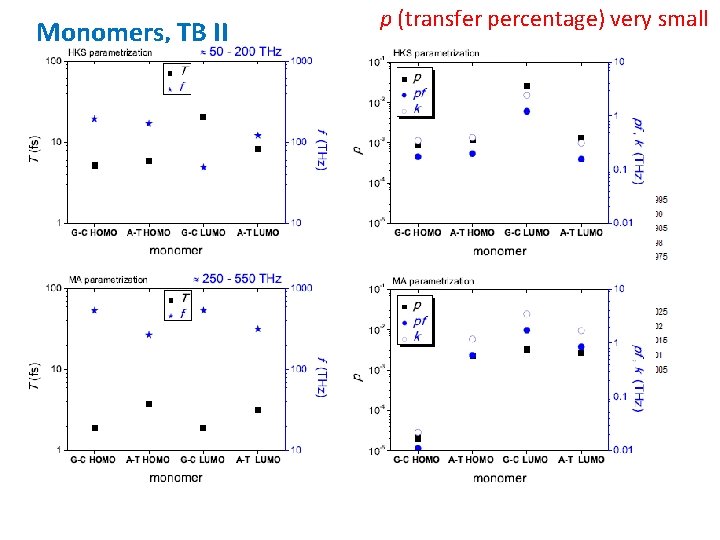
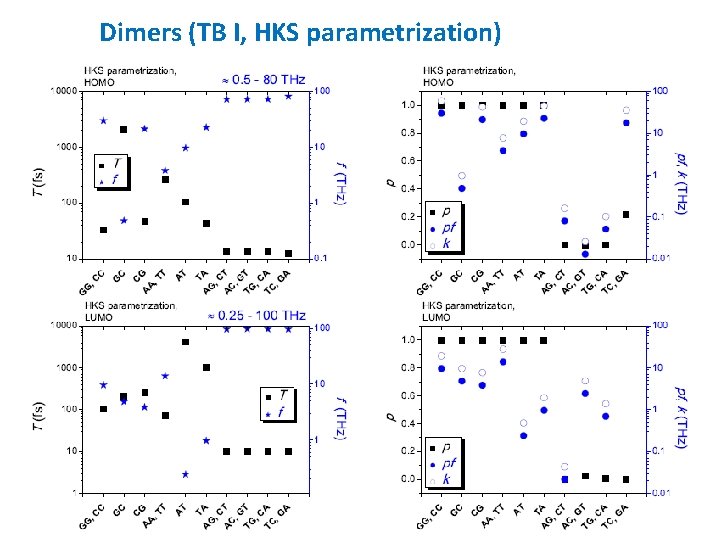
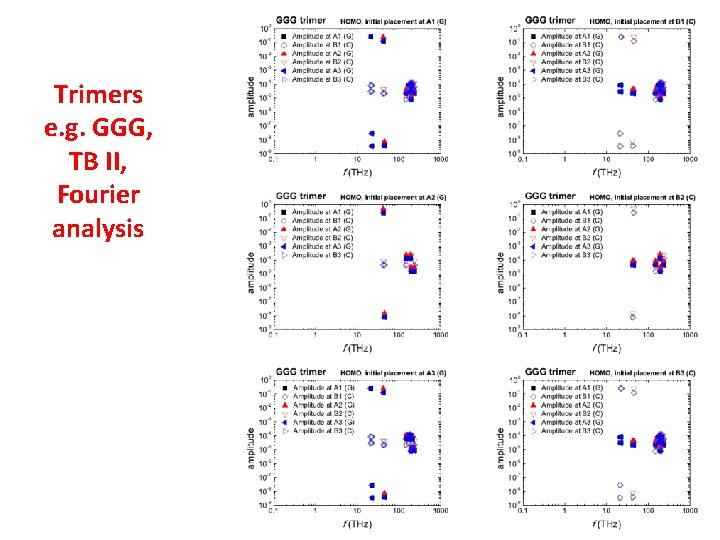
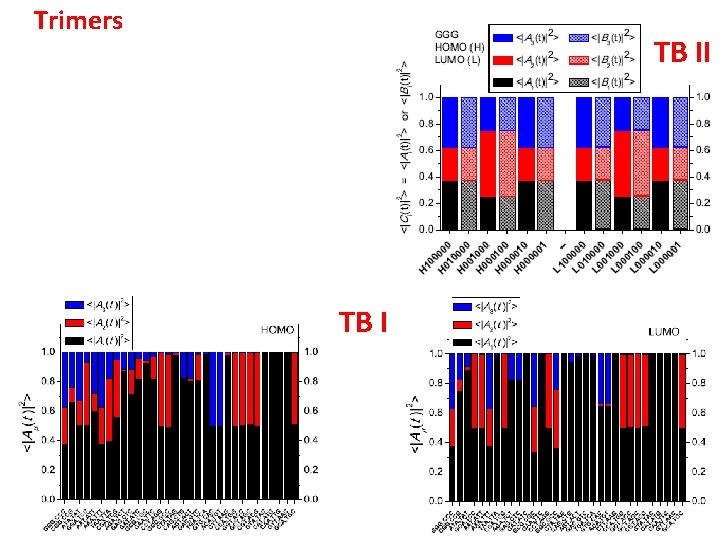
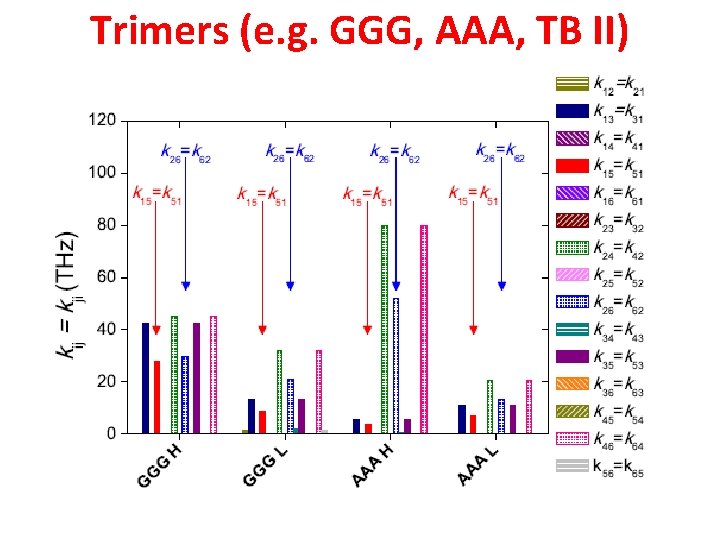
the main message. . . for monomers, dimers, trimers Monomers, TB II: periodic carrier oscillations f ≈ 50 -550 THz very small transfer Dimers, TB I: periodic carrier oscillations f ≈ 0. 25 -100 THz Trimers of identical monomers, TB I: periodic carrier oscillations, f ≈ 0. 5 -33 THz. In other cases, either with TB I or TB II: oscillations not strictly periodic, Fourier analysis shows similar frequency content For dimers and trimers, TB I and TB II are successfully compared giving complementary aspects of the oscillations. RT-TDDFT: THz frequencies, time-consuming (up to now only monomers and dimers)
The end Related Work Thank you ! M. Mantela, A. Morphis, M. Tassi, and C. Simserides, Molecular Physics 114 (2016) 709 K. Lambropoulos, M. Chatzieleftheriou, A. Morphis, K. Kaklamanis, M. Theodorakou, and C. Simserides, Physical Review E 92 (2015) 032725 K. Lambropoulos, K. Kaklamanis, G. Georgiadis, M. Theodorakou, M. Chatzieleftheriou, M. Tassi, A. Morphis and C. Simserides, 36 th PIERS (Progress in Electromagnetics Research Symposium) Proceedings, 6 -9 July 2015, Prague, pp 879 -833 K. Lambropoulos, K. Kaklamanis, G. Georgiadis, C. Simserides, Annalen der Physik (Berlin) 526 (2014) 249 C. Simserides, Chemical Physics 440 (2014) 31 L. G. D. Hawke, G. Kalosakas, C. Simserides, Eur. Phys. J. E 32 (2010) 291; ibid. 34 (2011) 118
3. Monomers
Monomers, TB II p (transfer percentage) very small
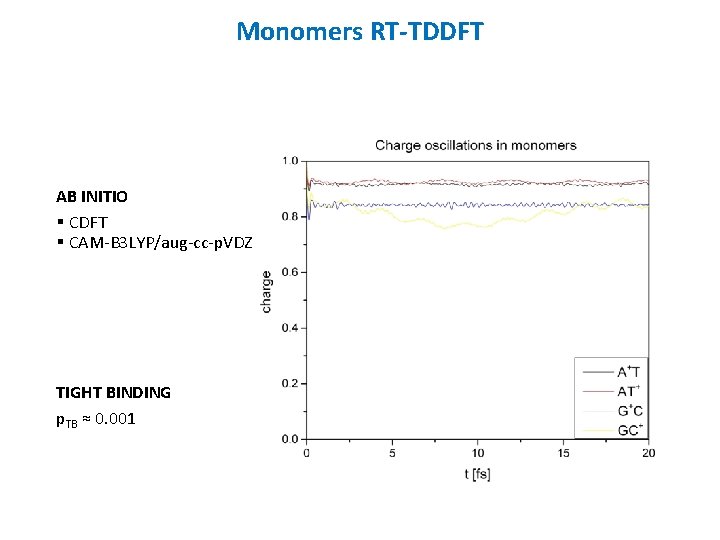
Monomers (e. g. A-T, RT TDDFT)
Monomers RT-TDDFT AB INITIO § CDFT § CAM-B 3 LYP/aug-cc-p. VDZ TIGHT BINDING p. TB ≈ 0. 001
4. Dimers
Dimers (TB I, HKS parametrization)
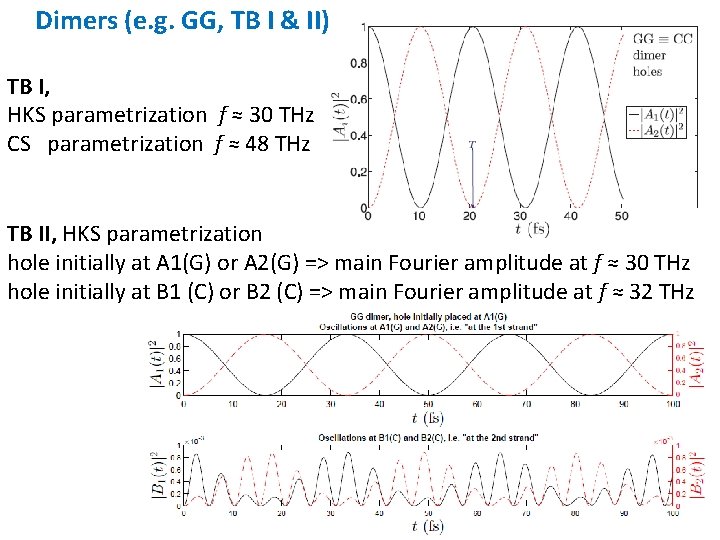
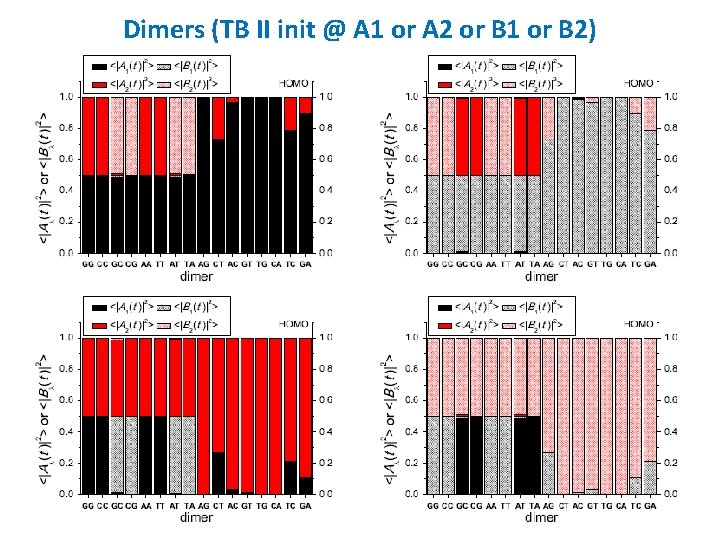
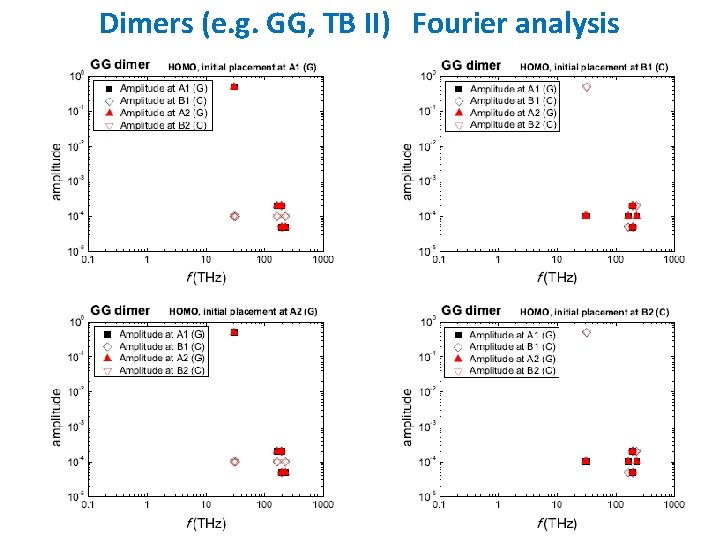
Dimers (e. g. GG, TB I & II) Title TB I, HKS parametrization f ≈ 30 THz CS parametrization f ≈ 48 THz ΤΒ ΙΙ, HKS parametrization hole initially at A 1(G) or A 2(G) => main Fourier amplitude at f ≈ 30 THz hole initially at B 1 (C) or B 2 (C) => main Fourier amplitude at f ≈ 32 THz
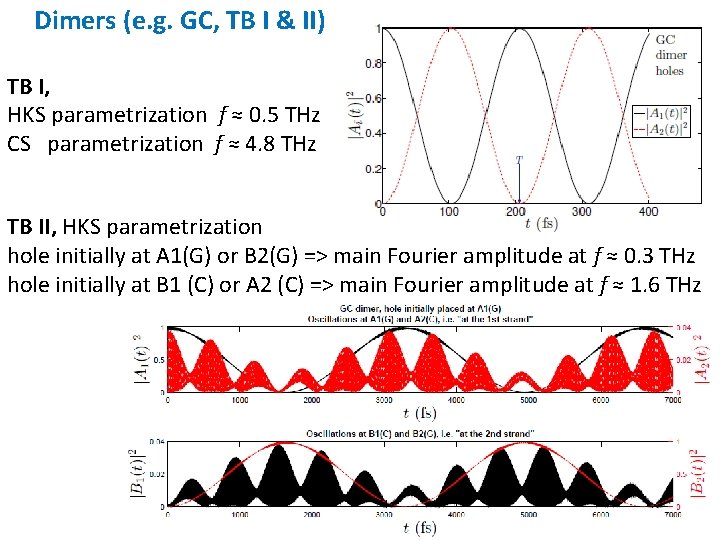
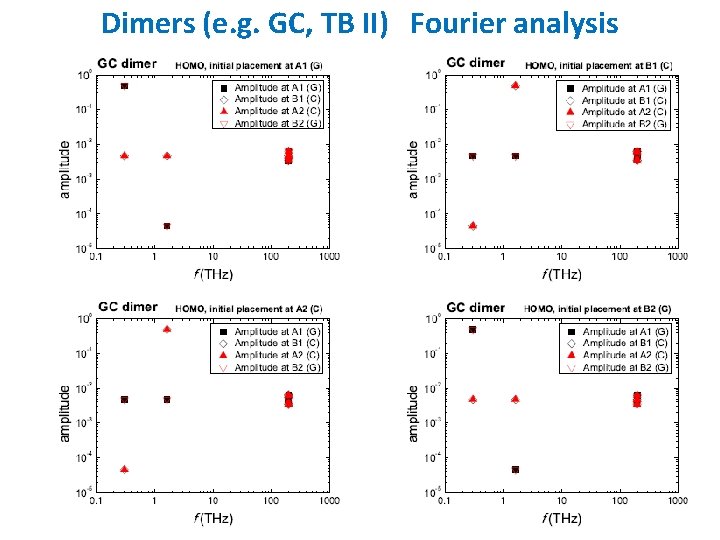
Dimers (e. g. GC, TB I & II) Title TB I, HKS parametrization f ≈ 0. 5 THz CS parametrization f ≈ 4. 8 THz ΤΒ ΙΙ, HKS parametrization hole initially at A 1(G) or B 2(G) => main Fourier amplitude at f ≈ 0. 3 THz hole initially at B 1 (C) or A 2 (C) => main Fourier amplitude at f ≈ 1. 6 THz
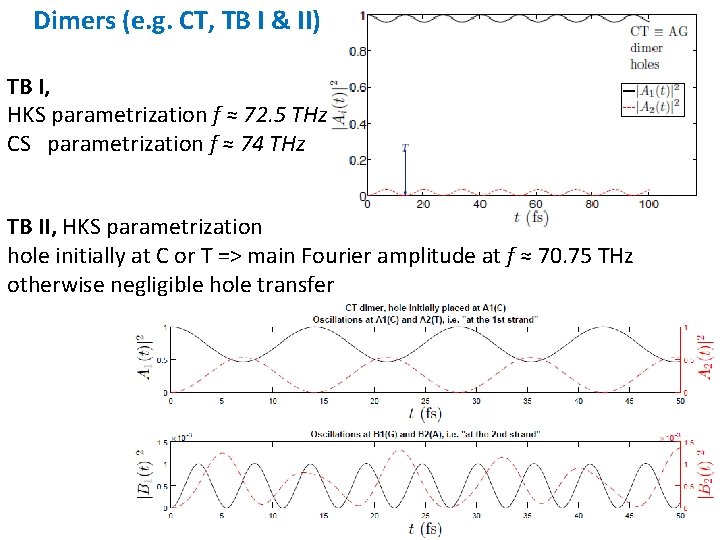
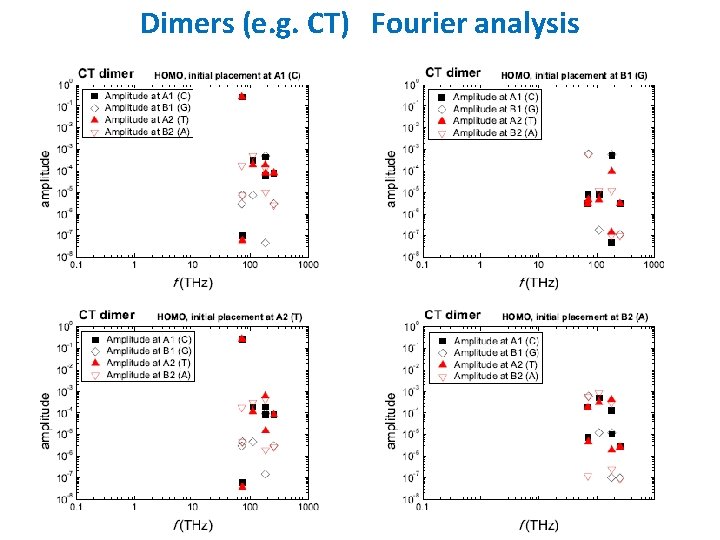
Dimers (e. g. CT, TB I & II) TB I, HKS parametrization f ≈ 72. 5 THz CS parametrization f ≈ 74 THz ΤΒ ΙΙ, HKS parametrization hole initially at C or T => main Fourier amplitude at f ≈ 70. 75 THz otherwise negligible hole transfer Title
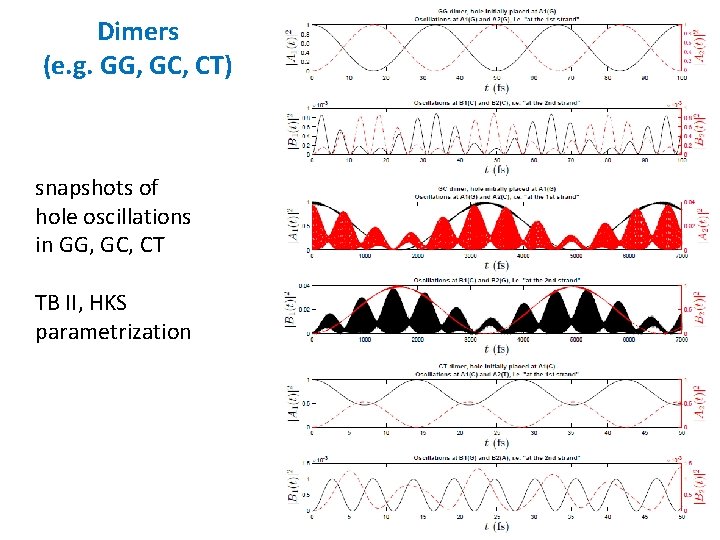
Dimers (e. g. GG, GC, CT) snapshots of hole oscillations in GG, GC, CT TB II, HKS parametrization
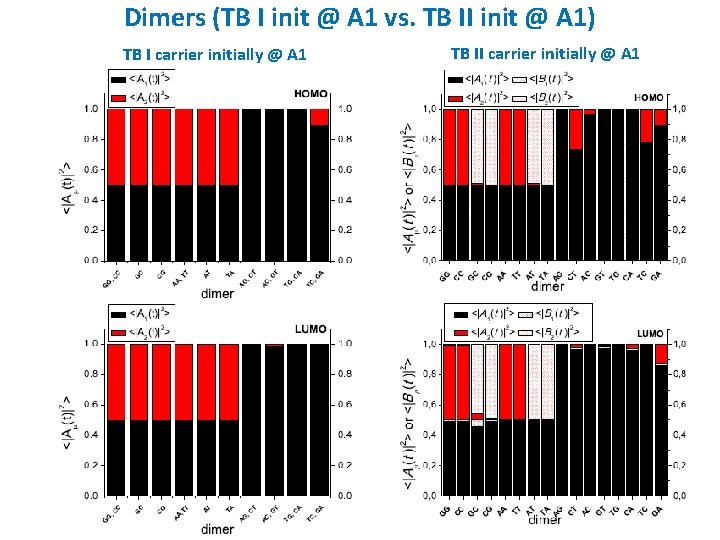
Dimers (TB I init @ A 1 vs. TB II init @ A 1) TB I carrier initially @ A 1 TB II carrier initially @ A 1
Dimers (TB II init @ A 1 or A 2 or B 1 or B 2)
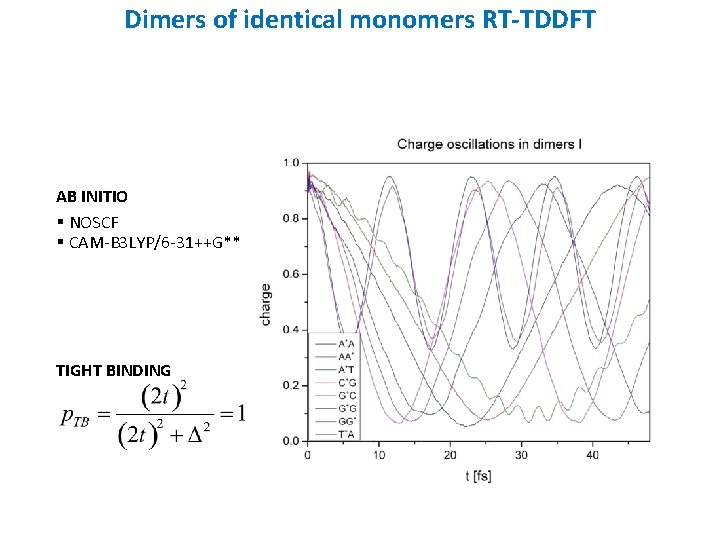
Dimers of identical monomers RT-TDDFT AB INITIO § NOSCF § CAM-B 3 LYP/6 -31++G** TIGHT BINDING
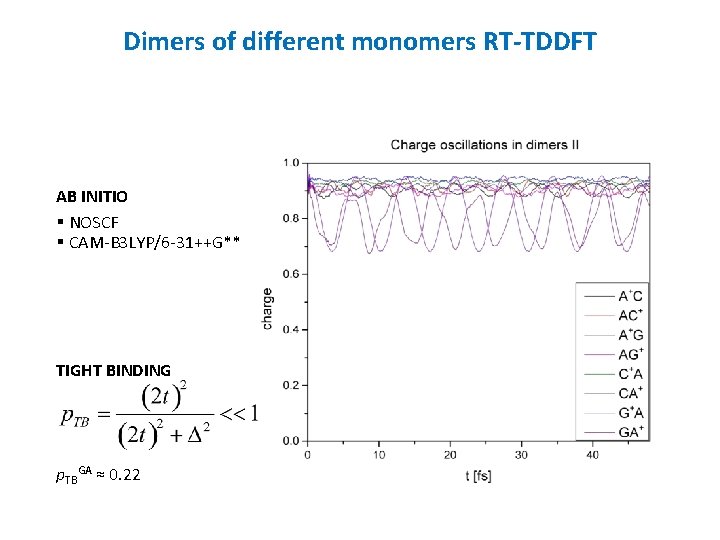
Dimers of different monomers RT-TDDFT AB INITIO § NOSCF § CAM-B 3 LYP/6 -31++G** TIGHT BINDING p. TBGA ≈ 0. 22
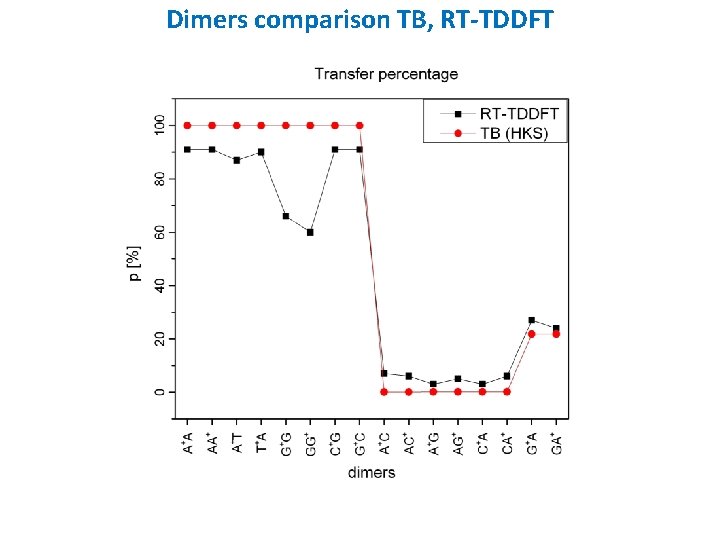
Dimers comparison TB, RT-TDDFT
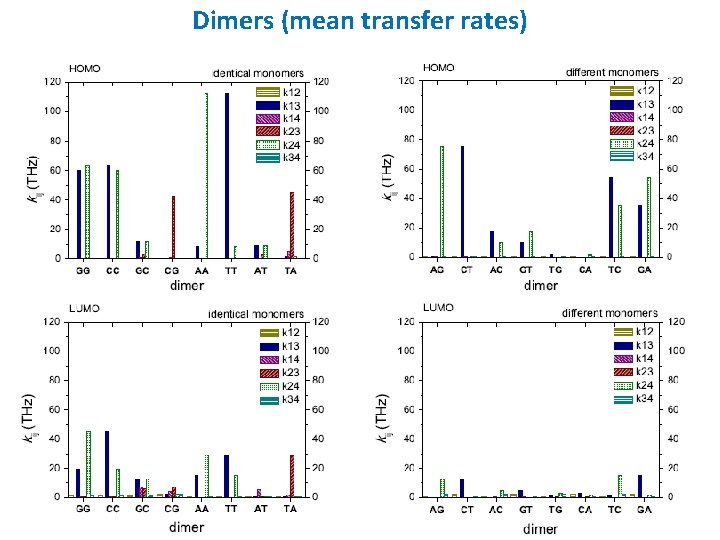
Dimers (mean transfer rates) Title
Dimers (summary) Dimers of identical monomers: large carrier transfer, probability equally shared between the two monomers purines crosswise to purines => interstrand carrier transfer significant diagonal transfer purines on the same strand => intrastrand carrier transfer Dimers of different monomers: intrastrand carrier transfer (but in small percentage)
5. Trimers
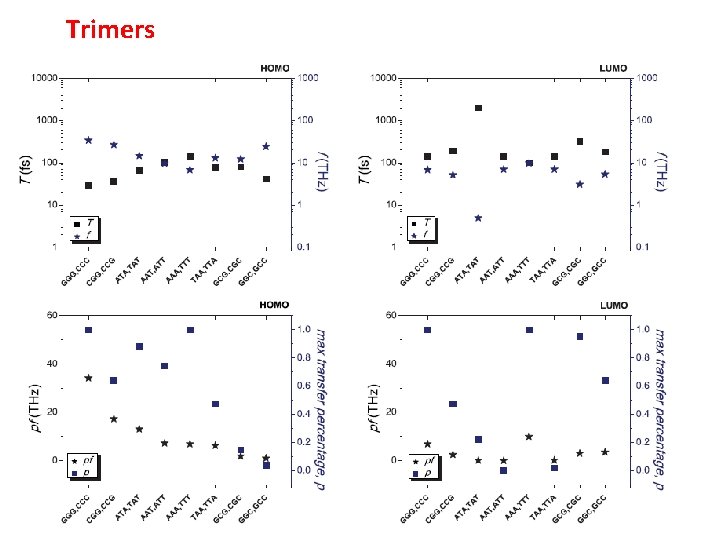
Trimers
Trimers of identical monomers (TB I, purine on purine)
Trimers of identical monomers (TB I, 1 or 2 times crosswise purines
Trimers of different monomers (examples, TB I)
Trimers e. g. GGG, TB II, Fourier analysis
Trimers Title TB II TB I
Trimers (e. g. GGG, AAA, TB II) Title
6. Polymers
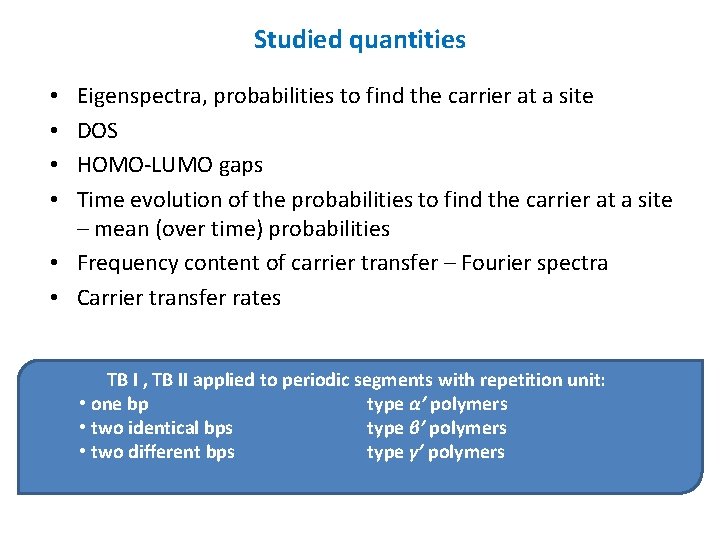
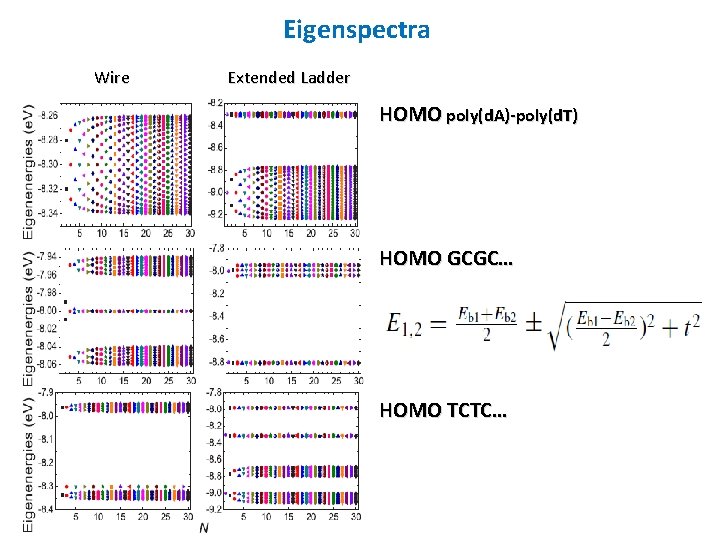
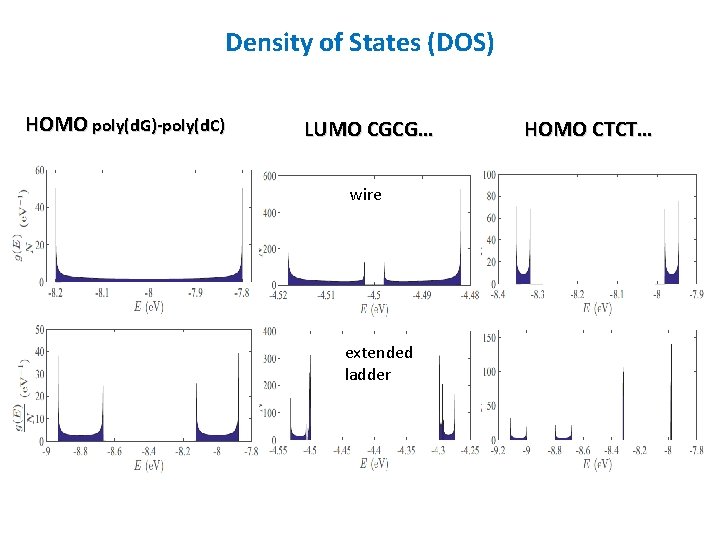
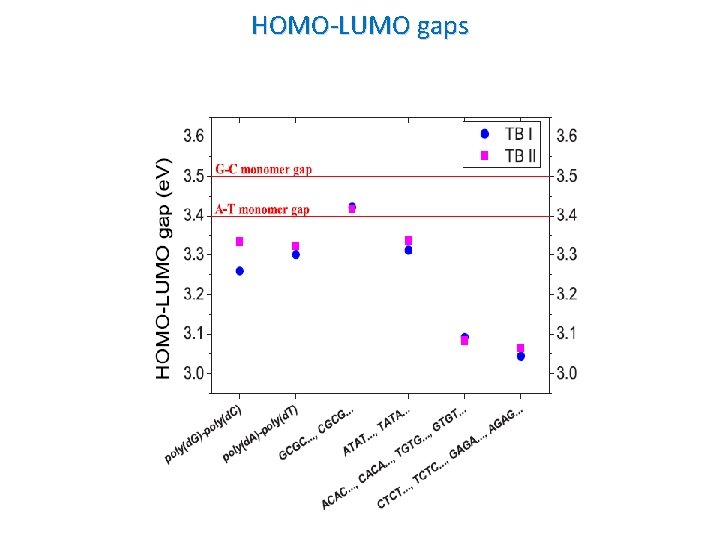
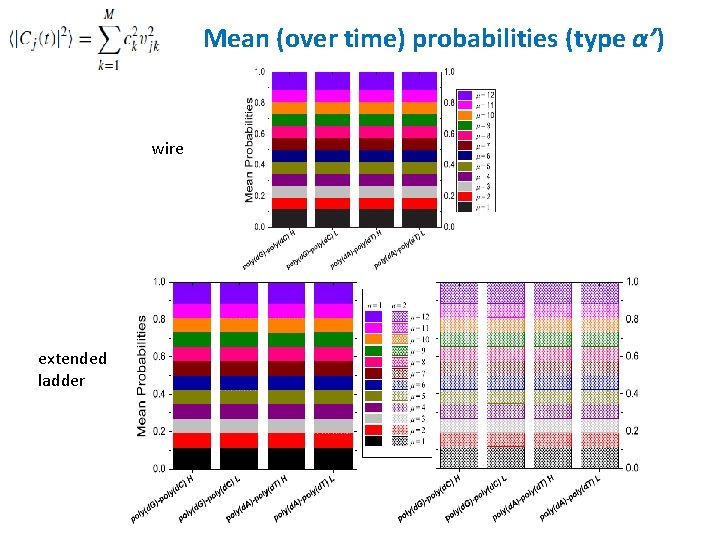
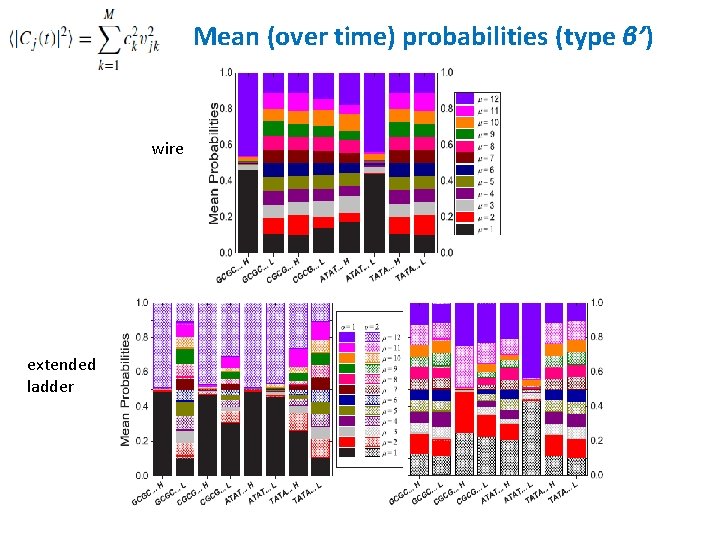
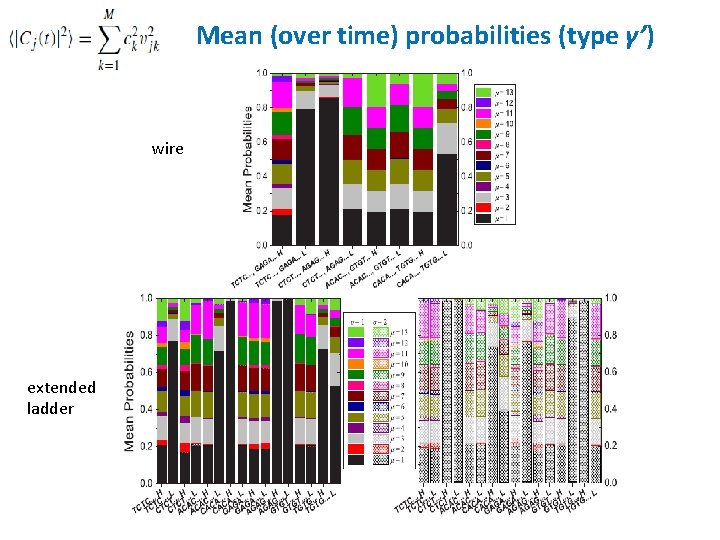
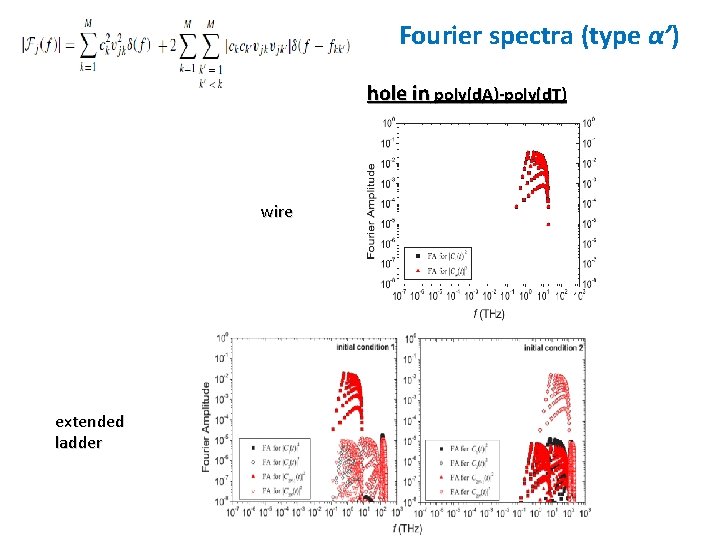
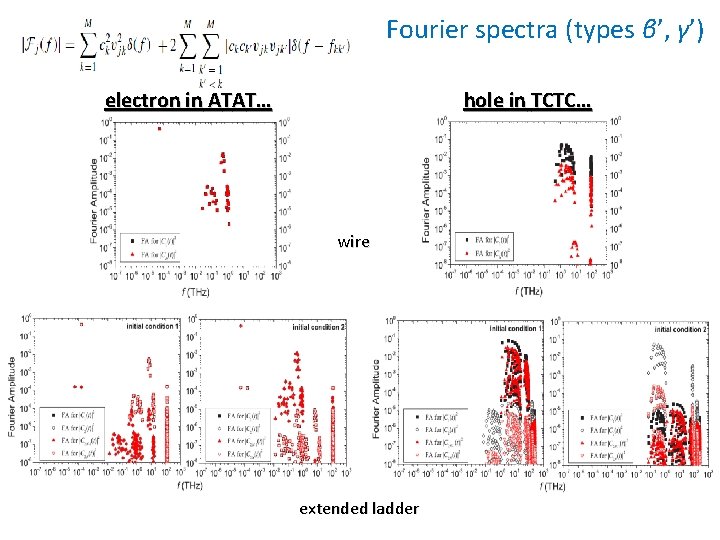
Studied quantities Eigenspectra, probabilities to find the carrier at a site DOS HOMO-LUMO gaps Time evolution of the probabilities to find the carrier at a site – mean (over time) probabilities • Frequency content of carrier transfer – Fourier spectra • Carrier transfer rates • • TB I , TB II applied to periodic segments with repetition unit: • one bp type α’ polymers • two identical bps type β’ polymers • two different bps type γ’ polymers
Eigenspectra Wire Extended Ladder ΗΟΜΟ poly(d. A)-poly(d. T) ΗΟΜΟ GCGC… ΗΟΜΟ TCTC…
Density of States (DOS) ΗΟΜΟ poly(d. G)-poly(d. C) LUΜΟ CGCG… wire extended ladder HOΜΟ CTCT…
HOMO-LUMO gaps
Mean (over time) probabilities (type α’) wire extended ladder
Mean (over time) probabilities (type β’) wire extended ladder
Mean (over time) probabilities (type γ’) wire extended ladder
Fourier spectra (type α’) hole in poly(dΑ)-poly(dΤ) wire extended ladder
Fourier spectra (types β’, γ’) electron in ΑTΑT… hole in TCTC… wire extended ladder
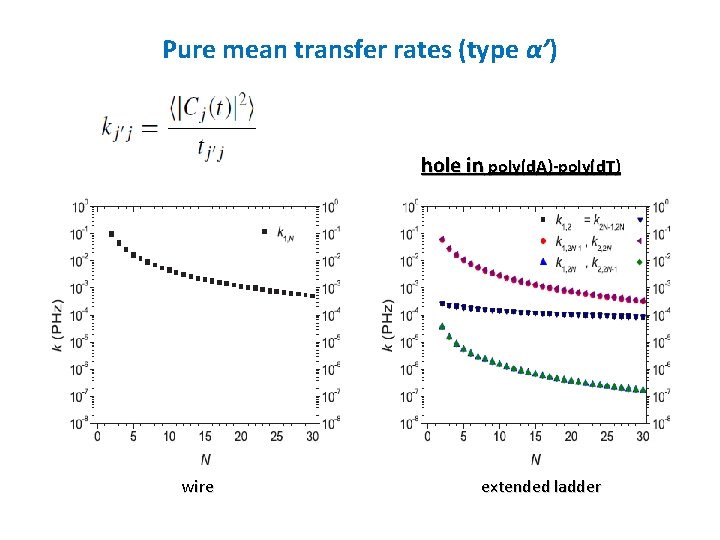
Pure mean transfer rates (type α’) hole in poly(dΑ)-poly(dΤ) wire extended ladder
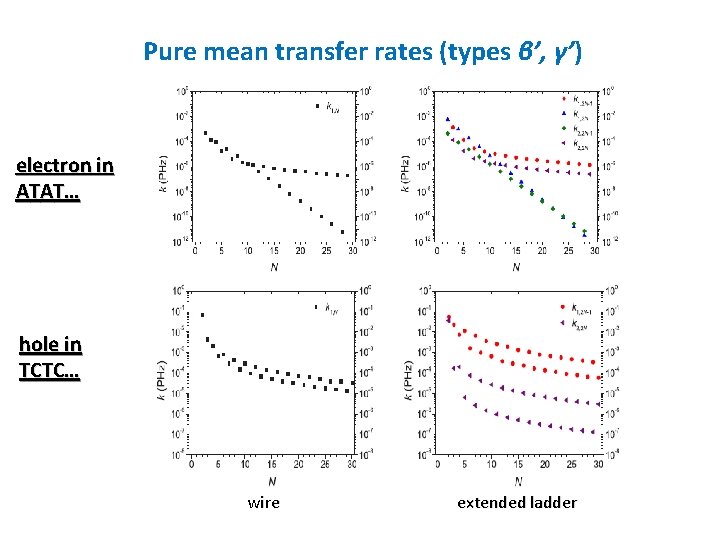
Pure mean transfer rates (types β’, γ’) electron in ΑTΑT… hole in TCTC… wire extended ladder
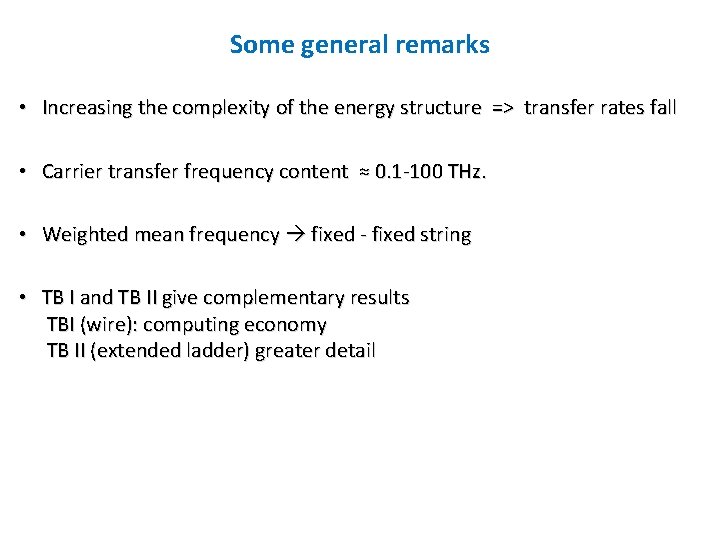
Some general remarks • Increasing the complexity of the energy structure => transfer rates fall • Carrier transfer frequency content ≈ 0. 1 -100 THz. • Weighted mean frequency fixed - fixed string • TB I and TB II give complementary results TBI (wire): computing economy TB II (extended ladder) greater detail
7. Conclusion
TB I, TB II, RT-TD DFT in monomers, dimers, trimers => THz oscillations in DNA monomers, dimers and trimers exist frequency content, max transfer percentages & transfer rates between sites, mean probabilities to find the carrier at a site monomers, TB II: f ≈ 50 -550 THz, T ≈ 2 -20 fs, λ ≈ 545 nm - 6 μm Vis to NIR & MIR max transfer percentage p, max transfer rate pf very small dimers, TB I: f ≈ 0. 25 -100 THz, T ≈ 10 -4000 fs, λ ≈ 3 -1200 μm ~ MIR & FIR Dimers of identical monomers: max transfer percentage p = 1 Dimers of different monomers: p < 1 dimers, TB II: oscillations not strictly periodic but similar frequency content and picture (more detail)
TB I, TB II, RT-TD DFT => Trimers of identical monomers, TB I: f ≈ 0. 5 -33 THz, T ≈ 30 -2000 fs (CS parametrization) MIR to FIR f ≈ 0. 5 -21 THz, T ≈ 50 -2000 fs (HKS parametrization) λ ≈ 10 -600 μm 0 times crosswise purines p = 1, 1 or 2 times crosswise purines p < 1 Trimers of identical monomers, TB II: oscillations not strictly periodic but similar frequency content and picture (more detail) The two TB approaches give coherent, complementary results. RT-TDDFT in qualitative agreement with TB I and TB II (monomers, dimers).
TB I, TB II in oligomers, polymers => Eigenspectra, probabilities to find the carrier at a site DOS HOMO-LUMO gaps Time evolution of the probabilities to find the carrier at a site – mean (over time) probabilities • Frequency content of carrier transfer – Fourier spectra • Frequency spectrum more fragmented and moves to lower frequencies, as we increase N • Carrier transfer rates • •
Objectives - Prospects in polymers • Study other periodic, quasi periodic, fractal, amorphous, random, natural DNA segments. • Transfer Matrix Method to obtain analytical expressions for the studied quantities, plus transmission coefficients in transport, Lyapunov coefficients. • Comparison TB with RT-TDDFT (much more time and resources consuming ). A source or receiver of EM radiation made of DNA segments with frequencies at 0. 1 THz to 1000 THz, could be imagined.
Related Work M. Tassi, A. Morphis, K. Lambropoulos, and C. Simserides (RT-DDFT, in preparation) K. Lambropoulos, M. Chatzieleftheriou, A. Morphis, K. Kaklamanis, R. Lopp, M. Theodorakou, M. Tassi, and C. Simserides, Physical Review E 94 (2016) 062403 K. Lambropoulos, K. Kaklamanis, A. Morphis, M. Tassi, R. Lopp, G. Georgiadis, M. Theodorakou, M. Chatzieleftheriou, and C. Simserides, Journal of Physics: Condensed Matter 28 (2016) 495101 M. Mantela, A. Morphis, M. Tassi, and C. Simserides, Molecular Physics 114 (2016) 709 -718 K. Lambropoulos, M. Chatzieleftheriou, A. Morphis, K. Kaklamanis, M. Theodorakou, and C. Simserides, Physical Review E 92 (2015) 032725 K. Lambropoulos, K. Kaklamanis, G. Georgiadis, and C. Simserides, Annalen der Physik (Berlin) 526 (2014) 249– 258 C. Simserides, Chemical Physics 440 (2014) 31 -41 L. G. D. Hawke, G. Kalosakas, C. Simserides, Eur. Phys. J. E 32 (2010) 291
The end Thank you !
Thanks to IKY (Hellenic State Scholarships Foundation) Aris Supercomputer (Hellenic State Ministry of Education) Cytera computers NKUo. A computers Group computers
The end Related Work Thank you ! M. Mantela, A. Morphis, M. Tassi, and C. Simserides, Molecular Physics 114 (2016) 709 K. Lambropoulos, M. Chatzieleftheriou, A. Morphis, K. Kaklamanis, M. Theodorakou, and C. Simserides, Physical Review E 92 (2015) 032725 K. Lambropoulos, K. Kaklamanis, G. Georgiadis, M. Theodorakou, M. Chatzieleftheriou, M. Tassi, A. Morphis and C. Simserides, 36 th PIERS (Progress in Electromagnetics Research Symposium) Proceedings, 6 -9 July 2015, Prague, pp 879 -833 K. Lambropoulos, K. Kaklamanis, G. Georgiadis, C. Simserides, Annalen der Physik (Berlin) 526 (2014) 249 C. Simserides, Chemical Physics 440 (2014) 31 L. G. D. Hawke, G. Kalosakas, C. Simserides, Eur. Phys. J. E 32 (2010) 291; ibid. 34 (2011) 118
nucleotide
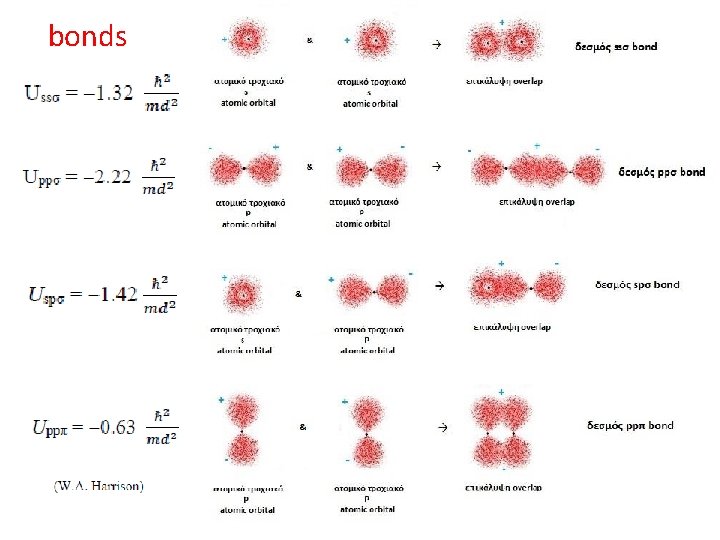
bonds
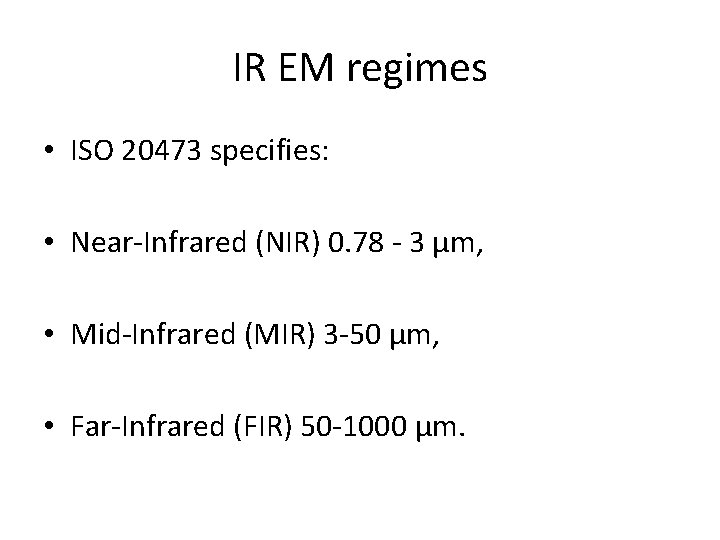
IR EM regimes • ISO 20473 specifies: • Near-Infrared (NIR) 0. 78 - 3 μm, • Mid-Infrared (MIR) 3 -50 μm, • Far-Infrared (FIR) 50 -1000 μm.
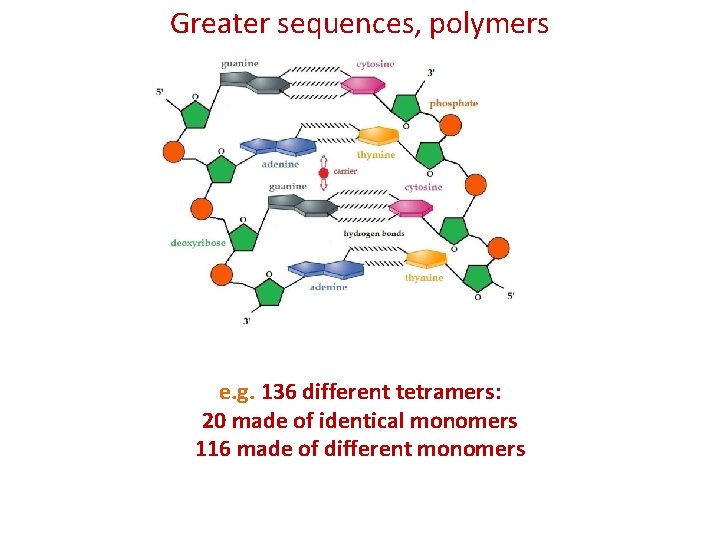
Greater sequences, polymers Title e. g. 136 different tetramers: 20 made of identical monomers 116 made of different monomers increasing the number of monomers above 3 periodicity is (generally) lost -> more complex frequency spectrum
Dimers (e. g. GG, TB II) Fourier analysis Title
Dimers (e. g. GC, TB II) Fourier analysis Title
Dimers (e. g. CT) Fourier analysis Title
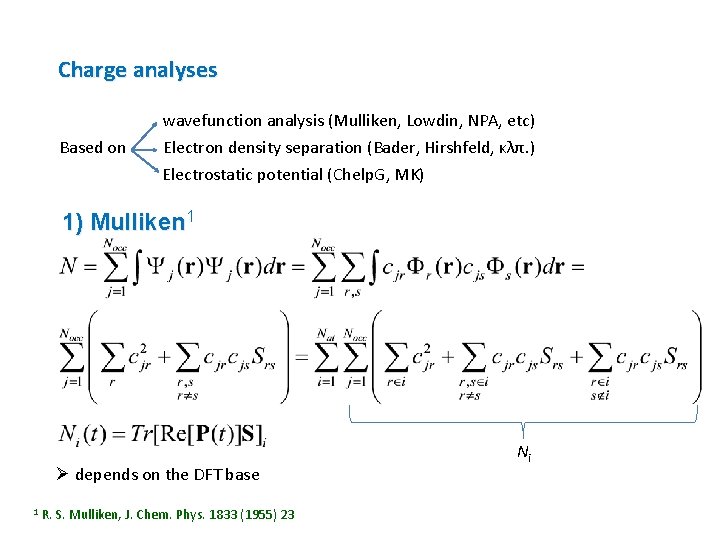
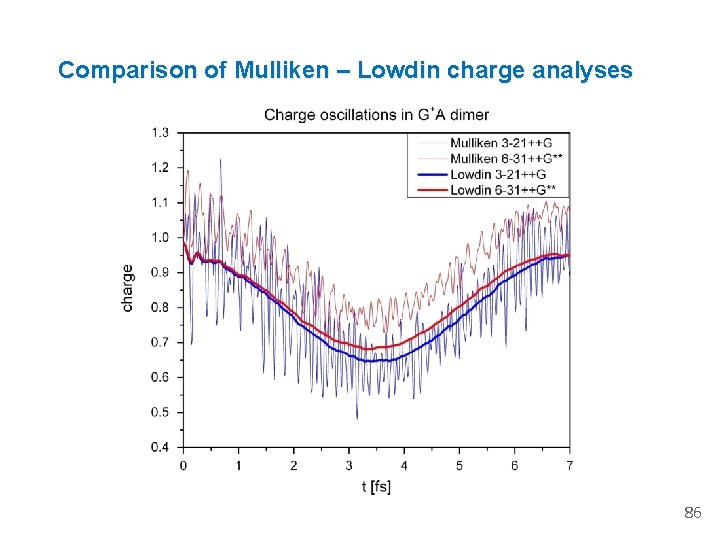
Charge analyses wavefunction analysis (Mulliken, Lowdin, NPA, etc) Based on Electron density separation (Bader, Hirshfeld, κλπ. ) Electrostatic potential (Chelp. G, MK) 1) Mulliken 1 Ø depends on the DFT base 1 R. S. Mulliken, J. Chem. Phys. 1833 (1955) 23 Ni
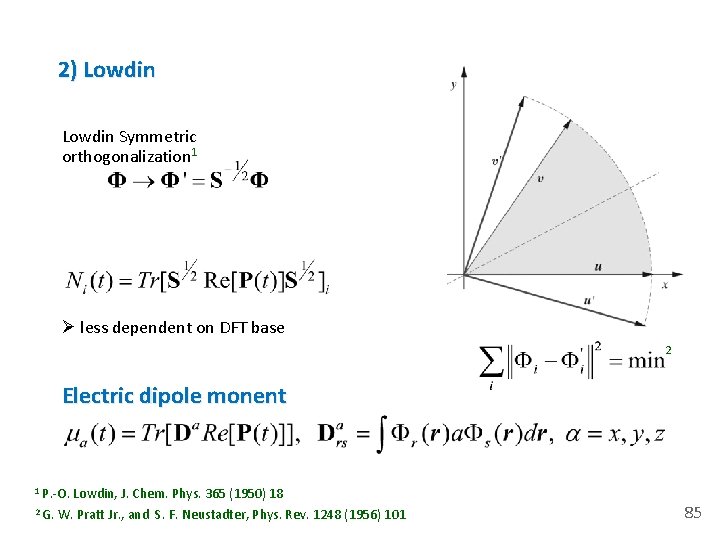
2) Lowdin Symmetric orthogonalization 1 Ø less dependent on DFT base 2 Electric dipole monent 1 P. -O. Lowdin, J. Chem. Phys. 365 (1950) 18 2 G. W. Pratt Jr. , and S. F. Neustadter, Phys. Rev. 1248 (1956) 101 85
Comparison of Mulliken – Lowdin charge analyses 86
Disorder In natural DNA there are two sources of disorder: (1) Non-periodic (“random”) base sequence (2) Random attachment of cations (K+, Ca+2, Na+) due to the presence of negative charges at the backbone