
MIDTERM REVIEW Honors Biology CELL UNIT 1 CELLULAR
MIDTERM REVIEW Honors Biology
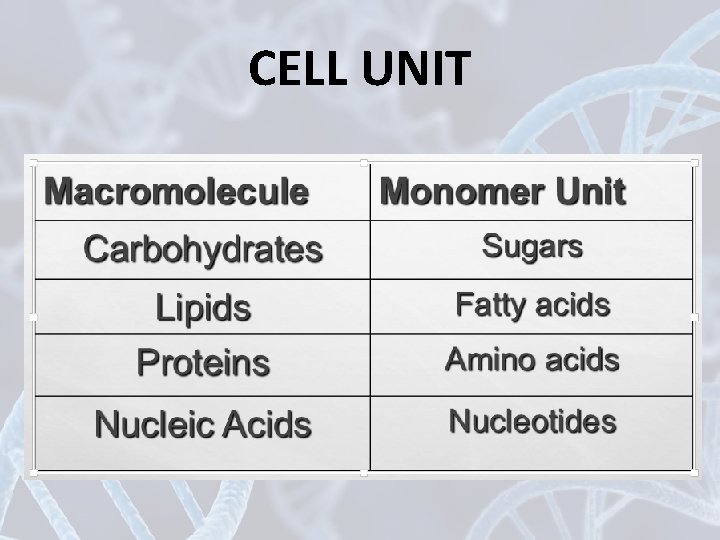
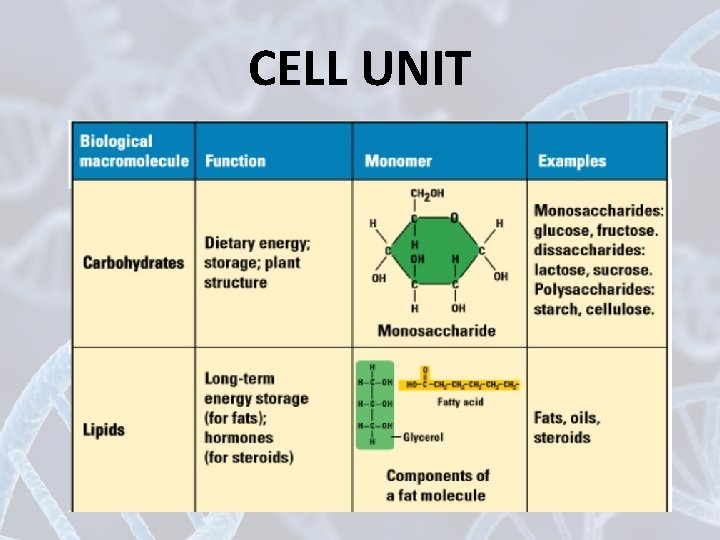
CELL UNIT 1: CELLULAR STRUCTURES SB 1: Students will analyze the nature of relationships between structures and functions in living cells. • Explain the role of cell organelles for both prokaryotic and eukaryotic cells, including the cell membrane, in maintaining homeostasis and cell reproduction. • Explain how enzymes function as catalysts. • Identify the function of the four macromolecules. • Explain the impact of water on life processes. SB 3: Students will derive the relationship between single-celled and multi-celled organisms and the increasing complexity of systems. • Explain the cycling of energy through the process of photosynthesis and respiration.
CELL UNIT Scientific Method – 1. What is a control group? What is its purpose? 2. What is the dependent variable? 3. What is the independent variable? 4. Define hypothesis.
CELL UNIT 5. You are conducting an experiment to determine if increased ultraviolet radiation from the decrease in the ozone layer is killing off frog tadpoles. Group one involves 100 tadpoles in a five gallon container of water that is covered by glass, which filters out the ultraviolet radiation. Group two will be set up exactly like group 1, except it isn’t covered with anything to filter out the ultraviolet radiation. You then place the groups outside for a period of a month, and observe the results. Identify the following: • control group = __________ • independent variable = __________ • dependent variable = ____________
CELL UNIT
CELL UNIT
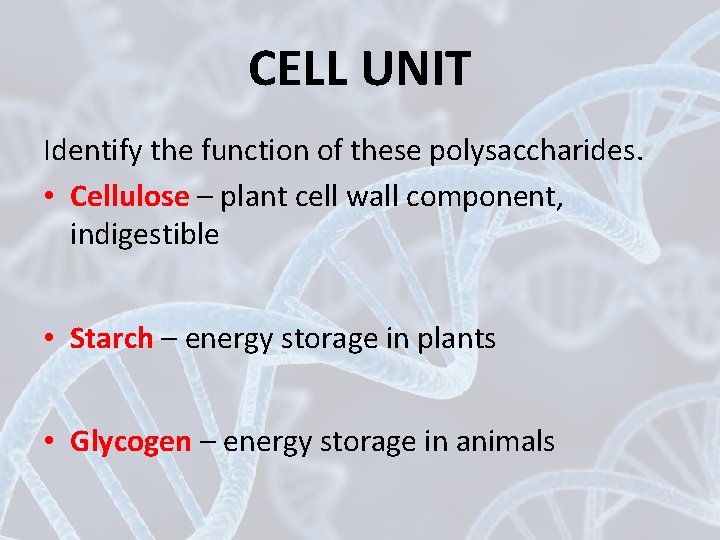
CELL UNIT Identify the function of these polysaccharides. • Cellulose – plant cell wall component, indigestible • Starch – energy storage in plants • Glycogen – energy storage in animals
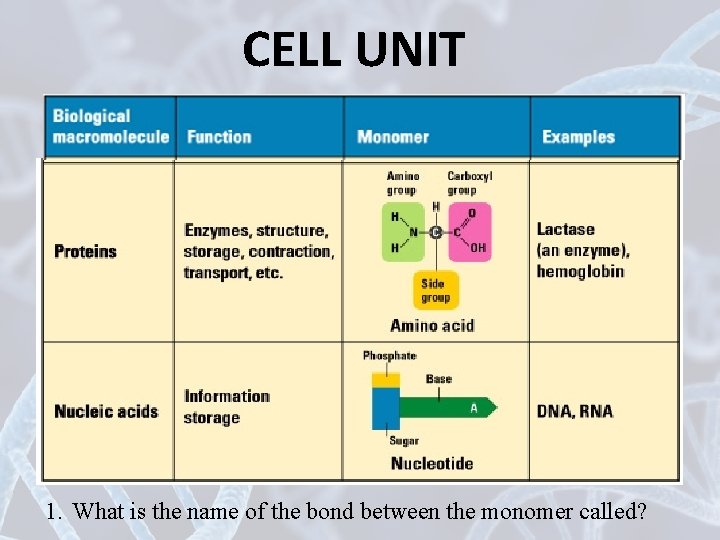
CELL UNIT 1. What is the name of the bond between the monomer called?
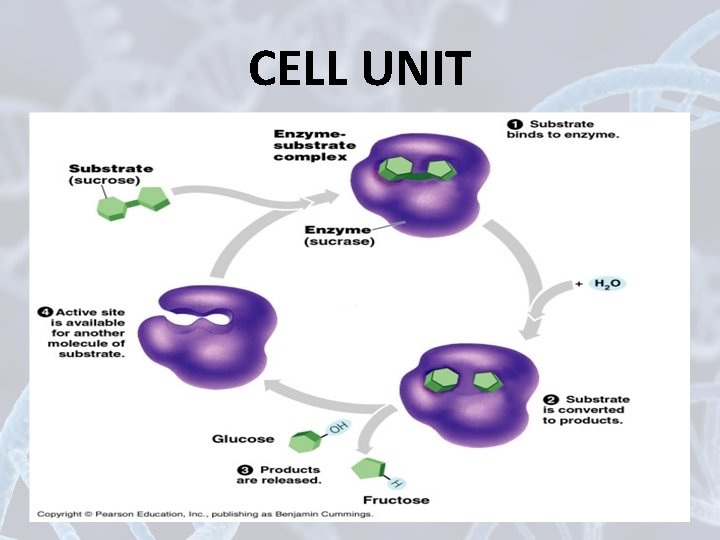
CELL UNIT • Enzymes control the rate of chemical reactions by weakening bonds, thus lowering the amount of activation energy needed for the reaction. • The nature and arrangement of amino acids in the active site make it specific for only one type of substrate.
CELL UNIT
CELL UNIT • Enzymes work consistently until they become denatured. • When enzymes denature, they are no longer active and cannot function. • Extreme temperature and the wrong levels of p. H can cause enzymes to become denatured.
CELL UNIT • How do enzymes affect the rate of a reaction? • How do enzymes affect the activation energy? • When an enzyme binds to a substrate, which substance is changed in the reaction? Which substance stays the same? • What is the name of the area on the enzyme where the enzyme attaches? • Enzymes are reusable. What does this mean? • Enzymes are highly selective. What does this mean? • What does denature mean? What environmental factors can denature an enzyme?
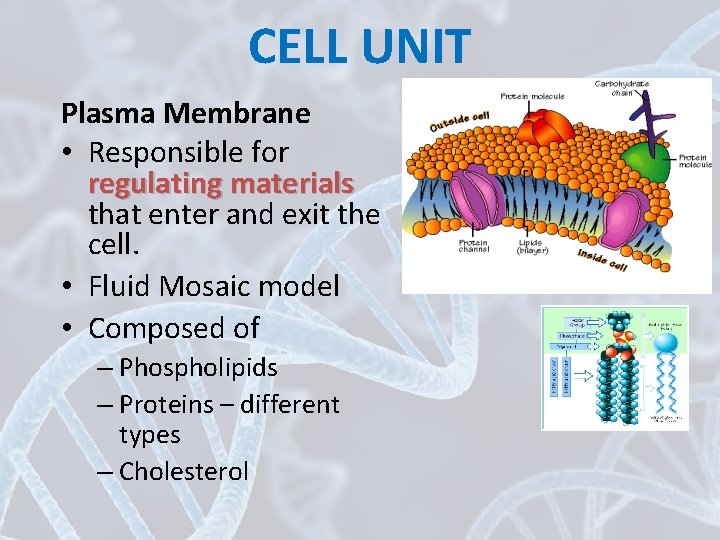
CELL UNIT Plasma Membrane • Responsible for regulating materials that enter and exit the cell. • Fluid Mosaic model • Composed of – Phospholipids – Proteins – different types – Cholesterol
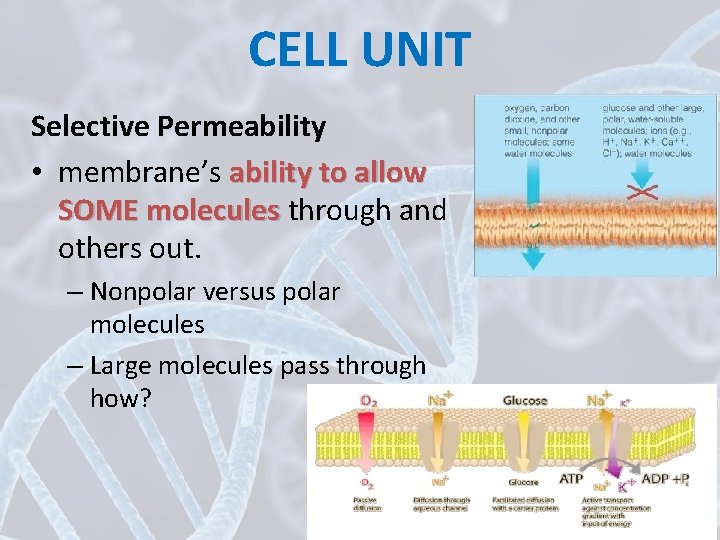
CELL UNIT Selective Permeability • membrane’s ability to allow SOME molecules through and others out. – Nonpolar versus polar molecules – Large molecules pass through how?
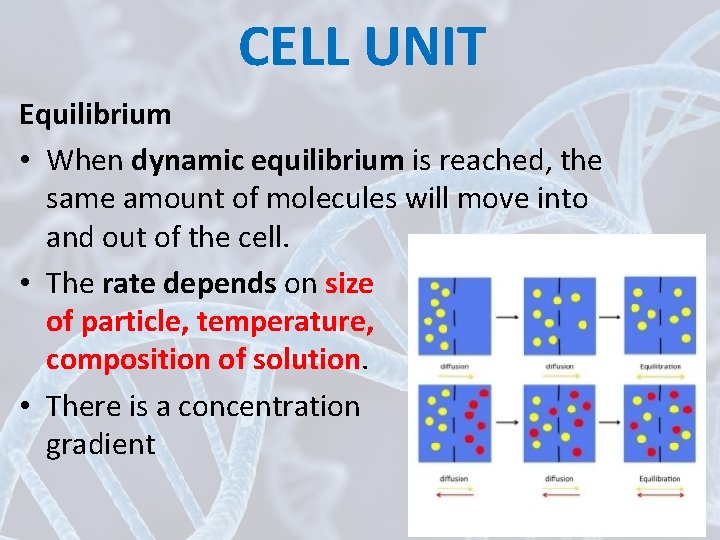
CELL UNIT Equilibrium • When dynamic equilibrium is reached, the same amount of molecules will move into and out of the cell. • The rate depends on size of particle, temperature, composition of solution. • There is a concentration gradient
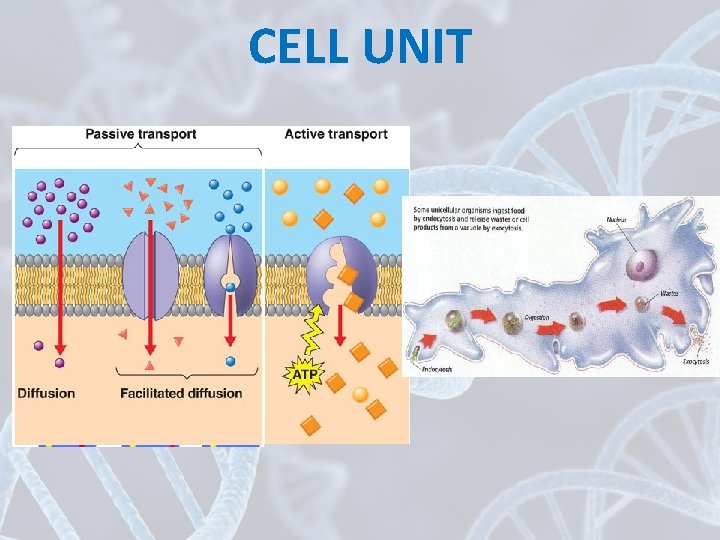
CELL UNIT Passive Transport Active Transport • Doesn’t require energy. • Solutes diffuse through a channel inside the protein’s interior. • Net movement is down concentration gradient (from high concentration to low concentration) • Diffusion, facilitate diffusion, osmosis • Requires ATP • Protein is an ATPase • • pump Pumps solute against its concentration gradient (from low to high) Endocytosis, Exocytosis, membrane transport proteins
CELL UNIT
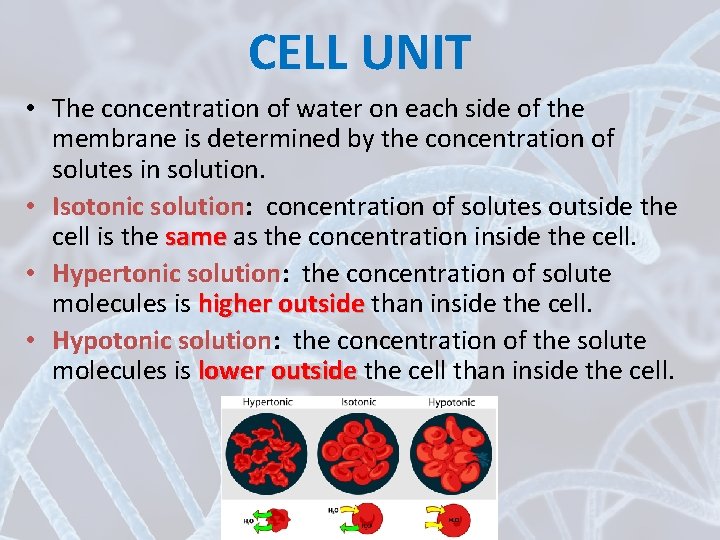
CELL UNIT • The concentration of water on each side of the membrane is determined by the concentration of solutes in solution. • Isotonic solution: concentration of solutes outside the cell is the same as the concentration inside the cell. • Hypertonic solution: the concentration of solute molecules is higher outside than inside the cell. • Hypotonic solution: the concentration of the solute molecules is lower outside the cell than inside the cell.
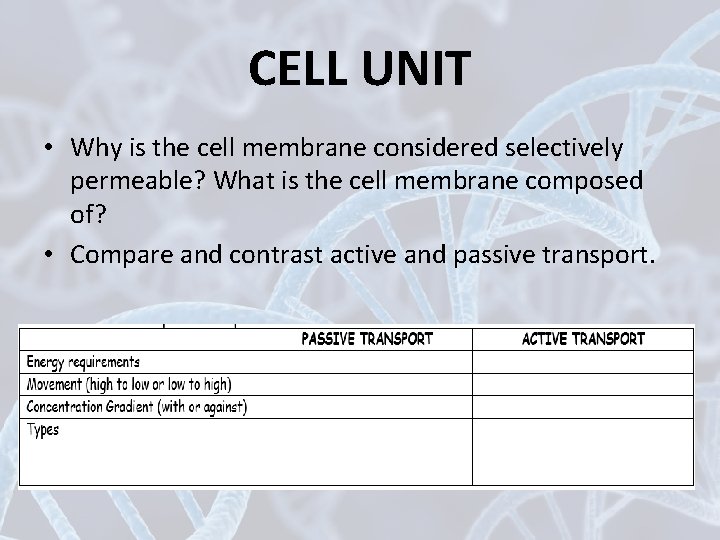
CELL UNIT • Why is the cell membrane considered selectively permeable? What is the cell membrane composed of? • Compare and contrast active and passive transport.
CELL UNIT 5. Identify the following types of transport: osmosis, facilitated diffusion, endocytosis, exocytosis, membrane pumps a. b. c. d. e. f. __________ is the movement of water from an area of high to low concentration. __________ is the movement of particles from an area of high to low concentration. __________ is the movement of materials through a membrane channel requiring the use of energy. __________ is movement of particles with the assistance of protein channels from an area of high to low concentration. __________ is the movement of materials to the outside of the cell using energy. __________ is the movement of materials to the inside of the cell using energy.
CELL UNIT There are 3 types of solutions – isotonic, hypertonic and hypotonic. Identify the solutions. a. concentration of solute outside and inside the cell are equal ______ b. concentration of solute is higher outside than inside the cell ______ c. concentration of solute is lower outside than inside the cell ______ d. water moves out of cell ________ e. water moves in the cell _______ f. no net movement of water _______ g. causes the cell to shrink ________ h. causes the cell to swell _________ i. preferred solution for plant cells __________ j. preferred solution for animal cells __________
CELL UNIT
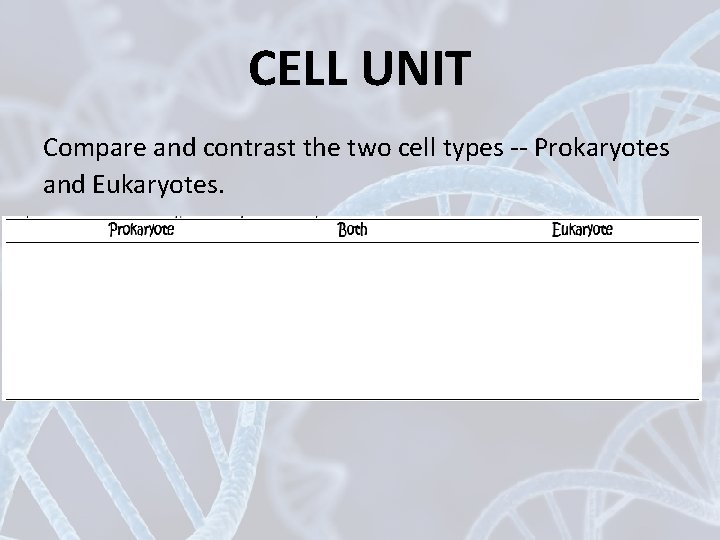
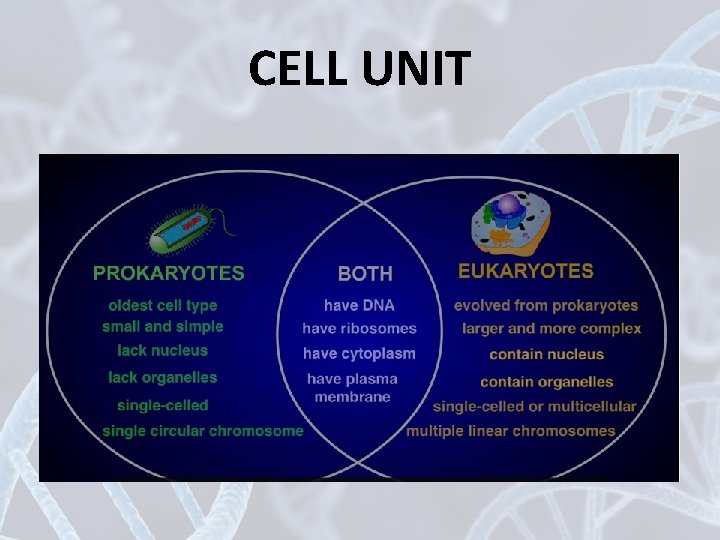
CELL UNIT Compare and contrast the two cell types -- Prokaryotes and Eukaryotes.
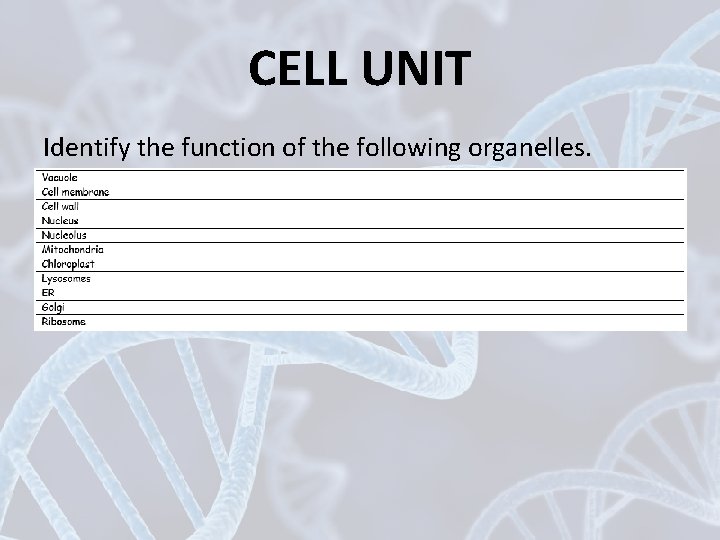
CELL UNIT Identify the function of the following organelles.
CELL UNIT • Vacuole: Saclike structures (vesicle) that store amino acids, sugars, metabolic and toxic waste; stores water absorbed by the cell • Cell Membrane: Serves as a barrier between the cell and its environment. Controls the movement of materials in and out of the cell to maintain homeostasis. • Cell Wall: Thick, inflexible outer layer surrounding the cell membrane that provides support and protection.
CELL UNIT • Nucleus: Stores the genetic information in DNA. • Nucleolus: Non-membrane structure located in nucleus where ribosomes are produced. • Mitochondria: Site of aerobic cellular respiration - Uses energy from food to make ATP (adenosine triphosphate) that the cell can use to grow, develop and move; has own DNA and can self replicate
CELL UNIT • Chloroplast: Plastid only found in plants and algae; site of photosynthesis - transforming sunlight energy directly into food; contains green pigment called chlorophyll; has own DNA & can self replicate • Lysosome: Vesicle containing digestive enzymes that break down and recycle organic compounds. Stomach of the cell; destroys cell parts, the entire cell or pathogens • Endoplasmic Reticulum: Reticulum Membrane system of channels and flatten sacs that is continuous with the nuclear membrane and extends through cytoplasm. Aids protein synthesis and transport of materials.
CELL UNIT • Golgi Apparatus: Flattened sacs that contain enzymes for modification of proteins produced in rough ER then packages proteins inside transport vesicles and sends them to their destination. • Ribosomes: Ribosomes Non-membrane structures that are attached to the Rough ER or free in the cytoplasm and synthesizes proteins.
CELL UNIT
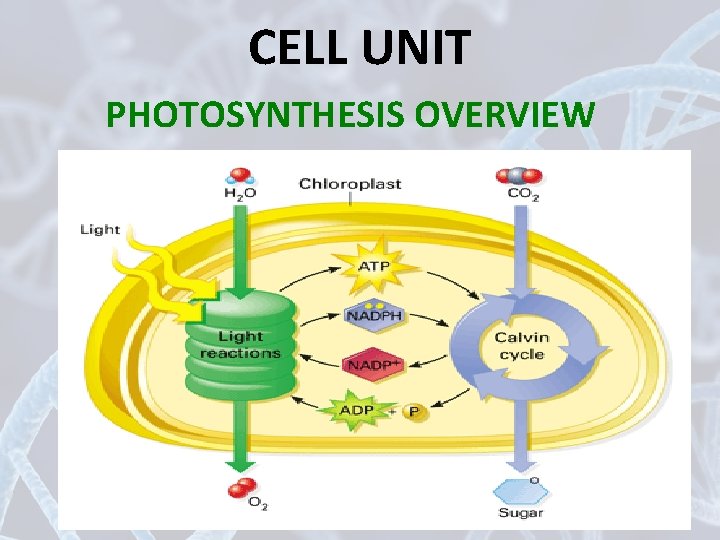
CELL UNIT PHOTOSYNTHESIS • • • Anabolic (small molecules combined) Endergonic (stores energy) Carbon dioxide (CO 2) requiring process that uses light energy (photons) and water (H 2 O) to produce organic macromolecules (glucose).
CELL UNIT PHOTOSYNTHESIS OVERVIEW 31
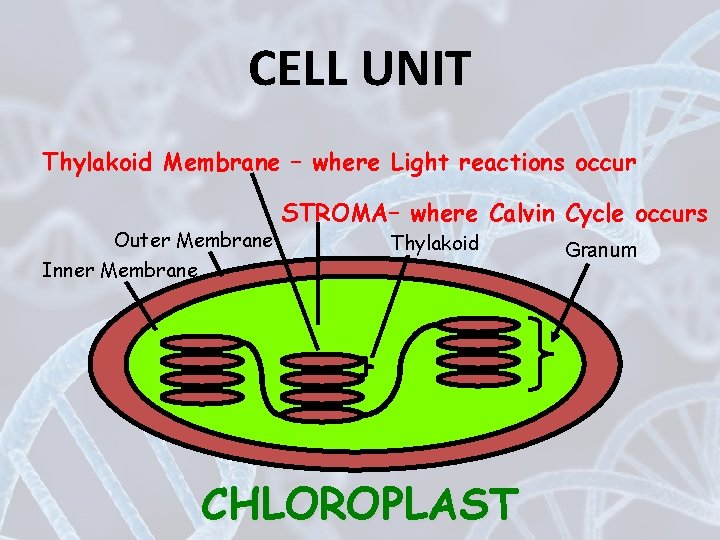
CELL UNIT Thylakoid Membrane – where Light reactions occur Outer Membrane Inner Membrane STROMA– where Calvin Cycle occurs Thylakoid CHLOROPLAST Granum
CELL UNIT TWO PARTS OF PHOTOSYNTHESIS SUN 1. Light Dependent Reaction Light energy is converted to chemical energy which is temporarily stored in the form of ATP and NADPH (chemical energy).
CELL UNIT 2. Light Independent Reaction (The Calvin Cycle) • CO 2 is used to make glucose molecules. • The chemical energy stored in ATP and NADPH powers to formation of glucose. • Also called Carbon Fixation or C 3 Fixation.
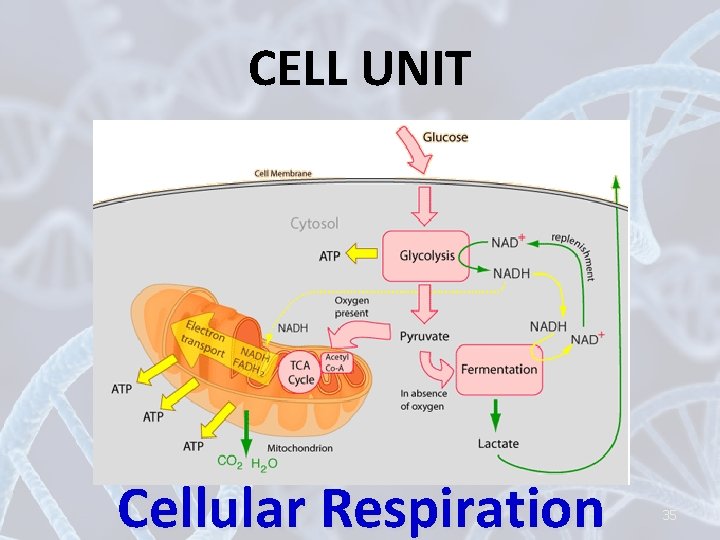
CELL UNIT Cellular Respiration 35
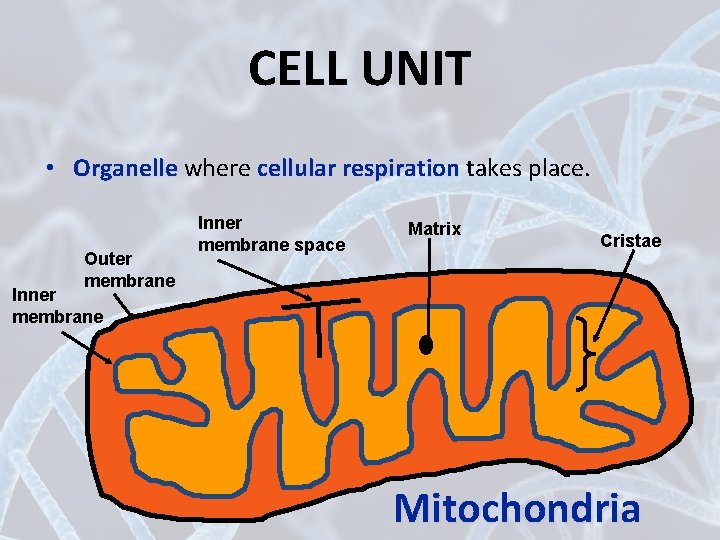
CELL UNIT • Organelle where cellular respiration takes place. Outer membrane Inner membrane space Matrix Cristae Inner membrane Mitochondria
CELL UNIT CELLULAR RESPIRATION Four main parts (reactions). 1. Glycolysis (splitting of sugar) 2. Grooming Phase 3. Krebs Cycle (Citric Acid Cycle) 4. Electron Transport Chain (ETC) and Oxidative Phosphorylation 37
CELL UNIT GLYCOLYSIS • Means “splitting glucose”. • Glucose is broken down into 2 pyruvate molecules. • Occurs in the cytoplasm (cytosol) just outside of mitochondria. • It is anaerobic which means it does NOT require oxygen. • YIELDS: 2 ATP, 2 NADPH, 2 pyruvate 38
CELL UNIT KREBS CYCLE (CITRIC ACID CYCLE) • Aerobic which means it requires O 2. • Each Acetyl-Co. A enters the Krebs Cycle resulting in two complete cycles to get yield. • Location: mitochondrial matrix. • It takes 2 turns of the Krebs cycle to oxidize 1 glucose molecule. • Total net yield (2 turns of krebs cycle) 2 - ATP (substrate-level phosphorylation) 8 – NADH 2 - FADH 2 4 - CO 2
CELL UNIT • Electron Transport Chain (ETC) and Oxidative Phosphorylation (Chemiosmosis • Aerobic • Occurs in the cristae of the mitochondria. • Electron acceptors in the chain accept NADH/FADH 2 electrons. As electrons pass down a series of molecules to O 2 – the O 2 combines with H atoms to form H 2 O and ATP.
CELL UNIT FERMENTATION • Called anaerobic. • Occurs in cytoplasm when cells are deprived of oxygen. • Lactic acid forms during increased muscle activity. Cramps result from increased acidity level. • Alcohol fermentation occurs in fungi such as yeast and some bacteria produce ethanol and CO 2.
CELL UNIT NET ATP YIELD 1. 4 ATP - substrate-level phosphorylation 2. 2 ATP – Krebs Cycle 3. 32 ATP - ETC & oxidative ATP phosphorylation 38 ATP – TOTAL - 2 ATP used in glycolysis 36 ATP – NET TOTAL YIELD 42
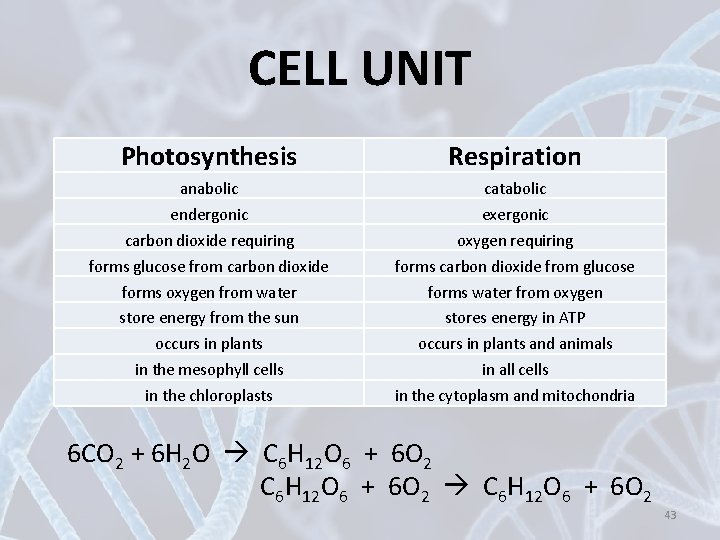
CELL UNIT Photosynthesis Respiration anabolic catabolic endergonic exergonic carbon dioxide requiring oxygen requiring forms glucose from carbon dioxide forms carbon dioxide from glucose forms oxygen from water forms water from oxygen store energy from the sun stores energy in ATP occurs in plants and animals in the mesophyll cells in all cells in the chloroplasts in the cytoplasm and mitochondria 6 CO 2 + 6 H 2 O C 6 H 12 O 6 + 6 O 2 43
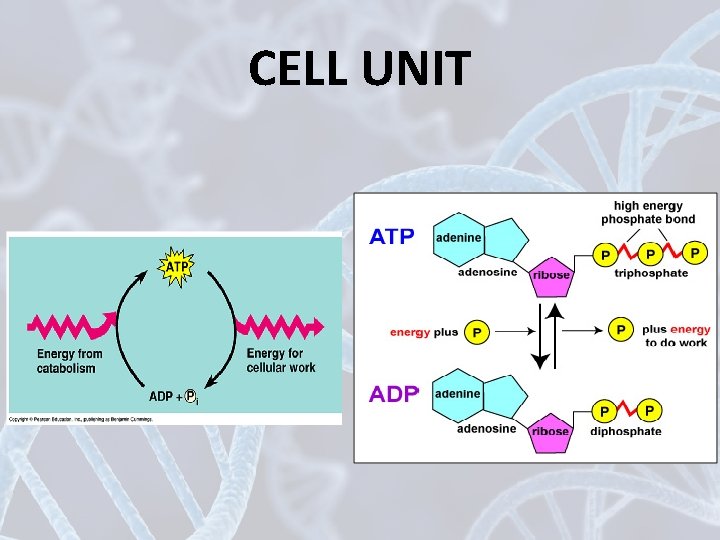
CELL UNIT 1. Explain how you form ATP and how you break it apart to form ADP. 2. Write the formula for photosynthesis. Circle the reactants and underline the products. 3. Define photosynthesis. Where does photosynthesis occur in the cell? 4. Briefly explain the 2 steps of photosynthesis.
CELL UNIT 5. Define respiration. Where does cell respiration occur in the cell? 6. Write the formula for cellular respiration. Circle the reactants and underline the products. 7. Briefly explain the 3 steps of cell respiration. 8. What happens if no O 2 is available after glycolysis? 9. Compare and contrast the respiration and photosynthesis.
- Slides: 45