
Middleware for Distributed Systems Old pals and the
Middleware for Distributed Systems Old pals and the new kid(s) on the block Walter Kriha
What is Middleware? software that helps two separate systems communicate seamlessly. (www. knownow. com/middleware/lexicon. html) In a strict sense middleware is transport software that is used to move information from one program to one or more other programs, shielding the developer from dependencies on communication protocols, operating systems and hardware platform (“plumbing”) (www. talarian. com)
The Transparency Dogma • Middleware is supposed to hide remote-ness and concurrency by hiding distribution behind local programming language constructs Critique: Jim Waldo, SUN Full transparency is impossible and the price is too high
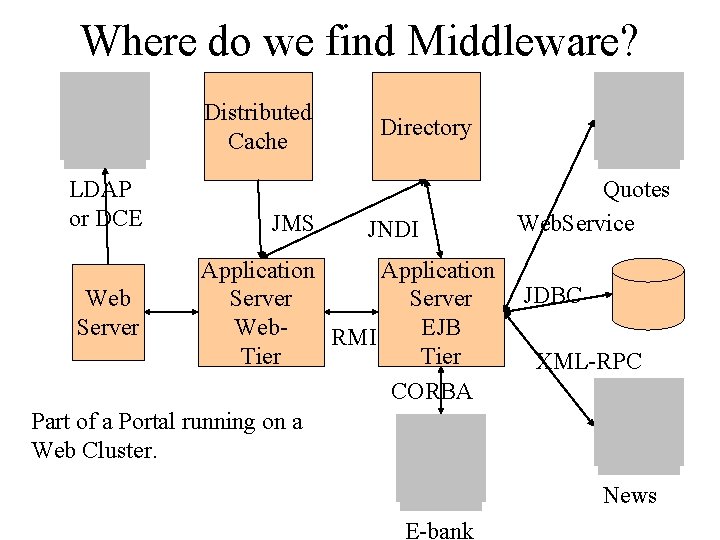
Where do we find Middleware? Distributed Cache LDAP or DCE JMS Directory JNDI Application Web Server Web. EJB Server RMI Tier CORBA Part of a Portal running on a Web Cluster. Quotes Web. Service JDBC XML-RPC News E-bank
Classification • • Remote Procedure Calls (RPCs) Object Request Brokers (ORBs) Message Oriented Middleware (MOMs) Others
The “ilities” • • Reliability Availability Security Scalability Quality Performance Maintainability Before using a specific middleware, always make sure that the “ilities” aka nonfunctional requirements are met. Middleware almost always differs implementation quality between vendors.
Real-World Problems • Skills/Understanding: Best practice patterns? • Single-Point-Of-Failures: replication, loadbalancing etc. • Tooling: generators, deployment tools • “Brittle-ness” if interfaces change (Compiler “illusion”)
RPC type Middleware • E. g. Sun-RPC, OSF DCE • Main idea: distribute functions, use concurrent processing • On top of it: Distributed Directory, File system, Security (cells, principals) • XML-RPC over http (www. userland. com) Layer foundations: UUIDs, value vs. reference, marshaling, versioning etc.
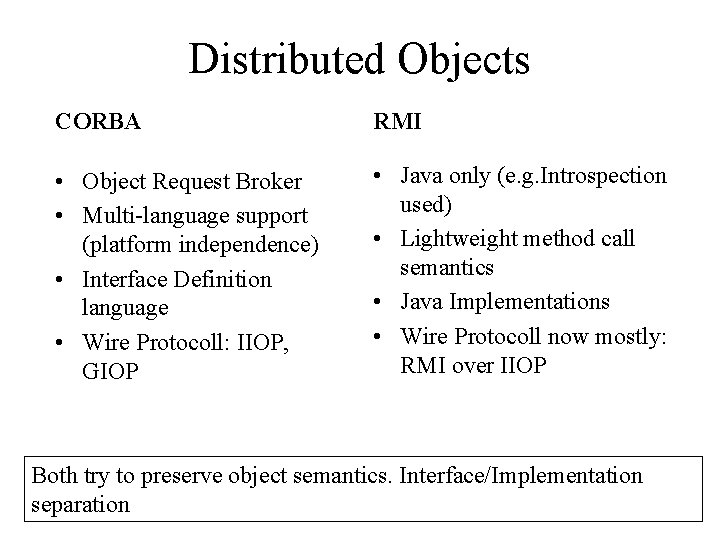
Distributed Objects CORBA RMI • Object Request Broker • Multi-language support (platform independence) • Interface Definition language • Wire Protocoll: IIOP, GIOP • Java only (e. g. Introspection used) • Lightweight method call semantics • Java Implementations • Wire Protocoll now mostly: RMI over IIOP Both try to preserve object semantics. Interface/Implementation separation
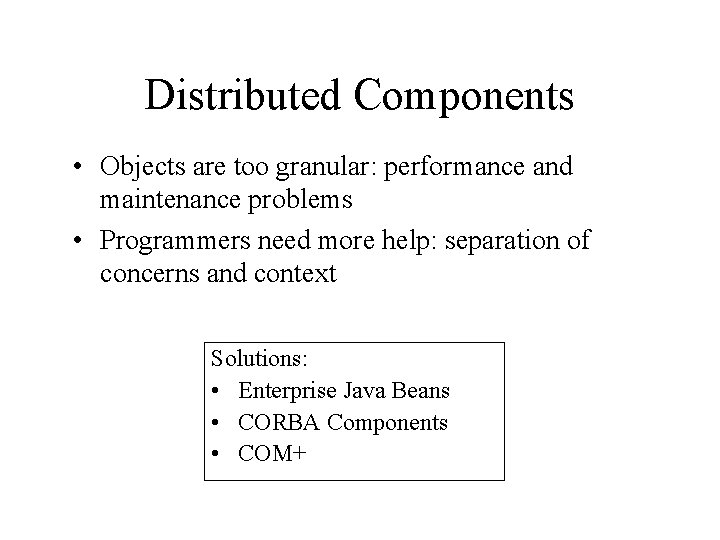
Distributed Components • Objects are too granular: performance and maintenance problems • Programmers need more help: separation of concerns and context Solutions: • Enterprise Java Beans • CORBA Components • COM+
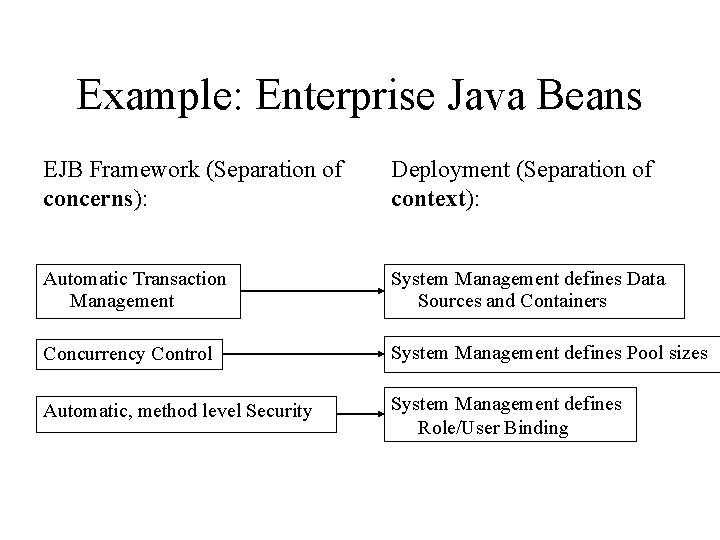
Example: Enterprise Java Beans EJB Framework (Separation of concerns): Deployment (Separation of context): Automatic Transaction Management System Management defines Data Sources and Containers Concurrency Control System Management defines Pool sizes Automatic, method level Security System Management defines Role/User Binding
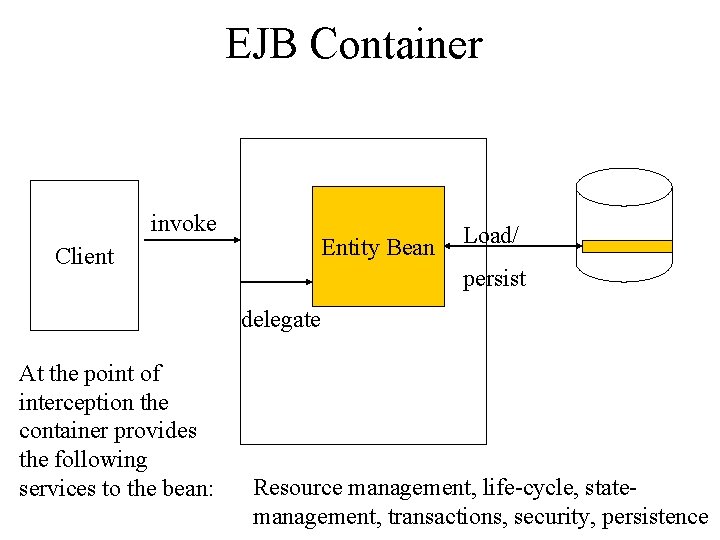
EJB Container invoke Client Entity Bean Load/ persist delegate At the point of interception the container provides the following services to the bean: Resource management, life-cycle, statemanagement, transactions, security, persistence
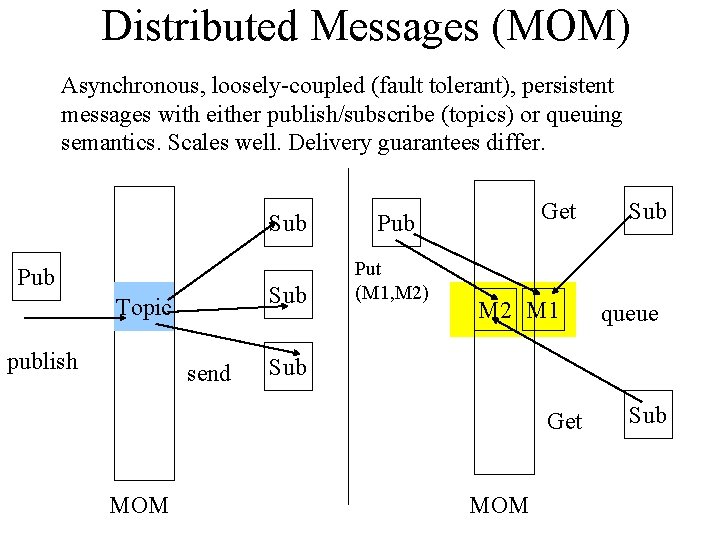
Distributed Messages (MOM) Asynchronous, loosely-coupled (fault tolerant), persistent messages with either publish/subscribe (topics) or queuing semantics. Scales well. Delivery guarantees differ. Pub Topic publish send Sub Pub Sub Put (M 1, M 2) Get M 2 M 1 queue Sub Get MOM Sub
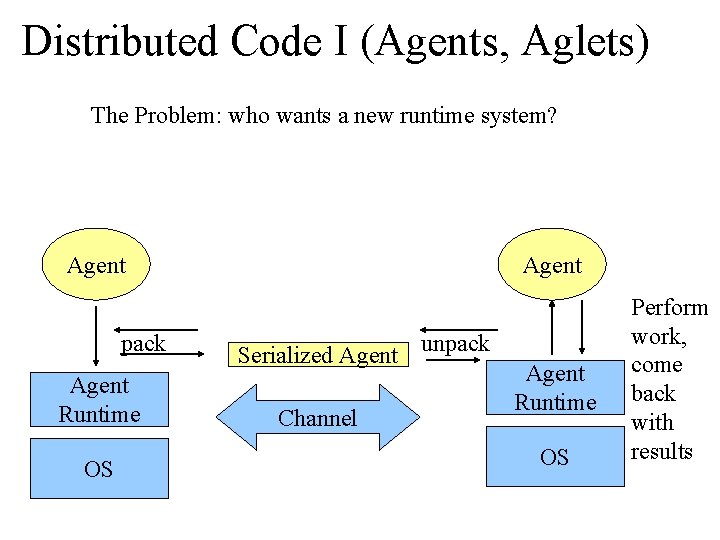
Distributed Code I (Agents, Aglets) The Problem: who wants a new runtime system? Agent pack Agent Runtime OS Agent Serialized Agent unpack Channel Agent Runtime OS Perform work, come back with results
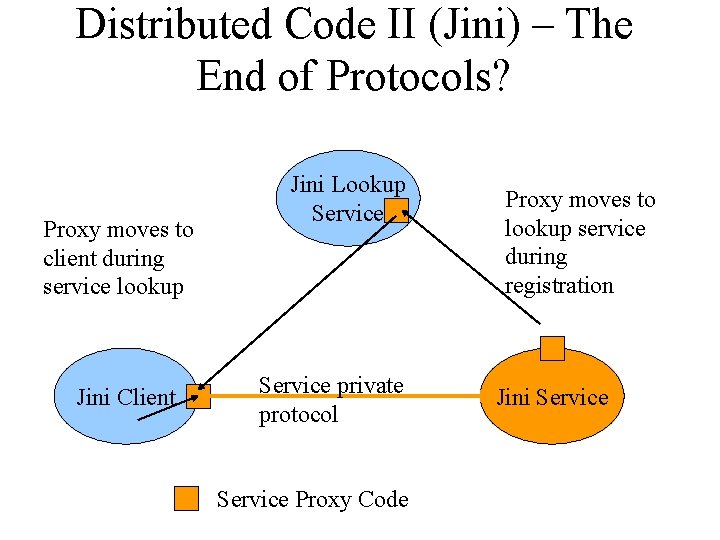
Distributed Code II (Jini) – The End of Protocols? Proxy moves to client during service lookup Jini Client Jini Lookup Service private protocol Service Proxy Code Proxy moves to lookup service during registration Jini Service
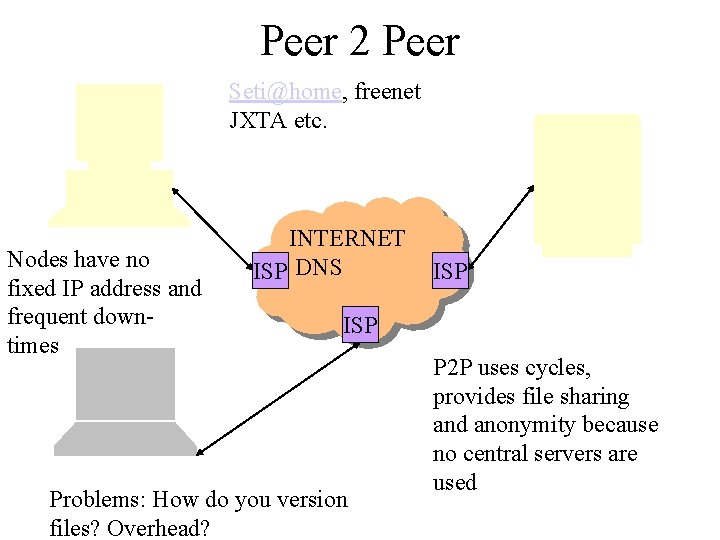
Peer 2 Peer Seti@home, freenet JXTA etc. Nodes have no fixed IP address and frequent downtimes INTERNET ISP DNS ISP Problems: How do you version files? Overhead? P 2 P uses cycles, provides file sharing and anonymity because no central servers are used
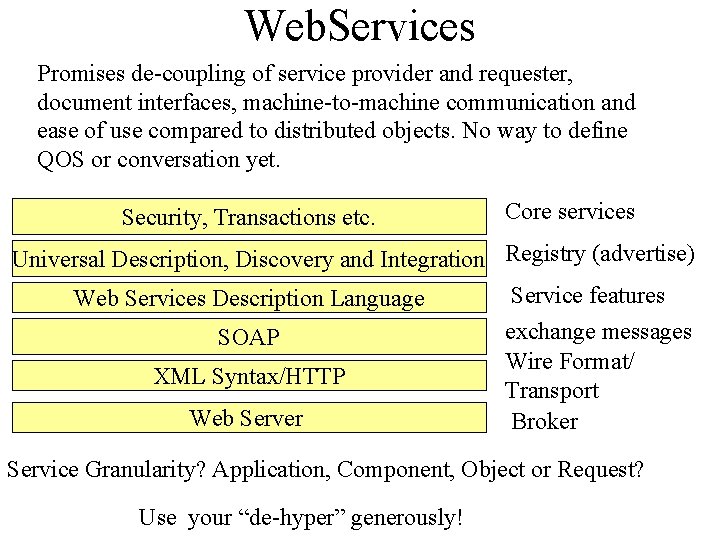
Web. Services Promises de-coupling of service provider and requester, document interfaces, machine-to-machine communication and ease of use compared to distributed objects. No way to define QOS or conversation yet. Security, Transactions etc. Core services Universal Description, Discovery and Integration Registry (advertise) Web Services Description Language SOAP XML Syntax/HTTP Web Server Service features exchange messages Wire Format/ Transport Broker Service Granularity? Application, Component, Object or Request? Use your “de-hyper” generously!
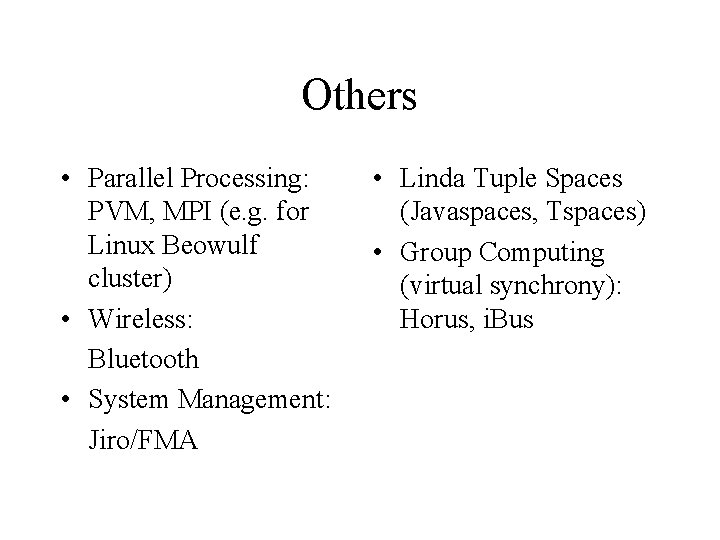
Others • Parallel Processing: PVM, MPI (e. g. for Linux Beowulf cluster) • Wireless: Bluetooth • System Management: Jiro/FMA • Linda Tuple Spaces (Javaspaces, Tspaces) • Group Computing (virtual synchrony): Horus, i. Bus
Resources • Jim Waldo, End of Protocols • Marco Boger, Java in verteilten Systemen • Ken Birman, Building secure and reliable Network Application • Object. Spectrum 7/2001, Web. Services • Java Magazine 7/2001, Java Message Service • www. theserverside. com on EJBs • Clay Shirky, What is P 2 P and what Isn’t (www. openp 2 p. com) • S. Tai, I. Rouvellou, Strategies for Integrating Messaging and Distributed Object Transactions
- Slides: 19