
Middle School Physical Science Space Introduction Grade 6
- Slides: 12
Middle School Physical Science Space Introduction – Grade 6 -7
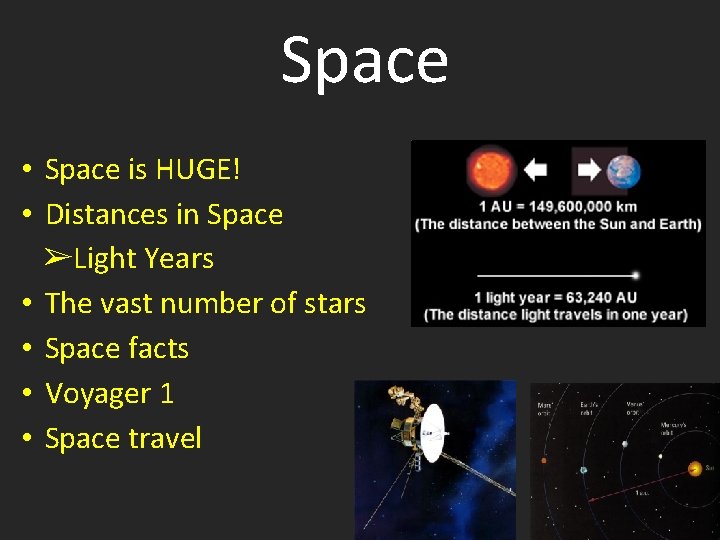
Space • Space is HUGE! • Distances in Space ➢Light Years • The vast number of stars • Space facts • Voyager 1 • Space travel
The Universe • The universe is everything that exists, including all matter and energy everywhere. The study of what is beyond Earth is called astronomy! Images of the Universe Video
Space is Huge! Measuring Distance in Space • Space is so vast we cannot measure the distance using normal means (km, miles, etc. ) • E. g. , distance from the Earth to the Sun = approximately 150 million km and the Sun is not that far away • Since space is so huge we use light years to measure distances
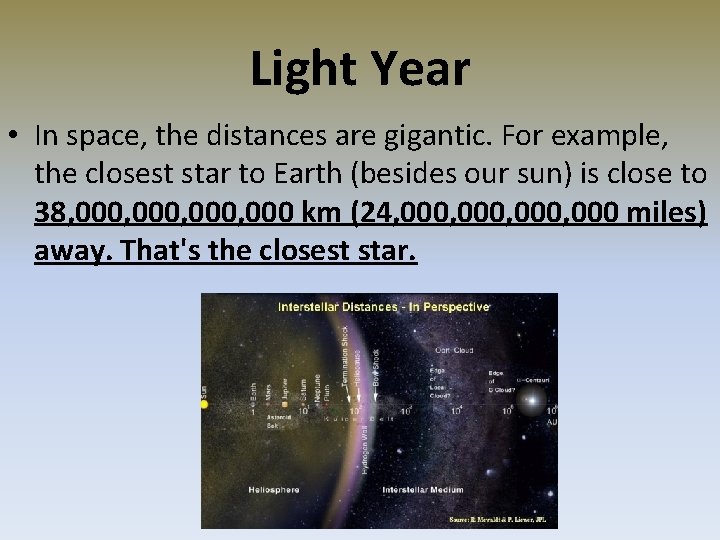
Light Year • In space, the distances are gigantic. For example, the closest star to Earth (besides our sun) is close to 38, 000, 000 km (24, 000, 000 miles) away. That's the closest star.
A Light Year • Light travels at 300, 000 kilometres per second. • A light year is the distance that light can travel in a year or: 9, 460, 800, 000 km (63, 072 A. U. ’s)
How HUGE is Space? Our Universe
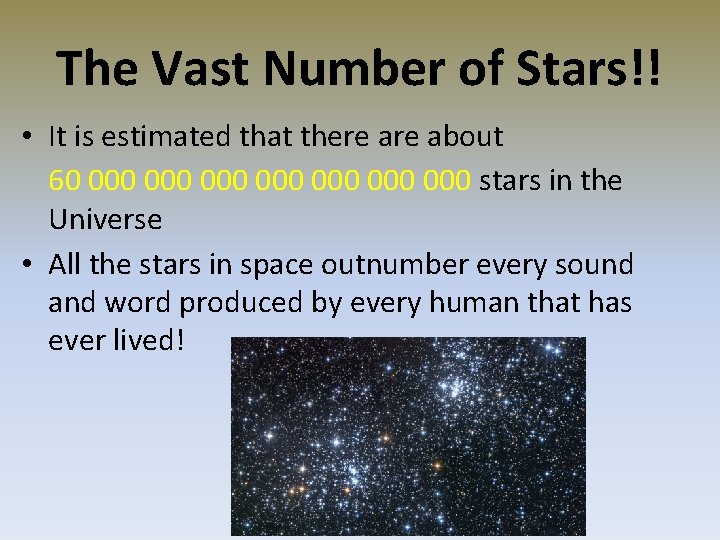
The Vast Number of Stars!! • It is estimated that there about 60 000 000 stars in the Universe • All the stars in space outnumber every sound and word produced by every human that has ever lived!
1 light year = 9, 460, 800, 000 km Distance from Earth to • Neptune (farthest planet in our solar system) = 2, 700, 000 miles = 4, 300, 000 km = 28. 67 A. U. = 0. 000455 light years • Alpha Centauri (nearest star) → over 4 light years • The centre of our galaxy → 27, 700 light years • Andromeda, nearest large galaxy → 2, 900, 000 light years • Furthest galaxies seen in the universe → 15, 000, 000 light years – If we were still using km, the distance to the furthest galaxies seen would be 145, 000, 000, 000 km away!!
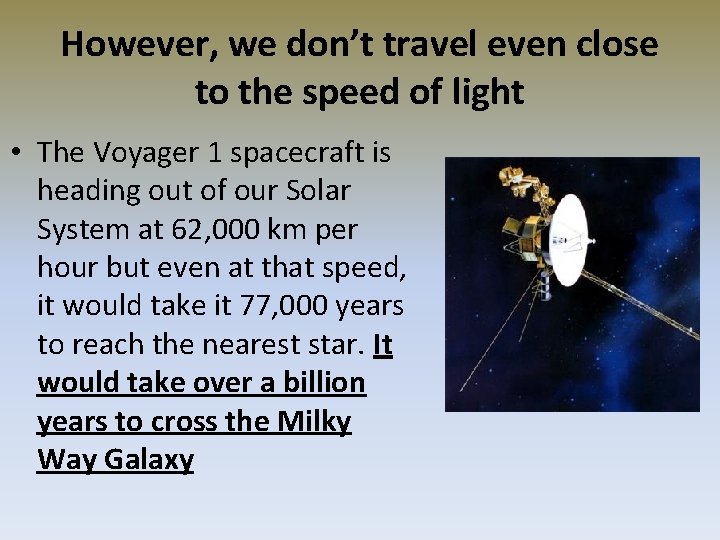
However, we don’t travel even close to the speed of light • The Voyager 1 spacecraft is heading out of our Solar System at 62, 000 km per hour but even at that speed, it would take it 77, 000 years to reach the nearest star. It would take over a billion years to cross the Milky Way Galaxy
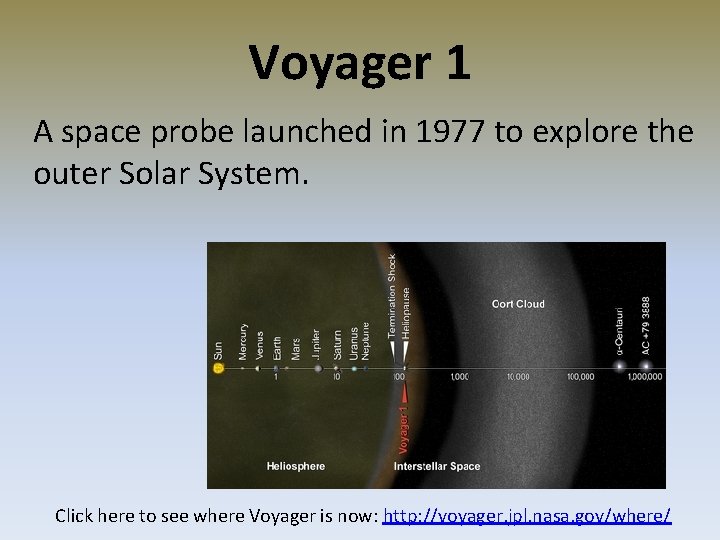
Voyager 1 A space probe launched in 1977 to explore the outer Solar System. Click here to see where Voyager is now: http: //voyager. jpl. nasa. gov/where/
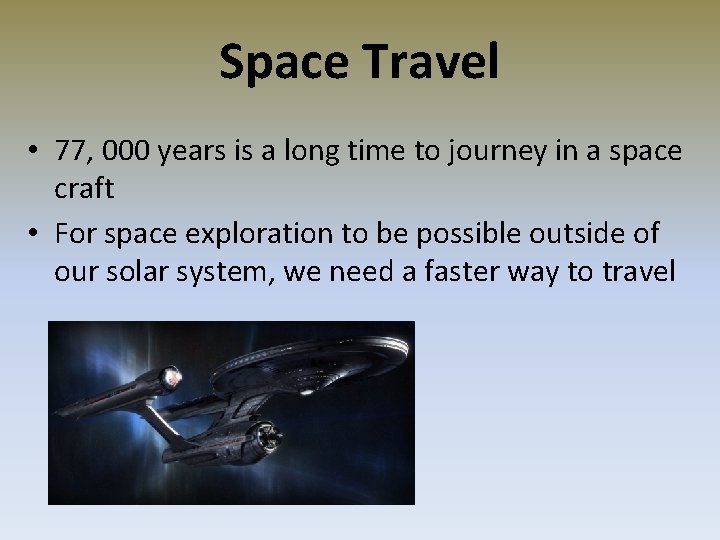
Space Travel • 77, 000 years is a long time to journey in a space craft • For space exploration to be possible outside of our solar system, we need a faster way to travel