
MIDDLE SCHOOL MATHEMATICS SOME STANDARDS ARE MORE DIFFICULT




- Slides: 62
MIDDLE SCHOOL MATHEMATICS SOME STANDARDS ARE MORE DIFFICULT TO INTERPRET AND UNDERSTAND IN MATHEMATICS Summer 2014 College and Career-Readiness Conference
Session Protocol Based on RIGOR: Reduce Side Chatter Involve Yourself in the Process Give Your Thoughts and Ideas Open Your Mind to How You Can Change Instruction Remember to Silence Electronic Devices
6. NS. A. 1 Cluster A. Apply and extend previous understandings of multiplication and division to divide fractions by fractions. Standard 1. Interpret and compute quotients of fractions, and solve word problems involving division of fractions by fractions, e. g. , by using visual fractions models and equations to represent the problem.
INVERT AND MULTIPLY
TODAY’S OUTCOMES Participants will: 1. Briefly review the instructional shift, COHERENCE, and make connections between division of fractions by fractions and other content from elementary school and middle school standards. 2. Explore a variety of models that each show what happens mathematically when values are divided by a fraction. 3. Compute quotients of fractions divided by fractions, and interpret the quotients.
OUTCOME #1 Participants will: 1. Review the instructional shift of COHERENCE, and make connections between division of fractions by fractions and other content from elementary school and middle school standards.
COHERENCE A purposeful placement of standards to create logical sequences of content topics that bridge across the grades, as well as across standards within each grade.
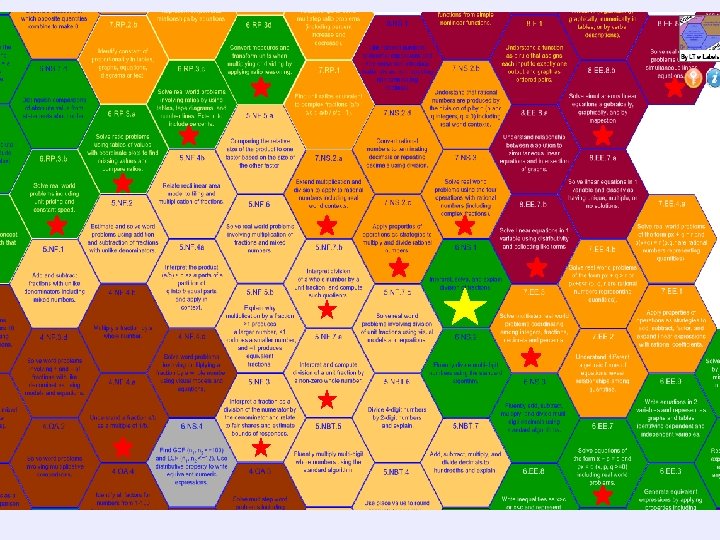
https: //www. turnonccmath. net
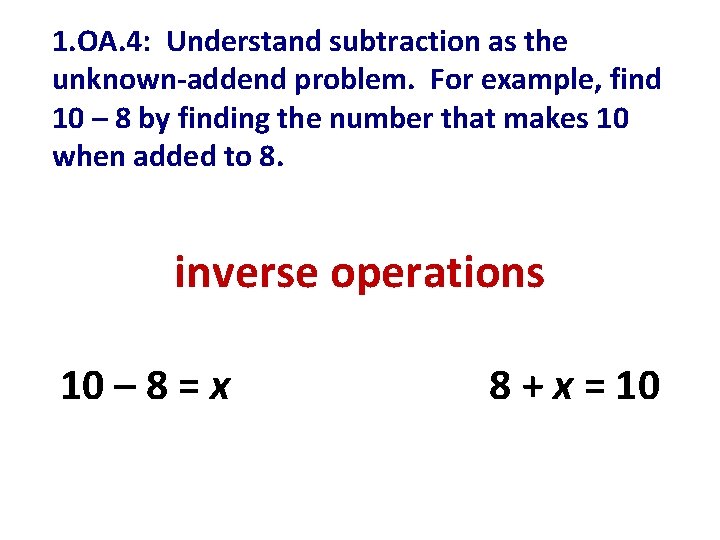
1. OA. 4: Understand subtraction as the unknown-addend problem. For example, find 10 – 8 by finding the number that makes 10 when added to 8. inverse operations 10 – 8 = x 8 + x = 10
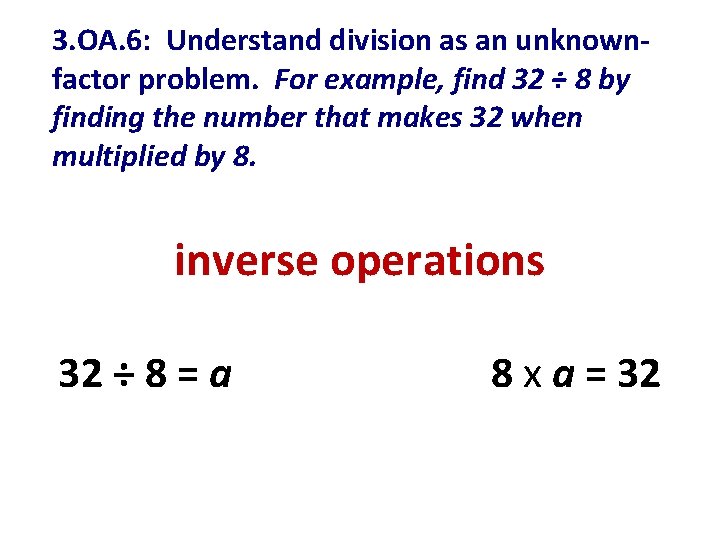
3. OA. 6: Understand division as an unknownfactor problem. For example, find 32 ÷ 8 by finding the number that makes 32 when multiplied by 8. inverse operations 32 ÷ 8 = a 8 x a = 32
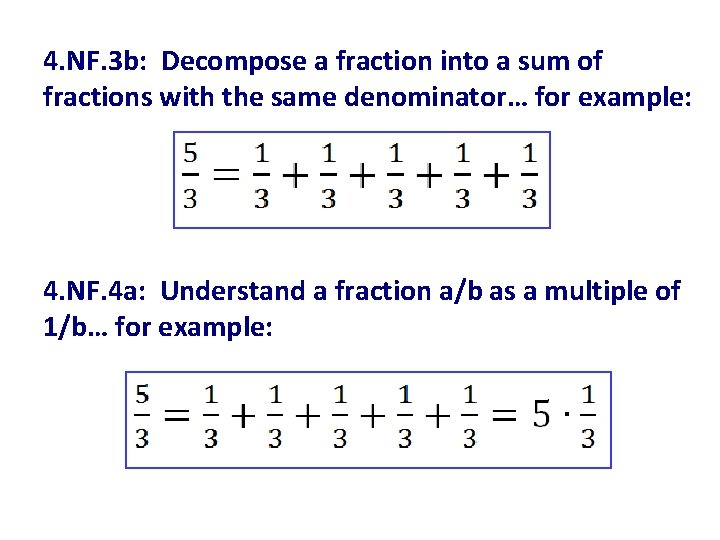
4. NF. 3 b: Decompose a fraction into a sum of fractions with the same denominator… for example: 4. NF. 4 a: Understand a fraction a/b as a multiple of 1/b… for example:
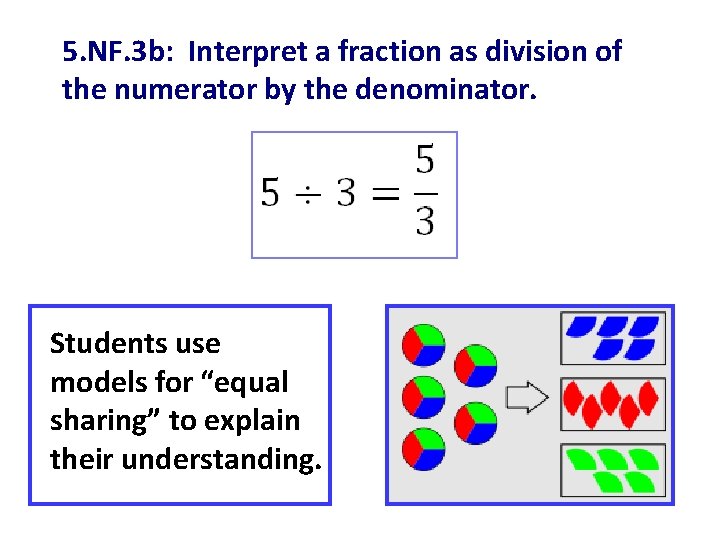
5. NF. 3 b: Interpret a fraction as division of the numerator by the denominator. Students use models for “equal sharing” to explain their understanding.
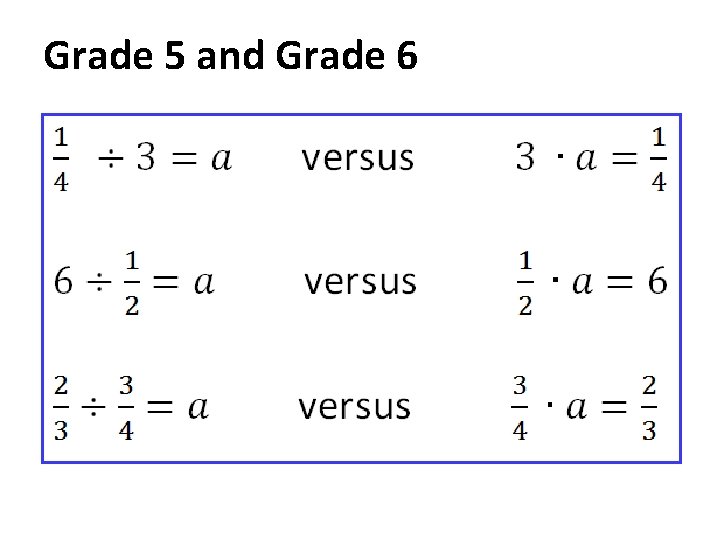
Grade 5 and Grade 6
OUTCOME #2 Participants will: 2. Explore a variety of models that each show what happens mathematically when values are divided by a fraction.
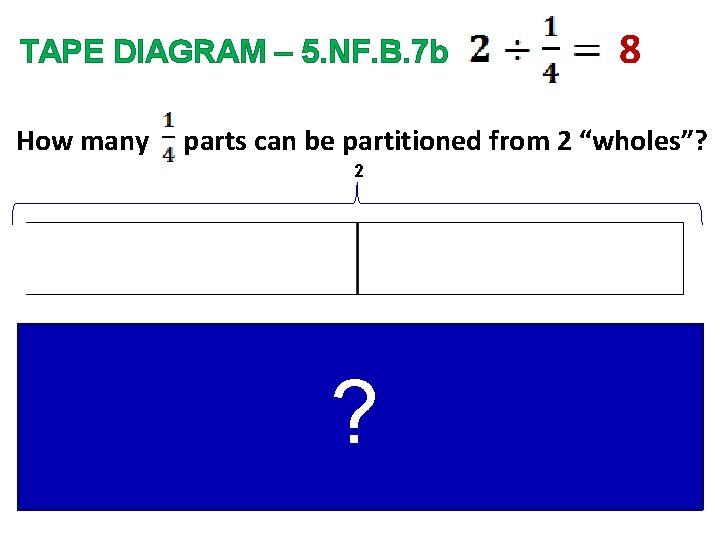
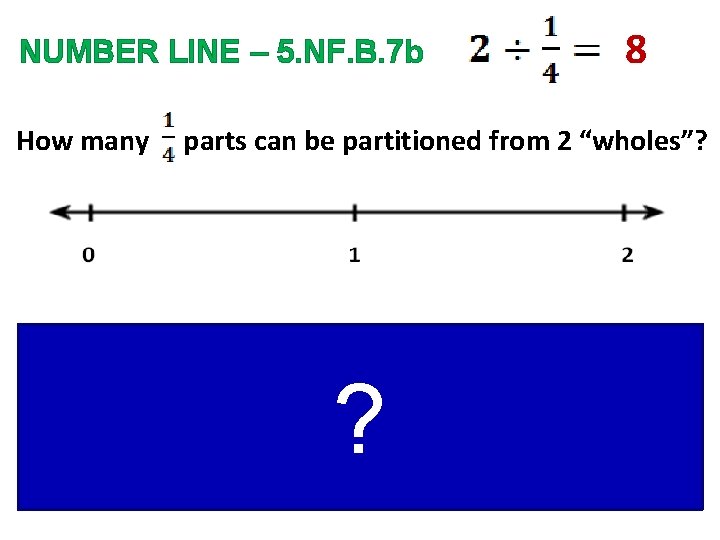
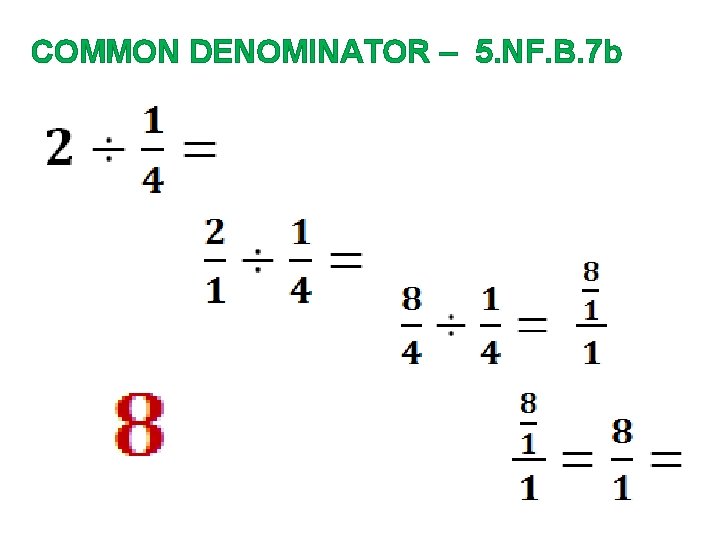
MODELS • Area Model • Number line model • Tape diagram model • Common denominator model
5. NF. B. 7 b: Interpret division of a whole number by a unit fraction, and compute such quotients
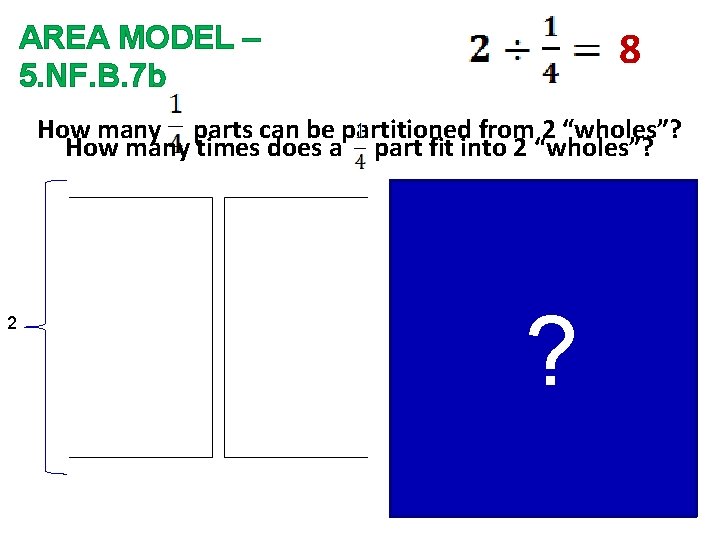
AREA MODEL – 5. NF. B. 7 b 8 How many parts can be partitioned from 2 “wholes”? How many times does a part fit into 2 “wholes”? 2 ? eight
TAPE DIAGRAM – 5. NF. B. 7 b How many 8 parts can be partitioned from 2 “wholes”? 2 ? eight
8 NUMBER LINE – 5. NF. B. 7 b How many one parts can be partitioned from 2 “wholes”? two three four five ? eight six seven eight
COMMON DENOMINATOR – 5. NF. B. 7 b
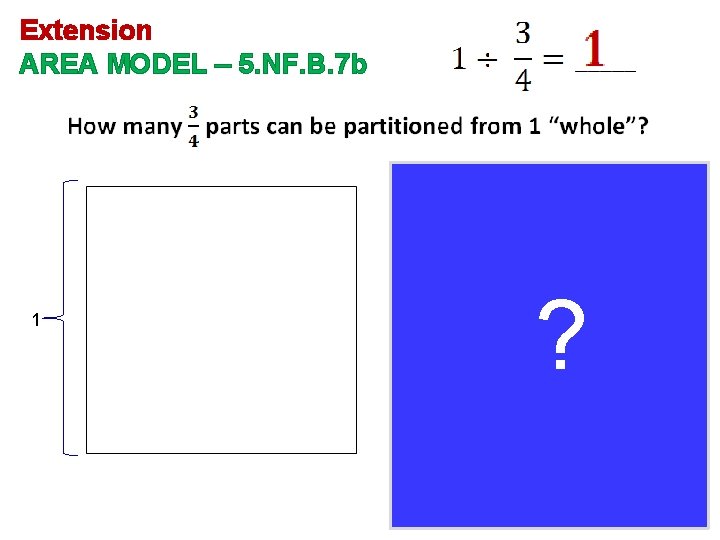
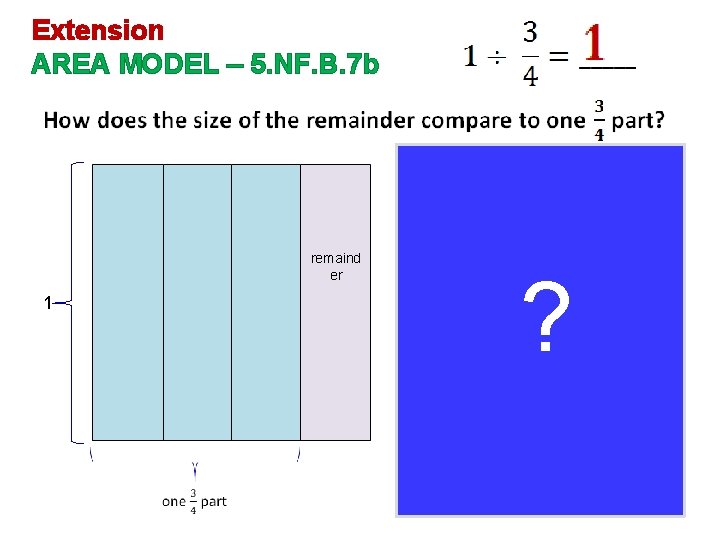
Extension AREA MODEL – 5. NF. B. 7 b 1 ? remainder
Extension AREA MODEL – 5. NF. B. 7 b remaind er 1 ? ? remainder
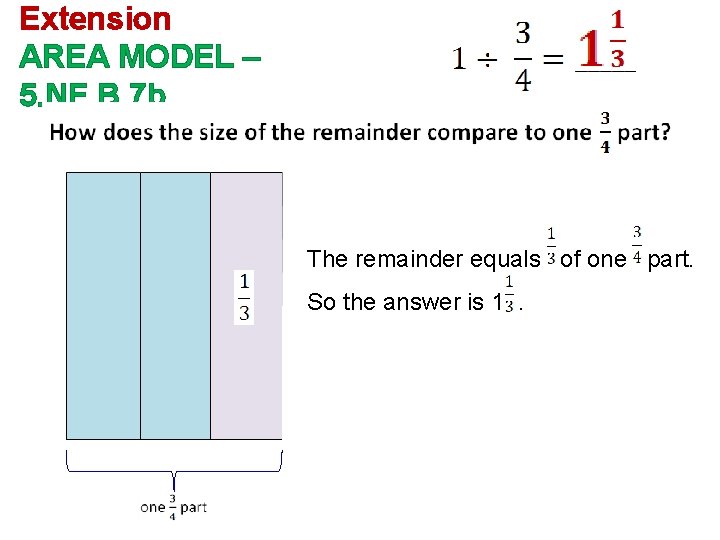
Extension AREA MODEL – 5. NF. B. 7 b The remainder equals of one part. So the answer is 1.
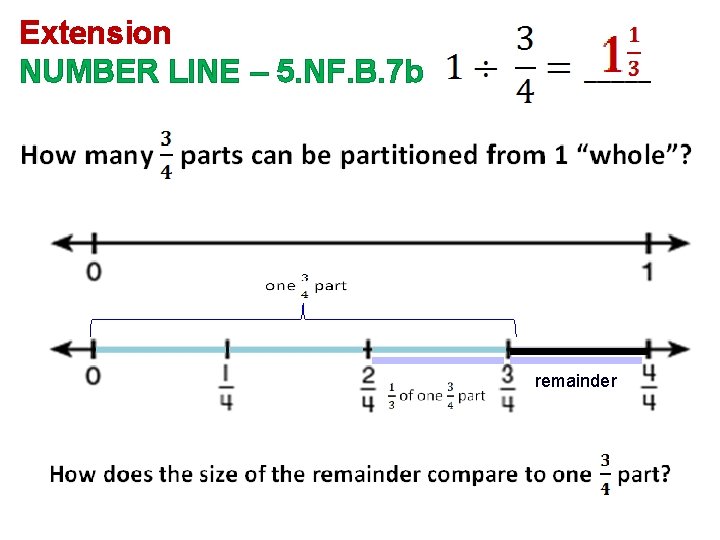
Extension NUMBER LINE – 5. NF. B. 7 b remainder
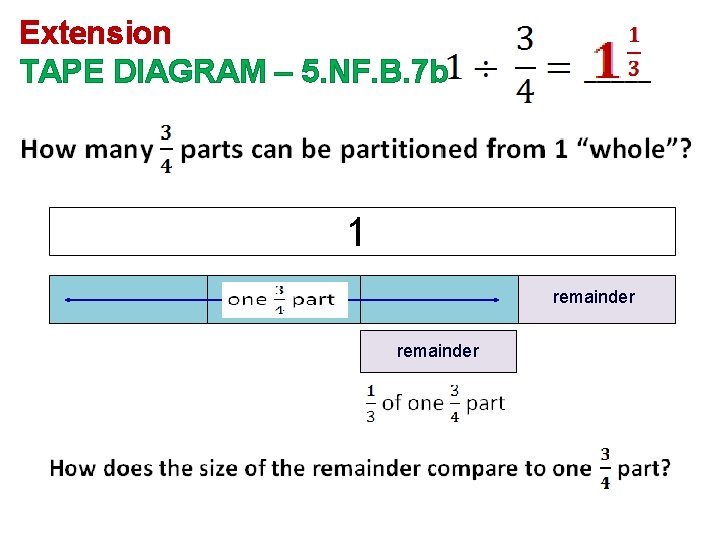
Extension TAPE DIAGRAM – 5. NF. B. 7 b 1 remainder
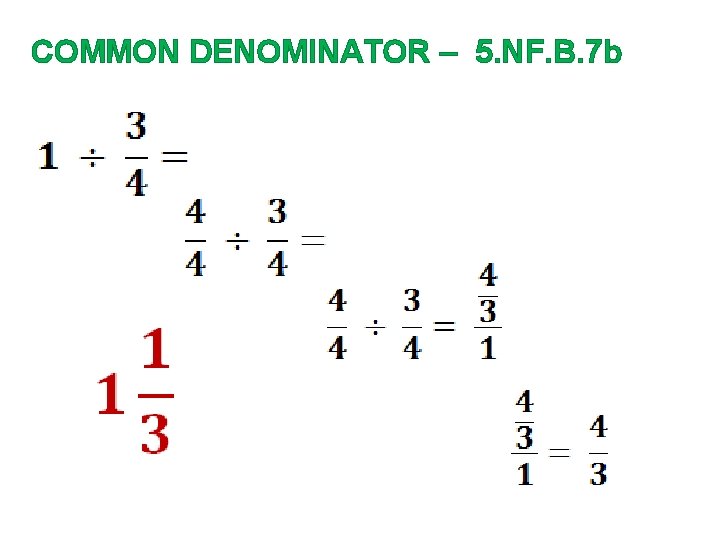
COMMON DENOMINATOR – 5. NF. B. 7 b
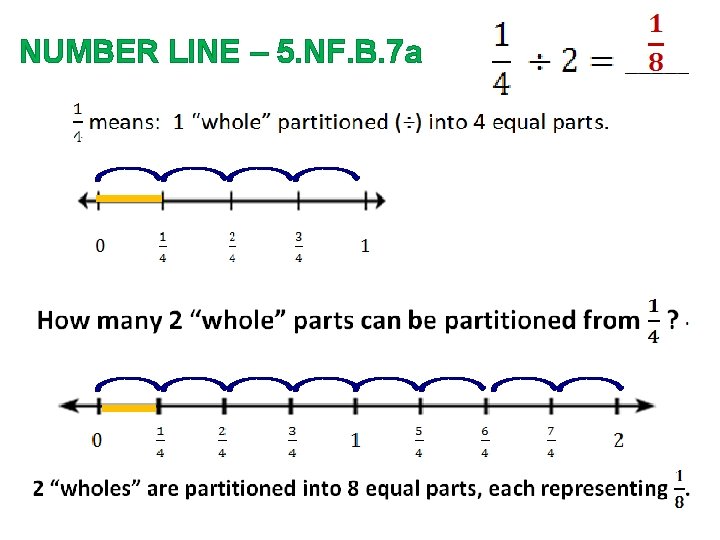
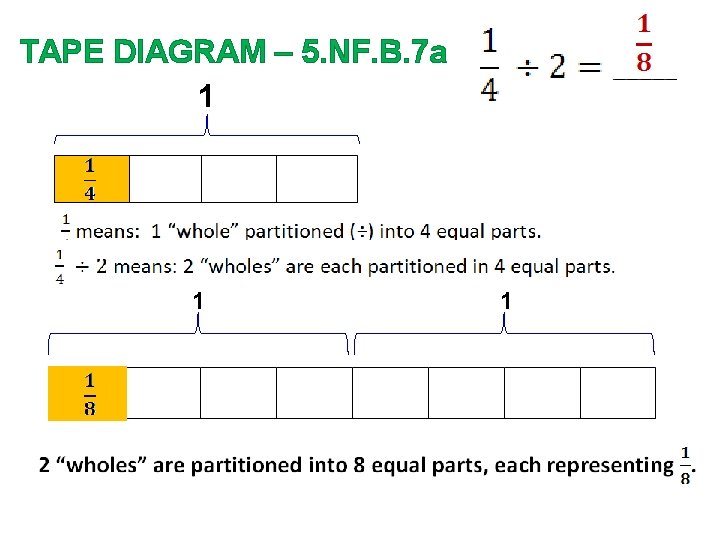
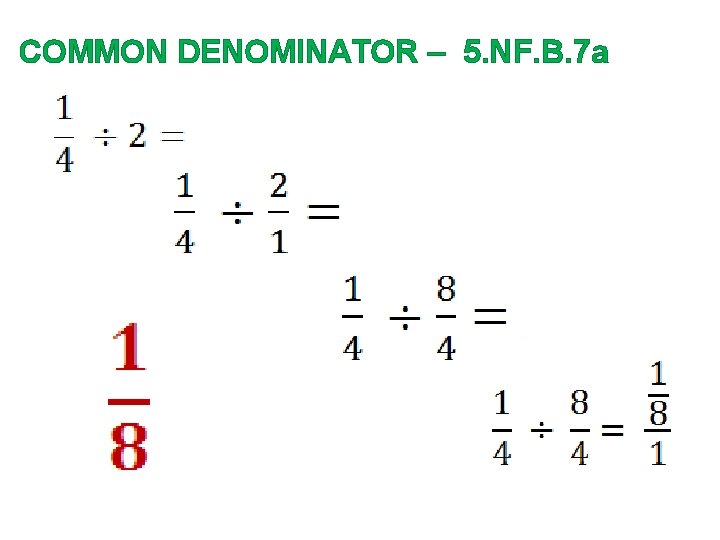
5. NF. B. 7 a: Interpret division of a unit fraction by a non-zero whole number, and compute such quotients.
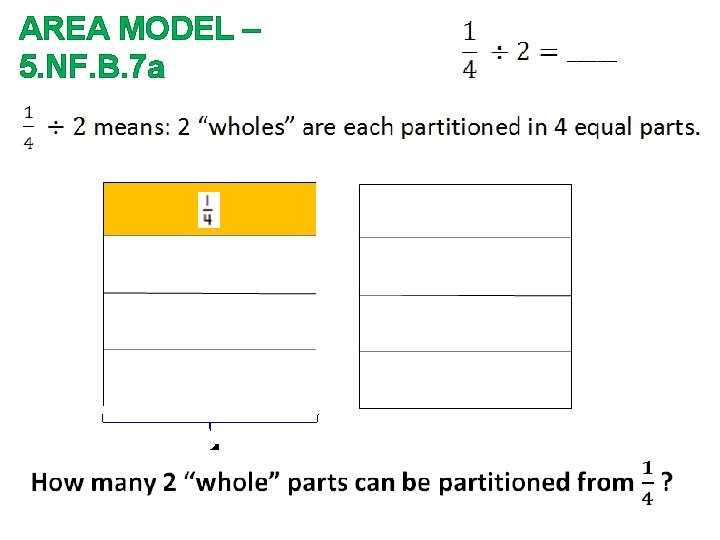
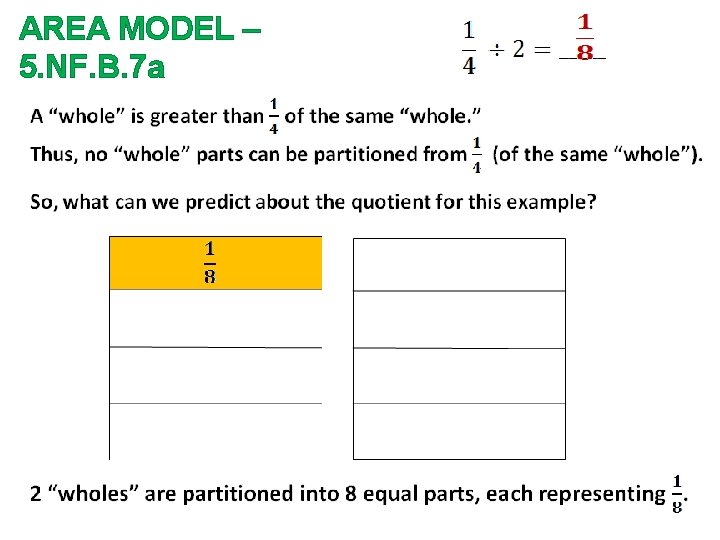
AREA MODEL – 5. NF. B. 7 a 1
AREA MODEL – 5. NF. B. 7 a The quotient must be a fraction!
NUMBER LINE – 5. NF. B. 7 a
TAPE DIAGRAM – 5. NF. B. 7 a 1 1 1
COMMON DENOMINATOR – 5. NF. B. 7 a
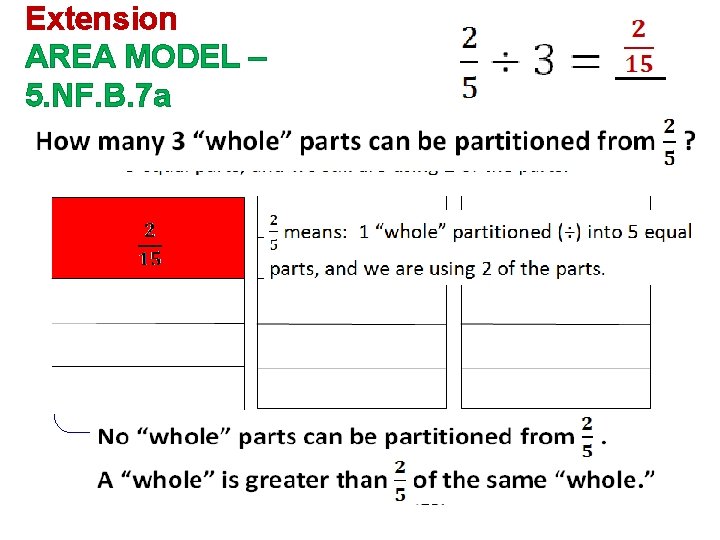
Extension AREA MODEL – 5. NF. B. 7 a 1
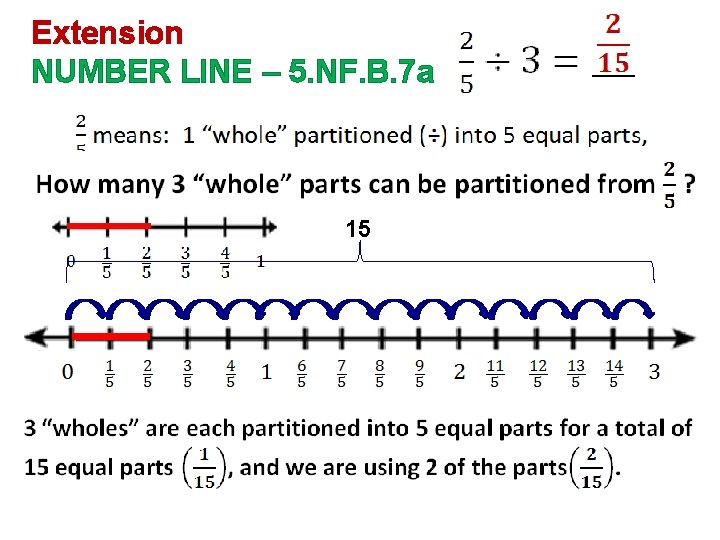
Extension NUMBER LINE – 5. NF. B. 7 a 15
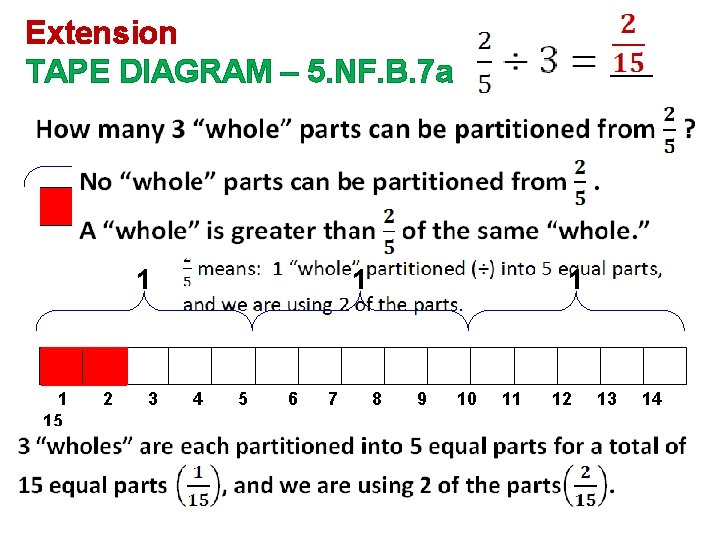
Extension TAPE DIAGRAM – 5. NF. B. 7 a 1 15 2 3 1 4 5 6 7 1 8 9 10 11 12 13 14
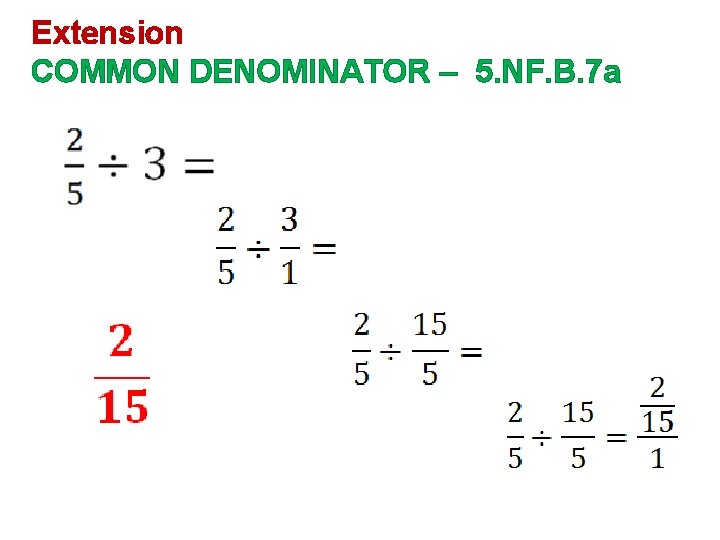
Extension COMMON DENOMINATOR – 5. NF. B. 7 a
OUTCOME #3 Participants will: 3. Compute quotients of fractions divided by fractions, and interpret the quotients.
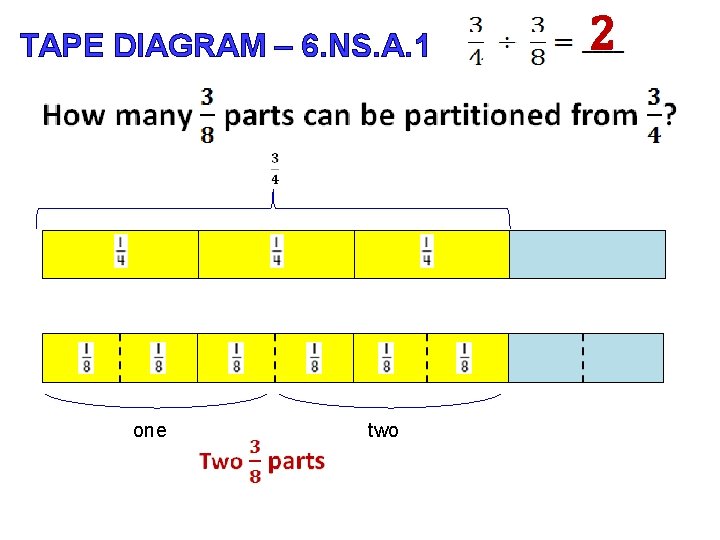
6. NS. A. 1: Interpret and compute quotients of fractions, and solve word problems involving division of fractions by fractions, e. g. , by using visual fractions models and equations to represent the problem.
6. NS. A. 1 - First Example When the dividend is greater than the divisor…
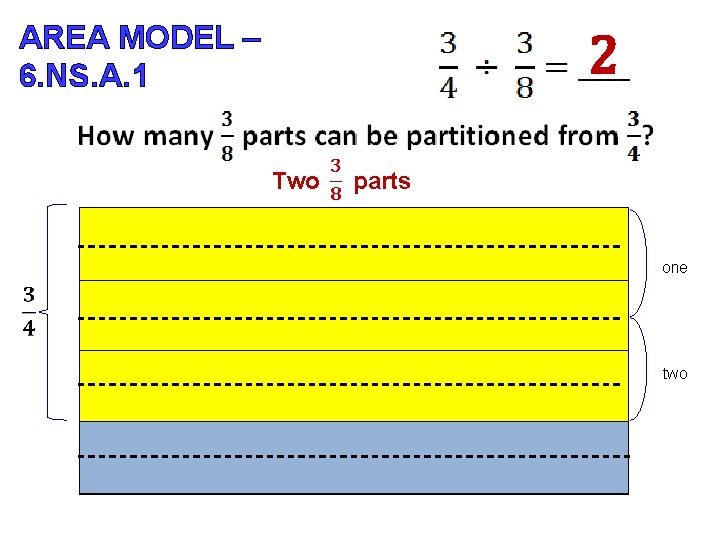
AREA MODEL – 6. NS. A. 1 2 Two parts one two
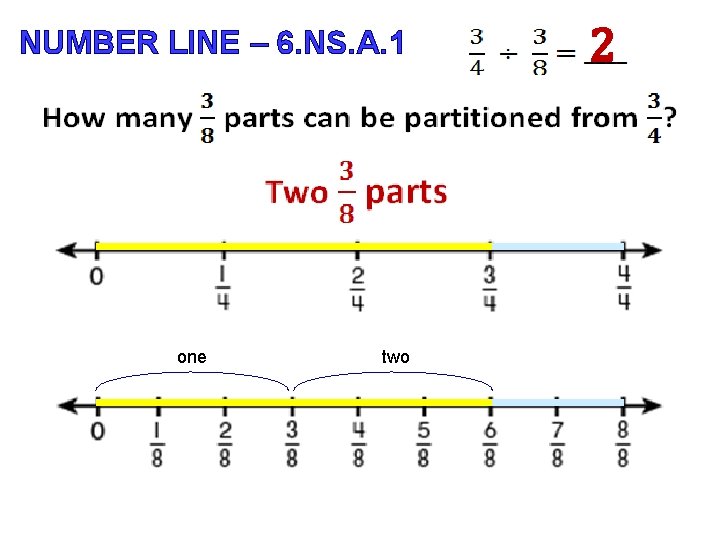
NUMBER LINE – 6. NS. A. 1 one two 2
TAPE DIAGRAM – 6. NS. A. 1 one two 2
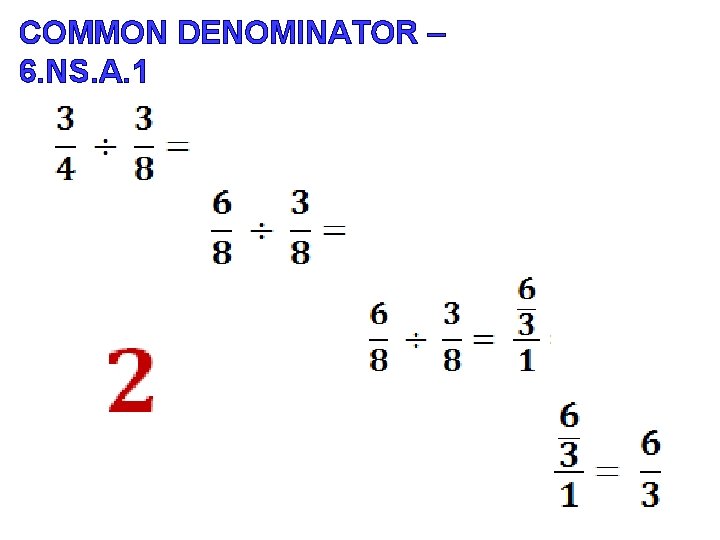
COMMON DENOMINATOR – 6. NS. A. 1
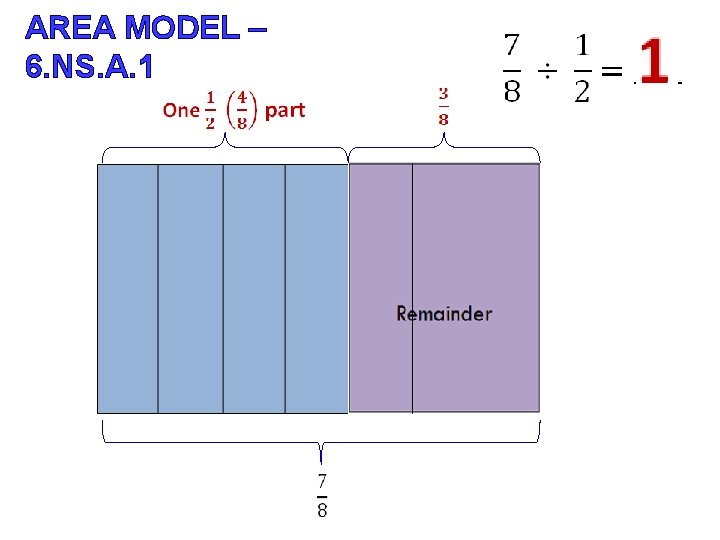
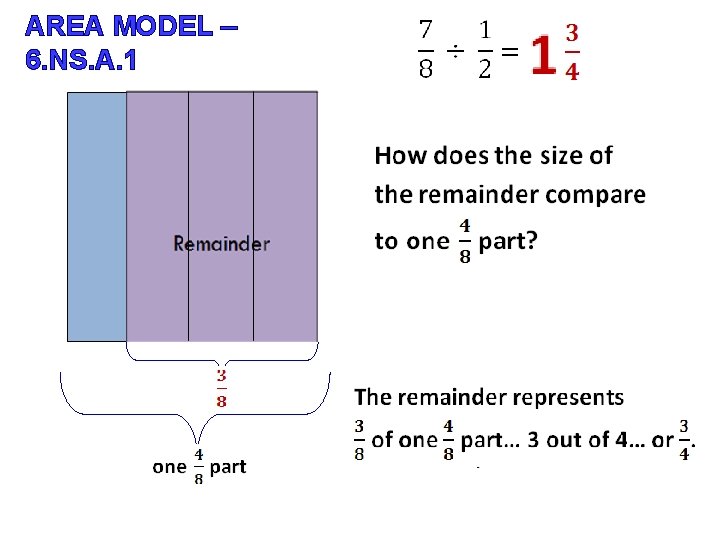
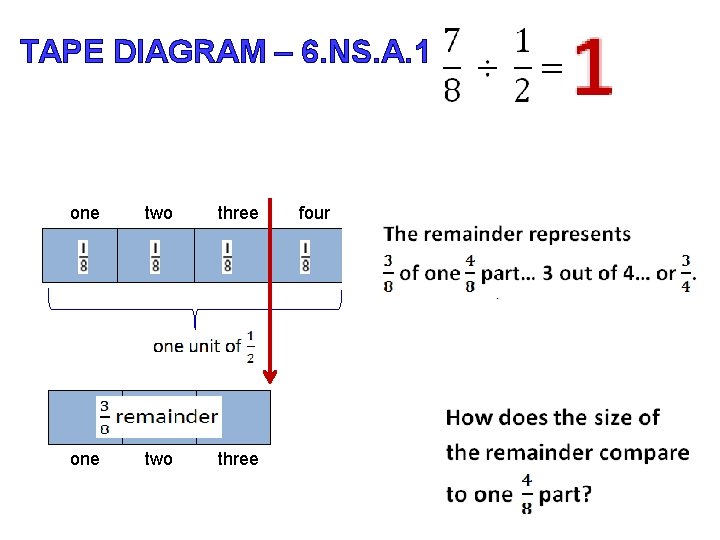
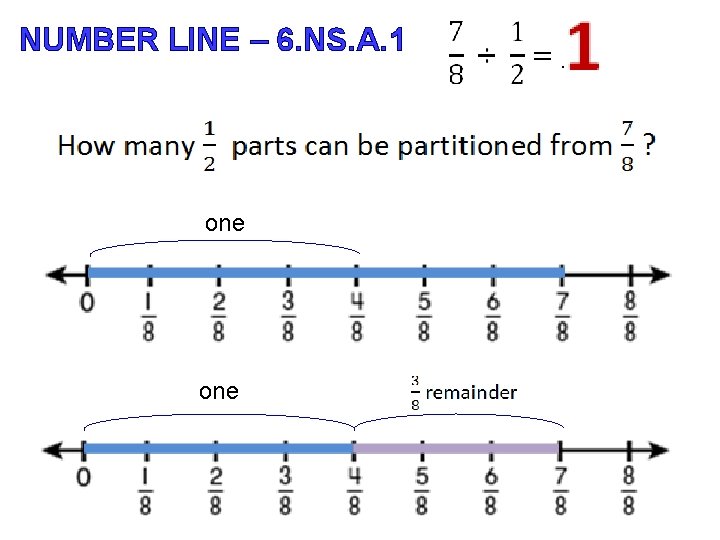
6. NS. A. 1 - Second Example: When the dividend is greater than the divisor, with a remainder…
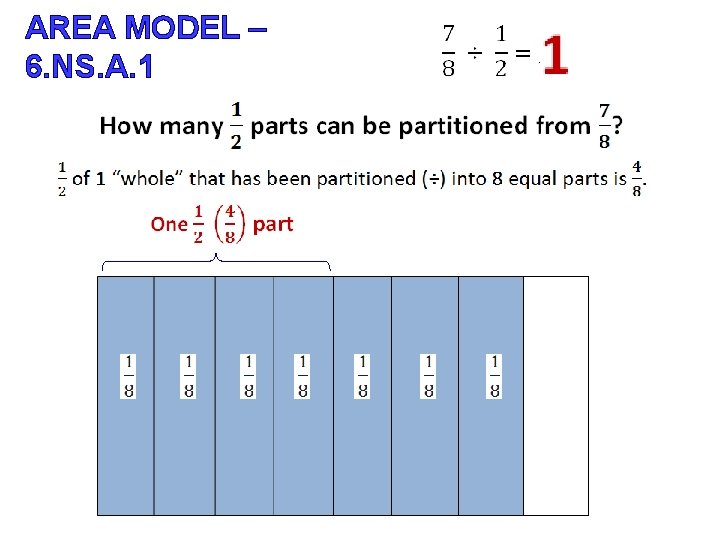
AREA MODEL – 6. NS. A. 1
AREA MODEL – 6. NS. A. 1
AREA MODEL – 6. NS. A. 1
TAPE DIAGRAM – 6. NS. A. 1 one two three four
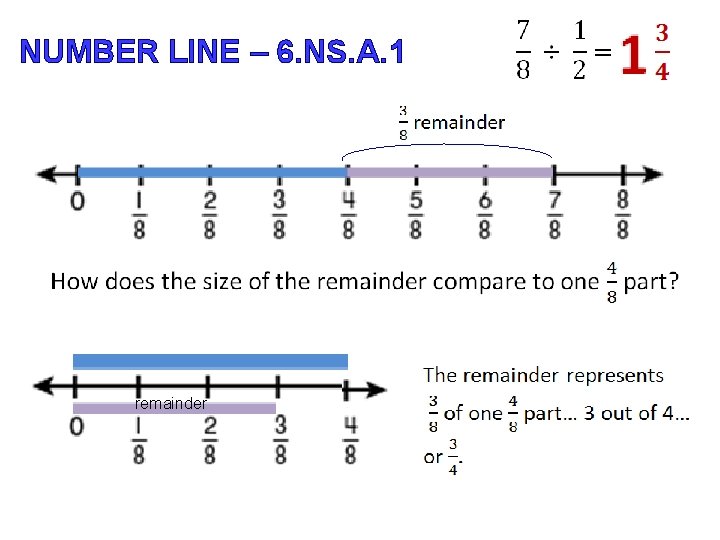
NUMBER LINE – 6. NS. A. 1 one
NUMBER LINE – 6. NS. A. 1 remainder
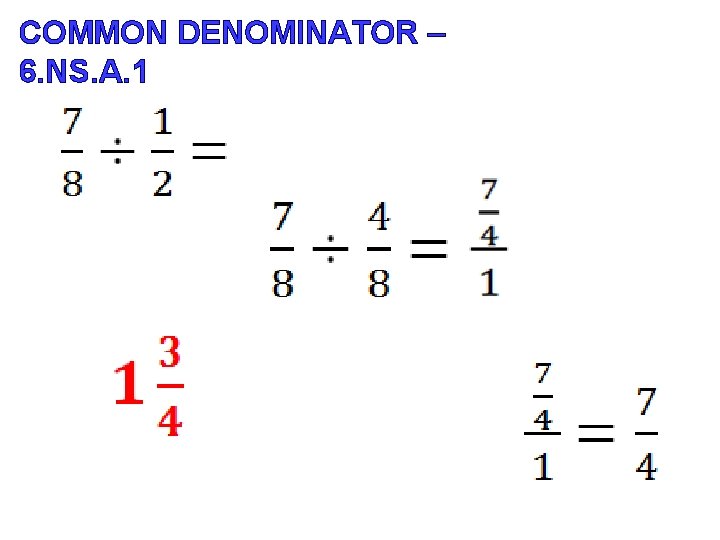
COMMON DENOMINATOR – 6. NS. A. 1
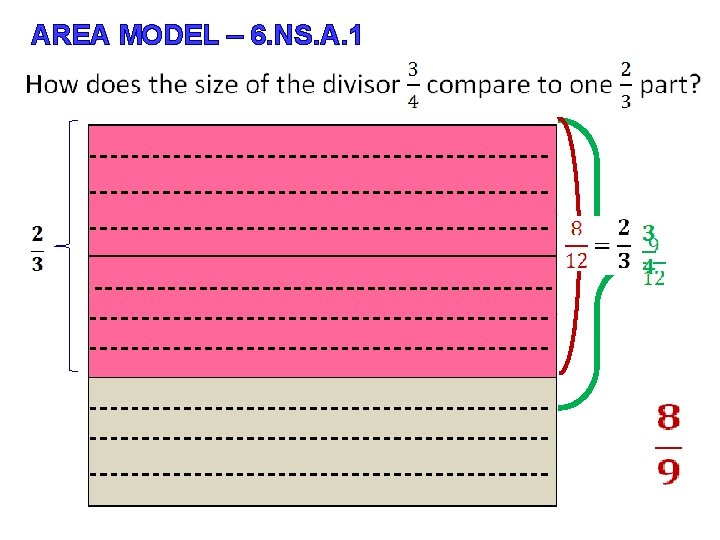
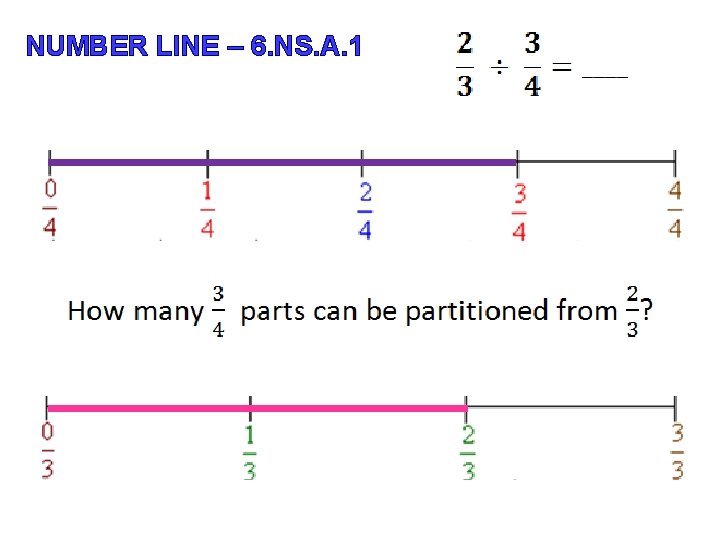
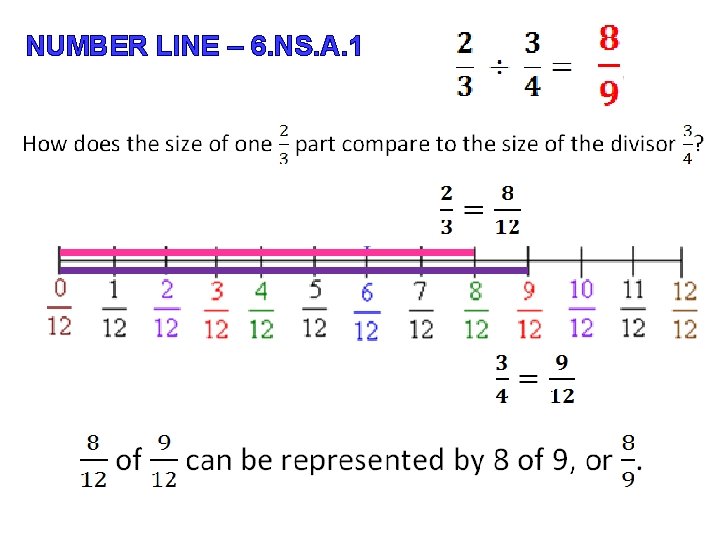
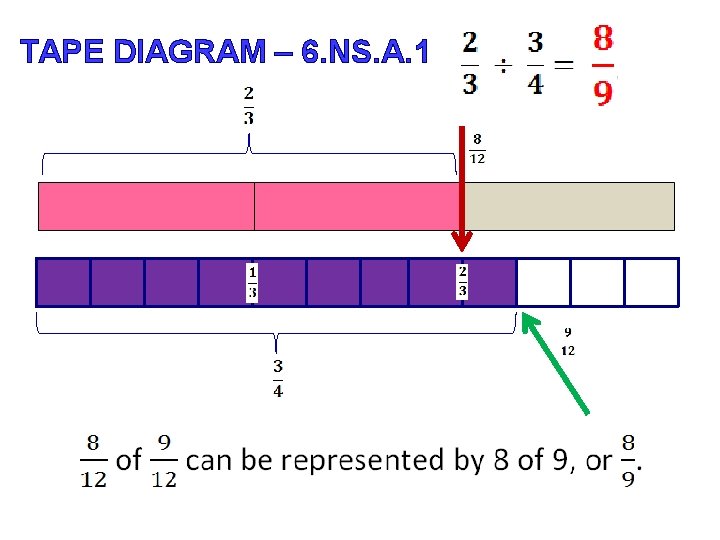
6. NS. A. 1 - Third Example: When the dividend is less than the divisor…
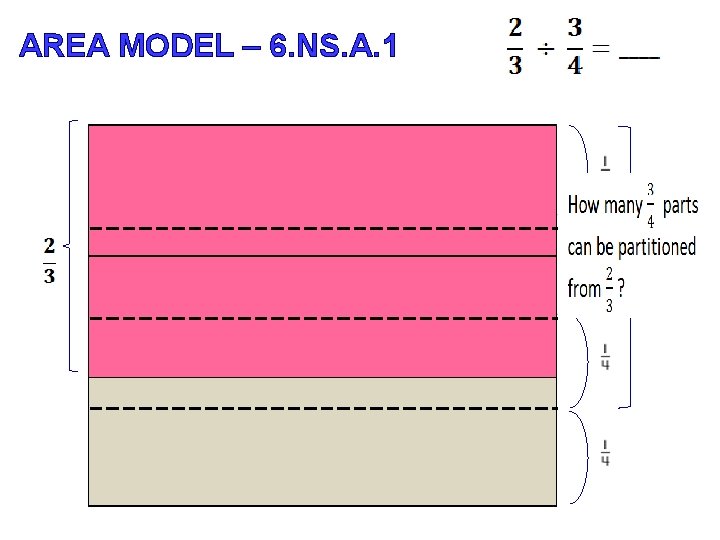
AREA MODEL – 6. NS. A. 1
AREA MODEL – 6. NS. A. 1
NUMBER LINE – 6. NS. A. 1
NUMBER LINE – 6. NS. A. 1
TAPE DIAGRAM – 6. NS. A. 1
COMMON DENOMINATOR – 6. NS. A. 1
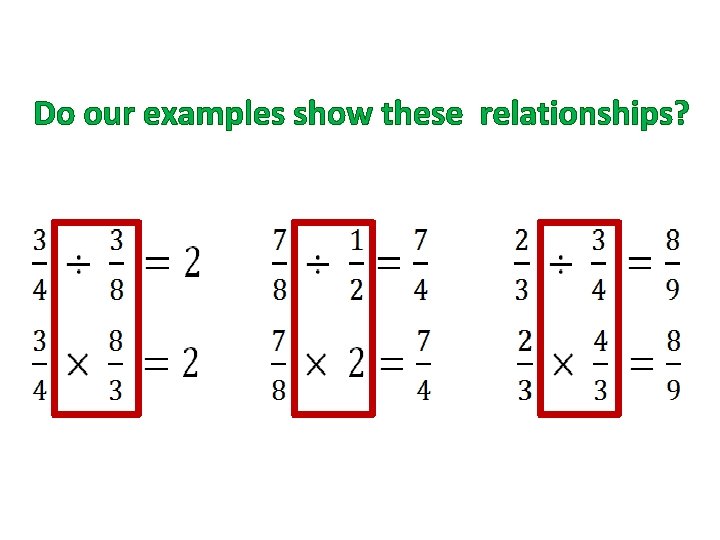
Why Does “Invert and Multiply” Work? Inverse Operations and Reciprocal Pairs
Do our examples show these relationships?
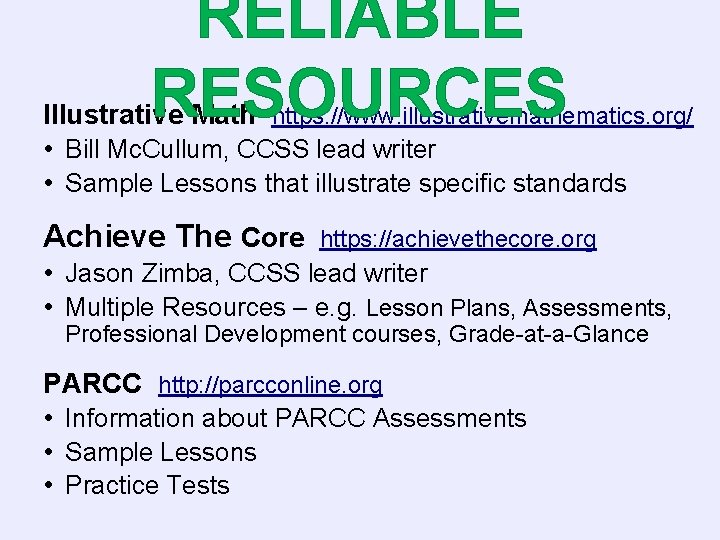
RELIABLE RESOURCES Illustrative Math https: //www. illustrativemathematics. org/ • Bill Mc. Cullum, CCSS lead writer • Sample Lessons that illustrate specific standards Achieve The Core https: //achievethecore. org • Jason Zimba, CCSS lead writer • Multiple Resources – e. g. Lesson Plans, Assessments, Professional Development courses, Grade-at-a-Glance PARCC http: //parcconline. org • Information about PARCC Assessments • Sample Lessons • Practice Tests