
Middle School Curriculum Integrated and Exploratory Overview What
- Slides: 21
Middle School Curriculum Integrated and Exploratory
Overview § What is integrated curriculum § Roles of teachers, students and faculty § Exploration curriculum and Programs
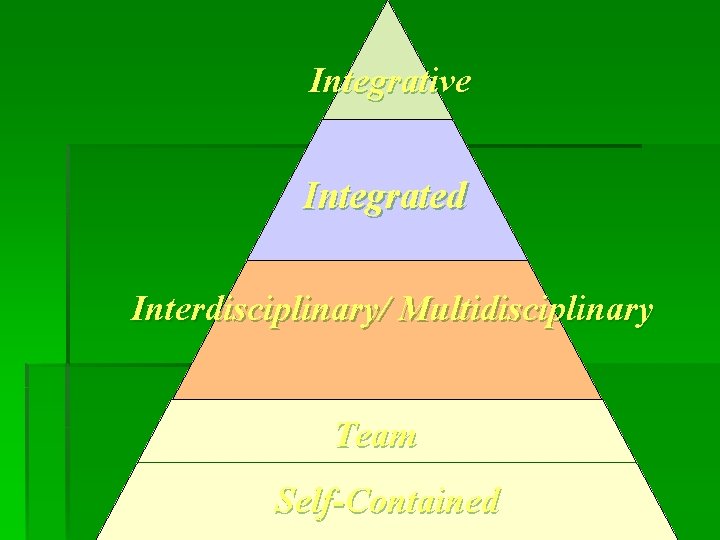
Integrative Integrated Interdisciplinary/ Multidisciplinary Team Self-Contained
Rational § § Application vs. Memorization Patterns and Connections Coherence over Fragmentation Right Answer vs. Finding the Solution
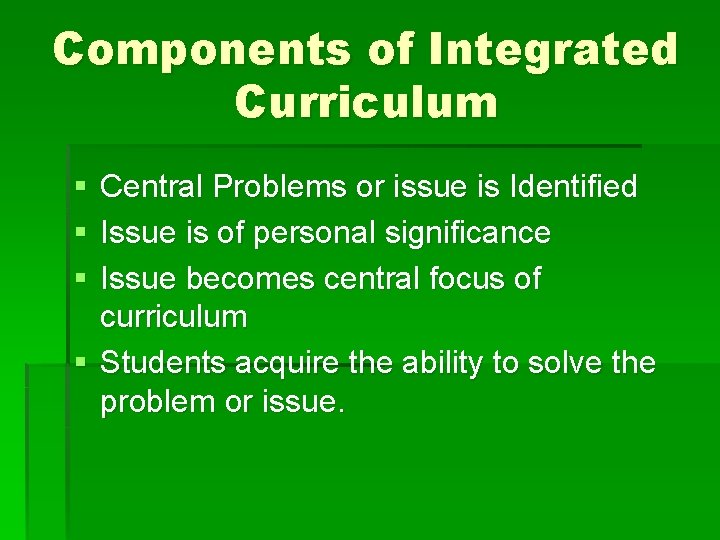
Components of Integrated Curriculum § § § Central Problems or issue is Identified Issue is of personal significance Issue becomes central focus of curriculum § Students acquire the ability to solve the problem or issue.
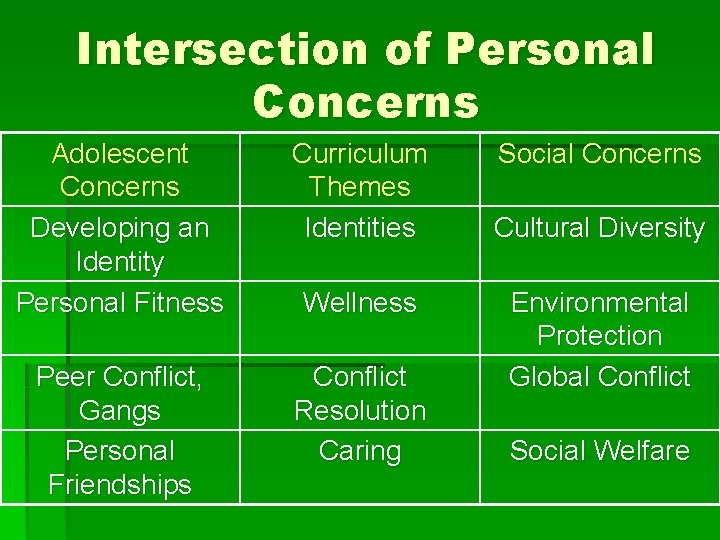
Intersection of Personal Concerns Adolescent Concerns Developing an Identity Personal Fitness Curriculum Themes Identities Peer Conflict, Gangs Personal Friendships Conflict Resolution Caring Wellness Social Concerns Cultural Diversity Environmental Protection Global Conflict Social Welfare
Roles, Resources and Rubrics
Roles of the Teacher • Demonstrate an Understanding of Adolescents Concerns • Setting the Stage and Environment • Structuring and Guiding the Explorations
Roles of the Learner • Involved in curriculum • Assume some responsibility for learning • Active participants in both process and products of learning
Library n Partnership n Technology n
n General n Specific
n Student n Real Demonstrated Knowledge World Scenario/ Demonstration n Projects n Authentic Assessment
n Scores on Standardized Tests n Focus on subject matter n Time in Planning n Need for Administration Support n Community Involvement
Exploratory Curriculum
Exploratory Curriculum/ Programs § Definition – A Class Designed to Help Students Explore Their Interests § Mini-course § Length of Classes – Semester – 6 -8 weeks
Reasons for a Exploratory Curriculum § Provides Opportunity for Students § Appeals to Diverse Learners § Self Discovery
Teachers’ Roles § Pique Students Interest in a Topic § Guide the Students § Be a Resource § Monitor Progress and Participation
Topics for Mini-Course § Home Economics – Foods for Independent living – Personal Finance § Arts – Ceramics – Photography § Language § Industrial Technology – Shop Class – Horticulture
Essentials for Exploratory § Developmentally Responsive § Enhances Motivation § Interesting and Useful § Provide Opportunity to Learn about Specific Topics § Reflect Core Curriculum
Considerations for Developing Curriculum § Be Unique § Reflect Developmental Responsive Perspectives § Be Relevant to Learners to learners Experiences
Considerations for Developing Curriculum § Adopt Student-Centered Perspective § Achieve a Balance Between Cognitive and Affective § Provide for Cultural and Gender Diversity § Reflect the Relationship – Between Learner’s Image of Success and School Curriculum