
MIDDLE EAST CONFLICT Cold War World Middle East
- Slides: 21
MIDDLE EAST CONFLICT
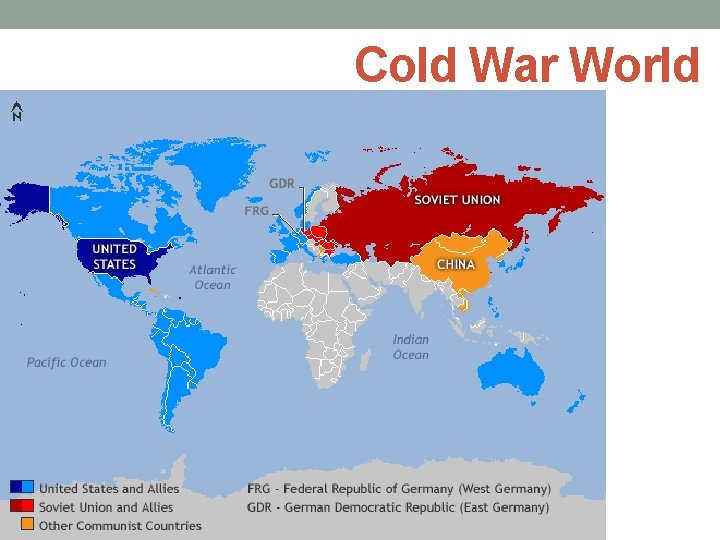
Cold War World
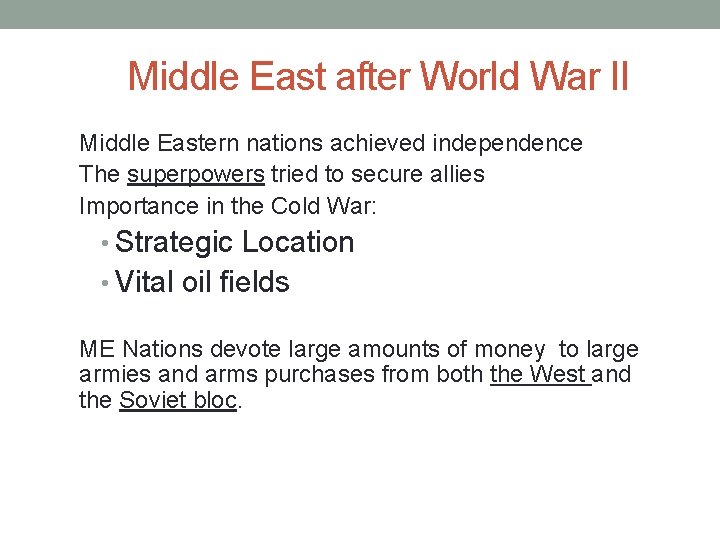
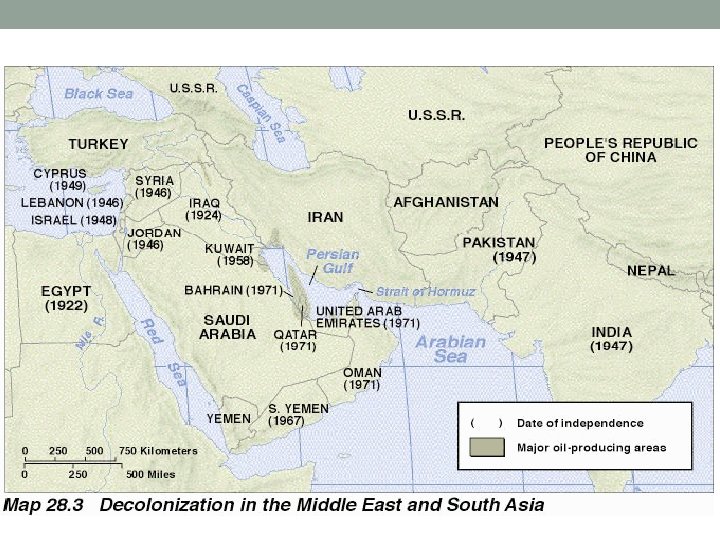
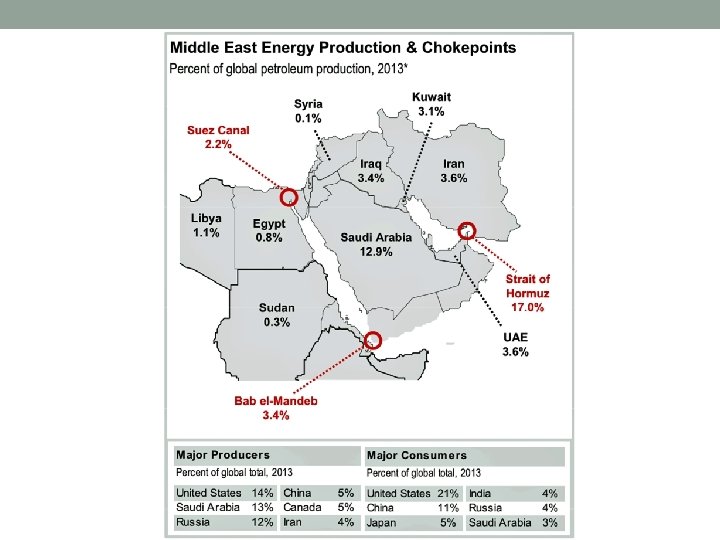
Middle East after World War II Middle Eastern nations achieved independence The superpowers tried to secure allies Importance in the Cold War: • Strategic Location • Vital oil fields ME Nations devote large amounts of money to large armies and arms purchases from both the West and the Soviet bloc.
The Middle East can be divided • Large petroleum supplies • Rich, relatively sparsely populated nations • Little or no petroleum • Poor, heavily populated nations
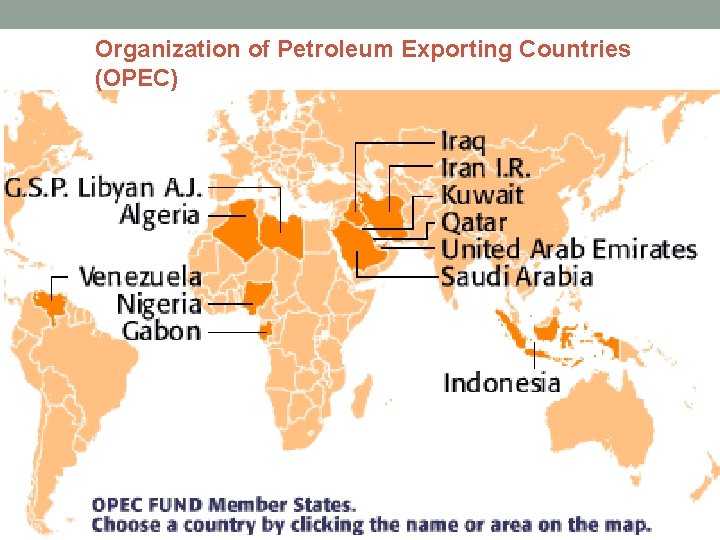
Organization of Petroleum Exporting Countries (OPEC)
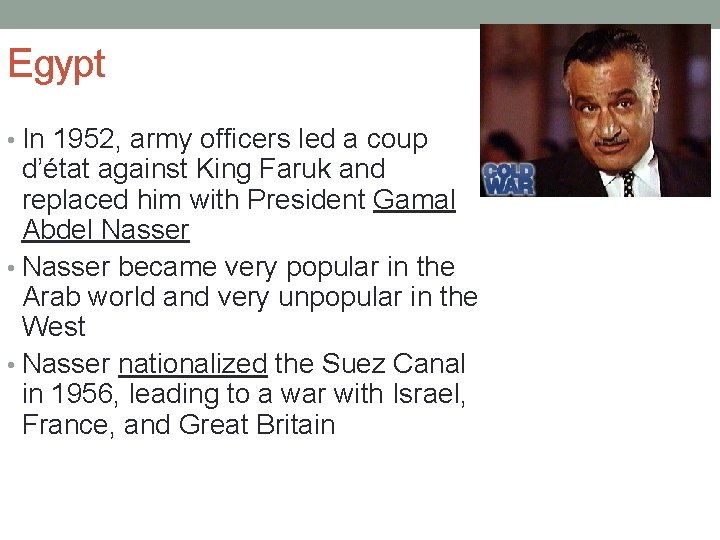
Egypt • In 1952, army officers led a coup d’état against King Faruk and replaced him with President Gamal Abdel Nasser • Nasser became very popular in the Arab world and very unpopular in the West • Nasser nationalized the Suez Canal in 1956, leading to a war with Israel, France, and Great Britain
Turkey • Turkey was the cornerstone of U. S. strategy (military) (Remember the Truman Doctrine) • Greek/Turkish disagreement over Cyprus, 1974 • After that, Turkey would gradually move further away from the U. S. sphere of influence • During the 1970 s and 1980 s, the U. S. would rely on Egypt, Saudi Arabia, and Israel, along with bases in the Persian Gulf and the Red Sea
U. S. S. R. in Afghanistan • Following WWII, Afghanistan remained one of the poorest and least developed nations • Following a cycle of coups and countercoups, Babrak Karmal emerged and was backed by the Soviets • December 1979, Soviet Union sent troops to support the regime • The Soviets withdrew in 1988 -89
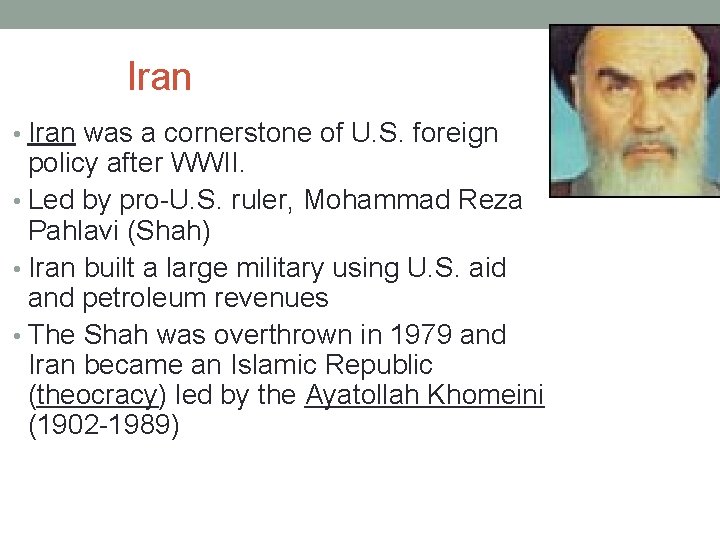
Iran • Iran was a cornerstone of U. S. foreign policy after WWII. • Led by pro-U. S. ruler, Mohammad Reza Pahlavi (Shah) • Iran built a large military using U. S. aid and petroleum revenues • The Shah was overthrown in 1979 and Iran became an Islamic Republic (theocracy) led by the Ayatollah Khomeini (1902 -1989)
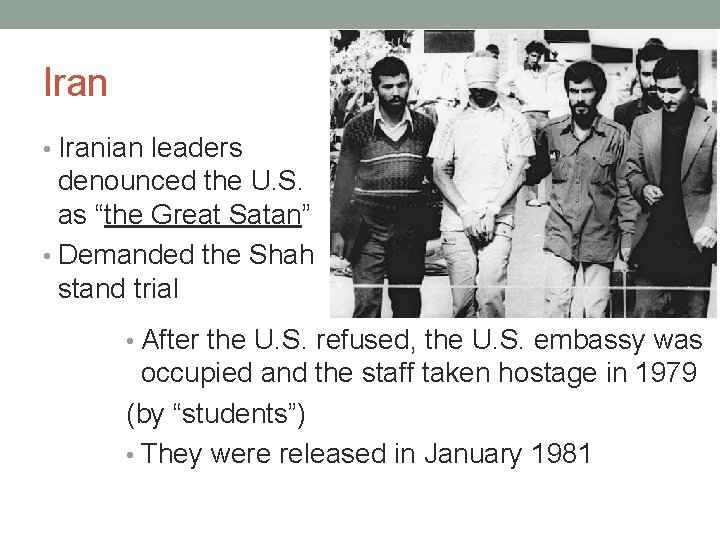
Iran • Iranian leaders denounced the U. S. as “the Great Satan” • Demanded the Shah stand trial • After the U. S. refused, the U. S. embassy was occupied and the staff taken hostage in 1979 (by “students”) • They were released in January 1981
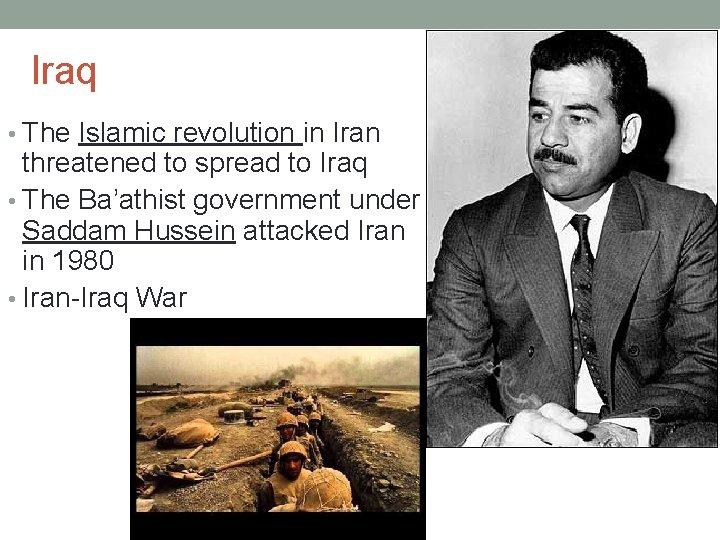
Iraq • The Islamic revolution in Iran threatened to spread to Iraq • The Ba’athist government under Saddam Hussein attacked Iran in 1980 • Iran-Iraq War
Israel • With the end of WWII, the Arab-Israeli conflict became the major political and military problem in the Middle East. • After the Holocaust, many of the survivors had no place to go. • Many Jews (Zionists) believed that they should have a homeland of their own. (late 19 th c. ) • They concentrated on the biblical area of Israel
Israel • Balfour Declaration • After WWI, the area had become the British mandate of Palestine. • When Jewish immigration accelerated, friction was created between Jews and Palestinian Arabs • After 1945, Zionists and Palestinian Arabs wanted individual nations and both felt they had claim to Palestine. • Britain withdrew in 1947 and the U. N. proposed that the country be partitioned 50/50
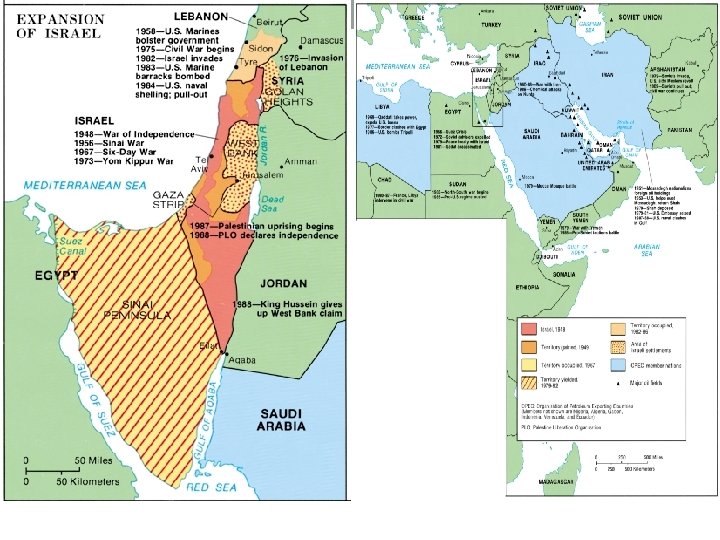
Israel • A war broke out when the Jews, certain of U. S. and Soviet support, declared their independence and the creation of a new state of Israel on May 14, 1948. • When fighting ended in 1949, the Israelis had conquered more territory than had been envisioned in the U. N. plan, and the rest of the territory fell to Egypt and Jordan, rather than forming an independent Palestinian state. • Palestinian Arab refugees fled to Lebanon, the West Bank, and the Gaza strip.
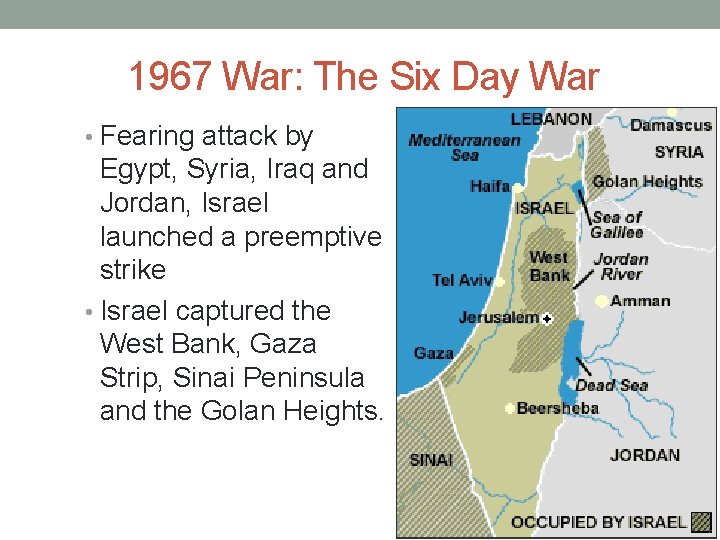
1967 War: The Six Day War • Fearing attack by Egypt, Syria, Iraq and Jordan, Israel launched a preemptive strike • Israel captured the West Bank, Gaza Strip, Sinai Peninsula and the Golan Heights.
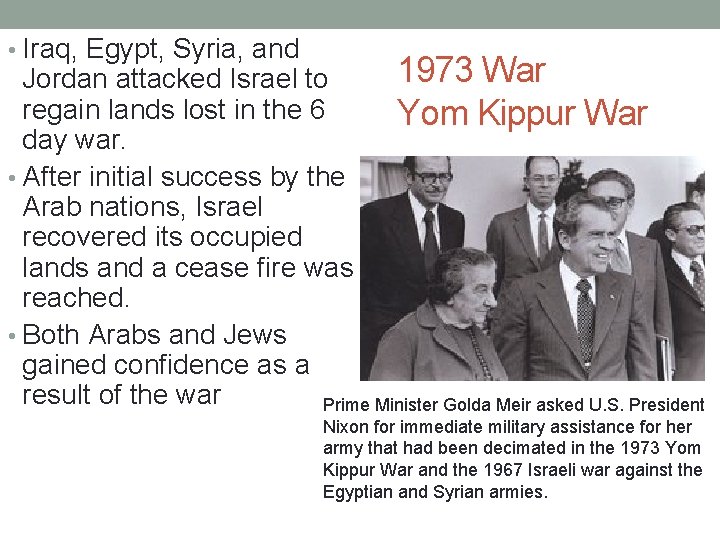
• Iraq, Egypt, Syria, and 1973 War Jordan attacked Israel to regain lands lost in the 6 Yom Kippur War day war. • After initial success by the Arab nations, Israel recovered its occupied lands and a cease fire was reached. • Both Arabs and Jews gained confidence as a result of the war Prime Minister Golda Meir asked U. S. President Nixon for immediate military assistance for her army that had been decimated in the 1973 Yom Kippur War and the 1967 Israeli war against the Egyptian and Syrian armies.
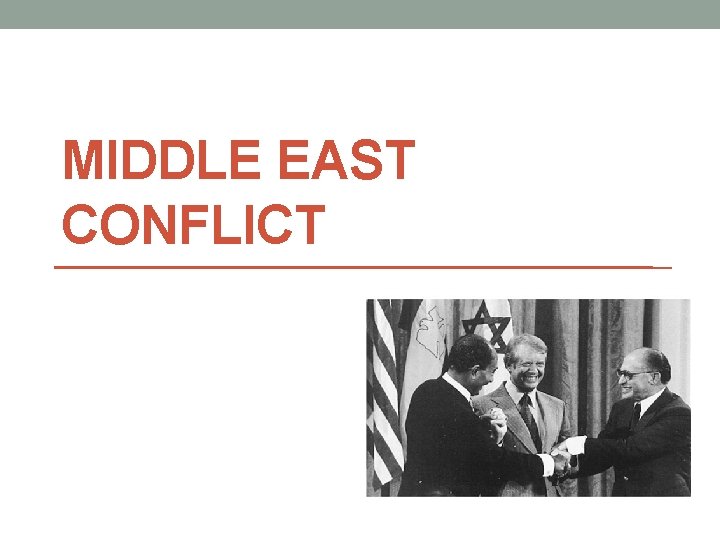
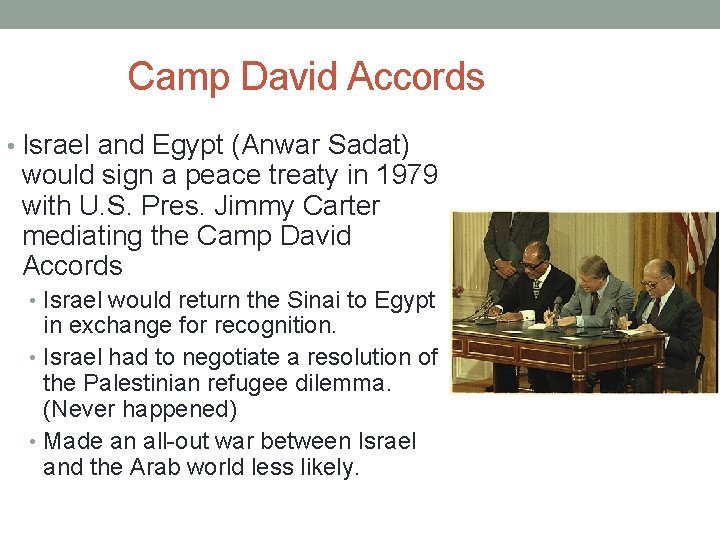
Camp David Accords • Israel and Egypt (Anwar Sadat) would sign a peace treaty in 1979 with U. S. Pres. Jimmy Carter mediating the Camp David Accords • Israel would return the Sinai to Egypt in exchange for recognition. • Israel had to negotiate a resolution of the Palestinian refugee dilemma. (Never happened) • Made an all-out war between Israel and the Arab world less likely.
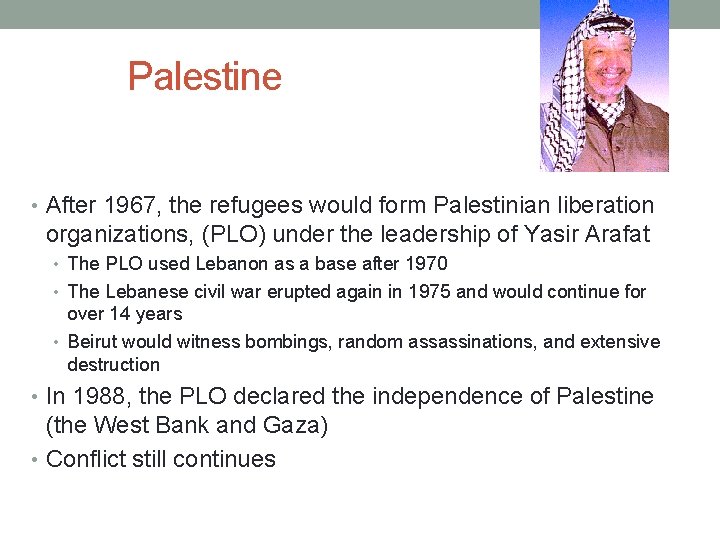
Palestine • After 1967, the refugees would form Palestinian liberation organizations, (PLO) under the leadership of Yasir Arafat • The PLO used Lebanon as a base after 1970 • The Lebanese civil war erupted again in 1975 and would continue for over 14 years • Beirut would witness bombings, random assassinations, and extensive destruction • In 1988, the PLO declared the independence of Palestine (the West Bank and Gaza) • Conflict still continues