
Middle Classical Period 200 BCE 200 CE Central
Middle Classical Period 200 BCE – 200 CE
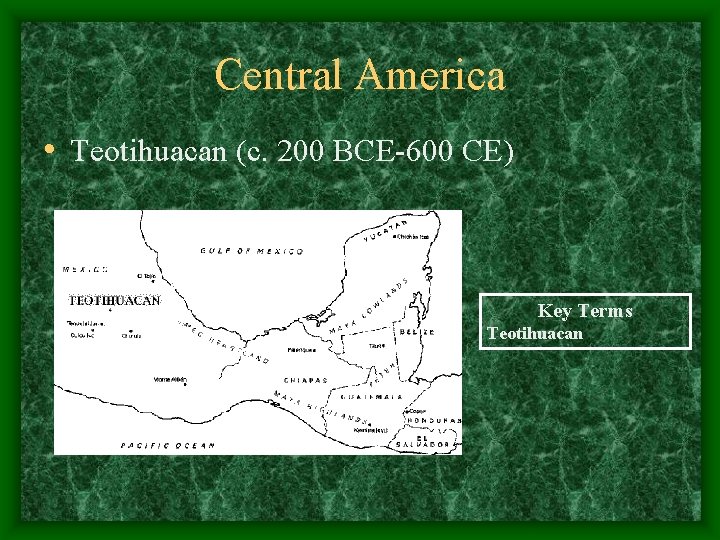
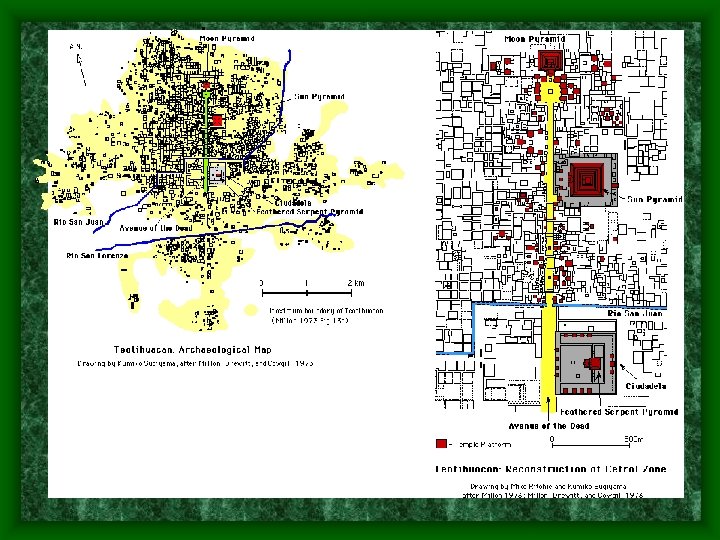
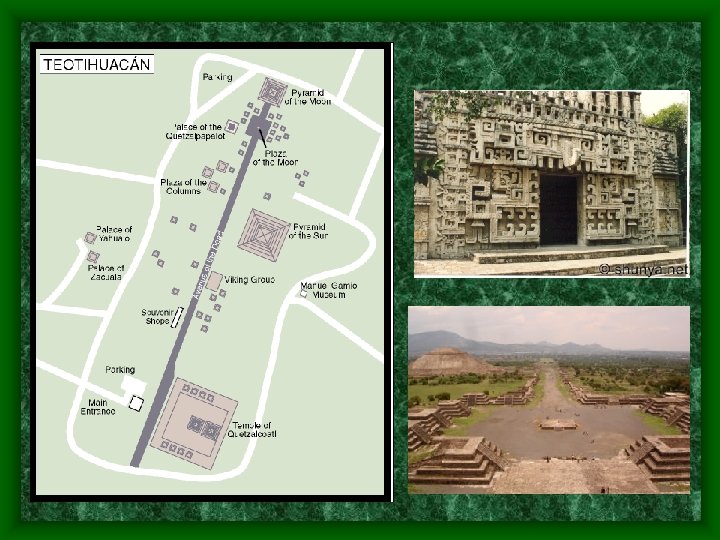
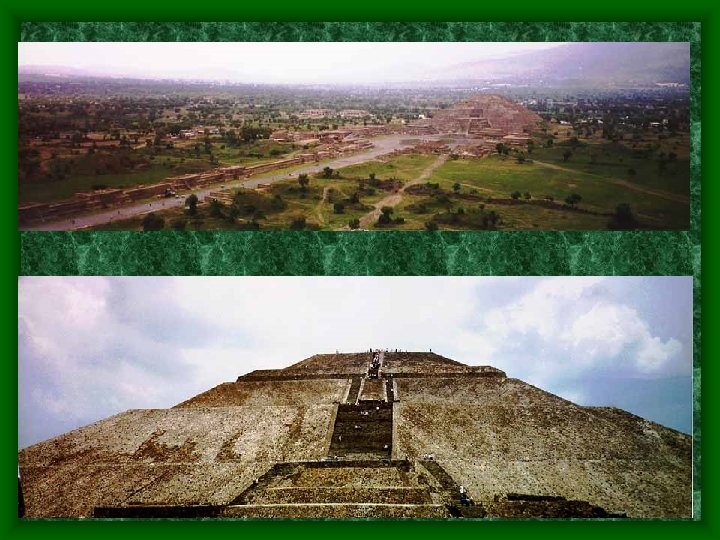
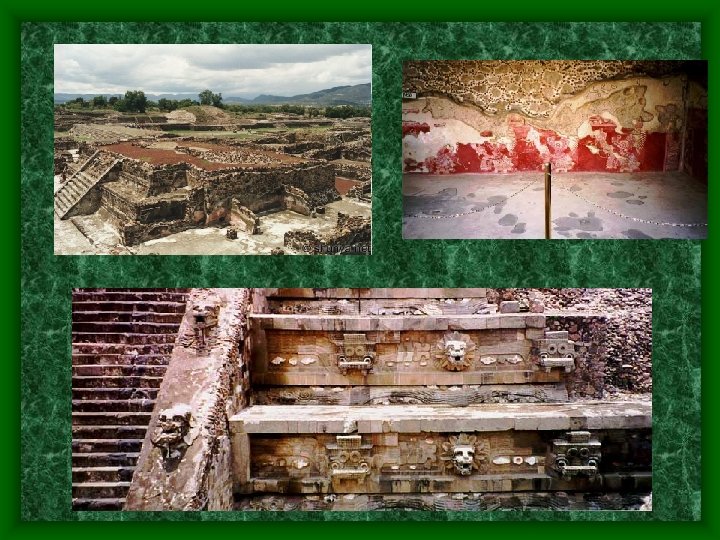
Central America • Teotihuacan (c. 200 BCE-600 CE) Key Terms Teotihuacan
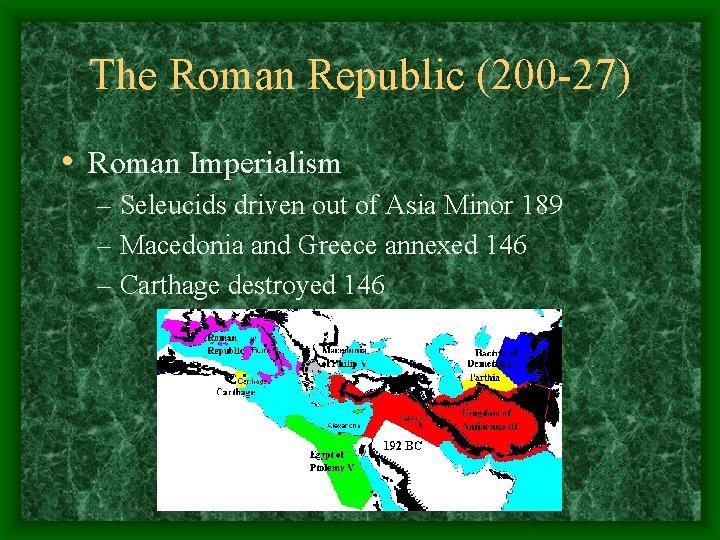
The Roman Republic (200 -27) • Roman Imperialism – Seleucids driven out of Asia Minor 189 – Macedonia and Greece annexed 146 – Carthage destroyed 146
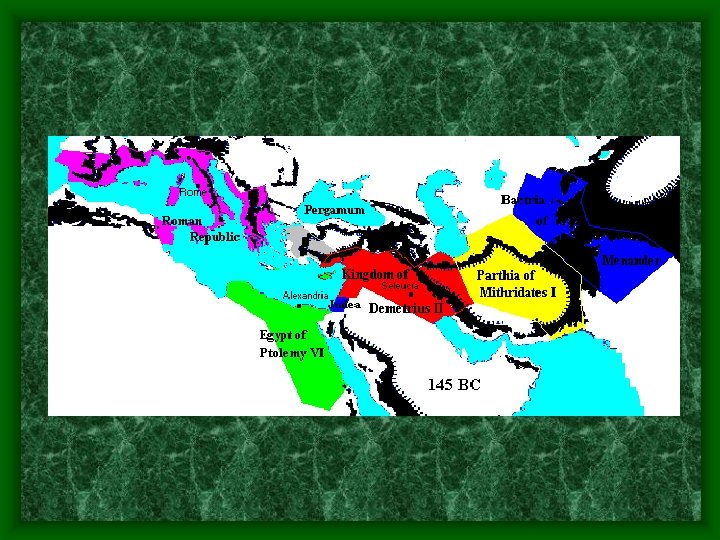
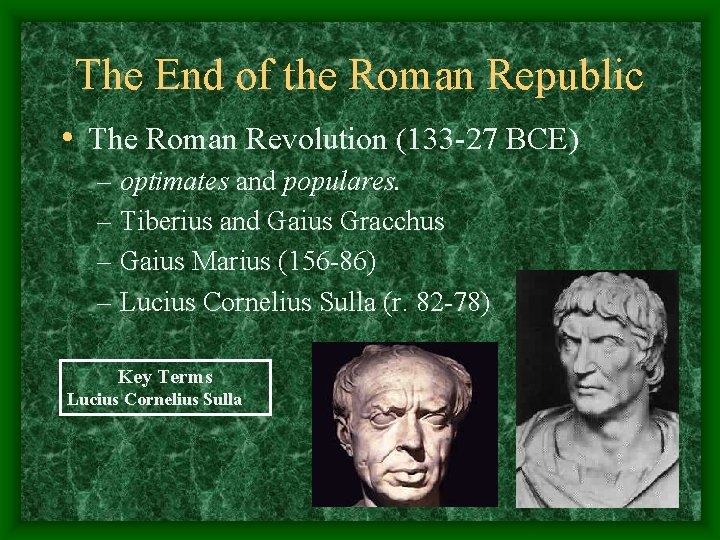
The End of the Roman Republic • The Roman Revolution (133 -27 BCE) – optimates and populares. – Tiberius and Gaius Gracchus – Gaius Marius (156 -86) – Lucius Cornelius Sulla (r. 82 -78) Key Terms Lucius Cornelius Sulla
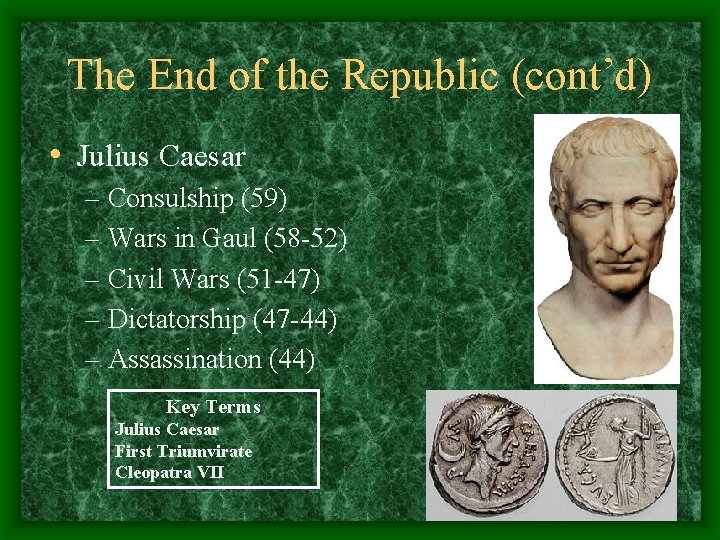
The End of the Republic (cont’d) • Julius Caesar – Consulship (59) – Wars in Gaul (58 -52) – Civil Wars (51 -47) – Dictatorship (47 -44) – Assassination (44) Key Terms Julius Caesar First Triumvirate Cleopatra VII
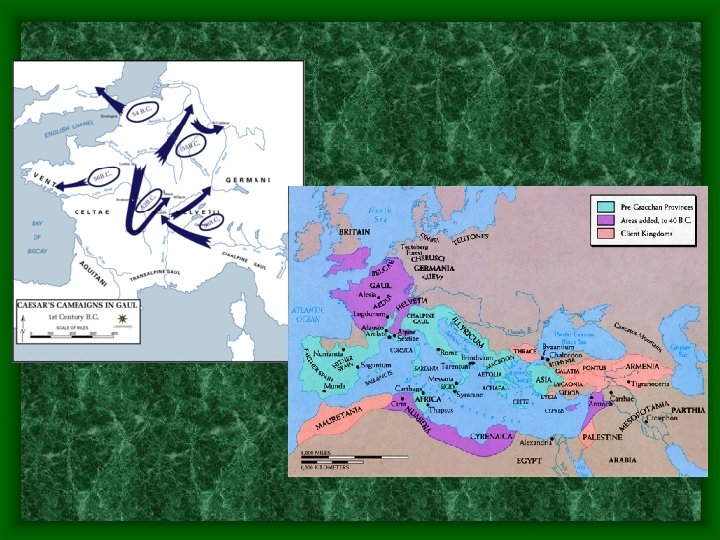
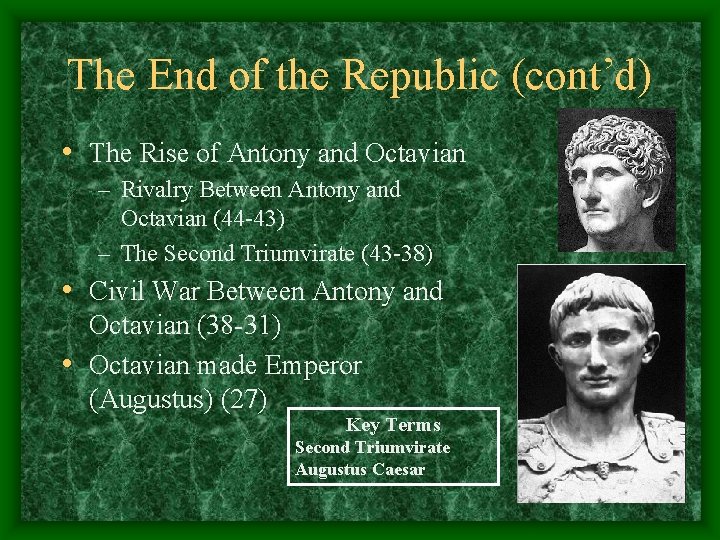
The End of the Republic (cont’d) • The Rise of Antony and Octavian – Rivalry Between Antony and Octavian (44 -43) – The Second Triumvirate (43 -38) • Civil War Between Antony and Octavian (38 -31) • Octavian made Emperor (Augustus) (27) Key Terms Second Triumvirate Augustus Caesar

The Empire Under Augustus (27 BCE-14 CE) • Government – The Senate – The Assemblies – The Magistrates – The Army • Patronage of Literature – Virgil’s Aeneid

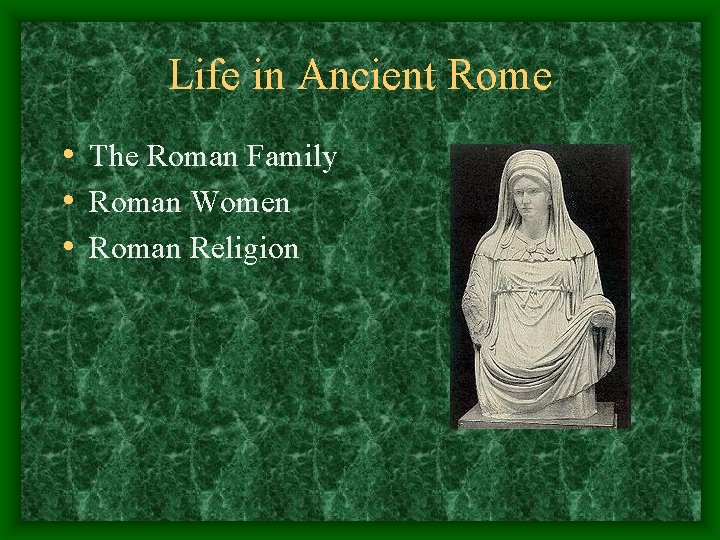
Life in Ancient Rome • The Roman Family • Roman Women • Roman Religion
Judea Since the Hebrew Bible w Macedonian Control of Judea n n n Ptolemaic Rulership (300 -200) Seleucid Rulership (200 -166) Maccabean Revolt (166 -160 BCE) Antiochus IV l Judah Maccabee l Key Terms Maccabean Revolt Hanukkah

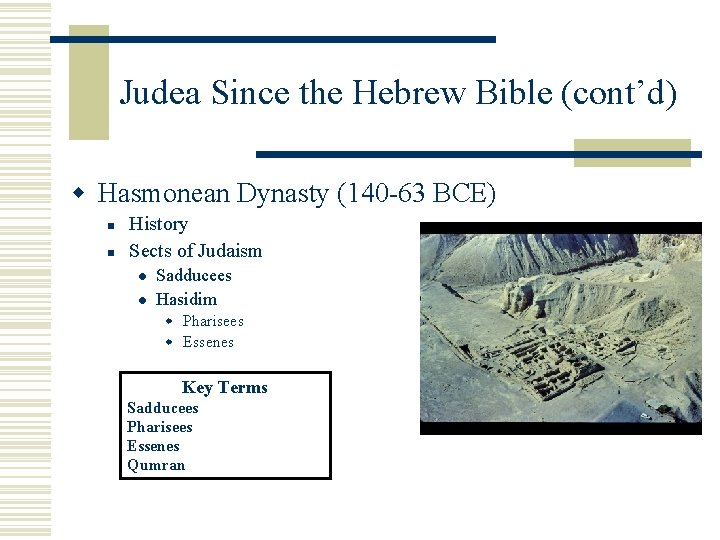
Judea Since the Hebrew Bible (cont’d) w Hasmonean Dynasty (140 -63 BCE) n n History Sects of Judaism l l Sadducees Hasidim w Pharisees w Essenes Key Terms Sadducees Pharisees Essenes Qumran

Judea in the Time of Jesus w Herod the Great (r. 37 -4 BCE) w Pontius Pilate (r. 26 -36 CE) Key Terms Herod the Great Pontius Pilate
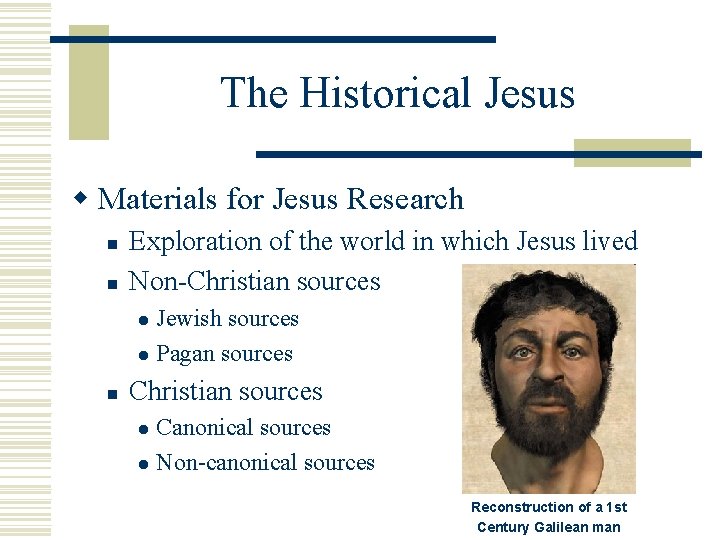
The Historical Jesus w Materials for Jesus Research n n Exploration of the world in which Jesus lived Non-Christian sources Jewish sources l Pagan sources l n Christian sources Canonical sources l Non-canonical sources l Reconstruction of a 1 st Century Galilean man

The Historical Jesus (cont’d) w Criteria for Determining Probability n Methodological Principles w Closer to the event = better w Beware of later ideas w Beware of bias n Criteria w Independent Attestation w Similarity w Dissimilarity w Accidental Information w Contextual Credibility
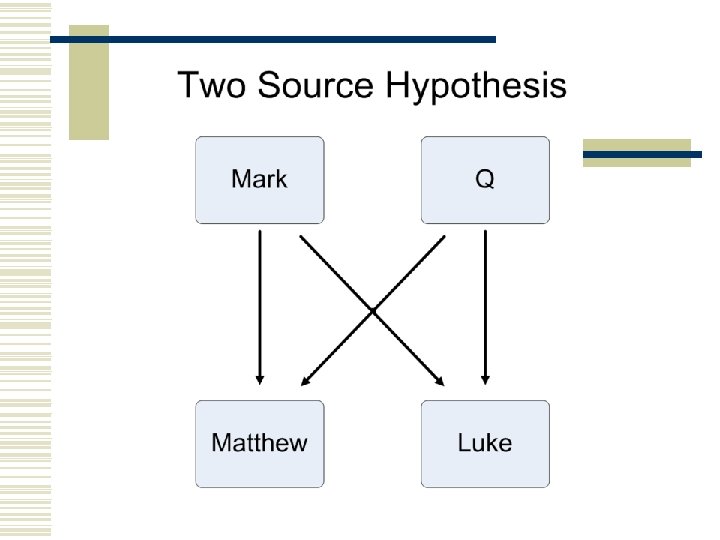

The Historical Jesus (cont’d) w Probable Facts about Jesus n n n n Lived and taught in Judea/Galilee during the early 1 st century CE. Grew up and spent most of his time in Nazareth. Gained a reputation as a healer, exorcist and preacher. Had a brief association with John the Baptist. Attracted disciples from the poor, uneducated and most unrespected segment of Galilean society. Predicted the fall of Jerusalem to the Romans. Attracted hostility from certain Jewish groups. Around 36 CE Jesus executed based upon charges of being a revolutionary.

Core Teachings of Jesus w Two most important commandments: 1) love God; 2) love neighbor as self (Mark 12: 28 -34) w Religious purity is moral, not ceremonial (Mark 7: 1 -15) w Forgive all wrongs done to you (Mark 11: 25) w A life of self-denial is more rewarding than a life of selfgratification (Mark 8: 34 -37) w Be humble (Mark 10: 42 -45) w Give to those in need (Mark 10: 21) w People don’t need to be lectured; they need to be helped (Mark 2: 15 -17)

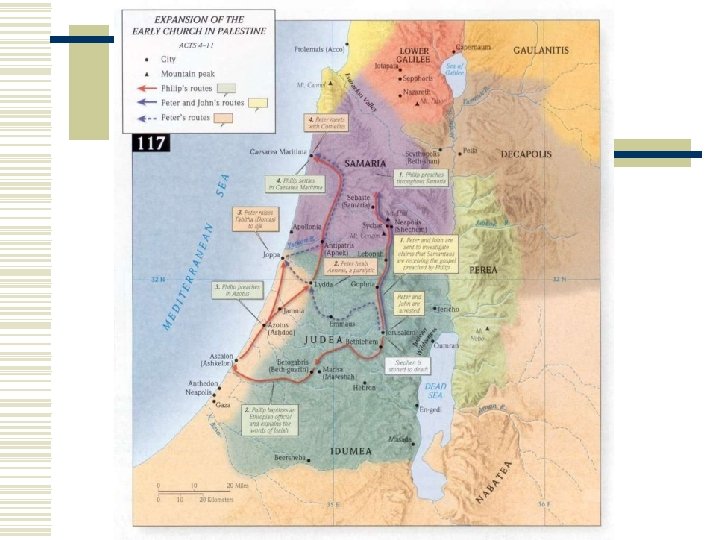
The Jesus Movement w What did Jesus’ disciples call themselves? n The Way, The Disciples, The Saints, The Nazoreans w Judaism and the Gentiles n n A Jewish Jesus Movement The Gentile Problem l Judaizers vs. Hellenists Key Terms Judaizer Hellenist

The Apostle Paul w Sources for Paul n Authentic Pauline Letters l n Deutero-Pauline Letters l n Ephesians, Colossians, 2 Thessalonians Pseudo-Pauline Letters l n Romans, 1 & 2 Corinthians, Galatians, Philippians, Thessalonians, Philemon 1 & 2 Timothy, Titus (Pastorals) The Book of Acts l l written c. 80 CE covers the years 36 -61 CE Key Terms Paul the Apostle 1
The Apostle Paul (cont’d) w His Life n n n n Born in the first decade of the first century in Tarsus Given name was Saul Native language was Greek Raised as a Pharisee Worked with the Sadducees against followers of Jesus Claimed to have had a vision of Jesus and became a convert Traveled as a missionary Eventually arrested and executed in Rome c. 64 CE
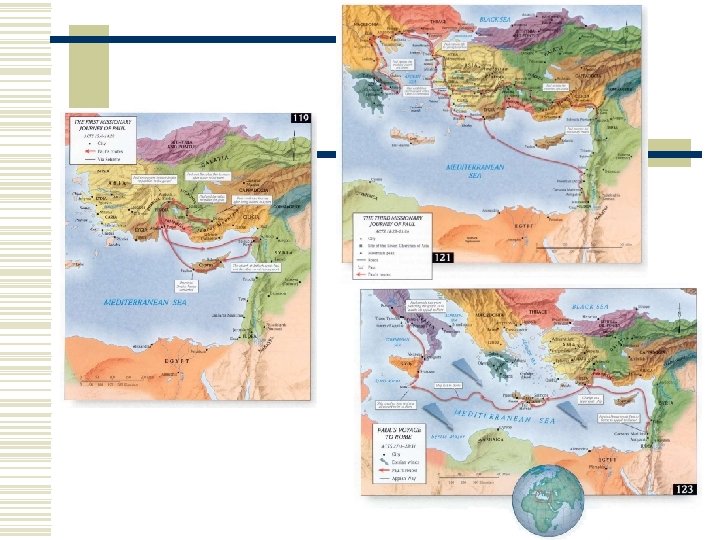
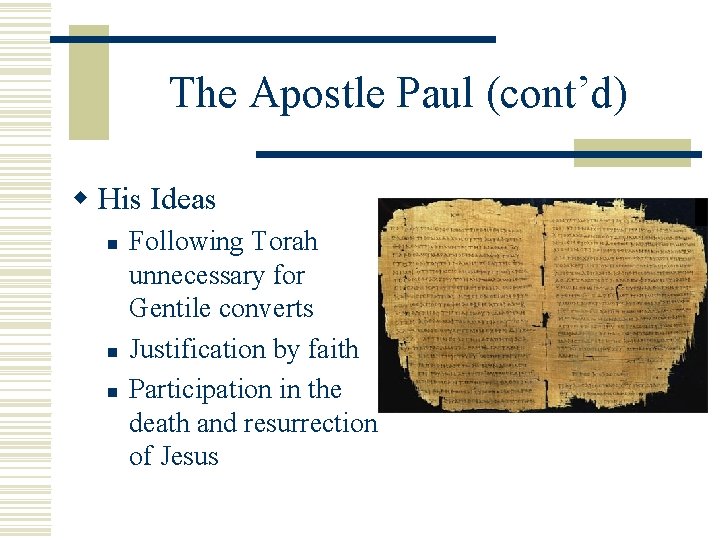
The Apostle Paul (cont’d) w His Ideas n n n Following Torah unnecessary for Gentile converts Justification by faith Participation in the death and resurrection of Jesus

Three Factions of the Early Jesus Movement JAMES’ JUDAIZERS • “Circumcision Party” • Pro-Temple • Pro-Torah • Want Gentiles circumcised PETER’S COMPROMISERS • Middle position • Wants Gentiles to observe basic laws, but not circumcision. PAUL’S HELLENISTS • No Temple • No Torah • No circumcision

The First Jewish Revolt (66 -73 CE) w Events of the War n Nero, Vespasian, Titus, Masada w The Book of Revelation w Effects of the Fall of Jerusalem on Judaism and Christianity Key Terms First Jewish Revolt
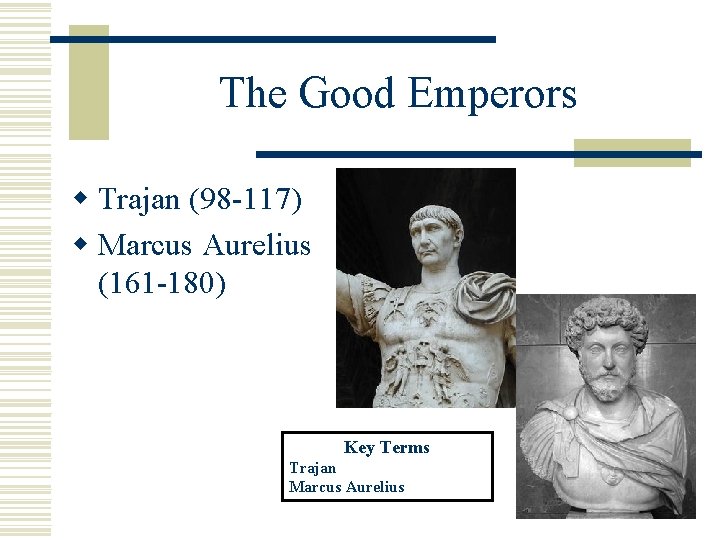
The Good Emperors w Trajan (98 -117) w Marcus Aurelius (161 -180) Key Terms Trajan Marcus Aurelius
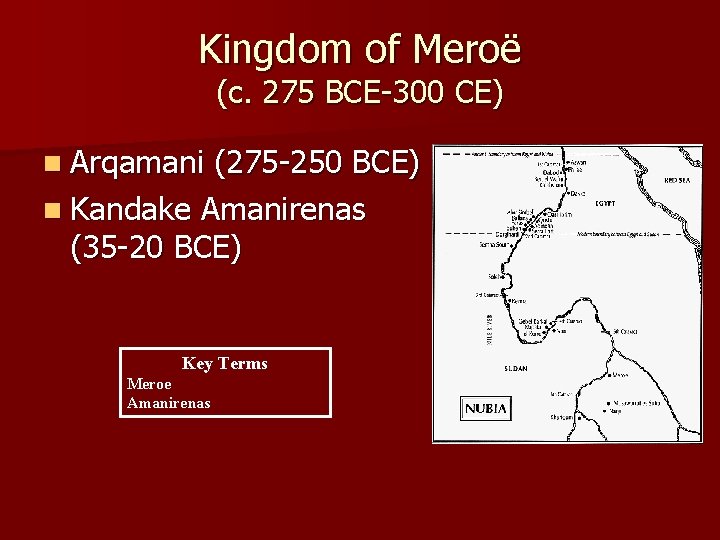
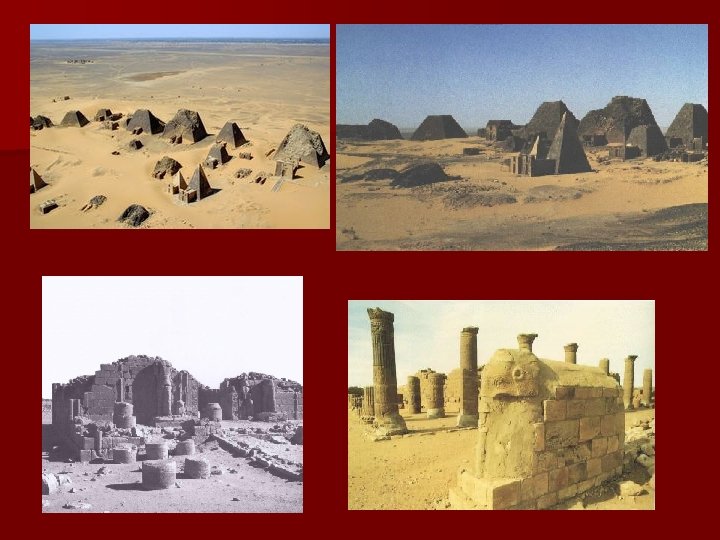
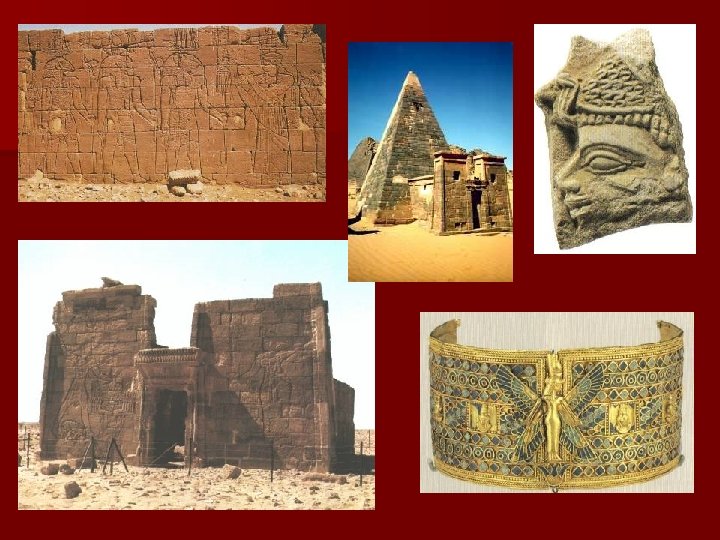
Kingdom of Meroë (c. 275 BCE-300 CE) n Arqamani (275 -250 BCE) n Kandake Amanirenas (35 -20 BCE) Key Terms Meroe Amanirenas

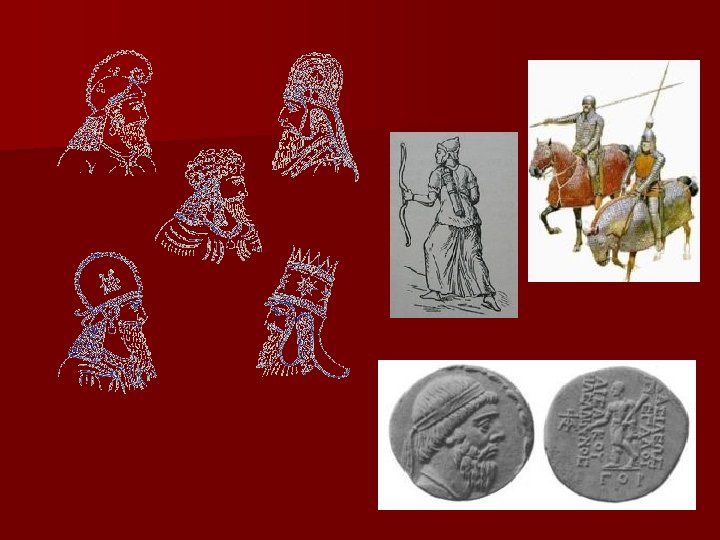
States of Inner Asia n The Parthian Empire (190 BCE-220 CE) – Arsaces (246 -211 BCE) – Mithridates I (171 -138 BCE) Key Terms Parthians Mithridates I
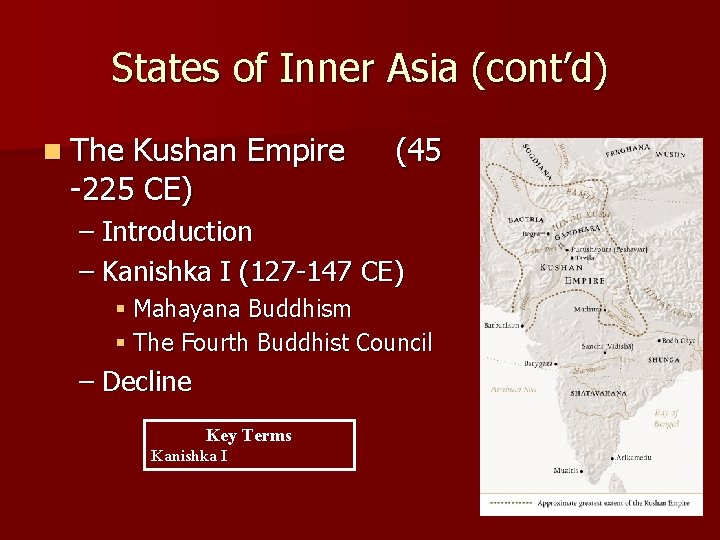
States of Inner Asia (cont’d) n The Kushan Empire -225 CE) (45 – Introduction – Kanishka I (127 -147 CE) § Mahayana Buddhism § The Fourth Buddhist Council – Decline Key Terms Kanishka I
Kushan Empire (cont’d) n Developments in Buddhism – Theravada Buddhism – Mahayana Buddhism § bodhisattvas § Three-Body Doctrine § The Lotus Sutra Key Terms bodhisattva
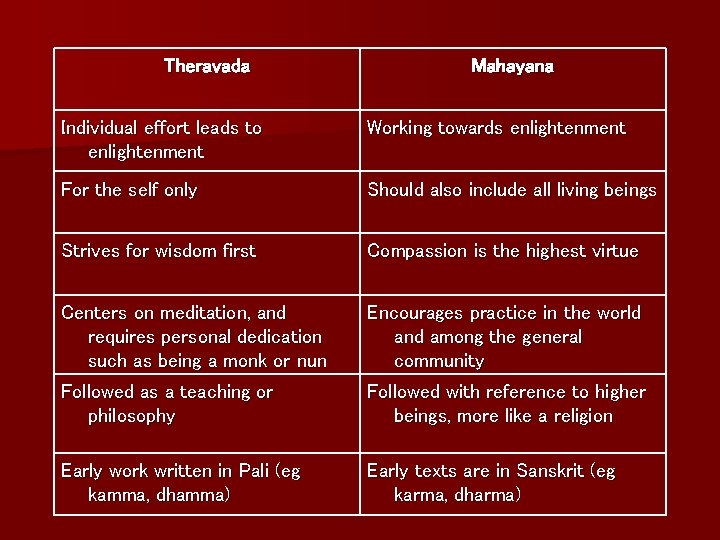
Theravada Mahayana Individual effort leads to enlightenment Working towards enlightenment For the self only Should also include all living beings Strives for wisdom first Compassion is the highest virtue Centers on meditation, and requires personal dedication such as being a monk or nun Encourages practice in the world and among the general community Followed as a teaching or philosophy Followed with reference to higher beings, more like a religion Early work written in Pali (eg kamma, dhamma) Early texts are in Sanskrit (eg karma, dharma)

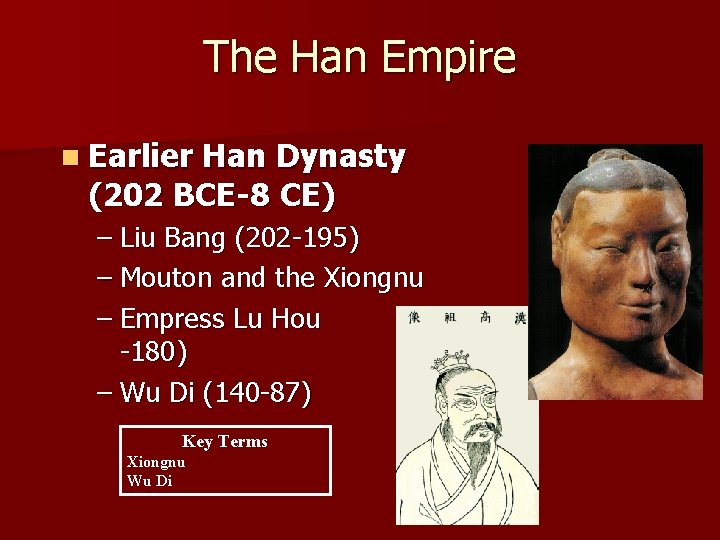
The Han Empire n Earlier Han Dynasty (202 BCE-8 CE) – Liu Bang (202 -195) – Mouton and the Xiongnu – Empress Lu Hou (195 -180) – Wu Di (140 -87) Key Terms Xiongnu Wu Di
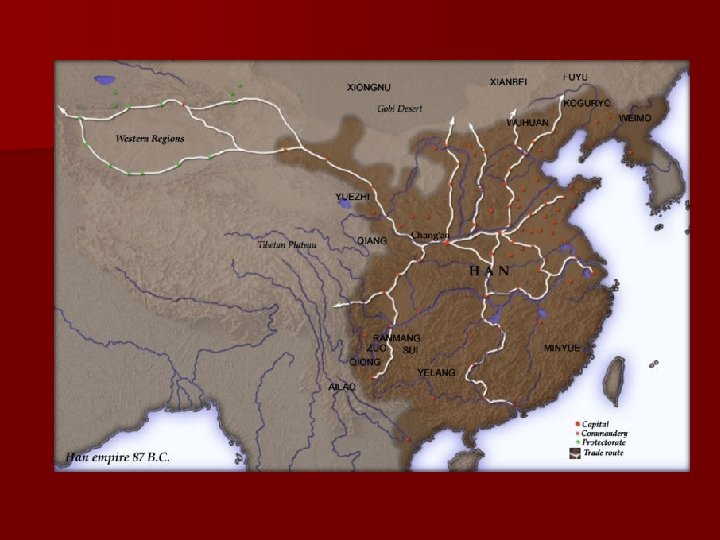
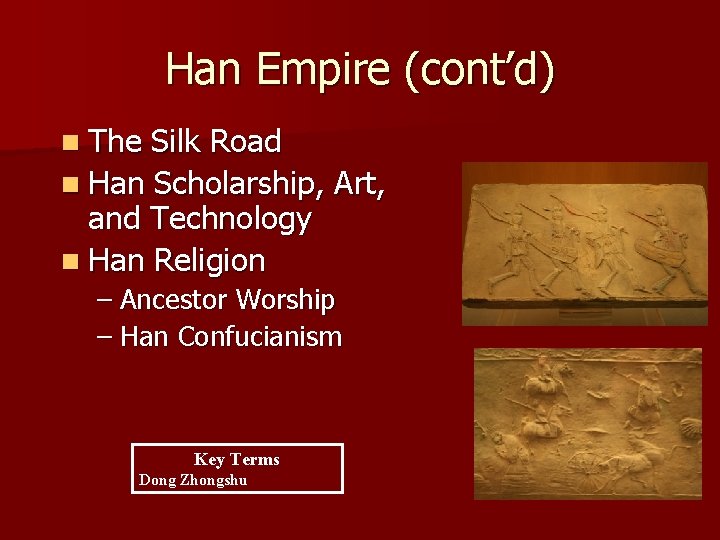
Han Empire (cont’d) n The Silk Road n Han Scholarship, Art, and Technology n Han Religion – Ancestor Worship – Han Confucianism Key Terms Dong Zhongshu
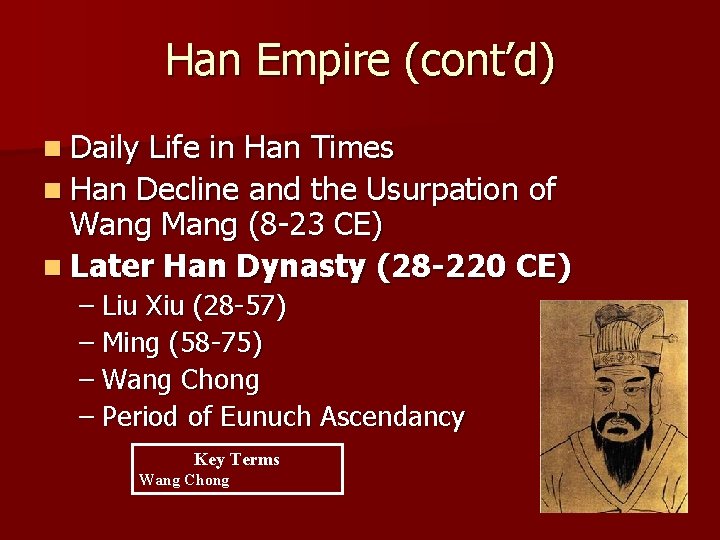
Han Empire (cont’d) n Daily Life in Han Times n Han Decline and the Usurpation of Wang Mang (8 -23 CE) n Later Han Dynasty (28 -220 CE) – Liu Xiu (28 -57) – Ming (58 -75) – Wang Chong – Period of Eunuch Ascendancy Key Terms Wang Chong
- Slides: 47