
Middle Cerebral Artery Doppler Ultrasound By Erik Paulson
Middle Cerebral Artery Doppler Ultrasound By Erik Paulson D. O. Diagnostic Radiology Resident
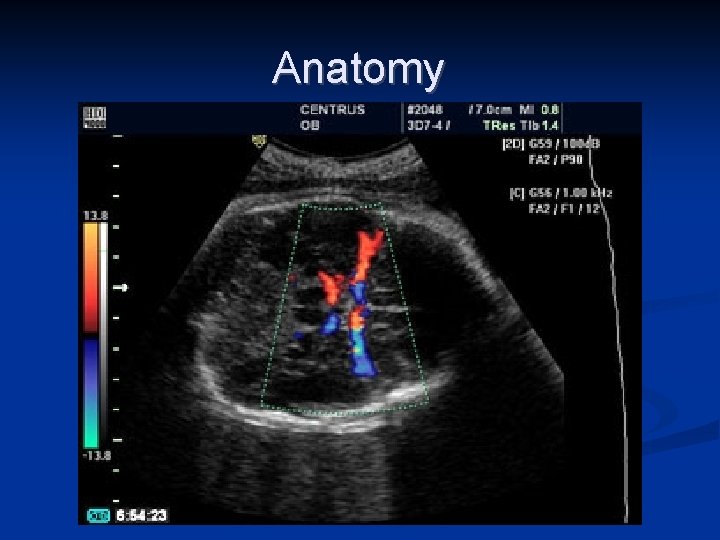
Anatomy

Why use the MCA? Easy to find n Reproducible n Straight vessel n Little collateral circulation n

Pulsatility Index (PI) n PI = (Vmax – Vmin) / Vmax average Increased PI means increased vascular resistance. n Decreased PI means decreased vascular resistance. n
Physiology of Fetal Hypoxia n Causes of hypoxia include Hypoxemia n Anemia n Ischemia n
Early response to hypoxia n Centralization n Which organs need to be saved first? n Brain, n Will the vessels dilate or constrict? n Dilate n Heart, Adrenal Glands. to increase blood flow. What will happen to the Pulsatility Index? n It will decrease.
Late response to hypoxia n Normalization n Cerebral edema n The increased pressure outside of the cerebral vessels is theorized to clamp down on the vessels producing increased resistance. n Increased resistance = Increased PI

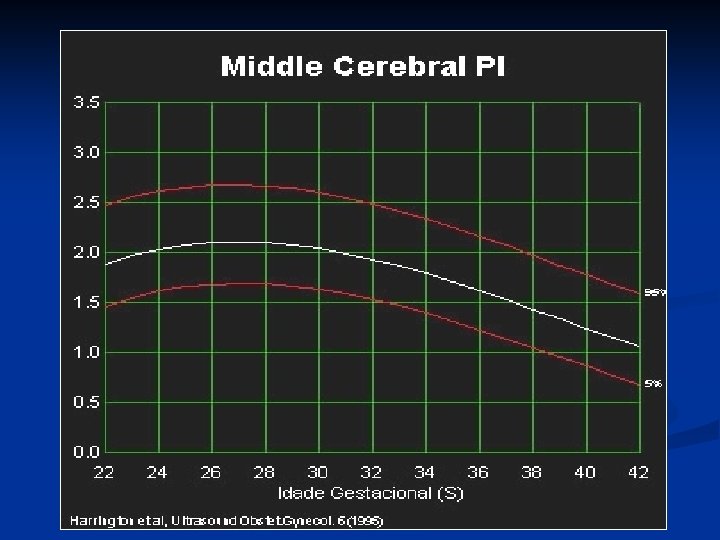
Normal vs. Abnormal

What to do if abnormal It is not necessarily an indication for delivery. n Biophysical profile scoring n Fetal growth surveillance n Consider invasive fetal testing if indicated n
Doppler ultrasound for the fetal assessment in high -risk pregnancies (Cochrane Review). In: The Cochrane Library, 1999. Neilson JP and Alfirevic Z Meta analysis n 11 Studies Included n Nearly 7000 patients were included n The trials compared no Doppler ultrasound to Doppler ultrasound in high-risk pregnancies. n
Results Reduction in perinatal deaths. ü Fewer inductions. ü Fewer admissions. ü No report of adverse effects. ü No difference was found for fetal distress in labor. ü No difference in caesarean delivery. ü
References n n n Creasy, Resnik, Iams. Maternal Fetal Medicine, 5 th ed. , 2004. Alfirevic Z, Neilson JP. Biophysical profile for fetal assessment in high risk pregnancies (Cochrane. Review). In: The Cochrane Library, 1995. http: //www. Google. com http: //www. centrus. com. br/Diploma. FMF/Series. F MF/doppler/capitulos-html/chapter_04. htm http: //www. medcyclopedia. com
- Slides: 13