
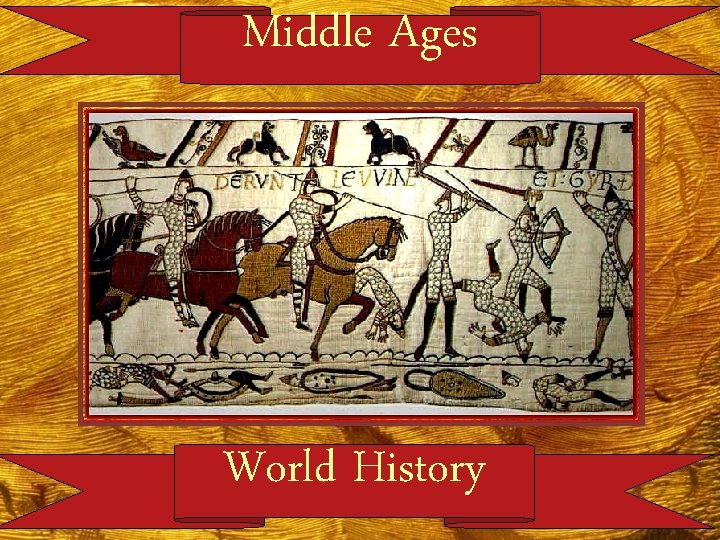
Middle Ages World History Middle Ages th th
- Slides: 20
Middle Ages World History
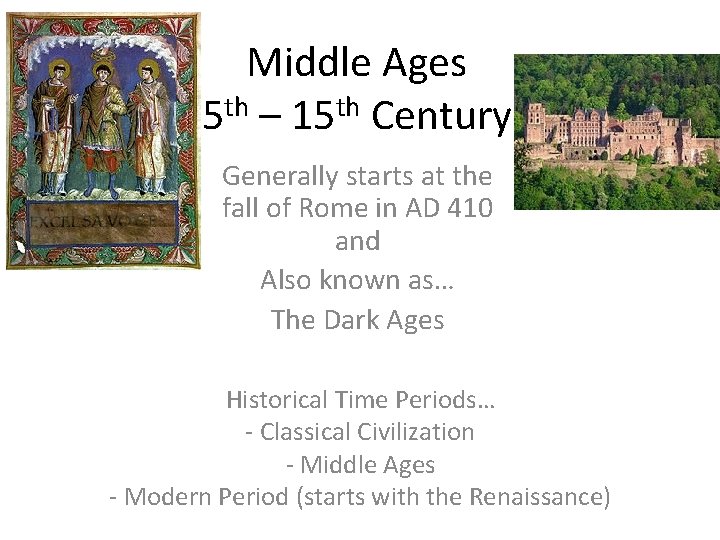
Middle Ages th th 5 – 15 Century Generally starts at the fall of Rome in AD 410 and Also known as… The Dark Ages Historical Time Periods… - Classical Civilization - Middle Ages - Modern Period (starts with the Renaissance)
¯ Era of relative peace and stability ¯ Population growth ¯ Cultural developments in education and art ¯ Kings, nobles, and the Church shared power ¯ Developed tax systems and government offices ¯ Supported towns and middle class for power ¯ Feudal and manor systems
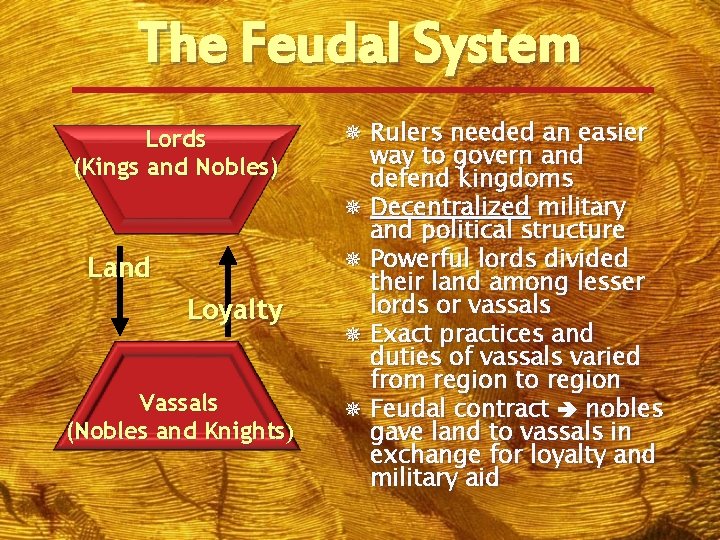
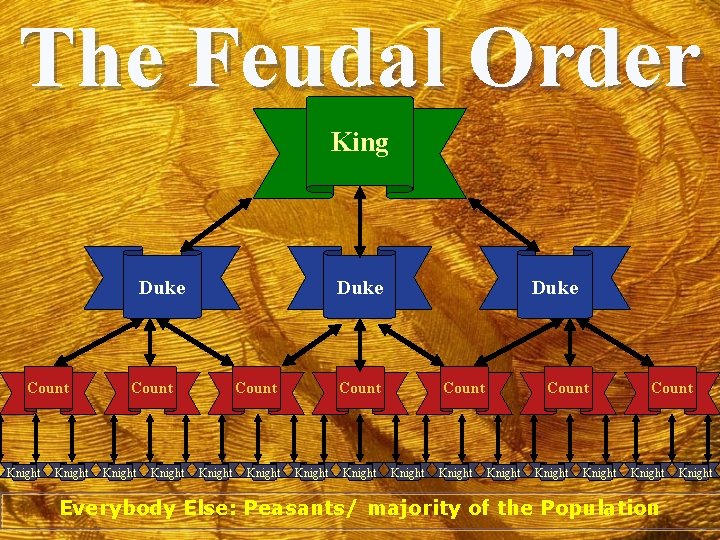
The Feudal System Lords (Kings and Nobles) Land Loyalty Vassals (Nobles and Knights) ¯ Rulers needed an easier way to govern and defend kingdoms ¯ Decentralized military and political structure ¯ Powerful lords divided their land among lesser lords or vassals ¯ Exact practices and duties of vassals varied from region to region ¯ Feudal contract nobles gave land to vassals in exchange for loyalty and military aid
The Feudal Order King Duke Count Knight Knight Count Knight Knight Count Knight Everybody Else: Peasants/ majority of the Population Knight
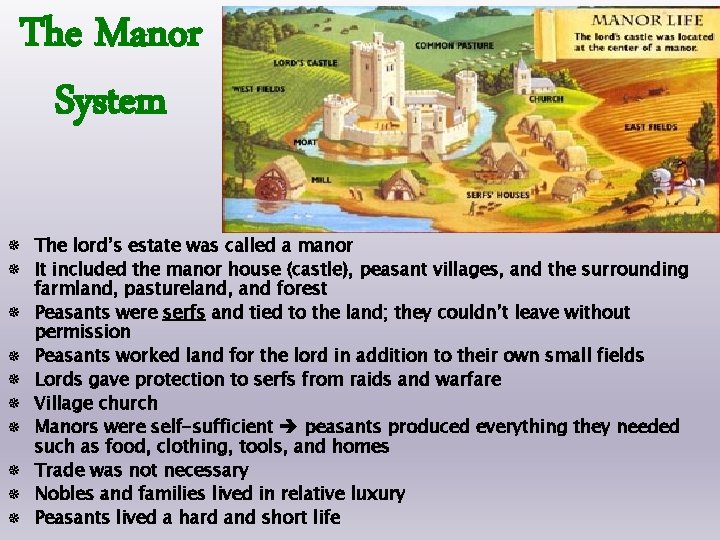
The Manor System ¯ The lord’s estate was called a manor ¯ It included the manor house (castle), peasant villages, and the surrounding ¯ ¯ ¯ ¯ farmland, pastureland, and forest Peasants were serfs and tied to the land; they couldn’t leave without permission Peasants worked land for the lord in addition to their own small fields Lords gave protection to serfs from raids and warfare Village church Manors were self-sufficient peasants produced everything they needed such as food, clothing, tools, and homes Trade was not necessary Nobles and families lived in relative luxury Peasants lived a hard and short life
Power of the Church ¯ Pope was spiritual leader God’s representative infallible ¯ Papal supremacy authority over kings ¯ Church officials also had secular jobs ¯ Law and Ecclesiastical courts ¯ Excommunication and the interdict ¯ The popes and the Roman Catholic Church became very wealthy
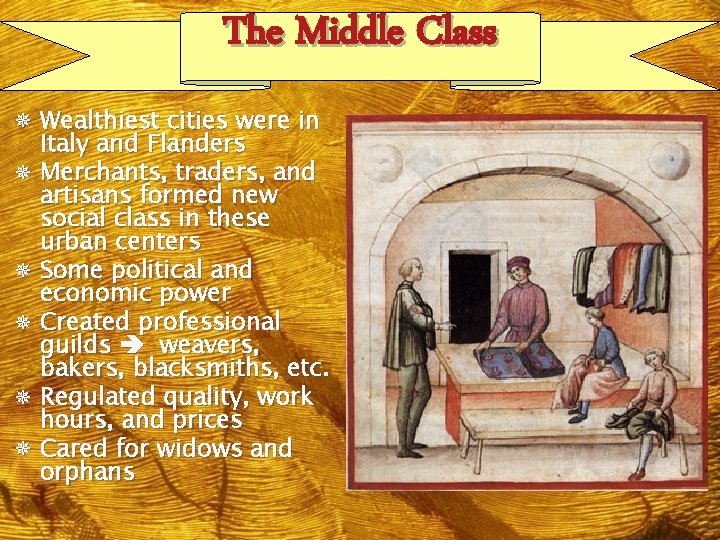
The Middle Class ¯ Wealthiest cities were in Italy and Flanders ¯ Merchants, traders, and artisans formed new social class in these urban centers ¯ Some political and economic power ¯ Created professional guilds weavers, bakers, blacksmiths, etc. ¯ Regulated quality, work hours, and prices ¯ Cared for widows and orphans
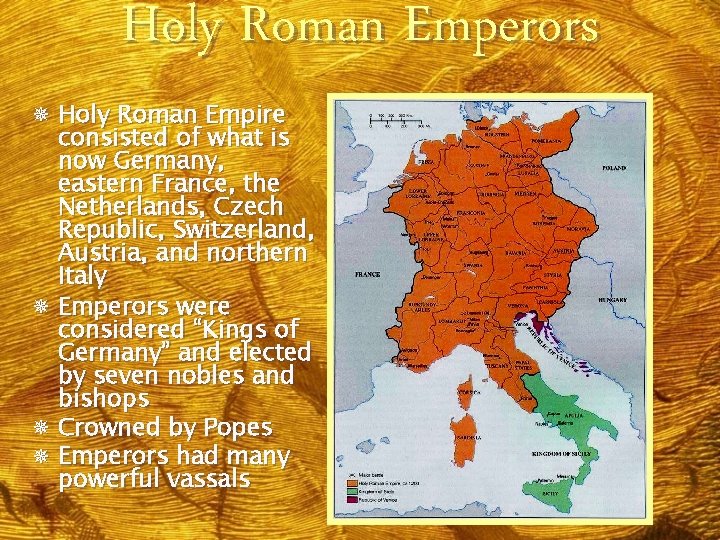
Holy Roman Emperors ¯ Holy Roman Empire consisted of what is now Germany, eastern France, the Netherlands, Czech Republic, Switzerland, Austria, and northern Italy ¯ Emperors were considered “Kings of Germany” and elected by seven nobles and bishops ¯ Crowned by Popes ¯ Emperors had many powerful vassals
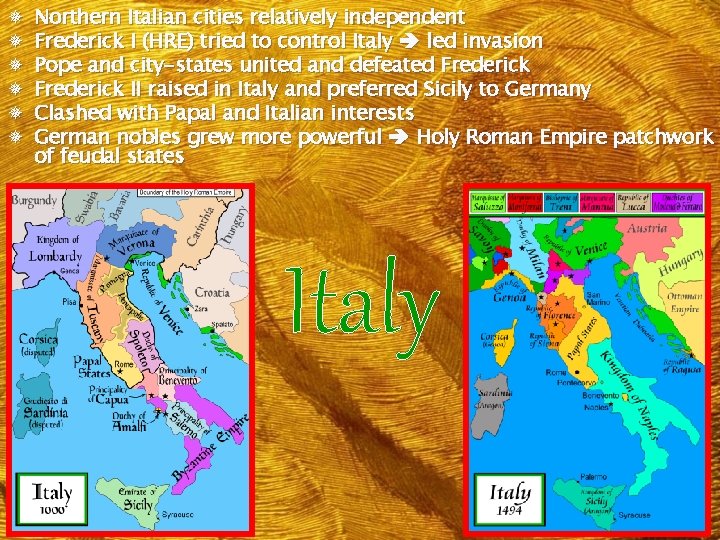
¯ ¯ ¯ Northern Italian cities relatively independent Frederick I (HRE) tried to control Italy led invasion Pope and city-states united and defeated Frederick II raised in Italy and preferred Sicily to Germany Clashed with Papal and Italian interests German nobles grew more powerful Holy Roman Empire patchwork of feudal states Italy
¯ 1300 s and 1400 s filled with disease, conflict, and war ¯ Black Death destroyed population and normal life ¯ Babylonian Captivity split Church and weakened its authority over European rulers and society ¯ Hundred Years’ War consumed lives and money from all over Europe
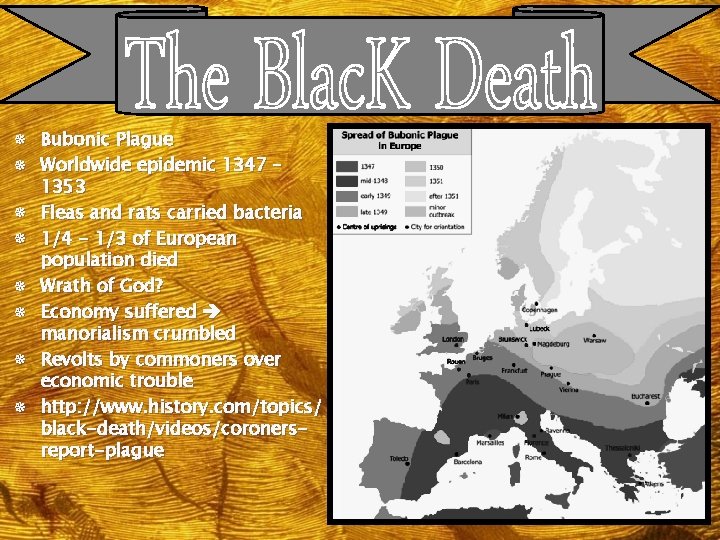
¯ Bubonic Plague ¯ Worldwide epidemic 1347 – ¯ ¯ ¯ 1353 Fleas and rats carried bacteria 1/4 - 1/3 of European population died Wrath of God? Economy suffered manorialism crumbled Revolts by commoners over economic trouble http: //www. history. com/topics/ black-death/videos/coronersreport-plague
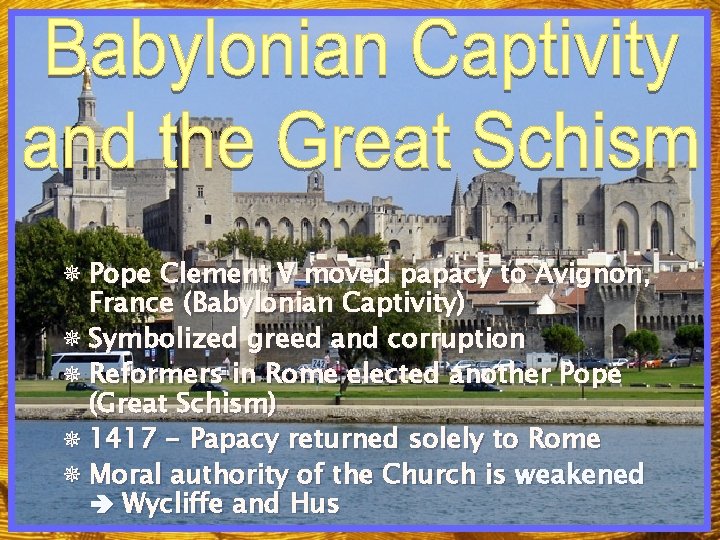
Babylonian Captivity and the Great Schism ¯ Pope Clement V moved papacy to Avignon, France (Babylonian Captivity) ¯ Symbolized greed and corruption ¯ Reformers in Rome elected another Pope (Great Schism) ¯ 1417 - Papacy returned solely to Rome ¯ Moral authority of the Church is weakened Wycliffe and Hus
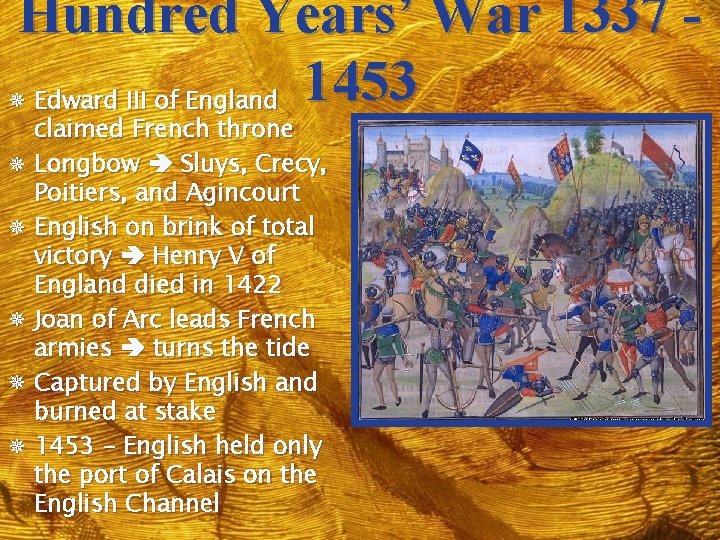
Hundred Years’ War 1337 Edward III of England 1453 ¯ claimed French throne ¯ Longbow Sluys, Crecy, Poitiers, and Agincourt ¯ English on brink of total victory Henry V of England died in 1422 ¯ Joan of Arc leads French armies turns the tide ¯ Captured by English and burned at stake ¯ 1453 - English held only the port of Calais on the English Channel
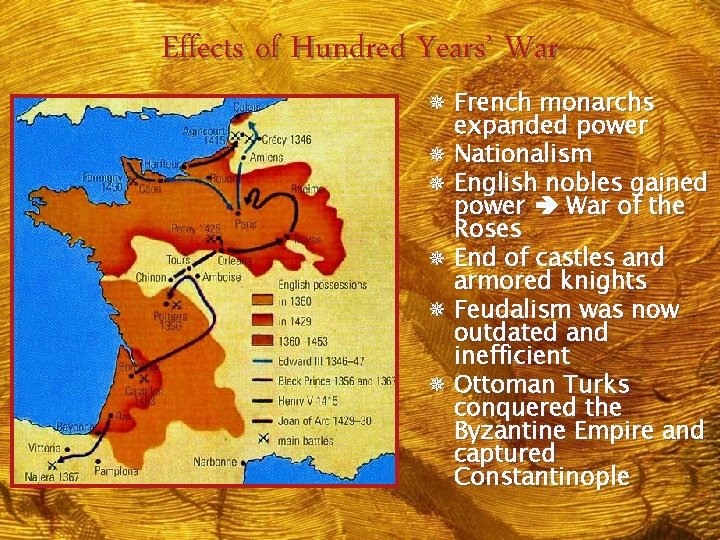
Effects of Hundred Years’ War ¯ French monarchs expanded power ¯ Nationalism ¯ English nobles gained power War of the Roses ¯ End of castles and armored knights ¯ Feudalism was now outdated and inefficient ¯ Ottoman Turks conquered the Byzantine Empire and captured Constantinople
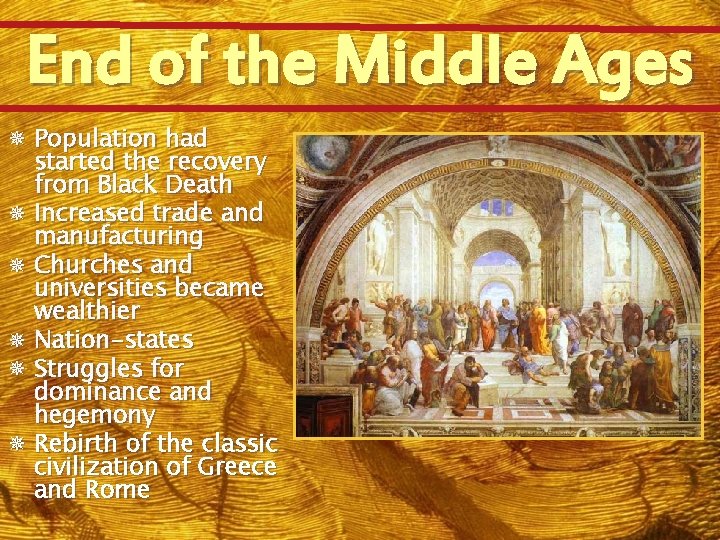
End of the Middle Ages ¯ Population had started the recovery from Black Death ¯ Increased trade and manufacturing ¯ Churches and universities became wealthier ¯ Nation-states ¯ Struggles for dominance and hegemony ¯ Rebirth of the classic civilization of Greece and Rome
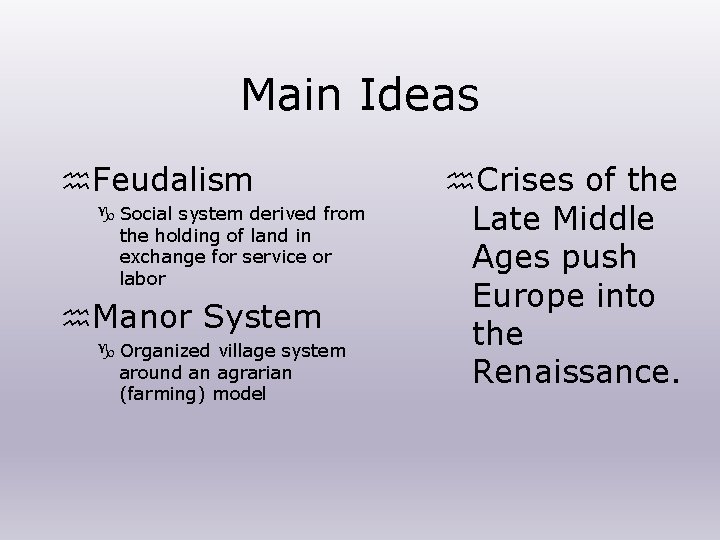
Main Ideas h. Feudalism g Social system derived from the holding of land in exchange for service or labor h. Manor System g Organized village system around an agrarian (farming) model h. Crises of the Late Middle Ages push Europe into the Renaissance.
Fun facts little known hhttp: //www. his toryextra. com/f eature/medieva l/10 -things-you -probably-didnt -know-aboutmiddle-ages hhttp: //www. his toryextra. com/ article/animals/ picturesmedieval-life