
Microspirometry Alison Sutherland Respiratory Nurse What is it
- Slides: 26
Microspirometry Alison Sutherland. Respiratory Nurse
What is it? • Simple, inexpensive hand-held spirometers, programmed at each use with the patient’s age, height and gender. • Give good, accurate readings of forced expiratory volume in 1 second (FEV 1) and express this as percent predicted. • Good quality results can be obtained but a good technique and instruction is still required.
Indications Micro spirometry can be used for Monitoring (COPD) BUT should NEVER be used for DIAGNOSIS
Monitoring COPD • The FEV 1 does not vary greatly in COPD and is not an indicator of severity in acute exacerbation of COPD, but is a good prognostic indicator of degree of obstruction in people with COPD. • QOF recommend FEV 1 annually, not full spirometry nor further FVC or FEV 1/FVC. • NICE recommends FEV 1 annually. • Major prognostic indicators look for FEV 1 alone and NOT other parameters e. g. BODE, DOSE
CONSIDER: A patient attends and is more breathless with COPD. • Potential causes may be • PE, CA, Anaemia, HF, Pneumonia, Anxiety, Bronchiectasis, Pneumothorax, Pleural Effusion, Deconditioning • None of these are picked up from measuring the FEV 1
Therefore, once diagnosis has been confirmed with full post bronchodilator spirometry and spirometry performed at the first annual review, future reviews could include the FEV 1 obtained from micro spirometry. This would leave more time to listen to patients, to react to their symptoms, check inhaler technique and allow a quality review to take place. (Holmes S & Scullion JE 2014)
• The FEV 1 result should be compared to the previous year. • If the FEV 1 has deteriorated by more than 60 ml then further investigation is required (Vestbo 2011)
How accurate? • VERIFICATION • The micro spirometer must have been checked for verification, to ensure accuracy. • Biological check • Perform an FEV 1 on the same person for 10 days, at approx. the same time of day. ( Doesn’t have to be consecutive) Obtaining the best of 3 results and ensuring the best 2 readings are within 100 mls • Add the 10 best results together • Divide by 10, to give the mean • Calculate plus and minus 5%, to create a biological FEV 1 range. • A biological check should take place monthly with the result being within the biological range. • Keep a log of the verification checks
TECHNIQUE FOR USE OF MICRO SPIROMETER • seated • Check the patients age, height and sex and enter results into the micro spirometer • Attach a one way mouthpiece to the micro spirometer • Ask patient to fully inhale, place mouth around the mouthpiece, ensure a firm seal, then maximally exhale as rapidly as possible for 6 seconds • Repeat the test 2 more times, noting each result, until the best 2 results are within 100 mls ideally (and certainly no more than 150 mls in the occasional highly variable patient). • Comments to be recorded in patient records, re variable effort, or problems experienced e. g. coughing, poor mouth seal, insufficient inspiration, inhaled medications taken pre-test.
CLEANING • Clean the micro spirometer as per manufacturer guidelines. • Use a new one way mouthpiece for each patient. • Do not perform micro spirometry if the patient currently has an infection or open TB
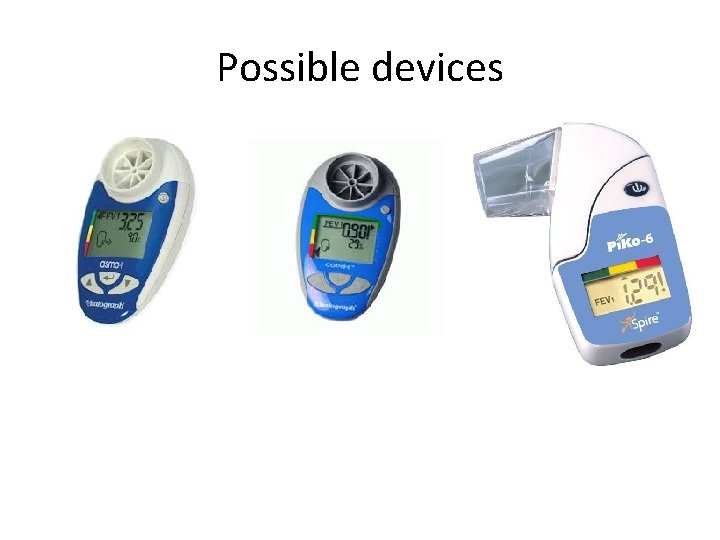
Possible devices
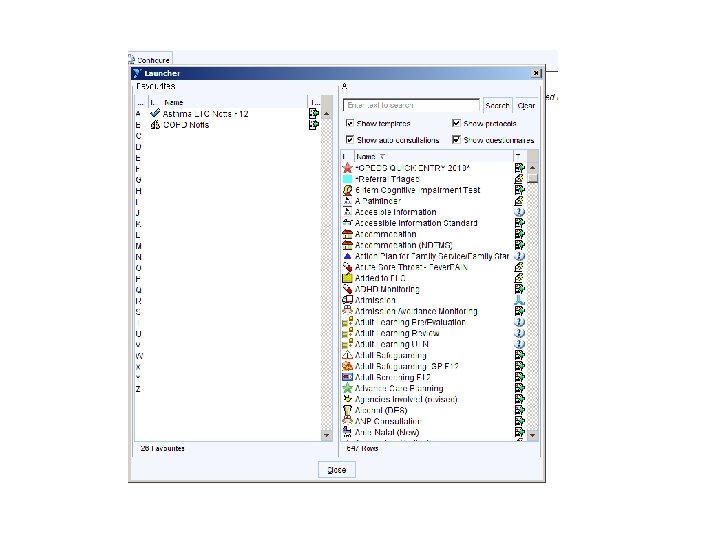
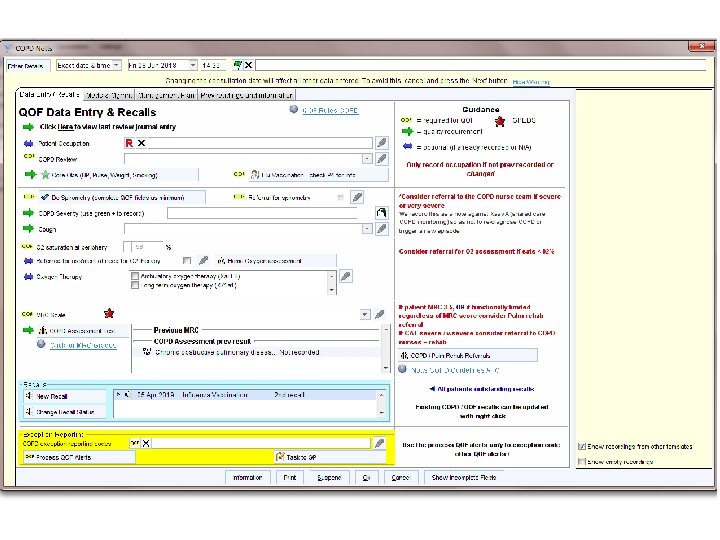
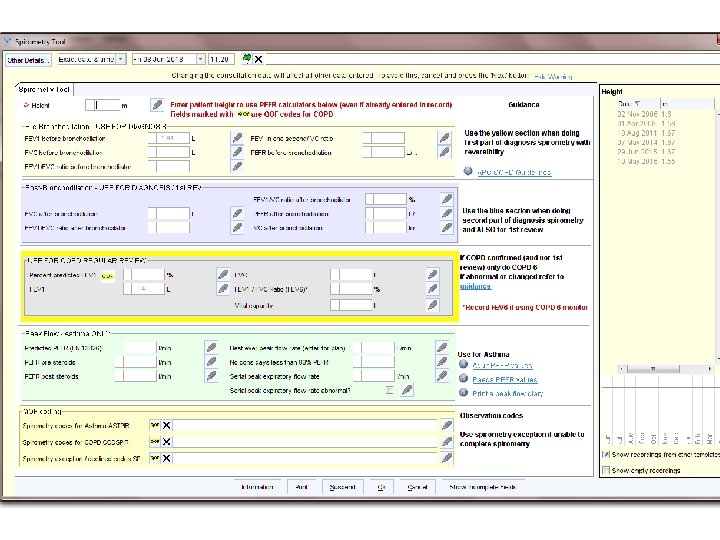
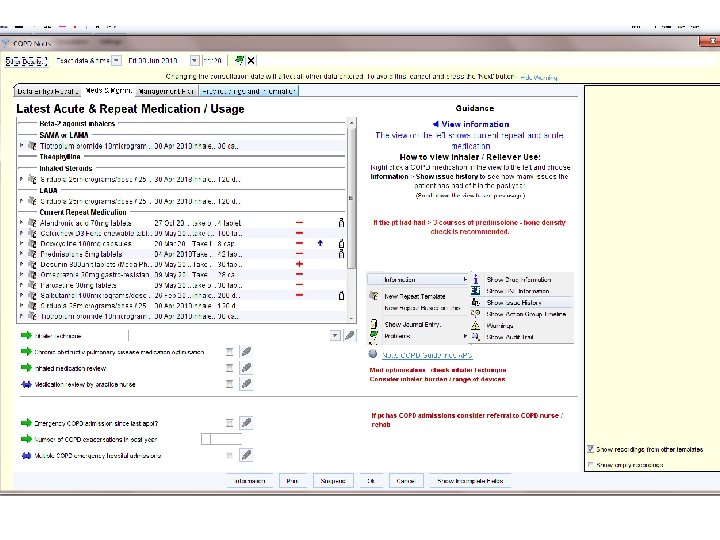
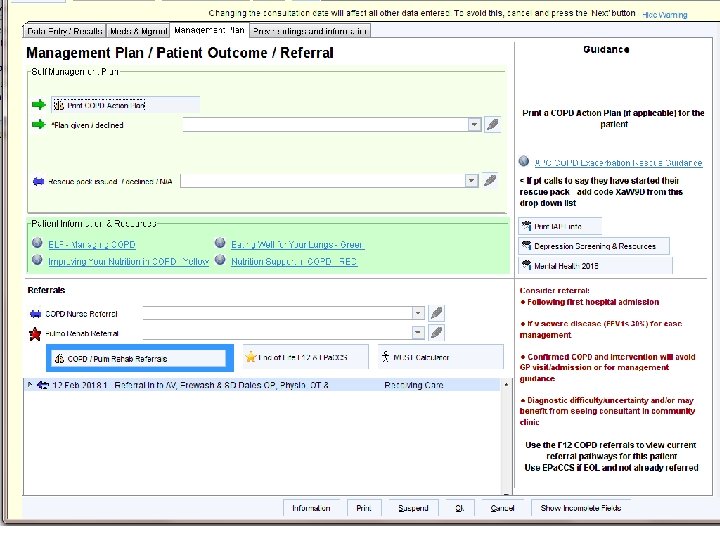
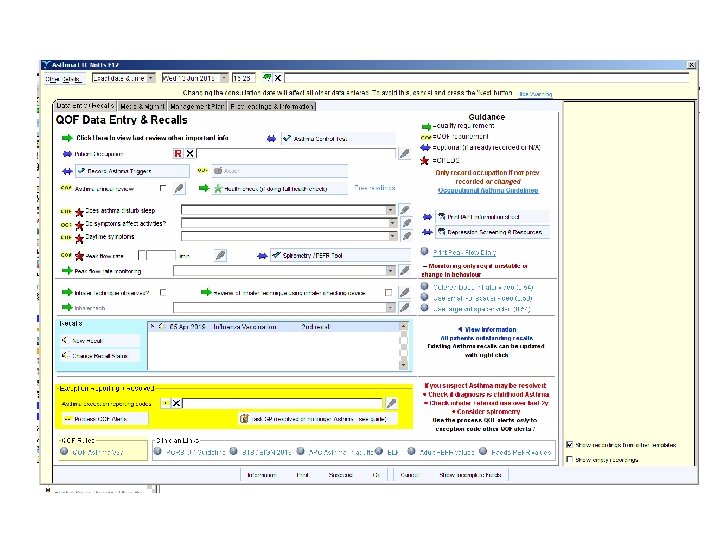
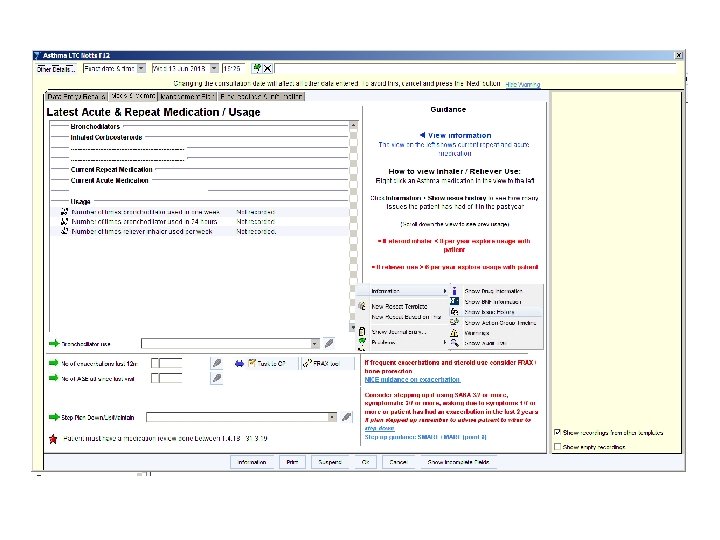
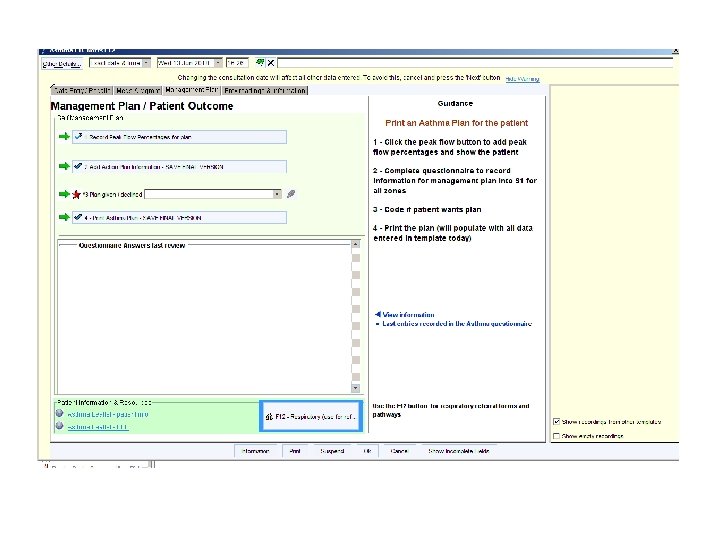
COPD REVIEW • F 12 template?
Questions?