
Microsoft New Wine in an Old Bottle Soumyashree
Microsoft – New Wine in an Old Bottle Soumyashree Sarangi Nirmal Joseph Prithwish Sarkar Sibi Othaloor
Table of Contents 1. 2. 3. 4. 5. 6. 7. 8. 9. Microsoft – Overview. Nokia– Overview. Microsoft’s Organizational Culture. Microsoft and Nokia’s Alliance. Role of Culture in Acquisitions. Contrast between US and European Culture. Impact of culture on the alliance. Challenges before Satya Nadella and his team. Suggestions / Conclusions.
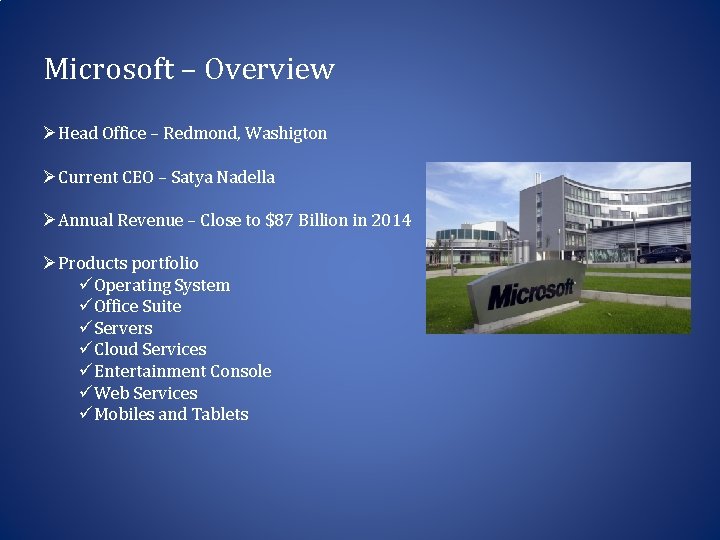
Microsoft – Overview ØHead Office – Redmond, Washigton ØCurrent CEO – Satya Nadella ØAnnual Revenue – Close to $87 Billion in 2014 ØProducts portfolio üOperating System üOffice Suite üServers üCloud Services üEntertainment Console üWeb Services üMobiles and Tablets
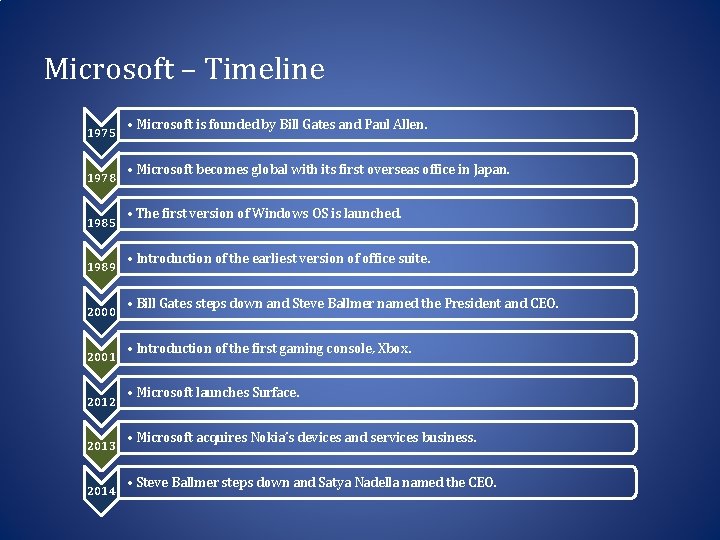
Microsoft – Timeline 1975 1978 1985 1989 2000 2001 2012 2013 2014 • Microsoft is founded by Bill Gates and Paul Allen. • Microsoft becomes global with its first overseas office in Japan. • The first version of Windows OS is launched. • Introduction of the earliest version of office suite. • Bill Gates steps down and Steve Ballmer named the President and CEO. • Introduction of the first gaming console, Xbox. • Microsoft launches Surface. • Microsoft acquires Nokia’s devices and services business. • Steve Ballmer steps down and Satya Nadella named the CEO.
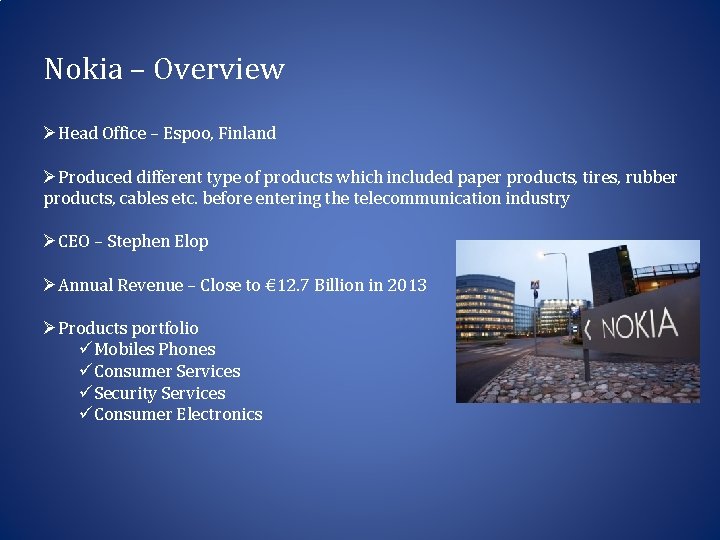
Nokia – Overview ØHead Office – Espoo, Finland ØProduced different type of products which included paper products, tires, rubber products, cables etc. before entering the telecommunication industry ØCEO – Stephen Elop ØAnnual Revenue – Close to € 12. 7 Billion in 2013 ØProducts portfolio üMobiles Phones üConsumer Services üSecurity Services üConsumer Electronics
Nokia – Timeline 1871 1963 1987 1999 2003 • Nokia founded by Fredrik Idestam as a wood-pulp mill. • Enters into the telecommunication market with radio telephones. • Launches its first handheld mobile phone, the Mobira Cityman. • Nokia releases 3210, one of the most successful phones, 160 Million units sold. • Nokia releases 1100, the best-selling mobile phone ever, 200 Million units sold. 2005 • Nokia introduces N series smart phones on Symbian platform. • Celebrated sales of 1 billion devices. 2010 • Partnership with Intel and announcement of Meego initiative. • Nokia hires former Microsoft executive Stephen Elop as chief executive. 2011 • Strategic partnership with Microsoft. • Decision to gradually phase-out of Symbian and Mego. 2012 2013 • Samsung overtakes Nokia as the world's largest maker of mobile phones. • Microsoft acquires Nokia’s devices and services business.
Microsoft’s Organizational Structure Ø“Stack ranking system” – Reward oriented system ØObjective of the stack ranking system was to balance creativity and discipline ØDisparity between “Old employees” and Newcomers ØSuccess in the company depended on mastery of politics ØSystems and procedures to analyze every facet of the organization ØTeams were devised based on each type of product
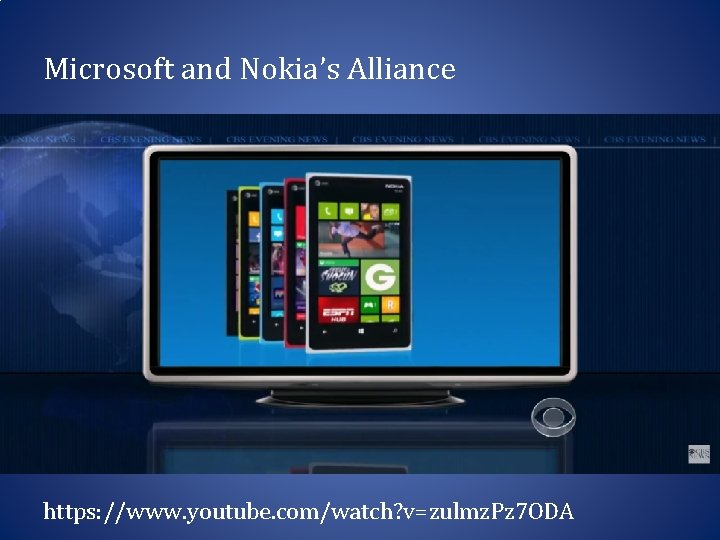
Microsoft and Nokia’s Alliance https: //www. youtube. com/watch? v=zulmz. Pz 7 ODA
Microsoft and Nokia’s Alliance Why Nokia needed Microsoft ? ØNokia’s flagship product , the cell phone, was no longer a market leader ØNokia became inward looking with their own OS “Symbian” ØThe new CEO, Stephen Elop decided to abandon Android and phase out Symbian & Meego to focus on the Microsoft Windows platform alone Ø$4 billion in losses incurred by Nokia within a year
Microsoft and Nokia’s Alliance Why Microsoft needed Nokia ? ØMicrosoft had a new vision “ Mobile first and Cloud first world” ØDesktops fading out Flagship products “OS and Office suite” cannot be relied on ØLimited success from other ventures such as the Xbox and Azure ØVery distant 3 rd in the mobile market itself
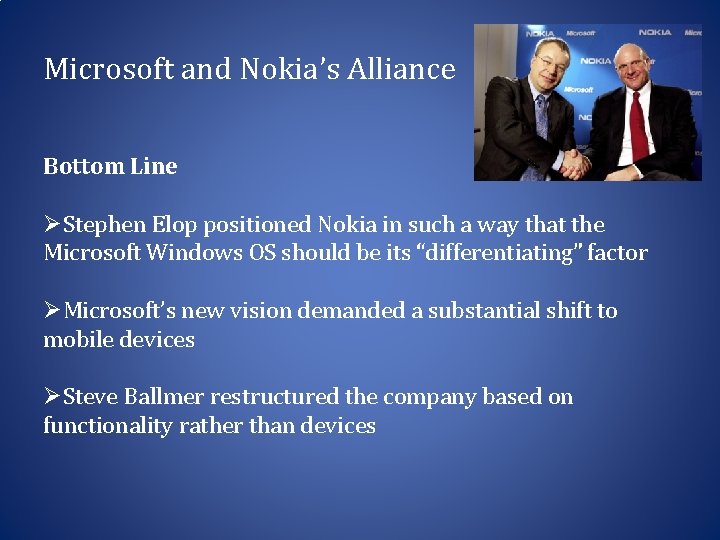
Microsoft and Nokia’s Alliance Bottom Line ØStephen Elop positioned Nokia in such a way that the Microsoft Windows OS should be its “differentiating” factor ØMicrosoft’s new vision demanded a substantial shift to mobile devices ØSteve Ballmer restructured the company based on functionality rather than devices
Analysis of Cultural Dimensions 1. Power Distance Index (PDI): The extent to which the less powerful members of institutions and organizations within a country expect and accept that power is distributed unequally. 2. Individualism versus Collectivism (IDV): The degree of interdependence a society maintains among its members. 3. Masculinity versus Femininity (MAS): The fundamental issue here is what motivates people, wanting to be the best (masculine) or liking what you do (feminine).
Analysis of Cultural Dimensions 4. Uncertainty Avoidance Index (UAI): The extent to which the members of a culture feel threatened by ambiguous or unknown situations and have created beliefs and institutions that try to avoid these. 5. Long Term Orientation versus Short Term (LTO): How every society has to maintain some links with its own past while dealing with the challenges of the present and future. 6. Indulgence versus Restraint (IND): The extent to which people try to control their desires and impulses.
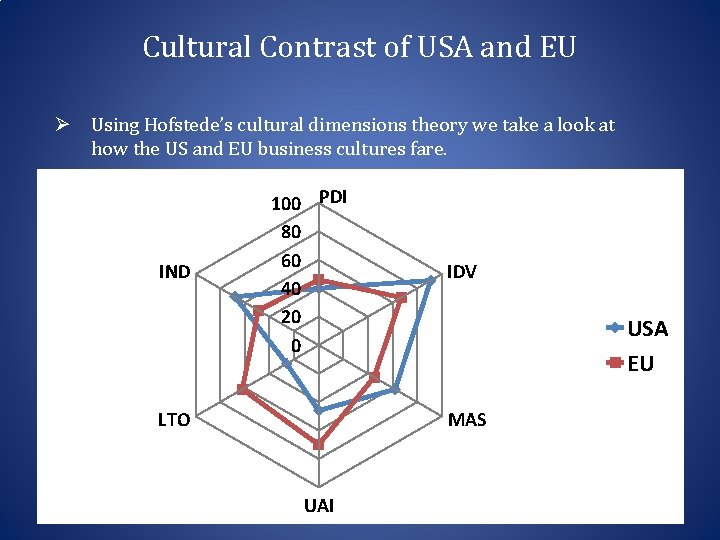
Cultural Contrast of USA and EU Ø Using Hofstede’s cultural dimensions theory we take a look at how the US and EU business cultures fare. IND 100 PDI 80 60 40 20 0 LTO IDV USA EU MAS UAI
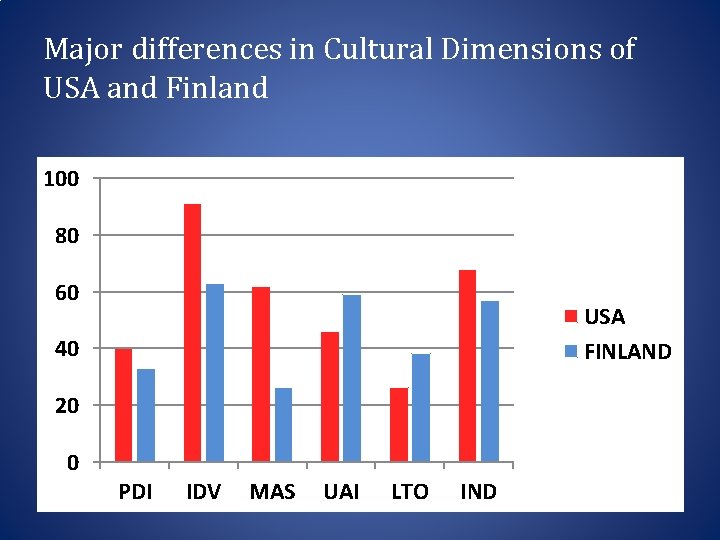
Major differences in Cultural Dimensions of USA and Finland 100 80 60 USA FINLAND 40 20 0 PDI IDV MAS UAI LTO IND
Role & Impact of Cultural Dimensions on Acquisitions and Mergers Ø Organizational culture and social culture differences can decide the success or failure of a merger or acquisition Impact of Social Culture Ø Preoccupation “How is this going to impact me? “ Ø Trust Ø Result oriented ”Short term and long term results”
Impact of Cultural Dimensions on Acquisitions and Mergers How do companies adapt to cultural differences? Ø Cultural fit Ø Acculturation Ø Social Constructive What is happening in this acquisition ? Acculturation in Microsoft – Nokia Ø Stephen Elop – “Trojan Horse” Ø Microsoft reorganization - a plan to easily integrate Nokia.
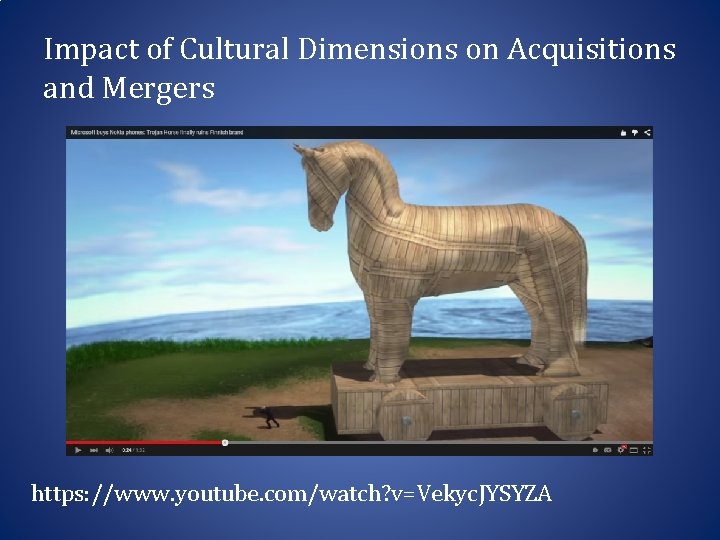
Impact of Cultural Dimensions on Acquisitions and Mergers https: //www. youtube. com/watch? v=Vekyc. JYSYZA
Challenges before Satya Nadella and his team Ø Verify whether Balmer’s reorganization tactic is in line with the company’s vision Ø Understanding and handling Nokia employees’ – Legal and Culture Ø Handling layoffs and pay cuts Ø Handling relationship with previous “partners” Ø To make the Windows ecosystem more appreciable to developers Ø Integration with Nokia increased the complexity of cultural change Microsoft was aiming for
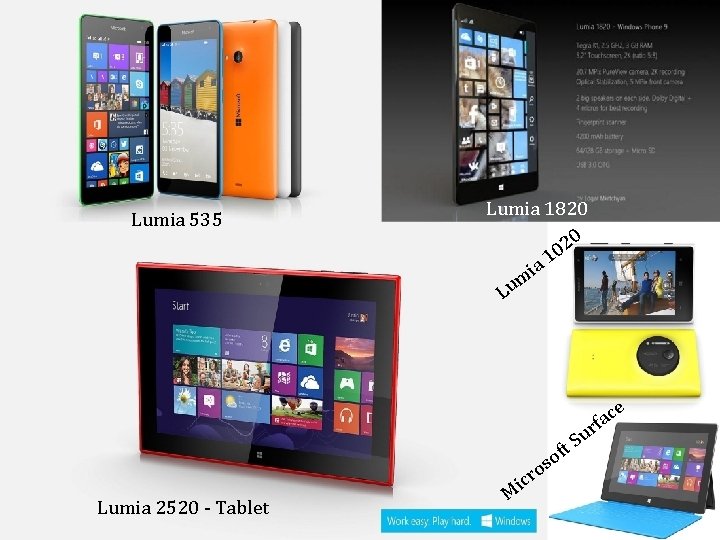
Lumia 535 Lumia 1820 20 0 1 ia m u L e o S ft Lumia 2520 - Tablet M os r ic u c rfa
Conclusion Ø Nokia’s strategy to focus on the Windows platform was good but not handled well due to cross cultural misunderstandings. Ø Microsoft’s reorganized structure, strategy and culture provides a good start for the road to recovery. Ø Even though seamless cultural integration is necessary, Microsoft’s focus should be mainly on innovation Ø Culture should be placed at the heart of integration strategies
References • http: //www. telegraph. co. uk/technology/noki a/10282657/Nokia-a-timeline-in-pictures. html
- Slides: 22