
Microscopy MICROSCOPE An optical instrument that uses a
- Slides: 19
Microscopy
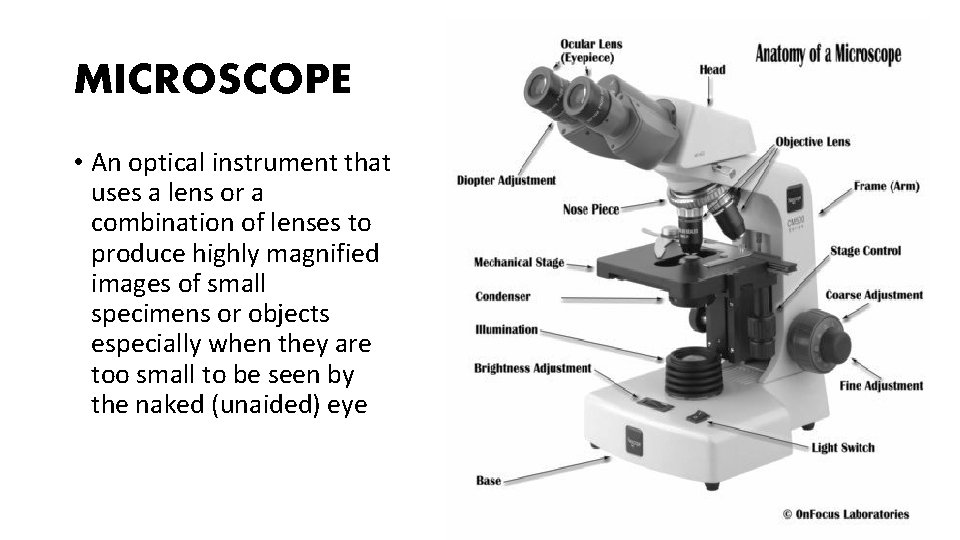
MICROSCOPE • An optical instrument that uses a lens or a combination of lenses to produce highly magnified images of small specimens or objects especially when they are too small to be seen by the naked (unaided) eye
TYPES OF MICRSOCPE • Light Microscope • The Bright-Field Microscope • The Dark-Field Microscope • Phase-Contrast Microscope • Differential Interference Contrast Microscope • Polarized light microscope • Fluorescence Microscope • Metallurgical Microscope • Electron Microscopes • • Spin-polarized low-energy electron microscope (SPLEEM) Reflection electron microscope(REM) Transmission Electron Microscope(TEM) Scanning Electron Microscope(SEM) • Latest Techniques in Microscopy • • • Confocal Microscopy Confocal laser scanning microscopy (CLSM or LSCM) Scanning Probe Microscopy Atomic force microscopy (AFM) or scanning force microscopy (SFM) Handheld Digital Microscopes
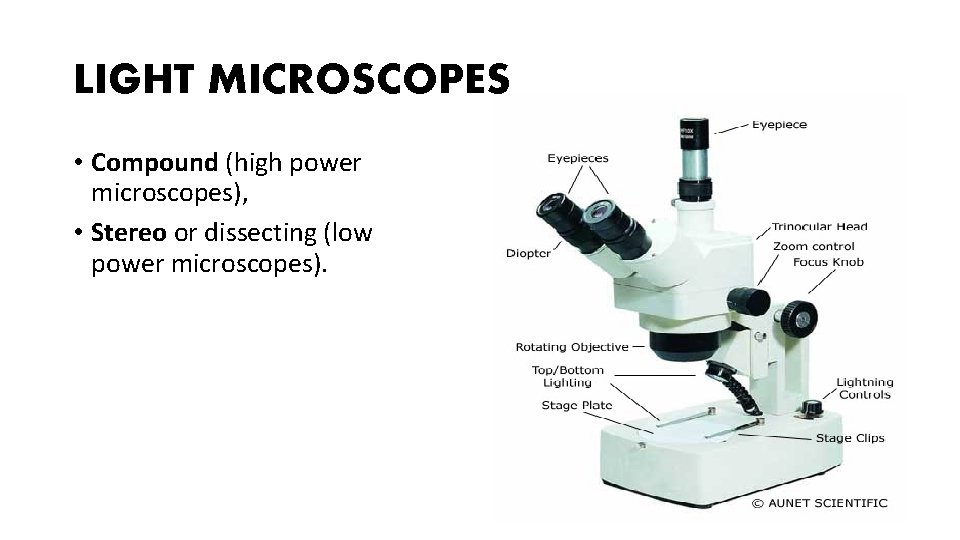
LIGHT MICROSCOPES • Compound (high power microscopes), • Stereo or dissecting (low power microscopes).
BRIGHT FIELD MICROSCOPY • Simplest of all the optical microscopy illumination techniques • Illuminated from below and observed from above
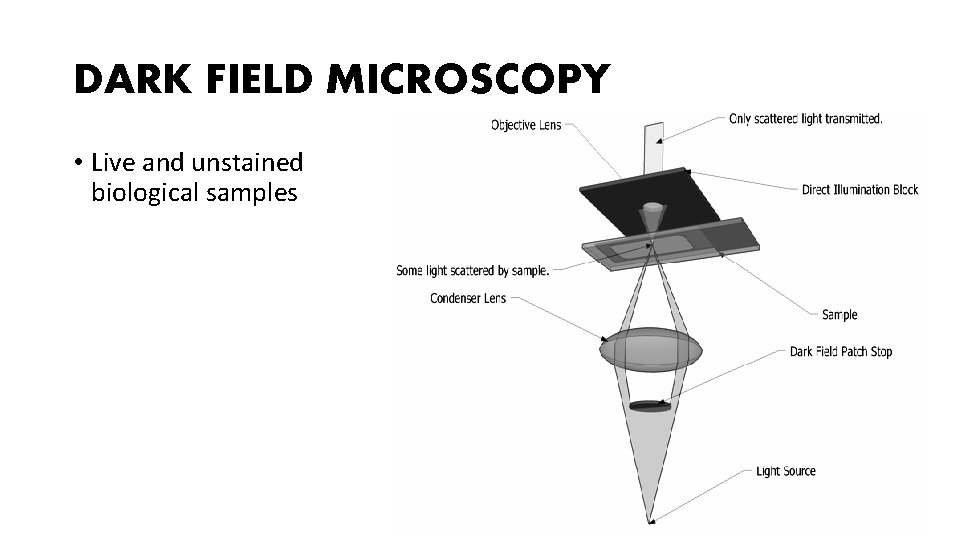
DARK FIELD MICROSCOPY • Live and unstained biological samples
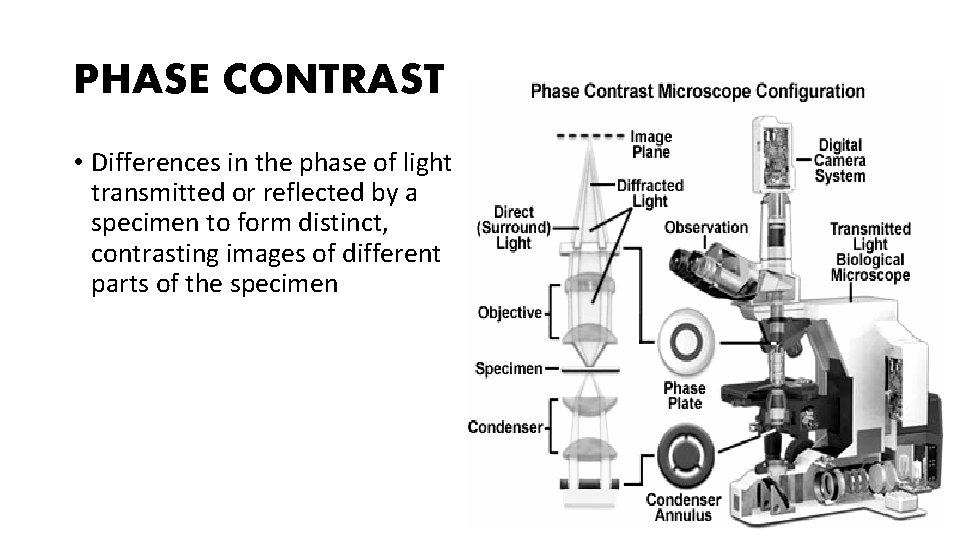
PHASE CONTRAST • Differences in the phase of light transmitted or reflected by a specimen to form distinct, contrasting images of different parts of the specimen
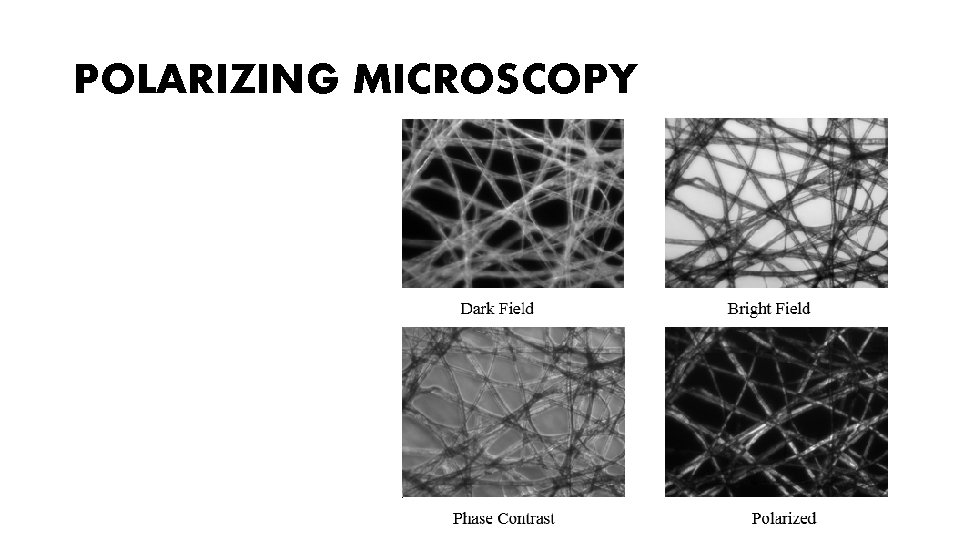
POLARIZING MICROSCOPY
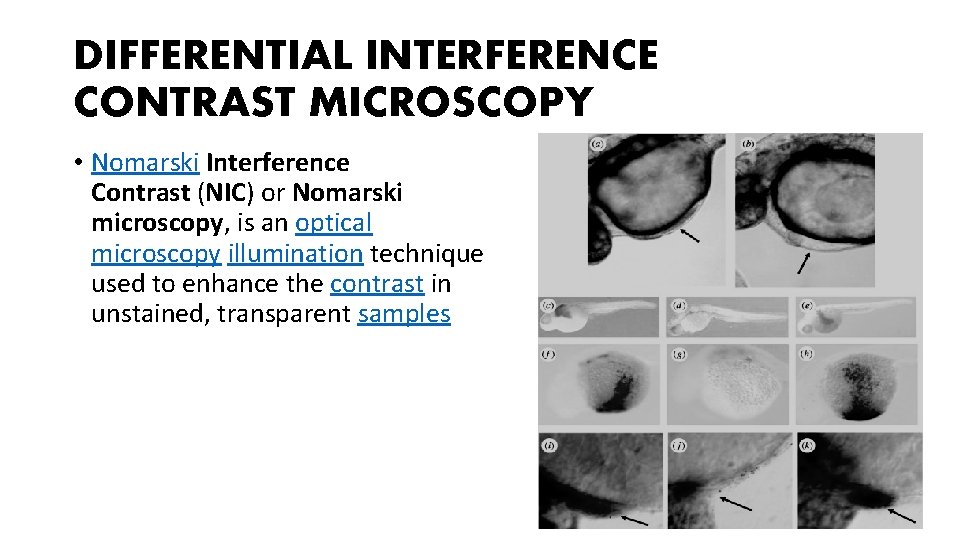
DIFFERENTIAL INTERFERENCE CONTRAST MICROSCOPY • Nomarski Interference Contrast (NIC) or Nomarski microscopy, is an optical microscopy illumination technique used to enhance the contrast in unstained, transparent samples
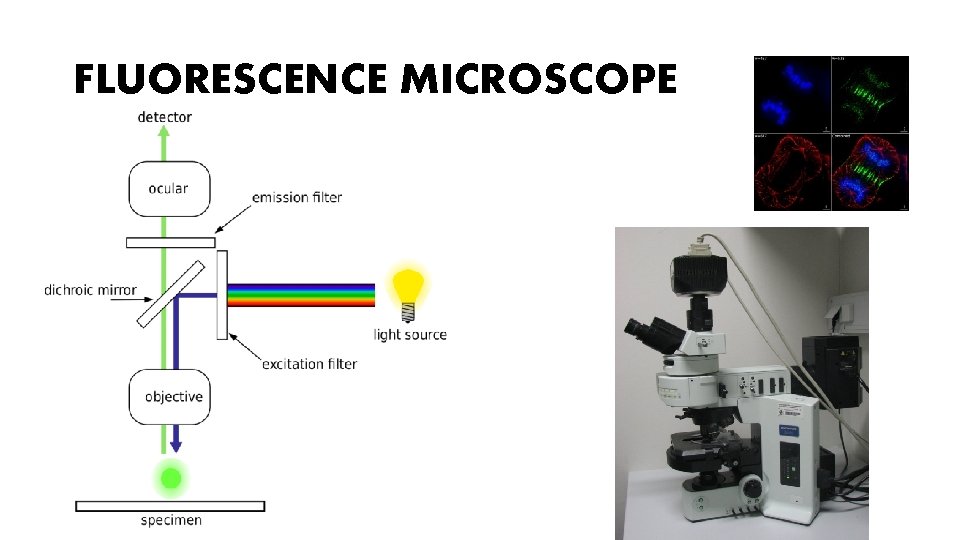
FLUORESCENCE MICROSCOPE
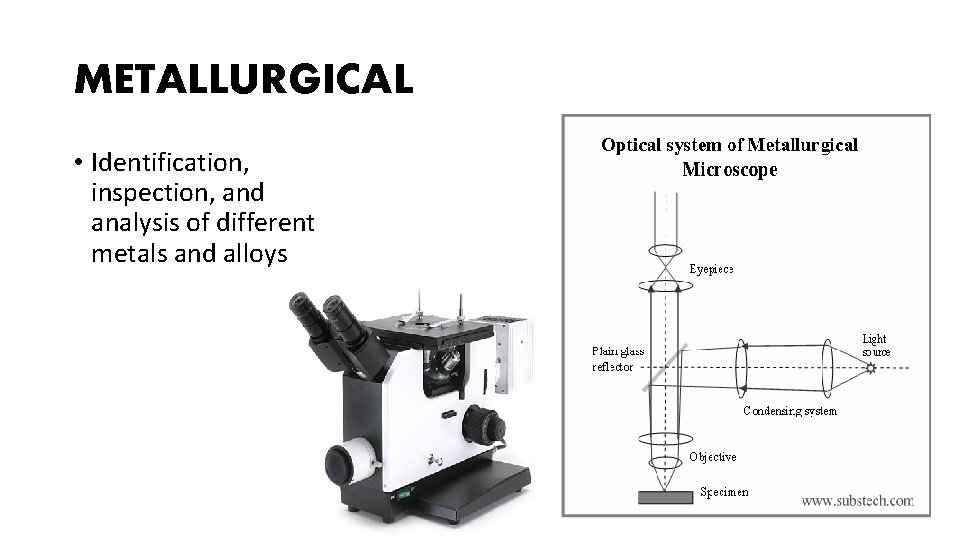
METALLURGICAL • Identification, inspection, and analysis of different metals and alloys
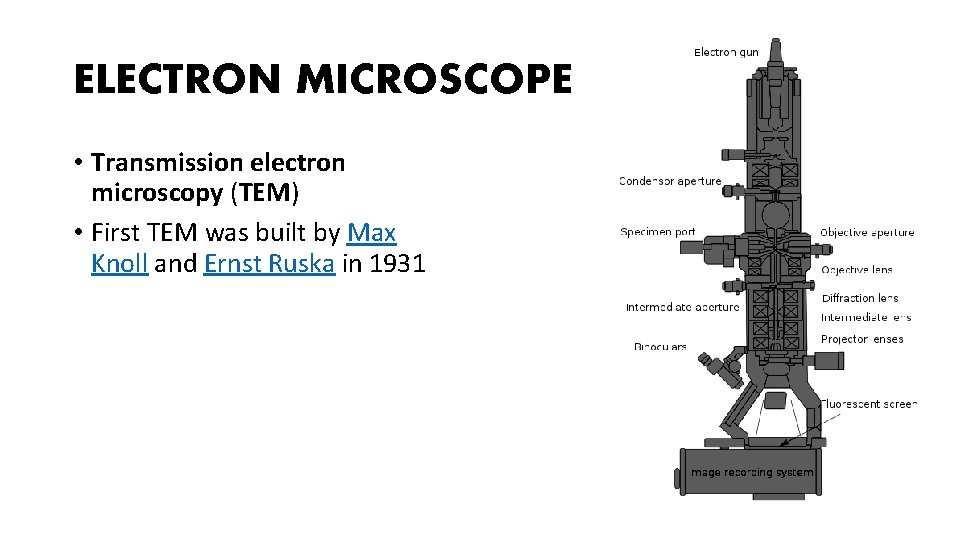
ELECTRON MICROSCOPE • Transmission electron microscopy (TEM) • First TEM was built by Max Knoll and Ernst Ruska in 1931
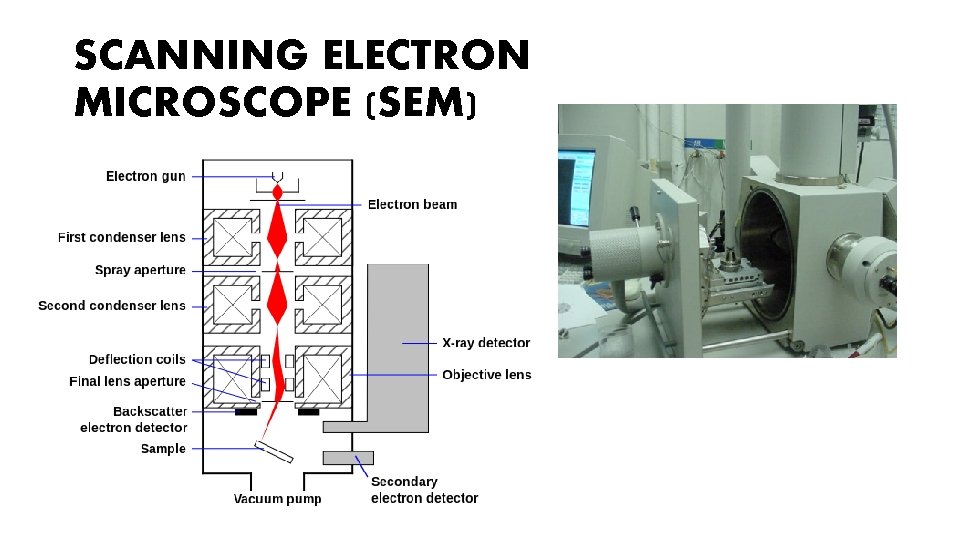
SCANNING ELECTRON MICROSCOPE (SEM)
REFLECTION ELECTRON MICROSCOPE • In the reflection electron microscope (REM) as in the TEM, an electron beam is incident on a surface but instead of using the transmission (TEM) or secondary electrons (SEM), the reflected beam of elastically scattered electrons is detected. This technique is typically coupled with reflection high energy electron diffraction (RHEED) and reflection high-energy loss spectroscopy (RHELS). Another variation is spin-polarized low-energy electron microscopy (SPLEEM), which is used for looking at the microstructure of magnetic domains
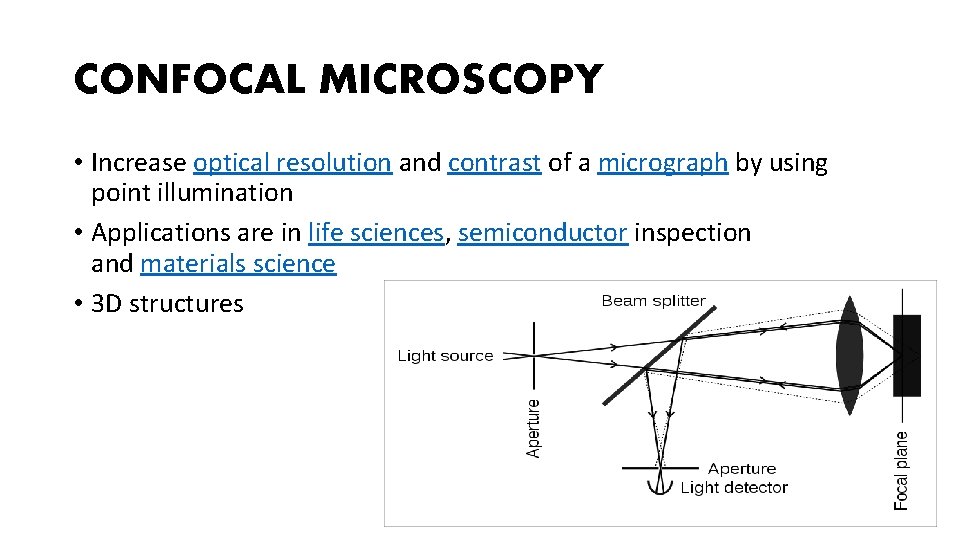
CONFOCAL MICROSCOPY • Increase optical resolution and contrast of a micrograph by using point illumination • Applications are in life sciences, semiconductor inspection and materials science • 3 D structures
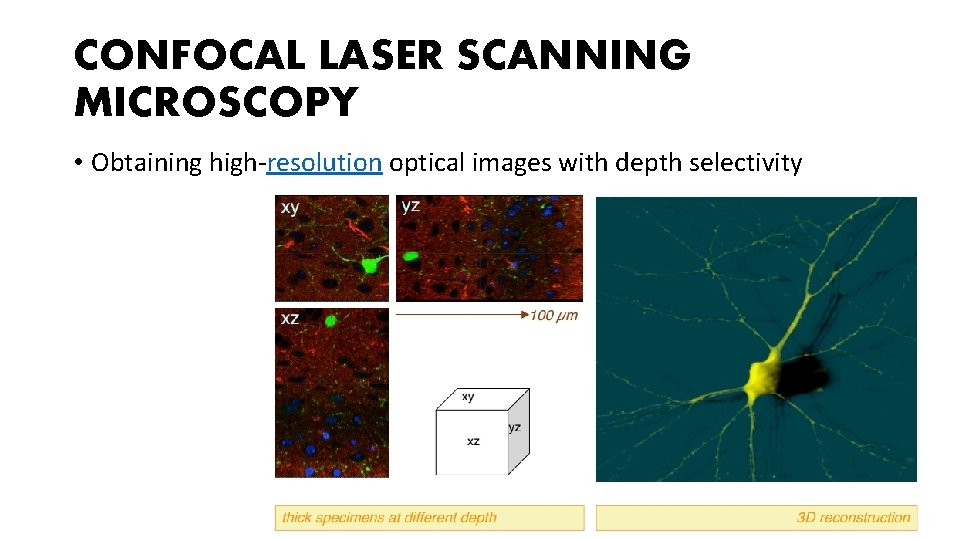
CONFOCAL LASER SCANNING MICROSCOPY • Obtaining high-resolution optical images with depth selectivity
SCANNING PROBE MICROSCOPY • Forms images of surfaces using a physical probe that scans the specimen
ATOMIC FORCE MICROSCOPY • Also called scanning force microscopy (SFM) is a very high-resolution type of scanning probe microscopy
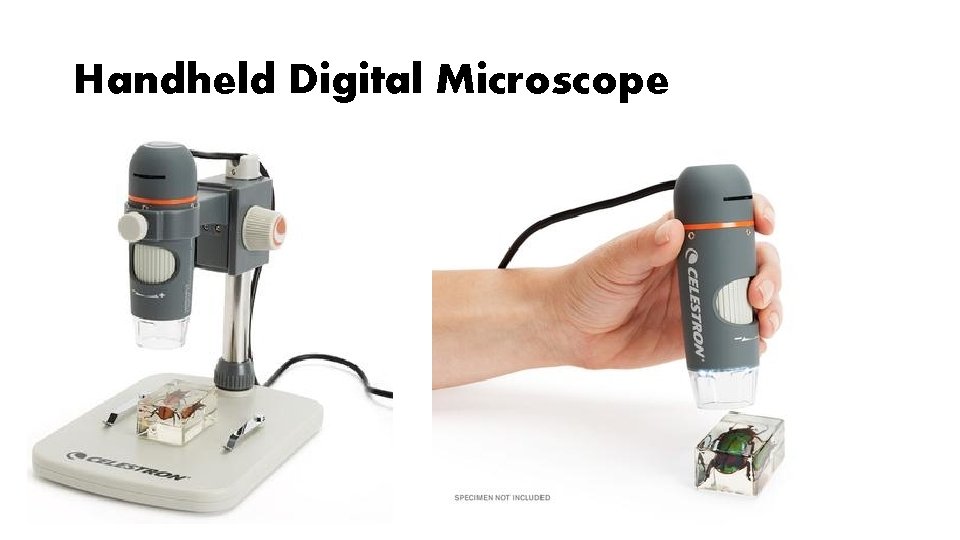
Handheld Digital Microscope