
Microscopy Lets give you the Scope of things
- Slides: 13
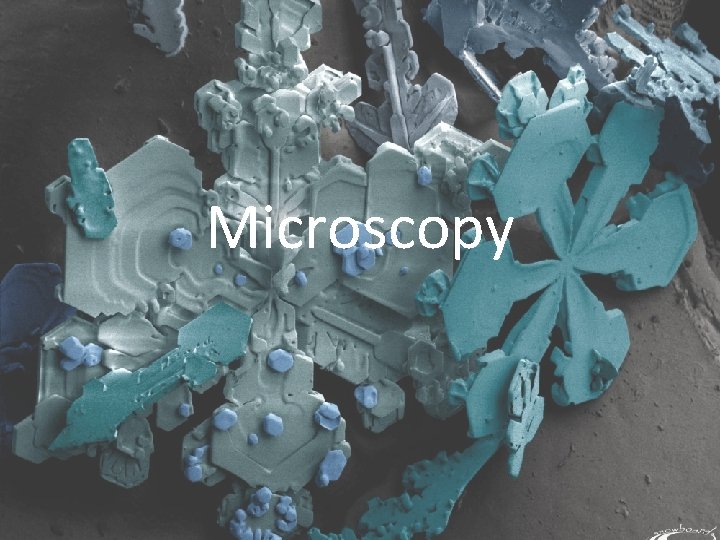
Microscopy
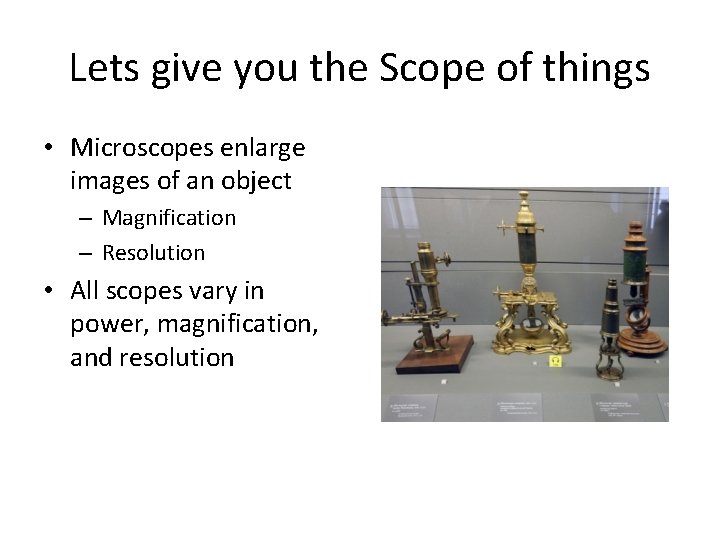
Lets give you the Scope of things • Microscopes enlarge images of an object – Magnification – Resolution • All scopes vary in power, magnification, and resolution
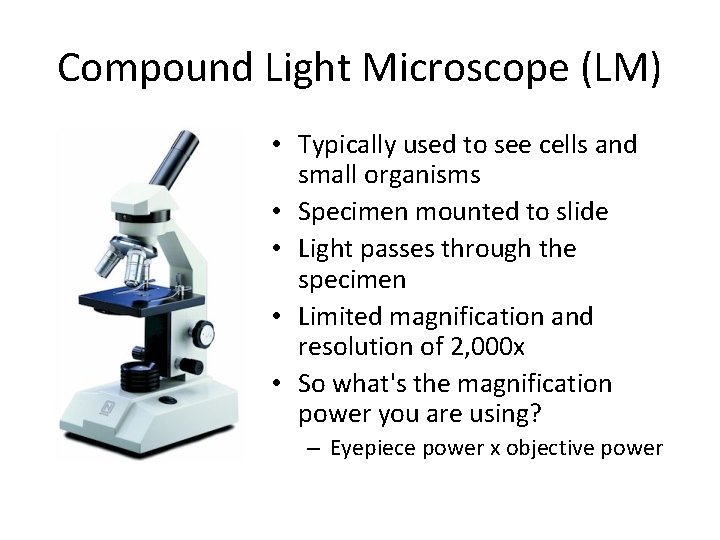
Compound Light Microscope (LM) • Typically used to see cells and small organisms • Specimen mounted to slide • Light passes through the specimen • Limited magnification and resolution of 2, 000 x • So what's the magnification power you are using? – Eyepiece power x objective power
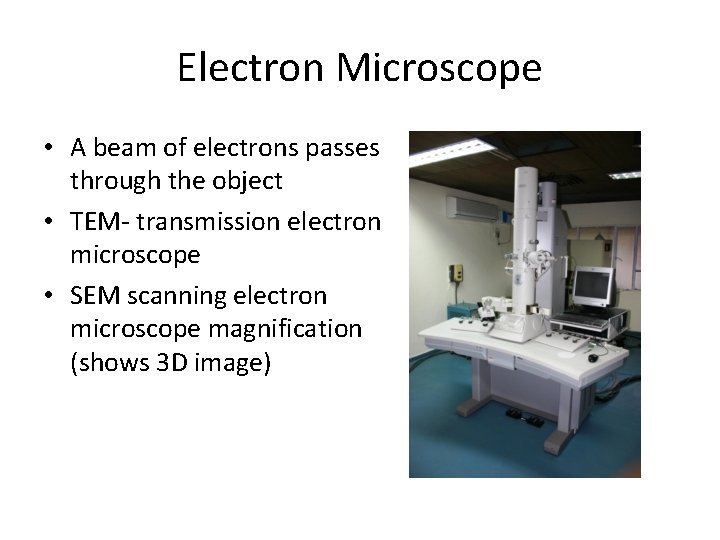
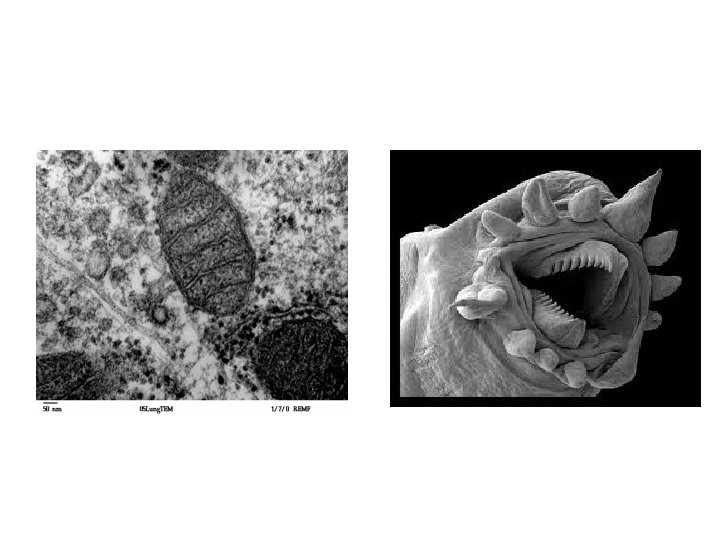
Electron Microscope • A beam of electrons passes through the object • TEM- transmission electron microscope • SEM scanning electron microscope magnification (shows 3 D image)
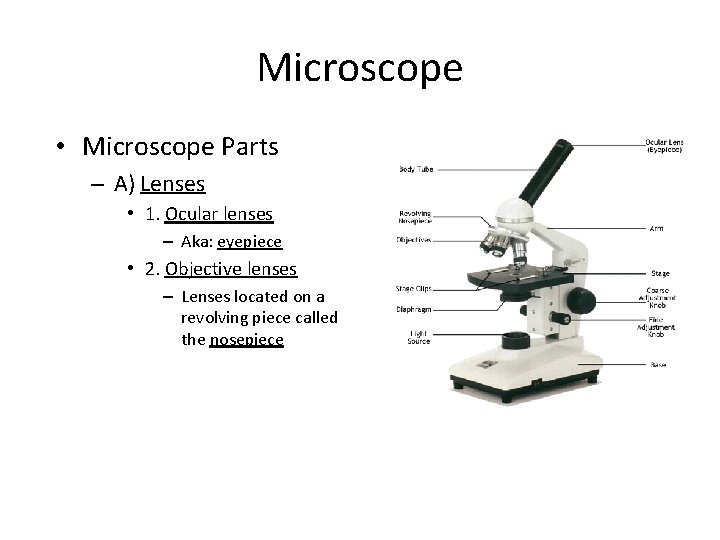
Microscope • Microscope Parts – A) Lenses • 1. Ocular lenses – Aka: eyepiece • 2. Objective lenses – Lenses located on a revolving piece called the nosepiece
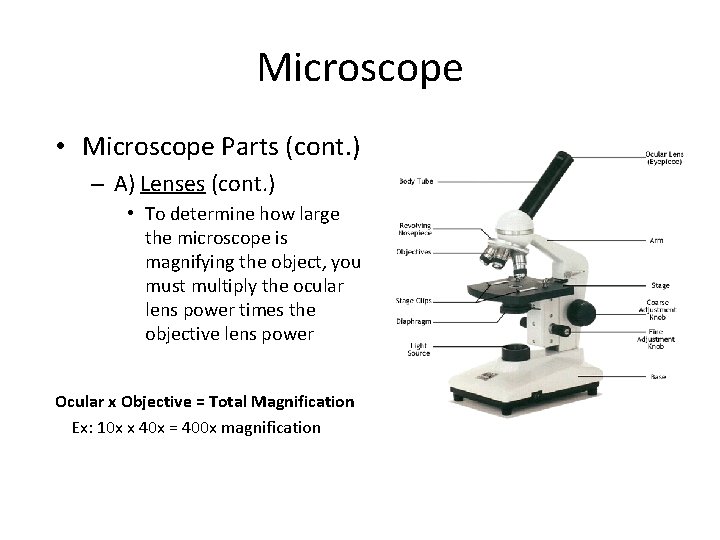
Microscope • Microscope Parts (cont. ) – A) Lenses (cont. ) • To determine how large the microscope is magnifying the object, you must multiply the ocular lens power times the objective lens power Ocular x Objective = Total Magnification Ex: 10 x x 40 x = 400 x magnification
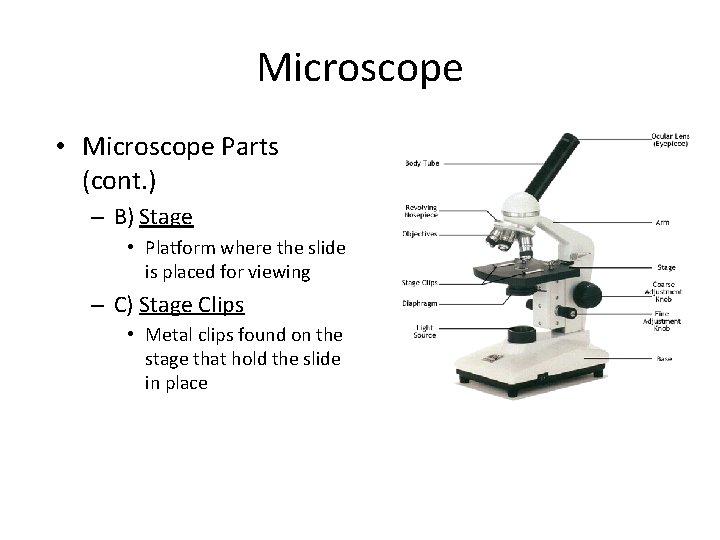
Microscope • Microscope Parts (cont. ) – B) Stage • Platform where the slide is placed for viewing – C) Stage Clips • Metal clips found on the stage that hold the slide in place
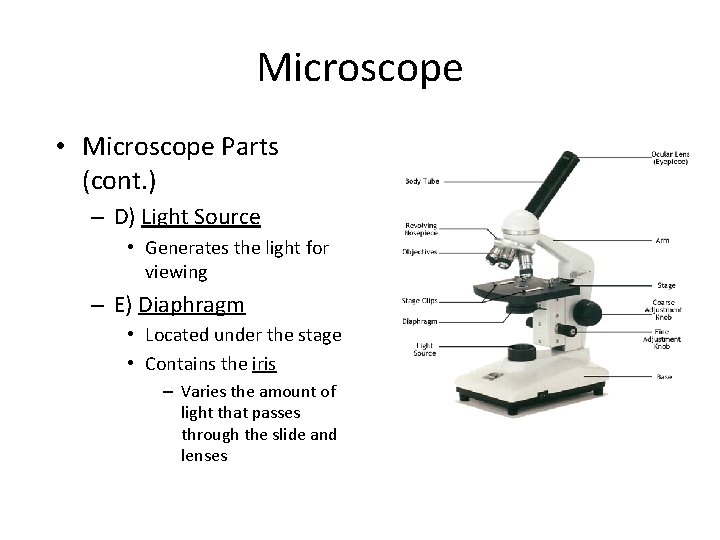
Microscope • Microscope Parts (cont. ) – D) Light Source • Generates the light for viewing – E) Diaphragm • Located under the stage • Contains the iris – Varies the amount of light that passes through the slide and lenses
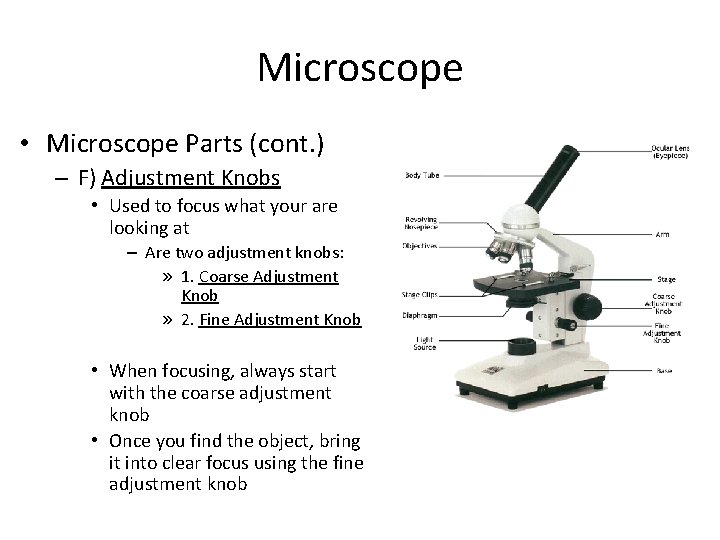
Microscope • Microscope Parts (cont. ) – F) Adjustment Knobs • Used to focus what your are looking at – Are two adjustment knobs: » 1. Coarse Adjustment Knob » 2. Fine Adjustment Knob • When focusing, always start with the coarse adjustment knob • Once you find the object, bring it into clear focus using the fine adjustment knob
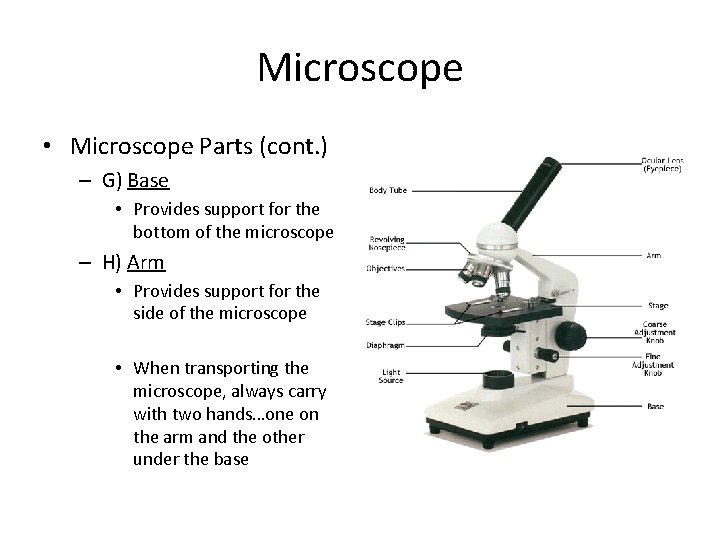
Microscope • Microscope Parts (cont. ) – G) Base • Provides support for the bottom of the microscope – H) Arm • Provides support for the side of the microscope • When transporting the microscope, always carry with two hands…one on the arm and the other under the base
Microscope • Focusing the Microscope – Always start with the lowest objective lens • The lowest objective gives the widest field of view (can see the most) – Use the coarse adjustment knob followed by the fine adjustment knob to bring your object into focus • Once in focus, center your object and then change to the next objective lens • Your object should remain in focus (you might have to make some slight adjustments)
Microscope • Microscope Care – Always take care of your microscope • Transport with two hands! • Only clean lenses with lens paper – Tissues, shirt sleeves, paper towels, etc. will scratch the lenses! • Cover with a plastic cover when not using