
Microscopic to Macroscopic Solids Liquids and Gases Macroscopic
- Slides: 11
Microscopic to Macroscopic Solids, Liquids and Gases
Macroscopic vs. Microscopic �Macroscopic means from the big picture or from far away. This means what we can see with the naked eye. �Microscopic means from close up or on a small scale. This means what it looks like on the atomic or molecular level
One Explains the Other �Keep your eye out for how the microscopic picture makes the macroscopic picture make sense. What do solids look like on the microscopic level? Why do solids have the properties they do? The first explains the second!
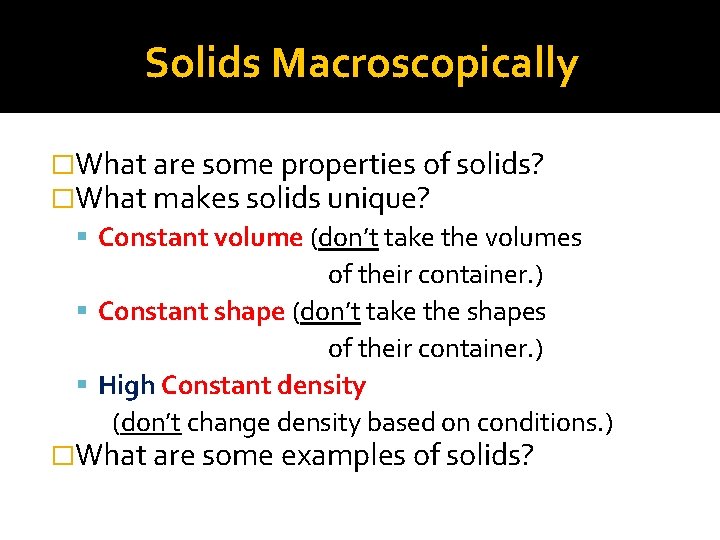
Solids Macroscopically �What are some properties of solids? �What makes solids unique? Constant volume (don’t take the volumes of their container. ) Constant shape (don’t take the shapes of their container. ) High Constant density (don’t change density based on conditions. ) �What are some examples of solids?
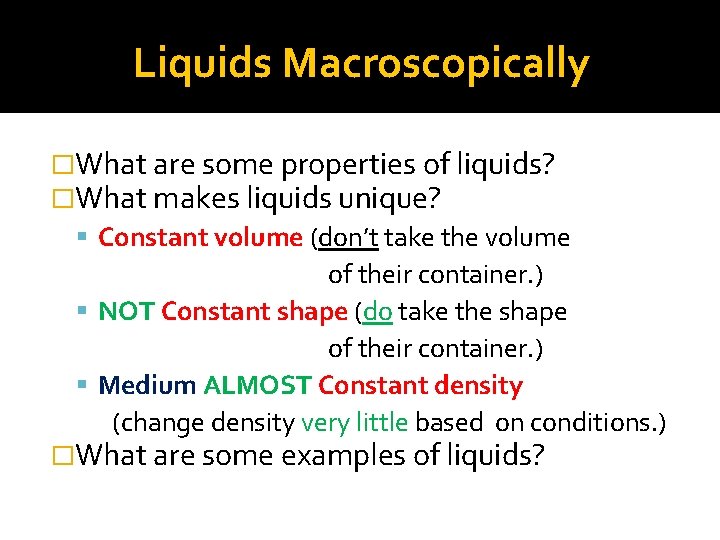
Liquids Macroscopically �What are some properties of liquids? �What makes liquids unique? Constant volume (don’t take the volume of their container. ) NOT Constant shape (do take the shape of their container. ) Medium ALMOST Constant density (change density very little based on conditions. ) �What are some examples of liquids?
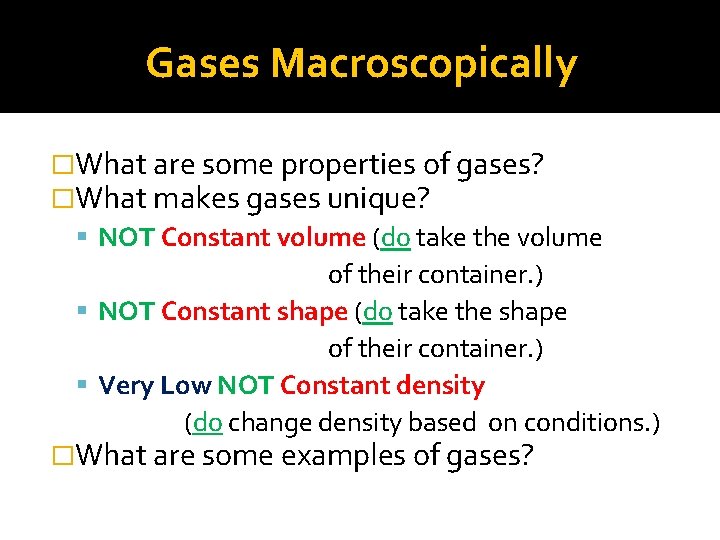
Gases Macroscopically �What are some properties of gases? �What makes gases unique? NOT Constant volume (do take the volume of their container. ) NOT Constant shape (do take the shape of their container. ) Very Low NOT Constant density (do change density based on conditions. ) �What are some examples of gases?
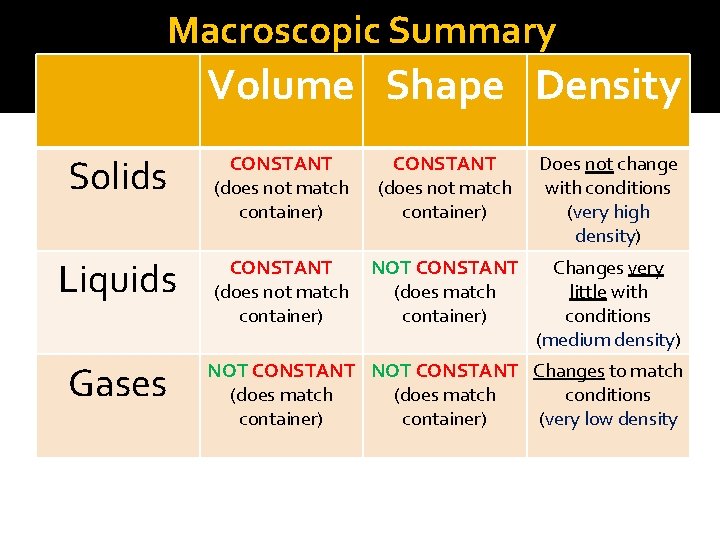
Macroscopic Summary Volume Shape Density Solids CONSTANT (does not match container) Does not change with conditions (very high density) Liquids CONSTANT (does not match container) NOT CONSTANT (does match container) Changes very little with conditions (medium density) Gases NOT CONSTANT Changes to match (does match conditions container) (very low density
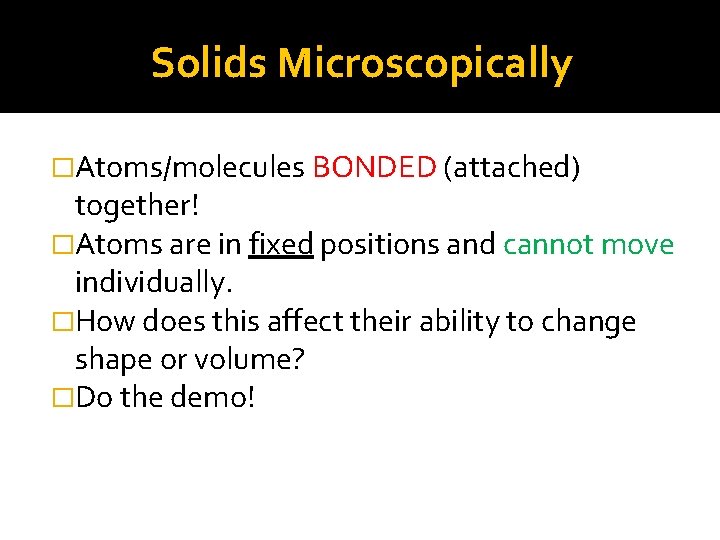
Solids Microscopically �Atoms/molecules BONDED (attached) together! �Atoms are in fixed positions and cannot move individually. �How does this affect their ability to change shape or volume? �Do the demo!
Liquids Microscopically �Atoms/molecules NOT BONDED (attached) together! �Atoms/molecules are not in fixed positions and can move individually. �Still attracted to each other because they are close and moving slowly. �How does this affect their ability to change shape or volume? �Do the demo!
Gases Microscopically �Atoms/molecules NOT BONDED (attached) together! �Atoms/moelcules are not in fixed positions and can move individually. �Atoms/molecules are very far apart, moving very quickly! �How does this affect their ability to change shape or volume? �Do the demo!
Microscopic Comparision �Watch the movie. �What are the microscopic comparisons of the three states? Gases bonded, not moving. Liquids free to move, but slow and close together Gases free to move; they are fast and far apart. �How does this explain their macroscopic properties?