
Microscopic life Bacteria Bacteria Simple cells Membrane surround
Microscopic life Bacteria
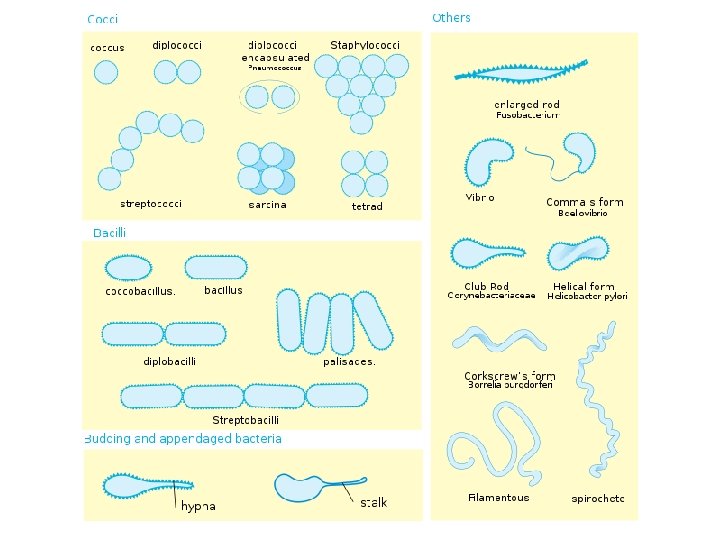
Bacteria • • Simple cells Membrane surround No membrane bound “organelles” DNA free-floating, usually circular (ring)
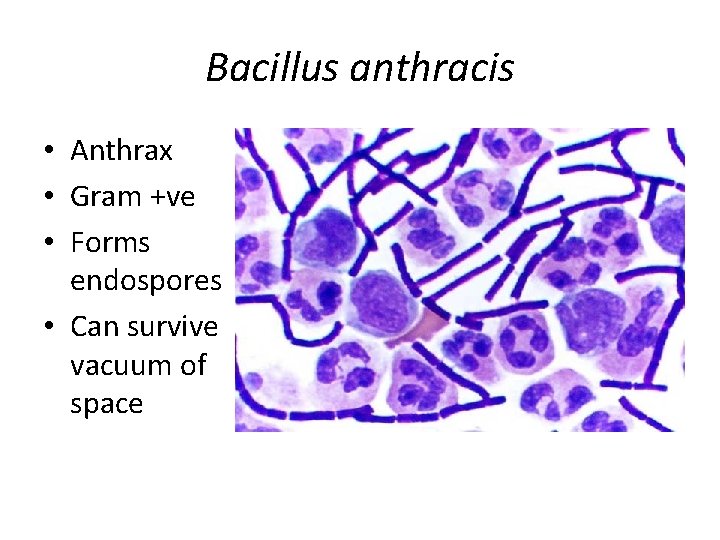
Bacillus anthracis • Anthrax • Gram +ve • Forms endospores • Can survive vacuum of space
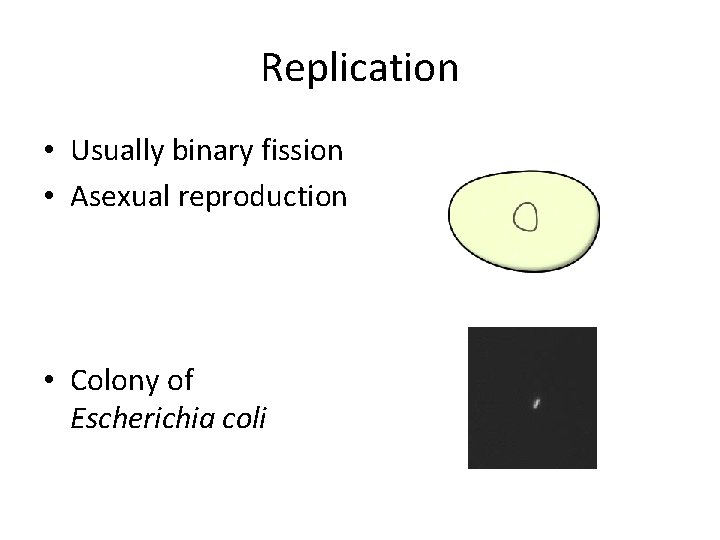
Replication • Usually binary fission • Asexual reproduction • Colony of Escherichia coli
Pile of paper • Tear a piece of paper in two and stack together • Tear again • And again • Do this 43 times • How tall is the pile of paper?
Pile of paper • 242 = 4. 398046 × 1012 • or 4, 398, 046, 000 pieces of paper (4 thousand billion) • Each piece is 0. 1 mm thick • So pile is 4398046000000 x 0. 1 mm = 439, 804, 600, 000 mm
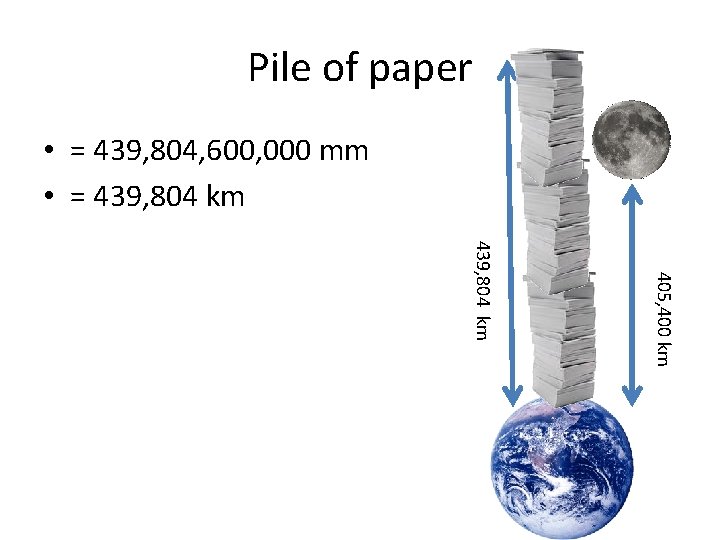
Pile of paper • = 439, 804, 600, 000 mm • = 439, 804 km 405, 400 km 439, 804 km
E coli • Allowed to reproduce every 20 minutes • Begin with one cell • How many 48 hours later?
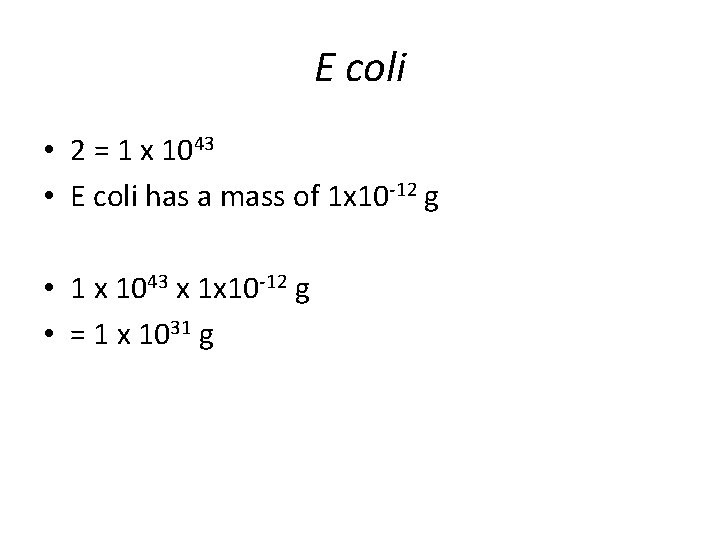
E coli • 2 = 1 x 1043 • E coli has a mass of 1 x 10 -12 g • 1 x 1043 x 1 x 10 -12 g • = 1 x 1031 g
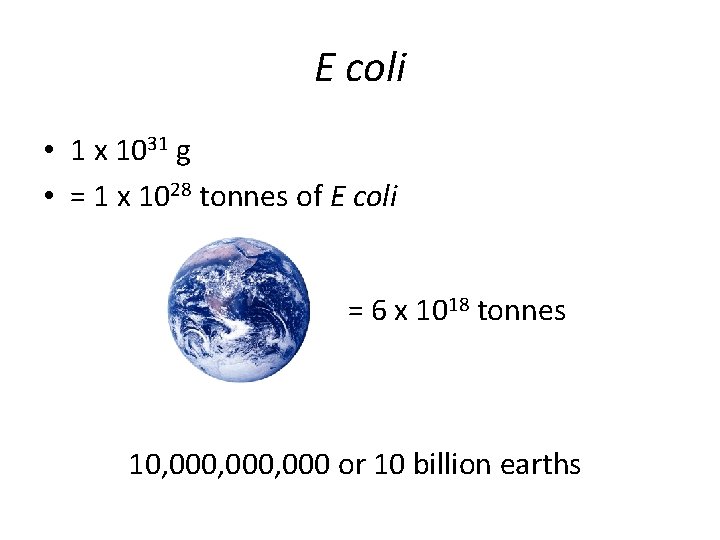
E coli • 1 x 1031 g • = 1 x 1028 tonnes of E coli = 6 x 10¹⁸ tonnes 10, 000, 000 or 10 billion earths

Why doesn’t this happen?
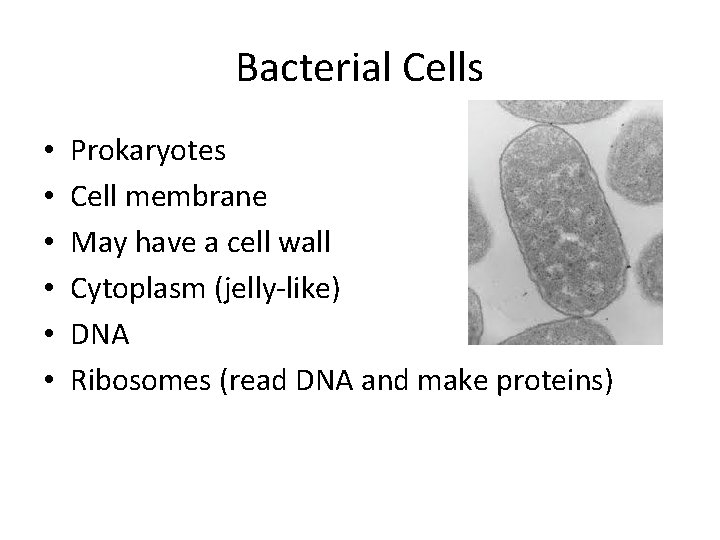
Bacterial Cells • • • Prokaryotes Cell membrane May have a cell wall Cytoplasm (jelly-like) DNA Ribosomes (read DNA and make proteins)
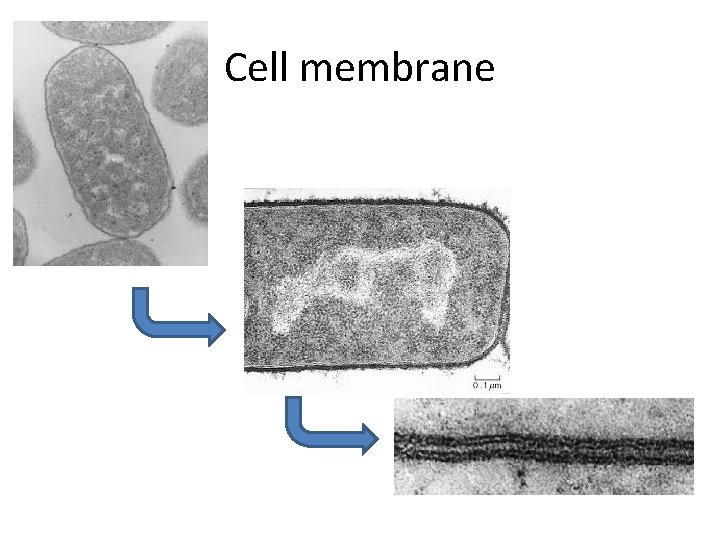
Cell membrane
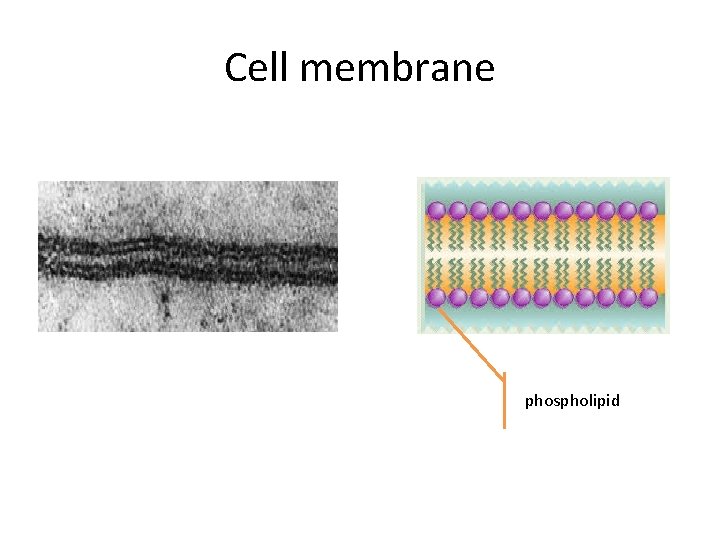
Cell membrane phospholipid
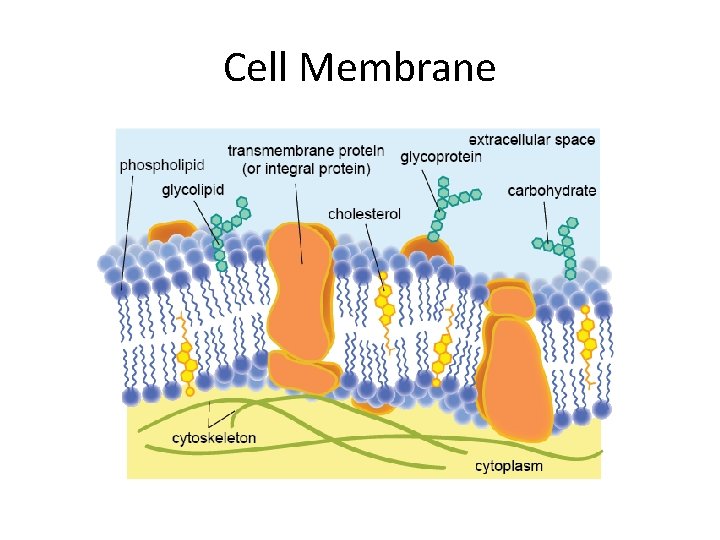
Cell Membrane
- Slides: 16