
Microscopes The invention of the microscope in the

- Slides: 10
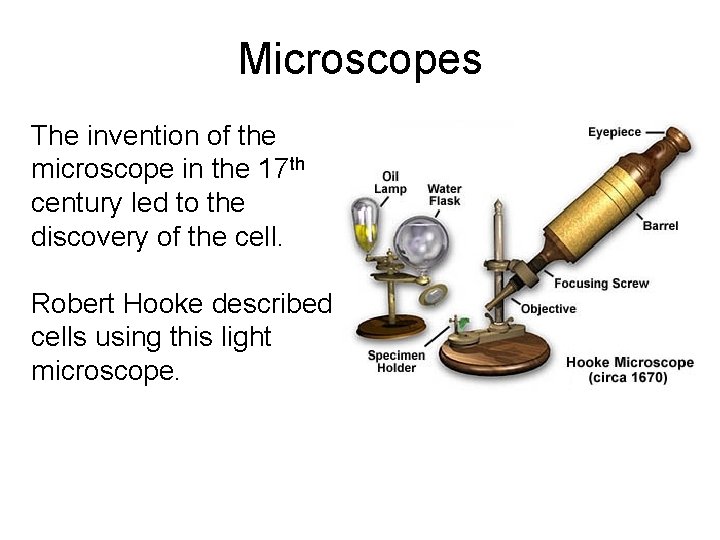
Microscopes The invention of the microscope in the 17 th century led to the discovery of the cell. Robert Hooke described cells using this light microscope.
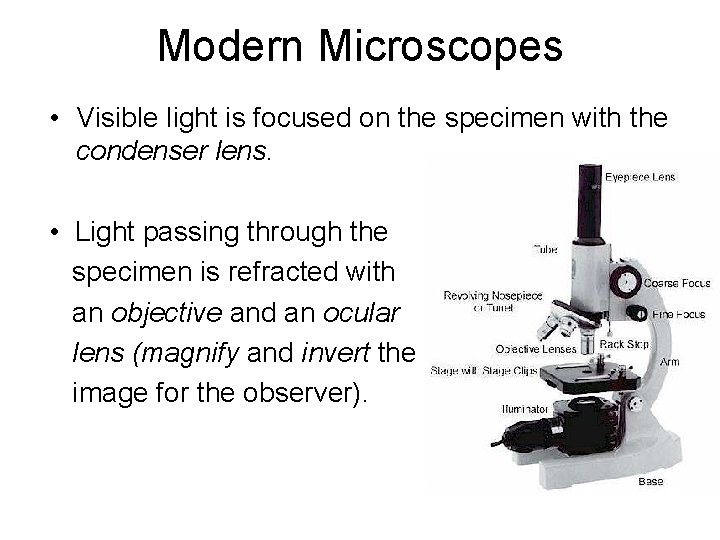
Modern Microscopes • Visible light is focused on the specimen with the condenser lens. • Light passing through the specimen is refracted with an objective and an ocular lens (magnify and invert the image for the observer).
Two Important Properties of Microscopes: • Magnification – how much larger an object is made to appear. • Resolving power – minimum distance between two points that can still be distinguished as two separate points. *limited by the wavelength of light. *maximum resolution of a LM is 0. 2μm. *highest magnification is 1, 000 X.
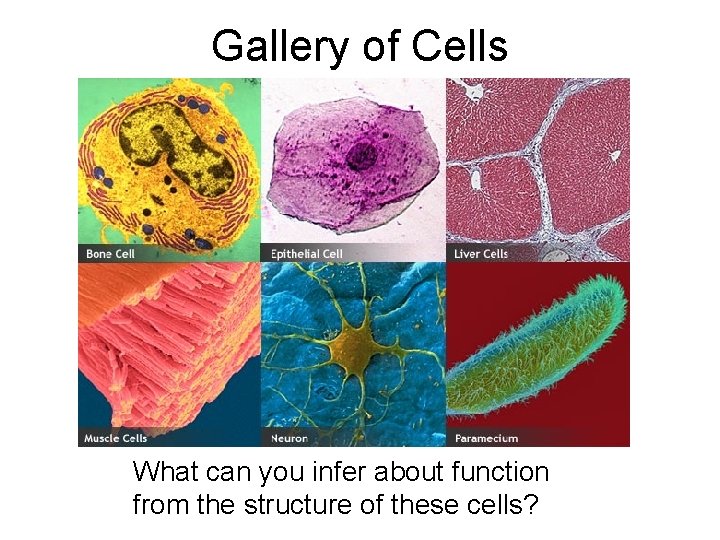
Gallery of Cells What can you infer about function from the structure of these cells?
Cell Theory
Electron Microscopes • Instead of light, electron microscopes use electron beams which have much shorter wavelengths (resolving power of 0. 2 nm). • Enhanced resolution and magnification led to the identification of subcellular organelles. • There are two types of electron microscopes: transmission and scanning electron microscopes.
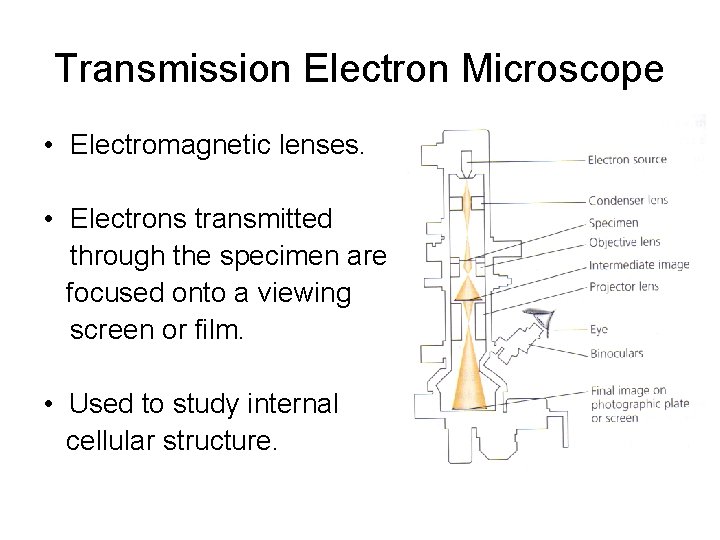
Transmission Electron Microscope • Electromagnetic lenses. • Electrons transmitted through the specimen are focused onto a viewing screen or film. • Used to study internal cellular structure.
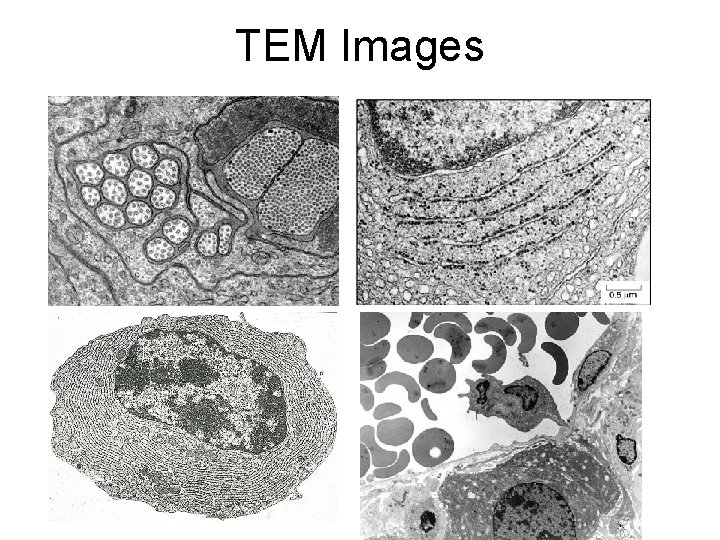
TEM Images
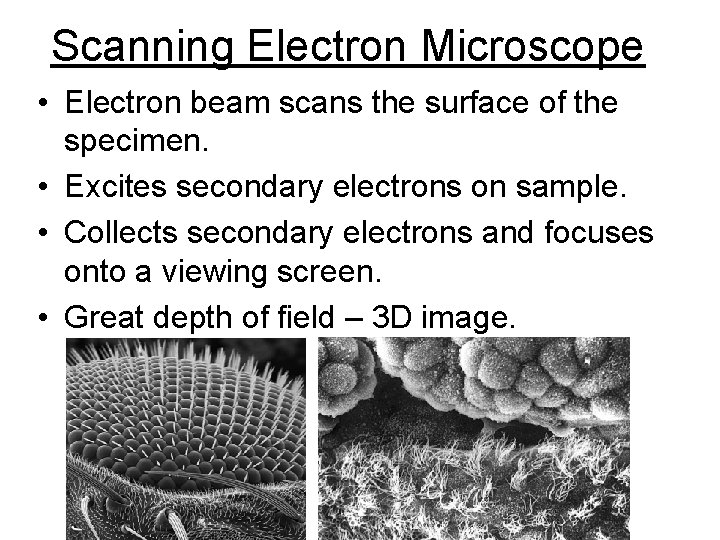
Scanning Electron Microscope • Electron beam scans the surface of the specimen. • Excites secondary electrons on sample. • Collects secondary electrons and focuses onto a viewing screen. • Great depth of field – 3 D image.
http: //www. aimediaserver. com/studiodaily/harvard. swf