
Microscopes Object To study the structure and function
Microscopes § Object: To study the structure and function of compound microscope. § Microscopes are devices that produce magnified images of structures that are too small to see with the naked eye. § Resolution Power: The minimum distance of 0. 2 m or 200 nm between the two particles Practical Course Coordinator: Khalid Hasayen
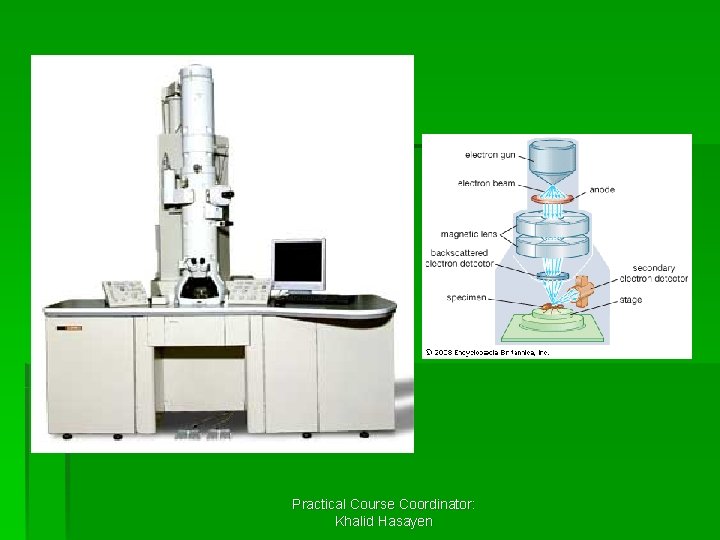
Microscopes § Light microscopes produce magnified images by focusing visible light rays. § Electron microscopes produce magnified images by focusing beams of electrons. Practical Course Coordinator: Khalid Hasayen
Magnification Power (MP): MP = Power of eye piece X Power of object piece The total magnification is the eye x objective Object lens eye lens Total Magnification 4 x 10 x 40 x Low Power 10 x 100 x High Power 40 x 10 x 400 x Oil Lens 100 x 1000 x Scanning Practical Course Coordinator: Khalid Hasayen
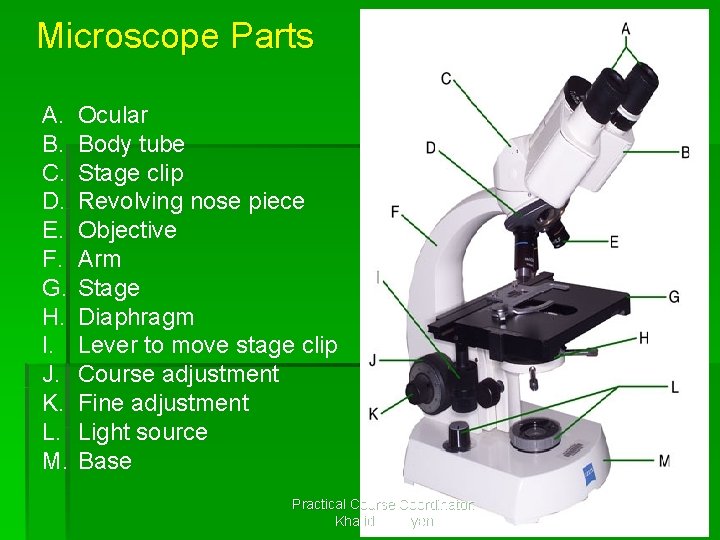
Microscope Parts A. B. C. D. E. F. G. H. I. J. K. L. M. Ocular Body tube Stage clip Revolving nose piece Objective Arm Stage Diaphragm Lever to move stage clip Course adjustment Fine adjustment Light source Base Practical Course Coordinator: Khalid Hasayen

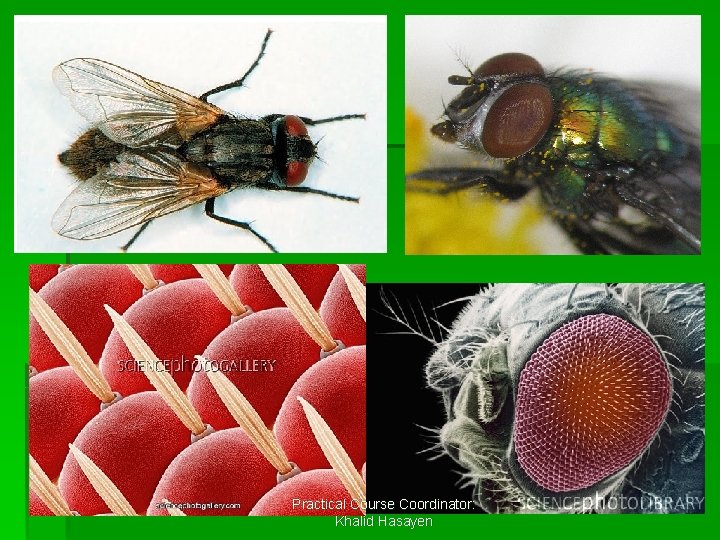
Microscopes § Electron microscopes use beams of electrons, rather than light, to produce images. § The best electron microscopes can produce images almost 1000 times more detailed than light microscopes can. Practical Course Coordinator: Khalid Hasayen
Practical Course Coordinator: Khalid Hasayen
Practical Course Coordinator: Khalid Hasayen
Practical Course Coordinator: Khalid Hasayen
Practical Course Coordinator: Khalid Hasayen
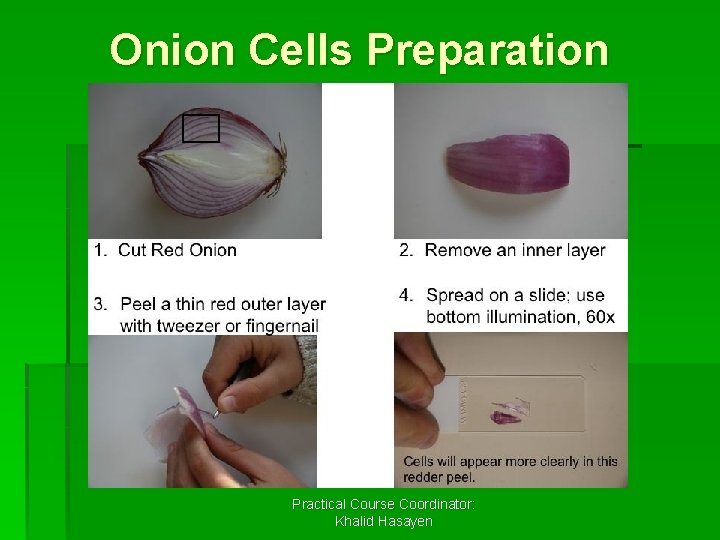
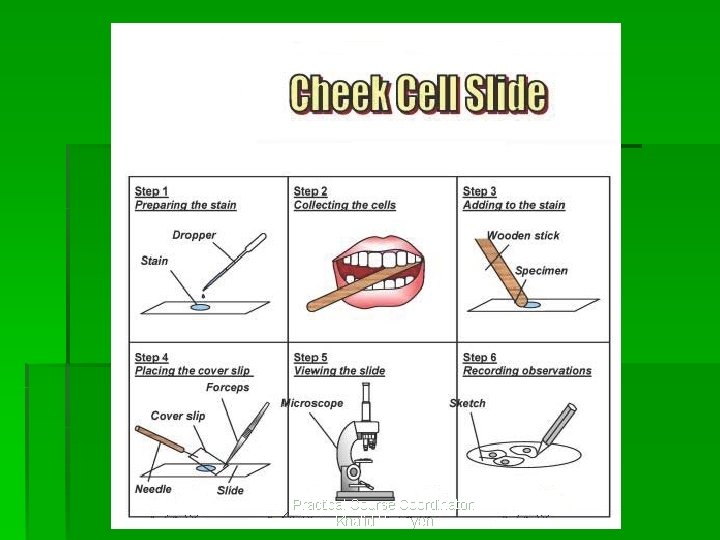
Onion Cells Preparation Practical Course Coordinator: Khalid Hasayen
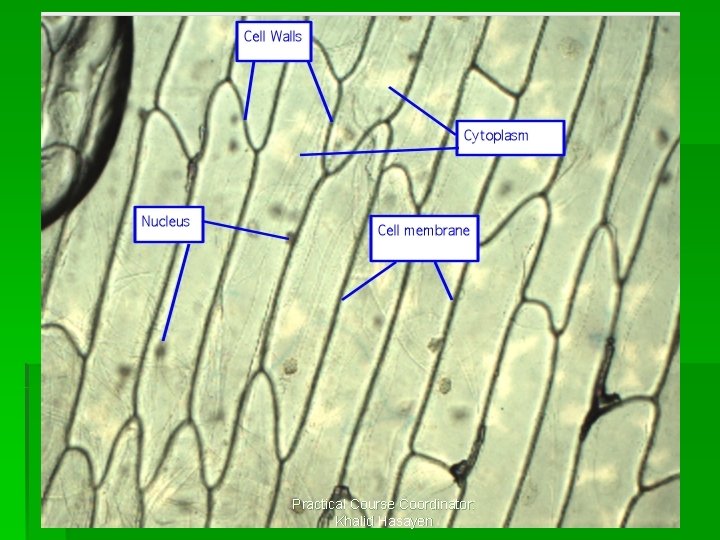
Practical Course Coordinator: Khalid Hasayen
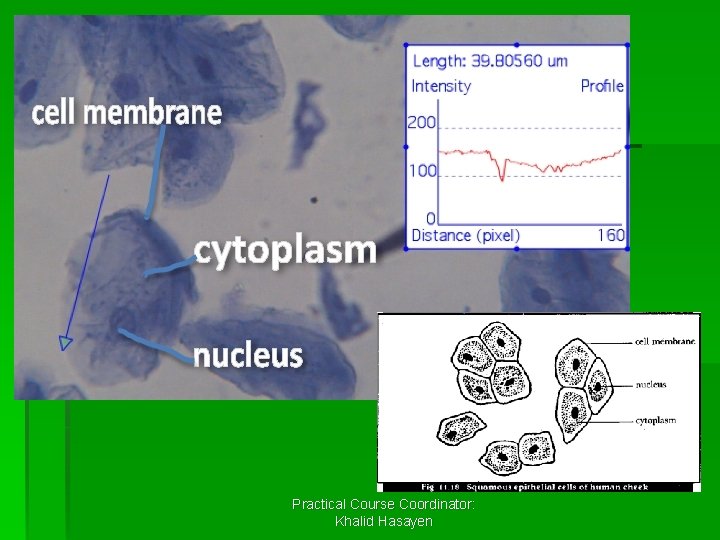
Cell Structure Object: to study the general structure of the cell, morphological variation (shapes) and size of cells through the light microscope. Practical Course Coordinator: Khalid Hasayen
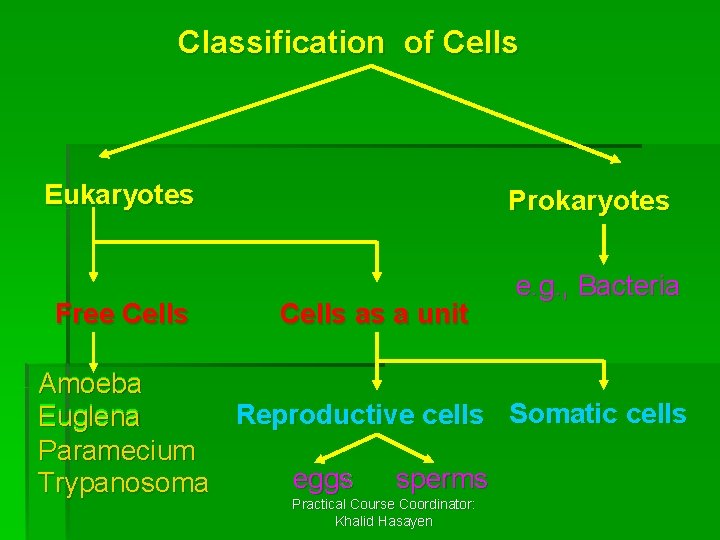
Classification of Cells Eukaryotes Free Cells Prokaryotes Cells as a unit e. g. , Bacteria Amoeba Reproductive cells Somatic cells Euglena Paramecium eggs sperms Trypanosoma Practical Course Coordinator: Khalid Hasayen
Types of Cells: § Prokaryotes Ex. Bacteria and Blue green Algae § Eukaryotes Ex. Plants, Animals, Fungi, and Protists Practical Course Coordinator: Khalid Hasayen
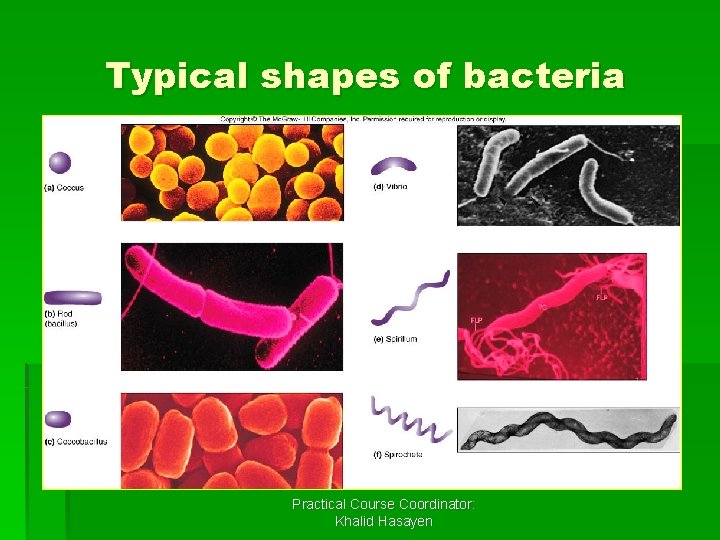
Typical shapes of bacteria Practical Course Coordinator: Khalid Hasayen
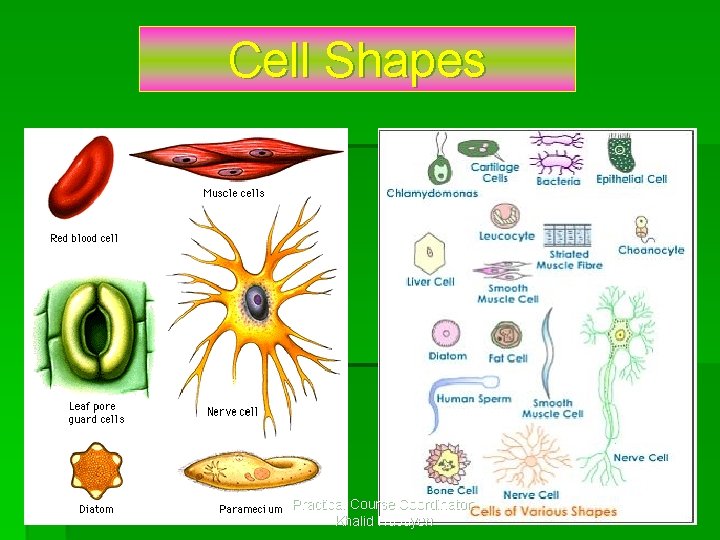
Cell Shapes Practical Course Coordinator: Khalid Hasayen
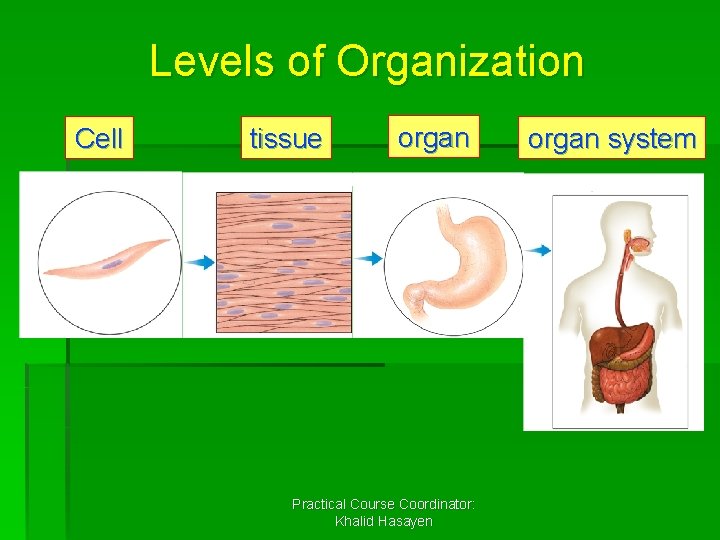
Levels of Organization Cell tissue organ Practical Course Coordinator: Khalid Hasayen organ system
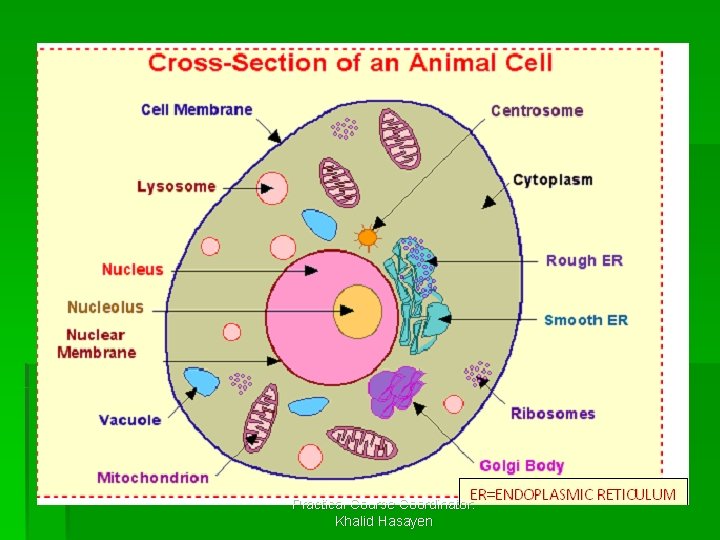
Practical Course Coordinator: Khalid Hasayen
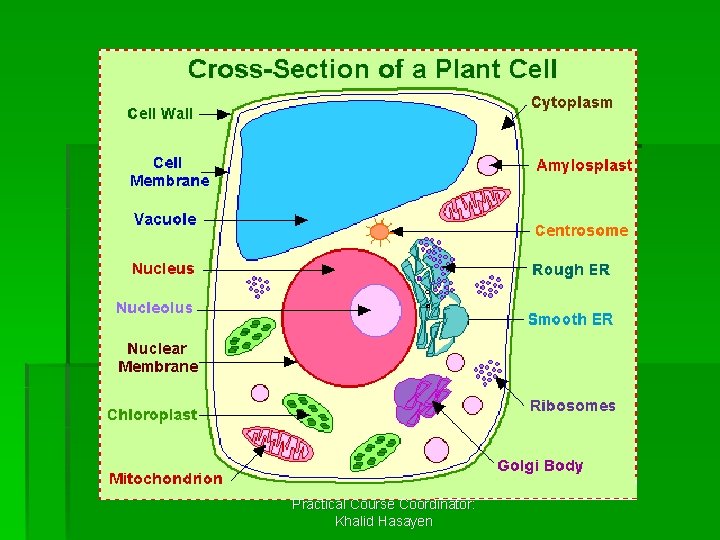
Practical Course Coordinator: Khalid Hasayen
- Slides: 19