
Microscopes Micrographia Robert Hooke 1665 First report of
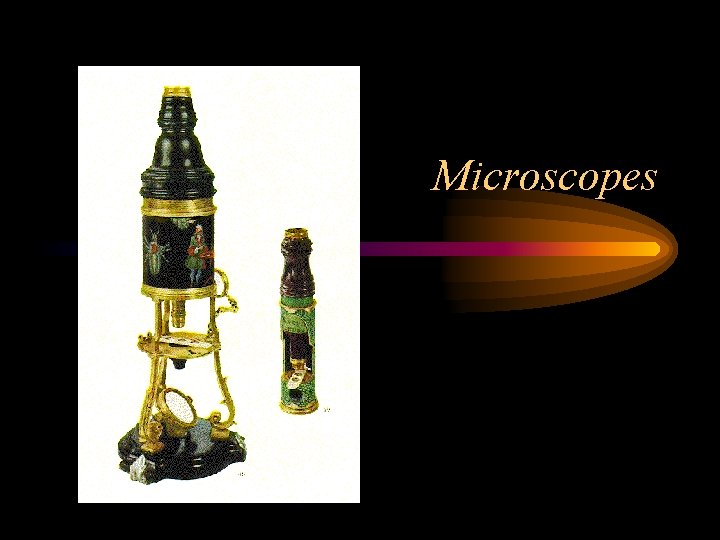
Microscopes
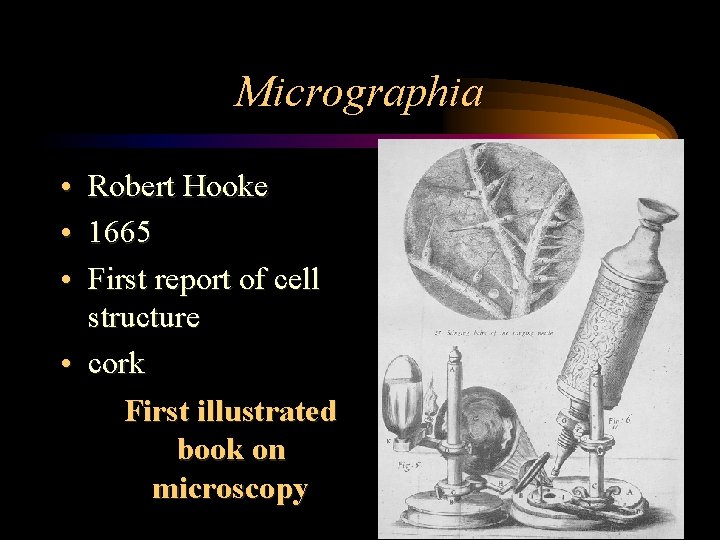
Micrographia • Robert Hooke • 1665 • First report of cell structure • cork First illustrated book on microscopy

Binocular Microscope
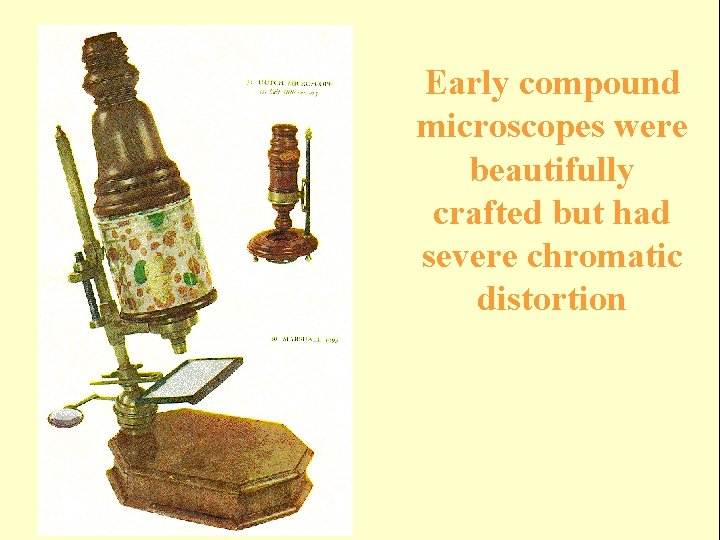
compound Early Microscope microscopes were beautifully crafted but had severe chromatic distortion
Outline • Units of Measurement • Microscopes: features & uses – Light – Electron
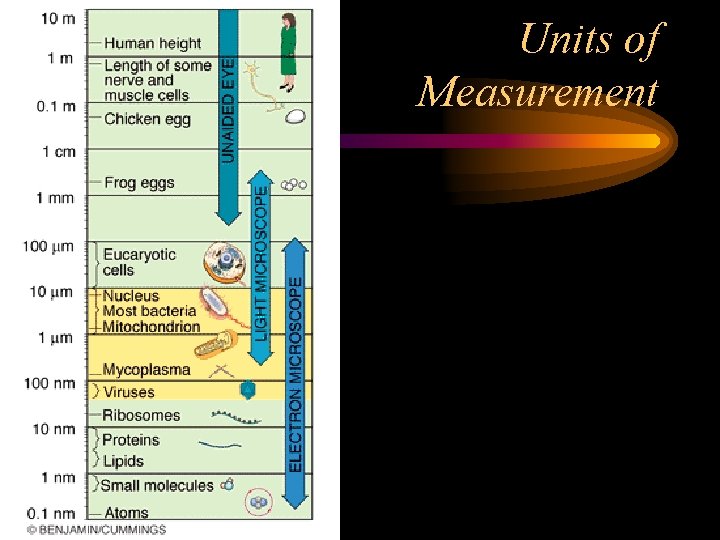
Units of Measurement
Light Microscopes • • • Brightlight Darkfield Phase Contrast Differential Interference Contrast Fluorescence Confocal
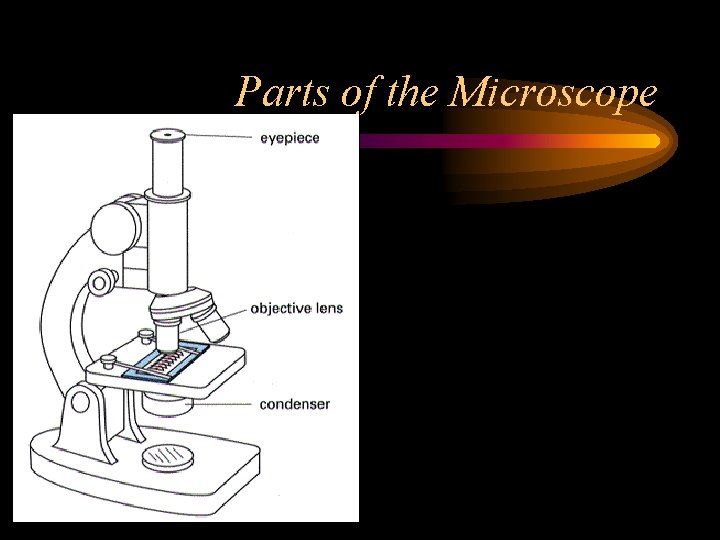
Parts of the Microscope
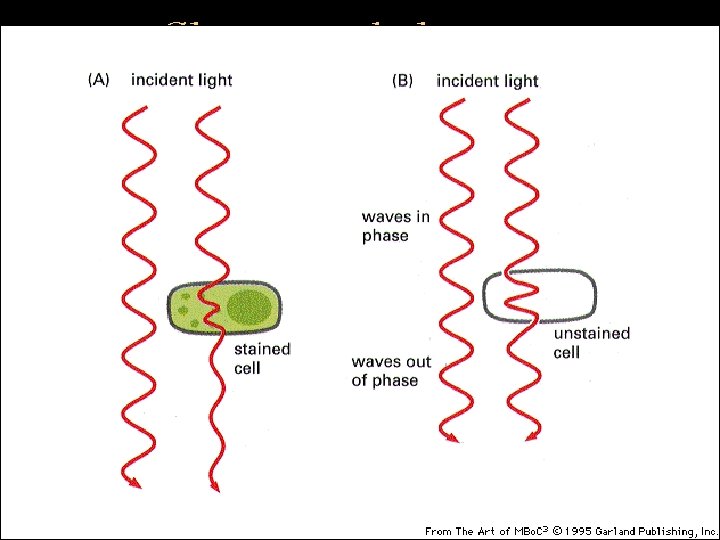
Changes in light as it passes through a cell
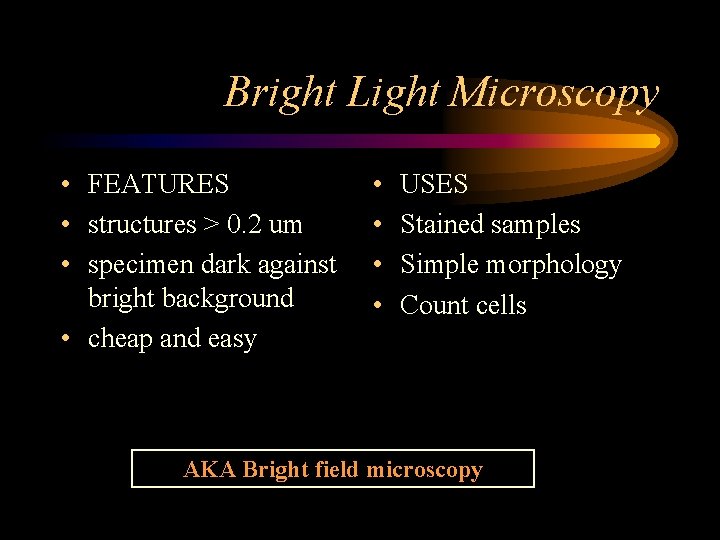
Bright Light Microscopy • FEATURES • structures > 0. 2 um • specimen dark against bright background • cheap and easy • • USES Stained samples Simple morphology Count cells AKA Bright field microscopy
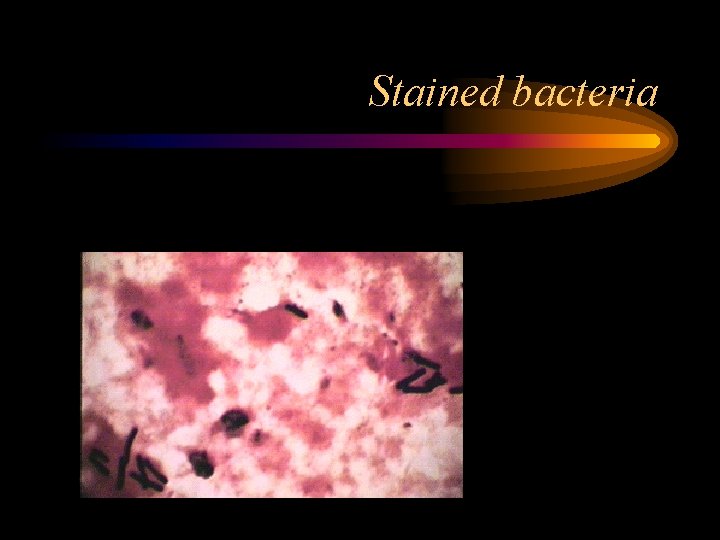
Stained bacteria
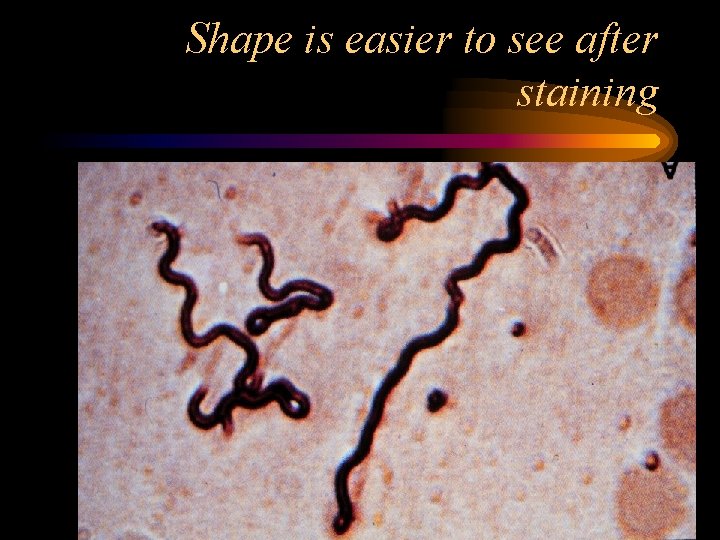
Shape is easier to see after staining
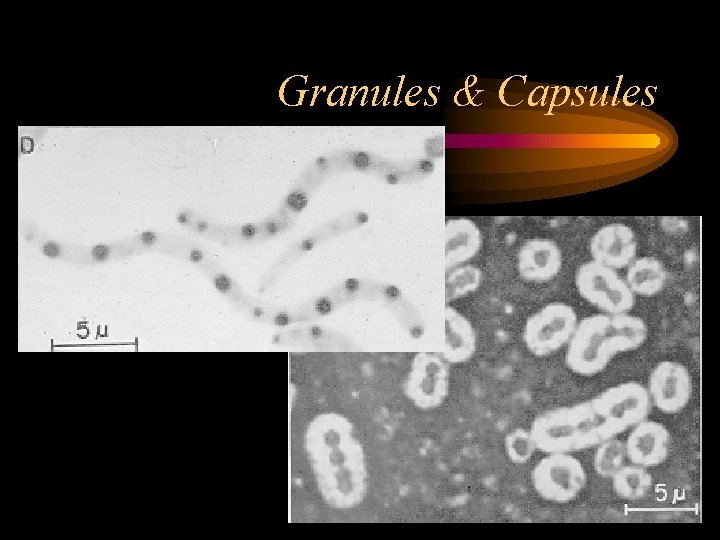
Granules & Capsules
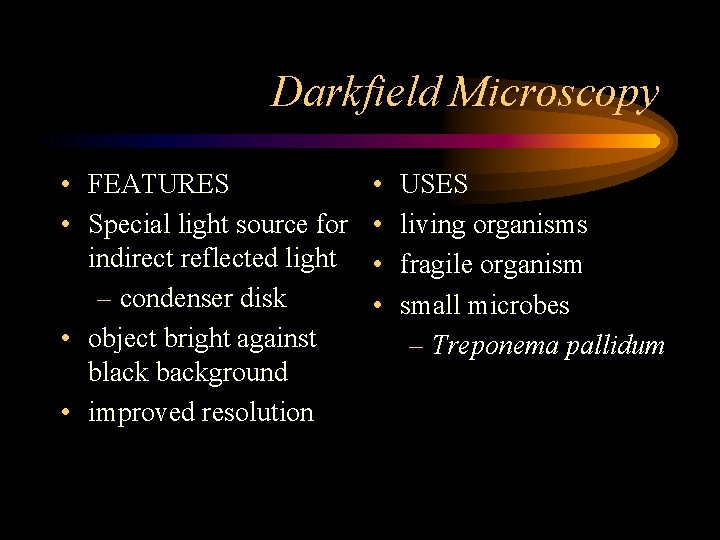
Darkfield Microscopy • FEATURES • Special light source for indirect reflected light – condenser disk • object bright against black background • improved resolution • • USES living organisms fragile organism small microbes – Treponema pallidum
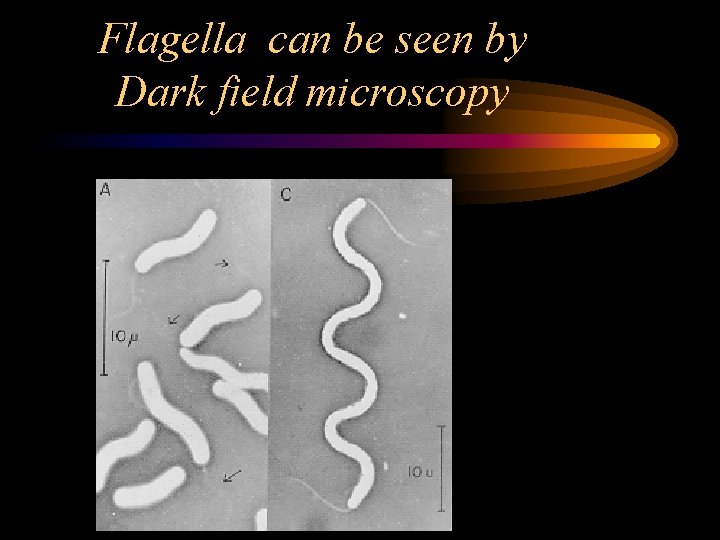
Flagella can be seen by Dark field microscopy
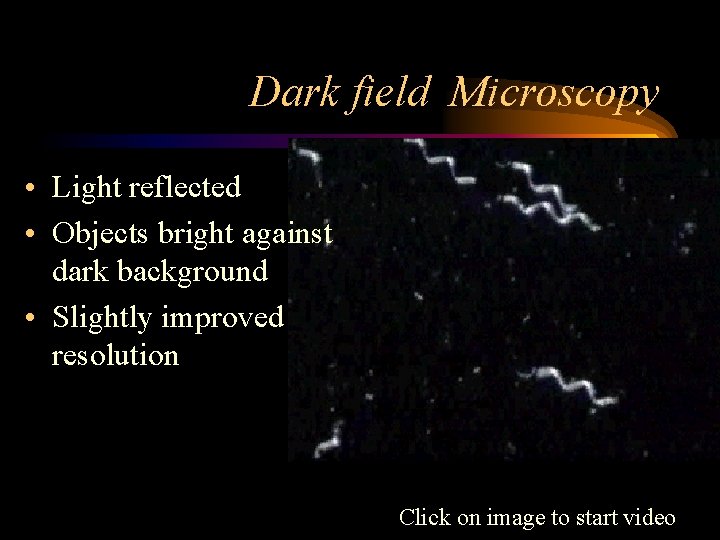
Dark field Microscopy • Light reflected • Objects bright against dark background • Slightly improved resolution Click on image to start video
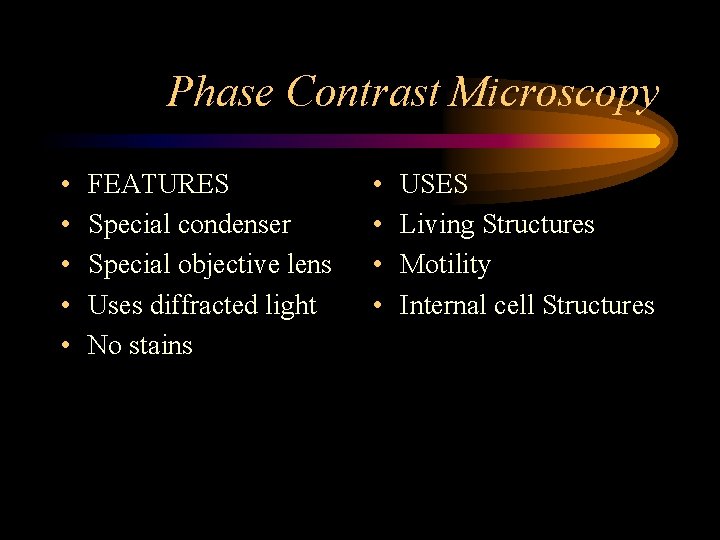
Phase Contrast Microscopy • • • FEATURES Special condenser Special objective lens Uses diffracted light No stains • • USES Living Structures Motility Internal cell Structures
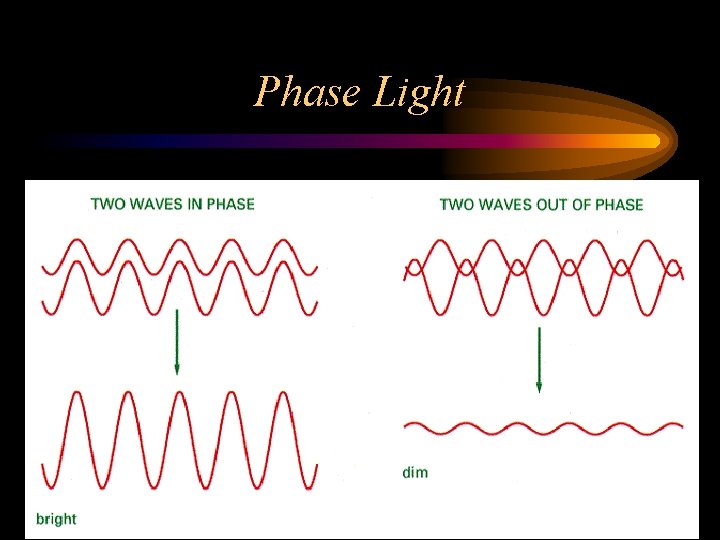
Phase Light
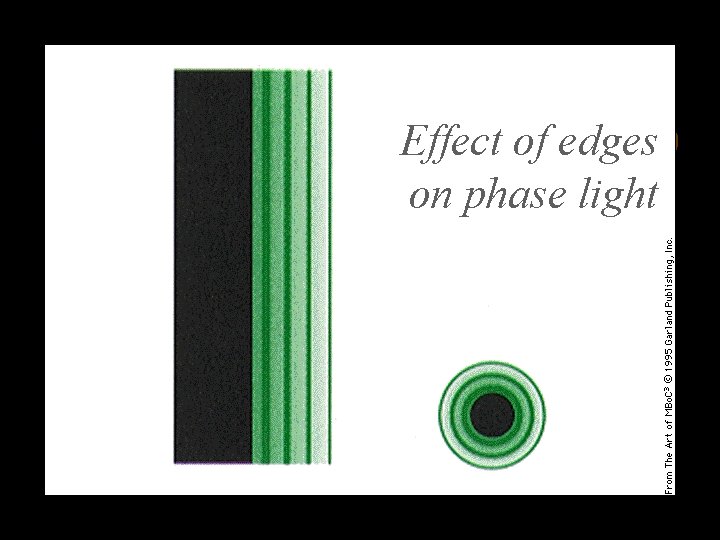
Effect of edges on phase light
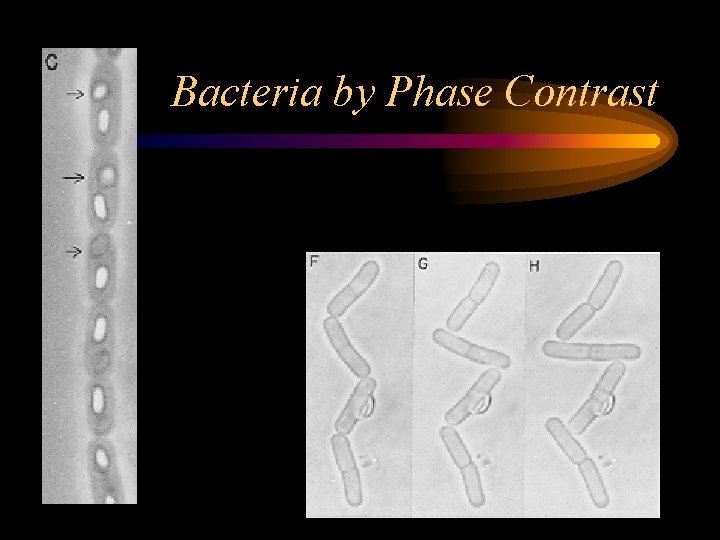
Bacteria by Phase Contrast
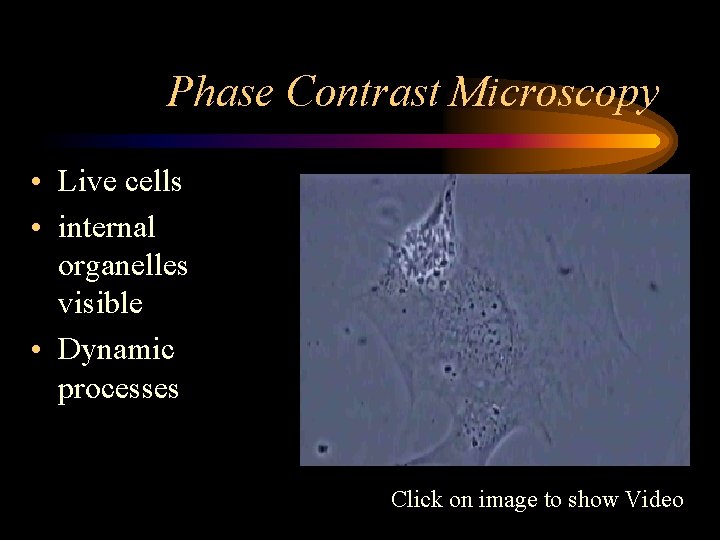
Phase Contrast Microscopy • Live cells • internal organelles visible • Dynamic processes Click on image to show Video
Differential Interference Contrast Microscopy • FEATURES • Two Light Beams • Sample appears coloured • USES • 3 D images First developed by Nomarski in 1952
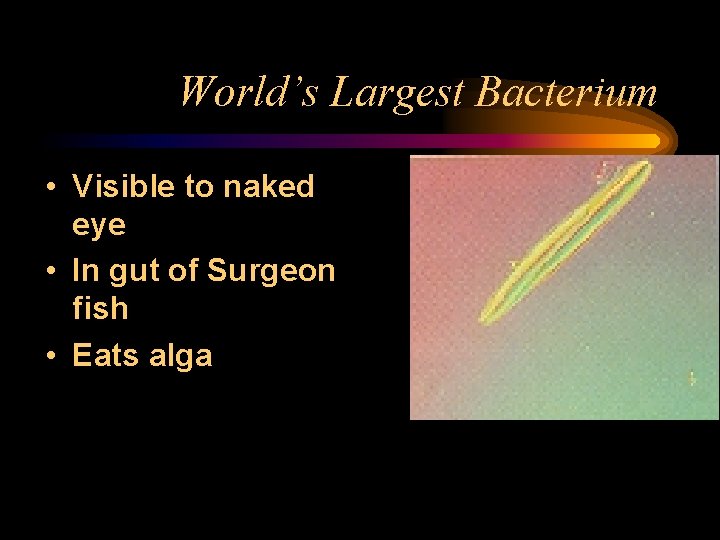
World’s Largest Bacterium • Visible to naked eye • In gut of Surgeon fish • Eats alga
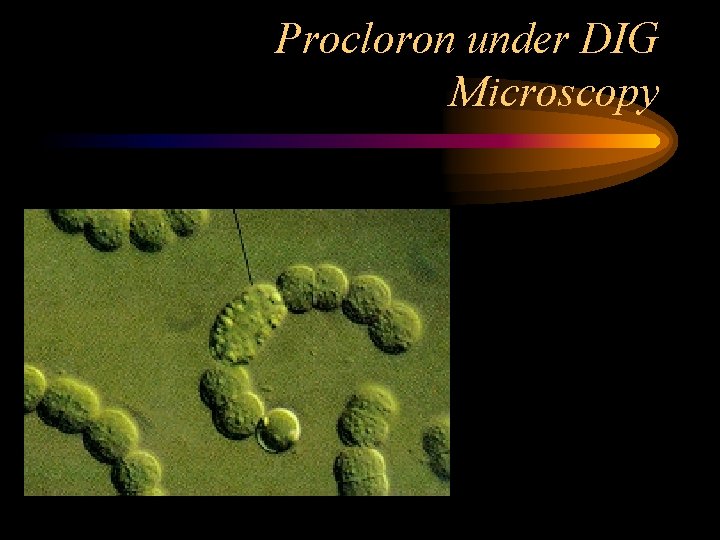
Procloron under DIG Microscopy

Procloron dividing
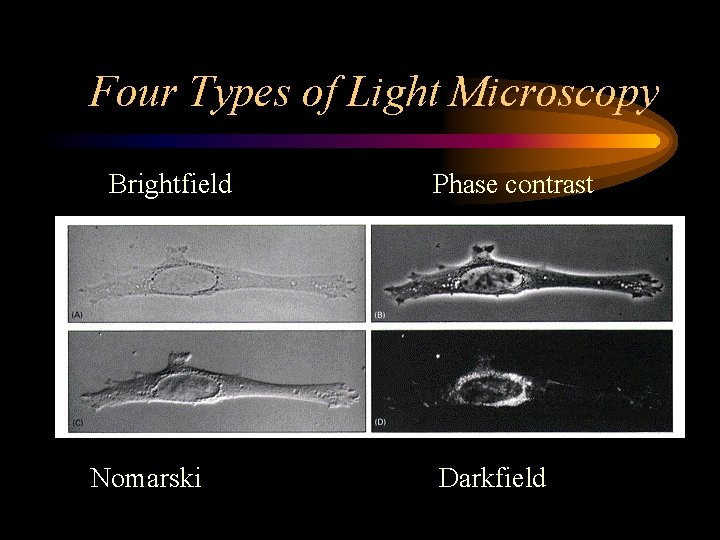
Four Types of Light Microscopy Brightfield Nomarski Phase contrast Darkfield
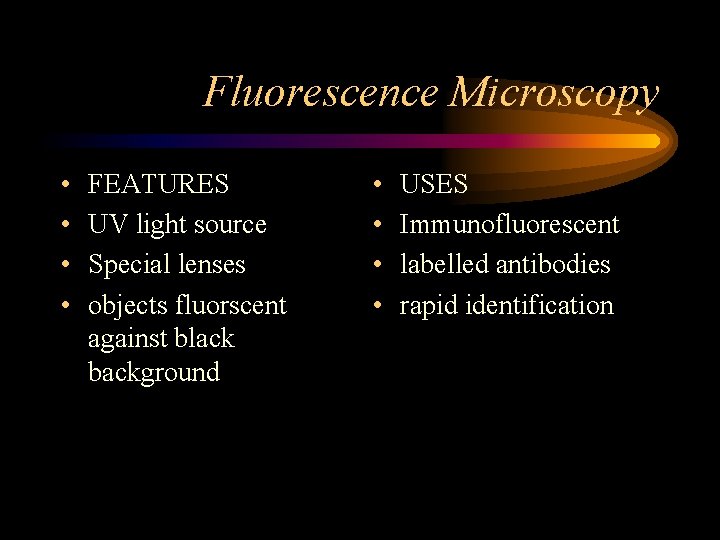
Fluorescence Microscopy • • FEATURES UV light source Special lenses objects fluorscent against black background • • USES Immunofluorescent labelled antibodies rapid identification
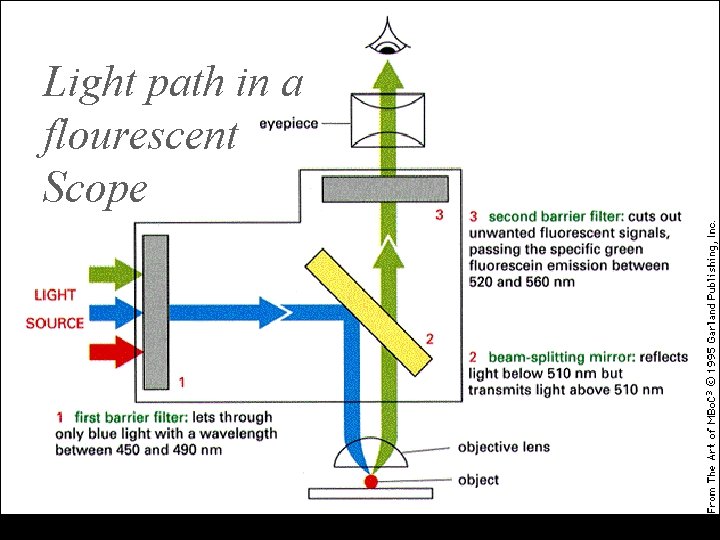
Light path in a flourescent Scope
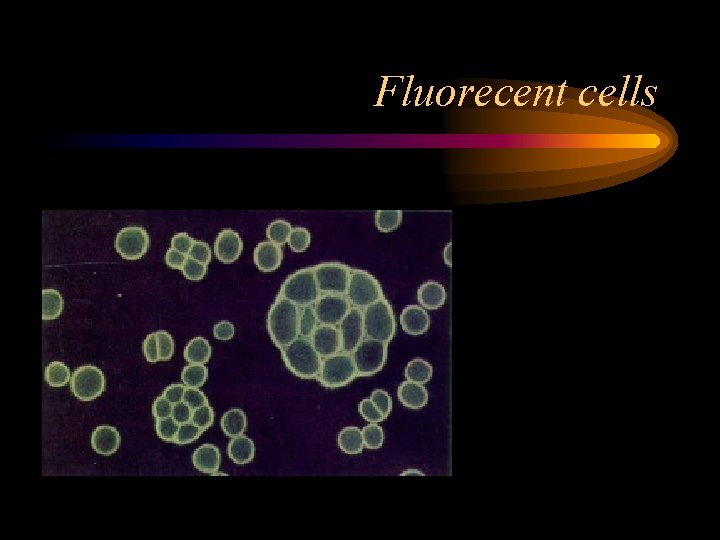
Fluorecent cells
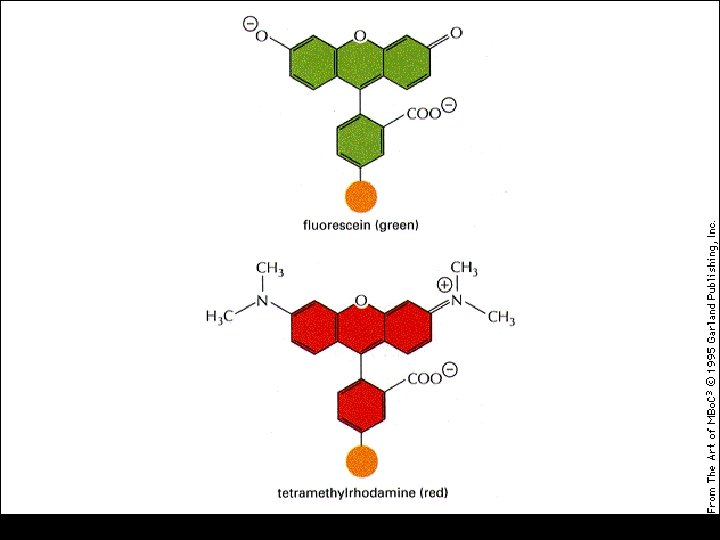
Fluorescent Molecules
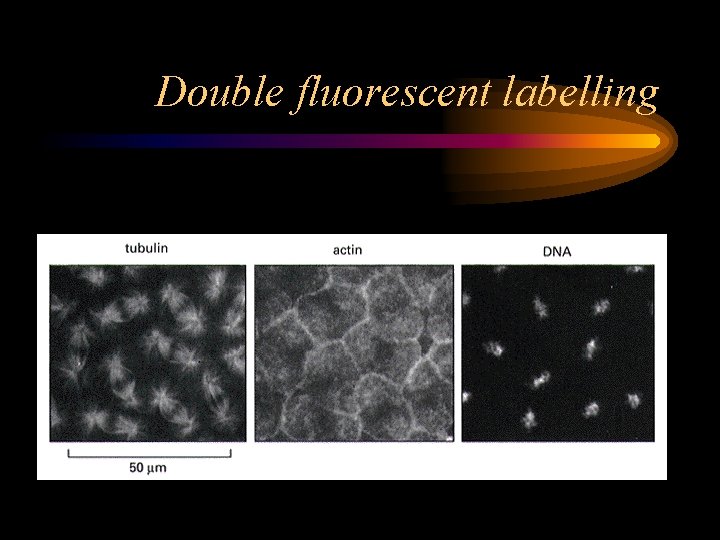
Double fluorescent labelling
Confocal Microscopy • • FEATURES Laser light multiple images computer generated • USES • 2 D and 3 D of fine structural detail
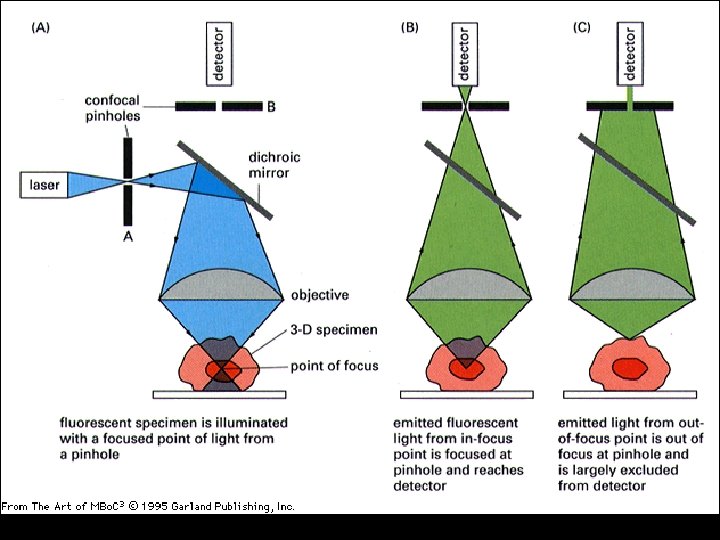
Confocal Microscopy
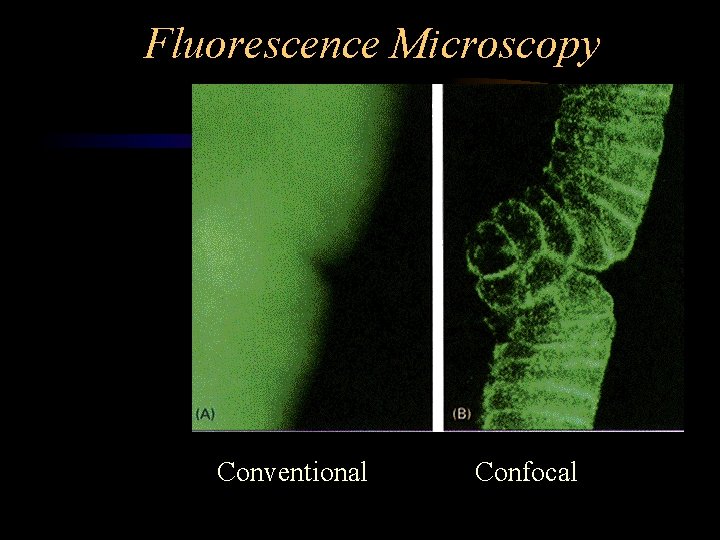
Fluorescence Microscopy Conventional Confocal
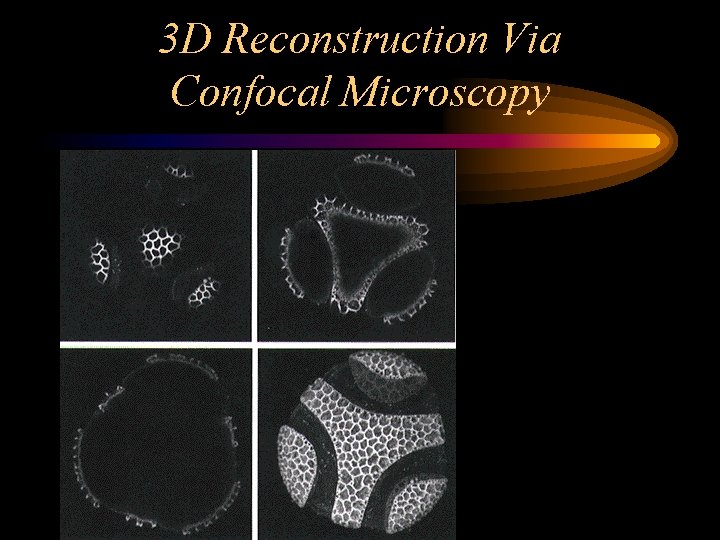
3 D Reconstruction Via Confocal Microscopy
Electron Microscopy • Transmission Electron Microscopy • Scanning Electron Microscopy
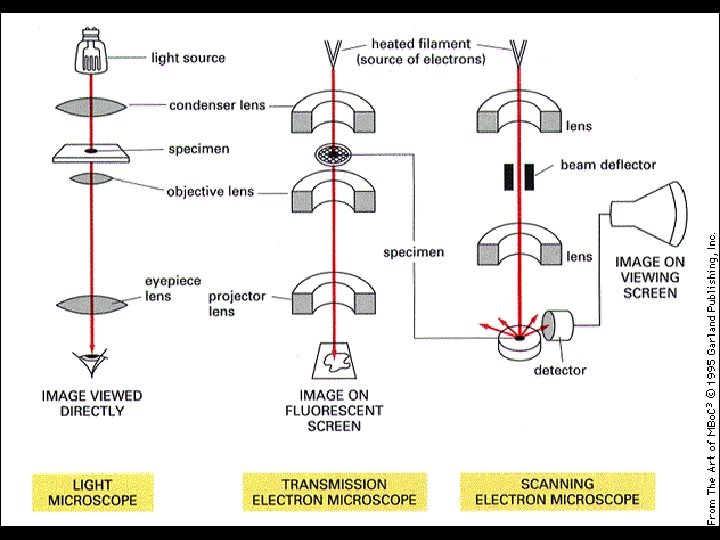
Lens in Microscopes
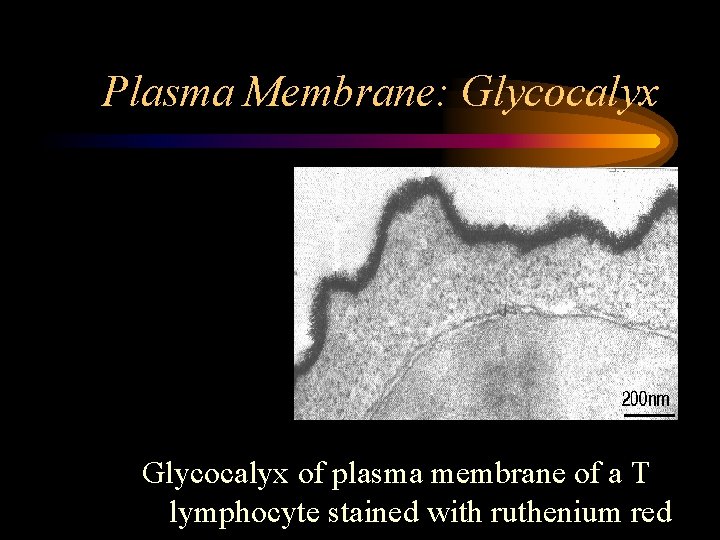
Plasma Membrane: Glycocalyx of plasma membrane of a T lymphocyte stained with ruthenium red
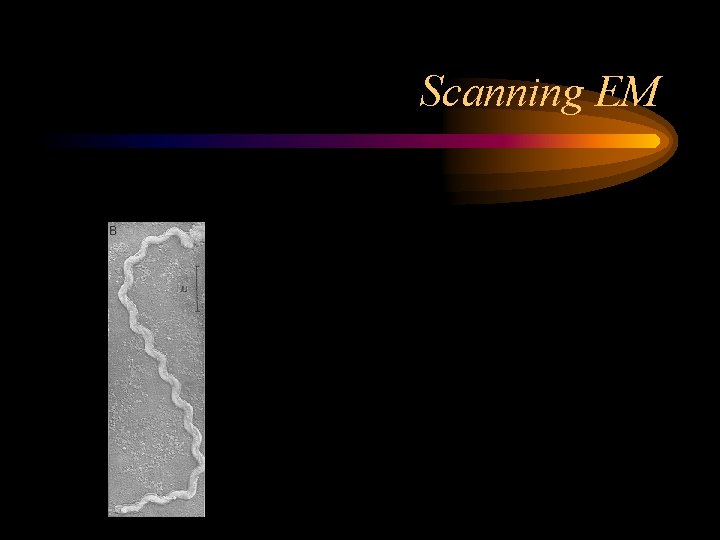
Scanning EM

Bacteria on Skin
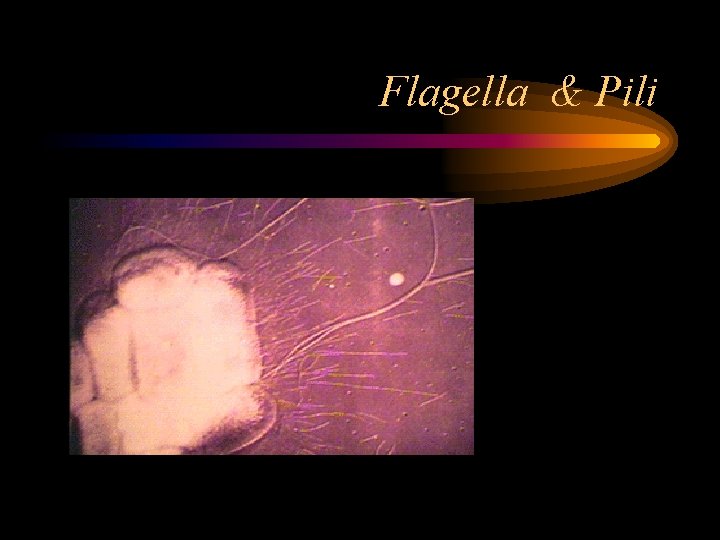
Flagella & Pili
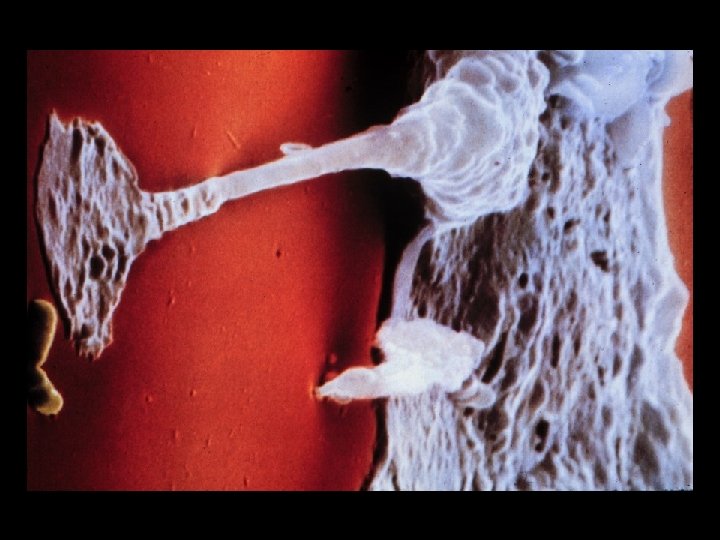
Scanning EM
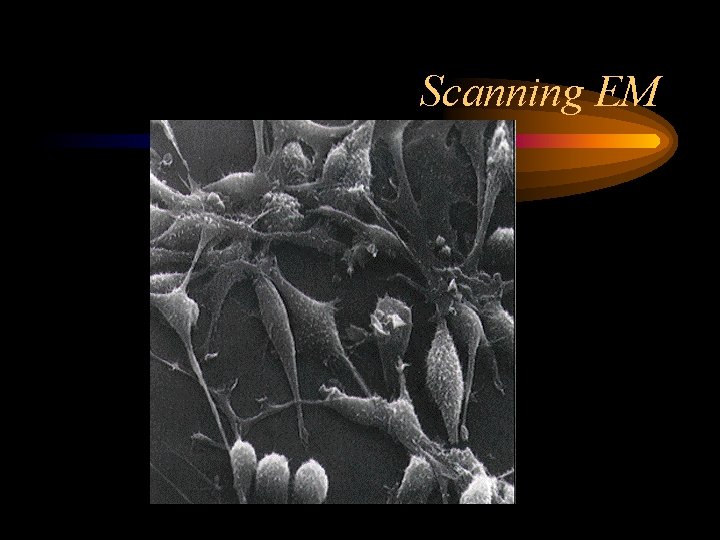
Scanning EM
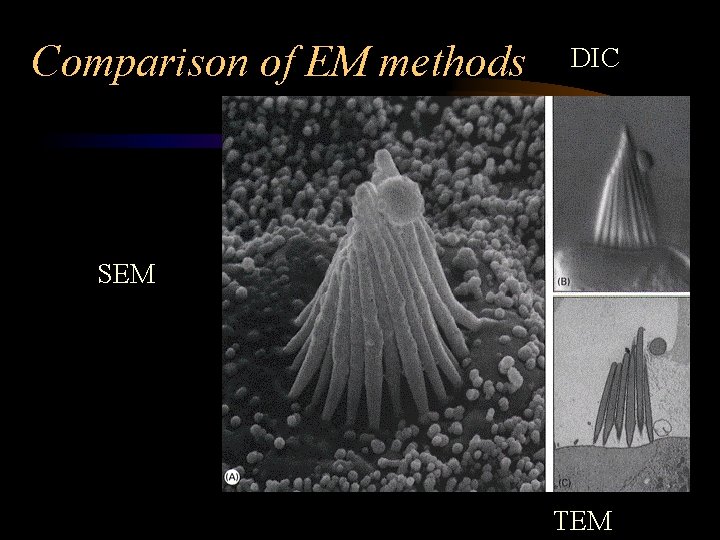
Comparison of EM methods DIC SEM TEM
- Slides: 44