
MICROSCOPES MAGNIFIES OBJECTS MAKES OBJECTS LOOK BIGGER HELP

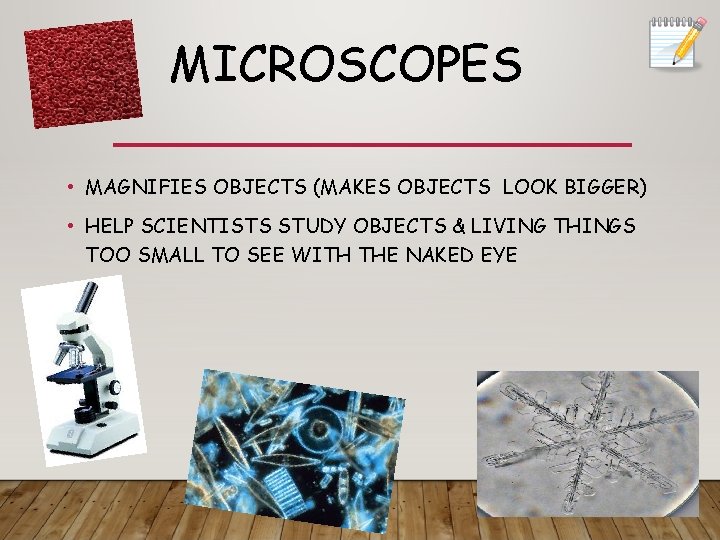
MICROSCOPES • MAGNIFIES OBJECTS (MAKES OBJECTS LOOK BIGGER) • HELP SCIENTISTS STUDY OBJECTS & LIVING THINGS TOO SMALL TO SEE WITH THE NAKED EYE
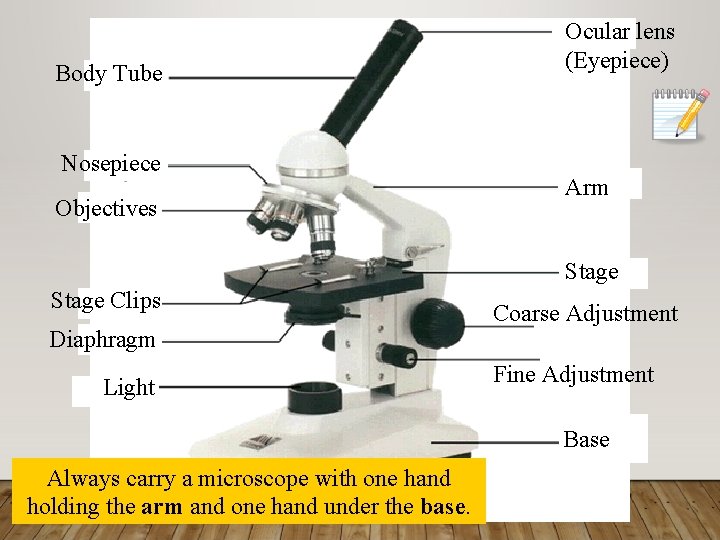
Body Tube Nosepiece Objectives Ocular lens (Eyepiece) Arm Stage Clips Diaphragm Light Coarse Adjustment Fine Adjustment Base Always carry a microscope with one hand holding the arm and one hand under the base.
3 TYPES OF MICROSCOPES • simple microscope has only 1 lens. compound microscope has 2 sets of lenses. It can magnify things 100 - 200 times larger than they really are. • electron microscope can magnify objects up to 300, 000 times. They do not use lenses but use electrons to enlarge the image.
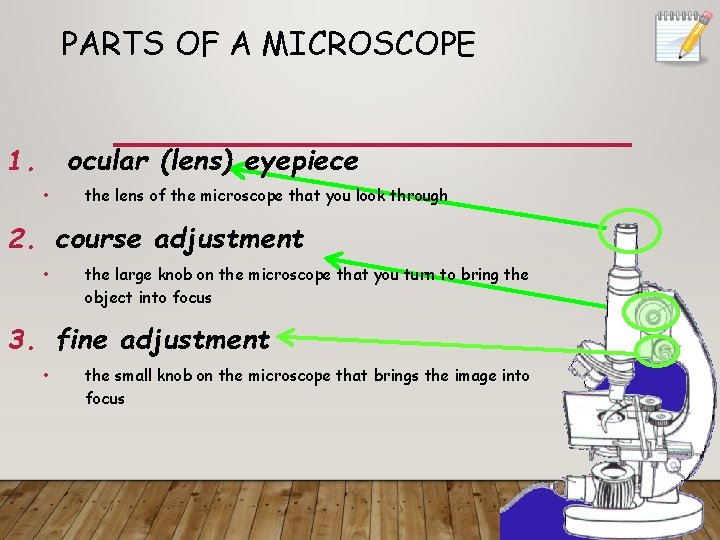
PARTS OF A MICROSCOPE 1. ocular (lens) eyepiece • the lens of the microscope that you look through 2. course adjustment • the large knob on the microscope that you turn to bring the object into focus 3. fine adjustment • the small knob on the microscope that brings the image into focus
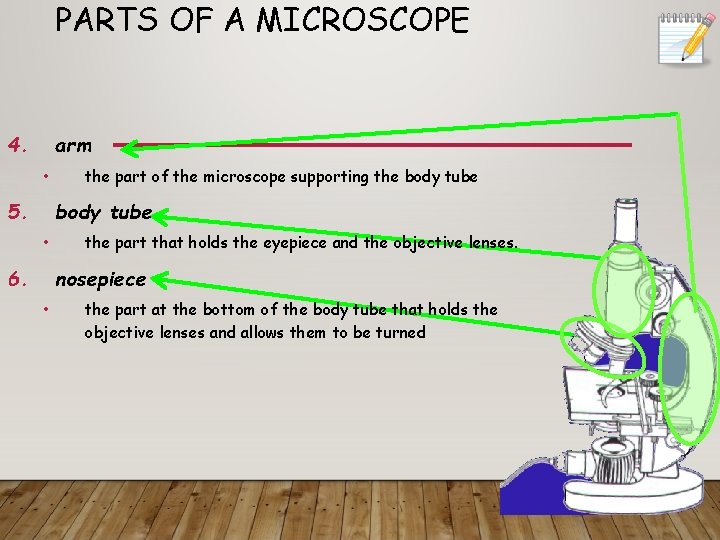
PARTS OF A MICROSCOPE 4. arm • 5. the part of the microscope supporting the body tube • 6. the part that holds the eyepiece and the objective lenses. nosepiece • the part at the bottom of the body tube that holds the objective lenses and allows them to be turned

7. high power objective lens • the lens that magnifies the object the greatest amount. (usually 40 x) 8. Low power (scanner) objective lens • the lens that magnifies the object the least amount (usually used to find the object; magnifies only 3 x or 4 x) 9. middle power objective lens • the lens that usually magnifies the object more than the scanner lens, but less than the high power lens (usually 10 x to 20 x)
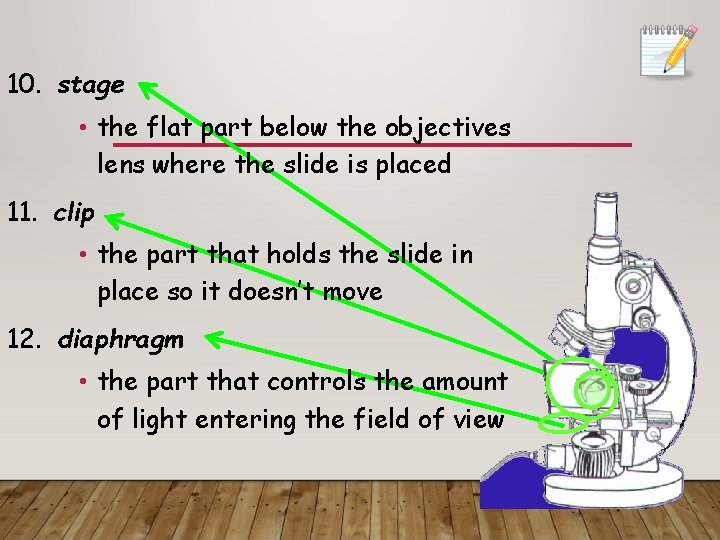
10. stage • the flat part below the objectives lens where the slide is placed 11. clip • the part that holds the slide in place so it doesn’t move 12. diaphragm • the part that controls the amount of light entering the field of view
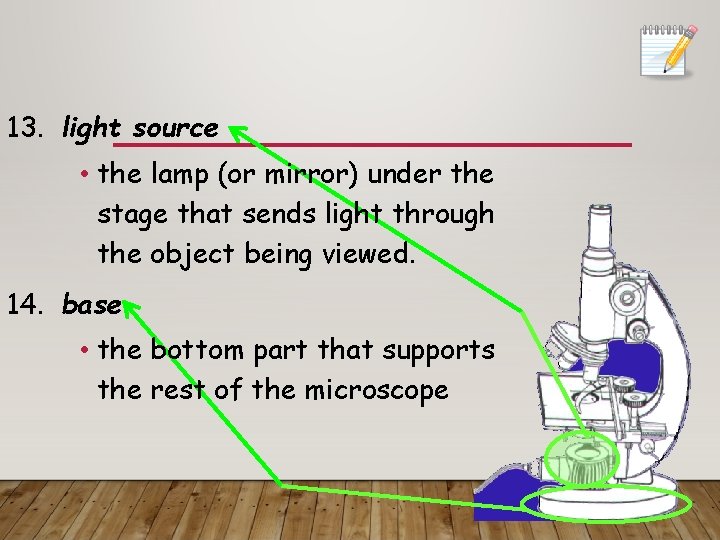
13. light source • the lamp (or mirror) under the stage that sends light through the object being viewed. 14. base • the bottom part that supports the rest of the microscope
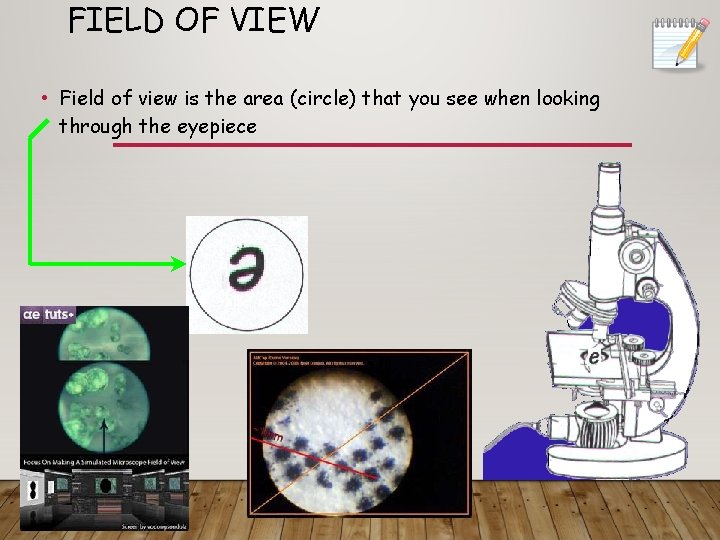
FIELD OF VIEW • Field of view is the area (circle) that you see when looking through the eyepiece
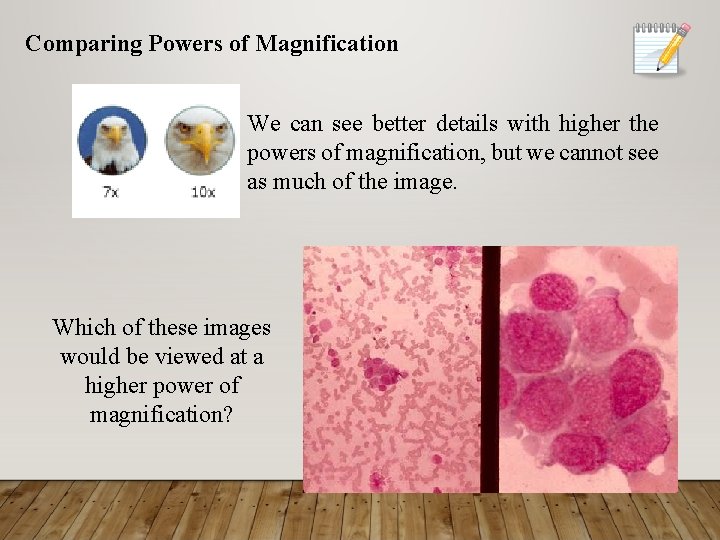
Comparing Powers of Magnification We can see better details with higher the powers of magnification, but we cannot see as much of the image. Which of these images would be viewed at a higher power of magnification?
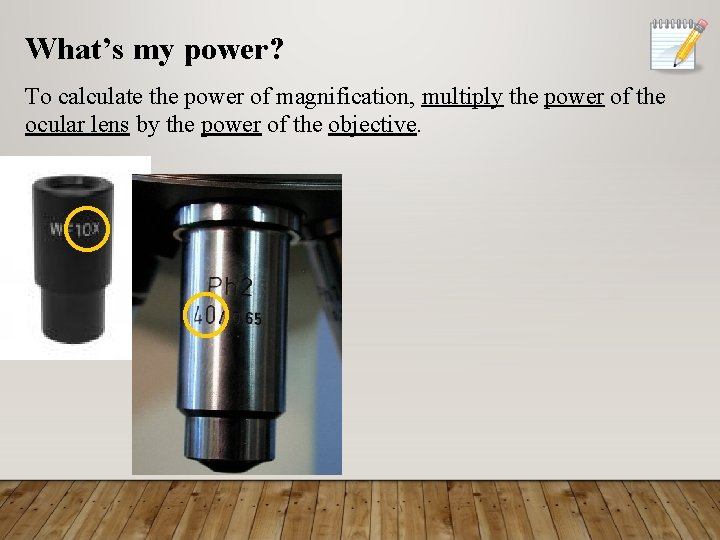
What’s my power? To calculate the power of magnification, multiply the power of the ocular lens by the power of the objective.
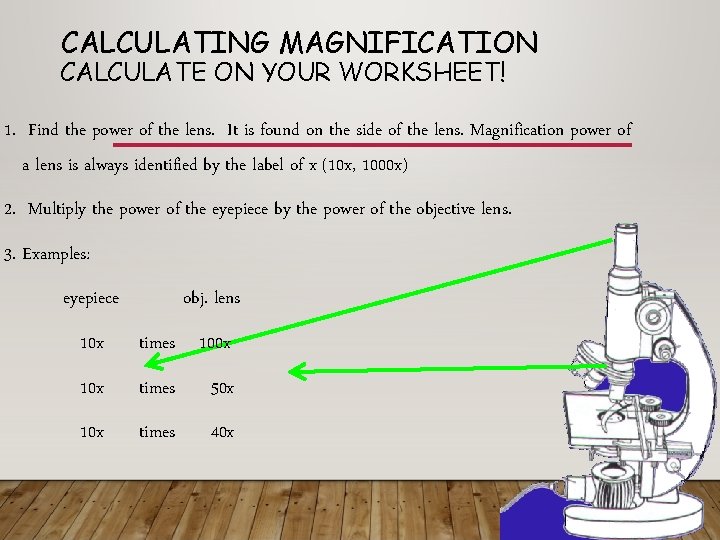
CALCULATING MAGNIFICATION CALCULATE ON YOUR WORKSHEET! 1. Find the power of the lens. It is found on the side of the lens. Magnification power of a lens is always identified by the label of x (10 x, 1000 x) 2. Multiply the power of the eyepiece by the power of the objective lens. 3. Examples: eyepiece obj. lens 10 x times 100 x 10 x times 50 x 10 x times 40 x
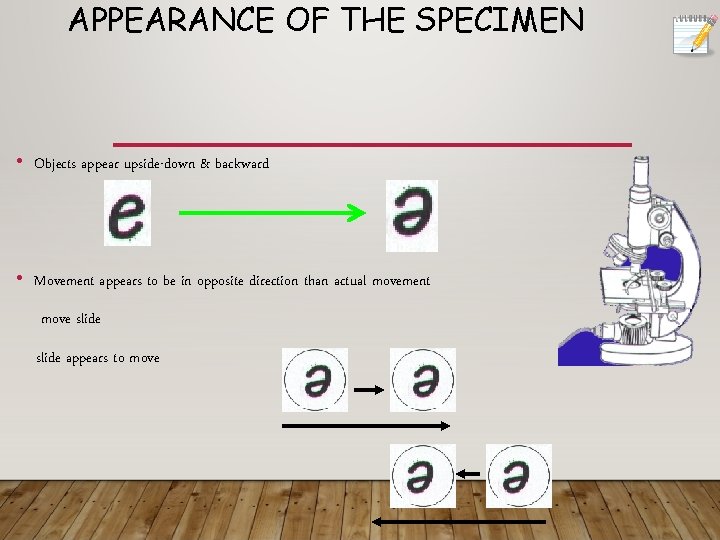
APPEARANCE OF THE SPECIMEN • Objects appear upside-down & backward • Movement appears to be in opposite direction than actual movement move slide appears to move
- Slides: 14