
Microscopes Compound Light Microscope Use lenses to magnify

- Slides: 7
Microscopes
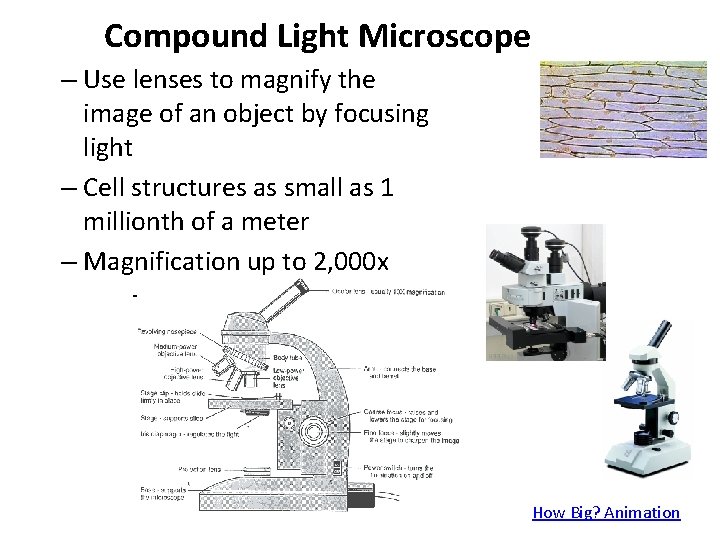
Compound Light Microscope – Use lenses to magnify the image of an object by focusing light – Cell structures as small as 1 millionth of a meter – Magnification up to 2, 000 x – Classroom microscopes go up to 400 x How Big? Animation
Magnification
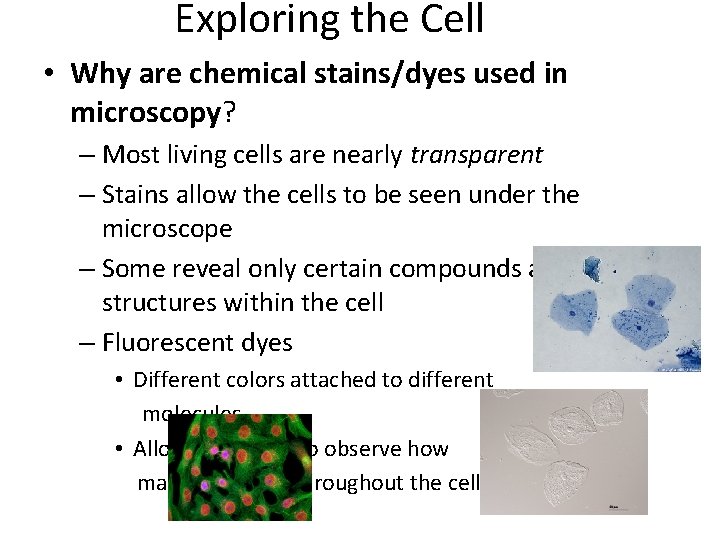
Exploring the Cell • Why are chemical stains/dyes used in microscopy? – Most living cells are nearly transparent – Stains allow the cells to be seen under the microscope – Some reveal only certain compounds and structures within the cell – Fluorescent dyes • Different colors attached to different molecules • Allows scientists to observe how materials move throughout the cell
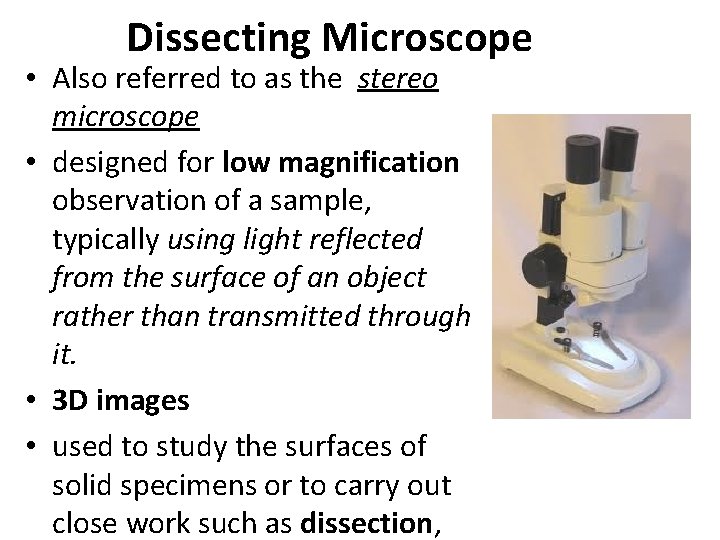
Dissecting Microscope • Also referred to as the stereo microscope • designed for low magnification observation of a sample, typically using light reflected from the surface of an object rather than transmitted through it. • 3 D images • used to study the surfaces of solid specimens or to carry out close work such as dissection,
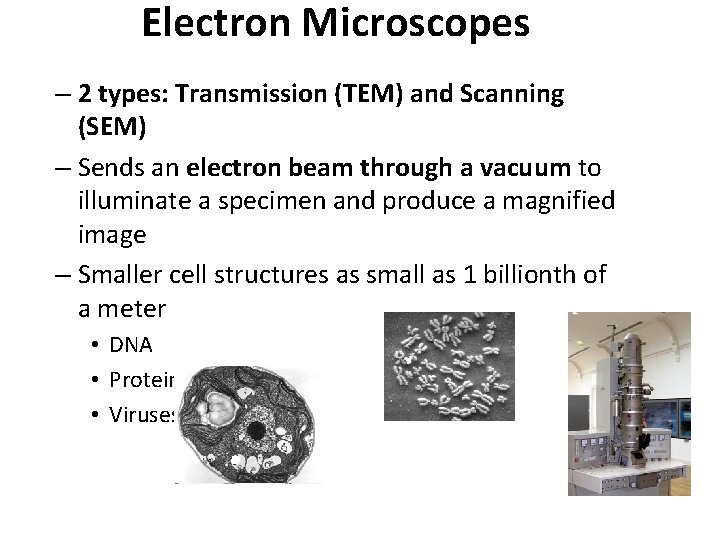
Electron Microscopes – 2 types: Transmission (TEM) and Scanning (SEM) – Sends an electron beam through a vacuum to illuminate a specimen and produce a magnified image – Smaller cell structures as small as 1 billionth of a meter • DNA • Protein molecules • Viruses
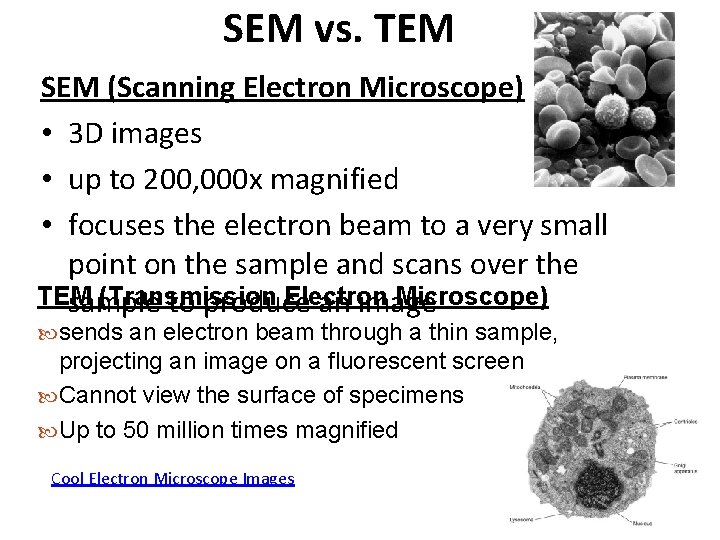
SEM vs. TEM SEM (Scanning Electron Microscope) • 3 D images • up to 200, 000 x magnified • focuses the electron beam to a very small point on the sample and scans over the TEM (Transmission Electron Microscope) sample to produce an image sends an electron beam through a thin sample, projecting an image on a fluorescent screen Cannot view the surface of specimens Up to 50 million times magnified Cool Electron Microscope Images