
Microscopes and Basic Measurement How are they used
Microscopes and Basic Measurement How are they used to study the living environment?
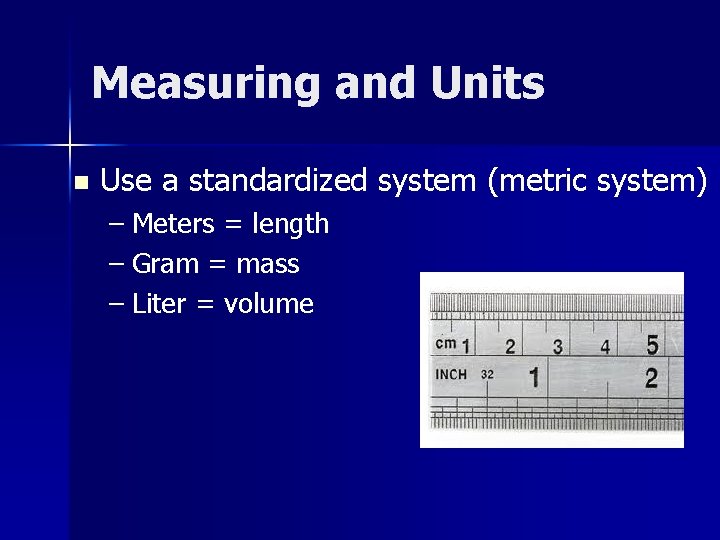
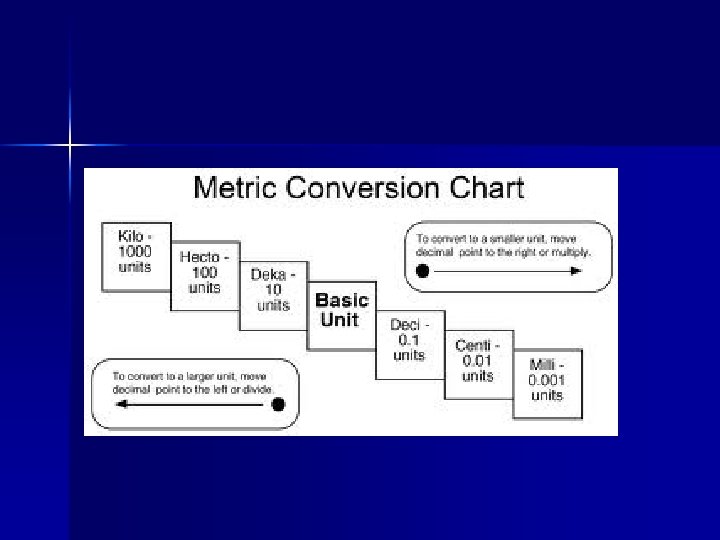
Measuring and Units n Use a standardized system (metric system) – Meters = length – Gram = mass – Liter = volume
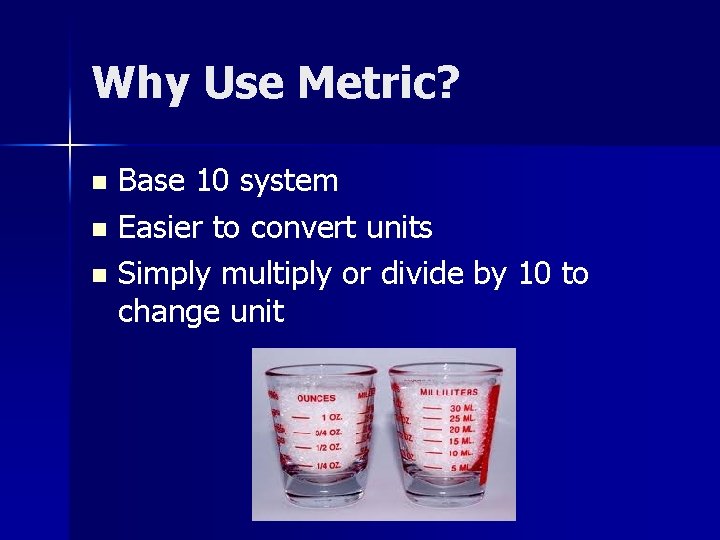
Why Use Metric? Base 10 system n Easier to convert units n Simply multiply or divide by 10 to change unit n
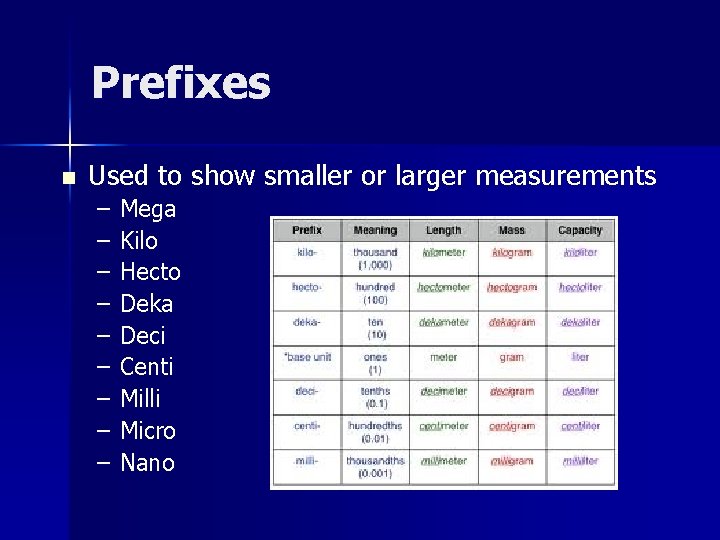
Prefixes n Used to show smaller or larger measurements – – – – – Mega Kilo Hecto Deka Deci Centi Milli Micro Nano
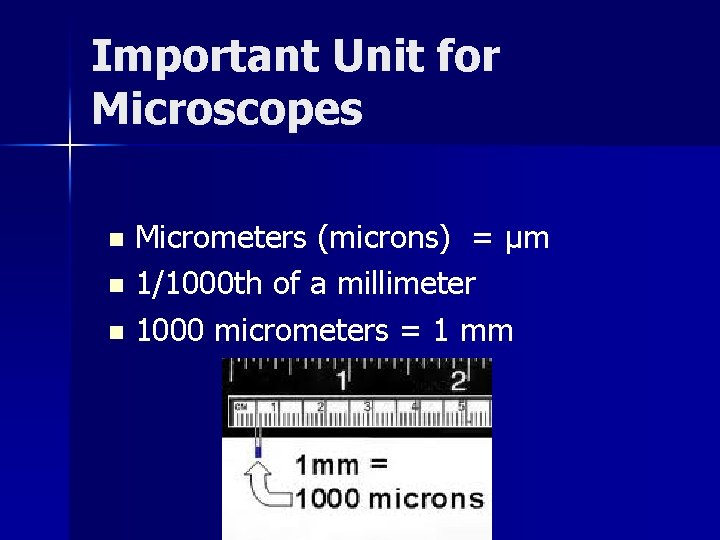
Important Unit for Microscopes Micrometers (microns) = µm n 1/1000 th of a millimeter n 1000 micrometers = 1 mm n
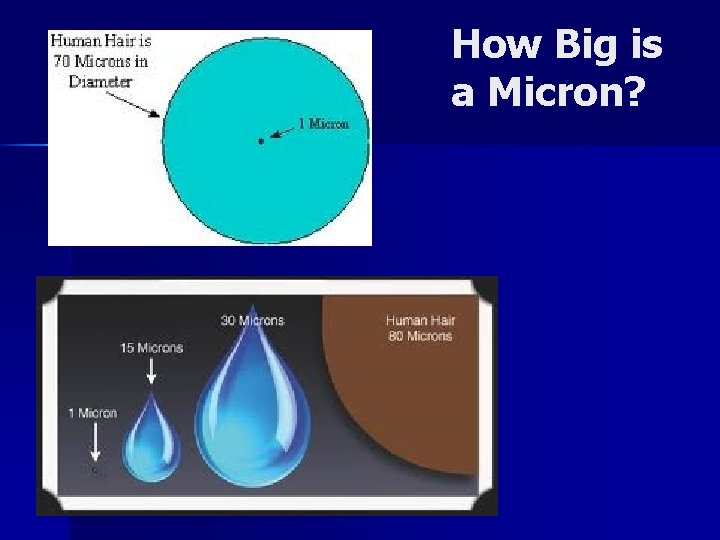
How Big is a Micron?
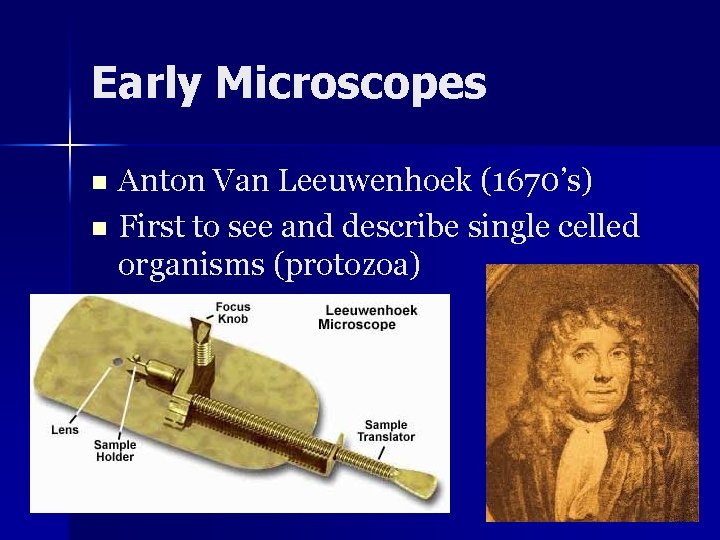
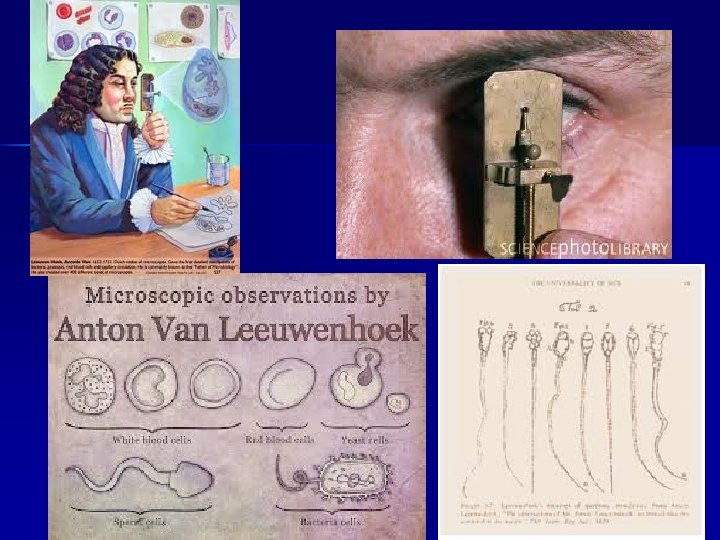
Early Microscopes Anton Van Leeuwenhoek (1670’s) n First to see and describe single celled organisms (protozoa) n
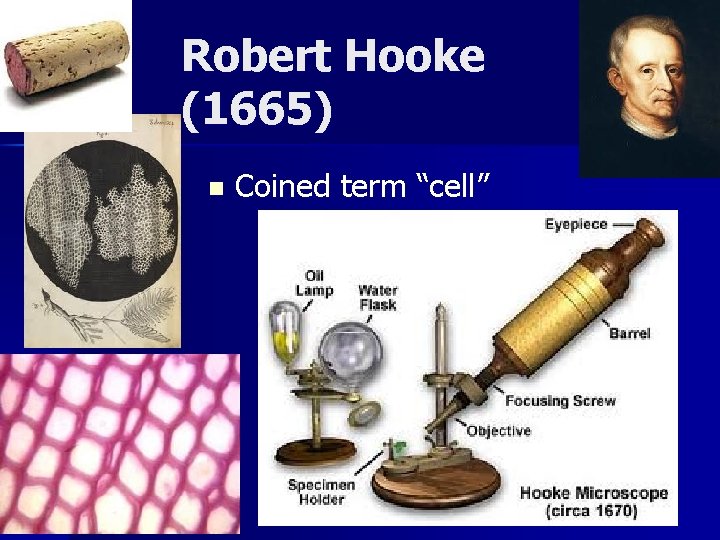
Robert Hooke (1665) n Coined term “cell”
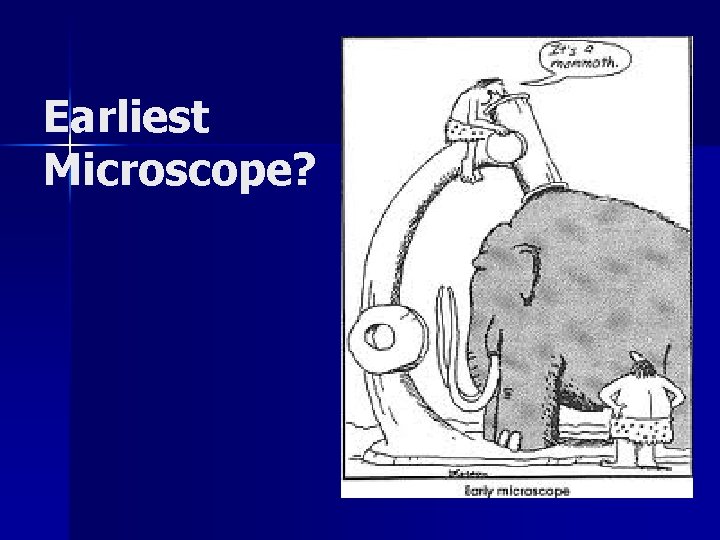
Earliest Microscope?
Parts of a Compound Microscope
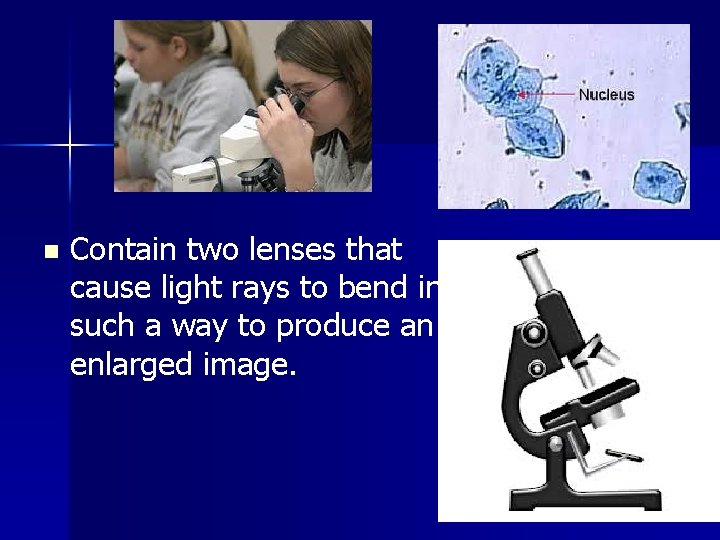
n Contain two lenses that cause light rays to bend in such a way to produce an enlarged image.
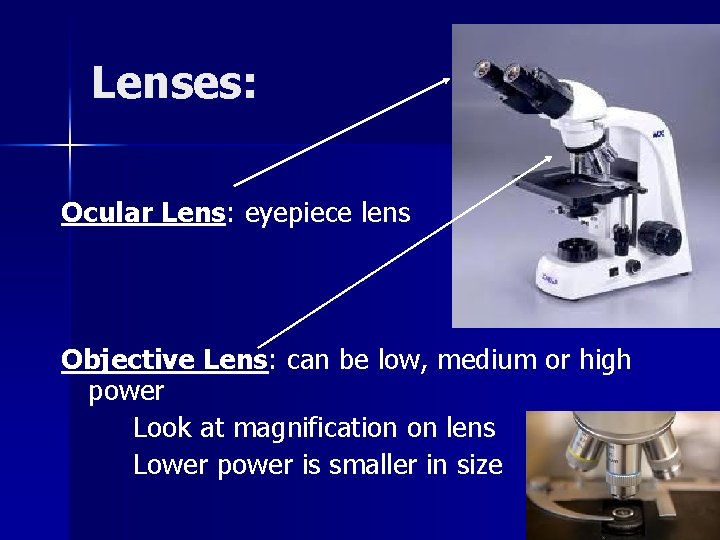
Lenses: Ocular Lens: eyepiece lens Objective Lens: can be low, medium or high power Look at magnification on lens Lower power is smaller in size
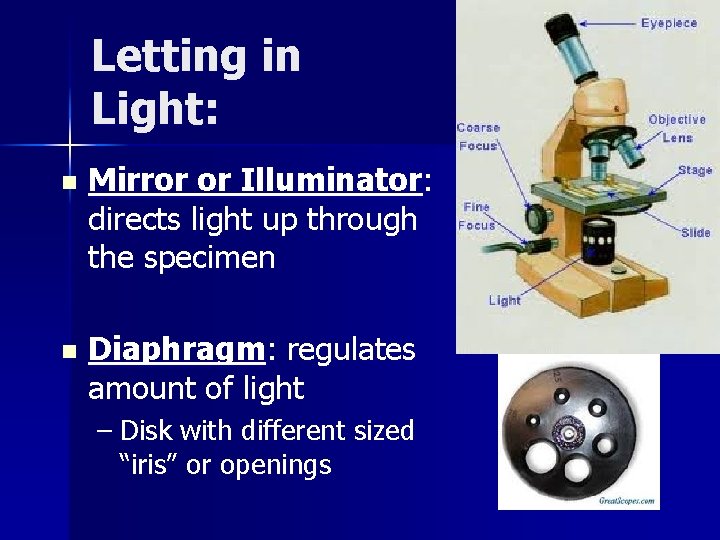
Letting in Light: n Mirror or Illuminator: directs light up through the specimen n Diaphragm: regulates amount of light – Disk with different sized “iris” or openings
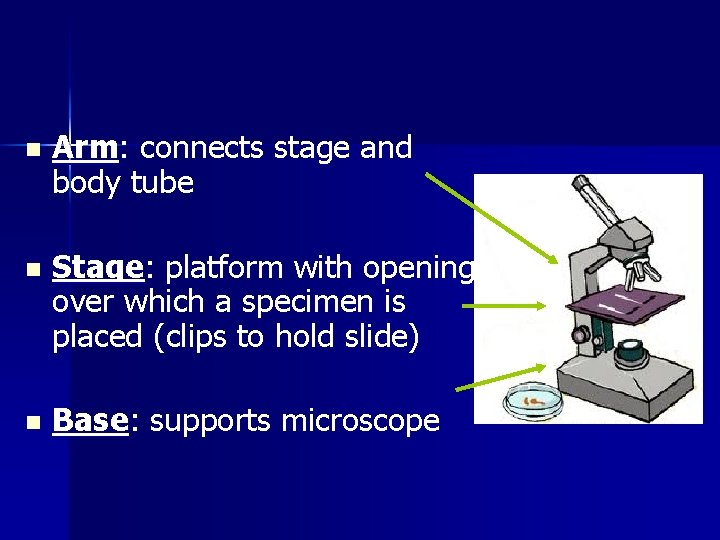
n Arm: connects stage and body tube n Stage: platform with opening over which a specimen is placed (clips to hold slide) n Base: supports microscope
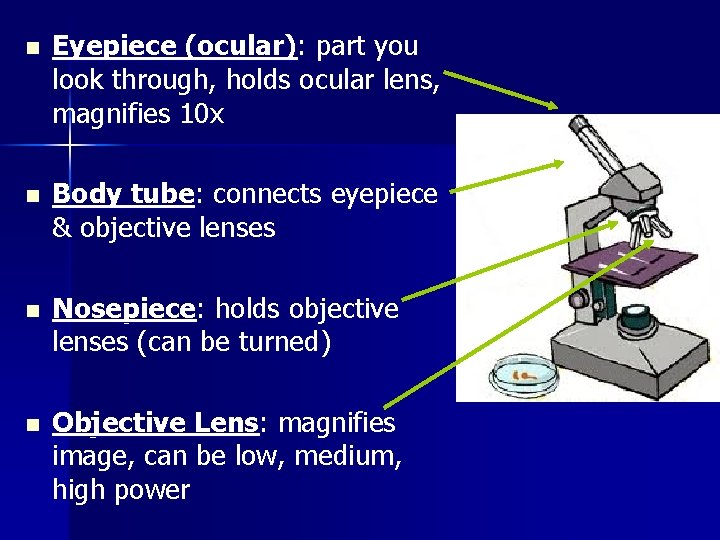
n Eyepiece (ocular): part you look through, holds ocular lens, magnifies 10 x n Body tube: connects eyepiece & objective lenses n Nosepiece: holds objective lenses (can be turned) n Objective Lens: magnifies image, can be low, medium, high power
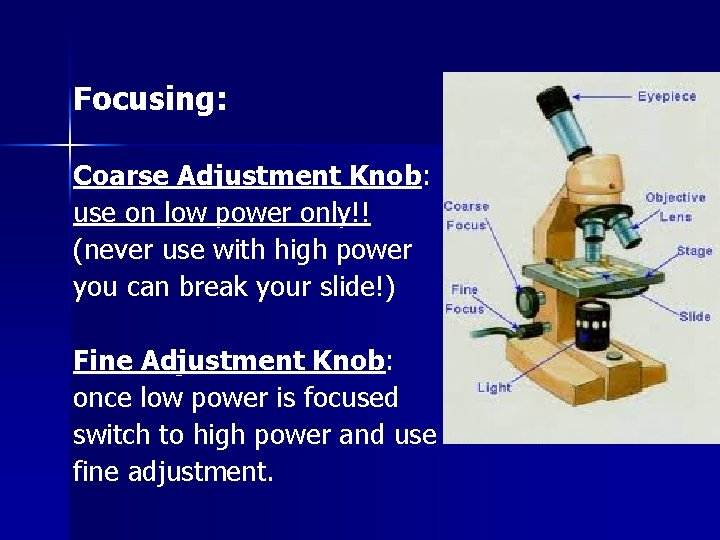
Focusing: Coarse Adjustment Knob: use on low power only!! (never use with high power you can break your slide!) Fine Adjustment Knob: once low power is focused switch to high power and use fine adjustment.
Magnification n How much can you enlarge the image? n Ex: 100 x = 100 times as big
Finding Total Magnification n Multiply strengths of two lenses you are using. – Ocular lens x Objective lens Ex: Ocular = 10 x High Power Objective= 45 x Total Magnification = (10 x 45) = 450 x
Practice Find Total Magnification: 1. Ocular 2 x, Objective 30 x = 2. Ocular 10 x, Objective 60 x = 3. If Ocular is 10 x and Total mag. = 350 x What is the strength of the objective lens?
n Note: n As you increase magnification you need to let in more light to see your specimen (adjust diaphragm)
Resolution n How sharp can you get the image? n Ability of microscope to distinguish two objects as being separate (ex: one cell from another)
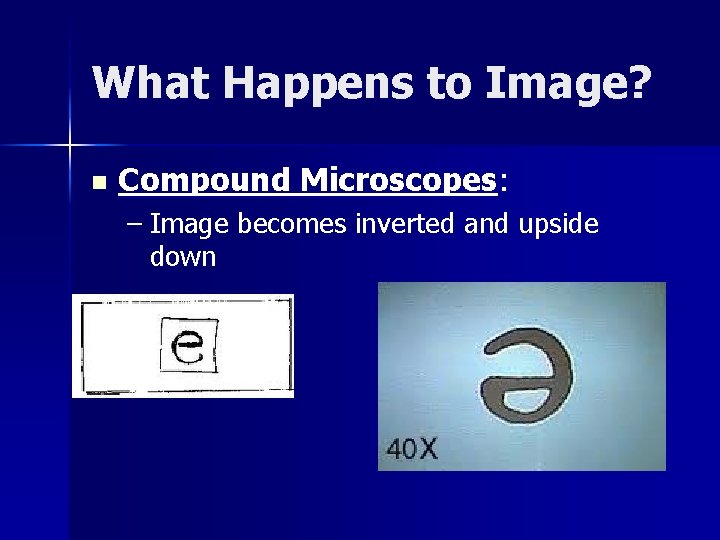
What Happens to Image? n Compound Microscopes: – Image becomes inverted and upside down
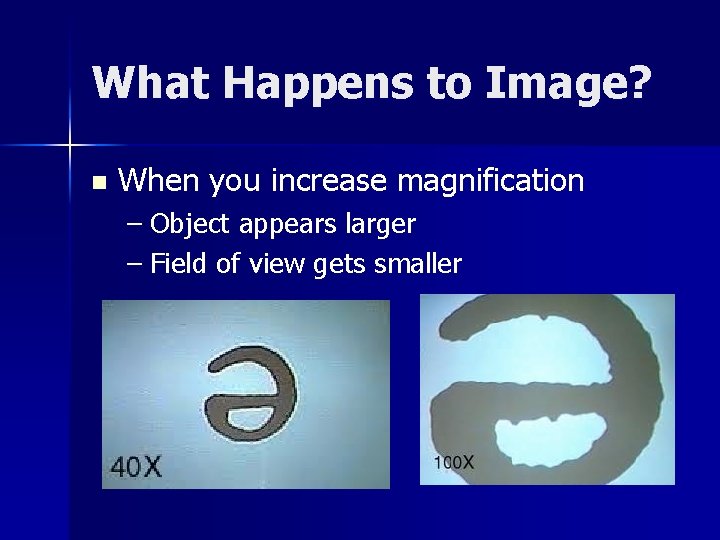
What Happens to Image? n When you increase magnification – Object appears larger – Field of view gets smaller
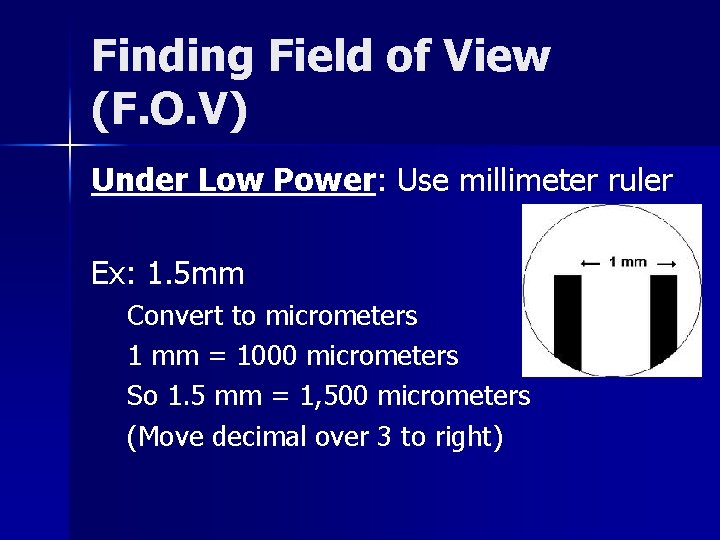
Finding Field of View (F. O. V) Under Low Power: Use millimeter ruler Ex: 1. 5 mm Convert to micrometers 1 mm = 1000 micrometers So 1. 5 mm = 1, 500 micrometers (Move decimal over 3 to right)
Finding Field of View (F. O. V) n Under Medium or High Power Need to set up a proportion Remember!! – As magnification increases FOV decreases
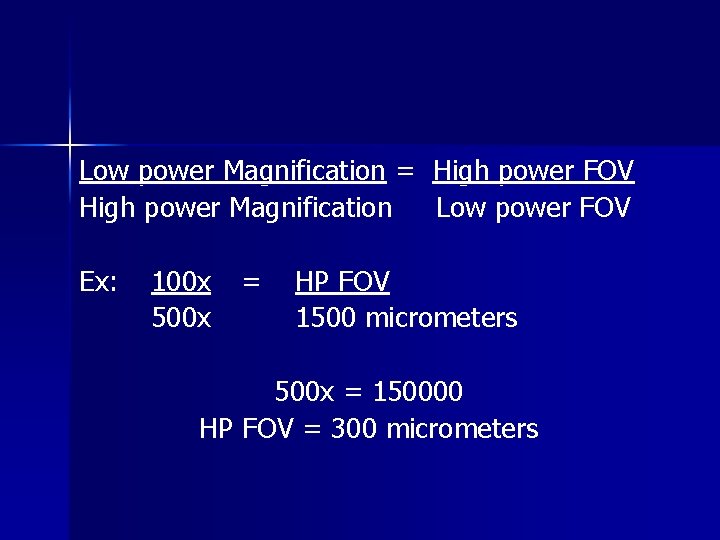
Low power Magnification = High power FOV High power Magnification Low power FOV Ex: 100 x 500 x = HP FOV 1500 micrometers 500 x = 150000 HP FOV = 300 micrometers
Determining the Size of an Object Under a Microscope
n View and draw object on low power n Estimate how many objects would fit across diameter of field of view
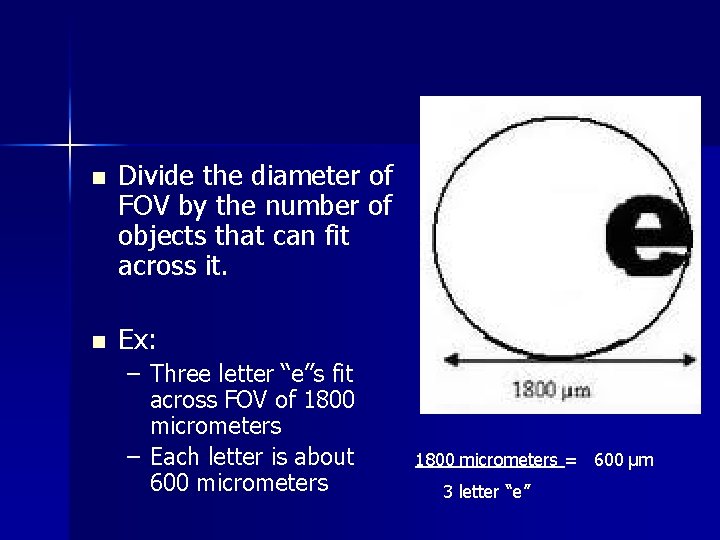
n Divide the diameter of FOV by the number of objects that can fit across it. n Ex: – Three letter “e”s fit across FOV of 1800 micrometers – Each letter is about 600 micrometers 1800 micrometers = 600 µm 3 letter “e”
Comparing Microscopes
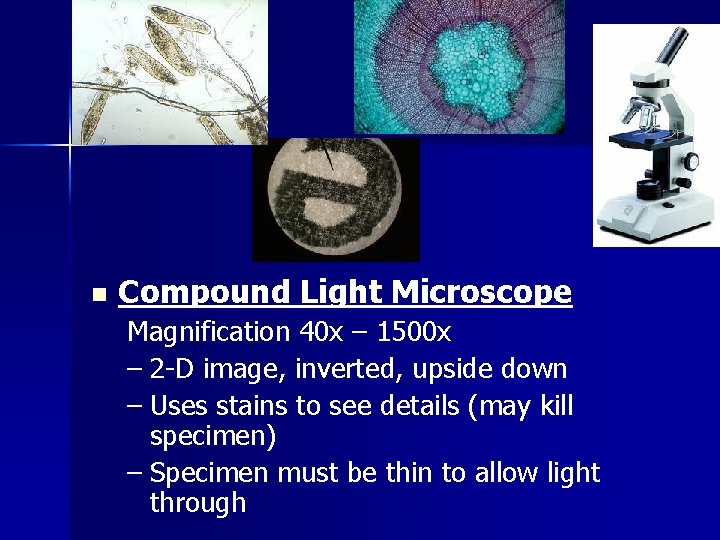
n Compound Light Microscope Magnification 40 x – 1500 x – 2 -D image, inverted, upside down – Uses stains to see details (may kill specimen) – Specimen must be thin to allow light through
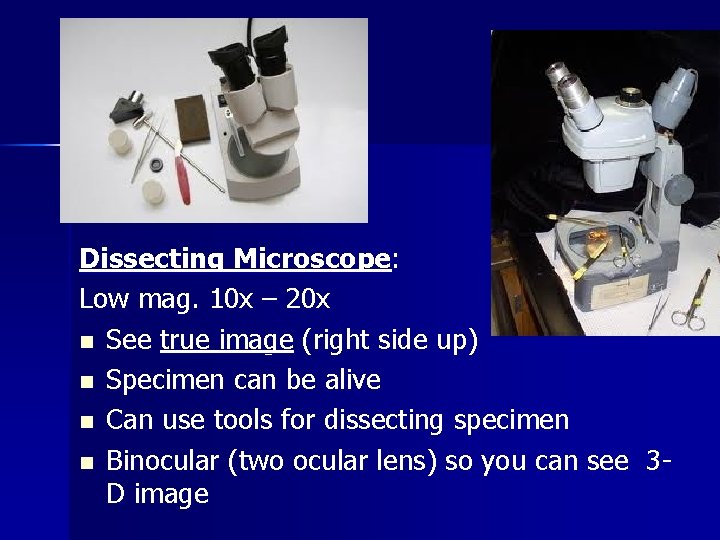
Dissecting Microscope: Low mag. 10 x – 20 x n See true image (right side up) n Specimen can be alive n Can use tools for dissecting specimen n Binocular (two ocular lens) so you can see 3 D image
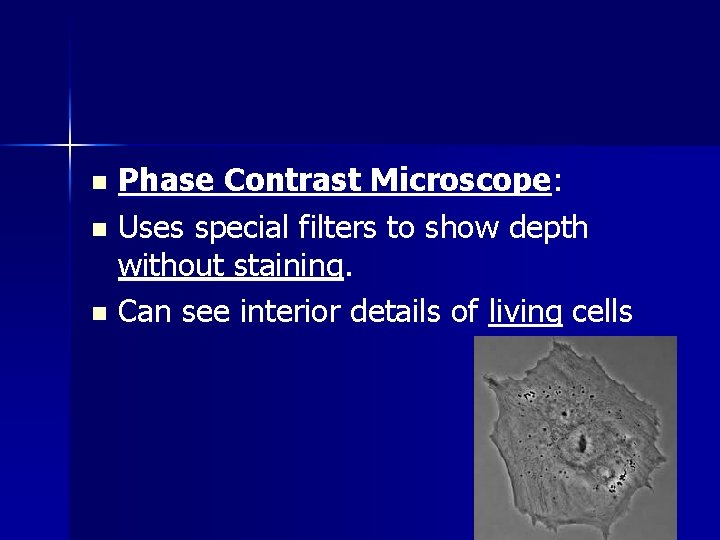
Phase Contrast Microscope: n Uses special filters to show depth without staining. n Can see interior details of living cells n
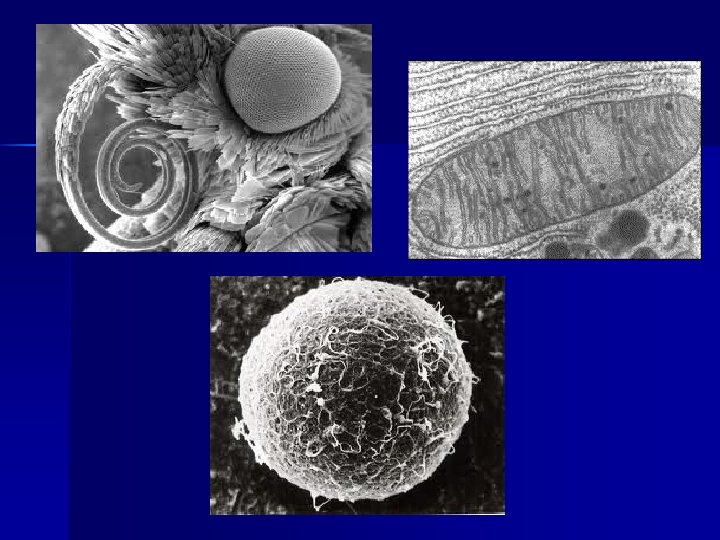
n n n n Electron Microscopes: Much higher magnification and resolution than microscopes that use light. Magnifies up to 200, 000 x Uses beam of electrons Sample placed in vacuum Cannot view living specimens Allowed scientists to see structure of cellular organelles
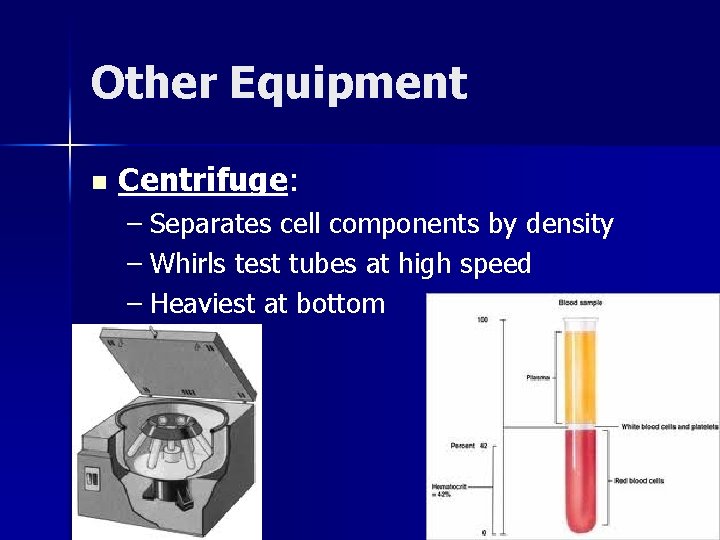
Other Equipment n Centrifuge: – Separates cell components by density – Whirls test tubes at high speed – Heaviest at bottom
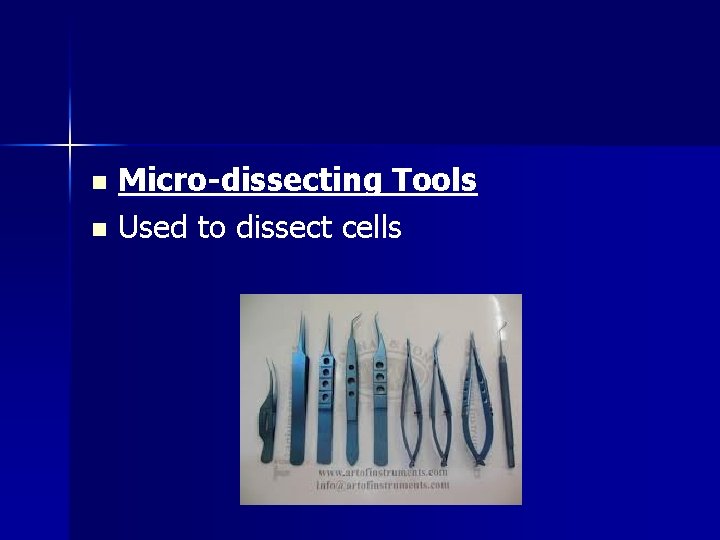
Micro-dissecting Tools n Used to dissect cells n
- Slides: 39