
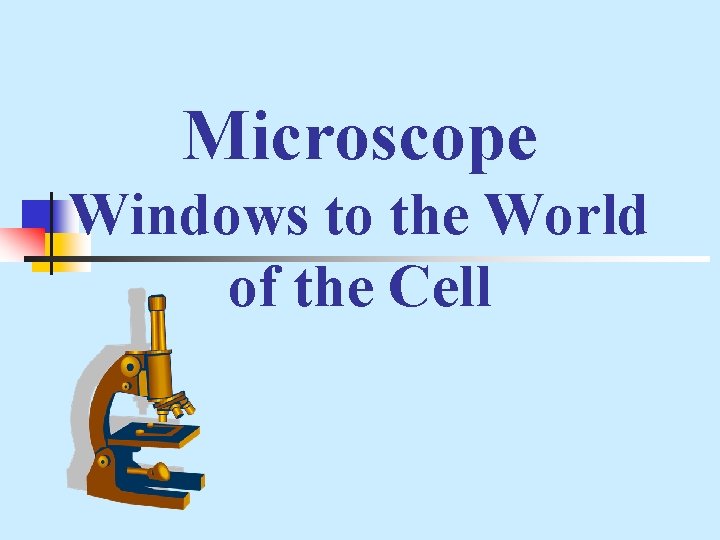
Microscope Windows to the World of the Cell
- Slides: 25
Microscope Windows to the World of the Cell
Microscopes An instrument used observe small objects n Enlarges images of small objects n
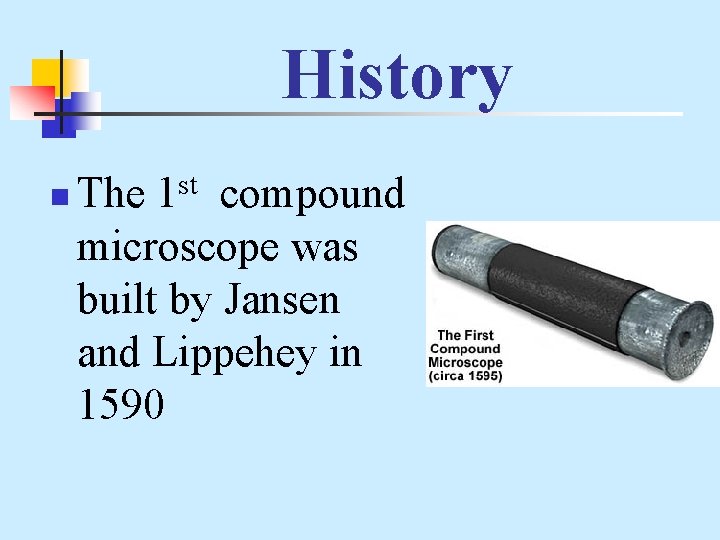
History n The 1 st compound microscope was built by Jansen and Lippehey in 1590
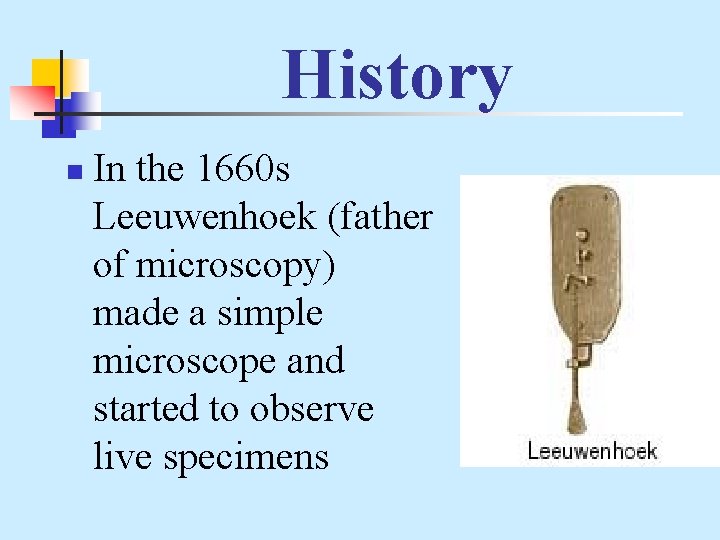
History n In the 1660 s Leeuwenhoek (father of microscopy) made a simple microscope and started to observe live specimens
Types of Microscope Light: uses light and lenses to magnify image n Electron: uses magnets and electrons to magnify image n
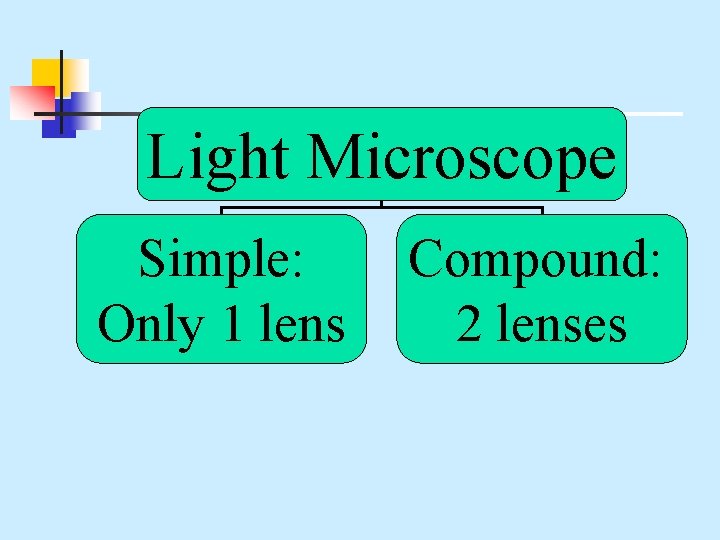
Light Microscope Simple: Only 1 lens Compound: 2 lenses
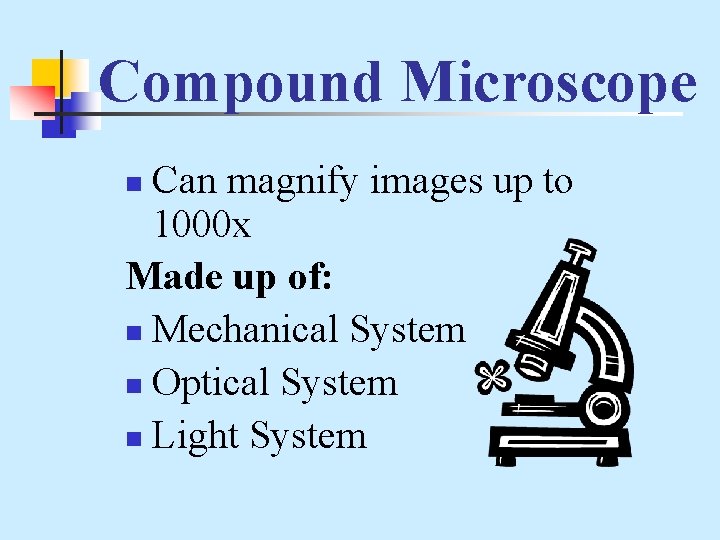
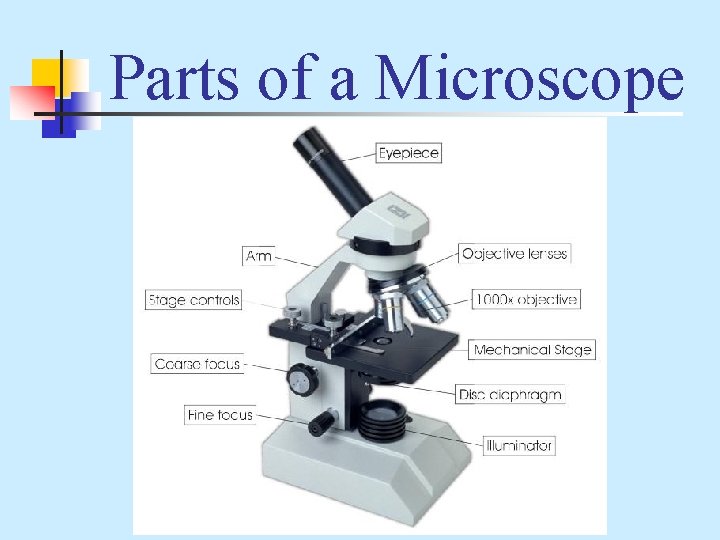
Compound Microscope Can magnify images up to 1000 x Made up of: n Mechanical System n Optical System n Light System n
Mechanical System Holds specimen n Allows one to focus Parts n Stage/clips n Focusing knobs n Body of the microscope n
Optical System Made of two lenses * Objective Lens * Eyepiece n Both together produce the magnified image n
Light System Light source (mirror): illuminates object n Diaphragm: allows to control amount of light n
Parts of a Microscope
Magnification n The ability to make objects look larger
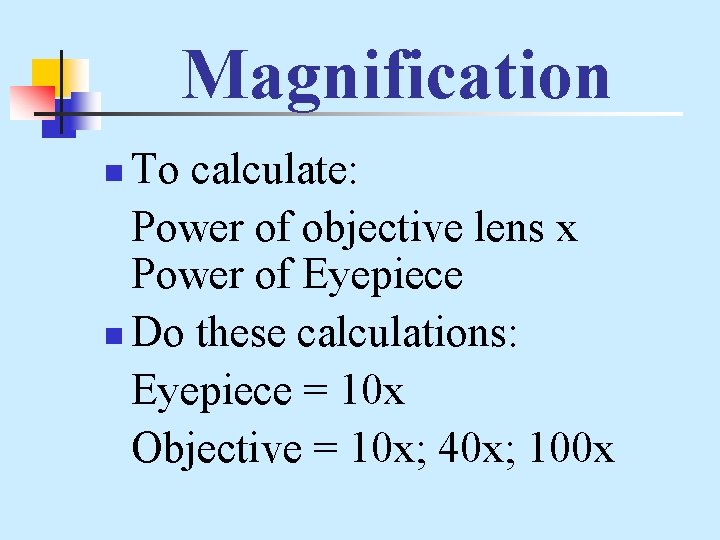
Magnification To calculate: Power of objective lens x Power of Eyepiece n Do these calculations: Eyepiece = 10 x Objective = 10 x; 40 x; 100 x n
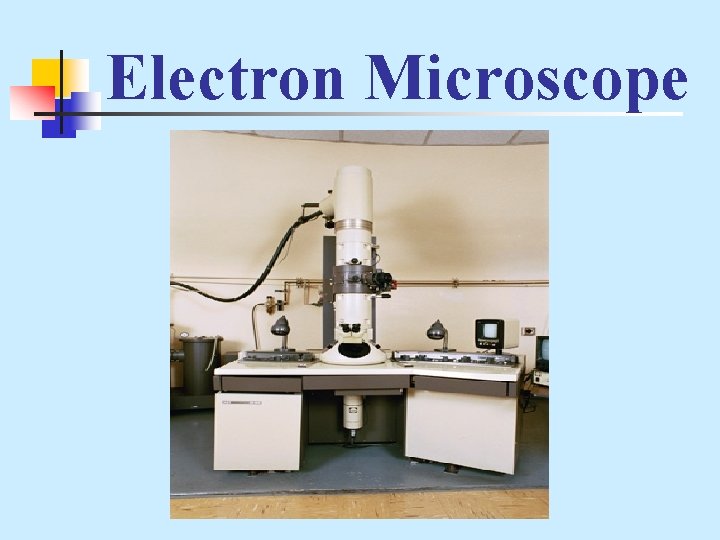
Electron Microscope
Electron Microscope Uses magnets and electrons to magnify images n Magnifies 1000 x better than a light microscope n Specimen cannot be living n
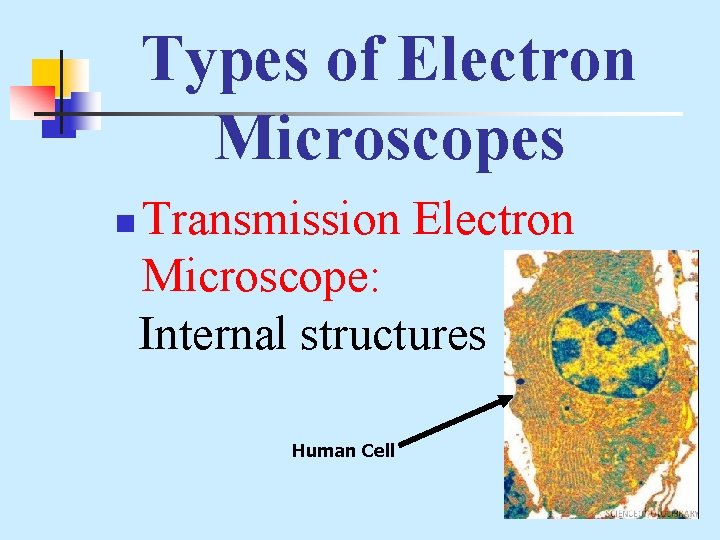
Types of Electron Microscopes n Transmission Electron Microscope: Internal structures Human Cell
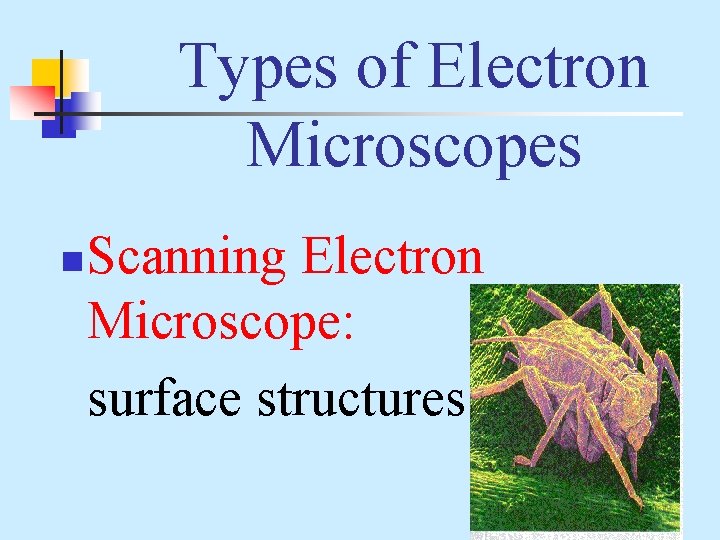
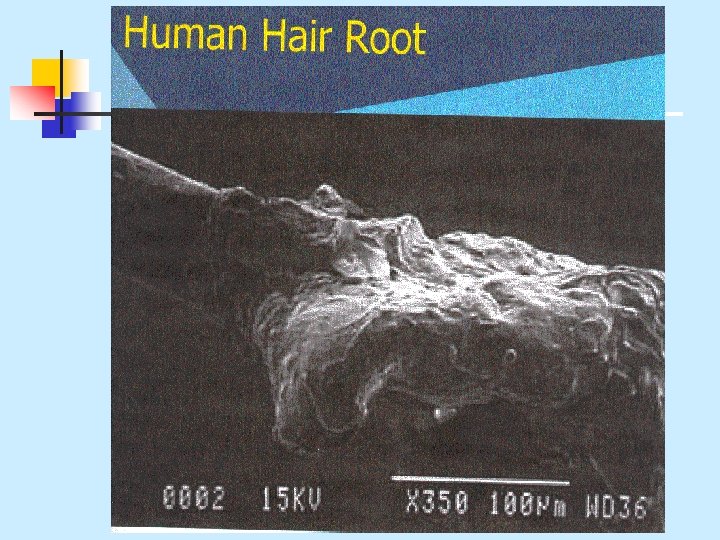
Types of Electron Microscopes n Scanning Electron Microscope: surface structures
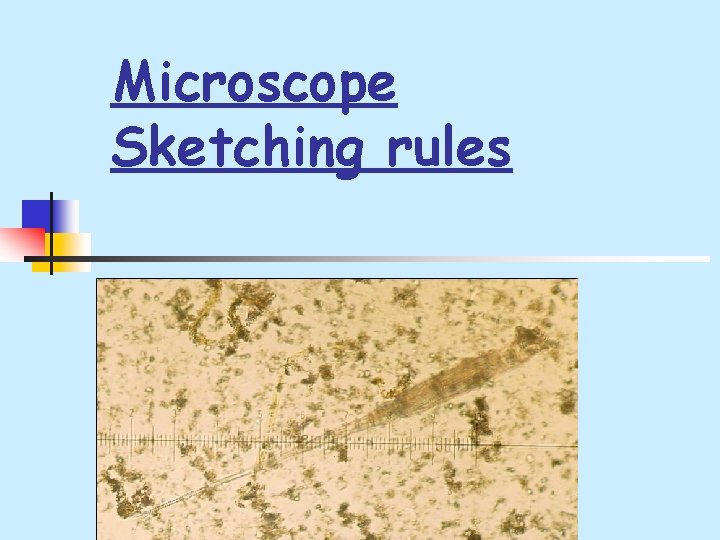
Microscope Sketching rules
When sketching a specimen you should… 1. 2. 3. use a sharp, hard pencil – no pen show details of one part of the viewing area Draw specimen the same size as it appears
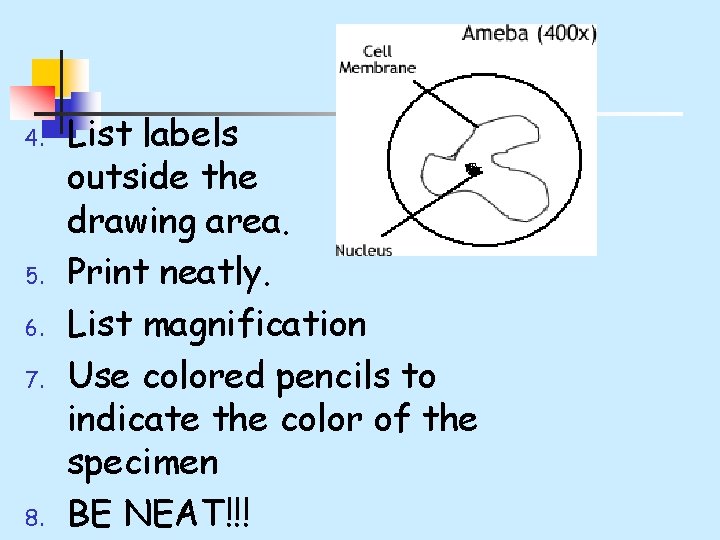
4. 5. 6. 7. 8. List labels outside the drawing area. Print neatly. List magnification Use colored pencils to indicate the color of the specimen BE NEAT!!!
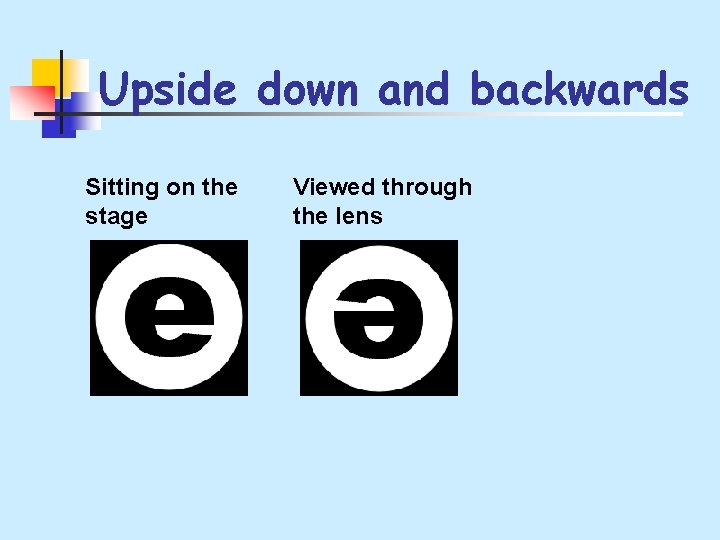
Upside down and backwards Sitting on the stage Viewed through the lens