
Microscope Basics 1 Ocular lens Eyepiece 2 Body
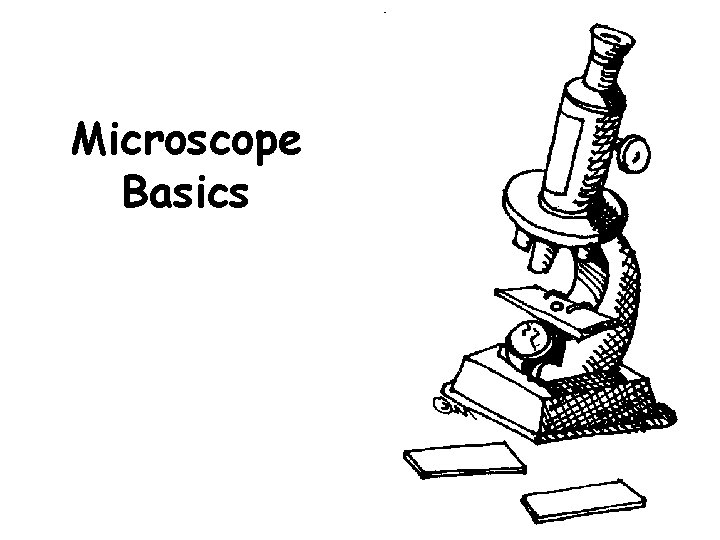
Microscope Basics
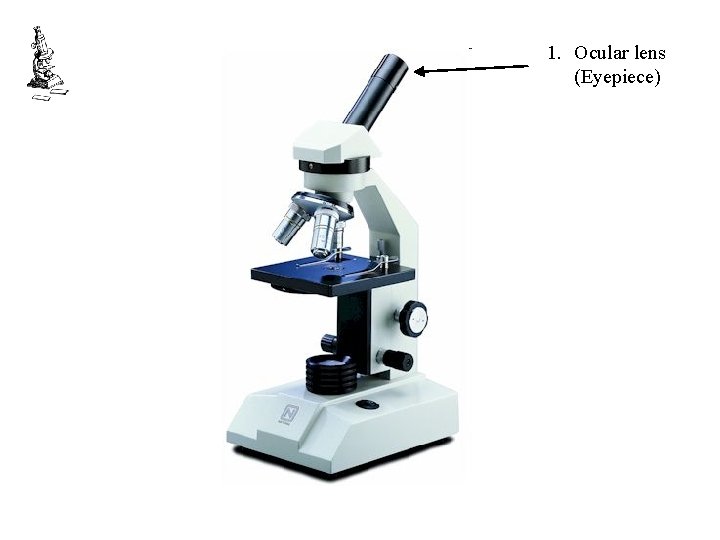
1. Ocular lens (Eyepiece)

2. Body Tube 1. Ocular lens (Eyepiece)
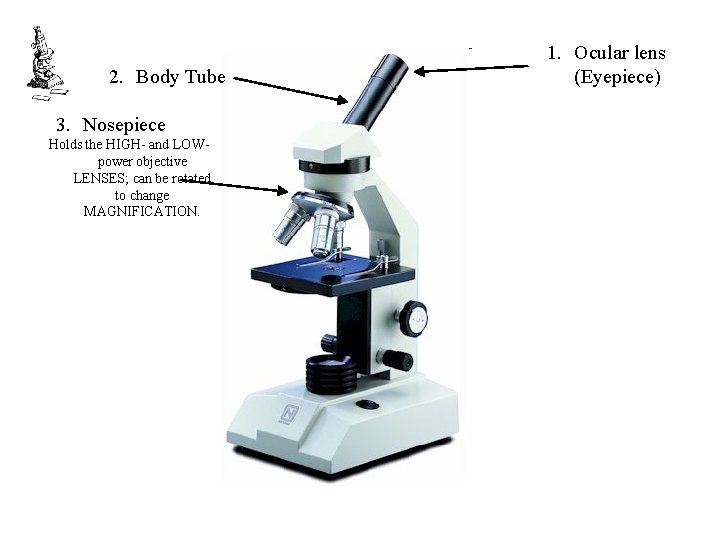
2. Body Tube 3. Nosepiece Holds the HIGH- and LOWpower objective LENSES; can be rotated to change MAGNIFICATION. 1. Ocular lens (Eyepiece)
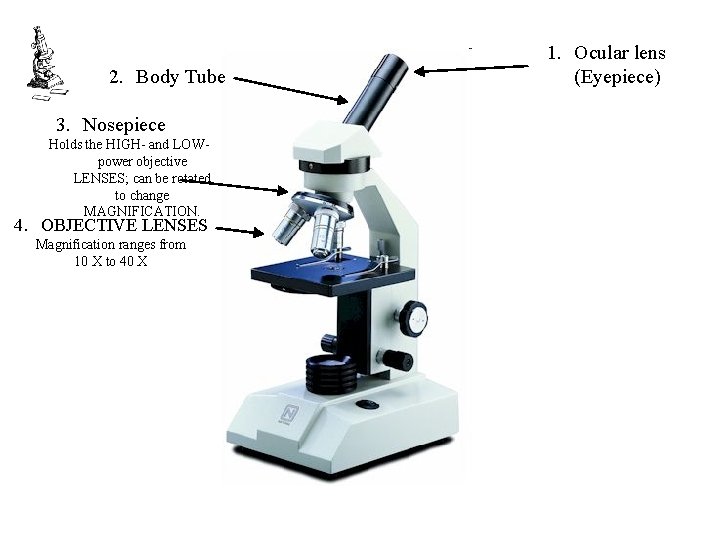
2. Body Tube 3. Nosepiece Holds the HIGH- and LOWpower objective LENSES; can be rotated to change MAGNIFICATION. 4. OBJECTIVE LENSES Magnification ranges from 10 X to 40 X 1. Ocular lens (Eyepiece)
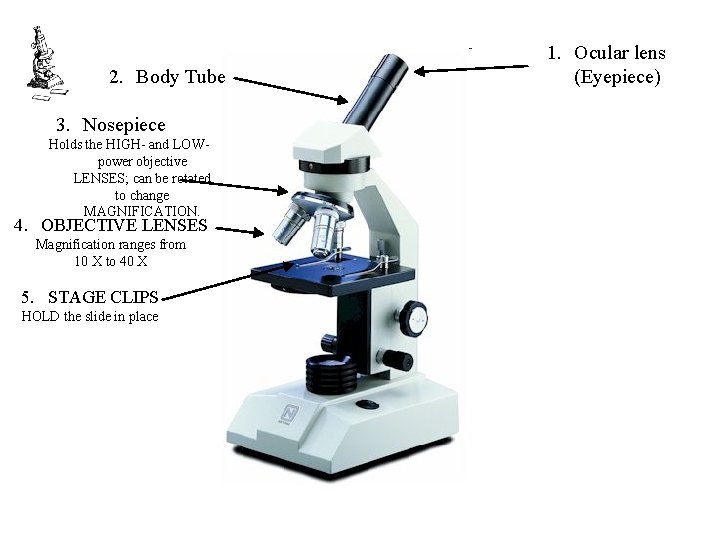
2. Body Tube 3. Nosepiece Holds the HIGH- and LOWpower objective LENSES; can be rotated to change MAGNIFICATION. 4. OBJECTIVE LENSES Magnification ranges from 10 X to 40 X 5. STAGE CLIPS HOLD the slide in place 1. Ocular lens (Eyepiece)
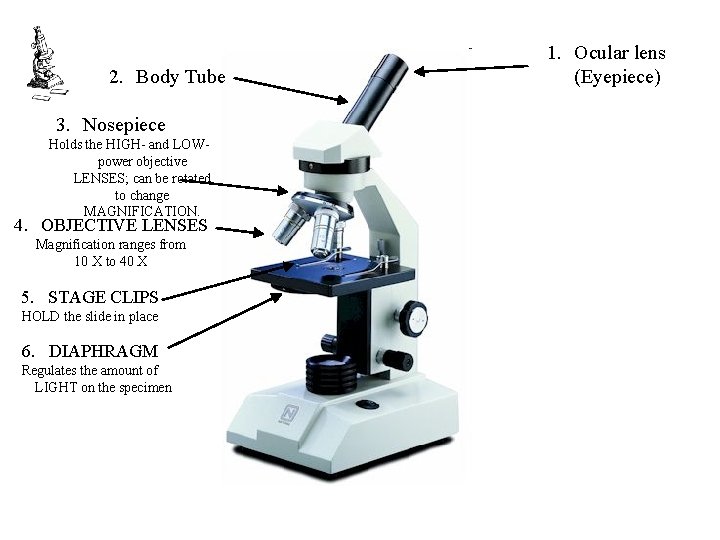
2. Body Tube 3. Nosepiece Holds the HIGH- and LOWpower objective LENSES; can be rotated to change MAGNIFICATION. 4. OBJECTIVE LENSES Magnification ranges from 10 X to 40 X 5. STAGE CLIPS HOLD the slide in place 6. DIAPHRAGM Regulates the amount of LIGHT on the specimen 1. Ocular lens (Eyepiece)
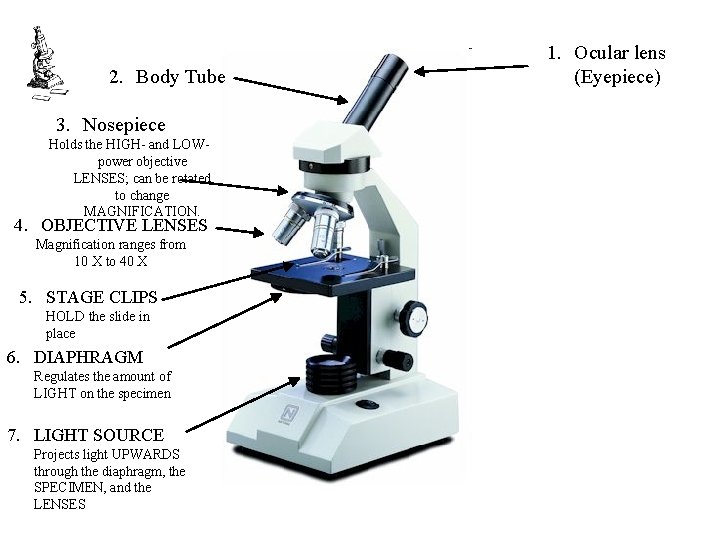
2. Body Tube 3. Nosepiece Holds the HIGH- and LOWpower objective LENSES; can be rotated to change MAGNIFICATION. 4. OBJECTIVE LENSES Magnification ranges from 10 X to 40 X 5. STAGE CLIPS HOLD the slide in place 6. DIAPHRAGM Regulates the amount of LIGHT on the specimen 7. LIGHT SOURCE Projects light UPWARDS through the diaphragm, the SPECIMEN, and the LENSES 1. Ocular lens (Eyepiece)
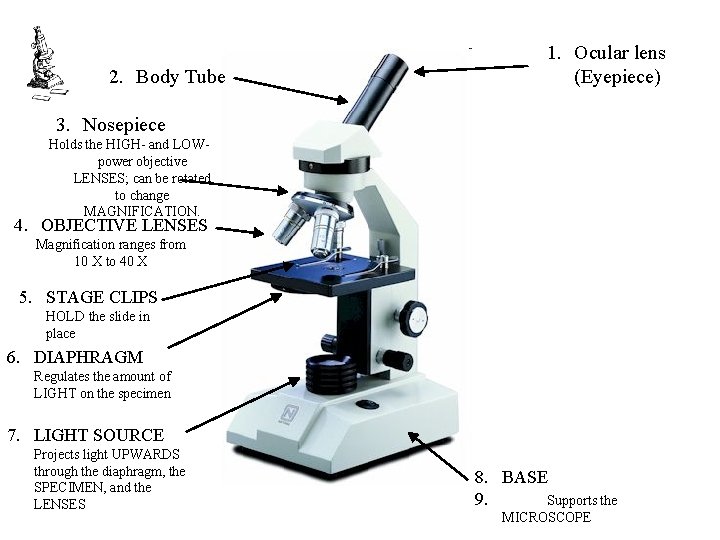
2. Body Tube 1. Ocular lens (Eyepiece) 3. Nosepiece Holds the HIGH- and LOWpower objective LENSES; can be rotated to change MAGNIFICATION. 4. OBJECTIVE LENSES Magnification ranges from 10 X to 40 X 5. STAGE CLIPS HOLD the slide in place 6. DIAPHRAGM Regulates the amount of LIGHT on the specimen 7. LIGHT SOURCE Projects light UPWARDS through the diaphragm, the SPECIMEN, and the LENSES 8. BASE 9. Supports the MICROSCOPE
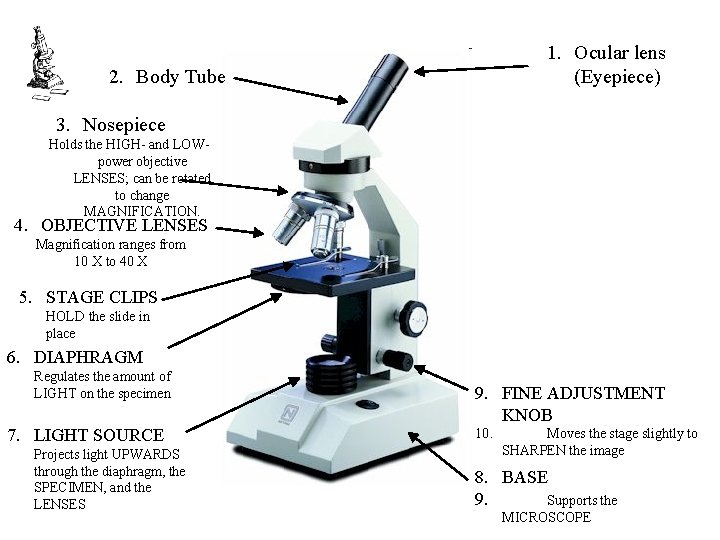
1. Ocular lens (Eyepiece) 2. Body Tube 3. Nosepiece Holds the HIGH- and LOWpower objective LENSES; can be rotated to change MAGNIFICATION. 4. OBJECTIVE LENSES Magnification ranges from 10 X to 40 X 5. STAGE CLIPS HOLD the slide in place 6. DIAPHRAGM Regulates the amount of LIGHT on the specimen 7. LIGHT SOURCE Projects light UPWARDS through the diaphragm, the SPECIMEN, and the LENSES 9. FINE ADJUSTMENT KNOB 10. Moves the stage slightly to SHARPEN the image 8. BASE 9. Supports the MICROSCOPE
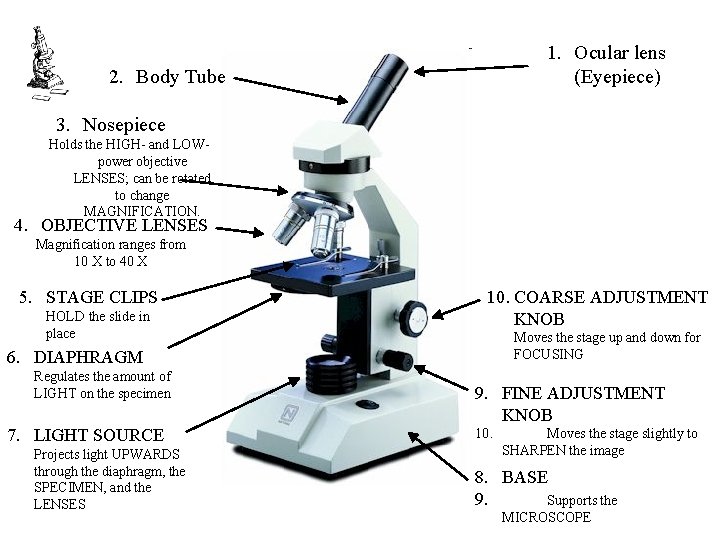
1. Ocular lens (Eyepiece) 2. Body Tube 3. Nosepiece Holds the HIGH- and LOWpower objective LENSES; can be rotated to change MAGNIFICATION. 4. OBJECTIVE LENSES Magnification ranges from 10 X to 40 X 5. STAGE CLIPS HOLD the slide in place 10. COARSE ADJUSTMENT KNOB Moves the stage up and down for FOCUSING 6. DIAPHRAGM Regulates the amount of LIGHT on the specimen 7. LIGHT SOURCE Projects light UPWARDS through the diaphragm, the SPECIMEN, and the LENSES 9. FINE ADJUSTMENT KNOB 10. Moves the stage slightly to SHARPEN the image 8. BASE 9. Supports the MICROSCOPE
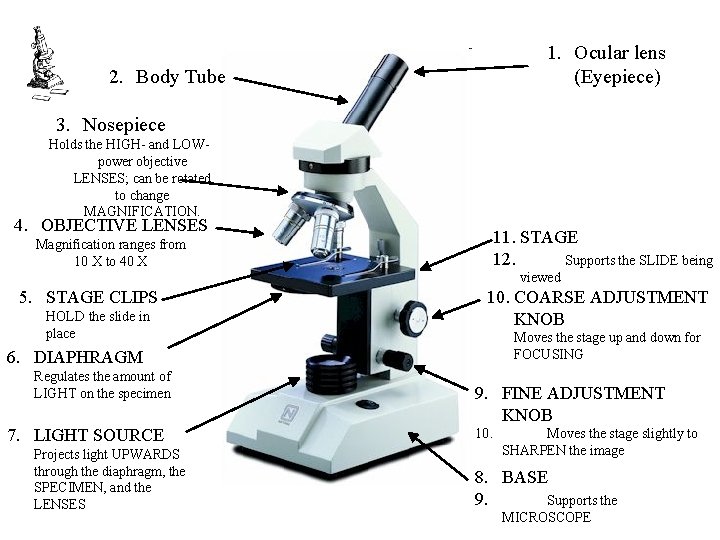
1. Ocular lens (Eyepiece) 2. Body Tube 3. Nosepiece Holds the HIGH- and LOWpower objective LENSES; can be rotated to change MAGNIFICATION. 4. OBJECTIVE LENSES Magnification ranges from 10 X to 40 X 11. STAGE 12. Supports the SLIDE being viewed 5. STAGE CLIPS HOLD the slide in place 10. COARSE ADJUSTMENT KNOB Moves the stage up and down for FOCUSING 6. DIAPHRAGM Regulates the amount of LIGHT on the specimen 7. LIGHT SOURCE Projects light UPWARDS through the diaphragm, the SPECIMEN, and the LENSES 9. FINE ADJUSTMENT KNOB 10. Moves the stage slightly to SHARPEN the image 8. BASE 9. Supports the MICROSCOPE
1. Ocular lens (Eyepiece) 2. Body Tube 3. Nosepiece Holds the HIGH- and LOWpower objective LENSES; can be rotated to change MAGNIFICATION. 4. OBJECTIVE LENSES Magnification ranges from 10 X to 40 X 12. ARM 13. Used to SUPPORT the microscope when carried 11. STAGE 12. Supports the SLIDE being viewed 5. STAGE CLIPS HOLD the slide in place 10. COARSE ADJUSTMENT KNOB Moves the stage up and down for FOCUSING 6. DIAPHRAGM Regulates the amount of LIGHT on the specimen 7. LIGHT SOURCE Projects light UPWARDS through the diaphragm, the SPECIMEN, and the LENSES 9. FINE ADJUSTMENT KNOB 10. Moves the stage slightly to SHARPEN the image 8. BASE 9. Supports the MICROSCOPE
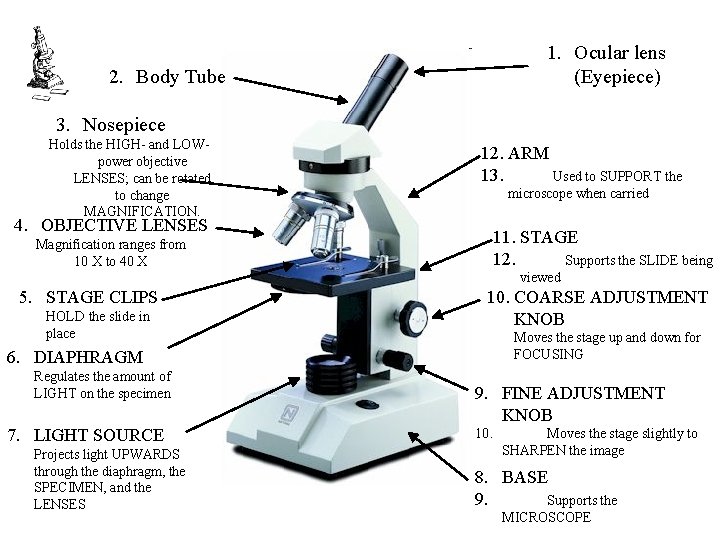
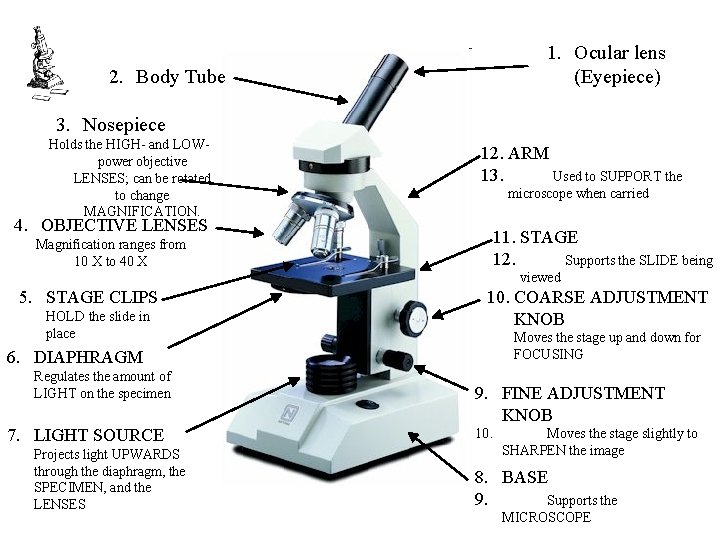
1. Ocular lens (Eyepiece) 2. Body Tube 3. Nosepiece Holds the HIGH- and LOWpower objective LENSES; can be rotated to change MAGNIFICATION. 4. OBJECTIVE LENSES Magnification ranges from 10 X to 40 X 12. ARM 13. Used to SUPPORT the microscope when carried 11. STAGE 12. Supports the SLIDE being viewed 5. STAGE CLIPS HOLD the slide in place 10. COARSE ADJUSTMENT KNOB Moves the stage up and down for FOCUSING 6. DIAPHRAGM Regulates the amount of LIGHT on the specimen 7. LIGHT SOURCE Projects light UPWARDS through the diaphragm, the SPECIMEN, and the LENSES 9. FINE ADJUSTMENT KNOB 10. Moves the stage slightly to SHARPEN the image 8. BASE 9. Supports the MICROSCOPE
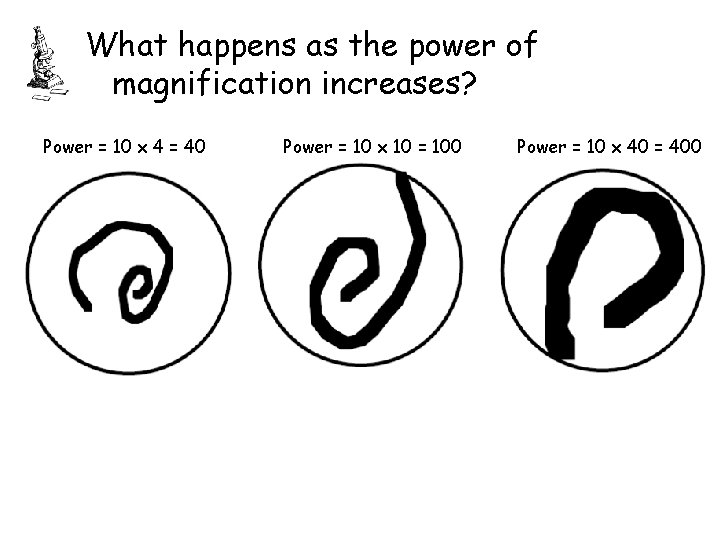
What happens as the power of magnification increases? Power = 10 x 4 = 40 Power = 10 x 10 = 100 Power = 10 x 40 = 400
- Slides: 15