
MICROPLASTICS IN FRESHWATER ENVIRONMENTS IMPLICATIONS ON AQUATIC AND
- Slides: 14
MICROPLASTICS IN FRESHWATER ENVIRONMENTS: IMPLICATIONS ON AQUATIC AND HUMAN HEALTH Dr Eunice Ubomba-Jaswa Research Manager: Water Resources Quality and Management Water Research Commission
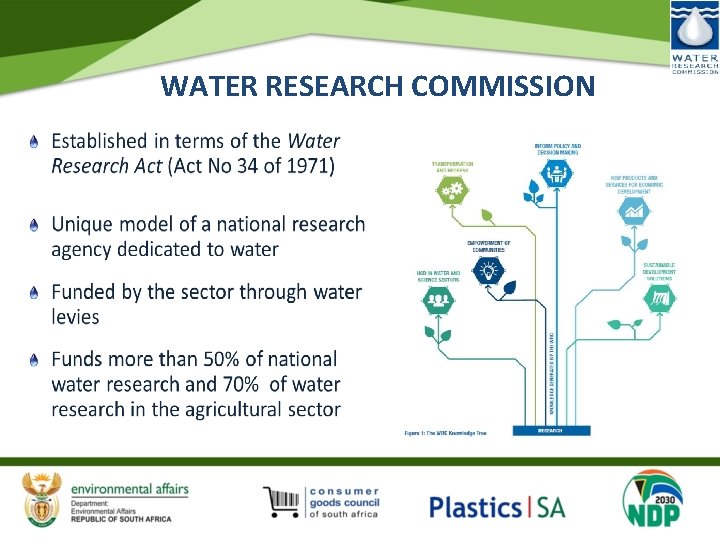
WATER RESEARCH COMMISSION
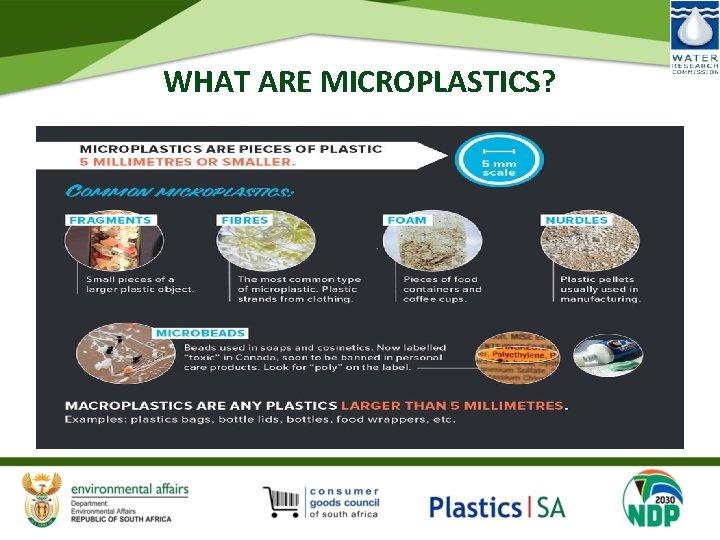
WHAT ARE MICROPLASTICS?
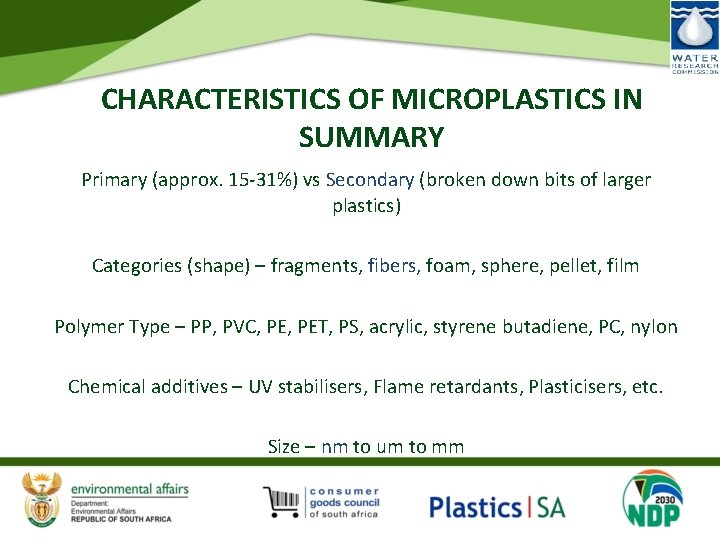
CHARACTERISTICS OF MICROPLASTICS IN SUMMARY Primary (approx. 15‐ 31%) vs Secondary (broken down bits of larger plastics) Categories (shape) – fragments, fibers, foam, sphere, pellet, film Polymer Type – PP, PVC, PET, PS, acrylic, styrene butadiene, PC, nylon Chemical additives – UV stabilisers, Flame retardants, Plasticisers, etc. Size – nm to um to mm
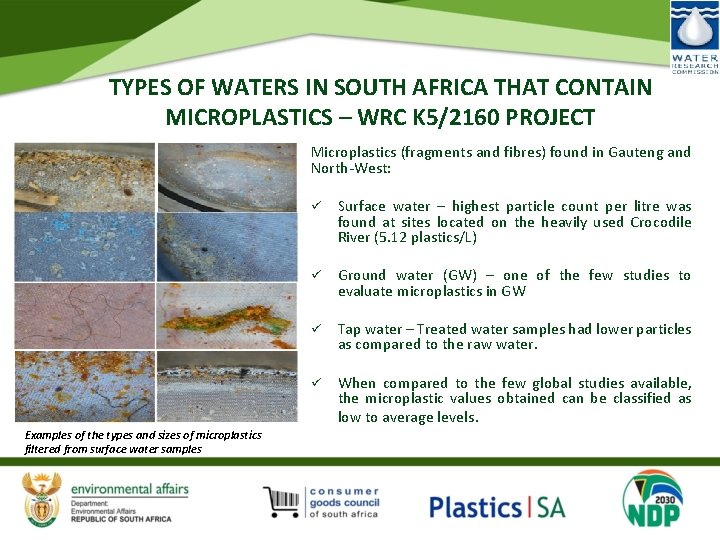
TYPES OF WATERS IN SOUTH AFRICA THAT CONTAIN MICROPLASTICS – WRC K 5/2160 PROJECT Microplastics (fragments and fibres) found in Gauteng and North‐West: Examples of the types and sizes of microplastics filtered from surface water samples ü Surface water – highest particle count per litre was found at sites located on the heavily used Crocodile River (5. 12 plastics/L) ü Ground water (GW) – one of the few studies to evaluate microplastics in GW ü Tap water – Treated water samples had lower particles as compared to the raw water. ü When compared to the few global studies available, the microplastic values obtained can be classified as low to average levels.
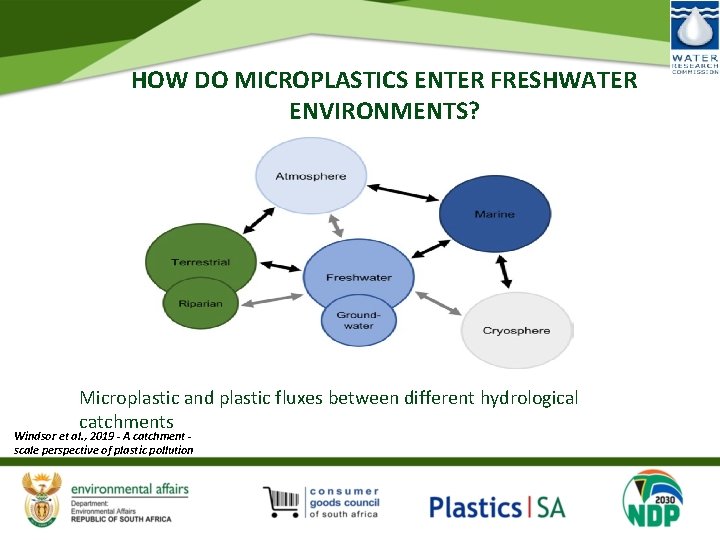
HOW DO MICROPLASTICS ENTER FRESHWATER ENVIRONMENTS? Microplastic and plastic fluxes between different hydrological catchments Windsor et al. , 2019 - A catchment scale perspective of plastic pollution
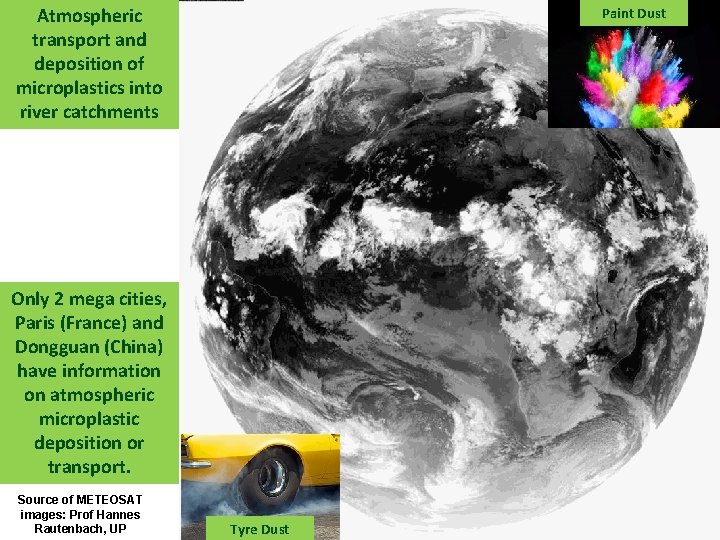
Atmospheric transport and deposition of microplastics into river catchments Paint Dust Only 2 mega cities, Paris (France) and Dongguan (China) have information on atmospheric microplastic deposition or transport. Source of METEOSAT images: Prof Hannes Rautenbach, UP Tyre Dust
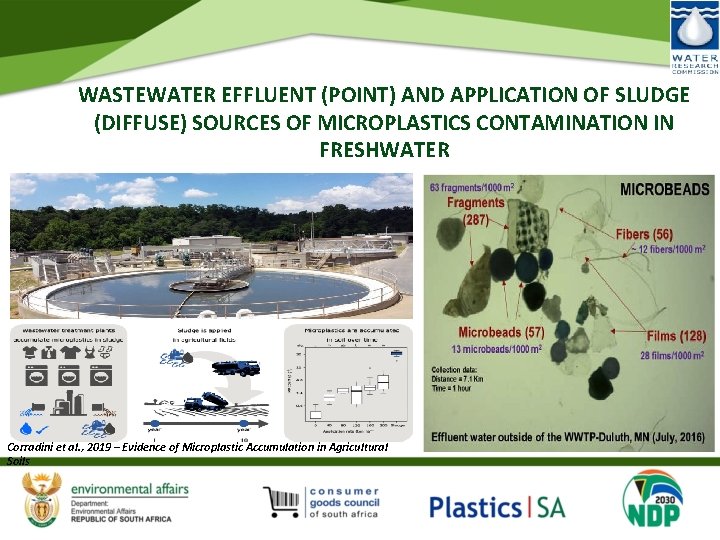
WASTEWATER EFFLUENT (POINT) AND APPLICATION OF SLUDGE (DIFFUSE) SOURCES OF MICROPLASTICS CONTAMINATION IN FRESHWATER Corradini et al. , 2019 – Evidence of Microplastic Accumulation in Agricultural Soils
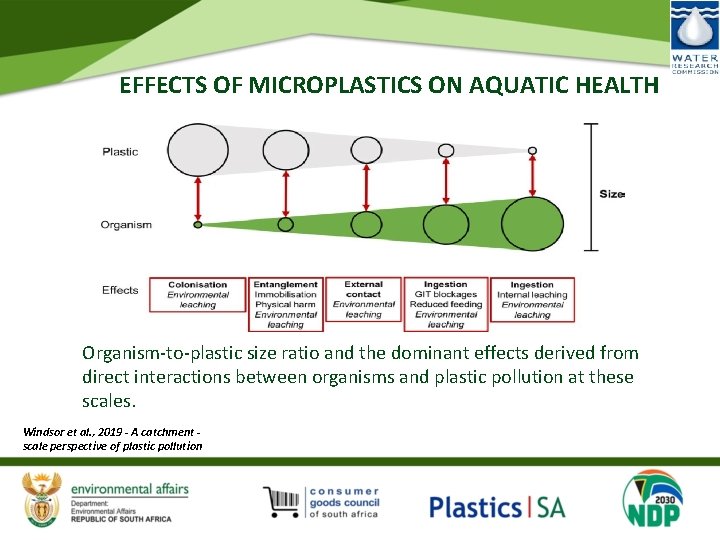
EFFECTS OF MICROPLASTICS ON AQUATIC HEALTH Organism‐to‐plastic size ratio and the dominant effects derived from direct interactions between organisms and plastic pollution at these scales. Windsor et al. , 2019 - A catchment scale perspective of plastic pollution
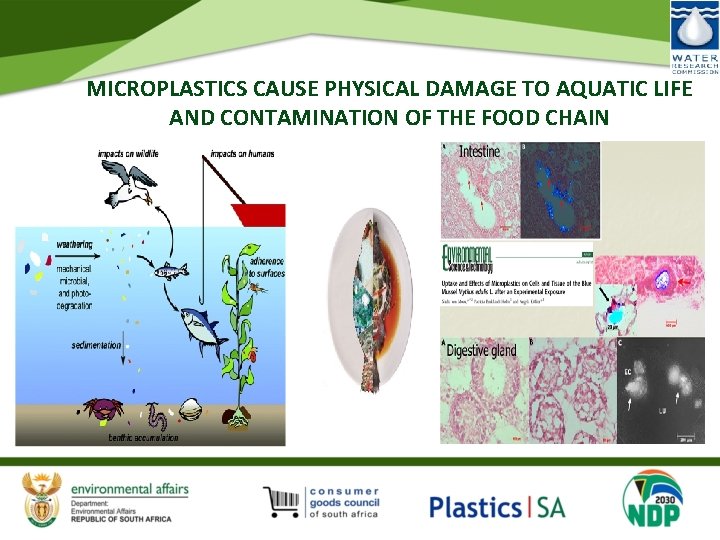
MICROPLASTICS CAUSE PHYSICAL DAMAGE TO AQUATIC LIFE AND CONTAMINATION OF THE FOOD CHAIN
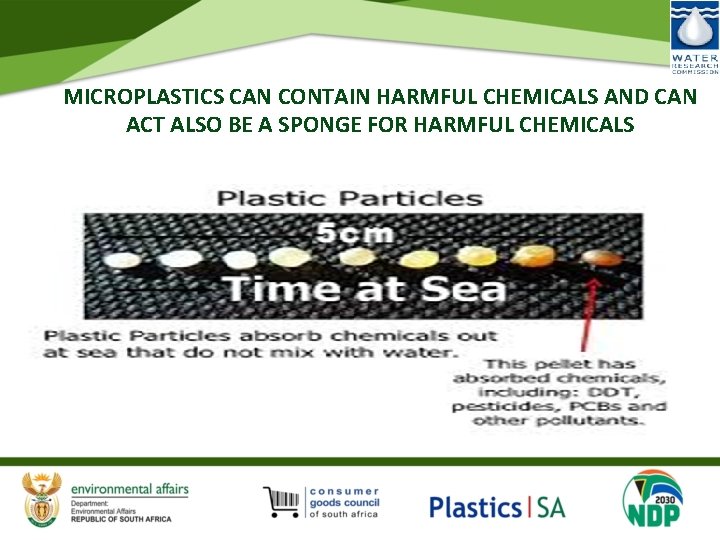
MICROPLASTICS CAN CONTAIN HARMFUL CHEMICALS AND CAN ACT ALSO BE A SPONGE FOR HARMFUL CHEMICALS
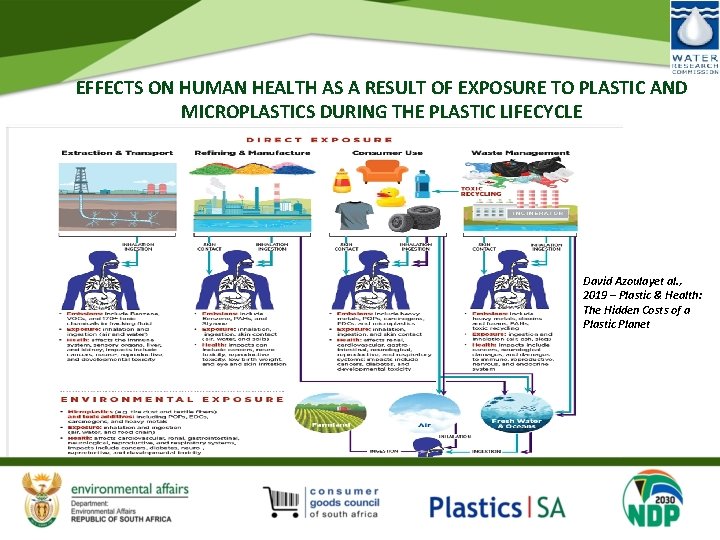
EFFECTS ON HUMAN HEALTH AS A RESULT OF EXPOSURE TO PLASTIC AND MICROPLASTICS DURING THE PLASTIC LIFECYCLE David Azoulayet al. , 2019 – Plastic & Health: The Hidden Costs of a Plastic Planet
THE CHALLENGE FOR PRODUCT DESIGN AND INNOVATION (PDI) • Plastic is an extremely important and valuable material and ideally should be reserved for products that should last for a long time and that we do not want breaking down in our natural environment. • New material engineering and material recycling solutions should take into consideration at the design process possible harmful effects on ecosystem and human health. • Practical solutions that PDI considers should include minimizing microplastic release into the environment during plastic manufacturing and product lifecycle.
WRC reports on microplastics, emerging contaminants and water related research can be accessed and downloaded from the Knowledge Hub – www. wrc. org. za THANK YOU