
Micropiles for Bridge Foundations in Karst Terrain I2059
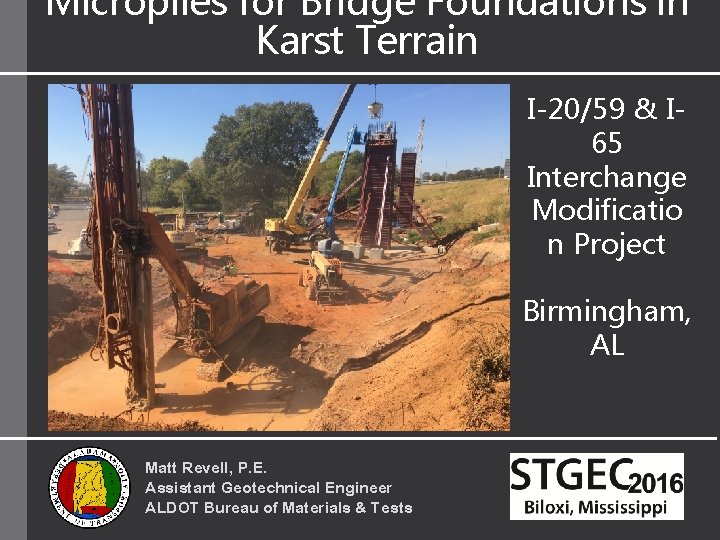
Micropiles for Bridge Foundations in Karst Terrain I-20/59 & I 65 Interchange Modificatio n Project Birmingham, AL Matt Revell, P. E. Assistant Geotechnical Engineer ALDOT Bureau of Materials & Tests
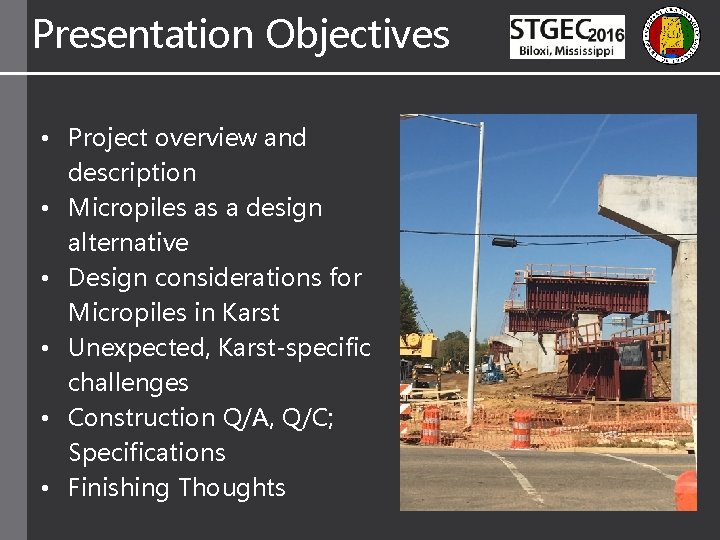
Presentation Objectives • Project overview and description • Micropiles as a design alternative • Design considerations for Micropiles in Karst • Unexpected, Karst-specific challenges • Construction Q/A, Q/C; Specifications • Finishing Thoughts
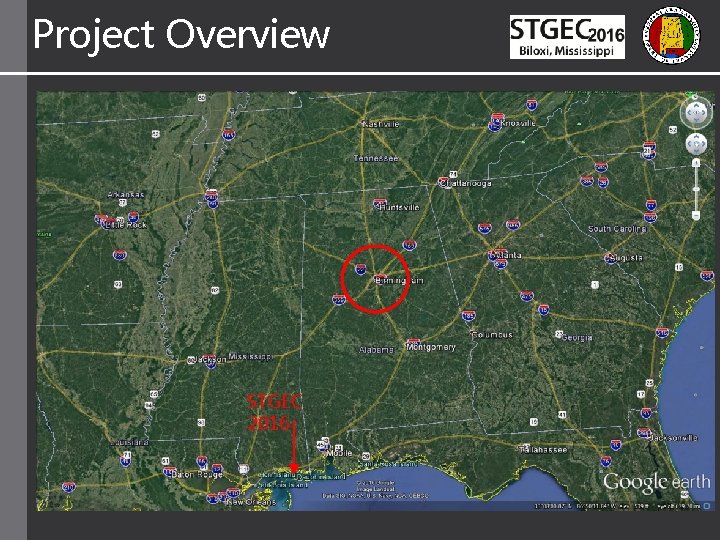
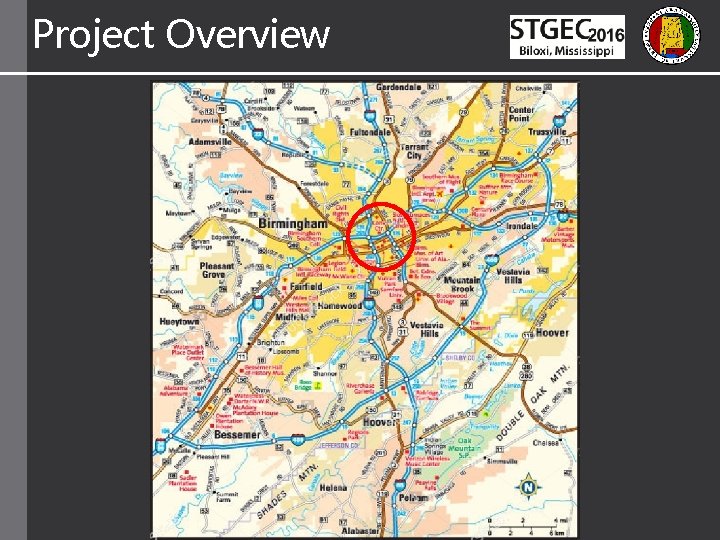
Project Overview STGEC 2016
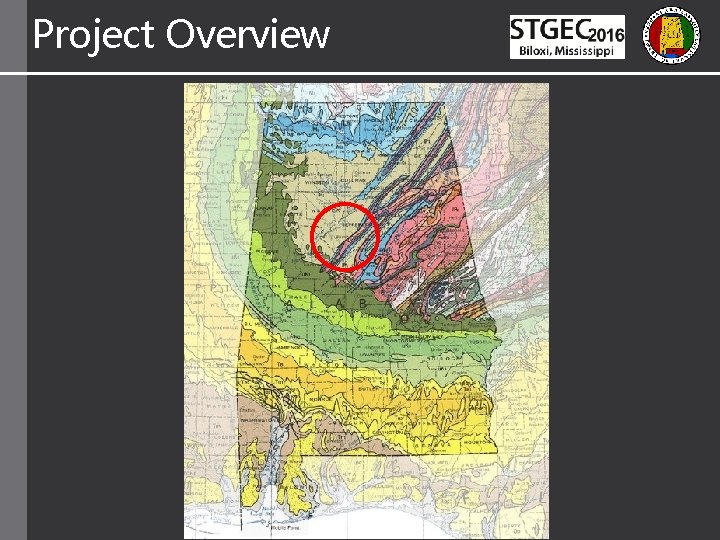
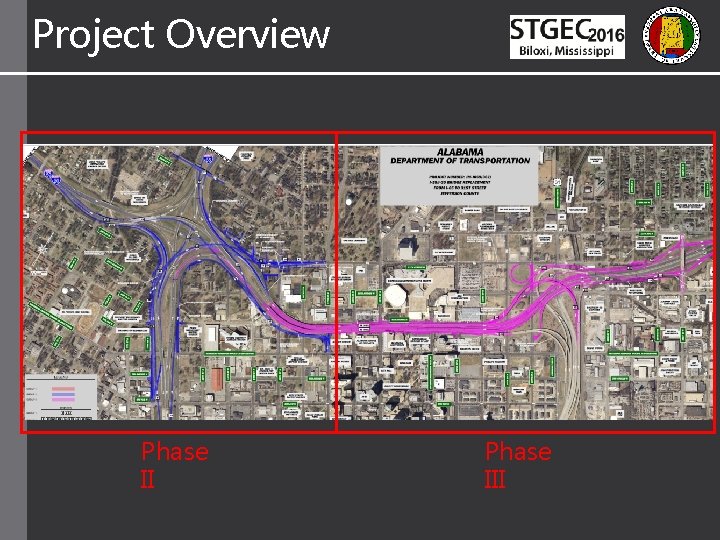
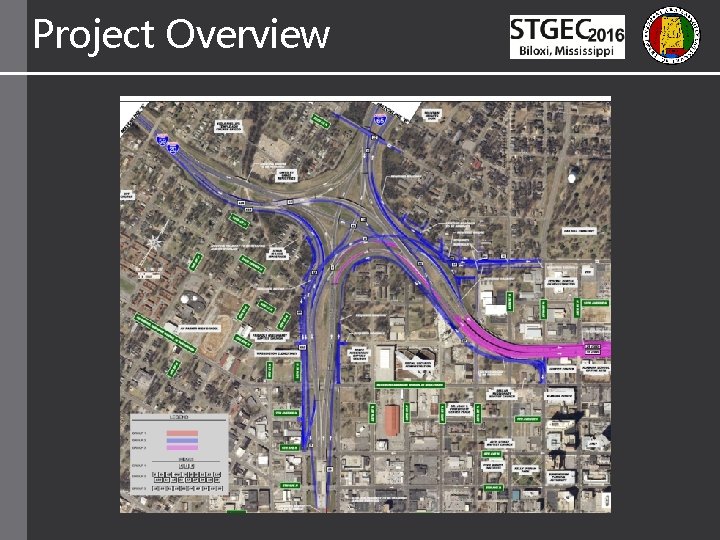
Project Overview
Project Overview
Project Overview Phase III
Project Overview
Project Overview Fun Facts: • Project let January 22, 2016 • Low bidder: Granite Construction Co. , Watsonville, CA $208, 611, 848. 60 • Next lowest bidder: Brasfield & Gorrie, LLC, Birmingham, AL $277, 029, 808. 98 • 21 Bridges (new or widened) • 19, 958. 42’ (3. 8 miles) • 17 Retaining Walls • 146, 704 square feet of wall face (3. 4 acres) • 121, 502 LF of Steel H-piles • 23 miles (Pascagoula or Bay St. Louis) • 697 LF of Drilled Shafts • 40, 845 CY of improved foundation soils through Aggregate Foundations
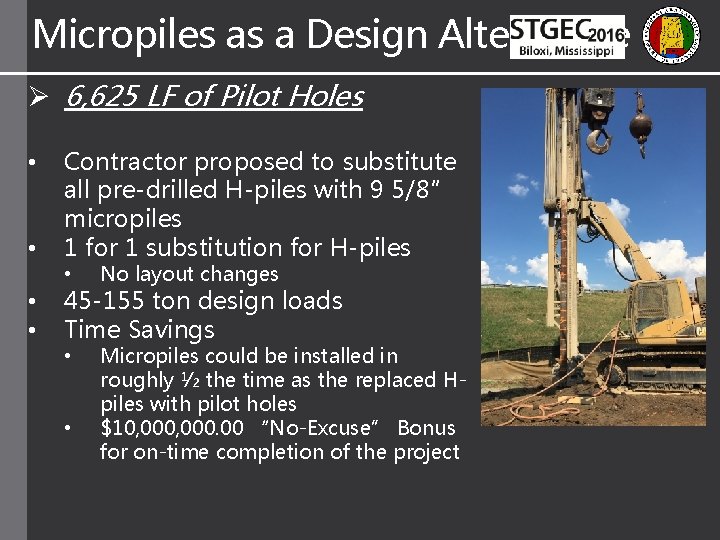
Micropiles as a Design Alternative Ø 6, 625 LF of Pilot Holes • • Contractor proposed to substitute all pre-drilled H-piles with 9 5/8” micropiles 1 for 1 substitution for H-piles • No layout changes • Micropiles could be installed in roughly ½ the time as the replaced Hpiles with pilot holes $10, 000. 00 “No-Excuse” Bonus for on-time completion of the project 45 -155 ton design loads Time Savings •
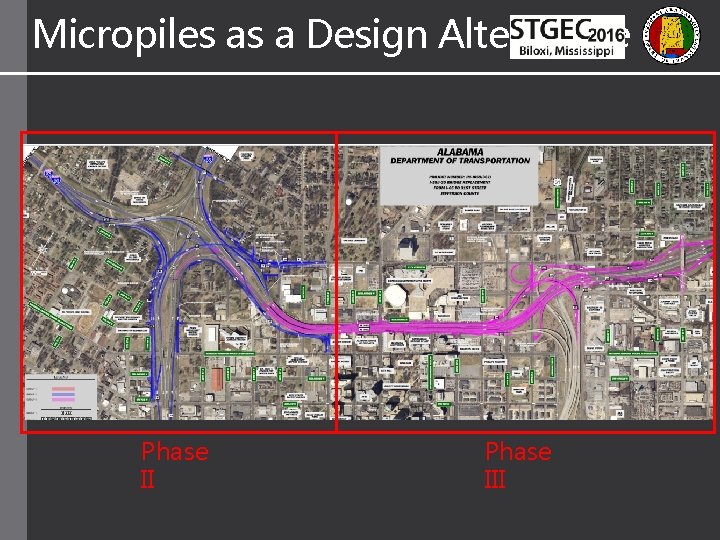
Micropiles as a Design Alternative Phase III
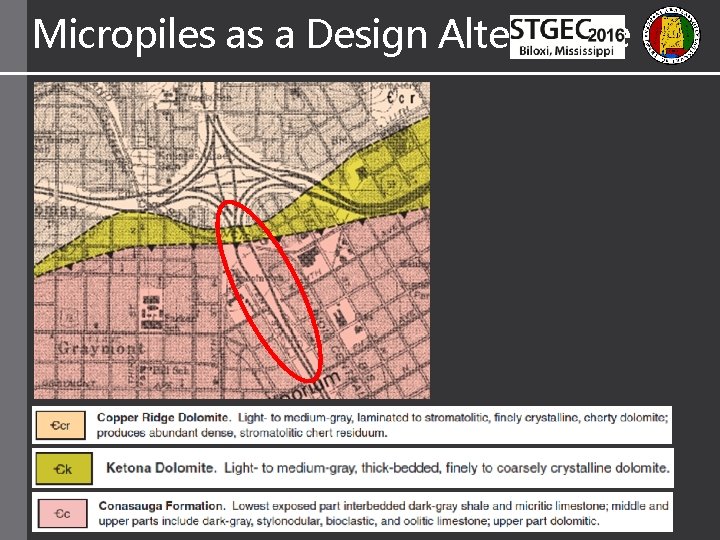
Micropiles as a Design Alternative
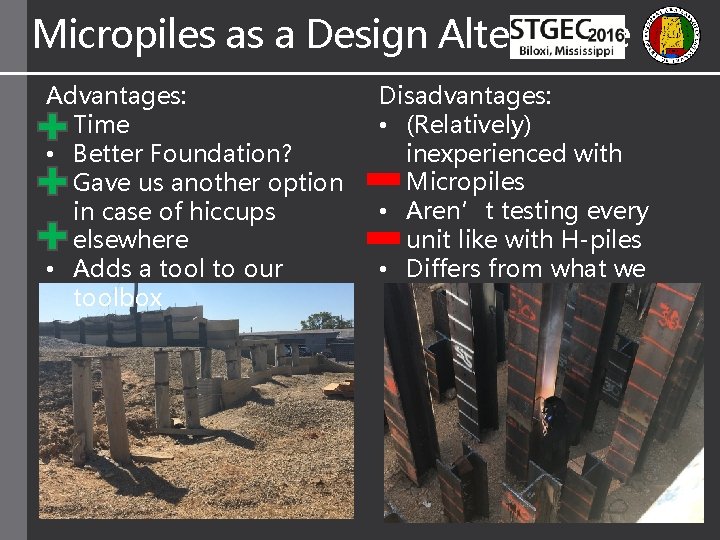
Micropiles as a Design Alternative Advantages: • Time • Better Foundation? • Gave us another option in case of hiccups elsewhere • Adds a tool to our toolbox Disadvantages: • (Relatively) inexperienced with Micropiles • Aren’t testing every unit like with H-piles • Differs from what we know works
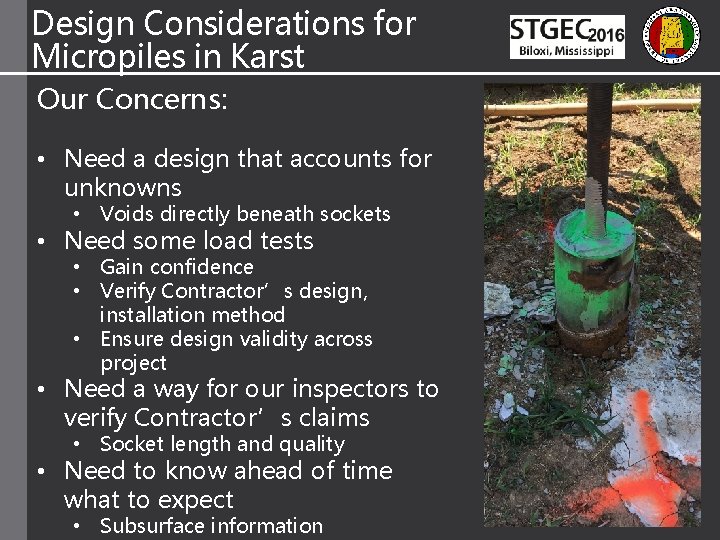
Design Considerations for Micropiles in Karst Our Concerns: • Need a design that accounts for unknowns • Voids directly beneath sockets • Need some load tests • Gain confidence • Verify Contractor’s design, installation method • Ensure design validity across project • Need a way for our inspectors to verify Contractor’s claims • Socket length and quality • Need to know ahead of time what to expect • Subsurface information
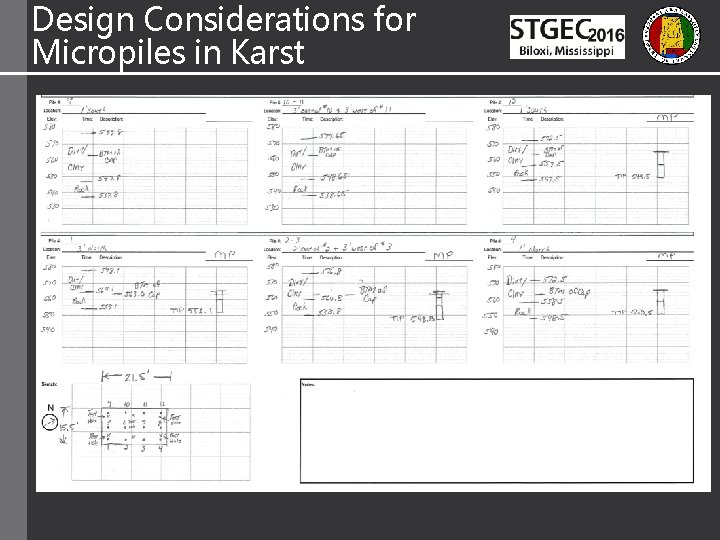
Design Considerations for Micropiles in Karst Our Stipulations: • Verification Load Test • 200% of the design load, in compression • Proof test 5% of production micropiles • 150% of the design load, in tension • Minimum 1 proof test per footing • Side resistance only, no base resistance • Capacity cannot be derived from broken/voided/weathered rock • Capacity must be developed in a continuous, solid rock socket • Must provide a reproducible method of verifying the rock socket • Cannot be based solely on driller’s observations • Contractor must perform additional investigation at each footing they plan to convert to micropiles
Design Considerations for Micropiles in Karst
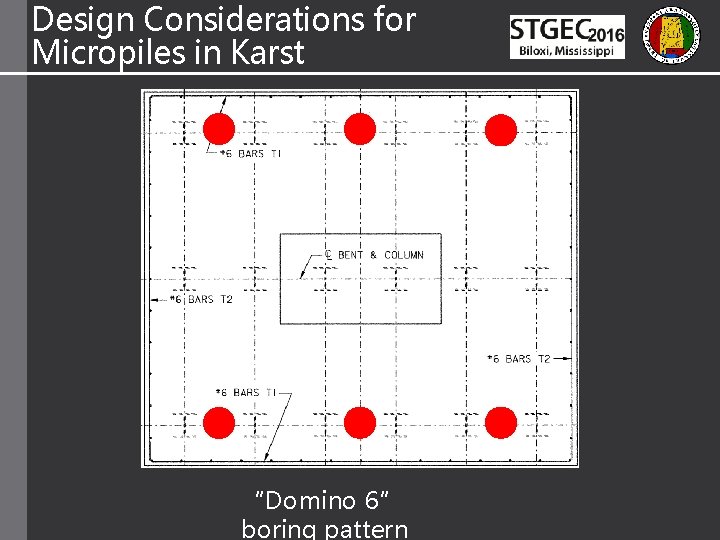
Design Considerations for Micropiles in Karst “Domino 6” boring pattern
Design Considerations for Micropiles in Karst
Unexpected Challenges
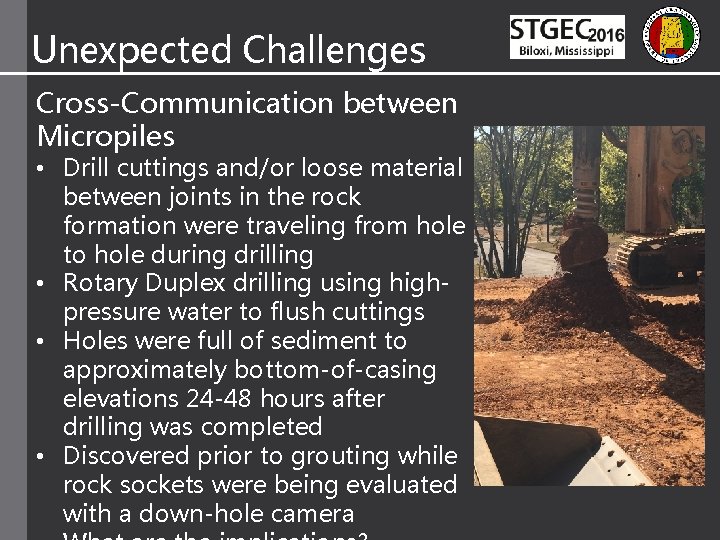
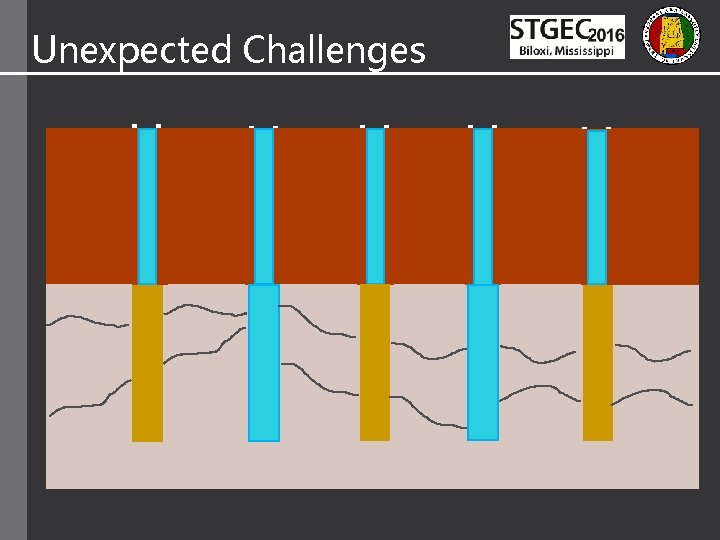
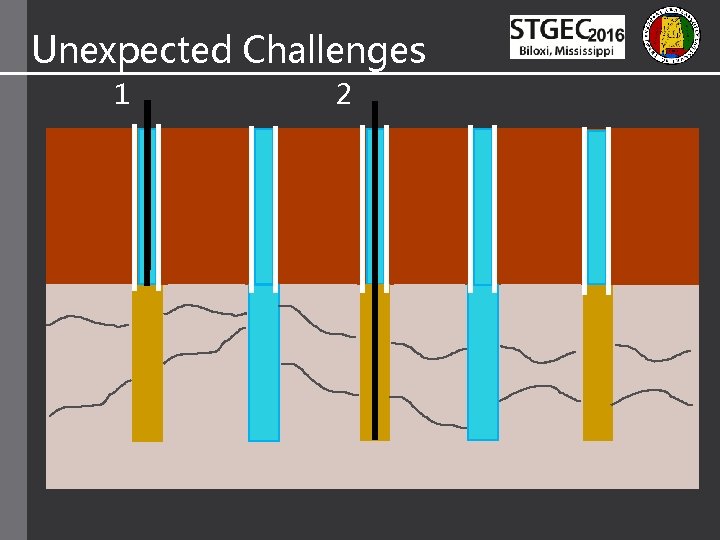
Unexpected Challenges Cross-Communication between Micropiles • Drill cuttings and/or loose material between joints in the rock formation were traveling from hole to hole during drilling • Rotary Duplex drilling using highpressure water to flush cuttings • Holes were full of sediment to approximately bottom-of-casing elevations 24 -48 hours after drilling was completed • Discovered prior to grouting while rock sockets were being evaluated with a down-hole camera
Unexpected Challenges 1
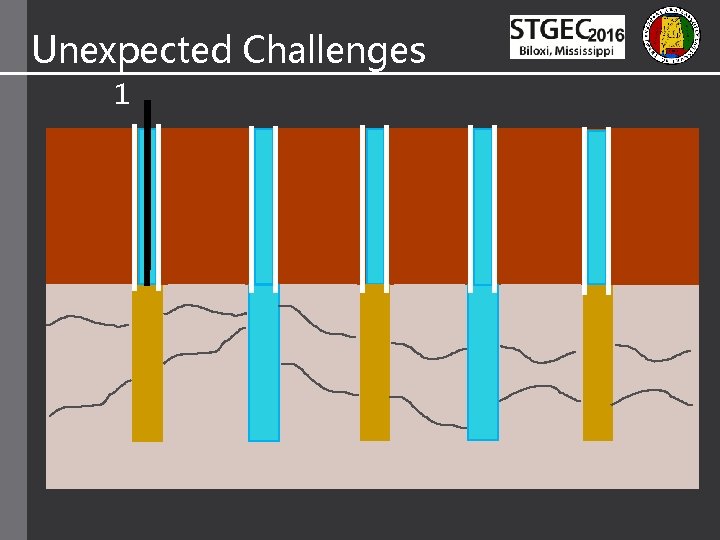
Unexpected Challenges Cross-Communication between Micropiles Problem #1: • Center reinforcing bar is placed after loose material has settled and bar cannot be advanced the full length of the hole • Remove the bar and go back into hole with the drill to remove loose material • But what did that operation do to the adjacent hole?
Unexpected Challenges 1 2
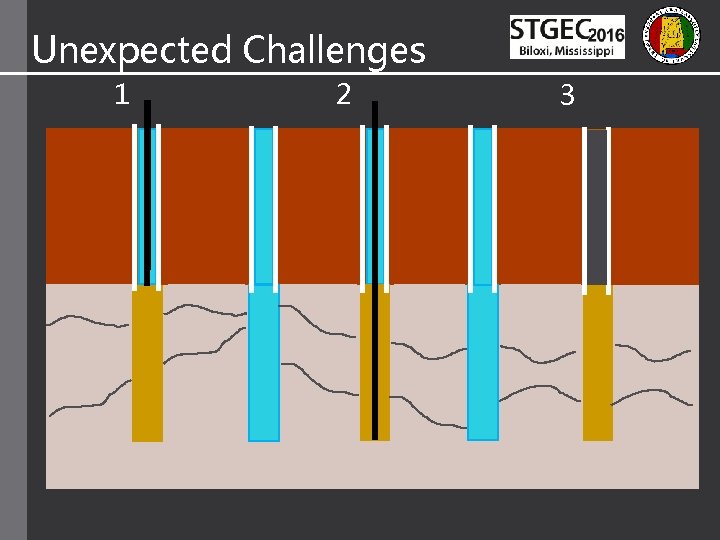
Unexpected Challenges Cross-Communication between Micropiles Problem #2: • Center reinforcing bar is placed before loose material has settled and material settles around the bar and tremie tube • Does the grout push the loose material up and out of the hole? • Does the grout take a preferential, isolated path up and out of the loose material, leaving a contaminated socket? • If you’re monitoring grout takes you would catch the problem, but at that point is it too late?
Unexpected Challenges 1 2 3
Unexpected Challenges Cross-Communication between Micropiles Problem #3: • Center reinforcing bar is not required for structural capacity • Significant mixing of grout and loose material, resulting in a contaminated socket • No grout enters the bond zone at all • Again, would likely be caught before grouting, but still causes headaches
Unexpected Challenges Cross-Communication between Micropiles Solution: • Determined that holes would have to be all cleaned and then all grouted • Could not grout a micropile then move over and clean out an adjacent micropile • Contractor was required to perform a weighted tape measurement on two different occasions for each hole 1. Immediately after drilling 2. Immediately prior to grouting • As long as the two measurements match, the contractor was cleared to grout • If the material is significantly fluid such that the weighted tape could reach the bottom of the hole,
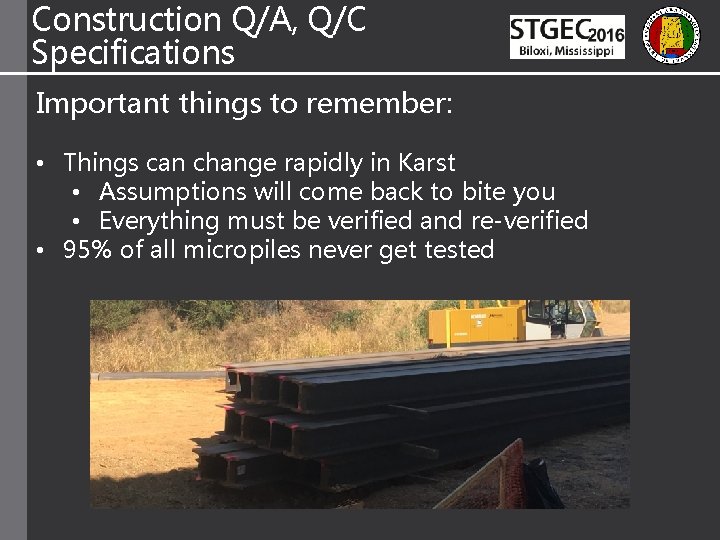
Construction Q/A, Q/C Specifications Important things to remember: • Things can change rapidly in Karst • Assumptions will come back to bite you • Everything must be verified and re-verified • 95% of all micropiles never get tested
Construction Q/A, Q/C Specifications Verification Load Test • Recommend this be done in compression • Contractors won’t like it, but it does a couple of things for us… 1. Verifies the design of the micropile under the same loading conditions as it will feel when bridge loads are applied to it 2. Requires the installation of 3 total micropiles • 1 test pile, 2 reaction micropiles • Contractor’s installation methods can be fully evaluated • Inspectors get more practice
Construction Q/A, Q/C Specifications Proof Load Tests • Performed in tension • Recommend these be performed to a minimum of 150% of the Design Load • Here’s why…
Construction Q/A, Q/C Specifications
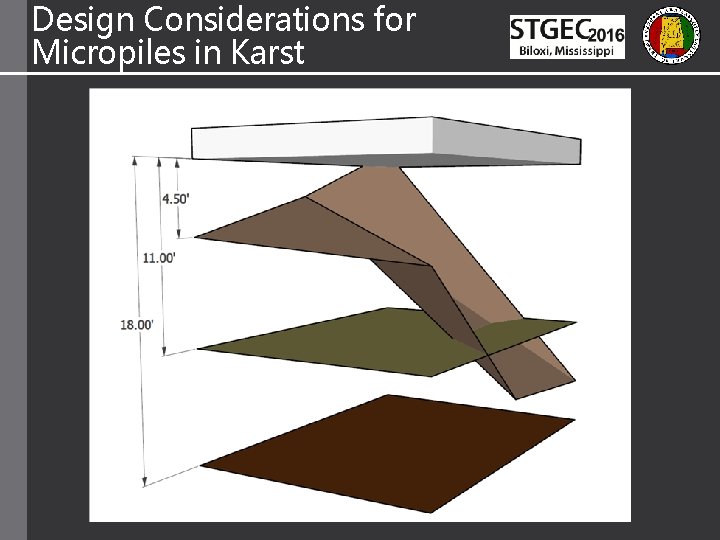
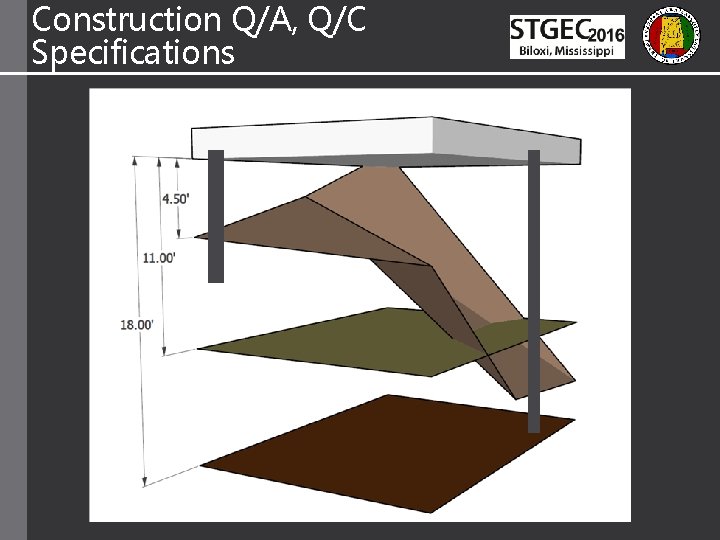
Construction Q/A, Q/C Specifications Proof Load Tests • Performed in tension • Recommend these be performed to a minimum of 150% of the Design Load • Here’s why… • Strain compatibility tells us that the reaction in the short micropile has to be greater than in the long micropile • If the surface of the rock is sloping severely, all micropiles will not carry the same load • Must either: • Have provisions for socket lengths to be adjusted as drilling information is received, or… • Increase your test load threshold to account for varying lengths in micropiles
Construction Q/A, Q/C Specifications “Domino 6” Investigation • One boring per footing will not fully characterize the subsurface in Karst conditions • Contractor and owner mutually agree on “tentative” tip elevations prior to installation • Reduces bias during drilling and installation • Hopefully eliminates the “oops” and “uh oh’s” • Gives all parties involved confidence in what they’re doing • Allows Contractor and inspectors to make correlations between drill performance and material type • Soil, weathered/broken rock, solid rock • Reduces conflict between driller and inspector • Doesn’t have to be fancy • Small diameter air-rotary percussion drill • Single most effective provision for reducing tension between owner and contractor
Construction Q/A, Q/C Specifications Installation Plan • Pretty standard for drilled foundations • Karst changes everything • Testing regimen • Reproducible verification of rock socket length/quality • Independent of driller’s observations • Cross-communication of drilled holes • Should address sequence of drilling, cleaning, and grouting micropiles • In Detail • Additional drilling/investigation to fully characterize rock surface • Make the contractor demonstrate everything in their plan during the verification load testing What is the contractor going to do to ensure the quality
Construction Q/A, Q/C Specifications Other Recommended Provisions • Include provisions that allow you to test micropiles at will • Separate pay item and unique quantity for proof and verification tests • Gives you the freedom to test any micropile that you think is suspect • Minimum 1 proof test per footing • Not simply 5% of production piles • Things change rapidly in Karst • Make sure your provisions allow for modifications to the design as you move through a project
Final Thoughts • Micropiles can be effective in Karst • Requires attention to detail and a little foresight • Remain calm • Be flexible • Early and often communication with contractor pays significant dividends
Thank You Questions? Stephen M. (Matt) Revell, P. E. Assistant Geotechnical Engineer, A Email: revells@dot. state. al. us Ph: 334 -206 -2257
- Slides: 36