
MICROORGANISMS MICROBES 1 BACTERIA smallest living 2 VIRUSES

MICRO-ORGANISMS = MICROBES 1. BACTERIA smallest living 2. VIRUSES non-living 3. PROTOZOA (protists) 4. some FUNGI big one-celled unicelled or multi 5. some PARASITES HARMFUL: PATHOGENS/CONTAGIONS
To best understand parasites, we should first ask THIS question….
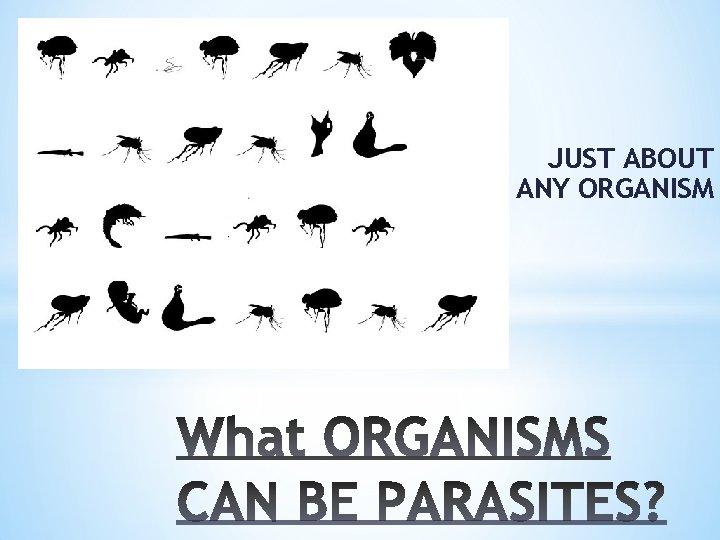
JUST ABOUT ANY ORGANISM
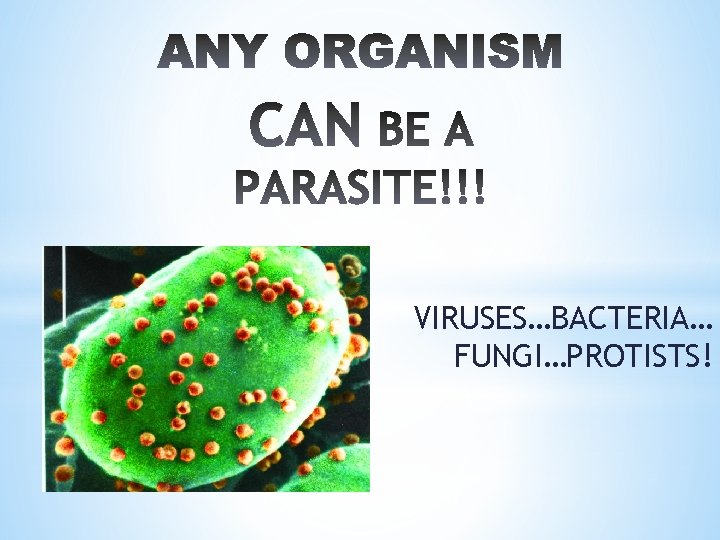
VIRUSES…BACTERIA… FUNGI…PROTISTS!
All our MICRO-ORGANISMS (MICROBES) can be PARASITES…. and EVEN BIGGER ORGANISMS 1. BACTERIA smallest living 2. VIRUSES non-living 3. PROTOZOA (protists) 4. some FUNGI big one-celled unicelled or multi 5. some PARASITES HARMFUL: PATHOGENS/CONTAGIONS
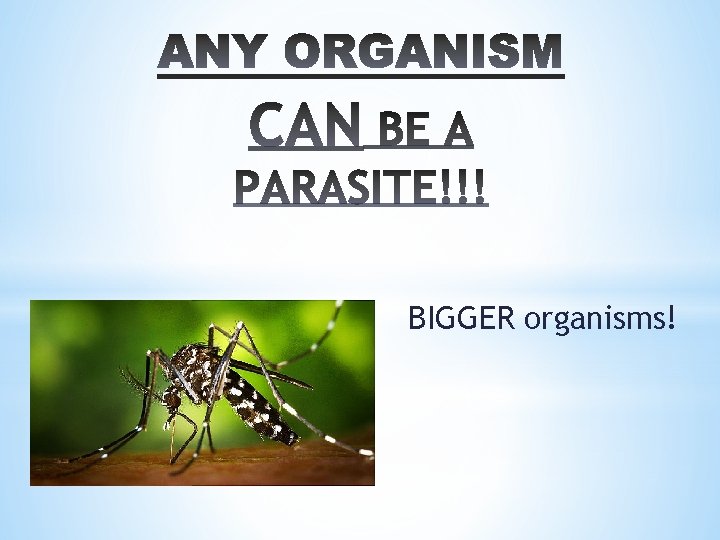
BIGGER organisms!
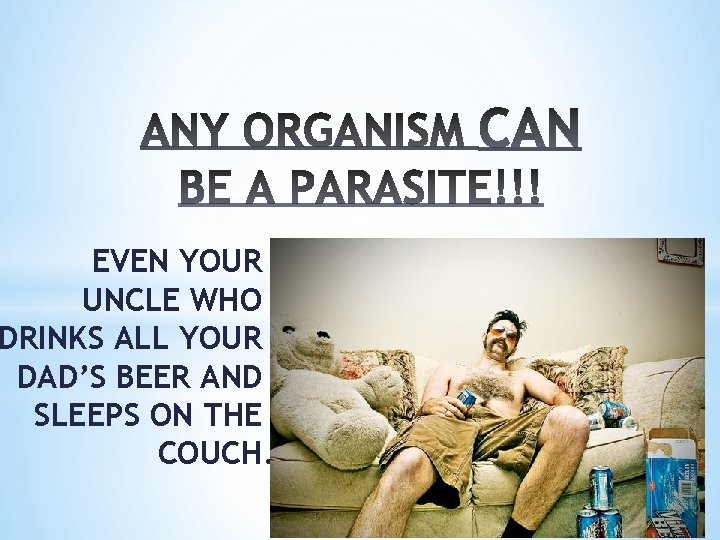
EVEN YOUR UNCLE WHO DRINKS ALL YOUR DAD’S BEER AND SLEEPS ON THE COUCH.
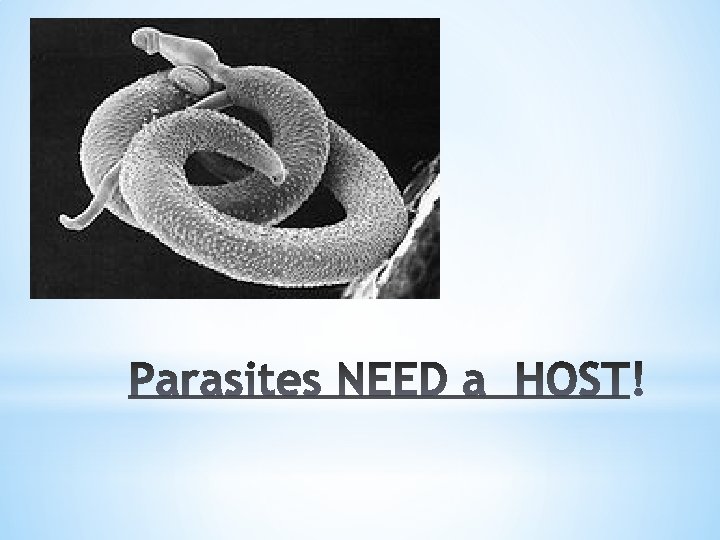
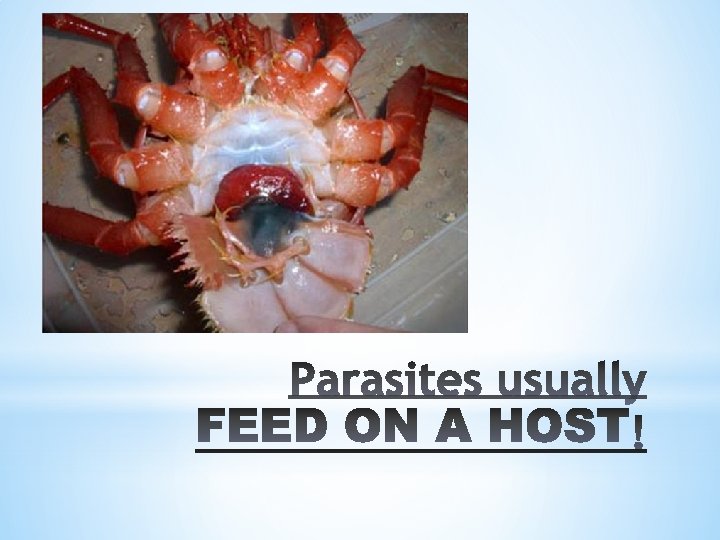
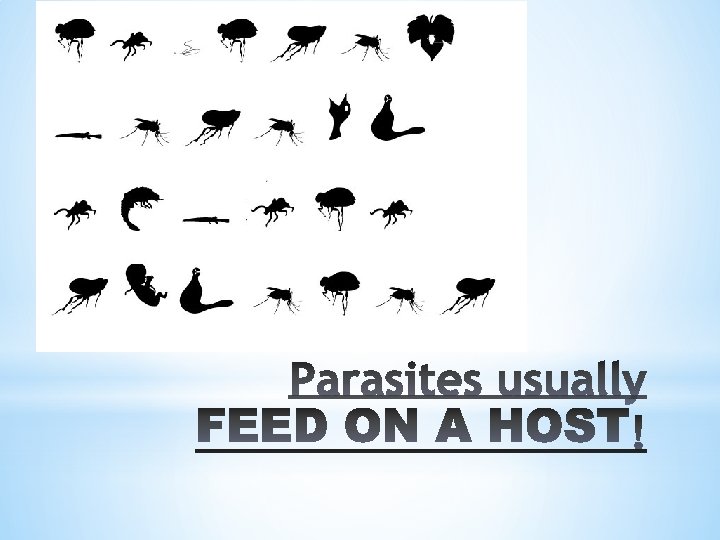
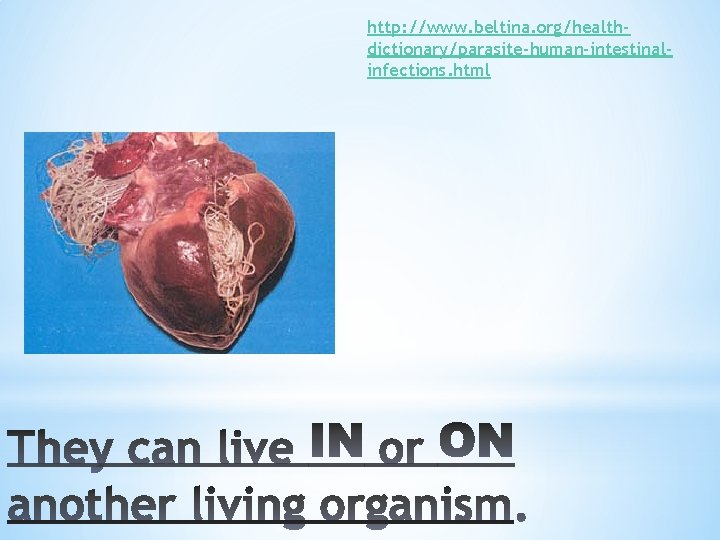
http: //www. beltina. org/healthdictionary/parasite-human-intestinalinfections. html
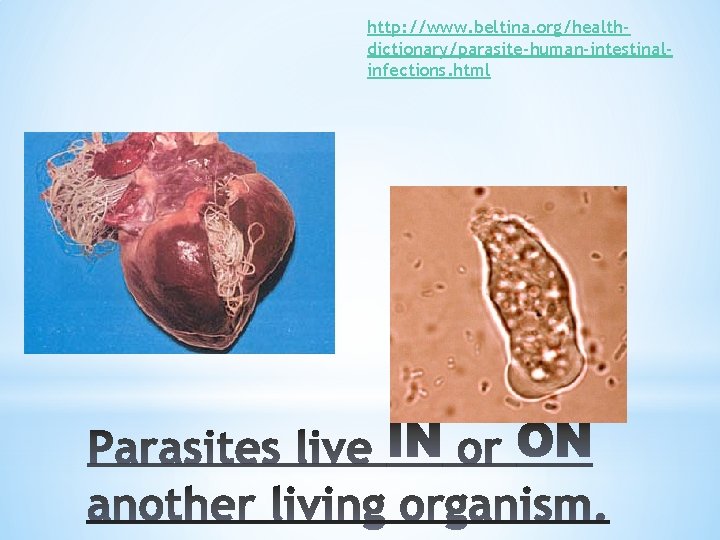
http: //www. beltina. org/healthdictionary/parasite-human-intestinalinfections. html
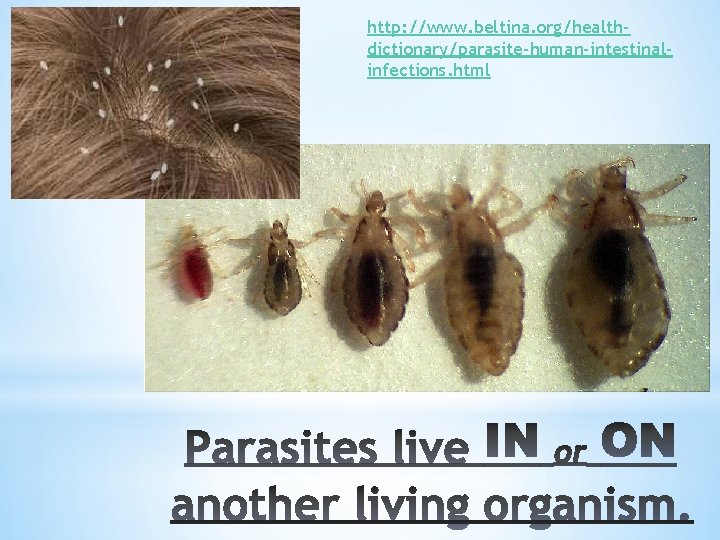
http: //www. beltina. org/healthdictionary/parasite-human-intestinalinfections. html
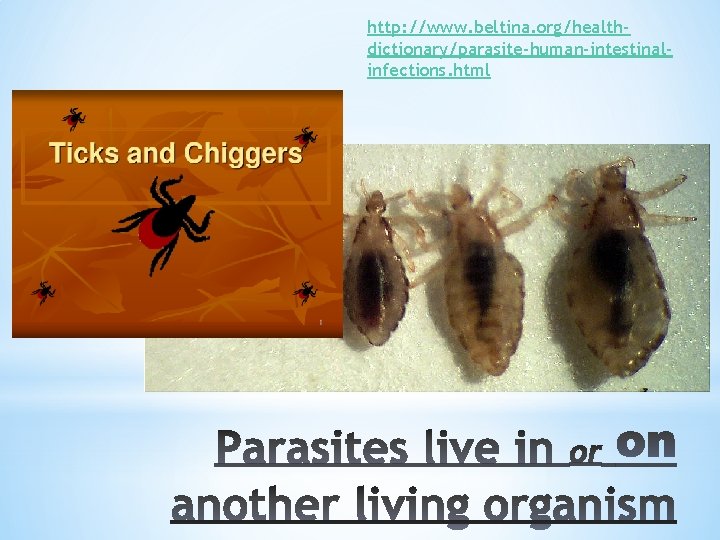
http: //www. beltina. org/healthdictionary/parasite-human-intestinalinfections. html
*PASS AROUND LAMINATES
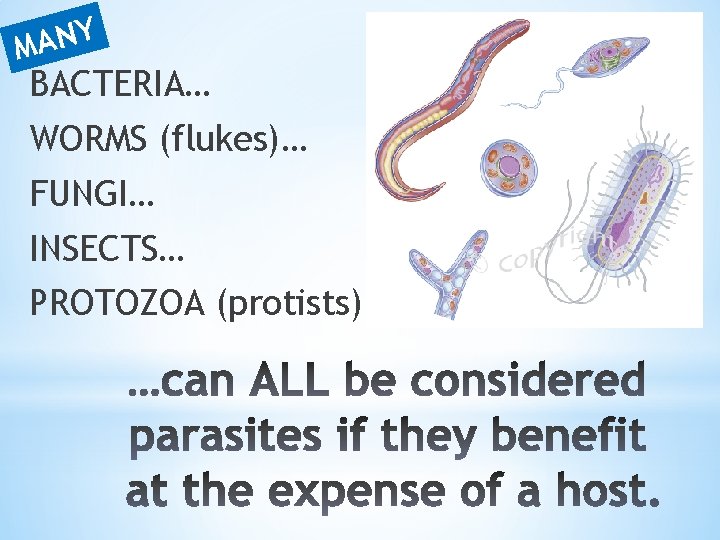
Y N A M BACTERIA… WORMS (flukes)… FUNGI… INSECTS… PROTOZOA (protists)
* https: //www. britannica. com/list/5 -awesomeparasitic-plants striga
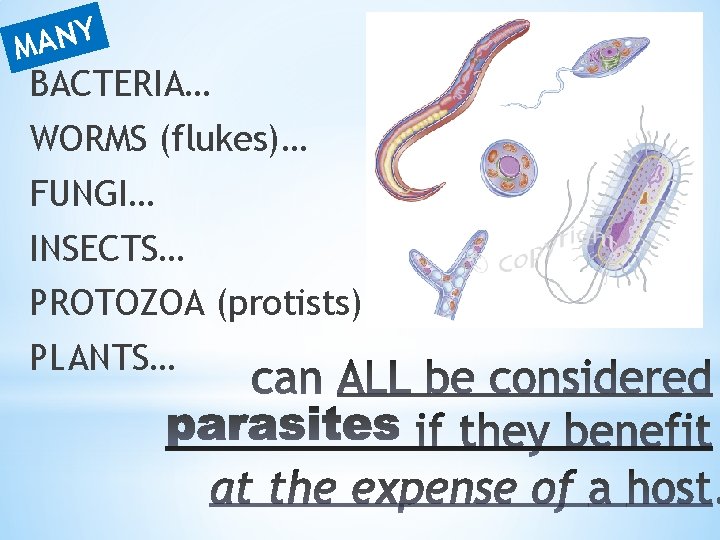
Y N A M BACTERIA… WORMS (flukes)… FUNGI… INSECTS… PROTOZOA (protists) PLANTS…
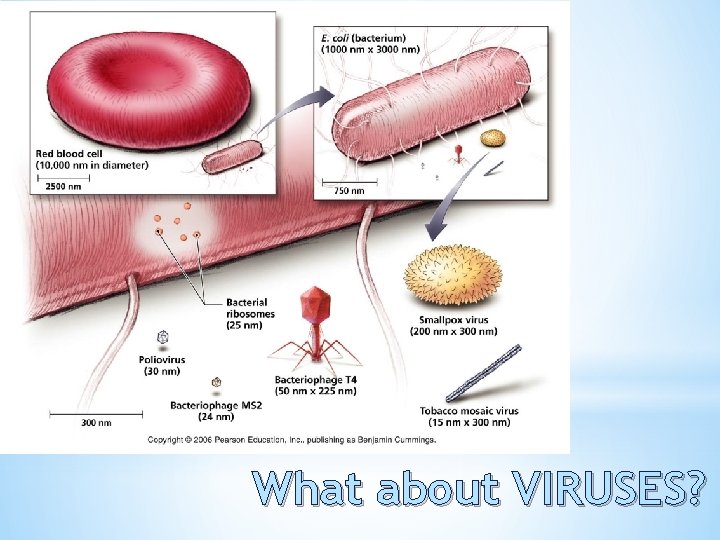
What about VIRUSES?
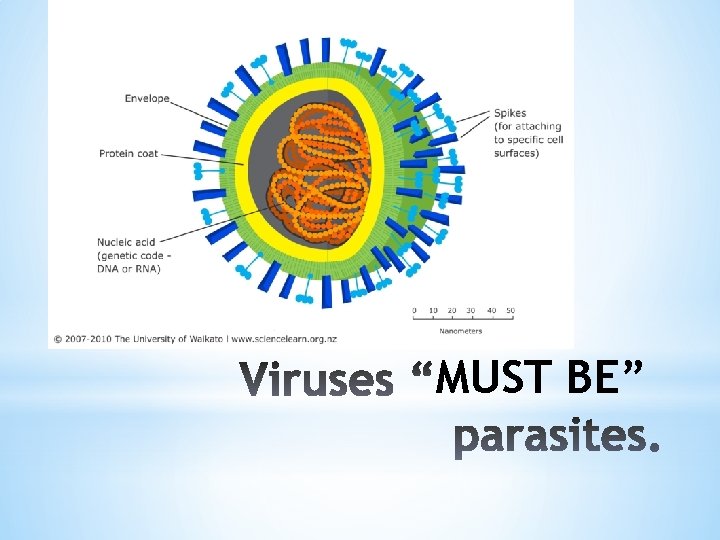
MUST BE”

OBLIGATE P ARASITES!
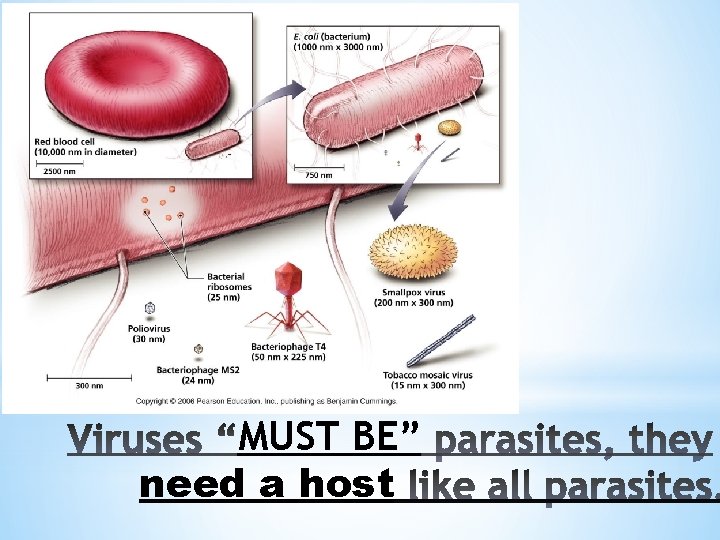
MUST BE” need a host
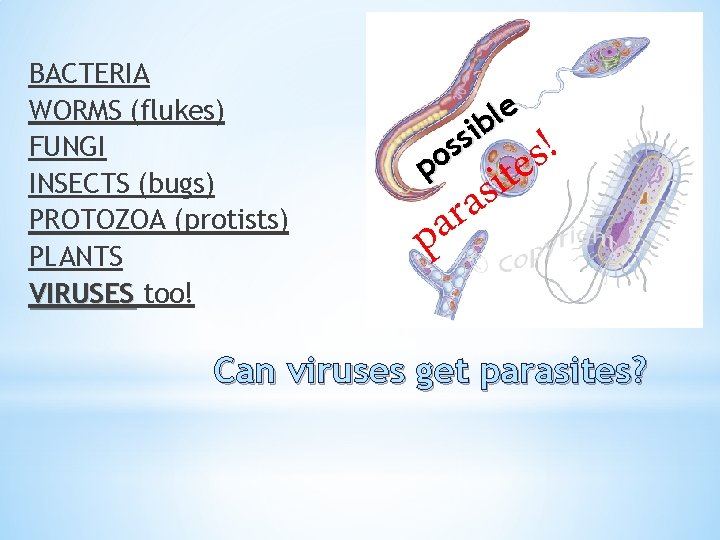
BACTERIA WORMS (flukes) FUNGI INSECTS (bugs) PROTOZOA (protists) PLANTS VIRUSES too! e l ib s s o p p ! s ti e s a ar Can viruses get parasites?
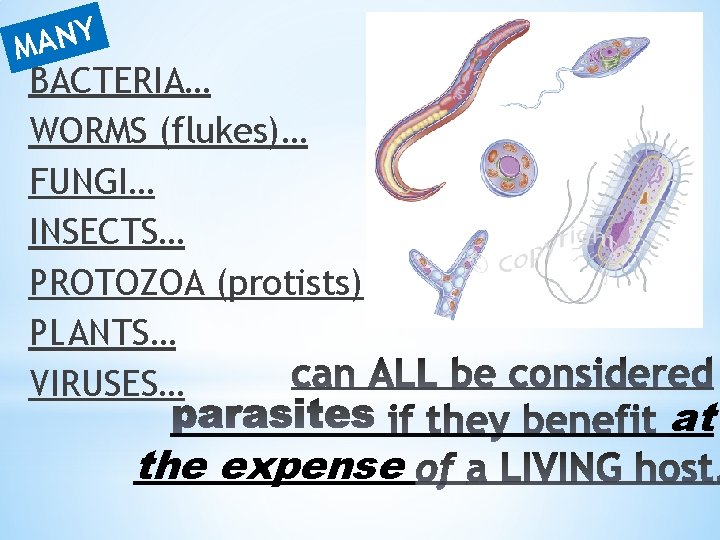
Y N A M BACTERIA… WORMS (flukes)… FUNGI… INSECTS… PROTOZOA (protists) PLANTS… VIRUSES… the expense at
WHY CAN’T VIRUSES HAVE PARASITES? ? ?
noth ing’s ! E V than smal I L l A t er h e T m ’ than o N ther I A m olecu y s e u ch. les & th WHY CAN’T VIRUSES HAVE PARASITES? ? ? HOW CAN VIRUSES BE A HOST IF THEY CAN’T DO ANYTHING ALONE?

PLEASE NOTE THE DIFFERENCE….

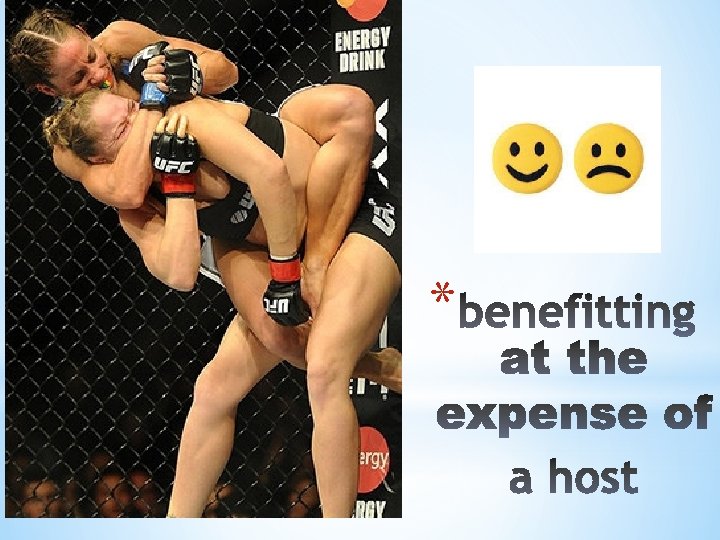
If parasites benefit AT THE EXPENSE of a living host, do you think they want to kill the host?
The “smart” ones don’t.
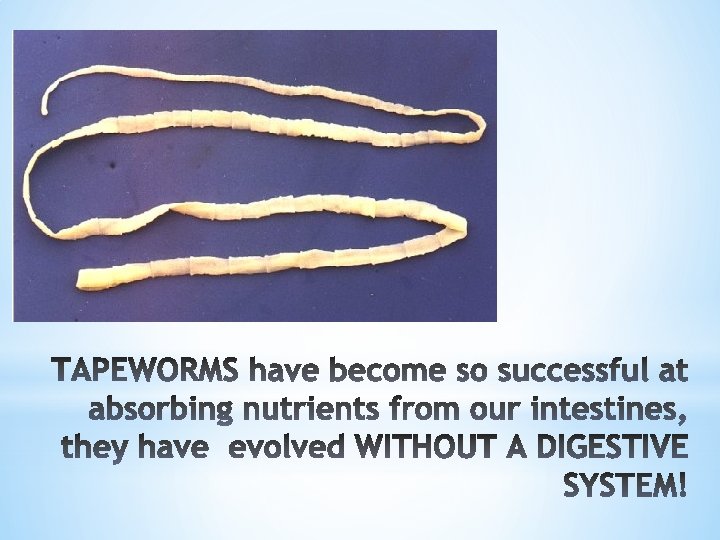
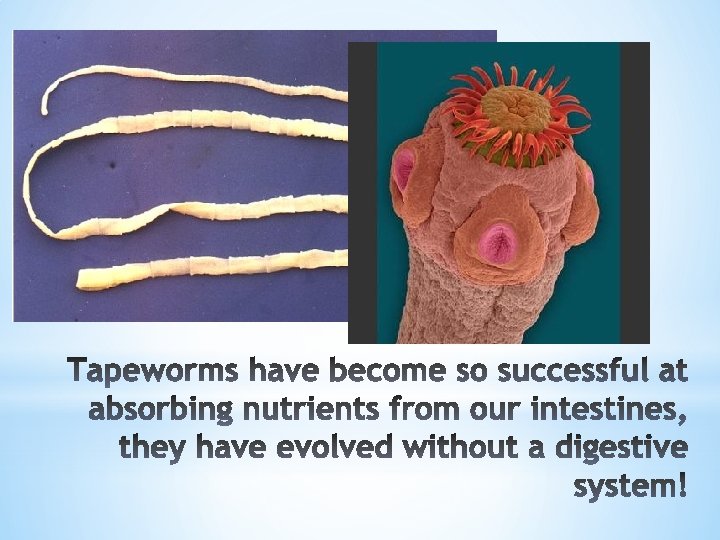
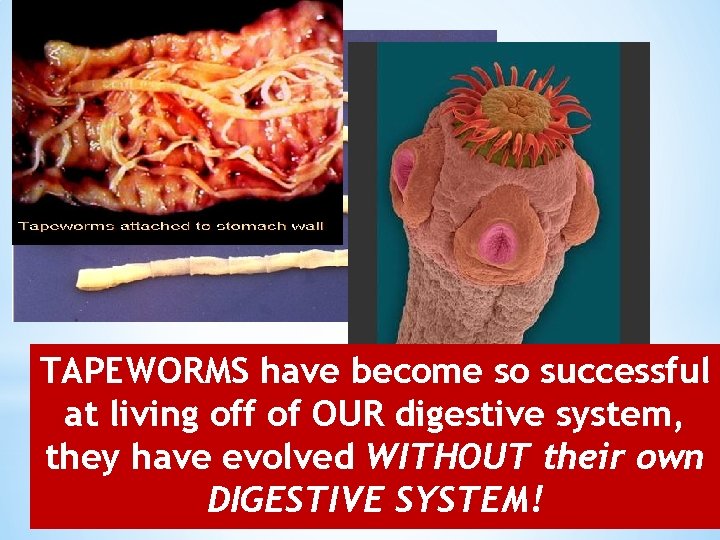
TAPEWORMS have become so successful at living off of OUR digestive system, they have evolved WITHOUT their own DIGESTIVE SYSTEM!
1. SOME become TOO SPECIALIZED to live outside the host.
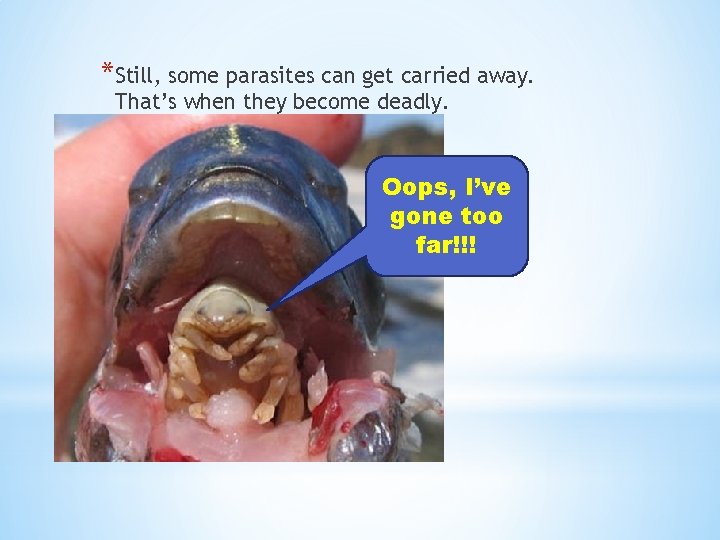
*Still, some parasites can get carried away. That’s when they become deadly. Oops, I’ve gone too far!!!
SOME are P_____! DISEASECAUSING
SOME are PATHOGENIC! DISEASECAUSING
They all mean the same thing!
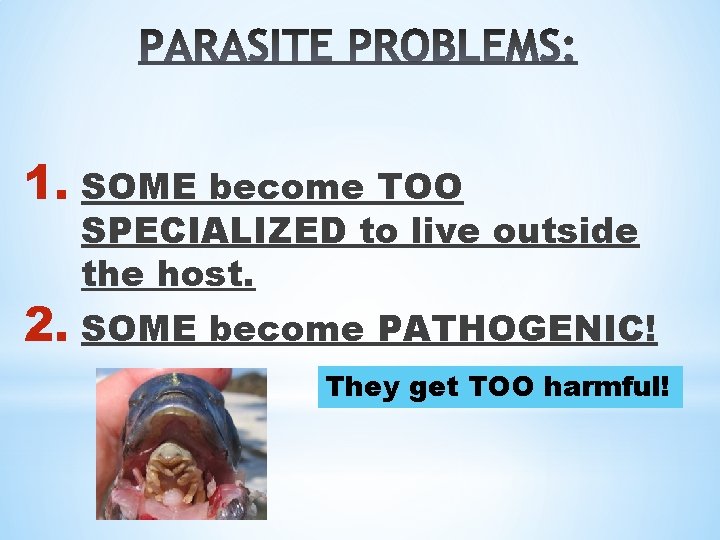
1. SOME become TOO SPECIALIZED to live outside the host. 2. SOME become PATHOGENIC! They get TOO harmful!
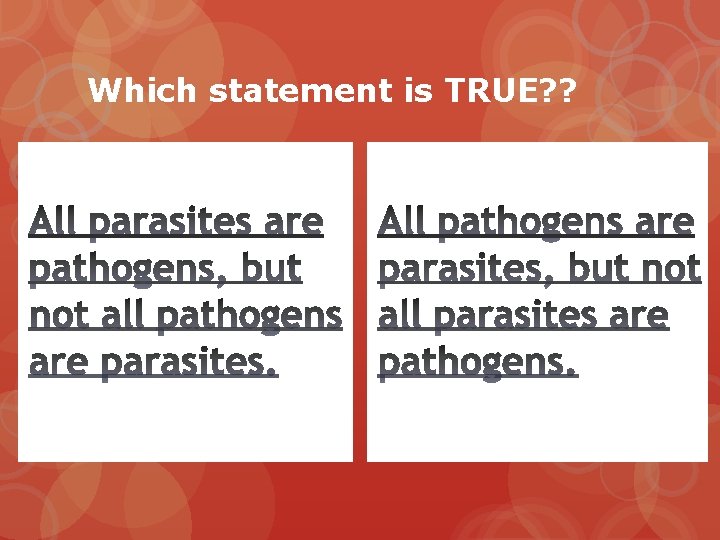
Which statement is TRUE? ?
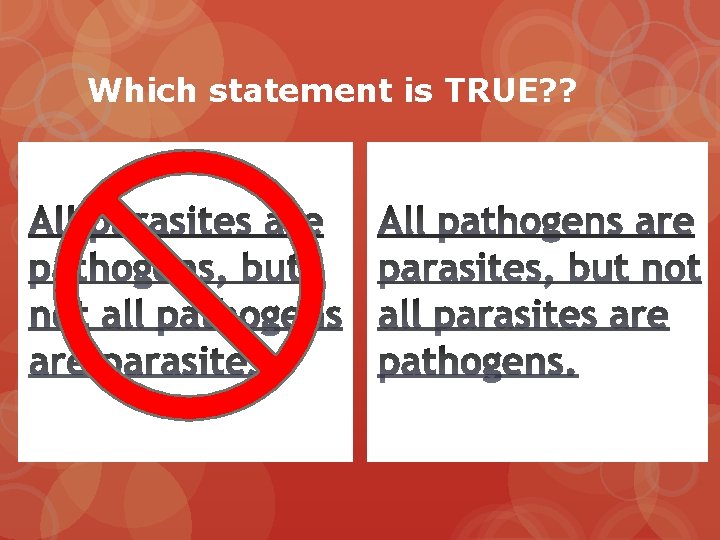
Which statement is TRUE? ?
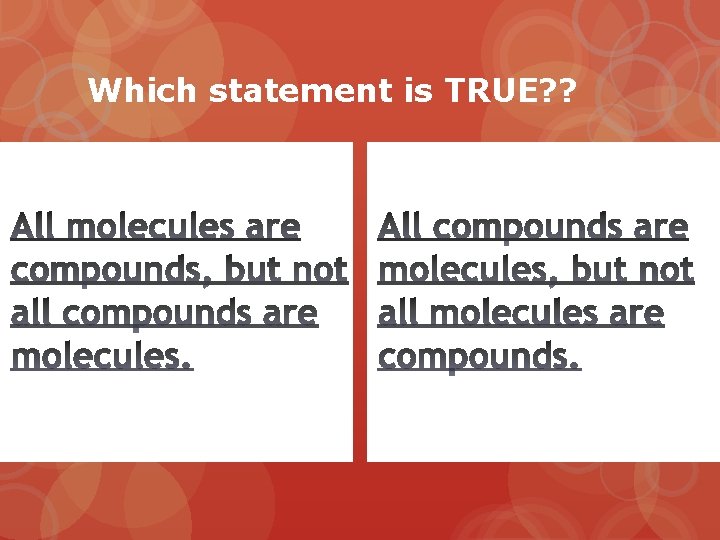
Which statement is TRUE? ?
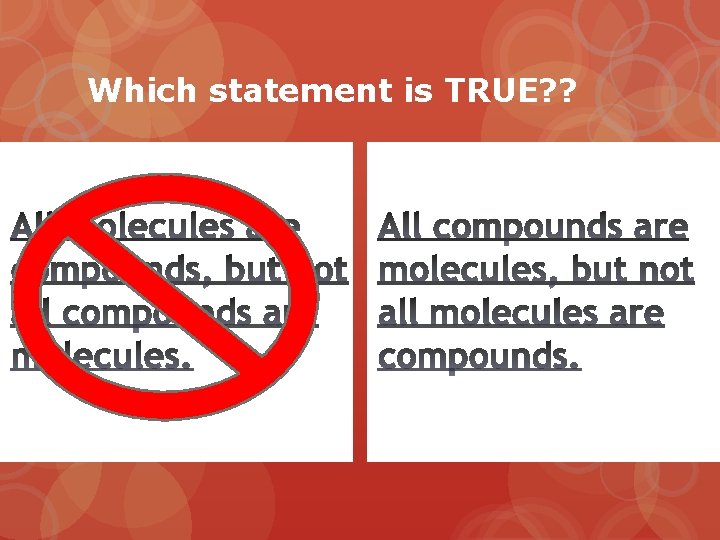
Which statement is TRUE? ?
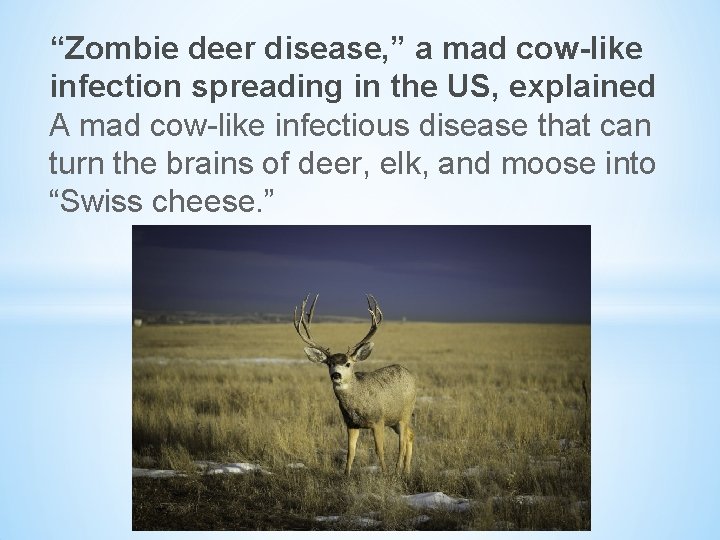
“Zombie deer disease, ” a mad cow-like infection spreading in the US, explained A mad cow-like infectious disease that can turn the brains of deer, elk, and moose into “Swiss cheese. ”
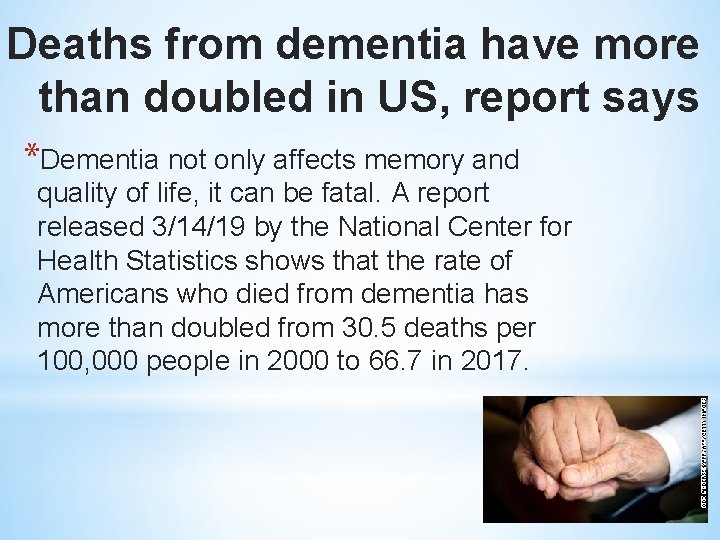
Deaths from dementia have more than doubled in US, report says *Dementia not only affects memory and quality of life, it can be fatal. A report released 3/14/19 by the National Center for Health Statistics shows that the rate of Americans who died from dementia has more than doubled from 30. 5 deaths per 100, 000 people in 2000 to 66. 7 in 2017.
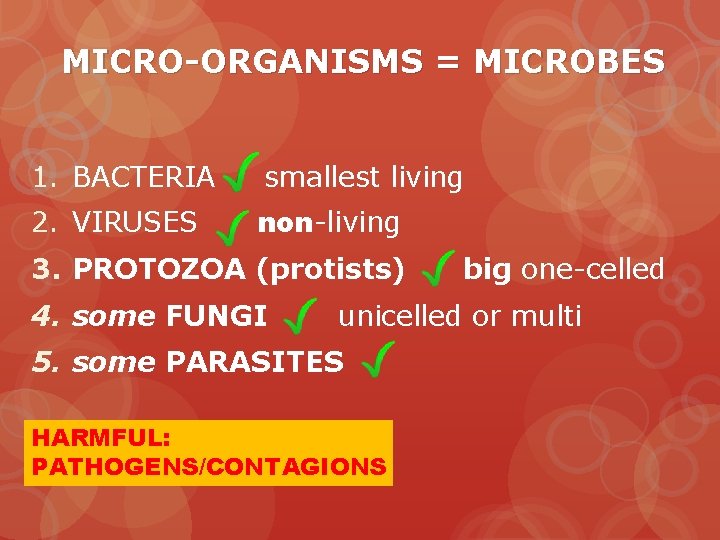
MICRO-ORGANISMS = MICROBES 1. BACTERIA smallest living 2. VIRUSES non-living 3. PROTOZOA (protists) 4. some FUNGI big one-celled unicelled or multi 5. some PARASITES HARMFUL: PATHOGENS/CONTAGIONS
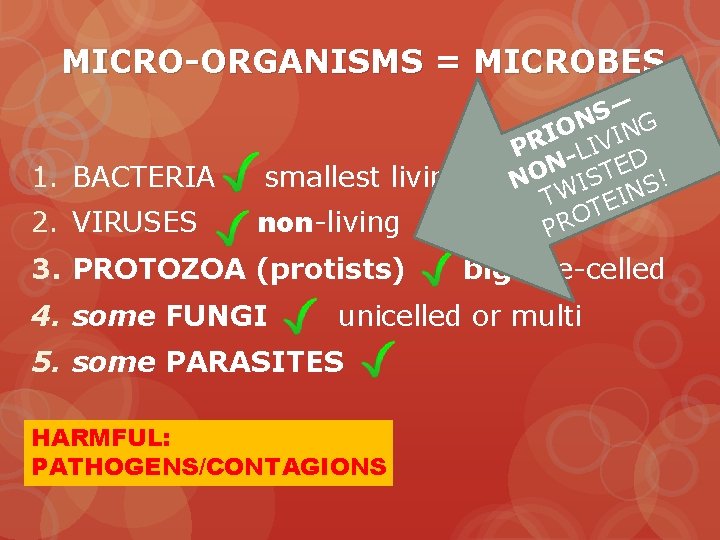
MICRO-ORGANISMS = MICROBES 1. BACTERIA smallest living 2. VIRUSES non-living — S ON ING I PR -LIV D N TE O ! N WIS S N T TEI O PR 3. PROTOZOA (protists) big one-celled 4. some FUNGI unicelled or multi 5. some PARASITES HARMFUL: PATHOGENS/CONTAGIONS

E… K LI
Monsters inside me…discussion questions to follow http: //app. discoveryeducation. com/player/view/asset Guid/10 B 041 A 3 -ADB 1 -4 BD 2 -AF 4 B-95 CB 59631 CE 4
1. Why is the organism inside Wendy considered to be a parasite? 2.
1. Why is the organism inside Wendy considered to be a parasite? 2. How is the parasite dependant on the host?
1. Why is the organism inside Wendy considered to be a parasite? 2. How is the parasite dependant on the host? 3. How did the micro-organism living inside of Wendy affect her?
1. Why is the organism inside Wendy considered to be a parasite? 2. 3. How is the parasite dependant on the host? How did the micro-organism living inside of Wendy affect her? 4. How did the parasite enter Wendy’s body?
1. Why is the organism inside Wendy considered to be a parasite? 2. 3. How is the parasite dependant on the host? 4. How did the micro-organism living inside of Wendy affect her? How did the parasite enter Wendy’s body? 5. How is the parasites life cycle repeated?
1. Why is the organism inside Jonathan considered to be a parasite? 2. How is the parasite dependent upon the host? 3. How did the organisms living inside Jonathan affect him? 4. 5. How did the parasite enter Jonathan’s body? How is the parasite’s life cycle repeated?
1. Why is the organism inside Jonathan considered to be a parasite? 2. How is the parasite dependent upon the host? 3. How did the organisms living inside Jonathan affect him? 4. 5. How did the parasite enter Jonathan’s body? How is the parasite’s life cycle repeated?

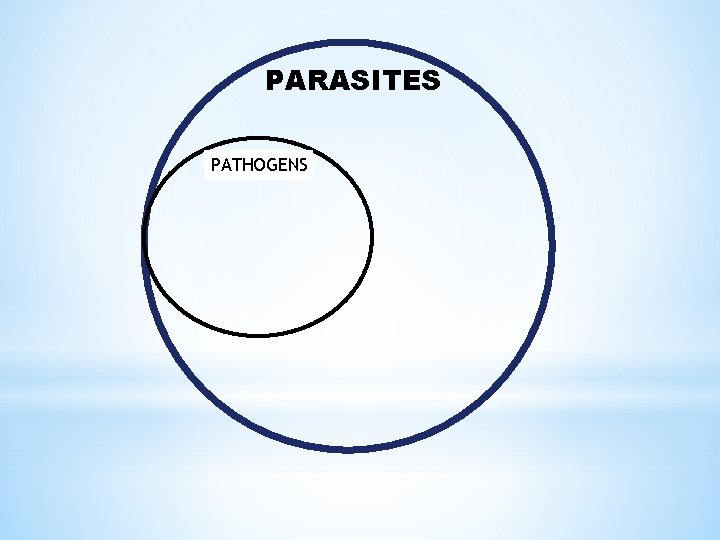
PARASITES PATHOGENS
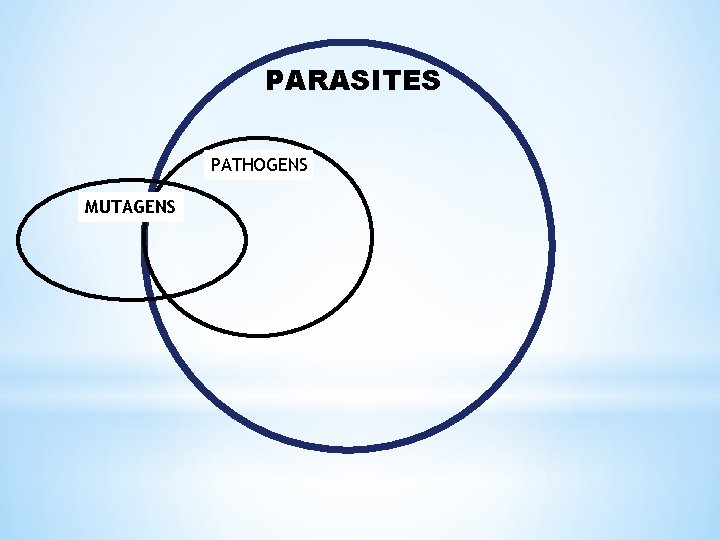
PARASITES PATHOGENS MUTAGENS
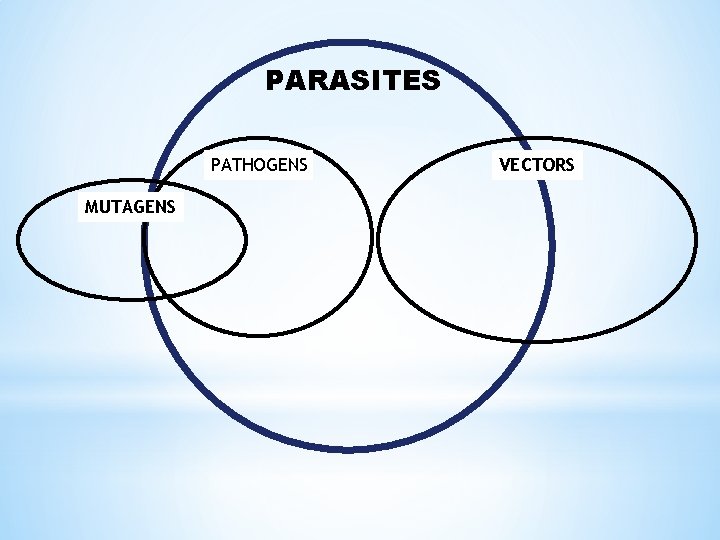
PARASITES PATHOGENS MUTAGENS VECTORS

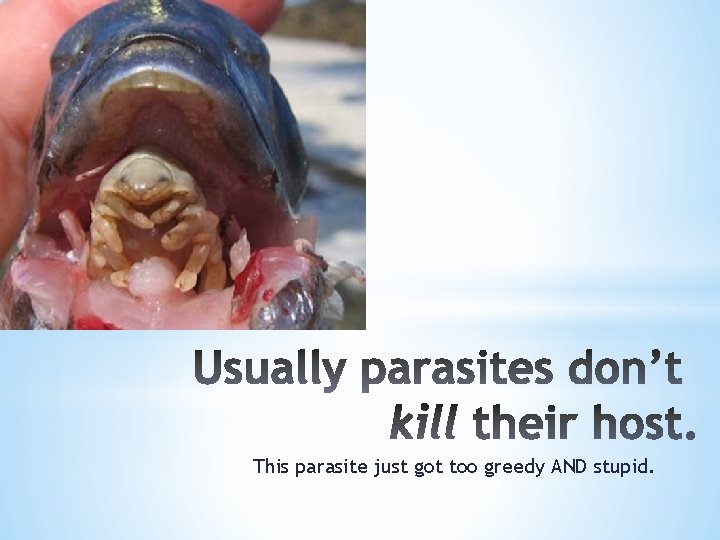
This parasite just got too greedy AND stupid.
http: //www. beltina. org/healthdictionary/parasite-human-intestinalinfections. html *
They are specialized anatomically & physiologically.
*The use of microorganisms, such as bacteria or yeasts, or biological substances, such as enzymes, to perform specific industrial or manufacturing processes. Applications include the production of certain drugs, synthetic hormones, and bulk foodstuffs as well as the bioconversion of organic waste and the use of genetically altered bacteria in the cleanup of oil spills. *
*The application of the principles of engineering and technology to the life sciences *
- Slides: 80