
Microorganisms Food Module 6 4 Cloning Biotechnology Learning
Microorganisms & Food Module 6. 4 Cloning & Biotechnology
Learning Objectives Understand the use of microorganisms in biotechnological processes.
Success Criteria Describe the use of microorganisms in the production of dairy products, alcohol and mycoprotein. State the advantages and disadvantages of using microorganisms to produce food products such as mycoprotein.
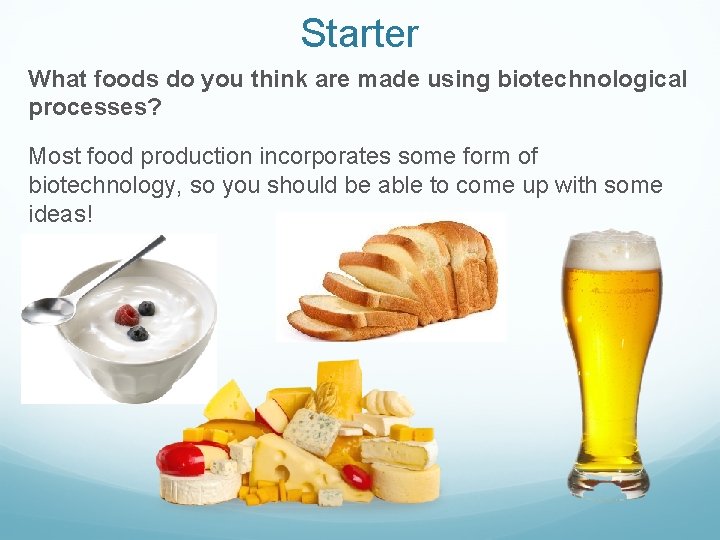
Starter What foods do you think are made using biotechnological processes? Most food production incorporates some form of biotechnology, so you should be able to come up with some ideas!
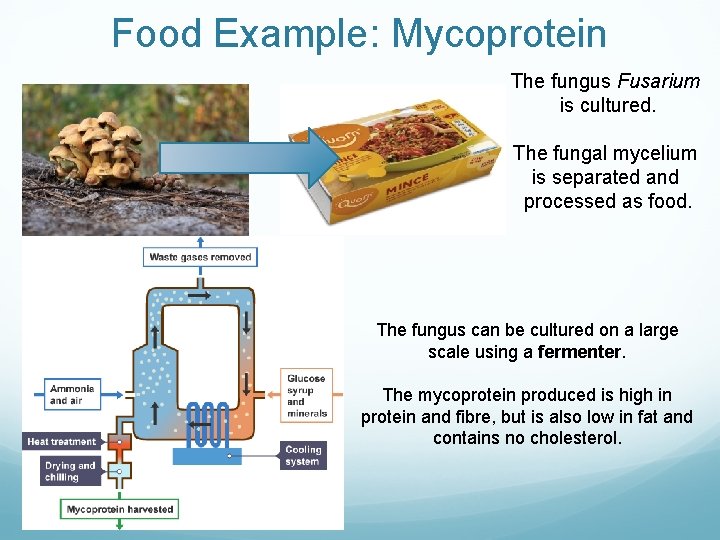
Food Example: Mycoprotein The fungus Fusarium is cultured. The fungal mycelium is separated and processed as food. The fungus can be cultured on a large scale using a fermenter. The mycoprotein produced is high in protein and fibre, but is also low in fat and contains no cholesterol.
Task Read the paragraph on single-cell protein (SCP) on page 252. Answer the following questions after reading the section: 1. 2. 3. 4. Which fungal species is used to produce mycoprotein/SCP. What is mycoprotein marketed as? How is mycoprotein beneficial to health? What is one of the biggest benefits of using microorganisms to produce mycoprotein?
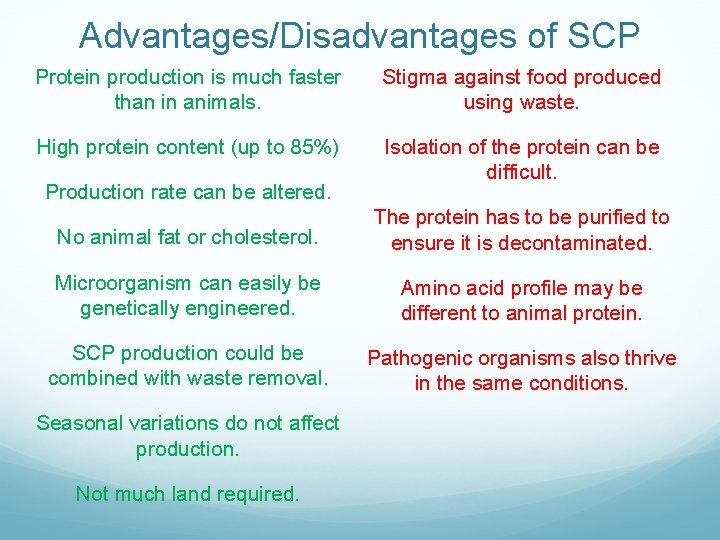
Advantages/Disadvantages of SCP Protein production is much faster than in animals. Stigma against food produced using waste. High protein content (up to 85%) Isolation of the protein can be difficult. Production rate can be altered. No animal fat or cholesterol. The protein has to be purified to ensure it is decontaminated. Microorganism can easily be genetically engineered. Amino acid profile may be different to animal protein. SCP production could be combined with waste removal. Pathogenic organisms also thrive in the same conditions. Seasonal variations do not affect production. Not much land required.
Advantages of using Microorganisms are cheap and easy to grow. Low fuel/running costs. Process requires low atmospheric pressures. Microorganisms can be fed waste products of other processes. Short life cycles. Can be genetically modified easily. Fewer ethical considerations. Product is easy to harvest.
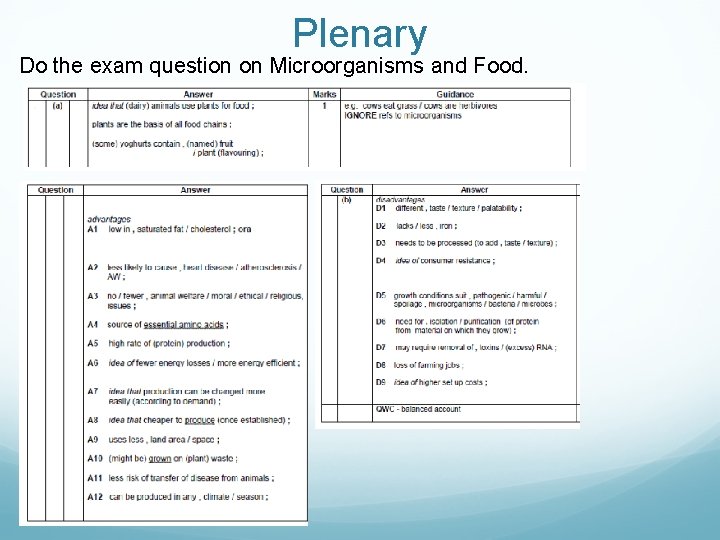
Plenary Do the exam question on Microorganisms and Food.
Learning Objectives Understand the use of microorganisms in biotechnological processes.
Success Criteria Describe the use of microorganisms in the production of dairy products, alcohol and mycoprotein. State the advantages and disadvantages of using microorganisms to produce food products such as mycoprotein.
- Slides: 11