
Micronutrients The principles of nutrition and their application
- Slides: 23
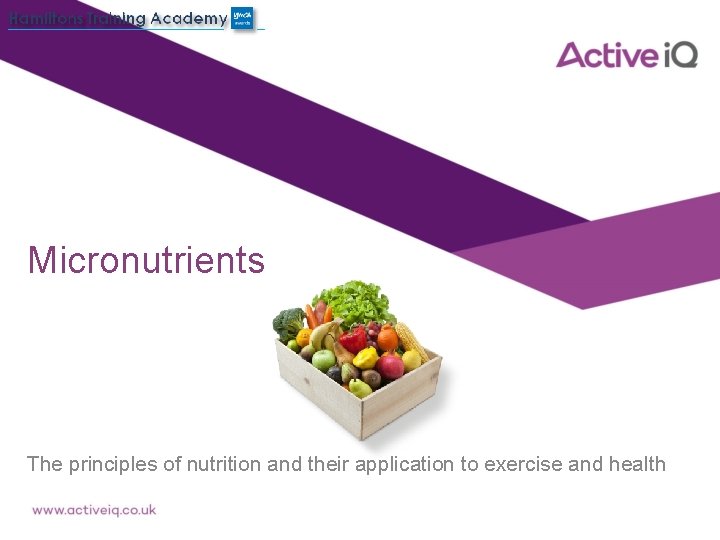
Micronutrients The principles of nutrition and their application to exercise and health
Learning objectives By the end of the lesson you will be able to: • Identify key micronutrients and their functions • Identify good dietary sources of key micronutrients • Evaluate the importance of phytonutrients to human health
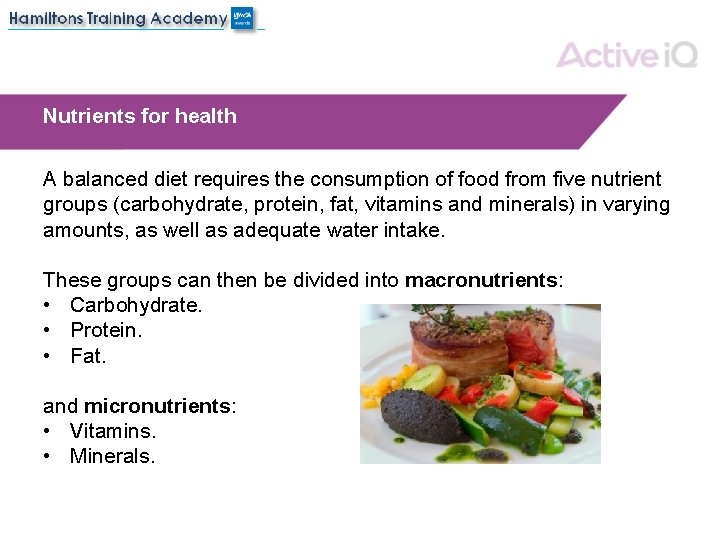
Nutrients for health A balanced diet requires the consumption of food from five nutrient groups (carbohydrate, protein, fat, vitamins and minerals) in varying amounts, as well as adequate water intake. These groups can then be divided into macronutrients: • Carbohydrate. • Protein. • Fat. and micronutrients: • Vitamins. • Minerals.
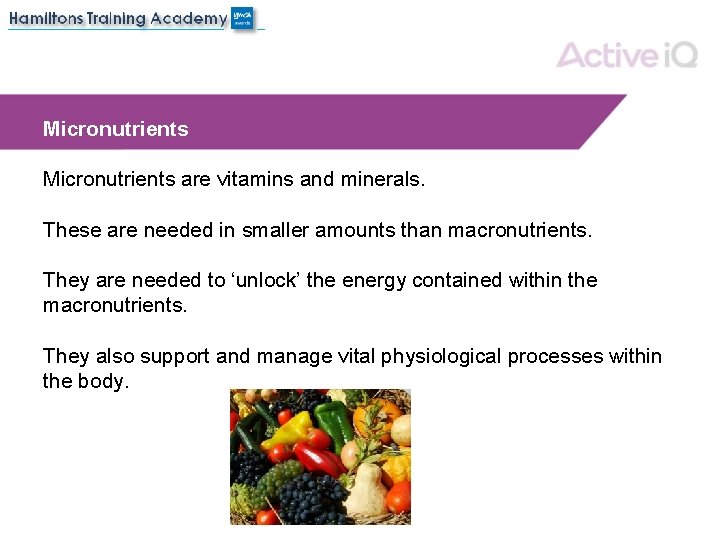
Micronutrients are vitamins and minerals. These are needed in smaller amounts than macronutrients. They are needed to ‘unlock’ the energy contained within the macronutrients. They also support and manage vital physiological processes within the body.
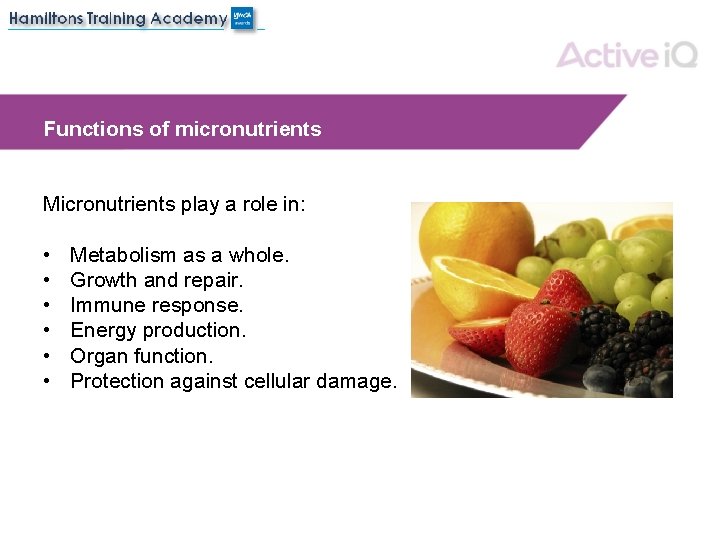
Functions of micronutrients Micronutrients play a role in: • • • Metabolism as a whole. Growth and repair. Immune response. Energy production. Organ function. Protection against cellular damage.
Vitamins are a group of organic compounds (all containing carbon) which are required for normal growth and metabolism. All vitamins are synthesised by plants and can be obtained in the diet by either eating the appropriate plants or by eating animal products that have derived their vitamin content from plants. To obtain sufficient vitamins and minerals, eat a wide variety of fruit and vegetables (5 -9 portions per day) of differing colours. Choose fresh, in-season produce where possible or frozen as a good alternative. Limit the storage time of vegetables and avoid over-cooking, keeping the lid on pans at all times.
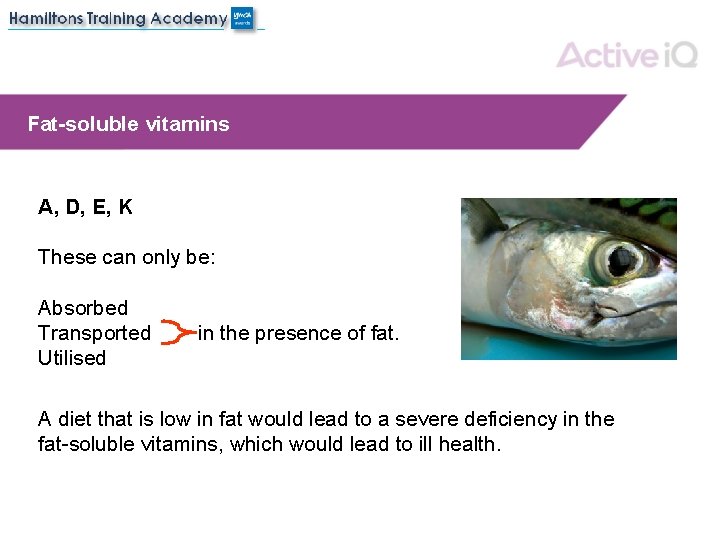
Fat-soluble vitamins A, D, E, K These can only be: Absorbed Transported Utilised in the presence of fat. A diet that is low in fat would lead to a severe deficiency in the fat-soluble vitamins, which would lead to ill health.
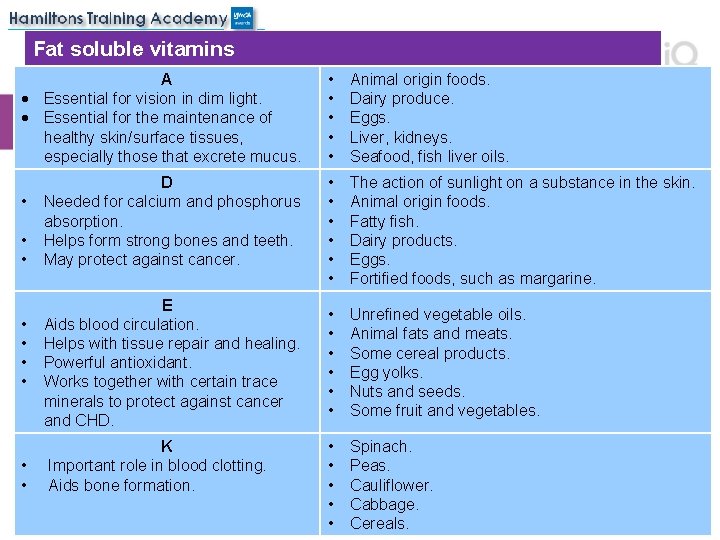
Fat soluble vitamins A Essential for vision in dim light. Essential for the maintenance of healthy skin/surface tissues, especially those that excrete mucus. • • • Animal origin foods. Dairy produce. Eggs. Liver, kidneys. Seafood, fish liver oils. D Needed for calcium and phosphorus absorption. Helps form strong bones and teeth. May protect against cancer. • • • The action of sunlight on a substance in the skin. Animal origin foods. Fatty fish. Dairy products. Eggs. Fortified foods, such as margarine. • • • Unrefined vegetable oils. Animal fats and meats. Some cereal products. Egg yolks. Nuts and seeds. Some fruit and vegetables. • • • Spinach. Peas. Cauliflower. Cabbage. Cereals. • • • E Aids blood circulation. Helps with tissue repair and healing. Powerful antioxidant. Works together with certain trace minerals to protect against cancer and CHD. K Important role in blood clotting. Aids bone formation.
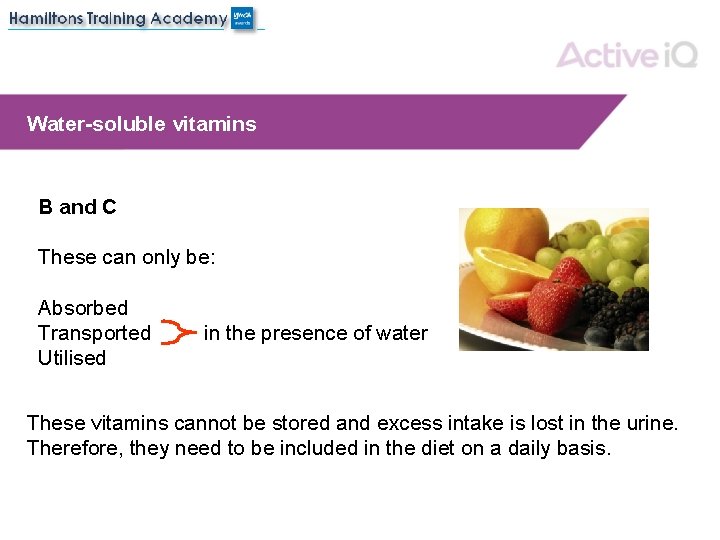
Water-soluble vitamins B and C These can only be: Absorbed Transported Utilised in the presence of water These vitamins cannot be stored and excess intake is lost in the urine. Therefore, they need to be included in the diet on a daily basis.
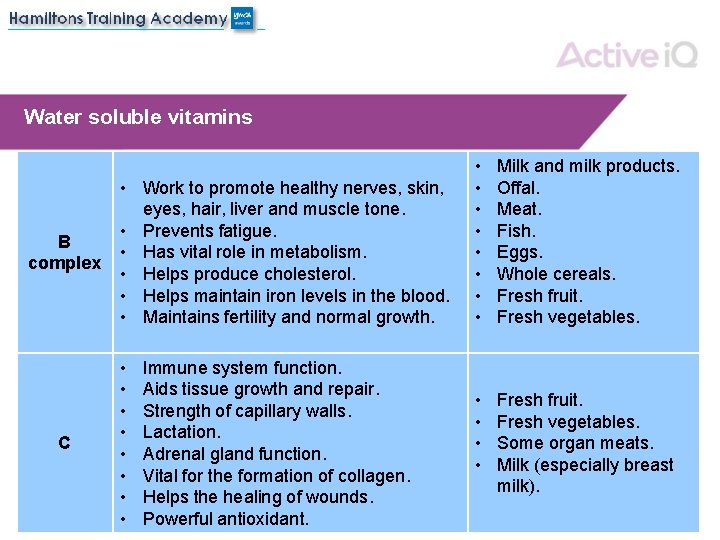
Water soluble vitamins B complex C • Work to promote healthy nerves, skin, eyes, hair, liver and muscle tone. • Prevents fatigue. • Has vital role in metabolism. • Helps produce cholesterol. • Helps maintain iron levels in the blood. • Maintains fertility and normal growth. • • Immune system function. Aids tissue growth and repair. Strength of capillary walls. Lactation. Adrenal gland function. Vital for the formation of collagen. Helps the healing of wounds. Powerful antioxidant. • • Milk and milk products. Offal. Meat. Fish. Eggs. Whole cereals. Fresh fruit. Fresh vegetables. • • Fresh fruit. Fresh vegetables. Some organ meats. Milk (especially breast milk).
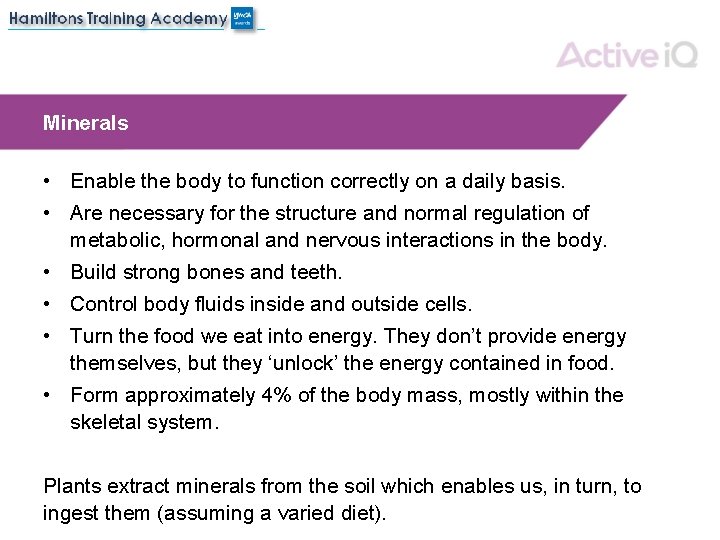
Minerals • Enable the body to function correctly on a daily basis. • Are necessary for the structure and normal regulation of metabolic, hormonal and nervous interactions in the body. • Build strong bones and teeth. • Control body fluids inside and outside cells. • Turn the food we eat into energy. They don’t provide energy themselves, but they ‘unlock’ the energy contained in food. • Form approximately 4% of the body mass, mostly within the skeletal system. Plants extract minerals from the soil which enables us, in turn, to ingest them (assuming a varied diet).
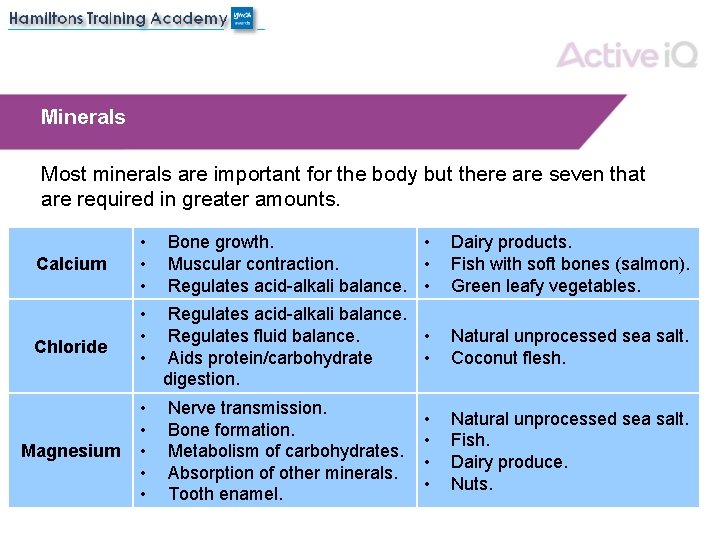
Minerals Most minerals are important for the body but there are seven that are required in greater amounts. Calcium Chloride Magnesium • • • Bone growth. • Muscular contraction. • Regulates acid-alkali balance. • Dairy products. Fish with soft bones (salmon). Green leafy vegetables. • • • Regulates acid-alkali balance. Regulates fluid balance. • Aids protein/carbohydrate • digestion. Natural unprocessed sea salt. Coconut flesh. • • • Nerve transmission. Bone formation. Metabolism of carbohydrates. Absorption of other minerals. Tooth enamel. Natural unprocessed sea salt. Fish. Dairy produce. Nuts. • •
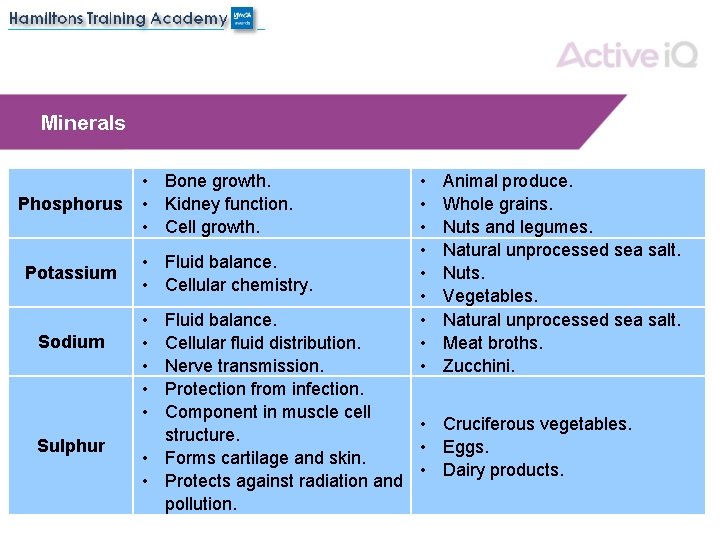
Minerals Phosphorus Potassium Sodium Sulphur • Bone growth. • Kidney function. • Cell growth. • Fluid balance. • Cellular chemistry. • • • • Animal produce. Whole grains. Nuts and legumes. Natural unprocessed sea salt. Nuts. Vegetables. Natural unprocessed sea salt. Meat broths. Zucchini. Fluid balance. Cellular fluid distribution. Nerve transmission. Protection from infection. Component in muscle cell • Cruciferous vegetables. structure. • Eggs. • Forms cartilage and skin. • Dairy products. • Protects against radiation and pollution.
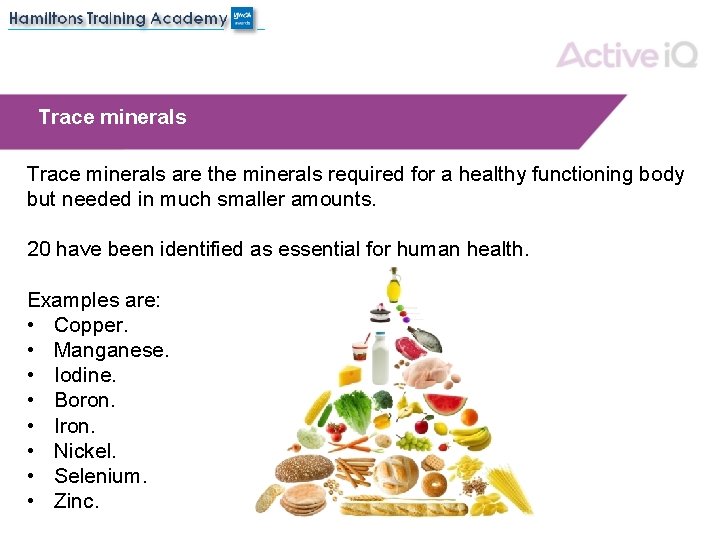
Trace minerals are the minerals required for a healthy functioning body but needed in much smaller amounts. 20 have been identified as essential for human health. Examples are: • Copper. • Manganese. • Iodine. • Boron. • Iron. • Nickel. • Selenium. • Zinc.
Antioxidants play a vital role in offsetting some of the effects of ageing and protecting against heart disease, cancer and other diseases. As the human body evolved to utilise oxygen, it also evolved the means of limiting the damage that can occur as a result of oxygen-based reactions (such as ageing and structural degeneration). It does this with the help of antioxidant enzymes, which the body produces naturally within cells. Dietary antioxidants can also be acquired from the food we eat.
Antioxidants As we age, we start to lose the battle against environmental damage from radiation, pollution and increasingly poor diets. Exercise also increases oxidative stress through increased oxygen consumption, so it is important that those engaging in regular, and especially intense, exercise ensure that their diet is better than average to guarantee high nutrient densities. This should help to reduce the damage caused by exercise, including injuries, and promote recovery.
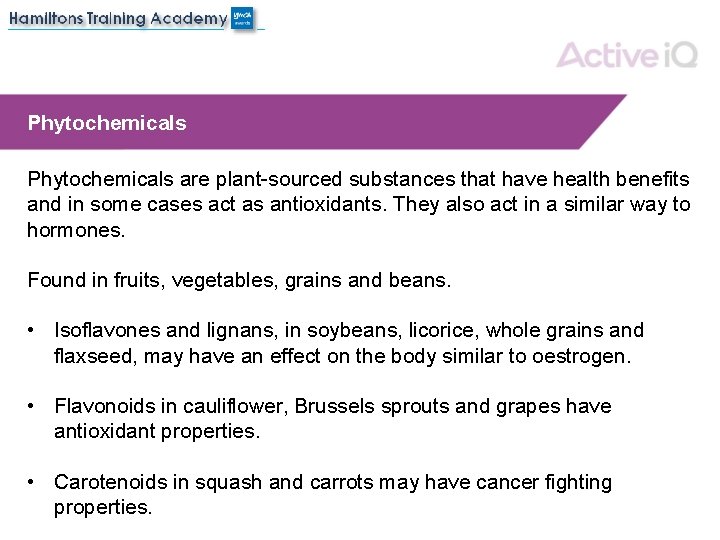
Phytochemicals are plant-sourced substances that have health benefits and in some cases act as antioxidants. They also act in a similar way to hormones. Found in fruits, vegetables, grains and beans. • Isoflavones and lignans, in soybeans, licorice, whole grains and flaxseed, may have an effect on the body similar to oestrogen. • Flavonoids in cauliflower, Brussels sprouts and grapes have antioxidant properties. • Carotenoids in squash and carrots may have cancer fighting properties.
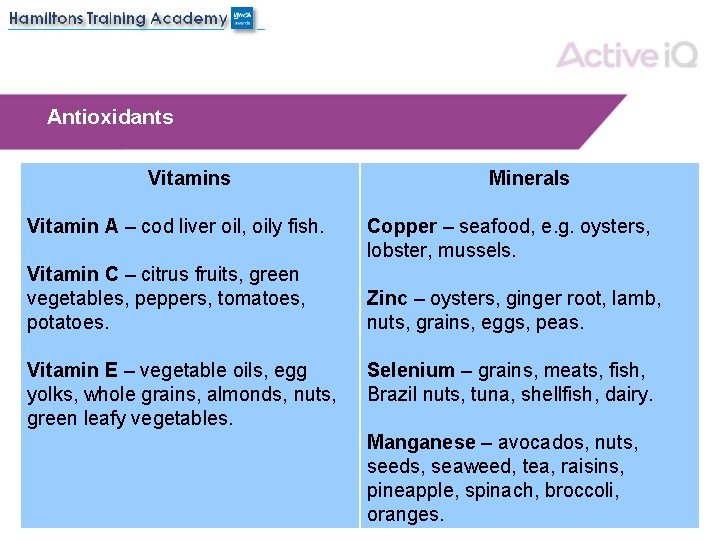
Antioxidants Vitamin A – cod liver oil, oily fish. Vitamin C – citrus fruits, green vegetables, peppers, tomatoes, potatoes. Vitamin E – vegetable oils, egg yolks, whole grains, almonds, nuts, green leafy vegetables. Minerals Copper – seafood, e. g. oysters, lobster, mussels. Zinc – oysters, ginger root, lamb, nuts, grains, eggs, peas. Selenium – grains, meats, fish, Brazil nuts, tuna, shellfish, dairy. Manganese – avocados, nuts, seeds, seaweed, tea, raisins, pineapple, spinach, broccoli, oranges.
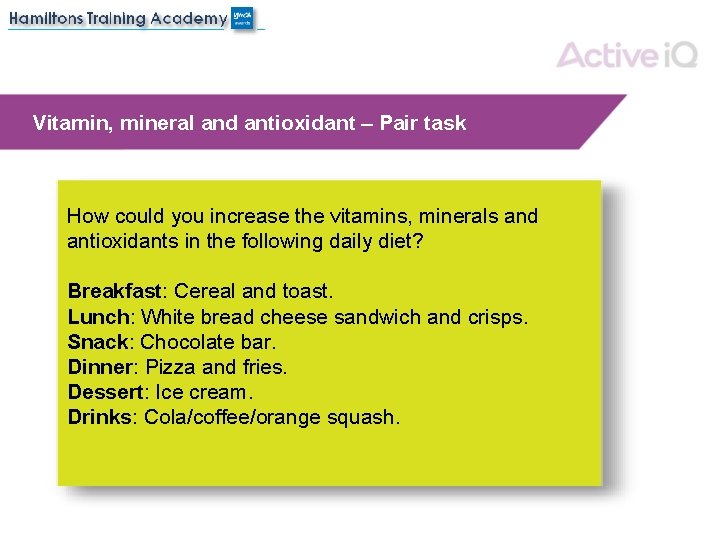
Vitamin, mineral and antioxidant – Pair task How could you increase the vitamins, minerals and antioxidants in the following daily diet? Breakfast: Cereal and toast. Lunch: White bread cheese sandwich and crisps. Snack: Chocolate bar. Dinner: Pizza and fries. Dessert: Ice cream. Drinks: Cola/coffee/orange squash.
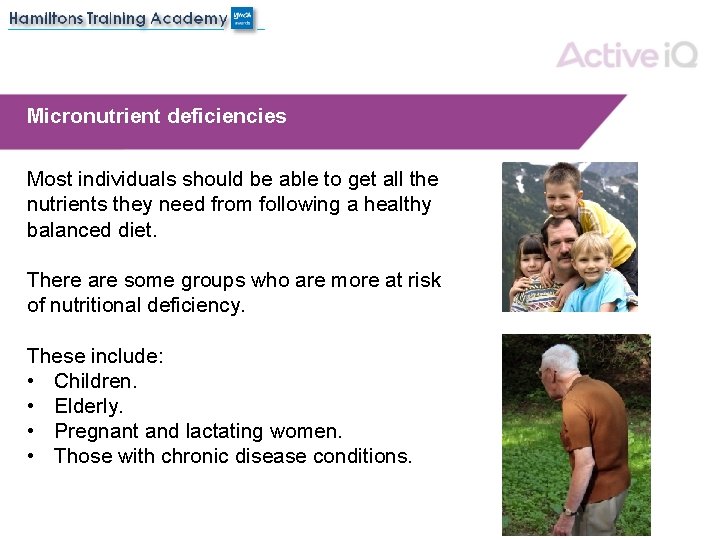
Micronutrient deficiencies Most individuals should be able to get all the nutrients they need from following a healthy balanced diet. There are some groups who are more at risk of nutritional deficiency. These include: • Children. • Elderly. • Pregnant and lactating women. • Those with chronic disease conditions.
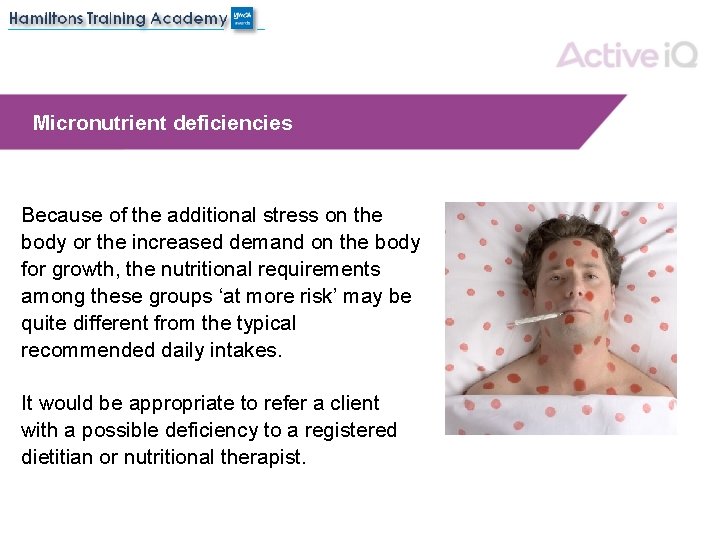
Micronutrient deficiencies Because of the additional stress on the body or the increased demand on the body for growth, the nutritional requirements among these groups ‘at more risk’ may be quite different from the typical recommended daily intakes. It would be appropriate to refer a client with a possible deficiency to a registered dietitian or nutritional therapist.
Micronutrient deficiency task Research the following: • Key signs and symptoms of common nutrient deficiencies. • Current recommended intake of each micronutrient. Complete your handout.
Learning review Can you now: • Identify key micronutrients and their functions • Identify good dietary sources of key micronutrients • Evaluate the importance of phytonutrients to human health