
Microflora Probiotics and the Gastrointestinal Defense System Presented
Microflora, Probiotics, and the Gastrointestinal Defense System Presented by Patricia Conway, Ph. D. VRI Bio. Medical & Mark Bartlett, Ph. D. Pharmanex This material has been prepared by Pharmanex to be used in conjunction with general educational events and activities only. Alterations or modifications of this presentation without the express approval of Pharmanex is prohibited.
Our View of Germs. . .

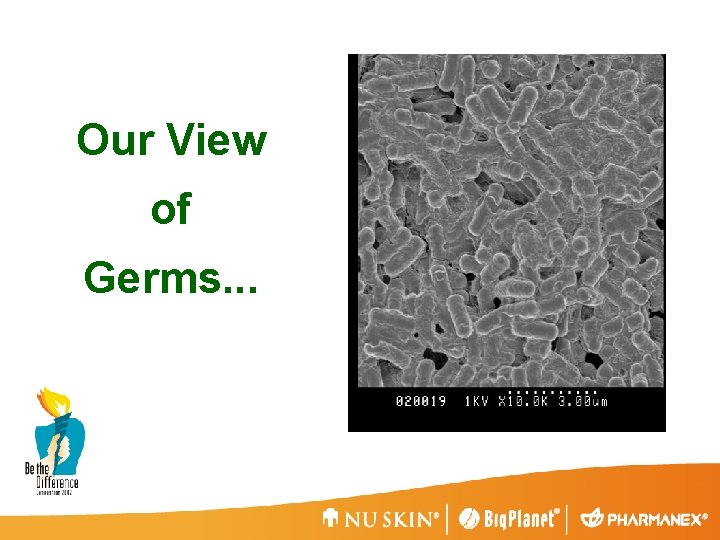
Our View of Germs. . . • All bacteria are bad and scary. . . • But that’s OK. Now we have antibiotics. . . • We also have irradiation, and domestic antibacterials. . . KILL THEM ALL?
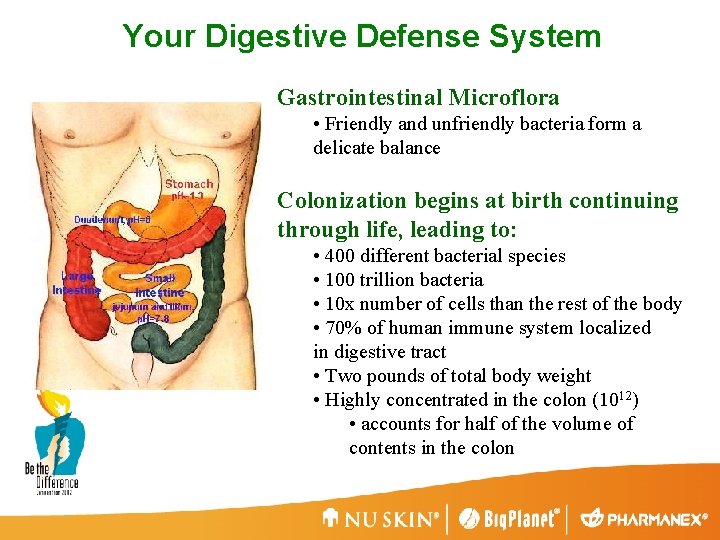
Your Digestive Defense System Gastrointestinal Microflora • Friendly and unfriendly bacteria form a delicate balance Colonization begins at birth continuing through life, leading to: • 400 different bacterial species • 100 trillion bacteria • 10 x number of cells than the rest of the body • 70% of human immune system localized in digestive tract • Two pounds of total body weight • Highly concentrated in the colon (1012) • accounts for half of the volume of contents in the colon

Gastrointestinal Microflora • Gastrointestinal microflora consists of friendly bacteria • Aid digestion and enhance the body’s own digestive immune response • Friendly bacteria create an intestinal ecosystem that inhibits the growth of undesirable bacteria • compete for essential nutrients • produce inhibitory substances • compete for adherence to intestinal mucosa
A Delicate Balance Delicate balance interrupted by: • stress, traveling, alcohol consumption, certain foods, and a poor diet Implications of microflora imbalance: • Common, minor symptoms of gastrointestinal (GI) malaise • Bowel irregularity • Occasional diarrhea • Other digestive and non-digestive discomforts
Gastrointestinal Microflora: A Delicate Balance Ideally, your flora should form a nice, thick “lawn” making it difficult for “weeds” to gain a foot-hold. • Compete for essential nutrients • Produce inhibitory substances • Compete for adherence to intestinal mucosa

When it Starts • At birth - digestive tract of humans is sterile. • Colonised by microbes within the first few days of life • At first, predominantly bifidobacteria (breast fed infants). • With the introduction of other foods, a diverse microbial population develops in the gastrointestinal tract. • By now, of all the cells in a human body, the overwhelming majority are non -human.

What’s in it for us? Fortifies Digestive Defense System • Helps control occasional GI discomfort* • Promotes digestive comfort and regularity* • Supports healthy function of urinary tract* Immunomodulation • Inhibits growth and adhesion of undesirable organisms* • Cell protection* * These statements have not been evaluated by the Food and Drug Administration. This product is not intended to diagnose, treat, cure, or prevent any disease.
The Search, and Discovery of a New and Unique Probiotic Presented by Patricia Conway, Ph. D. VRI Bio. Medical
Probiotics • Definition and concept of probiotics • Not all probiotics are the same • The search for the perfect probiotic • Research
Probiotic: Definition “A product containing viable, defined microorganisms in sufficient numbers, which alter the microflora and exert beneficial effects in the host. ” Salminen S, Bouley C, et al. (1998). • Not all strains are the same • Most common species are Lactobacillus and Bifidobacterium • Genus. . . Species. . . STRAIN

Requirements for an Effective Probiotic • Administered in a form that maintains its viability • Have the capacity to survive passage into the intestine • Survive conditions in the intestine • Attach to the intestinal wall • Demonstrable biological activity • Stable biological activity in the product
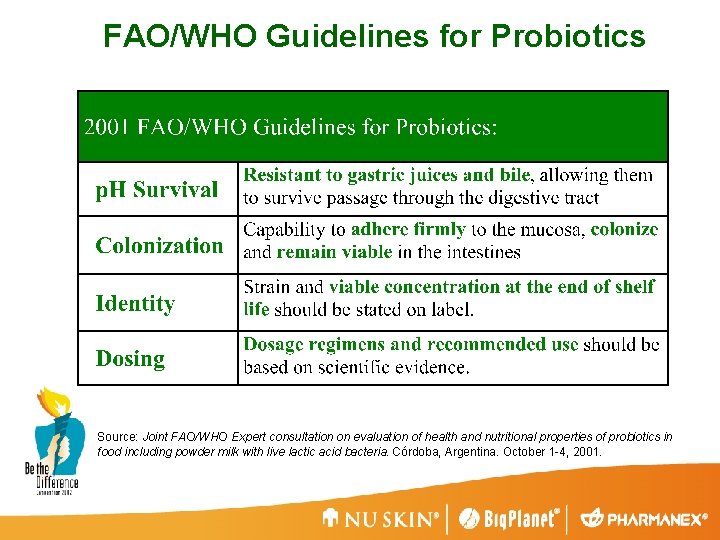
FAO/WHO Guidelines for Probiotics Source: Joint FAO/WHO Expert consultation on evaluation of health and nutritional properties of probiotics in food including powder milk with live lactic acid bacteria. Córdoba, Argentina. October 1 -4, 2001.
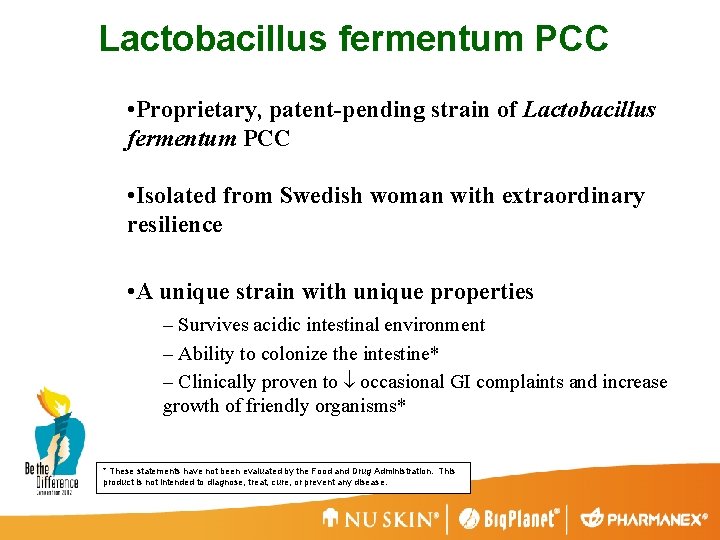
Lactobacillus fermentum PCC • Proprietary, patent-pending strain of Lactobacillus fermentum PCC • Isolated from Swedish woman with extraordinary resilience • A unique strain with unique properties – Survives acidic intestinal environment – Ability to colonize the intestine* – Clinically proven to occasional GI complaints and increase growth of friendly organisms* * These statements have not been evaluated by the Food and Drug Administration. This product is not intended to diagnose, treat, cure, or prevent any disease.
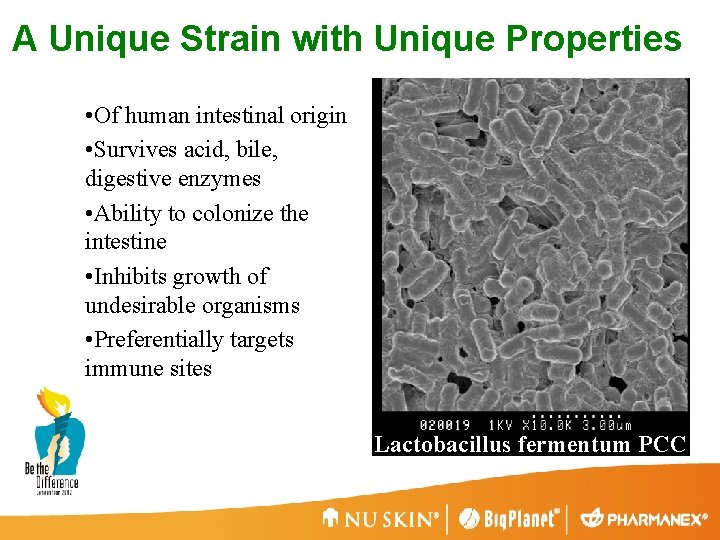
A Unique Strain with Unique Properties • Of human intestinal origin • Survives acid, bile, digestive enzymes • Ability to colonize the intestine • Inhibits growth of undesirable organisms • Preferentially targets immune sites Lactobacillus fermentum PCC
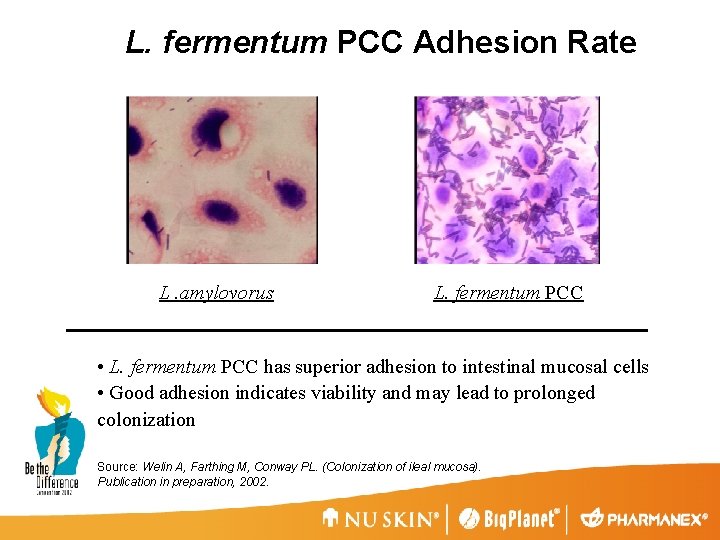
L. fermentum PCC Adhesion Rate L. amylovorus L. fermentum PCC • L. fermentum PCC has superior adhesion to intestinal mucosal cells • Good adhesion indicates viability and may lead to prolonged colonization Source: Welin A, Farthing M, Conway PL. (Colonization of ileal mucosa). Publication in preparation, 2002.
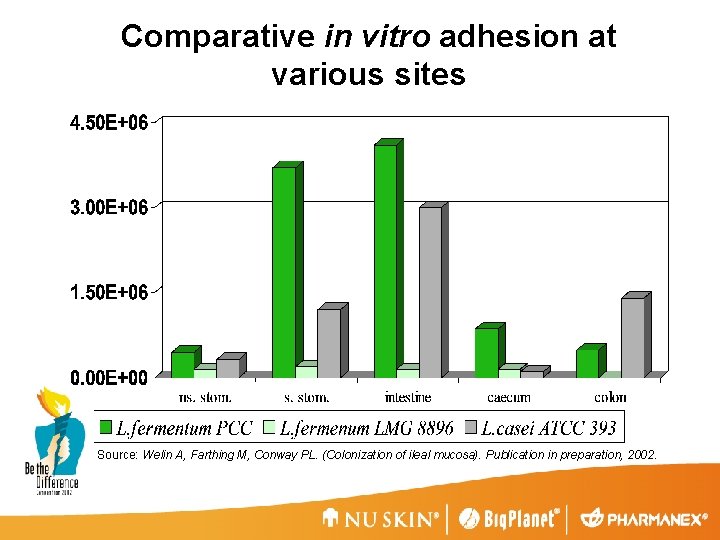
Comparative in vitro adhesion at various sites Source: Welin A, Farthing M, Conway PL. (Colonization of ileal mucosa). Publication in preparation, 2002.
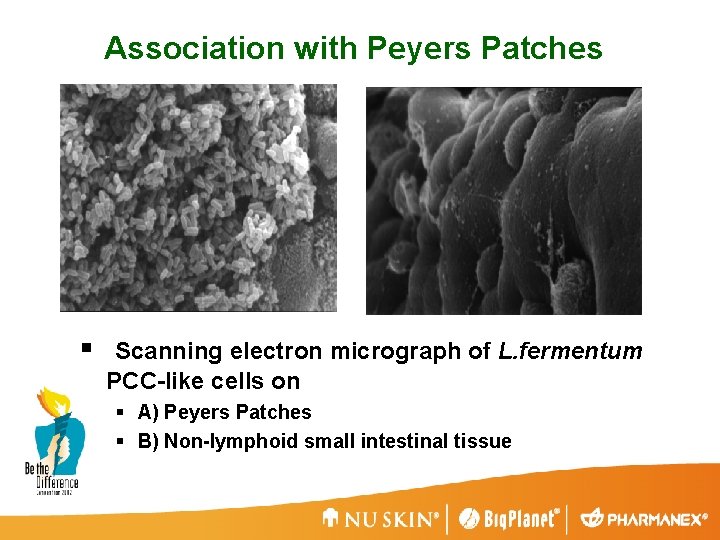
Association with Peyers Patches § Scanning electron micrograph of L. fermentum PCC-like cells on § A) Peyers Patches § B) Non-lymphoid small intestinal tissue
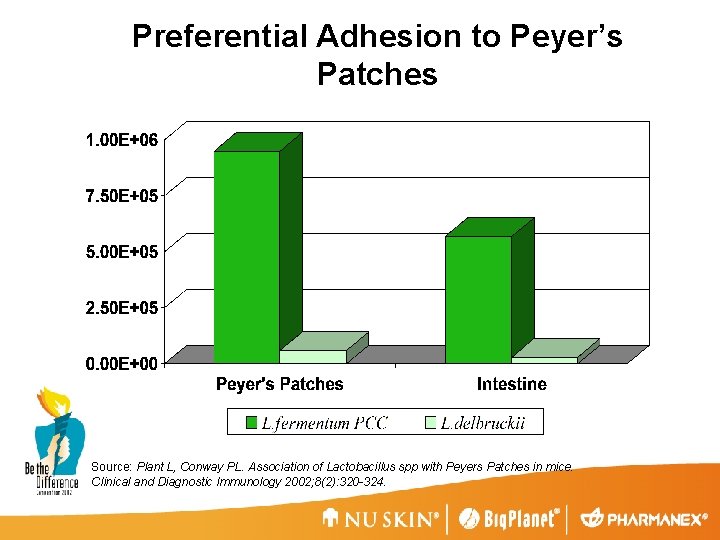
Preferential Adhesion to Peyer’s Patches Source: Plant L, Conway PL. Association of Lactobacillus spp with Peyers Patches in mice. Clinical and Diagnostic Immunology 2002; 8(2): 320 -324.
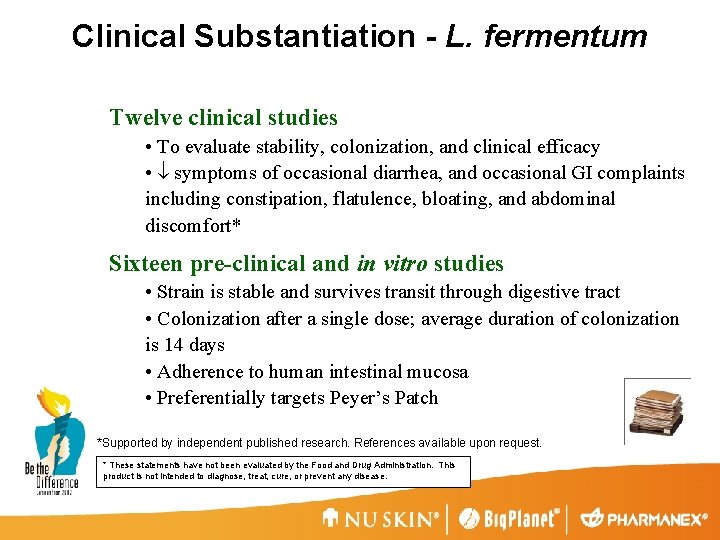
Clinical Substantiation - L. fermentum PCC Twelve clinical studies • To evaluate stability, colonization, and clinical efficacy • symptoms of occasional diarrhea, and occasional GI complaints including constipation, flatulence, bloating, and abdominal discomfort* Sixteen pre-clinical and in vitro studies • Strain is stable and survives transit through digestive tract • Colonization after a single dose; average duration of colonization is 14 days • Adherence to human intestinal mucosa • Preferentially targets Peyer’s Patch *Supported by independent published research. References available upon request. * These statements have not been evaluated by the Food and Drug Administration. This product is not intended to diagnose, treat, cure, or prevent any disease.
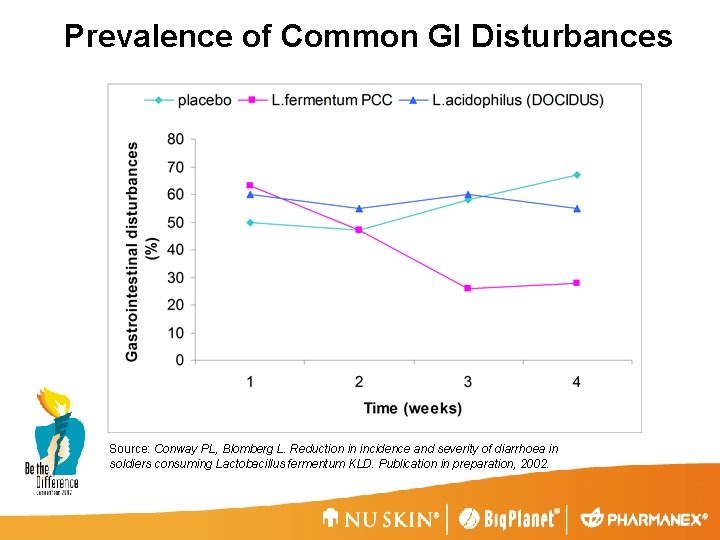
Prevalence of Common GI Disturbances Source: Conway PL, Blomberg L. Reduction in incidence and severity of diarrhoea in soldiers consuming Lactobacillus fermentum KLD. Publication in preparation, 2002.
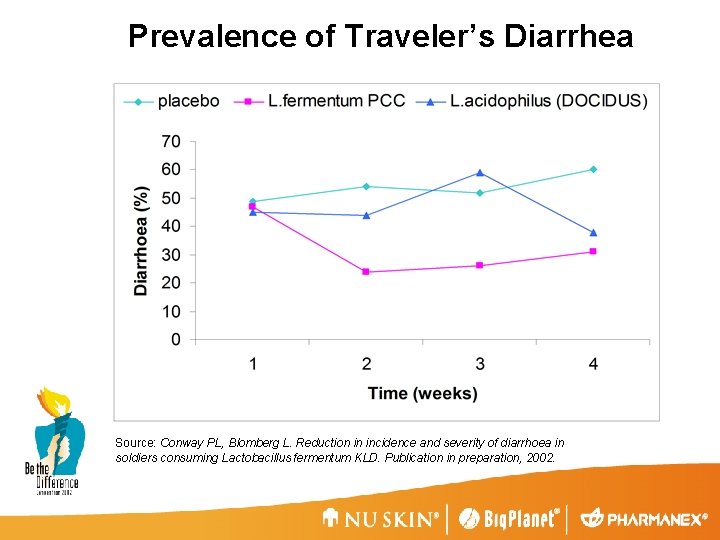
Prevalence of Traveler’s Diarrhea Source: Conway PL, Blomberg L. Reduction in incidence and severity of diarrhoea in soldiers consuming Lactobacillus fermentum KLD. Publication in preparation, 2002.
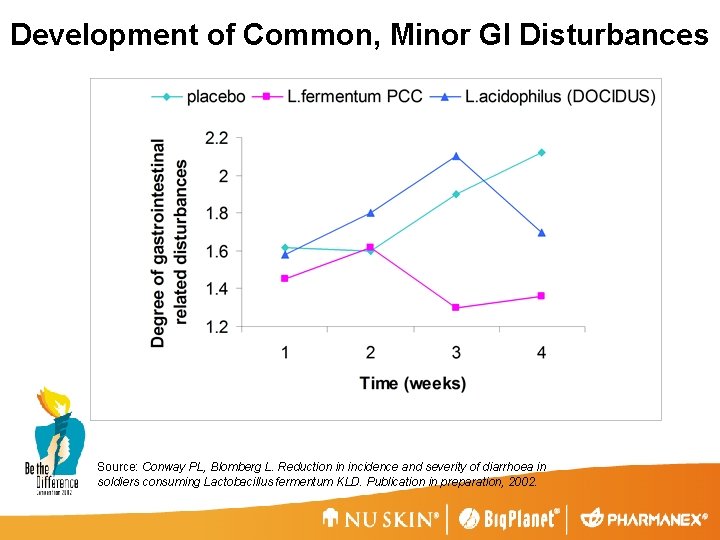
Development of Common, Minor GI Disturbances Source: Conway PL, Blomberg L. Reduction in incidence and severity of diarrhoea in soldiers consuming Lactobacillus fermentum KLD. Publication in preparation, 2002.
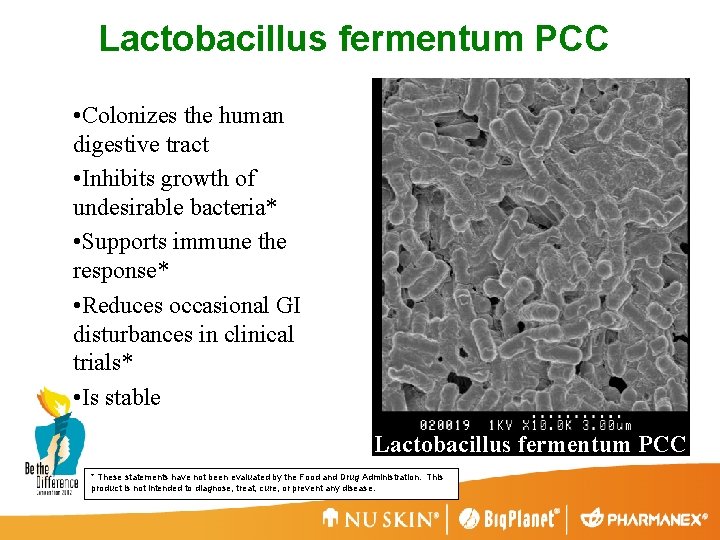
Lactobacillus fermentum PCC • Colonizes the human digestive tract • Inhibits growth of undesirable bacteria* • Supports immune the response* • Reduces occasional GI disturbances in clinical trials* • Is stable Lactobacillus fermentum PCC * These statements have not been evaluated by the Food and Drug Administration. This product is not intended to diagnose, treat, cure, or prevent any disease.
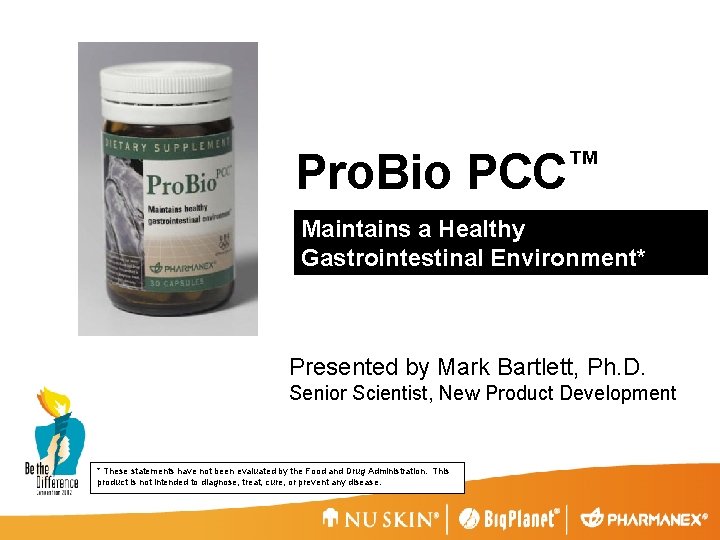
Pro. Bio ™ PCC Maintains a Healthy Gastrointestinal Environment* Presented by Mark Bartlett, Ph. D. Senior Scientist, New Product Development * These statements have not been evaluated by the Food and Drug Administration. This product is not intended to diagnose, treat, cure, or prevent any disease.
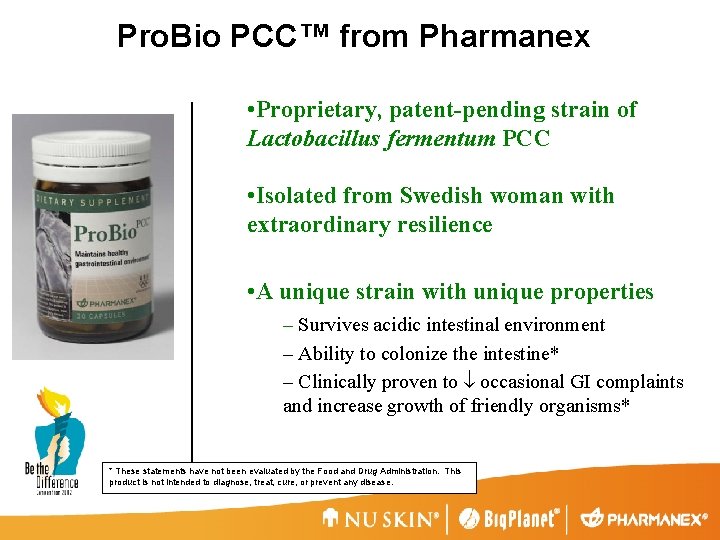
Pro. Bio PCC™ from Pharmanex • Proprietary, patent-pending strain of Lactobacillus fermentum PCC • Isolated from Swedish woman with extraordinary resilience • A unique strain with unique properties – Survives acidic intestinal environment – Ability to colonize the intestine* – Clinically proven to occasional GI complaints and increase growth of friendly organisms* * These statements have not been evaluated by the Food and Drug Administration. This product is not intended to diagnose, treat, cure, or prevent any disease.

Clinical Substantiation • Maintains healthy intestinal microflora • promotes proliferation of desirable bacteria while inhibiting growth of undesirable bacteria • Supports mucosal immunity • supports humoral immune response • acts as a protective barrier • Decrease in occasional GI complaints, including occasional diarrhea • supports growth and adhesion of desirable bacteria • Supports urinary tract health *Supported by independent published research. References available upon request.
Recommended Usage • For adults who experience occasional diarrhea, constipation, or cramps resulting from distressed digestive flora. • For adults who experience occasional gastrointestinal disturbances, such as gas or bloating. • For adults who are currently taking other probiotics. Directions For Use • Take one capsule daily. • Take continuously for best results. • If you are pregnant or lactating, or taking a prescription medication, consult a physician prior to use. Complementary Products - Digestive Formula, Nutri. Fi

Pro. Bio PCC™ - Competitive Advantage • Proprietary and patent-pending • Conforms to FAO/WHO guidelines • Supported by clinical studies • Developed according to the 6 S Process • Unique delivery system – 2 billion CFUs at the end of shelf life –Does not require refrigeration store at or below 68°F (20°C) Pharmanex has obtained exclusive rights to L. fermentum PCC

• www. pharmanex. com • product information • powerpoint presentation (What’s New) • Pharmanex Information Packet • product fact sheet • frequently asked questions • Pharmanex Product Showcase • meet the experts • interactive computer product training
- Slides: 31