
Microevolution SBI 3 U November 12 th 2012
Microevolution SBI 3 U November 12 th, 2012
Microevolution �What is microevolution? �Mechanisms of microevolution: natural selection, artificial selection, genetic drift and gene flow
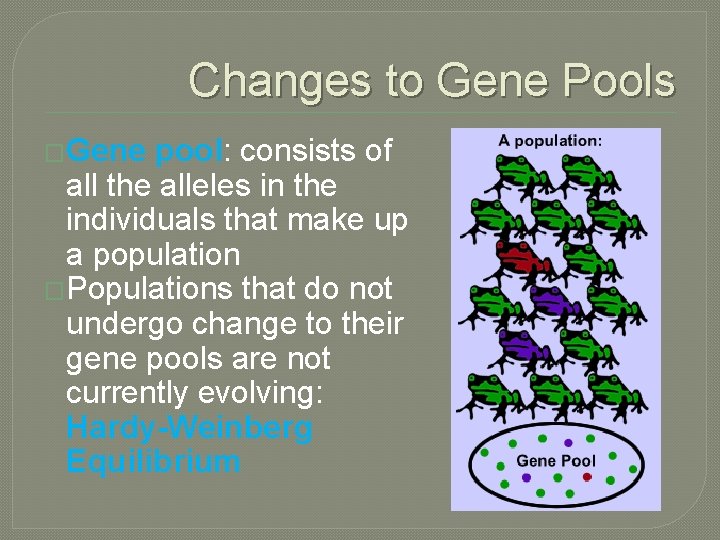
Changes to Gene Pools �Gene pool: consists of all the alleles in the individuals that make up a population �Populations that do not undergo change to their gene pools are not currently evolving: Hardy-Weinberg Equilibrium
The Hardy-Weinberg Equilibrium will hold under 5 conditions: 1. There must be random mating 2. There is a large population 3. There is no movement in or out of the population 4. There are no mutations 5. There is no natural selection
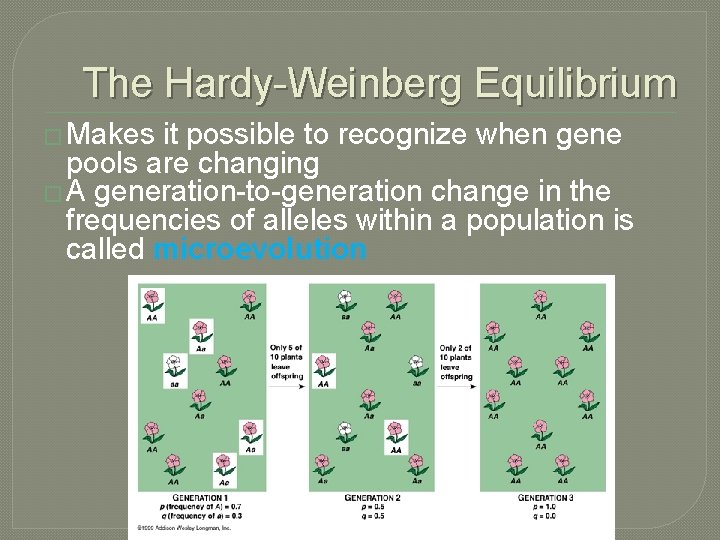
The Hardy-Weinberg Equilibrium � Makes it possible to recognize when gene pools are changing � A generation-to-generation change in the frequencies of alleles within a population is called microevolution
Mechanisms of Microevolution �Natural Selection �Artificial Selection �Genetic Drift �Gene Flow
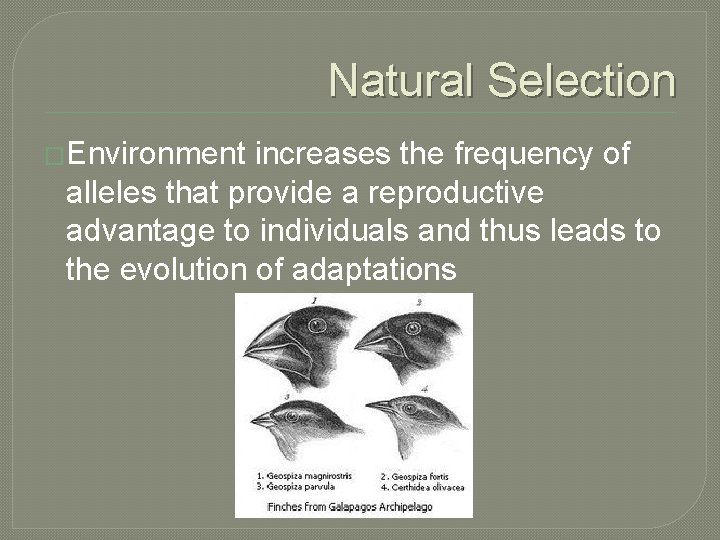
Natural Selection �Environment increases the frequency of alleles that provide a reproductive advantage to individuals and thus leads to the evolution of adaptations
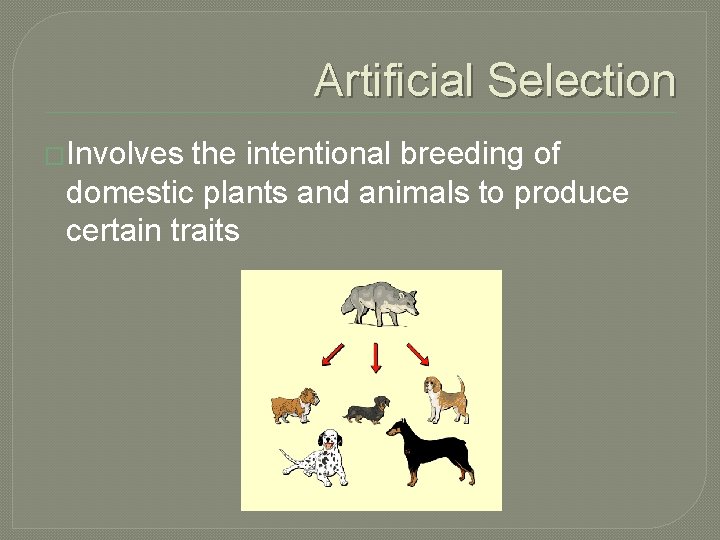
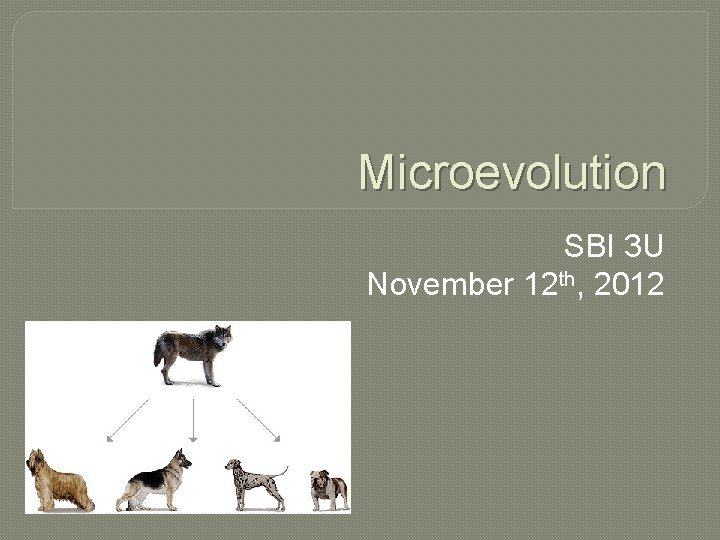
Artificial Selection �Involves the intentional breeding of domestic plants and animals to produce certain traits
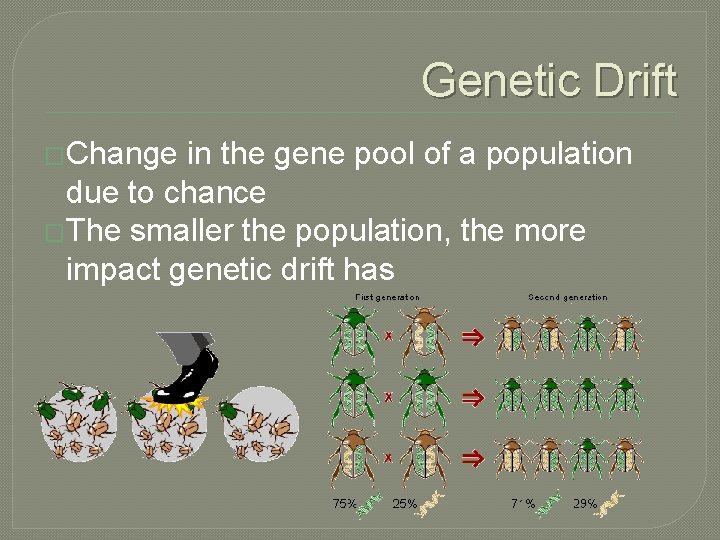
Genetic Drift �Change in the gene pool of a population due to chance �The smaller the population, the more impact genetic drift has
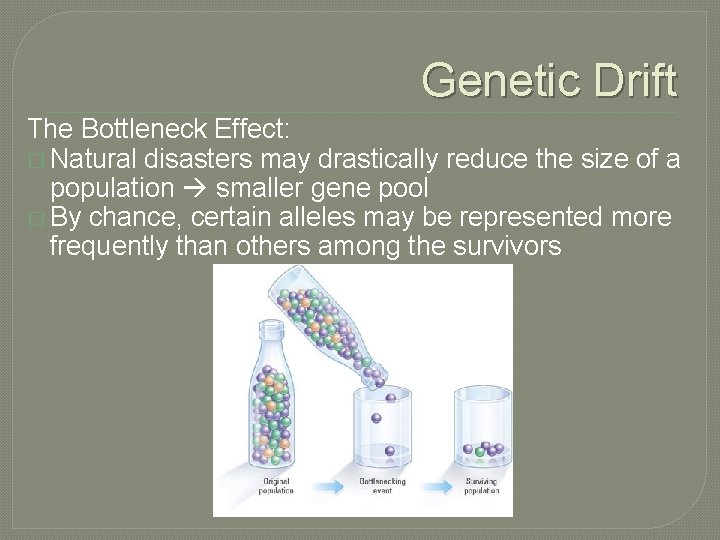
Genetic Drift The Bottleneck Effect: � Natural disasters may drastically reduce the size of a population smaller gene pool � By chance, certain alleles may be represented more frequently than others among the survivors
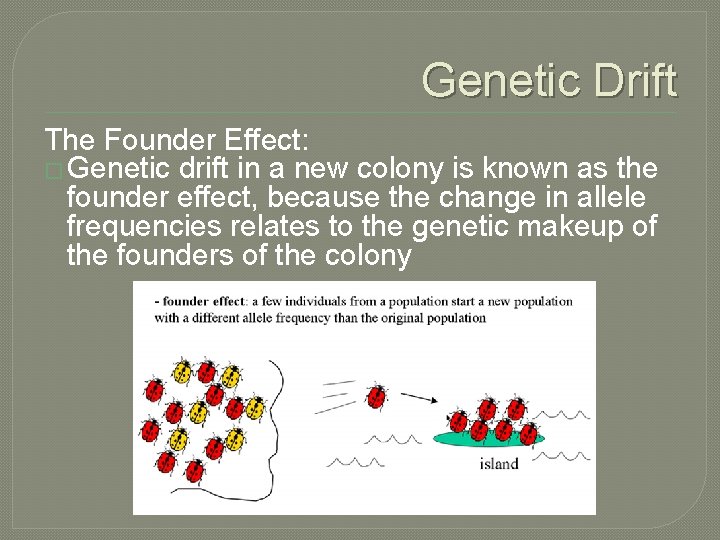
Genetic Drift The Founder Effect: � Genetic drift in a new colony is known as the founder effect, because the change in allele frequencies relates to the genetic makeup of the founders of the colony
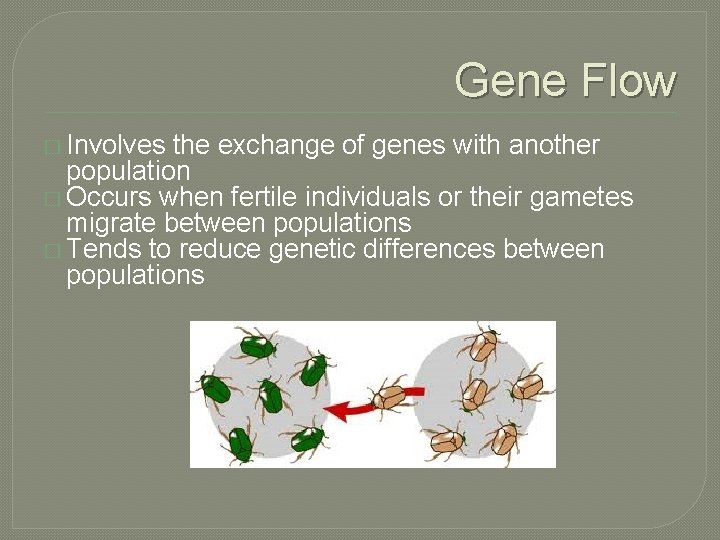
Gene Flow � Involves the exchange of genes with another population � Occurs when fertile individuals or their gametes migrate between populations � Tends to reduce genetic differences between populations
- Slides: 12