
Microeconomics Consumer Choice and Controls I Goals List
- Slides: 5
Microeconomics Consumer Choice and Controls
I. Goals • List the Five Fundamentals of Consumer Choice. • Explain utility and the law of diminishing marginal utility. • Explain how marginal utility determines quantity demanded.
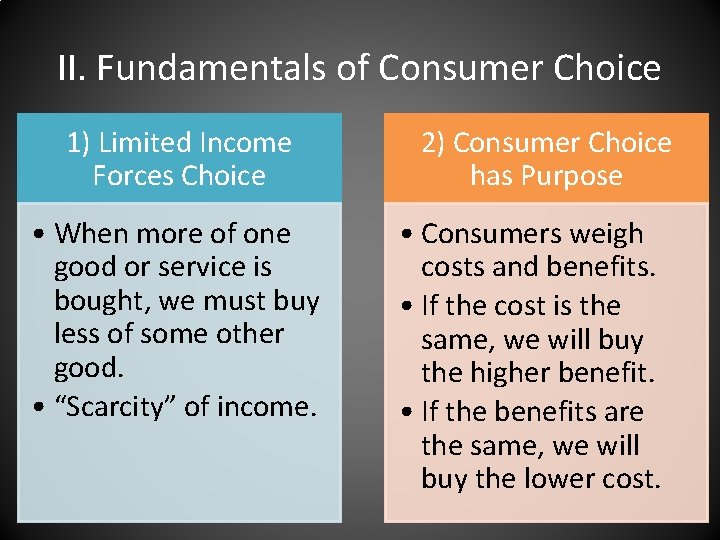
II. Fundamentals of Consumer Choice 1) Limited Income Forces Choice • When more of one good or service is bought, we must buy less of some other good. • “Scarcity” of income. 2) Consumer Choice has Purpose • Consumers weigh costs and benefits. • If the cost is the same, we will buy the higher benefit. • If the benefits are the same, we will buy the lower cost.
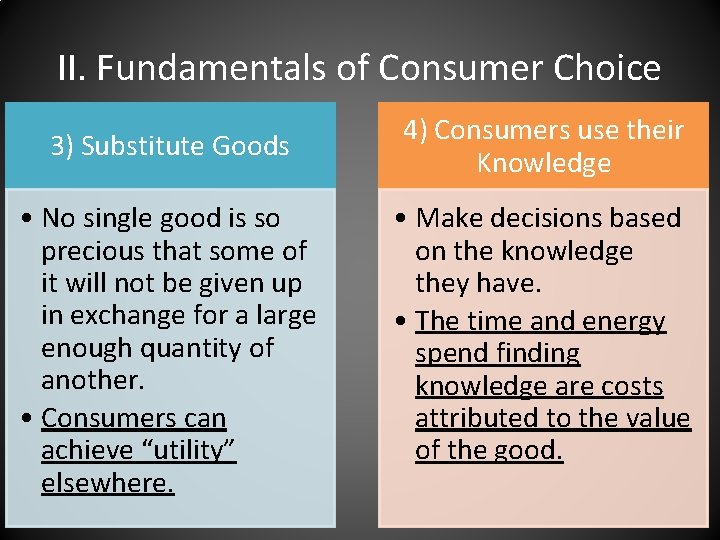
II. Fundamentals of Consumer Choice 3) Substitute Goods • No single good is so precious that some of it will not be given up in exchange for a large enough quantity of another. • Consumers can achieve “utility” elsewhere. 4) Consumers use their Knowledge • Make decisions based on the knowledge they have. • The time and energy spend finding knowledge are costs attributed to the value of the good.
II. Fundamentals of Consumer Choice 5) The Law of Marginal Utility applies: • As the rate of consumption increases, the marginal utility gained from consuming additional units of a good will decline. • Utility: subjective personal benefits. • Explains why we do not spend our entire budget on one good we receive utility from.