
Microbiology What You Dont Necessarily Learn in School

Microbiology: What You Don’t Necessarily Learn in School. 1
Objectives Demonstrate a basic understanding of commonly encountered organisms in the healthcare setting. Discuss the importance of reviewing and interpreting Microbiology lab results. Give examples of pathogenic vs. nonpathogenic bacteria. 2

Knowledge check 3
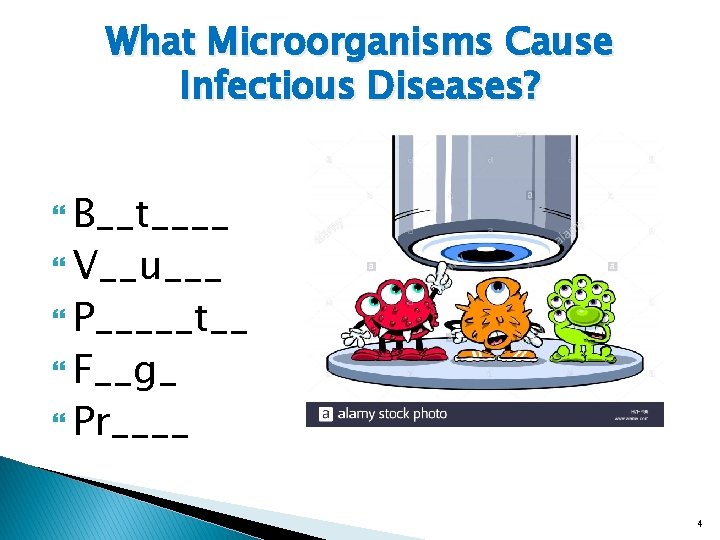
What Microorganisms Cause Infectious Diseases? B__t____ V__u___ P_____t__ F__g_ Pr____ 4
Nomenclature or Italicize Genus and species Staphylococcus aureus, Enterococcus faecalis Underline Staphylococcus aureus Enterococcus faecalis Abbreviate: C. difficile E. coli Genus alone: Clostridium Escherichia 5
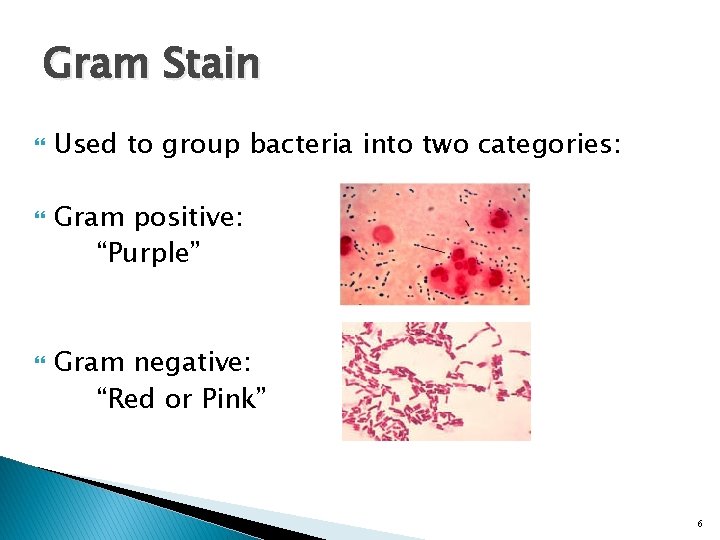
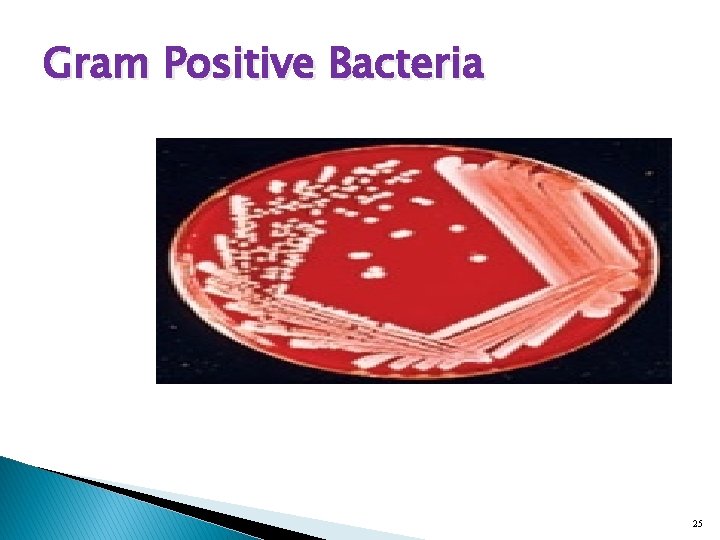
Gram Stain Used to group bacteria into two categories: Gram positive: “Purple” Gram negative: “Red or Pink” 6
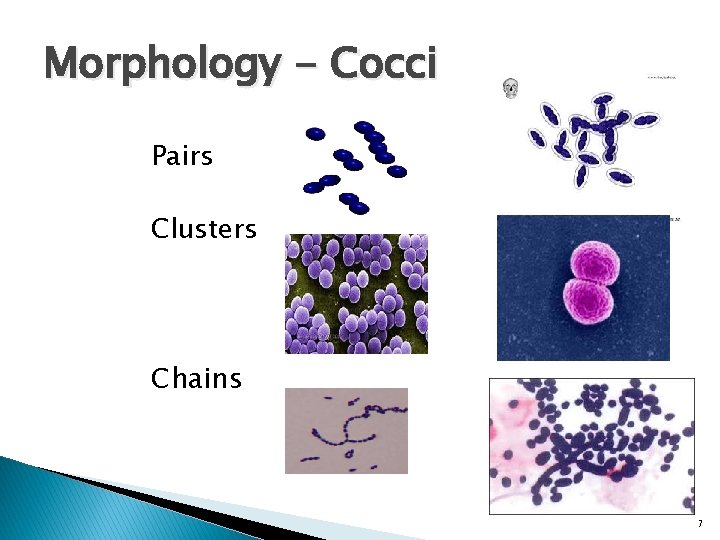
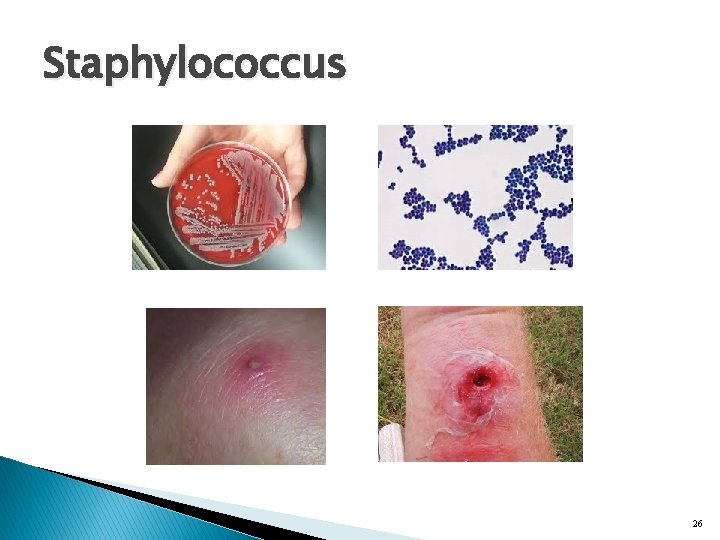
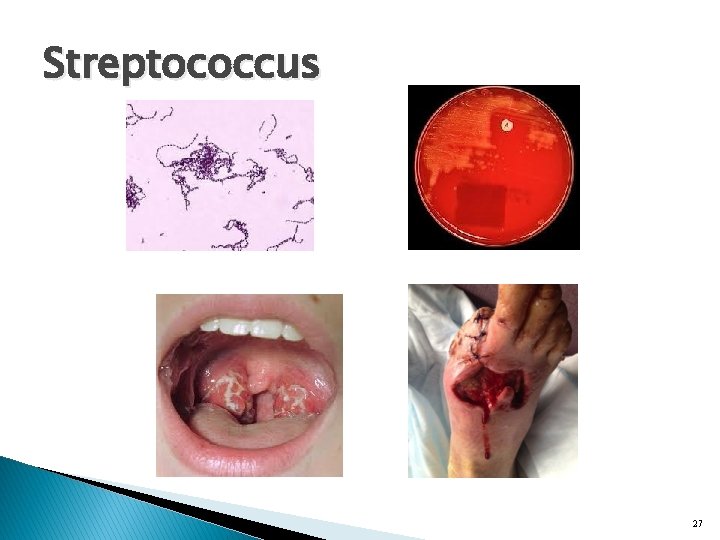
Morphology - Cocci Pairs Clusters Chains 7
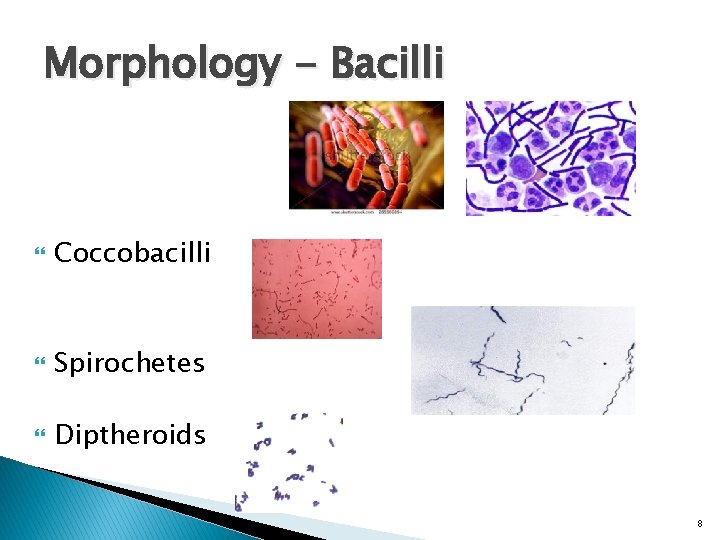
Morphology - Bacilli Coccobacilli Spirochetes Diptheroids 8
The White Blood Cell Count Neutrophils ◦ Polys, segs, bands ◦ Indicate infectious process with bacteria or fungi ◦ The first responders – pus formers Lymphocytes ◦ Often means a viral infection ◦ B and T cells/ CD 4 and CD 8 counts Eosinophils Often means parasitic or fungal infection Basophils ◦ Often means inflammatory process 9

Knowledge check 10
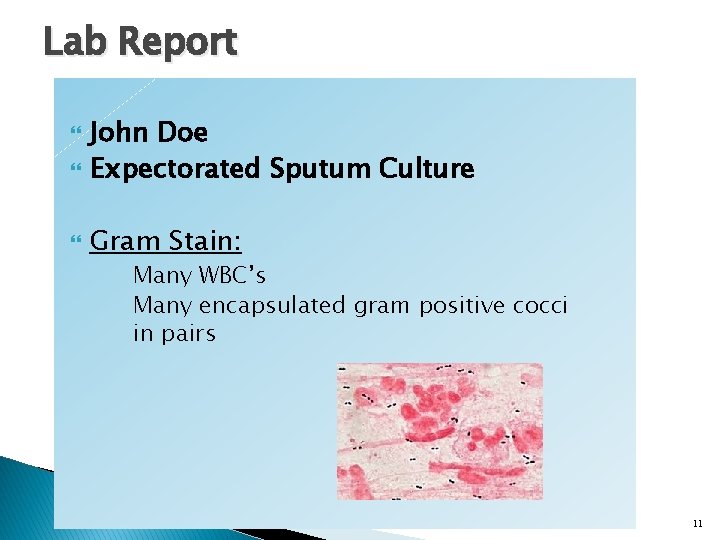
Lab Report John Doe Expectorated Sputum Culture Gram Stain: Many WBC’s Many encapsulated gram positive cocci in pairs 11
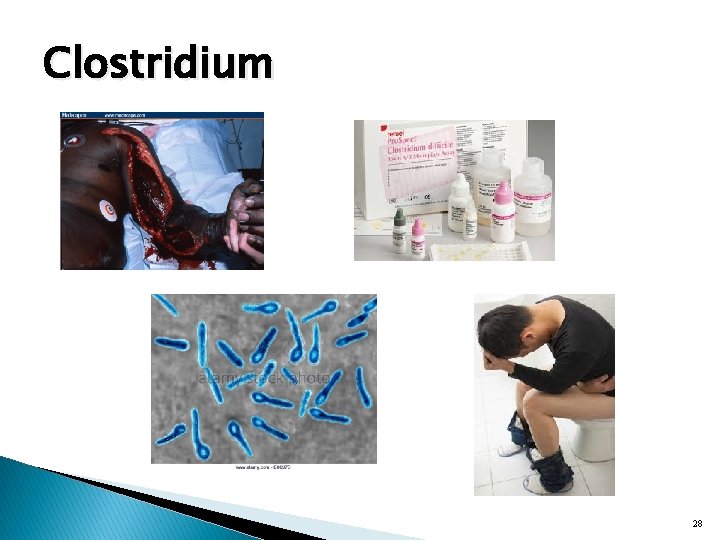
Tolerance Aerobic ◦ Require air or oxygen to grow ◦ Staph, Strep, Enterobacter Anaerobic ◦ Unable to tolerate air or oxygen ◦ Clostridium, Bacteroides, Fusobacterium ◦ Facultative anaerobes Able to tolerate lack of oxygen for a period of time 12
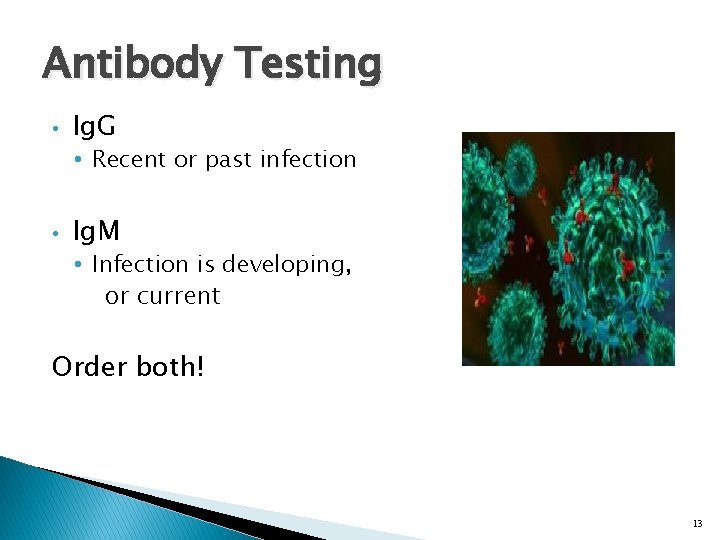
Antibody Testing • Ig. G • Recent or past infection • Ig. M • Infection is developing, or current Order both! 13
Toxins Cause tissue damage Disable the immune system Exotoxins ◦ Secreted and released outside the cell ◦ Usually no fever Endotoxins ◦ Located in the cell ◦ Cause fever and hypotension 14
Bacterial Flora Normal Flora Also called commensal organisms Harmless ◦ May be beneficial in their normal location Pathogenic Can produce disease if produced in a foreign location in large numbers, and if predisposing factors are present. 15
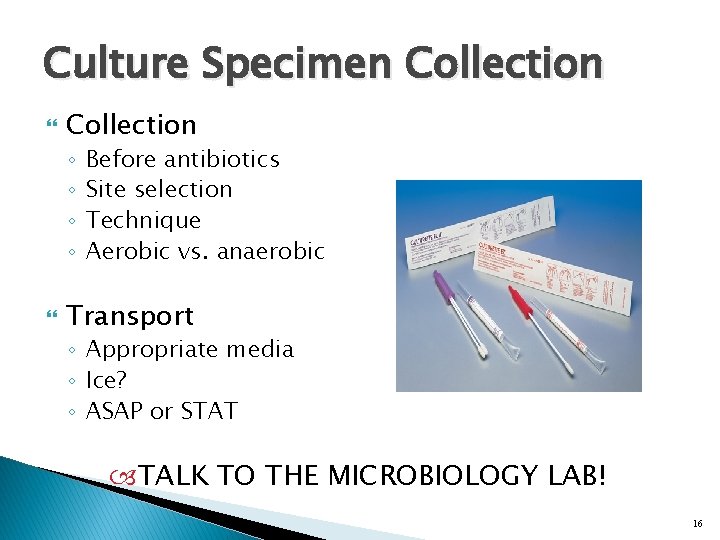
Culture Specimen Collection ◦ ◦ Before antibiotics Site selection Technique Aerobic vs. anaerobic Transport ◦ Appropriate media ◦ Ice? ◦ ASAP or STAT TALK TO THE MICROBIOLOGY LAB! 16
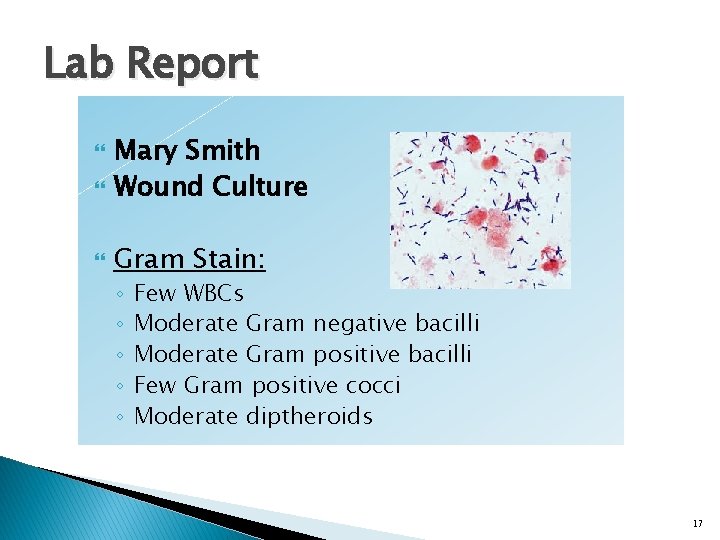
Lab Report Mary Smith Wound Culture Gram Stain: ◦ ◦ ◦ Few WBCs Moderate Gram negative bacilli Moderate Gram positive bacilli Few Gram positive cocci Moderate diptheroids 17
Susceptibility Testing A Laboratory test to determine if an organism can be effectively treated with a particular antibiotic. Factors that determine testing: ◦ ◦ Body site from which the organism is isolated Presence of bacteria Quality of the specimen The host’s status 18
The Sensitivity Report MIC – the lowest concentration of antimicrobial agent required to inhibit the growth of the organism. S –I –R The clinical interpretation for the patient to respond to therapy. “Growth vs. No Growth” Beta-lactamase An enzyme produced by the organism that inactivates ampicillin. 19
Multiple-drug Resistant Organisms MRSA VRE ESBL CRE * Neisseria gonorrhoeae * Acinetobacter * Pseudomonas * Salmonella * Tuberculosis * 20

Knowledge check 21
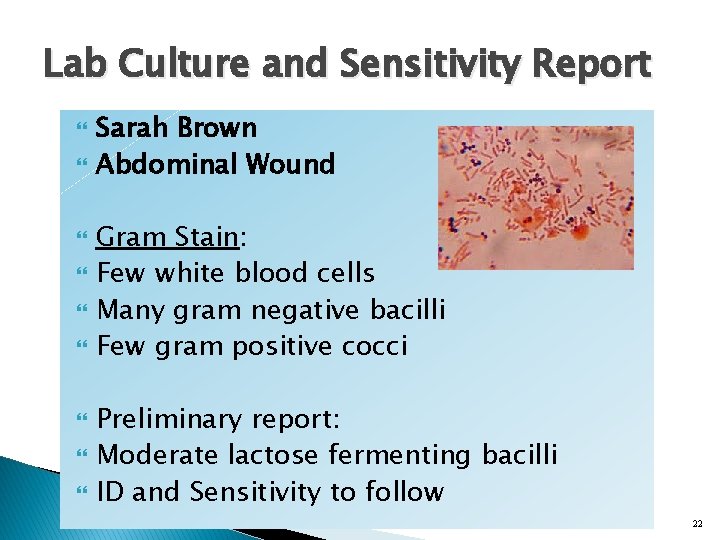
Lab Culture and Sensitivity Report Sarah Brown Abdominal Wound Gram Stain: Few white blood cells Many gram negative bacilli Few gram positive cocci Preliminary report: Moderate lactose fermenting bacilli ID and Sensitivity to follow 22
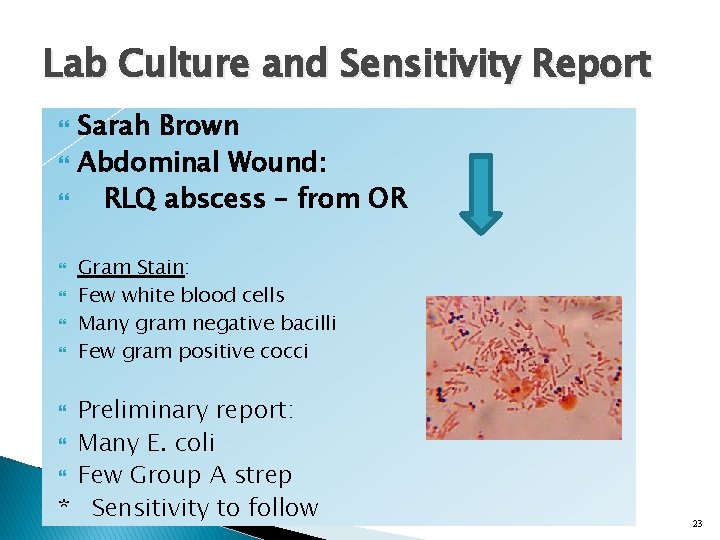
Lab Culture and Sensitivity Report Sarah Brown Abdominal Wound: RLQ abscess – from OR Gram Stain: Few white blood cells Many gram negative bacilli Few gram positive cocci Preliminary report: Many E. coli Few Group A strep * Sensitivity to follow 23
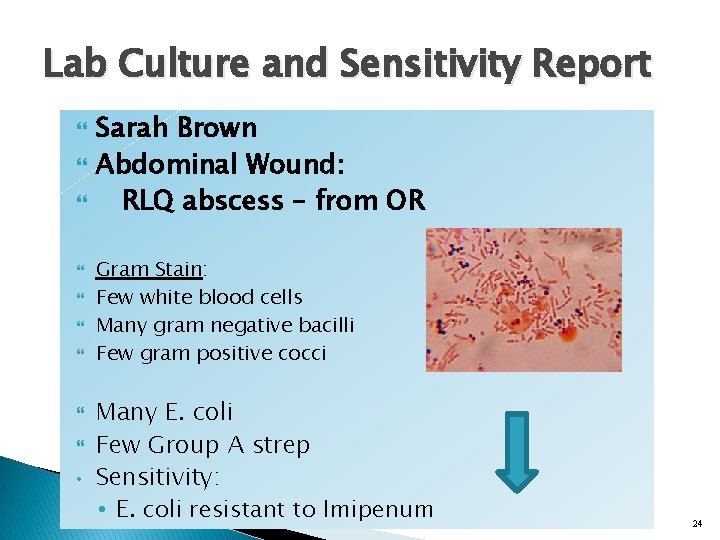
Lab Culture and Sensitivity Report • Sarah Brown Abdominal Wound: RLQ abscess – from OR Gram Stain: Few white blood cells Many gram negative bacilli Few gram positive cocci Many E. coli Few Group A strep Sensitivity: • E. coli resistant to Imipenum 24
Gram Positive Bacteria 25
Staphylococcus 26
Streptococcus 27
Clostridium 28
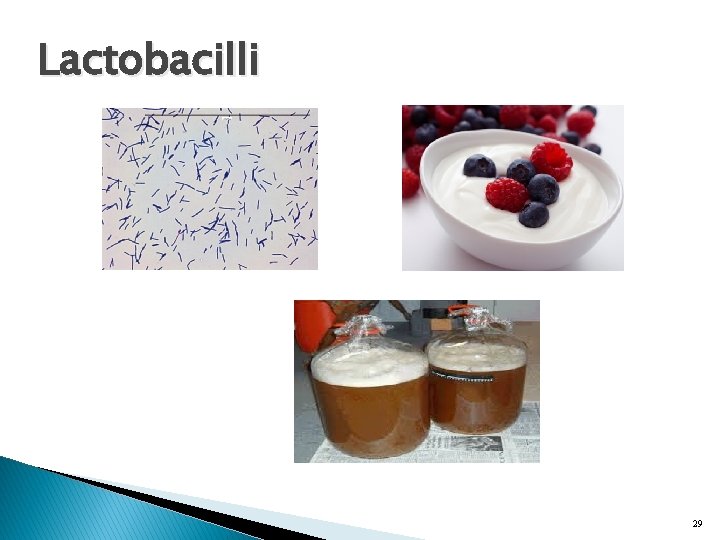
Lactobacilli 29
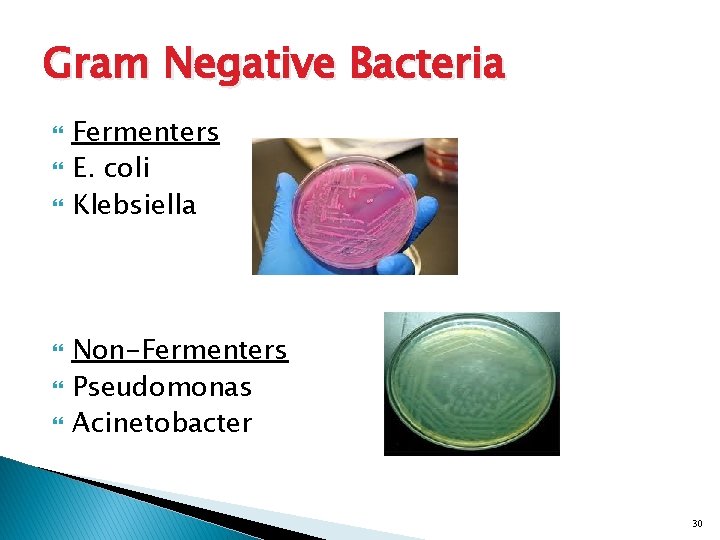
Gram Negative Bacteria Fermenters E. coli Klebsiella Non-Fermenters Pseudomonas Acinetobacter 30
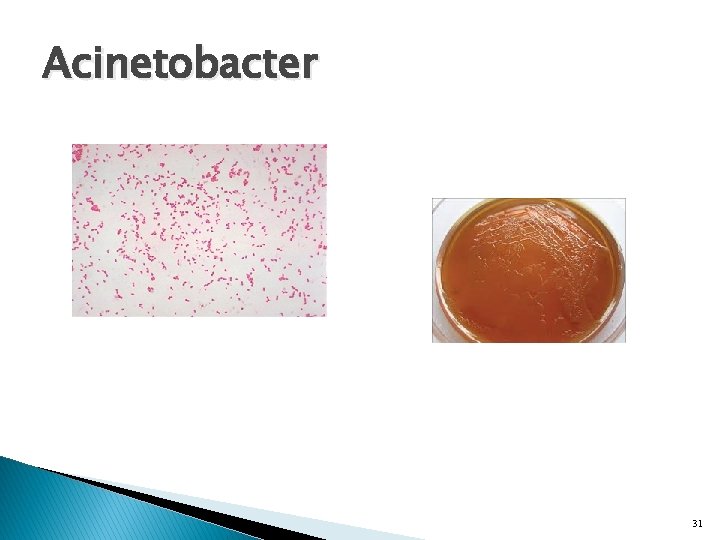
Acinetobacter 31
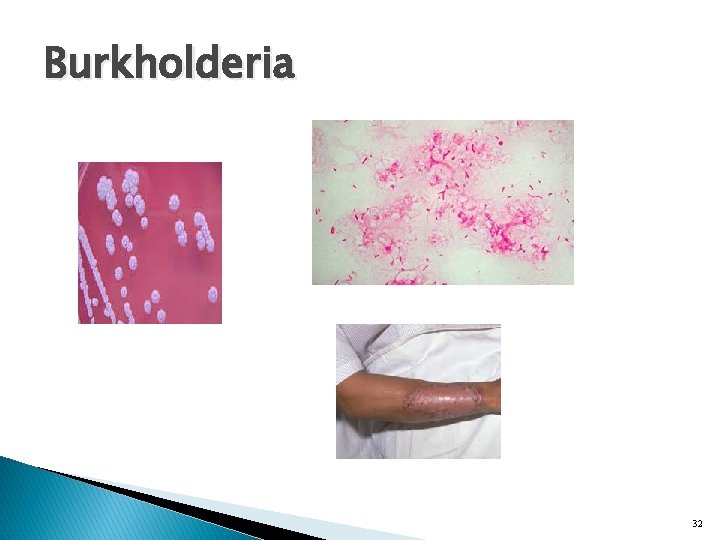
Burkholderia 32
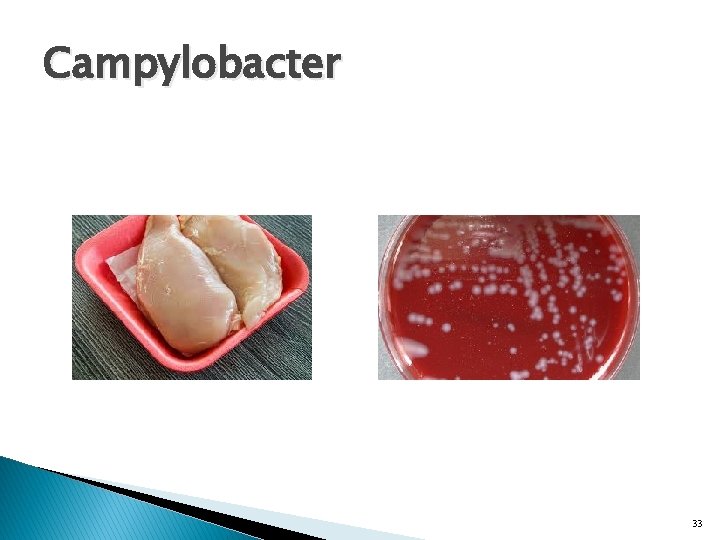
Campylobacter 33
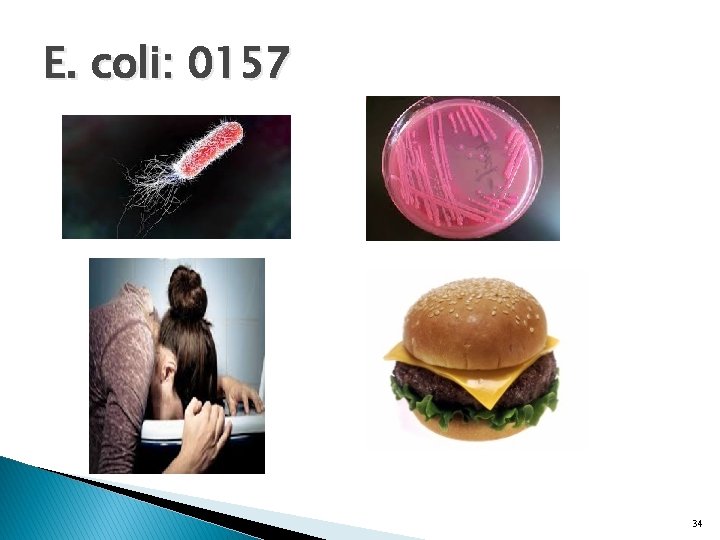
E. coli: 0157 34
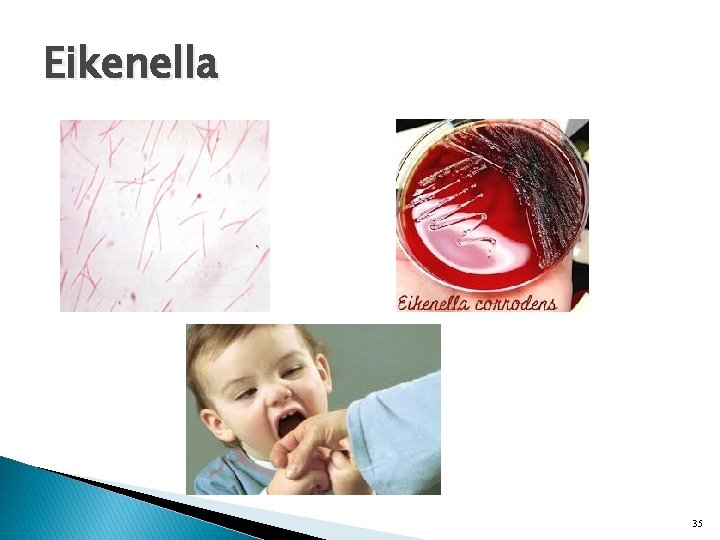
Eikenella 35
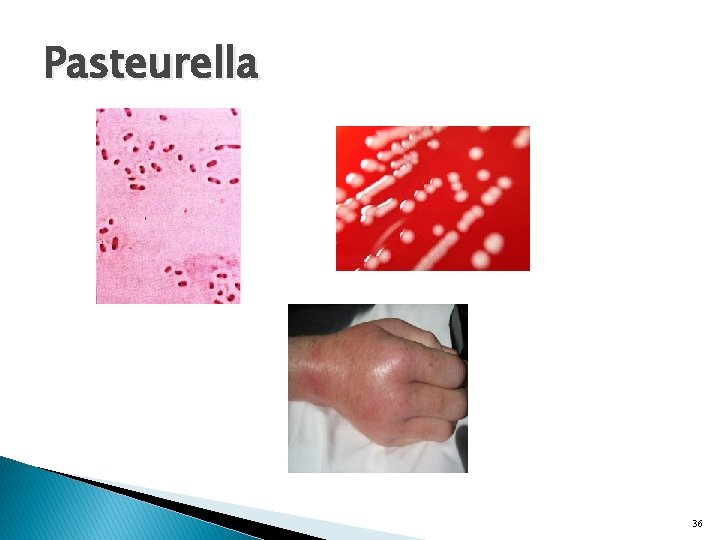
Pasteurella 36
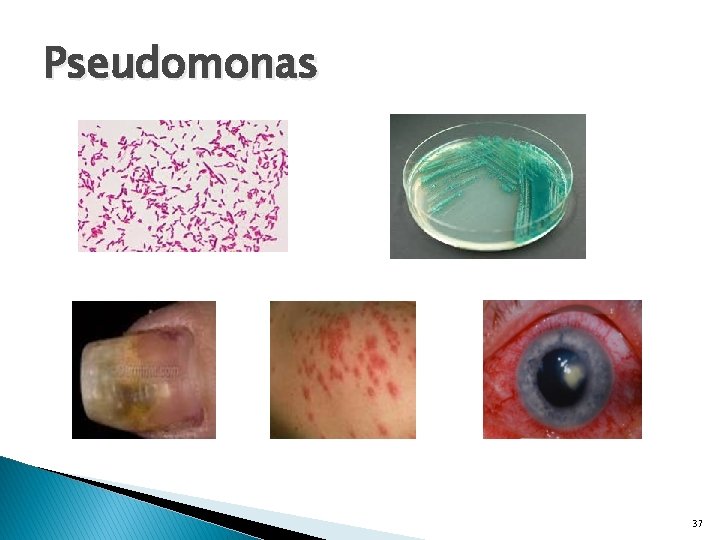
Pseudomonas 37
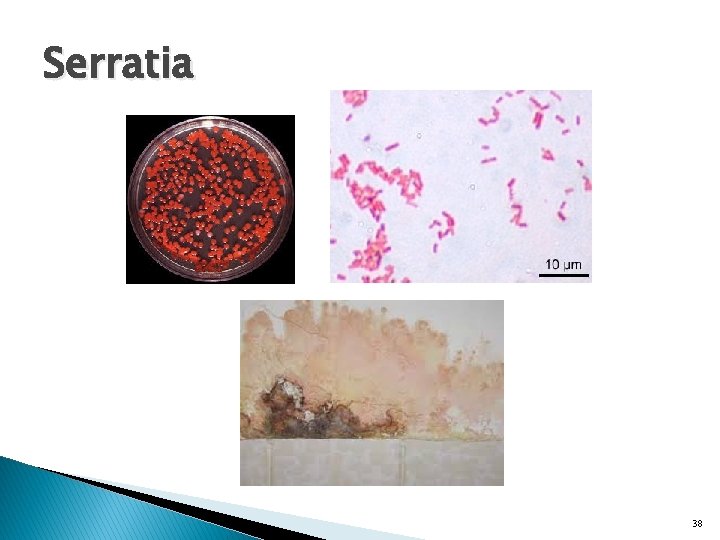
Serratia 38

Knowledge Check 39
What Could it be? 18 year old female presents to ED Rash and fever Chills, lethargy Lumber puncture reveals: ◦ Many white blood cells ◦ Many Gram negative diplococci 40
What if: 18 year old female presents to ED Rash and fever Chills, lethargy Lumber puncture reveals: ◦ Many white blood cells – lymphocytes ◦ No organisms seen 41
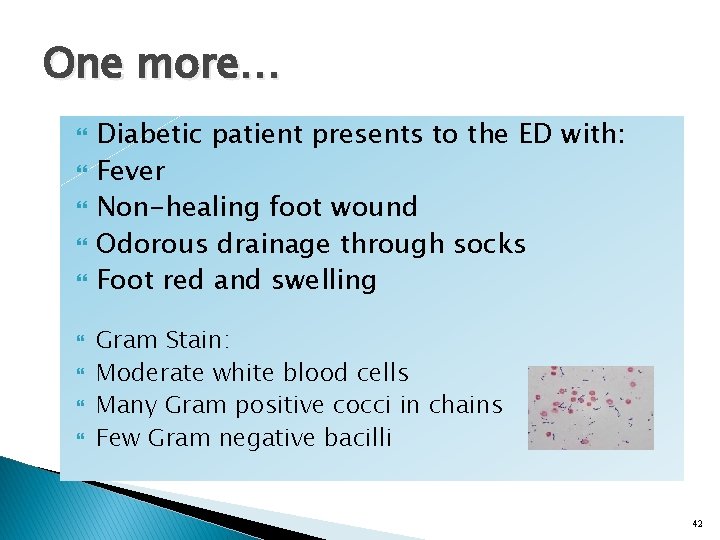
One more… Diabetic patient presents to the ED with: Fever Non-healing foot wound Odorous drainage through socks Foot red and swelling Gram Stain: Moderate white blood cells Many Gram positive cocci in chains Few Gram negative bacilli 42
Last one – really… Mrs. Jones Positive blood cultures 4/4 bottles Gram positive cocci Next day Plates grew S. epidermidis Resistant to Methicillin 43
FINAL WORD Assume that every patient is potentially infected or colonized with an organism that could be transmitted in the healthcare setting. Apply Standard Precautions for everyone * Wash you hands - Often 44
Thank You 45
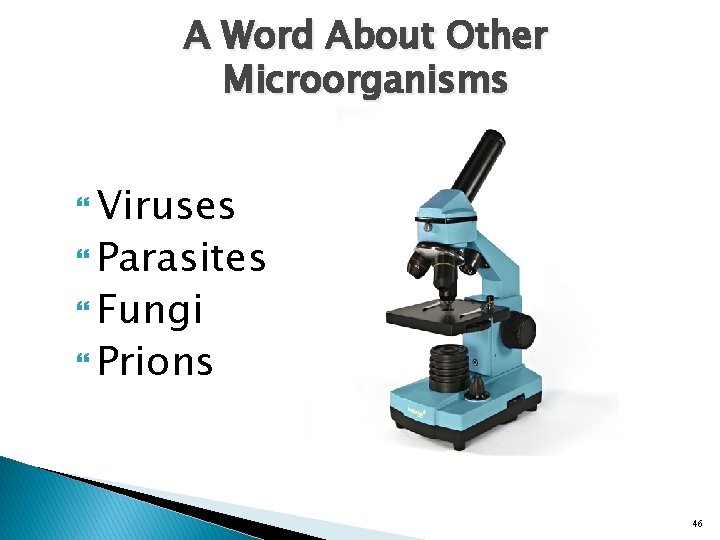
A Word About Other Microorganisms Viruses Parasites Fungi Prions 46
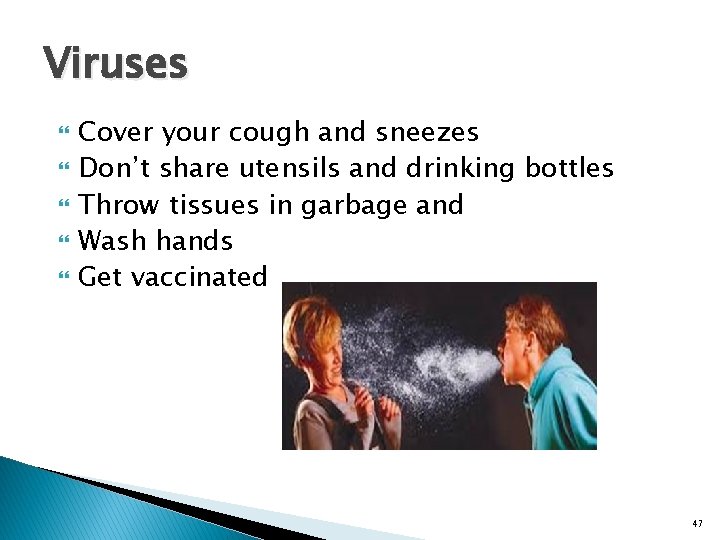
Viruses Cover your cough and sneezes Don’t share utensils and drinking bottles Throw tissues in garbage and Wash hands Get vaccinated 47
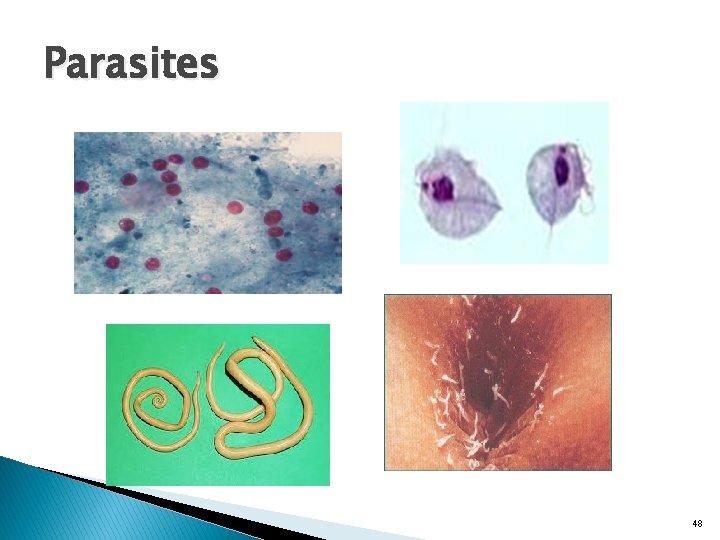
Parasites 48
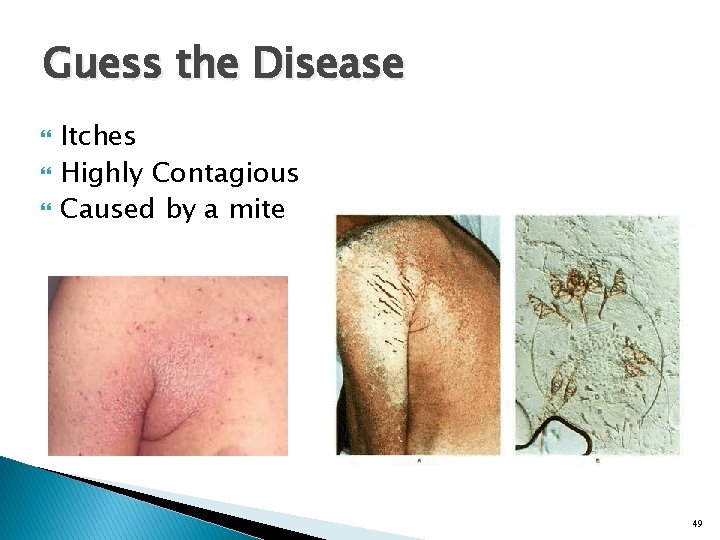
Guess the Disease Itches Highly Contagious Caused by a mite 49
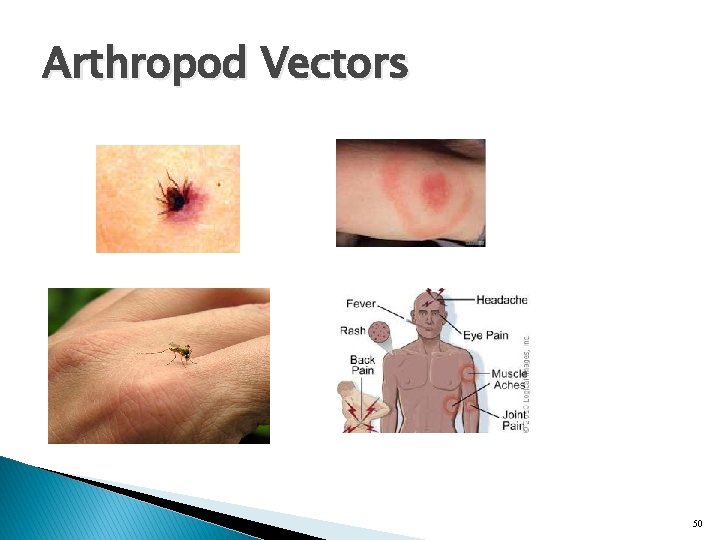
Arthropod Vectors 50
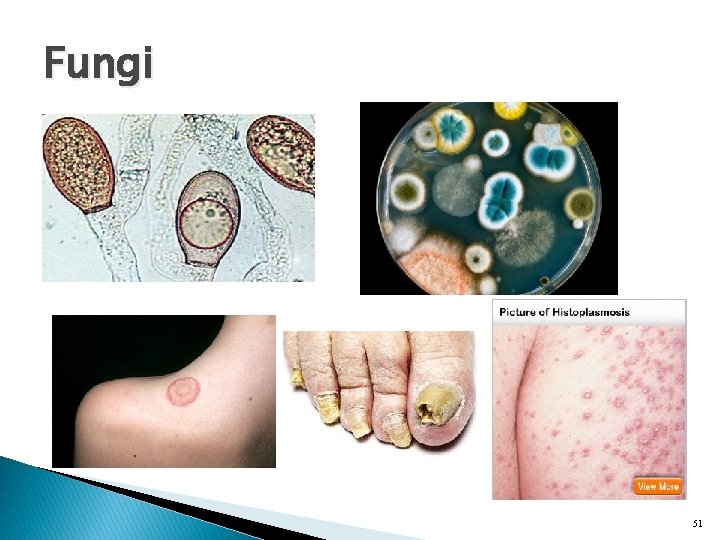
Fungi 51
- Slides: 51