
Microbiology Viruses Taxonomy Review We know that taxonomy
Microbiology Viruses
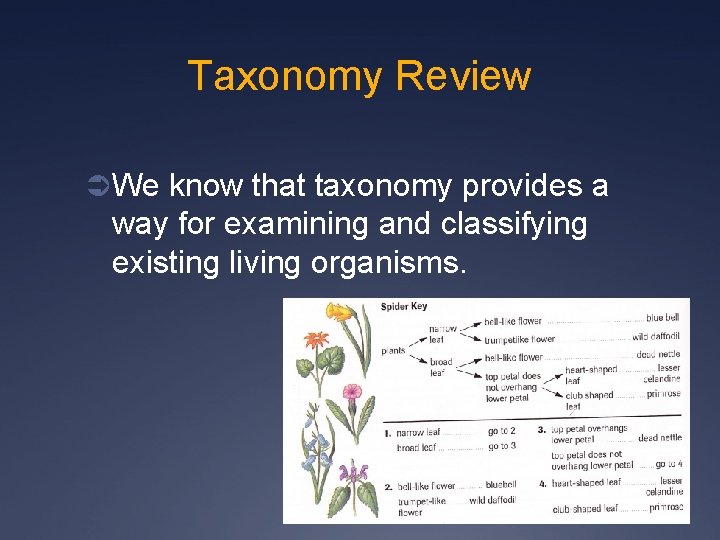
Taxonomy Review Ü We know that taxonomy provides a way for examining and classifying existing living organisms.
What is a Virus? ÜVirus: a microscopic lifeless particle that is capable of replicating only within living cells. ÜIt does not display the essential characteristics of living cells.
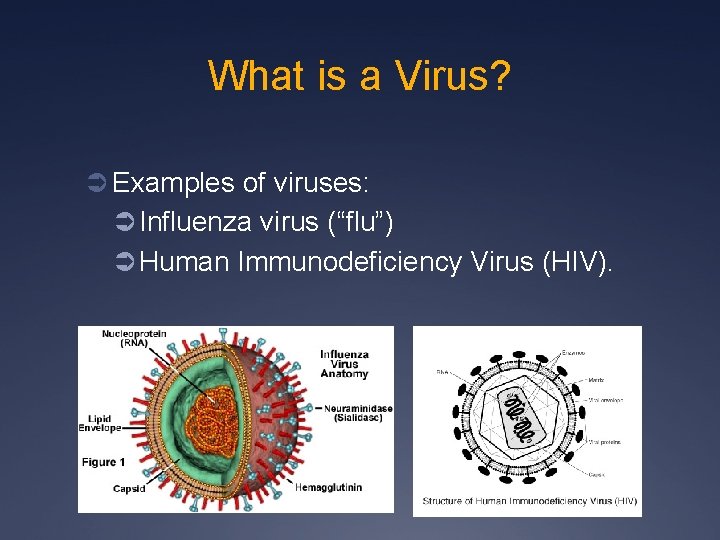
What is a Virus? Ü Examples of viruses: Ü Influenza virus (“flu”) Ü Human Immunodeficiency Virus (HIV).
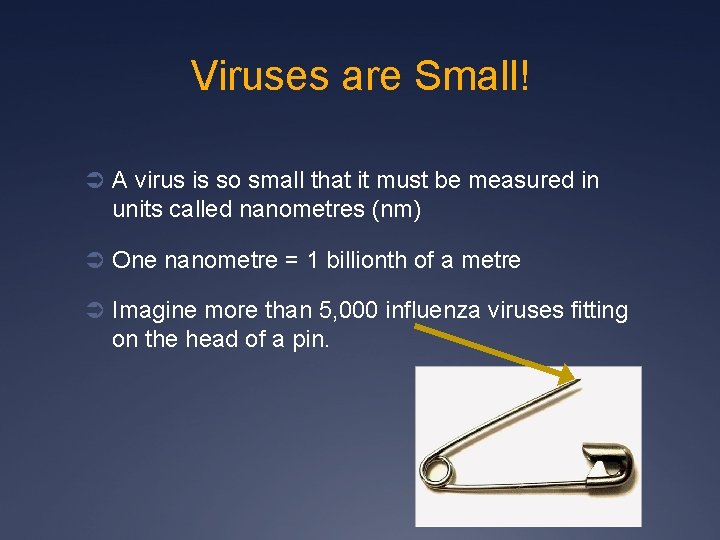
Viruses are Small! Ü A virus is so small that it must be measured in units called nanometres (nm) Ü One nanometre = 1 billionth of a metre Ü Imagine more than 5, 000 influenza viruses fitting on the head of a pin.
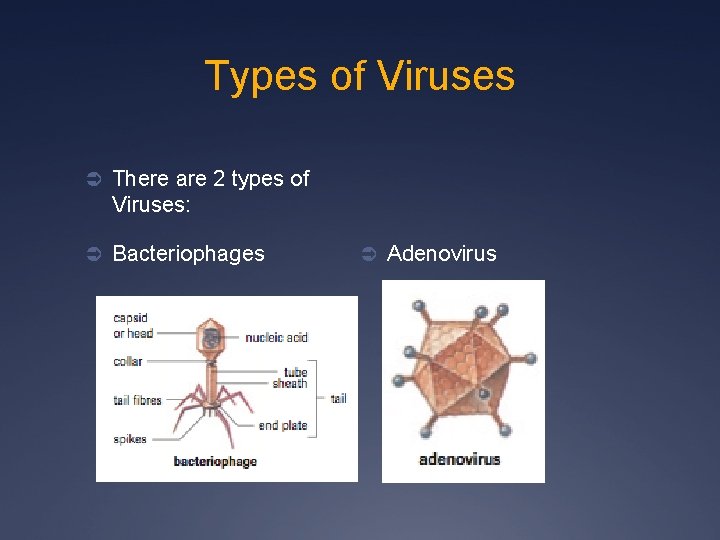
Types of Viruses Ü There are 2 types of Viruses: Ü Bacteriophages Ü Adenovirus
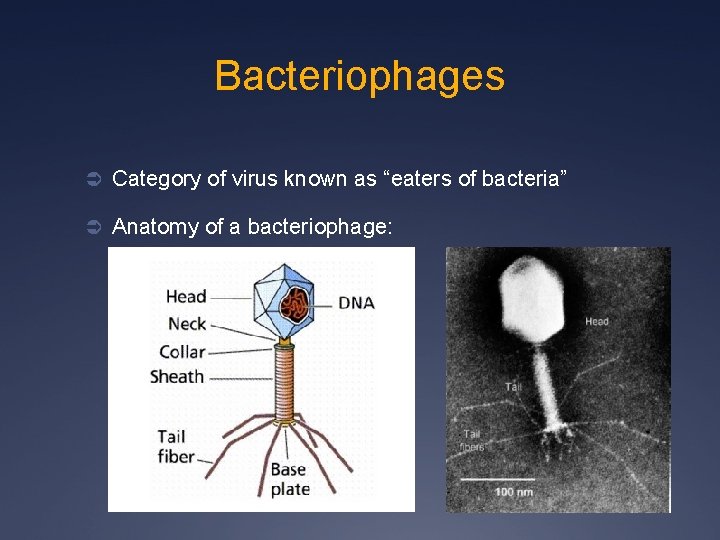
Bacteriophages Ü Category of virus known as “eaters of bacteria” Ü Anatomy of a bacteriophage:
Viruses are selective Ü Specific viruses enter only specific cells Ü This is called the host range Ü Host range: the number of host species, tissues, or cells that can be infected by a virus Ü Examples: Ü 1) Human cold virus: infects upper respiratory tract cells Ü 2) HIV affects immune system (surface of certain types of white blood cells)
Questions Ü Ü 1) Why aren’t viruses placed within the normal classification system? Answer: It’s a lifeless organism and it does not display the essential characteristics of living cells. Ü 2) Viruses have characteristic shapes. What are the 2 components that are similar between them? Answer: Genetic material and protein covering (capsid) Ü 3) What is the only way viruses survive? Answer: By attacking specific host cells and depend on them for nutrition, respiration and replication
Viral Replication Ü Replication: virus and genetic material are duplicated before a cell divides Ü Regardless of the type of host cell, all viruses follow the same basic steps Ü Whole process may take 25 – 45 minutes to produce hundreds of virus particles
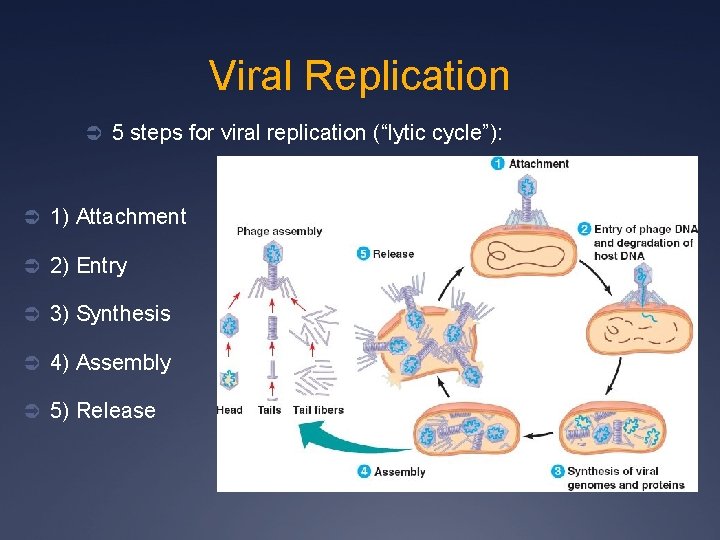
Viral Replication Ü 5 steps for viral replication (“lytic cycle”): Ü 1) Attachment Ü 2) Entry Ü 3) Synthesis Ü 4) Assembly Ü 5) Release
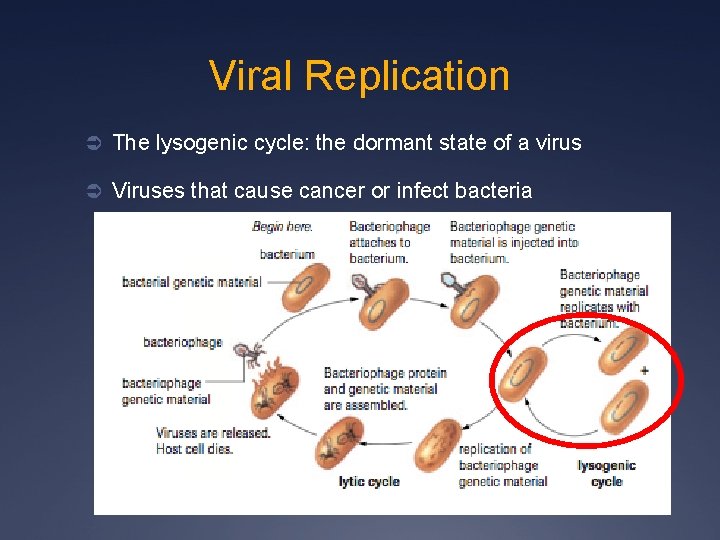
Viral Replication Ü The lysogenic cycle: the dormant state of a virus Ü Viruses that cause cancer or infect bacteria
Viral Replication Ü In the lysogenic (dormant) cycle: Ü The virus does not kill the cell right away Ü It may coexist with the cell and be carried through generations without harm to the host Ü Triggers of dormant viruses: Ü Environmental change to bacteria (e. g. temperature or p. H) Ü Changes in available nutrients
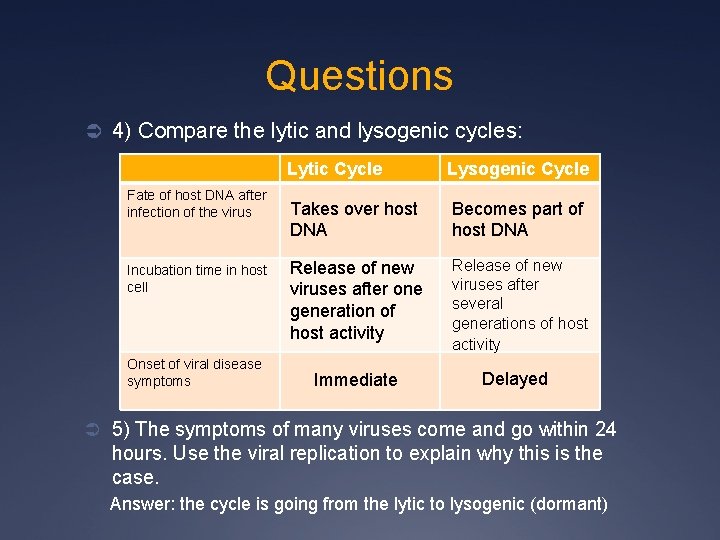
Questions Ü 4) Compare the lytic and lysogenic cycles: Fate of host DNA after infection of the virus Incubation time in host cell Onset of viral disease symptoms Lytic Cycle Lysogenic Cycle Takes over host DNA Becomes part of host DNA Release of new viruses after one generation of host activity Release of new viruses after several generations of host activity Immediate Delayed Ü 5) The symptoms of many viruses come and go within 24 hours. Use the viral replication to explain why this is the case. Answer: the cycle is going from the lytic to lysogenic (dormant)
Virus Video How a Virus Invades your body
- Slides: 15