
MICROBIOLOGY Unit 5 Chapter 16 17 18 19
MICROBIOLOGY Unit 5 Chapter 16, 17, 18, 19
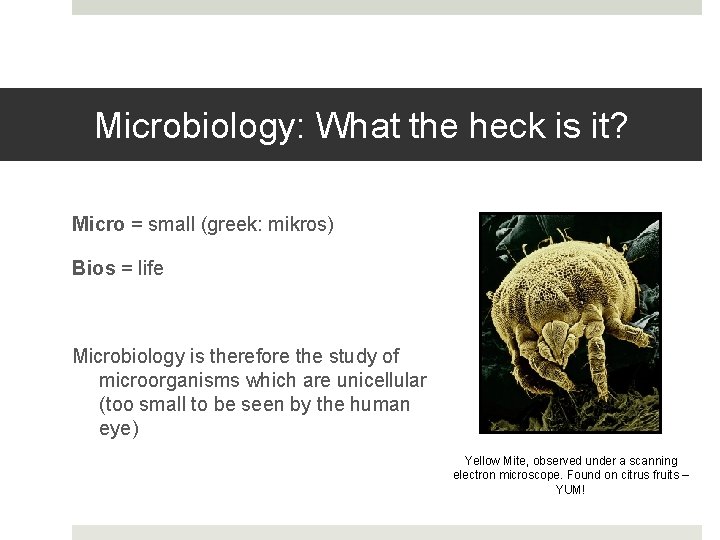
Microbiology: What the heck is it? Micro = small (greek: mikros) Bios = life Microbiology is therefore the study of microorganisms which are unicellular (too small to be seen by the human eye) Yellow Mite, observed under a scanning electron microscope. Found on citrus fruits – YUM!
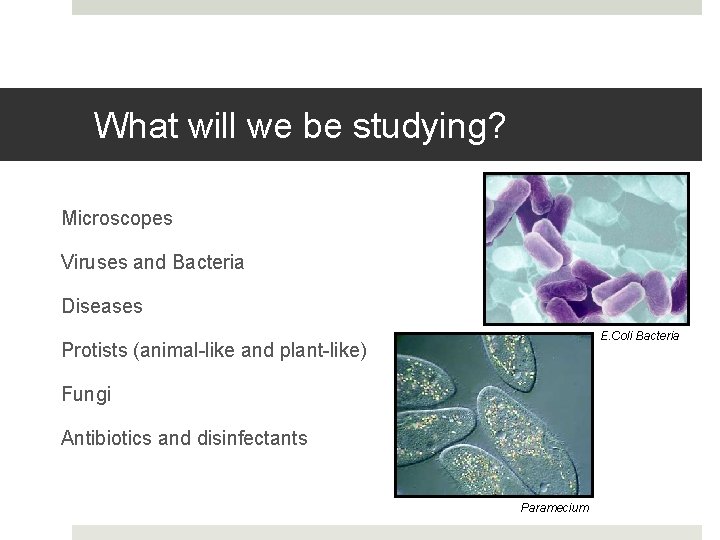
What will we be studying? Microscopes Viruses and Bacteria Diseases E. Coli Bacteria Protists (animal-like and plant-like) Fungi Antibiotics and disinfectants Paramecium
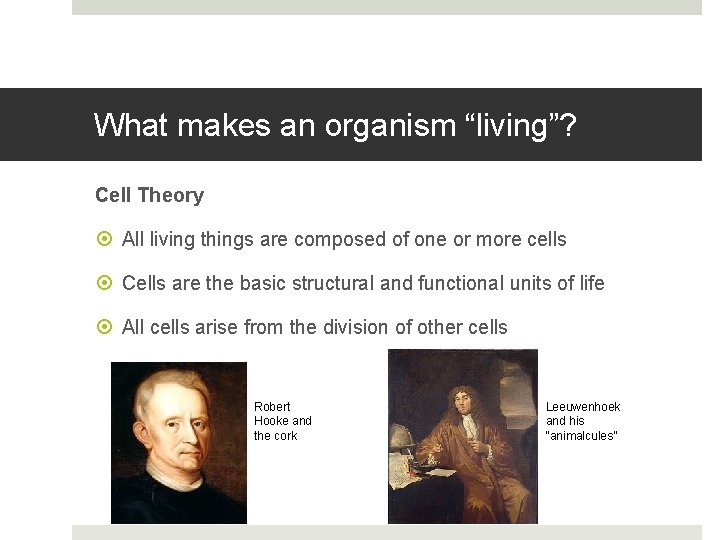
What makes an organism “living”? Cell Theory All living things are composed of one or more cells Cells are the basic structural and functional units of life All cells arise from the division of other cells Robert Hooke and the cork Leeuwenhoek and his “animalcules”
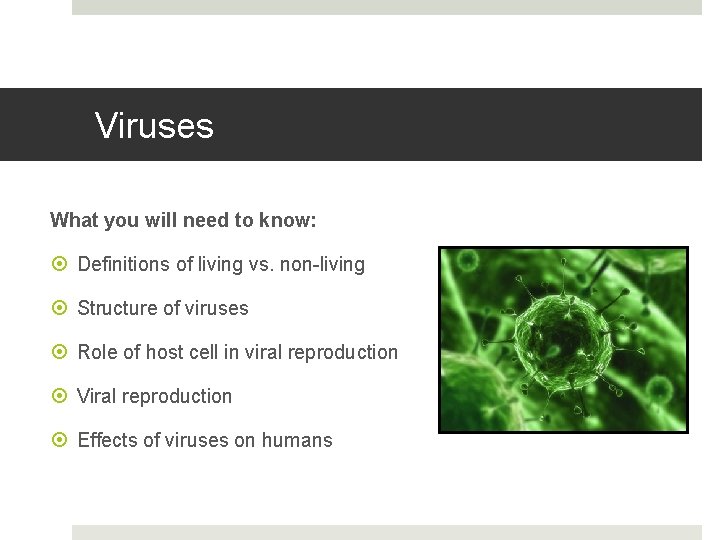
Viruses What you will need to know: Definitions of living vs. non-living Structure of viruses Role of host cell in viral reproduction Viral reproduction Effects of viruses on humans
Overview of the Virus A virus ( Latin for poison ) is: a lifeless particle that carries out no metabolic functions on its own and cannot reproduce on its own capable of reproduction once it invades a living cell (on this basis, viruses occupy a position between nonliving and living matter. ) so small that it must be measured in units called nanometres (nm). One nanometre equals one-billionth of a metre Def: A virus is a noncellular particle made up of genetic material and protein that can invade living cells
Shape of a Virus Shape is also a defining characteristic of viruses. The basic shapes viruses tend to take are: Rods, filaments, crystals, helixes, polyhedrons, spheres with added extensions Almost all human viruses are close to being spherical

Shapes of Viruses:
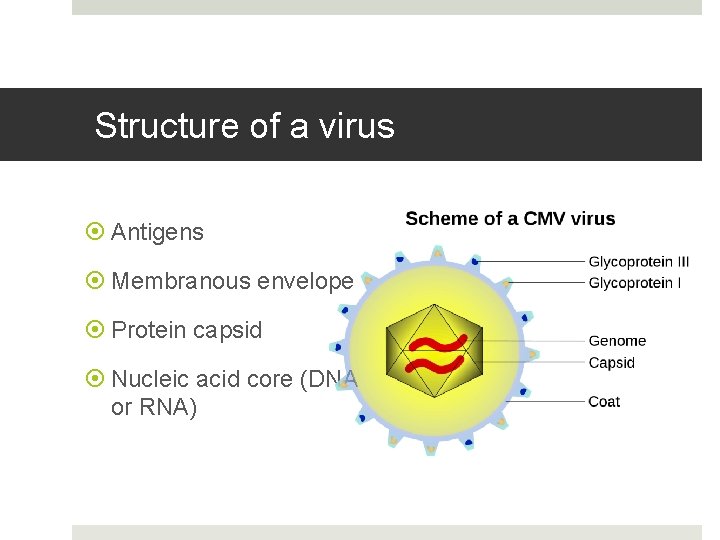
Structure of a virus Antigens Membranous envelope Protein capsid Nucleic acid core (DNA or RNA)
Structure of a Virus Every virus carry proteins and nucleic acids in a protective coat. This protective membrane is called the capsid. The capsid accounts for 95% of the total virus and gives the virus its particular shape Inside the virus is an inner nucleic acid (DNA or RNA) core or strand; its genetic material
Structure Continued Extensions on any virus are called antigens. The antigens allow viruses to identify, attack, and enter its target host Viruses are selective: only specific viruses enter only specific cells. Some viruses infect only humans, some only coldblooded animals and some can infect every kind (host range)
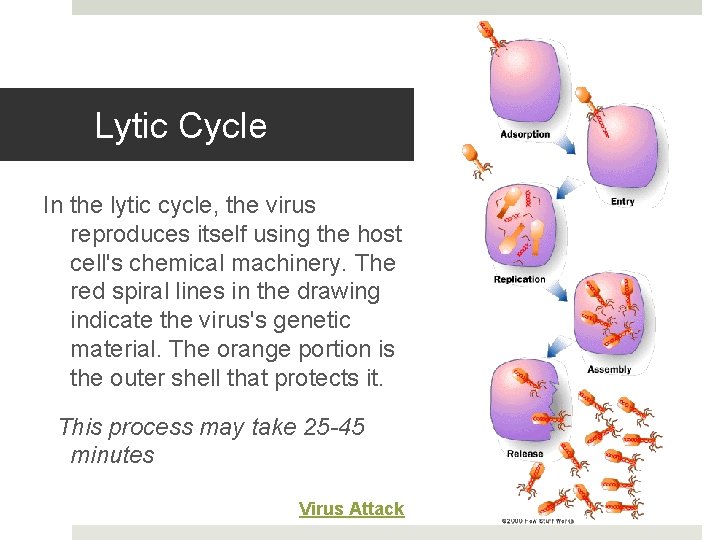
Lytic Cycle In the lytic cycle, the virus reproduces itself using the host cell's chemical machinery. The red spiral lines in the drawing indicate the virus's genetic material. The orange portion is the outer shell that protects it. This process may take 25 -45 minutes Virus Attack
Lytic Cycle Continued Regardless of the type of host cell, all viruses follow the same basic steps: 1. A virus particle attaches to a host cell 2. The particle releases its genetic instructions into the host cell 3. The injected genetic material recruits the host cell's enzymes 4. The enzymes make parts for more new virus particles 5. The new particles assemble the parts into new viruses 6. The new particles break free from the host cell (Lysis)
Example: Getting a Cold or Flu! The sequence of events that occurs when you come down with the flu or a cold is a good demonstration of how a virus works: 1. An infected person sneezes near you 2. You inhale the virus particle, and it attaches to cells lining the sinuses in your nose 3. The virus attacks the cells lining the sinuses and rapidly reproduces new viruses 4. The host cells break, and new viruses spread into your bloodstream and also into your lungs. Because you have lost cells lining your sinuses, fluid can flow into your nasal passages and give you a runny nose 5. Viruses in the fluid that drips down your throat attack the cells lining your throat and give you a sore throat. 6. Viruses in your bloodstream can attack muscle cells and cause you to have muscle aches
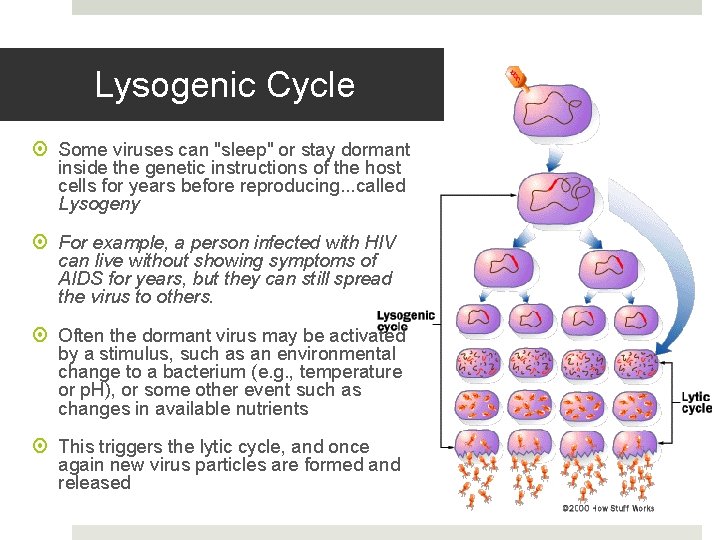
Lysogenic Cycle Some viruses can "sleep" or stay dormant inside the genetic instructions of the host cells for years before reproducing. . . called Lysogeny For example, a person infected with HIV can live without showing symptoms of AIDS for years, but they can still spread the virus to others. Often the dormant virus may be activated by a stimulus, such as an environmental change to a bacterium (e. g. , temperature or p. H), or some other event such as changes in available nutrients This triggers the lytic cycle, and once again new virus particles are formed and released
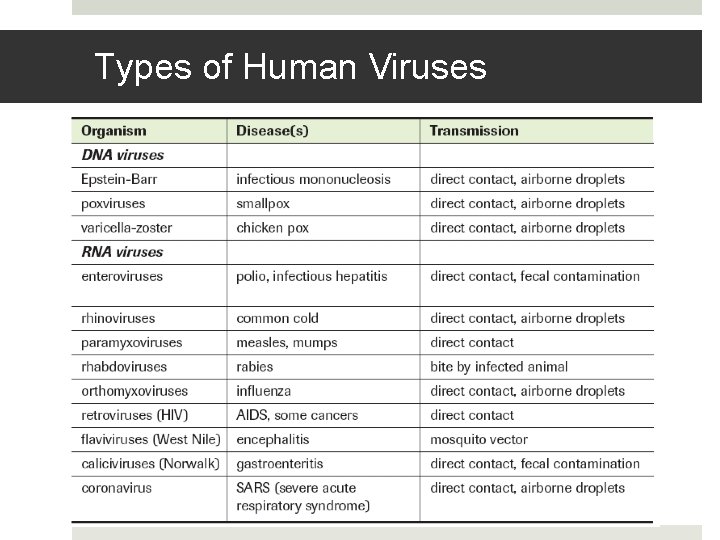
Types of Human Viruses
Body’s Defense Primary line of defense: natural chemical and physical barriers of the body Physical: Skin and Mucuous Membranes Chemical Barriers: Tears, Sweat, urine, stomach acid Secondary line of defense: non-specific Immune Response, used no matter what the invader Phagoctosis – done by macrophages Natural Killer Cells – the killer cells kill infected cells Inflammation – cuts off the infected area from the rest of the body Fever – raising temperature kills invading microorganism
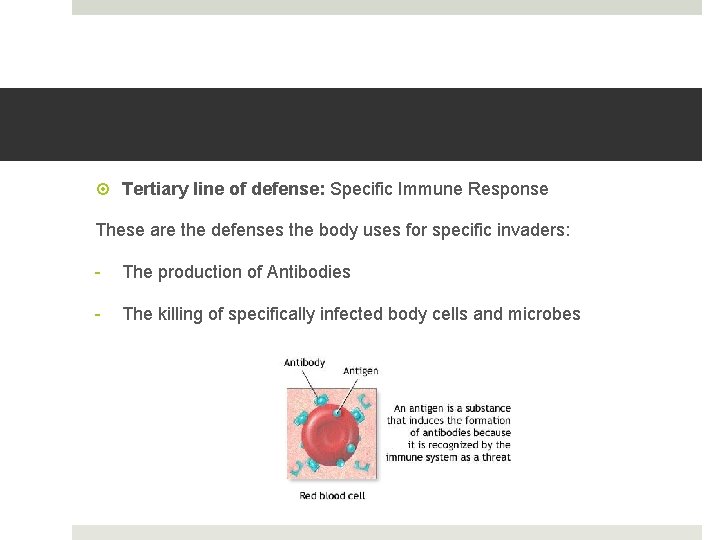
Tertiary line of defense: Specific Immune Response These are the defenses the body uses for specific invaders: - The production of Antibodies - The killing of specifically infected body cells and microbes
Viruses and Human Health Vaccines are liquid preparations of dead or weakened viral or bacterial cells that stimulate the body’s immune system to fight back. Some viral diseases can be prevented with vaccines (e. g. , polio, smallpox, hepatitis B). Vaccines are given orally or by injection (inoculation). Immunizations work by pre-infecting the body so it knows how to produce the right antibodies as soon as the virus starts reproducing Because viruses reproduce so quickly and so frequently, they can often change slightly. Sometimes, mistakes creep into their genetic instructions These changes might alter the protein coat slightly, so one year's batch of vaccine might not be as effective against the same type of virus next year
Reduce the spread! Viruses can be spread through the following means: Carrier organisms - mosquitoes, fleas The air Direct transfer of body fluids from one person to another - saliva, sweat, nasal mucus, blood, semen, vaginal secretions Surfaces on which body fluids have dried To reduce the risk of spreading or contacting viruses, here are things you can do: 1. Cover your mouth or nose when you sneeze or cough. 2. Wash your hands frequently, especially after going to the bathroom or preparing food. 3. Avoid contact with the bodily fluids of others.
The End Muh ha ha!
- Slides: 21