
Microbiology Revision Dr Anna Goyder and Dr Helen
Microbiology Revision Dr Anna Goyder and Dr Helen Mc. Kenna 19/03/13 - 21/03/13
Outline 2 lectures x 90 mins each: • • Bacteria and Abx Viruses and Antivirals Vaccinations Infections by system: - CNS - Cardio - Resp - GI/hepatitis - GU/gynae - Musculoskeletal • Mycobacterial • Zoonoses • Protozoa

Recap
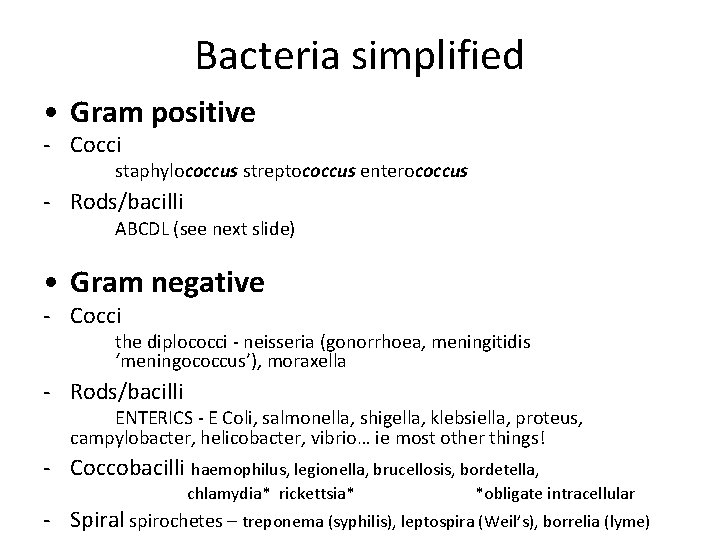
Bacteria simplified • Gram positive - Cocci staphylococcus streptococcus enterococcus - Rods/bacilli ABCDL (see next slide) • Gram negative - Cocci the diplococci - neisseria (gonorrhoea, meningitidis ‘meningococcus’), moraxella - Rods/bacilli ENTERICS - E Coli, salmonella, shigella, klebsiella, proteus, campylobacter, helicobacter, vibrio… ie most other things! - Coccobacilli haemophilus, legionella, brucellosis, bordetella, chlamydia* rickettsia* *obligate intracellular - Spiral spirochetes – treponema (syphilis), leptospira (Weil’s), borrelia (lyme)
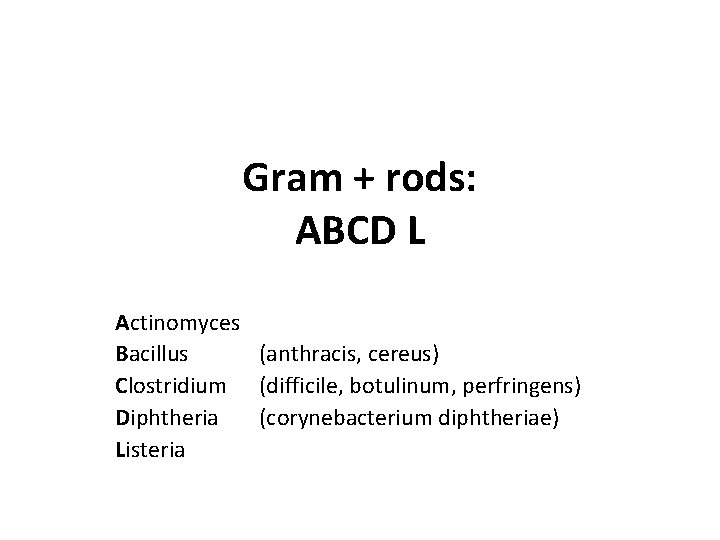
Gram + rods: ABCD L Actinomyces Bacillus (anthracis, cereus) Clostridium (difficile, botulinum, perfringens) Diphtheria (corynebacterium diphtheriae) Listeria
Respiratory Tract Infections
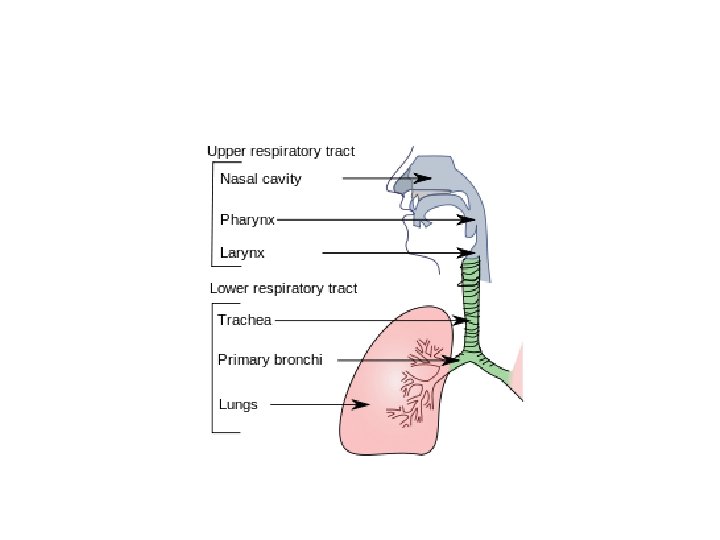
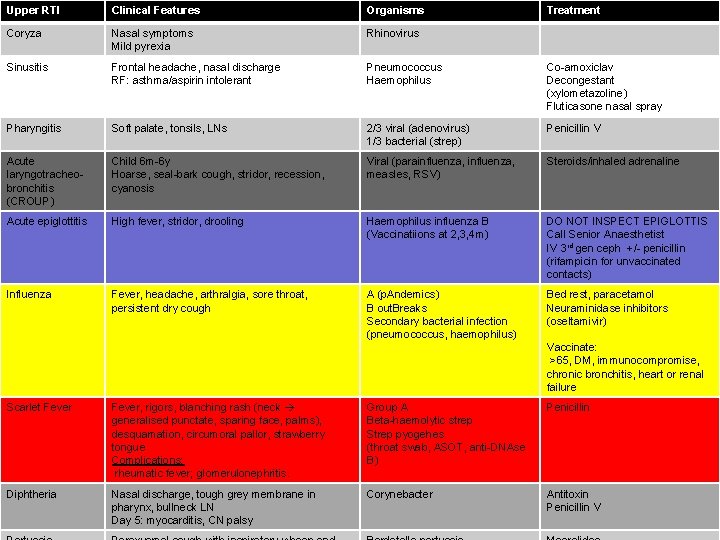
Upper RTI Clinical Features Organisms Treatment Coryza Nasal symptoms Mild pyrexia Rhinovirus Sinusitis Frontal headache, nasal discharge RF: asthma/aspirin intolerant Pneumococcus Haemophilus Co-amoxiclav Decongestant (xylometazoline) Fluticasone nasal spray Pharyngitis Soft palate, tonsils, LNs 2/3 viral (adenovirus) 1/3 bacterial (strep) Penicillin V Acute laryngotracheobronchitis (CROUP) Child 6 m-6 y Hoarse, seal-bark cough, stridor, recession, cyanosis Viral (parainfluenza, measles, RSV) Steroids/inhaled adrenaline Acute epiglottitis High fever, stridor, drooling Haemophilus influenza B (Vaccinatiions at 2, 3, 4 m) DO NOT INSPECT EPIGLOTTIS Call Senior Anaesthetist IV 3 rd gen ceph +/- penicillin (rifampicin for unvaccinated contacts) Influenza Fever, headache, arthralgia, sore throat, persistent dry cough A (p. Andemics) B out. Breaks Secondary bacterial infection (pneumococcus, haemophilus) Bed rest, paracetamol Neuraminidase inhibitors (oseltamivir) Vaccinate: >65, DM, immunocompromise, chronic bronchitis, heart or renal failure Scarlet Fever, rigors, blanching rash (neck generalised punctate, sparing face, palms), desquamation, circumoral pallor, strawberry tongue Complications: rheumatic fever; glomerulonephritis. Group A Beta-haemolytic strep Strep pyogehes (throat swab, ASOT, anti-DNAse B) Penicillin Diphtheria Nasal discharge, tough grey membrane in pharynx, bullneck LN Day 5: myocarditis, CN palsy Corynebacter Antitoxin Penicillin V
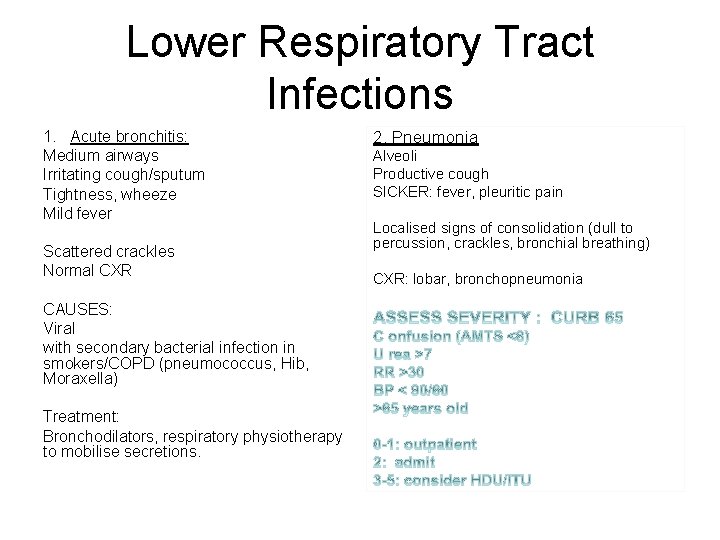
Lower Respiratory Tract Infections 1. Acute bronchitis: Medium airways Irritating cough/sputum Tightness, wheeze Mild fever Scattered crackles Normal CXR CAUSES: Viral with secondary bacterial infection in smokers/COPD (pneumococcus, Hib, Moraxella) Treatment: Bronchodilators, respiratory physiotherapy to mobilise secretions. 2. Pneumonia Alveoli Productive cough SICKER: fever, pleuritic pain Localised signs of consolidation (dull to percussion, crackles, bronchial breathing) CXR: lobar, bronchopneumonia
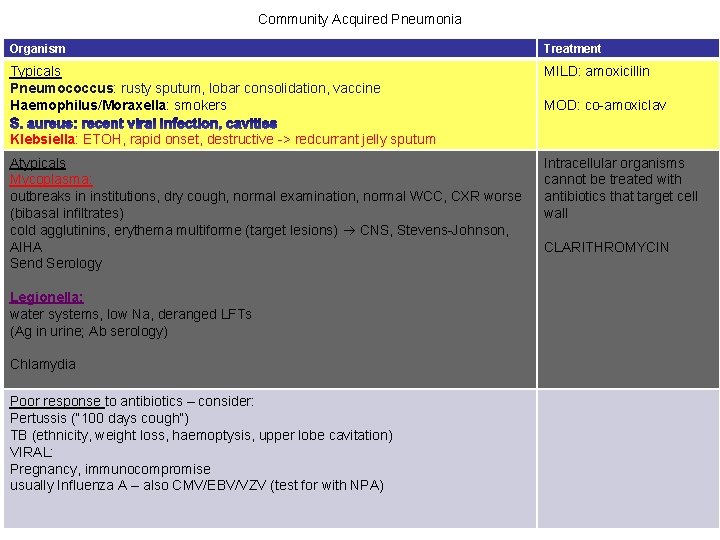
Community Acquired Pneumonia Organism Treatment Typicals Pneumococcus: rusty sputum, lobar consolidation, vaccine Haemophilus/Moraxella: smokers MILD: amoxicillin MOD: co-amoxiclav Klebsiella: ETOH, rapid onset, destructive -> redcurrant jelly sputum Atypicals Mycoplasma: outbreaks in institutions, dry cough, normal examination, normal WCC, CXR worse (bibasal infiltrates) cold agglutinins, erythema multiforme (target lesions) CNS, Stevens-Johnson, AIHA Send Serology Legionella: water systems, low Na, deranged LFTs (Ag in urine; Ab serology) Chlamydia Poor response to antibiotics – consider: Pertussis (“ 100 days cough”) TB (ethnicity, weight loss, haemoptysis, upper lobe cavitation) VIRAL: Pregnancy, immunocompromise usually Influenza A – also CMV/EBV/VZV (test for with NPA) Intracellular organisms cannot be treated with antibiotics that target cell wall CLARITHROMYCIN
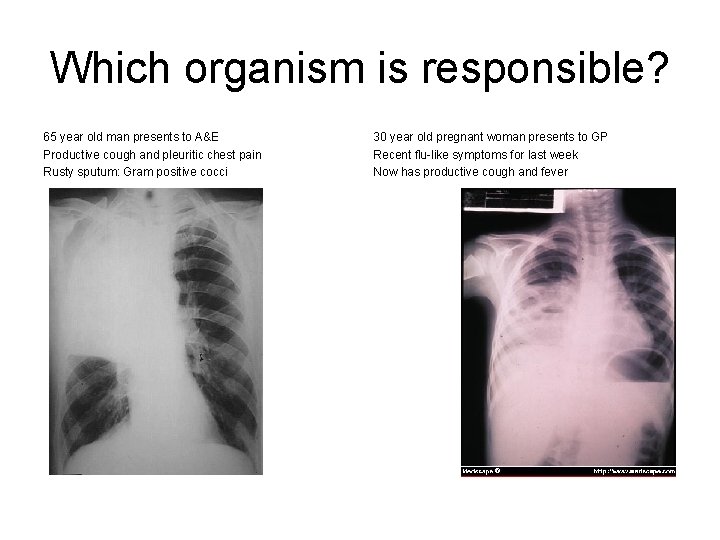
Which organism is responsible? 65 year old man presents to A&E Productive cough and pleuritic chest pain Rusty sputum: Gram positive cocci 30 year old pregnant woman presents to GP Recent flu-like symptoms for last week Now has productive cough and fever
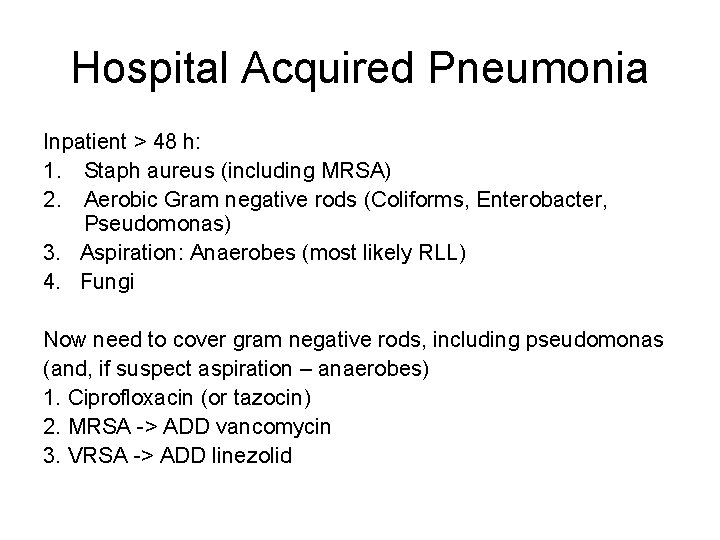
Hospital Acquired Pneumonia Inpatient > 48 h: 1. Staph aureus (including MRSA) 2. Aerobic Gram negative rods (Coliforms, Enterobacter, Pseudomonas) 3. Aspiration: Anaerobes (most likely RLL) 4. Fungi Now need to cover gram negative rods, including pseudomonas (and, if suspect aspiration – anaerobes) 1. Ciprofloxacin (or tazocin) 2. MRSA -> ADD vancomycin 3. VRSA -> ADD linezolid
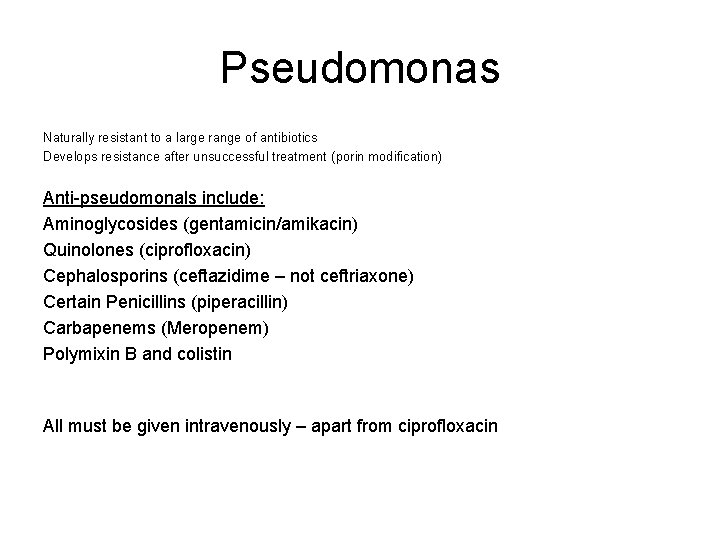
Pseudomonas Naturally resistant to a large range of antibiotics Develops resistance after unsuccessful treatment (porin modification) Anti-pseudomonals include: Aminoglycosides (gentamicin/amikacin) Quinolones (ciprofloxacin) Cephalosporins (ceftazidime – not ceftriaxone) Certain Penicillins (piperacillin) Carbapenems (Meropenem) Polymixin B and colistin All must be given intravenously – apart from ciprofloxacin
Questions 40 year old woman admitted with pneumonia following holiday in Turkey. Bloods show hyponatraemia and deranged liver function. Which investigation is most likely to confirm the diagnosis? A Sputum culture B Urinary Ag C Blood culture D Bone marrow aspirate E LP
28 year old man admitted with SOB and fever. 2/7 itchy vesicular rash after contact with brother with chicken pox. T 39, HR 120, BP 135/68, Sats 95% OA Chest: occasional fine crackles Which is the most important intervention? A Elective intubation within next 24 h B Prednisolone C VZIg D IV aciclovir E Paracetamol
17 year old presents with 4/7 sore throat, headache and lethargy. Doctor prescribed course of amoxicillin for URTI. 2/7 later her symptoms persist and she develops a maculopapular rash. A Kawasaki Disease B Penicillin allergy C HIV seroconversion D Beta-lactamase producing streptococcal infection E Infectious mononucleosis
Gastro/Hepatology 1. Diarrhoea and vomiting 2. Hepatitis
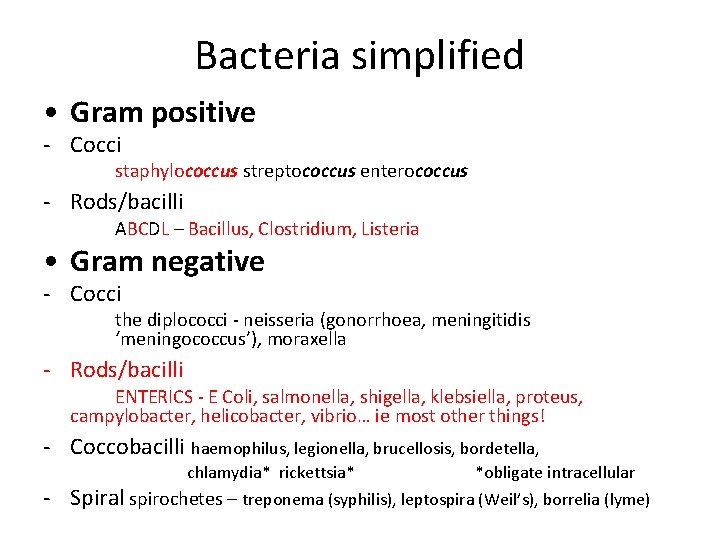
Bacteria simplified • Gram positive - Cocci staphylococcus streptococcus enterococcus - Rods/bacilli ABCDL – Bacillus, Clostridium, Listeria • Gram negative - Cocci the diplococci - neisseria (gonorrhoea, meningitidis ‘meningococcus’), moraxella - Rods/bacilli ENTERICS - E Coli, salmonella, shigella, klebsiella, proteus, campylobacter, helicobacter, vibrio… ie most other things! - Coccobacilli haemophilus, legionella, brucellosis, bordetella, chlamydia* rickettsia* *obligate intracellular - Spiral spirochetes – treponema (syphilis), leptospira (Weil’s), borrelia (lyme)
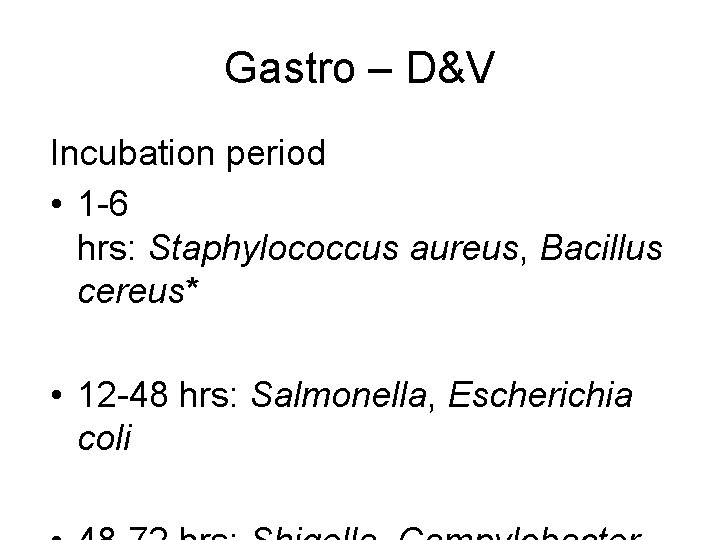
Gastro – D&V Incubation period • 1 -6 hrs: Staphylococcus aureus, Bacillus cereus* • 12 -48 hrs: Salmonella, Escherichia coli
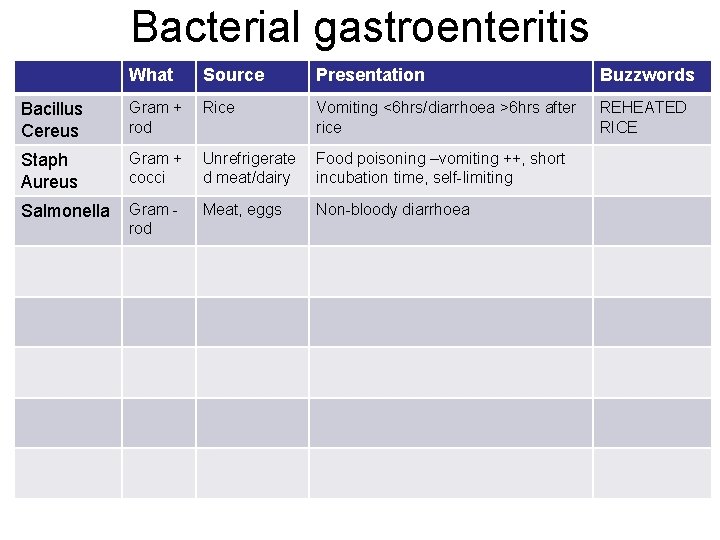
Bacterial gastroenteritis What Source Presentation Buzzwords Bacillus Cereus Gram + rod Rice Vomiting <6 hrs/diarrhoea >6 hrs after rice REHEATED RICE Staph Aureus Gram + Unrefrigerate cocci d meat/dairy Food poisoning –vomiting ++, short incubation time, self-limiting Salmonella Gram rod Non-bloody diarrhoea Meat, eggs
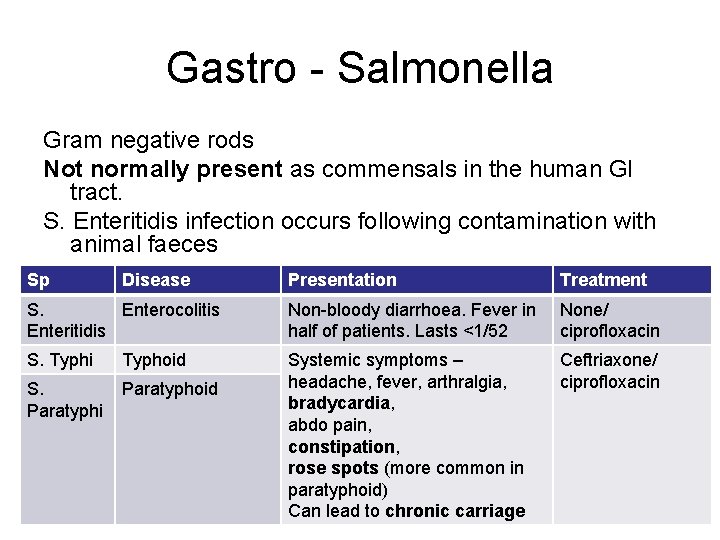
Gastro - Salmonella Gram negative rods Not normally present as commensals in the human GI tract. S. Enteritidis infection occurs following contamination with animal faeces Sp Disease Presentation Treatment S. Enterocolitis Enteritidis Non-bloody diarrhoea. Fever in half of patients. Lasts <1/52 None/ ciprofloxacin S. Typhi Typhoid S. Paratyphi Paratyphoid Systemic symptoms – headache, fever, arthralgia, bradycardia, abdo pain, constipation, rose spots (more common in paratyphoid) Can lead to chronic carriage Ceftriaxone/ ciprofloxacin
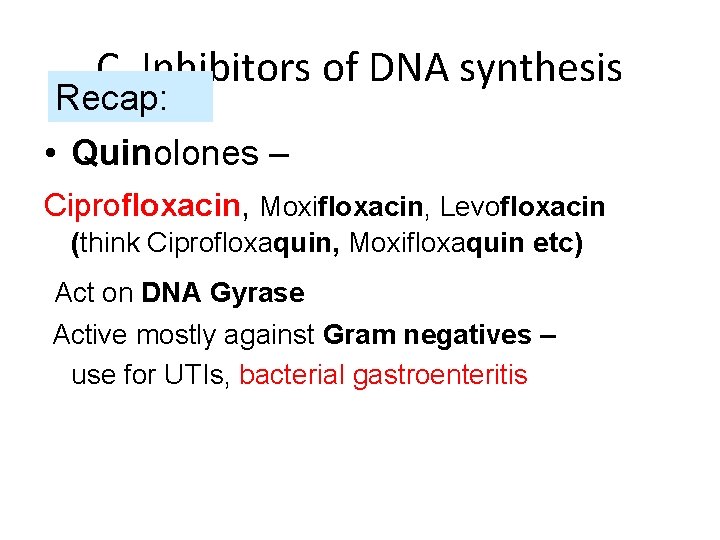
C. Inhibitors of DNA synthesis Recap: • Quinolones – Ciprofloxacin, Moxifloxacin, Levofloxacin (think Ciprofloxaquin, Moxifloxaquin etc) Act on DNA Gyrase Active mostly against Gram negatives – use for UTIs, bacterial gastroenteritis
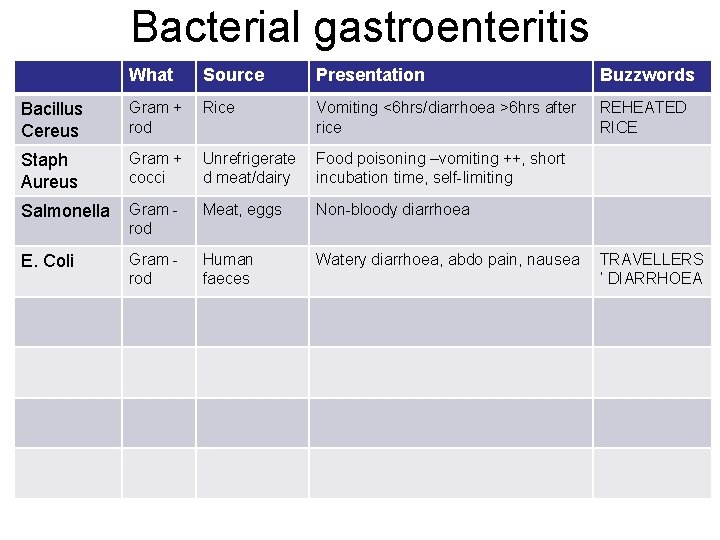
Bacterial gastroenteritis What Source Presentation Buzzwords Bacillus Cereus Gram + rod Rice Vomiting <6 hrs/diarrhoea >6 hrs after rice REHEATED RICE Staph Aureus Gram + Unrefrigerate cocci d meat/dairy Food poisoning –vomiting ++, short incubation time, self-limiting Salmonella Gram rod Meat, eggs Non-bloody diarrhoea E. Coli Gram rod Human faeces Watery diarrhoea, abdo pain, nausea TRAVELLERS ’ DIARRHOEA
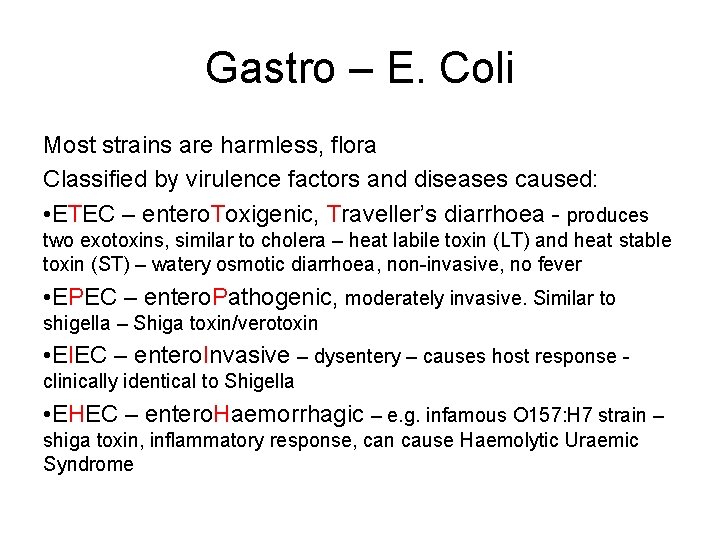
Gastro – E. Coli Most strains are harmless, flora Classified by virulence factors and diseases caused: • ETEC – entero. Toxigenic, Traveller’s diarrhoea - produces two exotoxins, similar to cholera – heat labile toxin (LT) and heat stable toxin (ST) – watery osmotic diarrhoea, non-invasive, no fever • EPEC – entero. Pathogenic, moderately invasive. Similar to shigella – Shiga toxin/verotoxin • EIEC – entero. Invasive – dysentery – causes host response - clinically identical to Shigella • EHEC – entero. Haemorrhagic – e. g. infamous O 157: H 7 strain – shiga toxin, inflammatory response, can cause Haemolytic Uraemic Syndrome
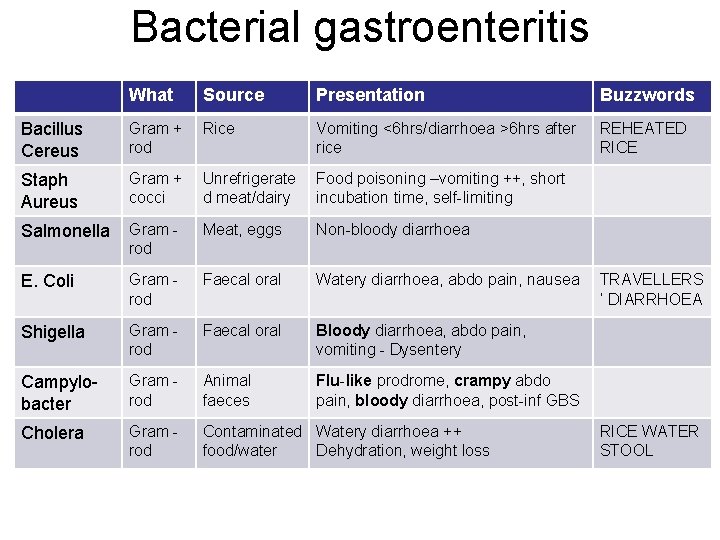
Bacterial gastroenteritis What Source Presentation Buzzwords Bacillus Cereus Gram + rod Rice Vomiting <6 hrs/diarrhoea >6 hrs after rice REHEATED RICE Staph Aureus Gram + Unrefrigerate cocci d meat/dairy Food poisoning –vomiting ++, short incubation time, self-limiting Salmonella Gram rod Meat, eggs Non-bloody diarrhoea E. Coli Gram rod Faecal oral Watery diarrhoea, abdo pain, nausea Shigella Gram rod Faecal oral Bloody diarrhoea, abdo pain, vomiting - Dysentery Campylobacter Gram rod Animal faeces Flu-like prodrome, crampy abdo pain, bloody diarrhoea, post-inf GBS Cholera Gram rod Contaminated Watery diarrhoea ++ food/water Dehydration, weight loss TRAVELLERS ’ DIARRHOEA RICE WATER STOOL
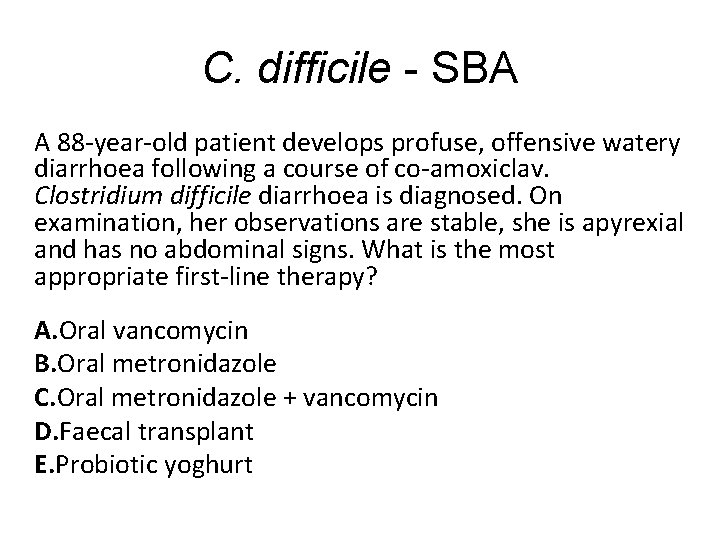
C. difficile - SBA A 88 -year-old patient develops profuse, offensive watery diarrhoea following a course of co-amoxiclav. Clostridium difficile diarrhoea is diagnosed. On examination, her observations are stable, she is apyrexial and has no abdominal signs. What is the most appropriate first-line therapy? A. Oral vancomycin B. Oral metronidazole C. Oral metronidazole + vancomycin D. Faecal transplant E. Probiotic yoghurt
Gastro – Clostridium difficile • Gram positive rod
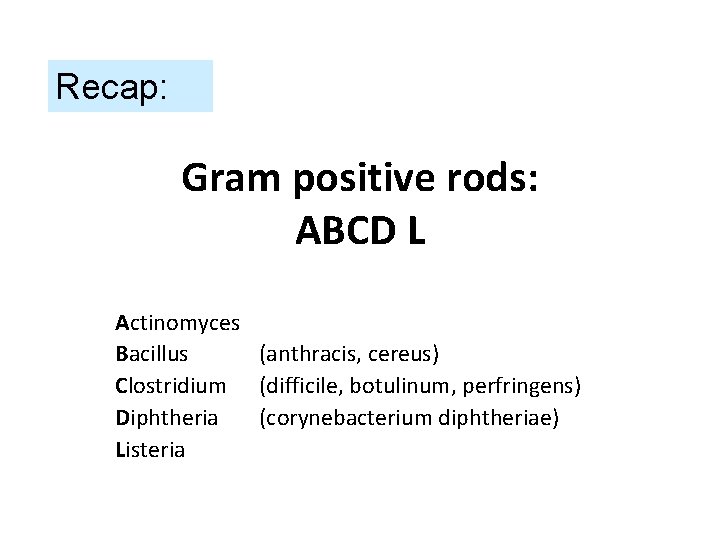
Recap: Gram positive rods: ABCD L Actinomyces Bacillus (anthracis, cereus) Clostridium (difficile, botulinum, perfringens) Diphtheria (corynebacterium diphtheriae) Listeria
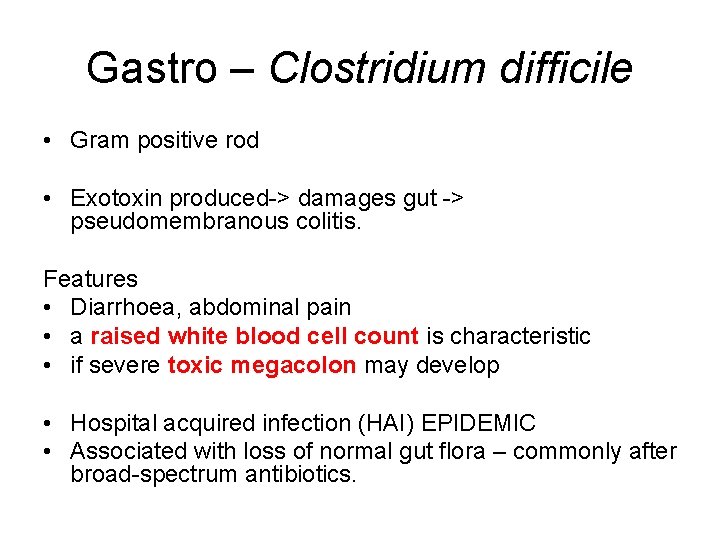
Gastro – Clostridium difficile • Gram positive rod • Exotoxin produced-> damages gut -> pseudomembranous colitis. Features • Diarrhoea, abdominal pain • a raised white blood cell count is characteristic • if severe toxic megacolon may develop • Hospital acquired infection (HAI) EPIDEMIC • Associated with loss of normal gut flora – commonly after broad-spectrum antibiotics.
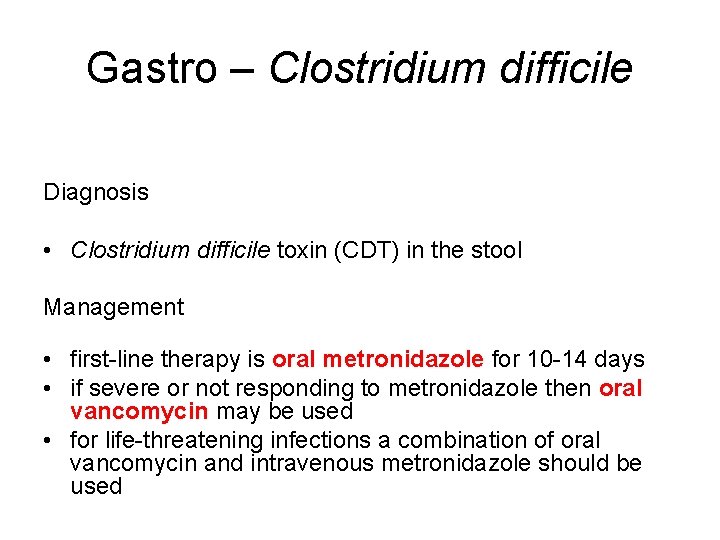
Gastro – Clostridium difficile Diagnosis • Clostridium difficile toxin (CDT) in the stool Management • first-line therapy is oral metronidazole for 10 -14 days • if severe or not responding to metronidazole then oral vancomycin may be used • for life-threatening infections a combination of oral vancomycin and intravenous metronidazole should be used
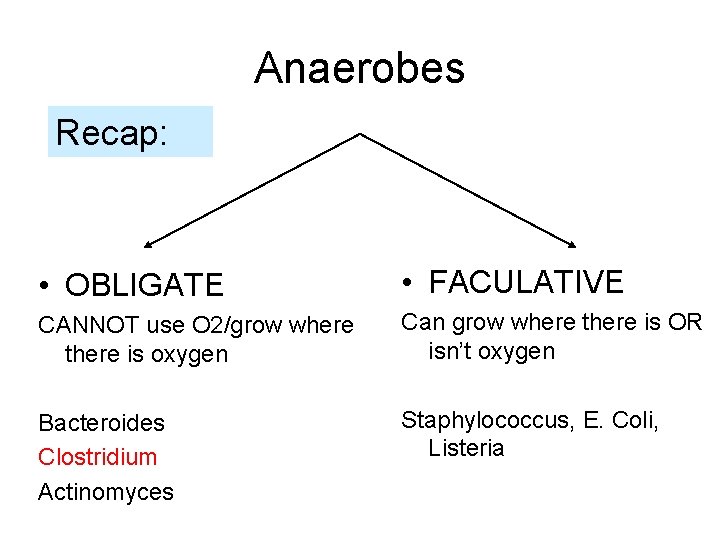
Anaerobes Recap: • OBLIGATE • FACULATIVE CANNOT use O 2/grow where there is oxygen Can grow where there is OR isn’t oxygen Bacteroides Clostridium Actinomyces Staphylococcus, E. Coli, Listeria
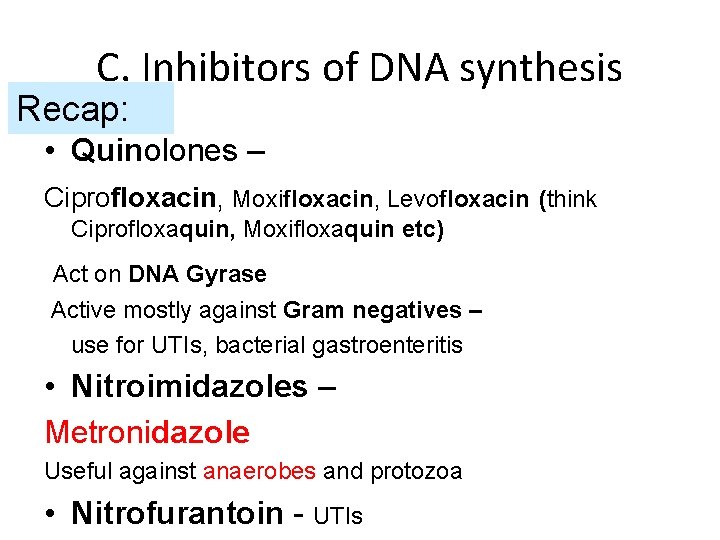
C. Inhibitors of DNA synthesis Recap: • Quinolones – Ciprofloxacin, Moxifloxacin, Levofloxacin (think Ciprofloxaquin, Moxifloxaquin etc) Act on DNA Gyrase Active mostly against Gram negatives – use for UTIs, bacterial gastroenteritis • Nitroimidazoles – Metronidazole Useful against anaerobes and protozoa • Nitrofurantoin - UTIs
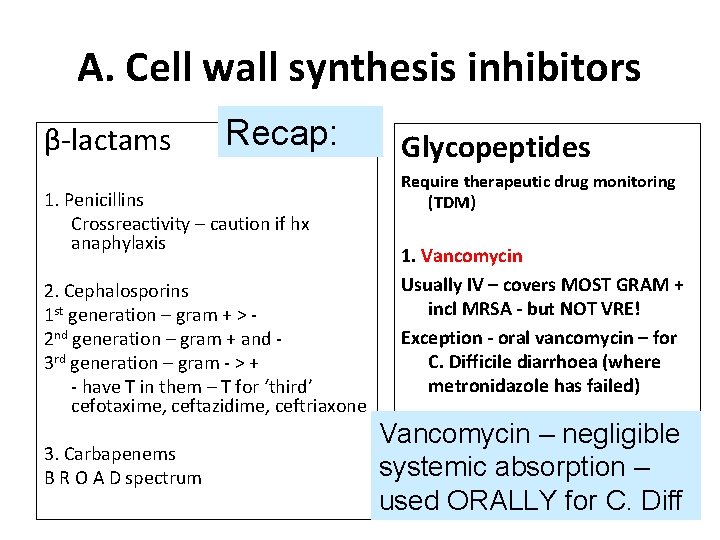
A. Cell wall synthesis inhibitors β-lactams Recap: 1. Penicillins Crossreactivity – caution if hx anaphylaxis 2. Cephalosporins 1 st generation – gram + > 2 nd generation – gram + and 3 rd generation – gram - > + - have T in them – T for ‘third’ cefotaxime, ceftazidime, ceftriaxone 3. Carbapenems B R O A D spectrum Glycopeptides Require therapeutic drug monitoring (TDM) 1. Vancomycin Usually IV – covers MOST GRAM + incl MRSA - but NOT VRE! Exception - oral vancomycin – for C. Difficile diarrhoea (where metronidazole has failed) Vancomycin – negligible 2. Teicoplanin systemic absorption – used ORALLY for C. Diff
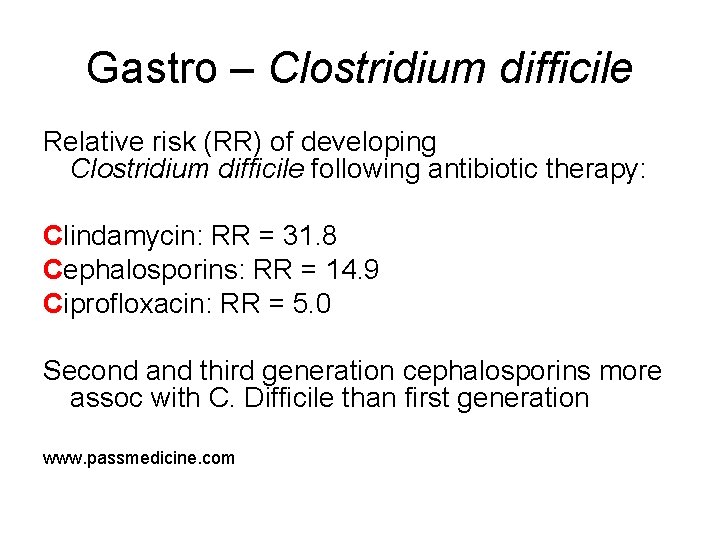
Gastro – Clostridium difficile Relative risk (RR) of developing Clostridium difficile following antibiotic therapy: Clindamycin: RR = 31. 8 Cephalosporins: RR = 14. 9 Ciprofloxacin: RR = 5. 0 Second and third generation cephalosporins more assoc with C. Difficile than first generation www. passmedicine. com
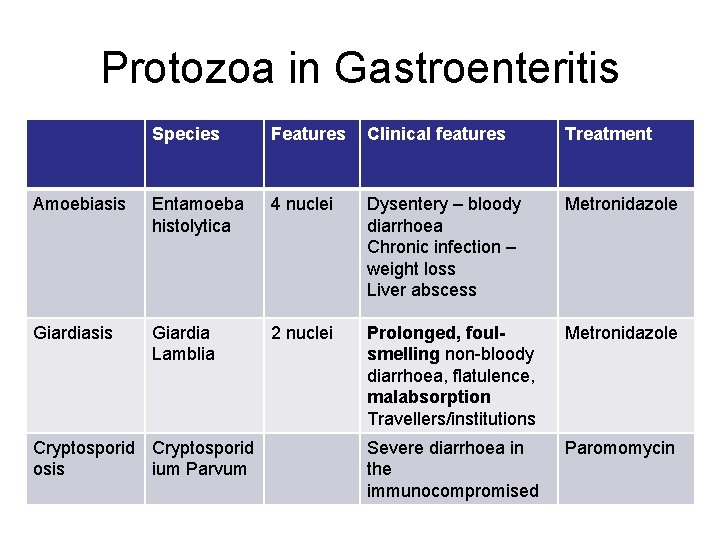
Protozoa in Gastroenteritis Species Features Clinical features Treatment Amoebiasis Entamoeba histolytica 4 nuclei Dysentery – bloody diarrhoea Chronic infection – weight loss Liver abscess Metronidazole Giardiasis Giardia Lamblia 2 nuclei Prolonged, foulsmelling non-bloody diarrhoea, flatulence, malabsorption Travellers/institutions Metronidazole Severe diarrhoea in the immunocompromised Paromomycin Cryptosporid osis ium Parvum
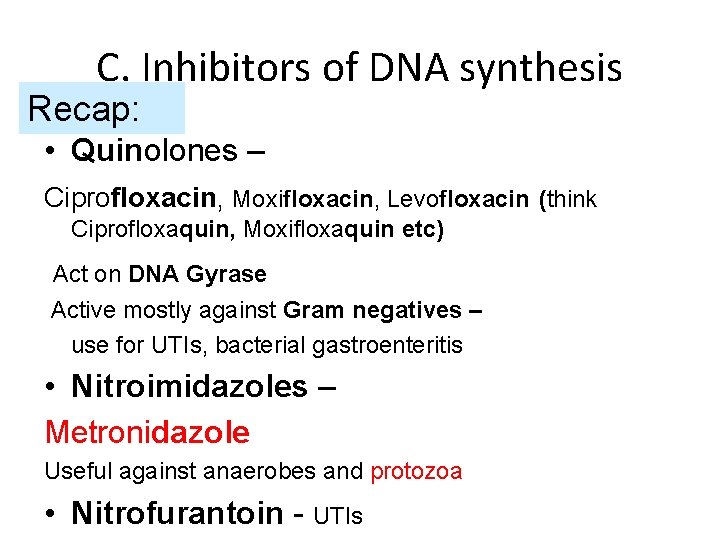
C. Inhibitors of DNA synthesis Recap: • Quinolones – Ciprofloxacin, Moxifloxacin, Levofloxacin (think Ciprofloxaquin, Moxifloxaquin etc) Act on DNA Gyrase Active mostly against Gram negatives – use for UTIs, bacterial gastroenteritis • Nitroimidazoles – Metronidazole Useful against anaerobes and protozoa • Nitrofurantoin - UTIs
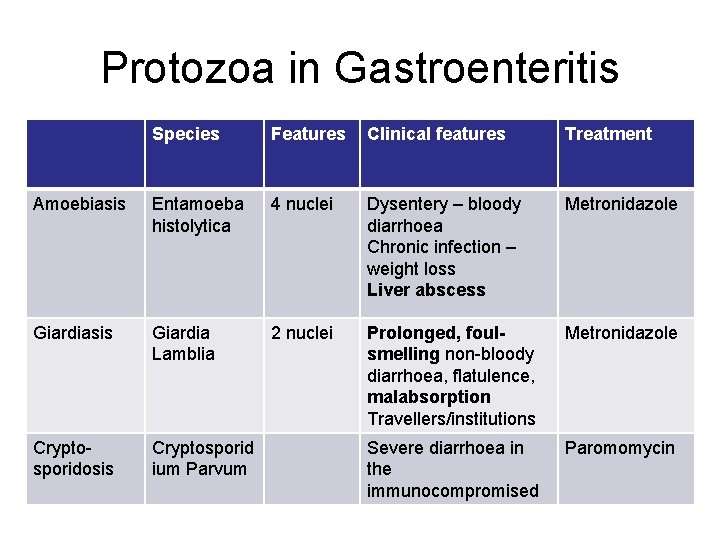
Protozoa in Gastroenteritis Species Features Clinical features Treatment Amoebiasis Entamoeba histolytica 4 nuclei Dysentery – bloody diarrhoea Chronic infection – weight loss Liver abscess Metronidazole Giardiasis Giardia Lamblia 2 nuclei Prolonged, foulsmelling non-bloody diarrhoea, flatulence, malabsorption Travellers/institutions Metronidazole Cryptosporidosis Cryptosporid ium Parvum Severe diarrhoea in the immunocompromised Paromomycin
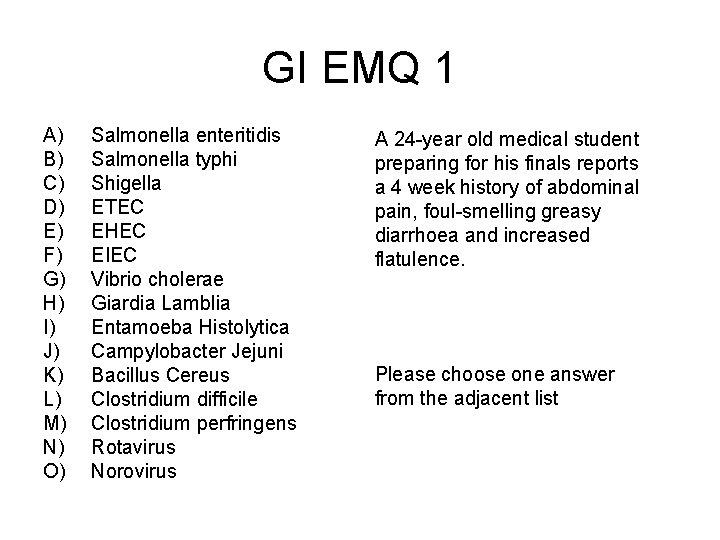
GI EMQ 1 A) B) C) D) E) F) G) H) I) J) K) L) M) N) O) Salmonella enteritidis Salmonella typhi Shigella ETEC EHEC EIEC Vibrio cholerae Giardia Lamblia Entamoeba Histolytica Campylobacter Jejuni Bacillus Cereus Clostridium difficile Clostridium perfringens Rotavirus Norovirus A 24 -year old medical student preparing for his finals reports a 4 week history of abdominal pain, foul-smelling greasy diarrhoea and increased flatulence. Please choose one answer from the adjacent list
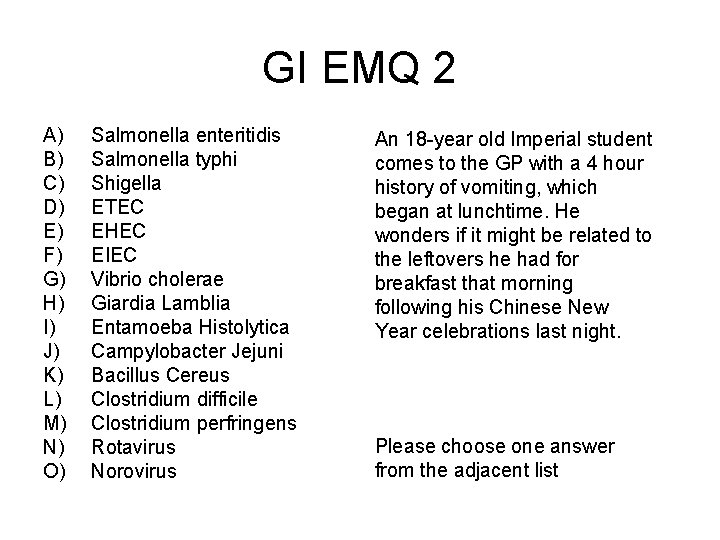
GI EMQ 2 A) B) C) D) E) F) G) H) I) J) K) L) M) N) O) Salmonella enteritidis Salmonella typhi Shigella ETEC EHEC EIEC Vibrio cholerae Giardia Lamblia Entamoeba Histolytica Campylobacter Jejuni Bacillus Cereus Clostridium difficile Clostridium perfringens Rotavirus Norovirus An 18 -year old Imperial student comes to the GP with a 4 hour history of vomiting, which began at lunchtime. He wonders if it might be related to the leftovers he had for breakfast that morning following his Chinese New Year celebrations last night. Please choose one answer from the adjacent list
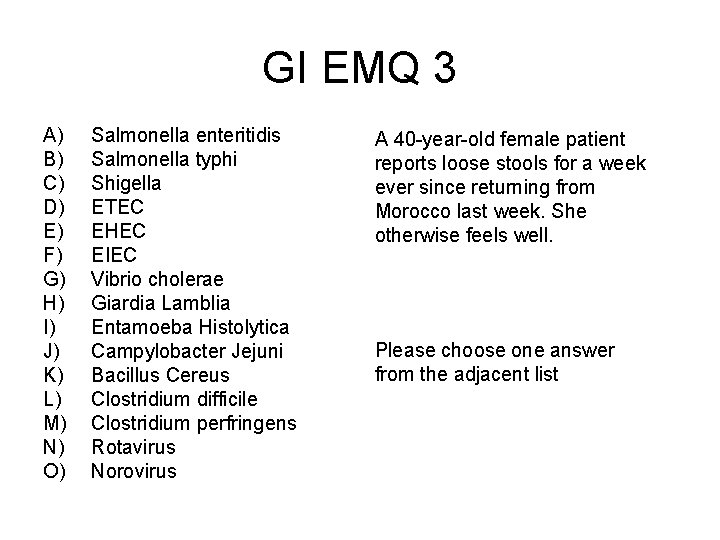
GI EMQ 3 A) B) C) D) E) F) G) H) I) J) K) L) M) N) O) Salmonella enteritidis Salmonella typhi Shigella ETEC EHEC EIEC Vibrio cholerae Giardia Lamblia Entamoeba Histolytica Campylobacter Jejuni Bacillus Cereus Clostridium difficile Clostridium perfringens Rotavirus Norovirus A 40 -year-old female patient reports loose stools for a week ever since returning from Morocco last week. She otherwise feels well. Please choose one answer from the adjacent list

GI EMQ 4 A) B) C) D) E) F) G) H) I) J) K) L) M) N) O) Salmonella enteritidis Salmonella typhi Shigella ETEC EHEC EIEC Vibrio cholerae Giardia Lamblia Entamoeba Histolytica Campylobacter Jejuni Bacillus Cereus Clostridium difficile Clostridium perfringens Rotavirus Norovirus A 25 -year-old patient comes to see the clinic you are running whilst on your elective. She reports a lengthy history of bloody diarrhoea and weight loss. On examination, her abdomen is soft but tender, particularly in the right upper quadrant. Please choose one answer from the adjacent list
Gastro/Hepatology 1. Diarrhoea and vomiting 2. Hepatitis
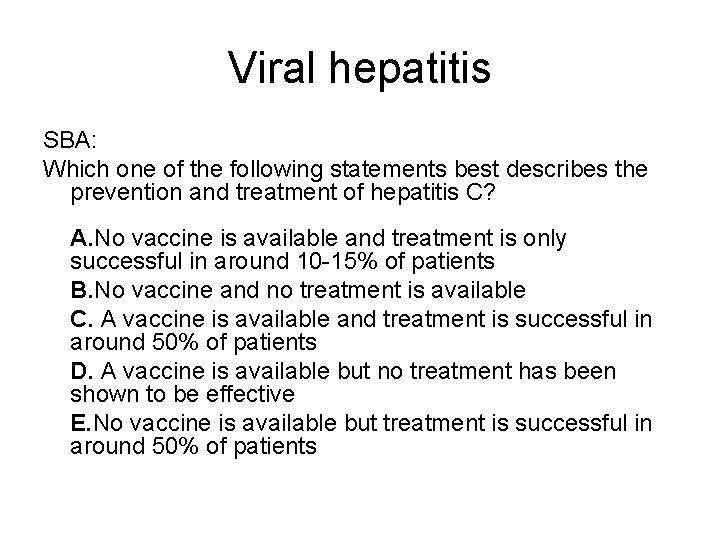
Viral hepatitis SBA: Which one of the following statements best describes the prevention and treatment of hepatitis C? A. No vaccine is available and treatment is only successful in around 10 -15% of patients B. No vaccine and no treatment is available C. A vaccine is available and treatment is successful in around 50% of patients D. A vaccine is available but no treatment has been shown to be effective E. No vaccine is available but treatment is successful in around 50% of patients
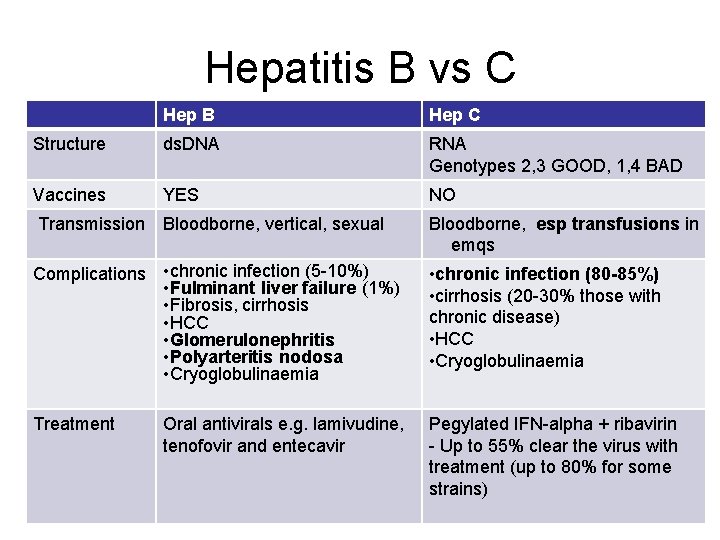
Hepatitis B vs C Hep B Hep C Structure ds. DNA RNA Genotypes 2, 3 GOOD, 1, 4 BAD Vaccines YES NO Transmission Bloodborne, vertical, sexual Bloodborne, esp transfusions in emqs Complications • chronic infection (5 -10%) • Fulminant liver failure (1%) • Fibrosis, cirrhosis • HCC • Glomerulonephritis • Polyarteritis nodosa • Cryoglobulinaemia • chronic infection (80 -85%) • cirrhosis (20 -30% those with chronic disease) • HCC • Cryoglobulinaemia Treatment Pegylated IFN-alpha + ribavirin - Up to 55% clear the virus with treatment (up to 80% for some strains) Oral antivirals e. g. lamivudine, tenofovir and entecavir
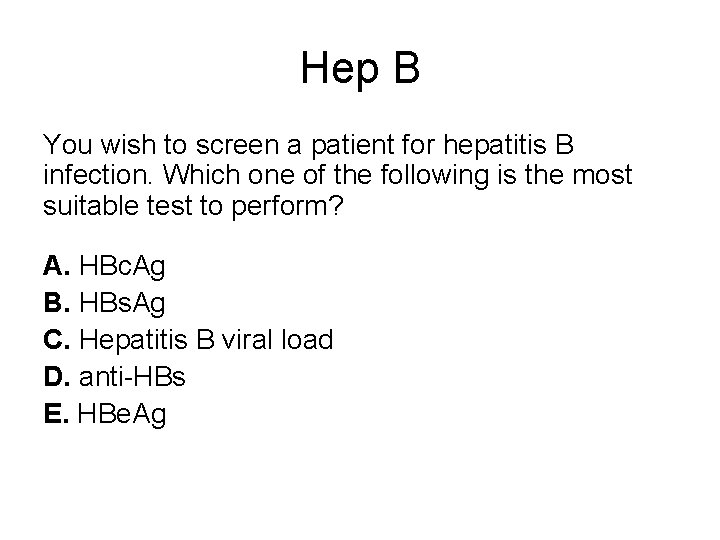
Hep B You wish to screen a patient for hepatitis B infection. Which one of the following is the most suitable test to perform? A. HBc. Ag B. HBs. Ag C. Hepatitis B viral load D. anti-HBs E. HBe. Ag
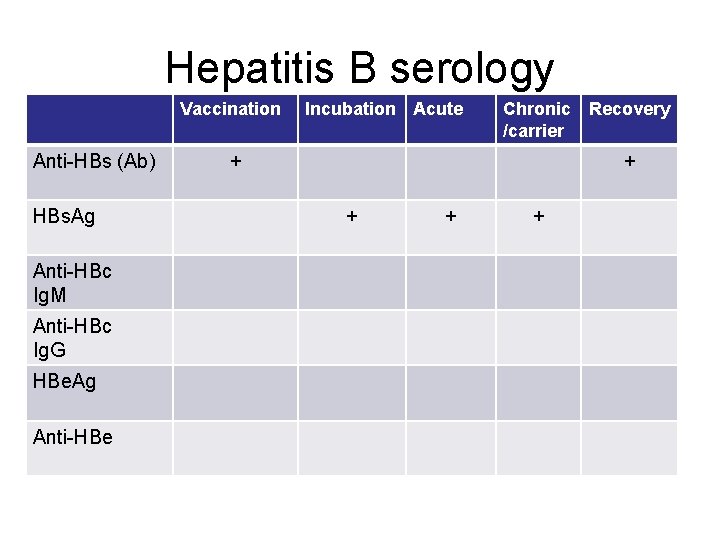
Hepatitis B serology Vaccination Anti-HBs (Ab) HBs. Ag Anti-HBc Ig. M Anti-HBc Ig. G HBe. Ag Anti-HBe Incubation Acute Chronic Recovery /carrier + + +
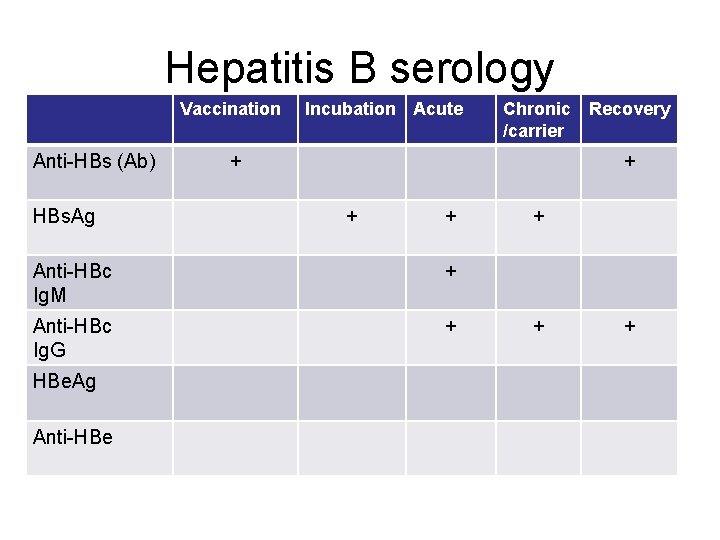
Hepatitis B serology Vaccination Anti-HBs (Ab) HBs. Ag Incubation Acute + + Anti-HBc Ig. M + Anti-HBc Ig. G + HBe. Ag Anti-HBe Chronic Recovery /carrier + + +
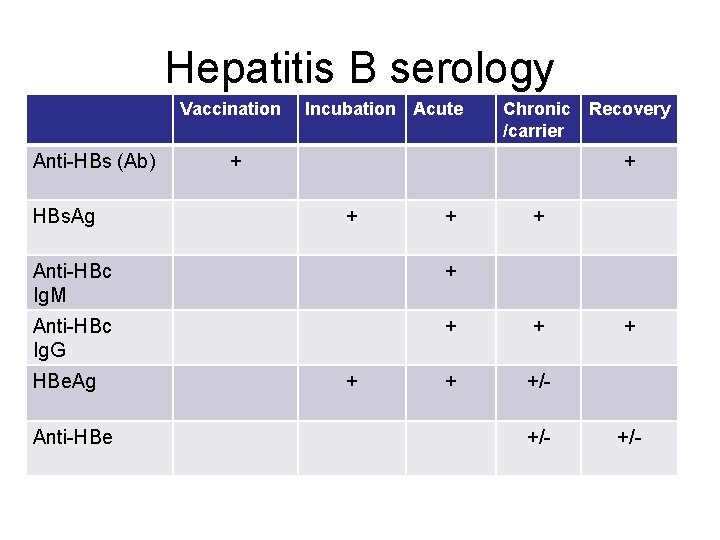
Hepatitis B serology Vaccination Anti-HBs (Ab) HBs. Ag Incubation Acute Chronic Recovery /carrier + + + Anti-HBc Ig. M + Anti-HBc Ig. G + +/- HBe. Ag Anti-HBe + +/-
Hepatitis A, D, E • Hepatitis A, E – faecal-oral transmission • Hepatitis D – co-infects patients already infected with Hepatitis B
Urinary Tract
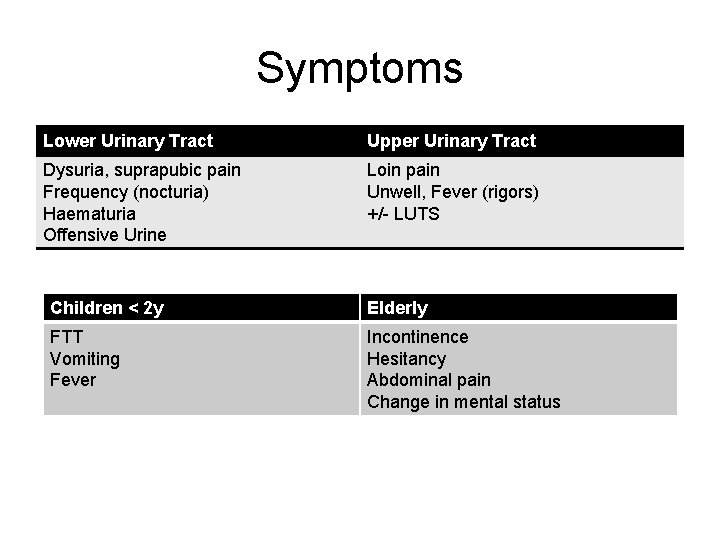
Symptoms Lower Urinary Tract Upper Urinary Tract Dysuria, suprapubic pain Frequency (nocturia) Haematuria Offensive Urine Loin pain Unwell, Fever (rigors) +/- LUTS Children < 2 y Elderly FTT Vomiting Fever Incontinence Hesitancy Abdominal pain Change in mental status
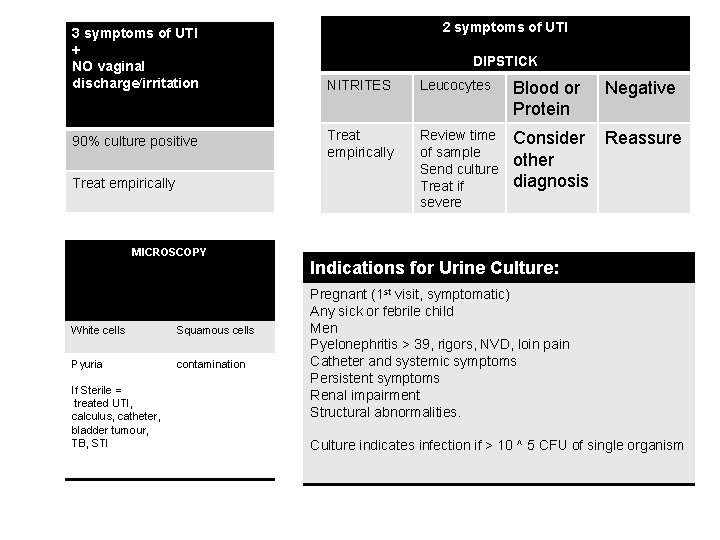
3 symptoms of UTI + NO vaginal discharge/irritation 90% culture positive Treat empirically MICROSCOPY White cells Squamous cells Pyuria contamination If Sterile = treated UTI, calculus, catheter, bladder tumour, TB, STI 2 symptoms of UTI DIPSTICK NITRITES Leucocytes Blood or Protein Treat empirically Review time of sample Send culture Treat if severe Consider Reassure other diagnosis Negative Indications for Urine Culture: Pregnant (1 st visit, symptomatic) Any sick or febrile child Men Pyelonephritis > 39, rigors, NVD, loin pain Catheter and systemic symptoms Persistent symptoms Renal impairment Structural abnormalities. Culture indicates infection if > 10 ^ 5 CFU of single organism
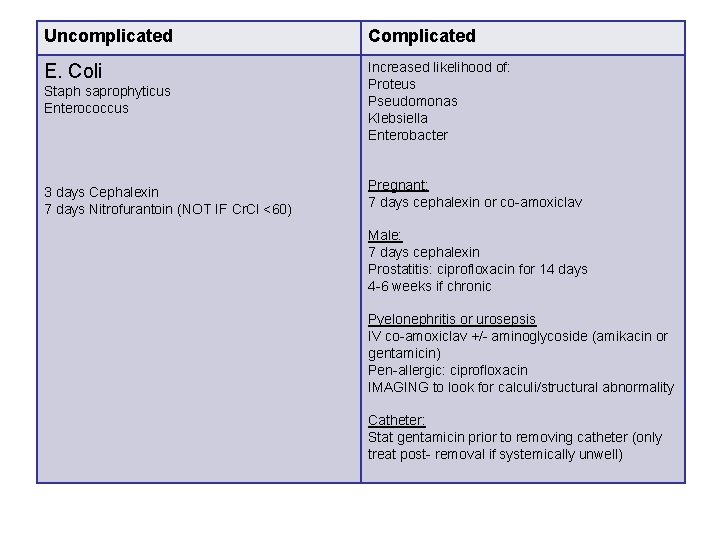
Uncomplicated Complicated E. Coli Increased likelihood of: Proteus Pseudomonas Klebsiella Enterobacter Staph saprophyticus Enterococcus 3 days Cephalexin 7 days Nitrofurantoin (NOT IF Cr. Cl <60) Pregnant: 7 days cephalexin or co-amoxiclav Male: 7 days cephalexin Prostatitis: ciprofloxacin for 14 days 4 -6 weeks if chronic Pyelonephritis or urosepsis IV co-amoxiclav +/- aminoglycoside (amikacin or gentamicin) Pen-allergic: ciprofloxacin IMAGING to look for calculi/structural abnormality Catheter: Stat gentamicin prior to removing catheter (only treat post- removal if systemically unwell)
Sexually Transmitted Infections
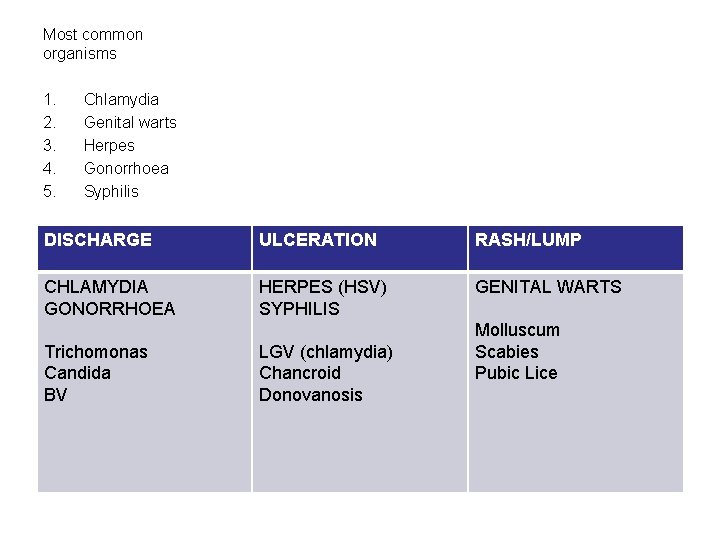
Most common organisms 1. 2. 3. 4. 5. Chlamydia Genital warts Herpes Gonorrhoea Syphilis DISCHARGE ULCERATION RASH/LUMP CHLAMYDIA GONORRHOEA HERPES (HSV) SYPHILIS GENITAL WARTS Trichomonas Candida BV LGV (chlamydia) Chancroid Donovanosis Molluscum Scabies Pubic Lice
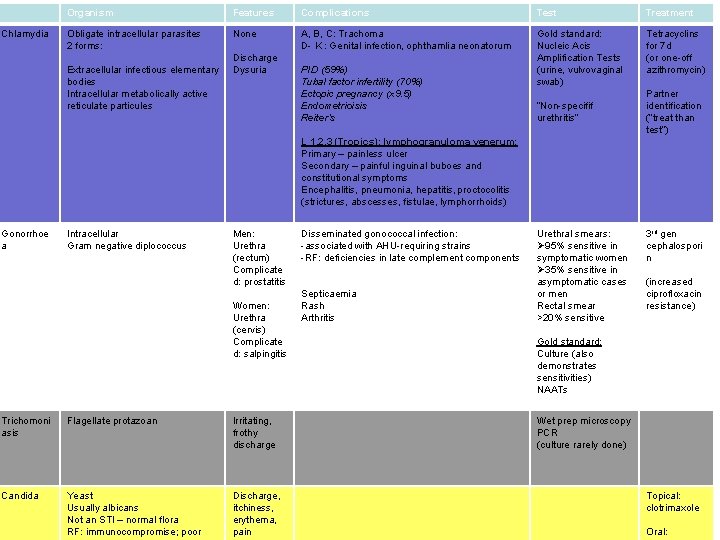
Chlamydia Organism Features Complications Test Treatment Obligate intracellular parasites 2 forms: None A, B, C: Trachoma D- K : Genital infection, ophthamlia neonatorum Gold standard: Nucleic Acis Amplification Tests (urine, vulvovaginal swab) Tetracyclins for 7 d (or one-off azithromycin) Extracellular infectious elementary bodies Intracellular metabolically active reticulate particules Discharge Dysuria PID (59%) Tubal factor infertility (70%) Ectopic pregnancy (x 9. 5) Endometrioisis Reiter’s “Non-specifif urethritis” Partner identification (“treat than test”) L 1, 2, 3 (Tropics): lymphogranuloma venerum: Primary – painless ulcer Secondary – painful inguinal buboes and constitutional symptoms Encephalitis, pneumonia, hepatitis, proctocolitis (strictures, abscesses, fistulae, lymphorrhoids) Gonorrhoe a Intracellular Gram negative diplococcus Men: Urethra (rectum) Complicate d: prostatitis Women: Urethra (cervis) Complicate d: salpingitis Trichomoni asis Flagellate protazoan Irritating, frothy discharge Candida Yeast Usually albicans Not an STI – normal flora RF: immunocompromise; poor Discharge, itchiness, erythema, pain Disseminated gonococcal infection: -associated with AHU-requiring strains -RF: deficiencies in late complement components Septicaemia Rash Arthritis Urethral smears: Ø 95% sensitive in symptomatic women Ø 35% sensitive in asymptomatic cases or men Rectal smear >20% sensitive 3 rd gen cephalospori n (increased ciprofloxacin resistance) Gold standard: Culture (also demonstrates sensitivities) NAATs Wet prep microscopy PCR (culture rarely done) Topical: clotrimaxole Oral:
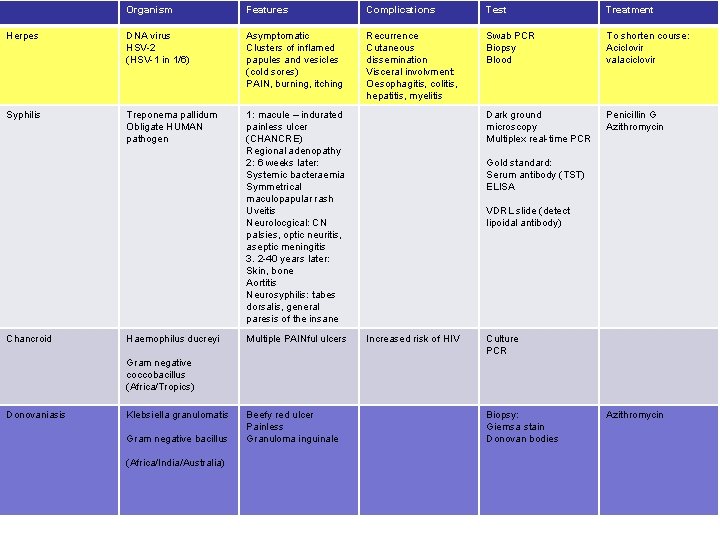
Organism Features Complications Test Treatment Herpes DNA virus HSV-2 (HSV-1 in 1/6) Asymptomatic Clusters of inflamed papules and vesicles (cold sores) PAIN, burning, itching Recurrence Cutaneous dissemination Visceral involvment: Oesophagitis, colitis, hepatitis, myelitis Swab PCR Biopsy Blood To shorten course: Aciclovir valaciclovir Syphilis Treponema pallidum Obligate HUMAN pathogen 1: macule – indurated painless ulcer (CHANCRE) Regional adenopathy 2: 6 weeks later: Systemic bacteraemia Symmetrical maculopapular rash Uveitis Neurolocgical: CN palsies, optic neuritis, aseptic meningitis 3. 2 -40 years later: Skin, bone Aortitis Neurosyphilis: tabes dorsalis, general paresis of the insane Dark ground microscopy Multiplex real-time PCR Penicillin G Azithromycin Chancroid Haemophilus ducreyi Multiple PAINful ulcers Gold standard: Serum antibody (TST) ELISA VDRL slide (detect lipoidal antibody) Increased risk of HIV Culture PCR Gram negative coccobacillus (Africa/Tropics) Donovaniasis Klebsiella granulomatis Gram negative bacillus (Africa/India/Australia) Beefy red ulcer Painless Granuloma inguinale Biopsy: Giemsa stain Donovan bodies Azithromycin
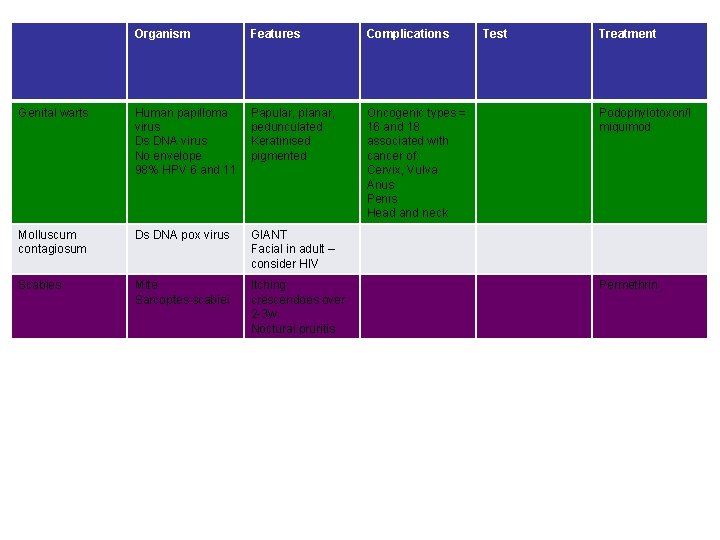
Organism Features Complications Genital warts Human papilloma virus Ds DNA virus No envelope 98% HPV 6 and 11 Papular, planar, pedunculated Keratinised pigmented Oncogenic types = 16 and 18 associated with cancer of: Cervix, Vulva Anus Penis Head and neck Molluscum contagiosum Ds DNA pox virus GIANT Facial in adult – consider HIV Scabies Mite Sarcoptes scabiei Itching crescendoes over 2 -3 w. Noctural pruritis Test Treatment Podophylotoxon/I miquimod Permethrin
Questions 20 year old man presents with dysuria and watery discharge from urethra. Urethral swab: non-specific urethritis. Which is the most appropriate antibiotic? A Erythromycin B Ciprofloxacin C Metronidazole D Cefixime E Azithromycin
35 homosexual man developed solitary painless penile ulcer associated with painful inguinal lymphadenopathy. He also has rectal pain and tenesmus. A Herpes simplex B Syphilis C Granuloma inguinale D Chancroid E Lymphogranuloma venereum
38 year old man presents with multiple painless genital ulcers. What is the most likely causative organism? A Klebsiella granulomatis B Chlamydia C Herpes simplex D Treponema pallidum E Haemophilus ducreyi
30 year old woman presents with white, malodorous vaginal discharge. No itch or dyspareunia. What is the most likely organism? A Lactobacilli B Trichomonas C Candida D Mycoplasma hominis E Gardnerella
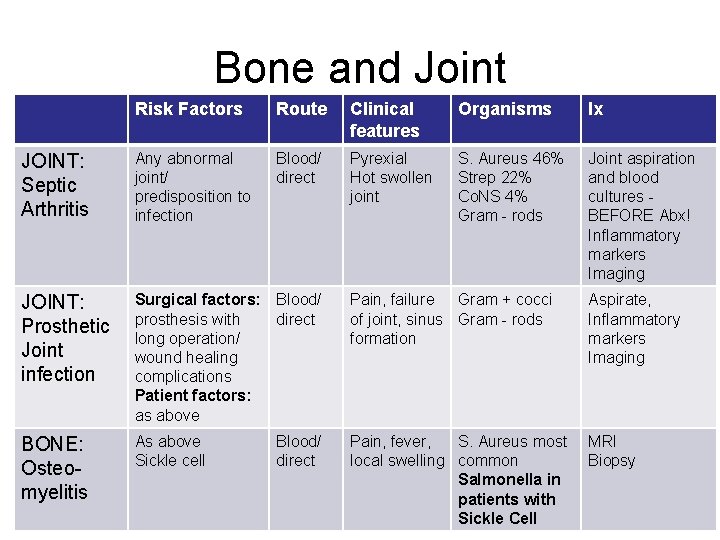
Bone and Joint Risk Factors Route • Septic Arthritis Any abnormal Blood/ JOINT: Septic Arthritis Clinical features Organisms Ix Pyrexial Hot swollen joint S. Aureus 46% Strep 22% Co. NS 4% Gram - rods Joint aspiration and blood cultures - BEFORE Abx! Inflammatory markers Imaging joint/ predisposition to infection direct Prosthetic Joint infection prosthesis with long operation/ wound healing complications Patient factors: as above direct of joint, sinus Gram - rods formation Inflammatory markers Imaging BONE: Osteomyelitis As above Sickle cell Blood/ direct Pain, fever, S. Aureus most local swelling common Salmonella in patients with Sickle Cell MRI Biopsy • Osteomyelitis Salmonella in patients with Sickle Cell Surgical factors: Blood/ Pain, failure Gram + cocci Aspirate, JOINT:
Mycobacterial disease • Mycobacterium tuberculosis • Mycobacterium leprae
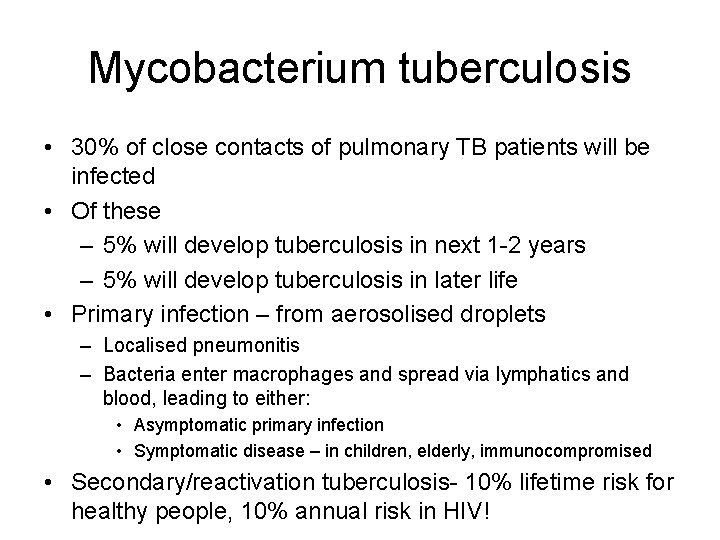
Mycobacterium tuberculosis • 30% of close contacts of pulmonary TB patients will be infected • Of these – 5% will develop tuberculosis in next 1 -2 years – 5% will develop tuberculosis in later life • Primary infection – from aerosolised droplets – Localised pneumonitis – Bacteria enter macrophages and spread via lymphatics and blood, leading to either: • Asymptomatic primary infection • Symptomatic disease – in children, elderly, immunocompromised • Secondary/reactivation tuberculosis- 10% lifetime risk for healthy people, 10% annual risk in HIV!
Zoonoses
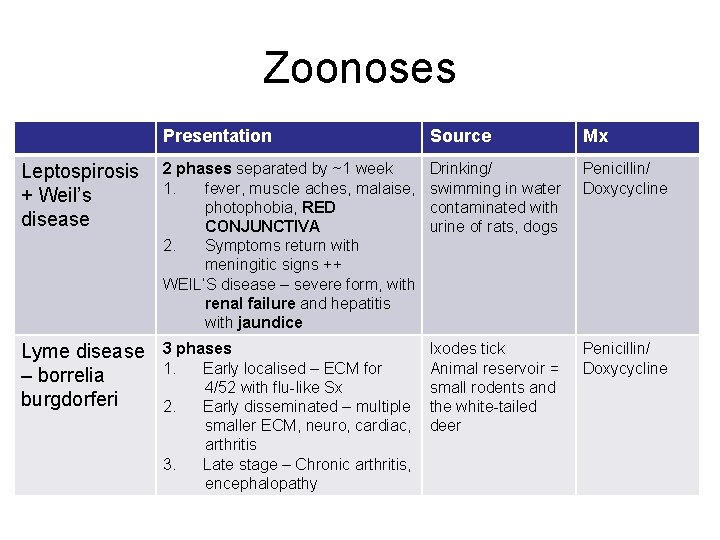
Zoonoses Presentation • Leptospirosis 2 phases separated by ~1 week 1. fever, muscle aches, malaise, • Lyme disease + Weil’s disease Lyme disease – borrelia burgdorferi photophobia, RED CONJUNCTIVA 2. Symptoms return with meningitic signs ++ WEIL’S disease – severe form, with renal failure and hepatitis with jaundice 3 phases 1. Early localised – ECM for 4/52 with flu-like Sx 2. Early disseminated – multiple smaller ECM, neuro, cardiac, arthritis 3. Late stage – Chronic arthritis, encephalopathy Source Mx Drinking/ swimming in water contaminated with urine of rats, dogs Penicillin/ Doxycycline Ixodes tick Animal reservoir = small rodents and the white-tailed deer Penicillin/ Doxycycline
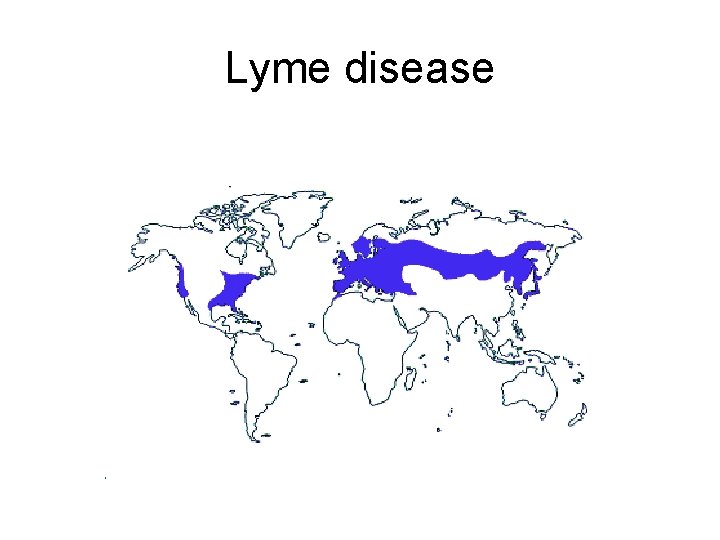
Lyme disease
Protozoa • Malaria • Leishmania • Trypanosoma
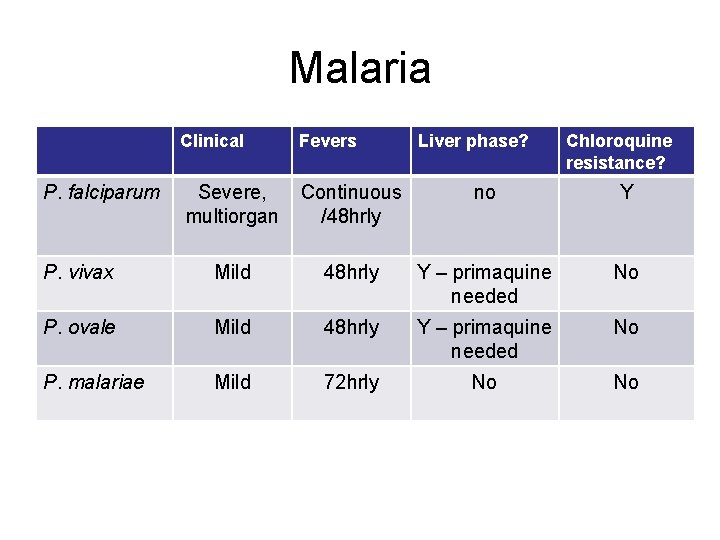
Malaria Clinical P. falciparum Fevers Liver phase? Chloroquine resistance? Severe, multiorgan Continuous /48 hrly no Y P. vivax Mild 48 hrly Y – primaquine needed No P. ovale Mild 48 hrly Y – primaquine needed No P. malariae Mild 72 hrly No No
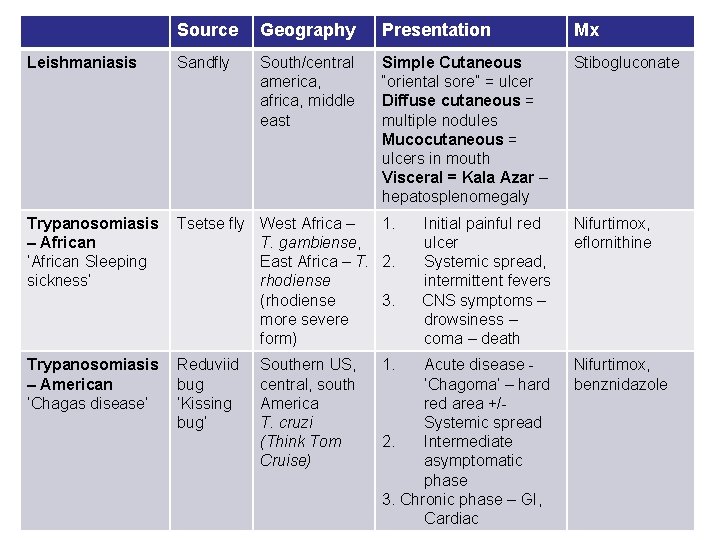
Source Geography Leishmaniasis Sandfly South/central america, africa, middle east Trypanosomiasis – African ‘African Sleeping sickness’ Tsetse fly West Africa – 1. Initial painful red T. gambiense, ulcer East Africa – T. 2. Systemic spread, rhodiense intermittent fevers (rhodiense 3. CNS symptoms – more severe drowsiness – form) coma – death Trypanosomiasis – American ‘Chagas disease’ Reduviid bug ‘Kissing bug’ ` Southern US, central, south America T. cruzi (Think Tom Cruise) Presentation Mx Simple Cutaneous “oriental sore” = ulcer Diffuse cutaneous = multiple nodules Mucocutaneous = ulcers in mouth Visceral = Kala Azar – hepatosplenomegaly Stibogluconate 1. Acute disease - ‘Chagoma’ – hard red area +/- Systemic spread 2. Intermediate asymptomatic phase 3. Chronic phase – GI, Cardiac Nifurtimox, eflornithine Nifurtimox, benznidazole

Thanks for coming • Good luck • PLEASE FILL IN A TEACHING FEEDBACK FORM!
- Slides: 72