
Microbiology of shell disease which bacteria are responsible
Microbiology of shell disease – which bacteria are responsible? Dr. Andrei Chistoserdov – Univ. Louisiana Dr. Patrick Gillevet – George Mason Univ. Dr. Jeff Shields – Virginia Inst. Marine Science Dr. Gordon Taylor – Stony Brook University Dr. Michael Tlusty – New England Aquarium And a host of others 9 th Annual Ronald C. Baird Sea Grant Science Symposium
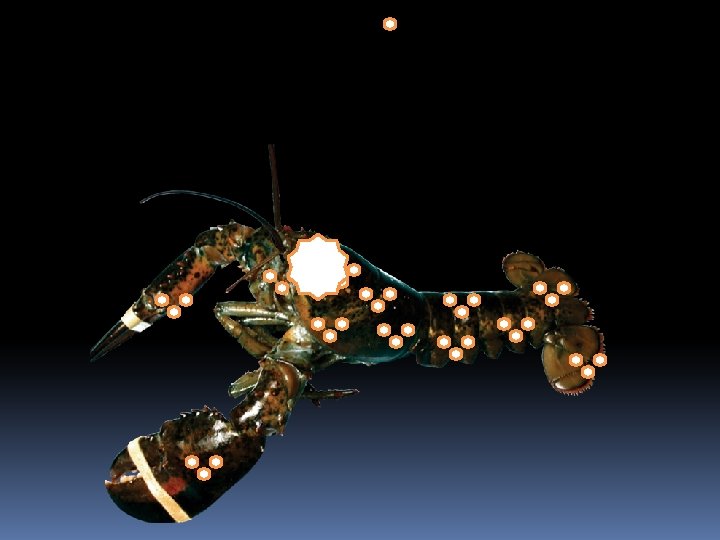
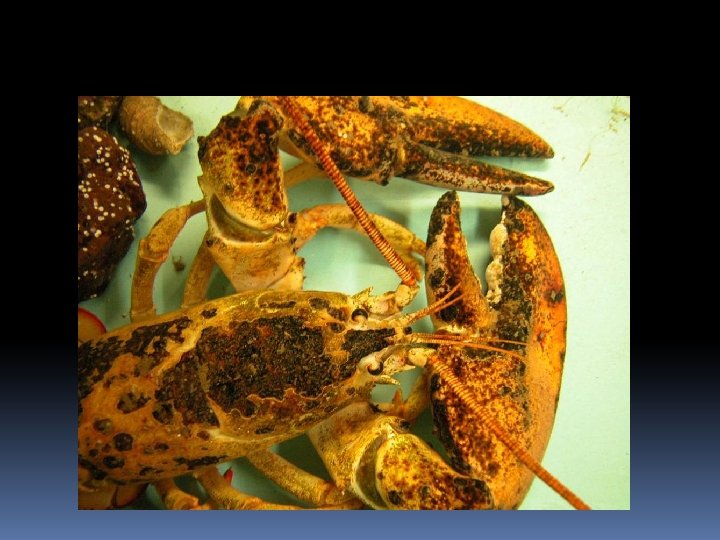
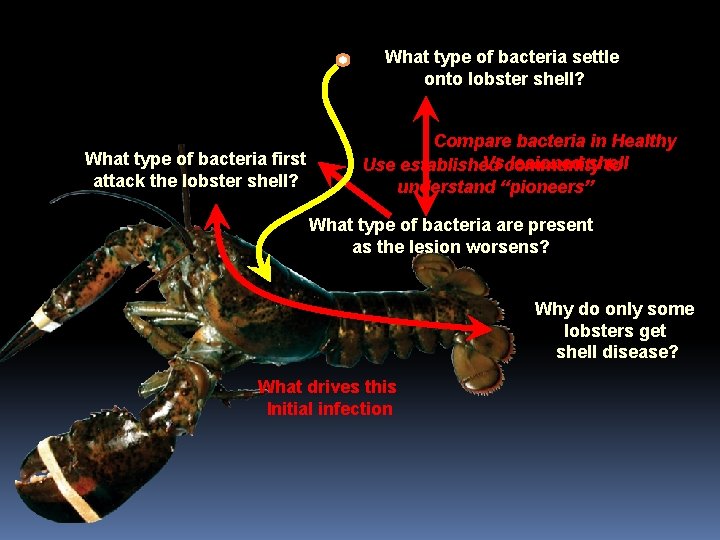
What type of bacteria settle onto lobster shell? What type of bacteria first attack the lobster shell? Compare bacteria in Healthy Vscommunity lesioned shell Use established to understand “pioneers” What type of bacteria are present as the lesion worsens? Why do only some lobsters get shell disease? What drives this Initial infection
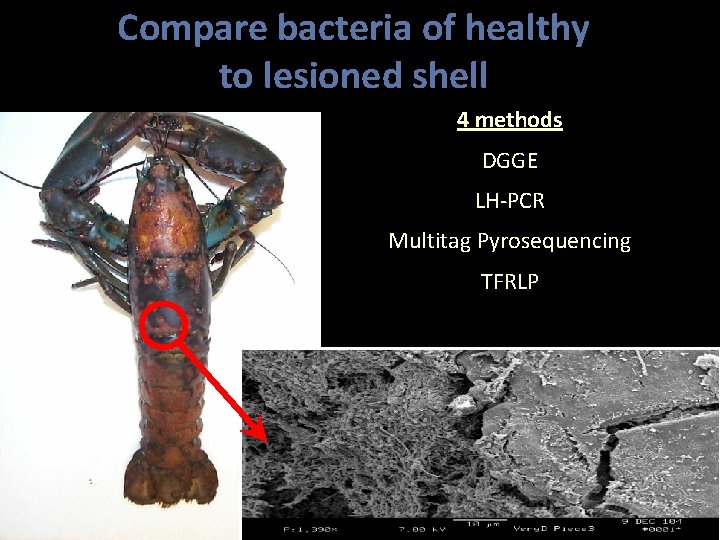
Compare bacteria of healthy to lesioned shell 4 methods DGGE LH-PCR Multitag Pyrosequencing TFRLP
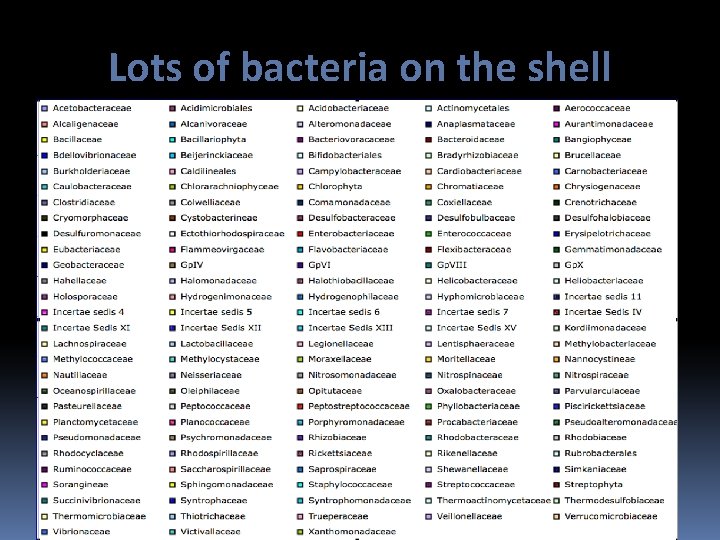
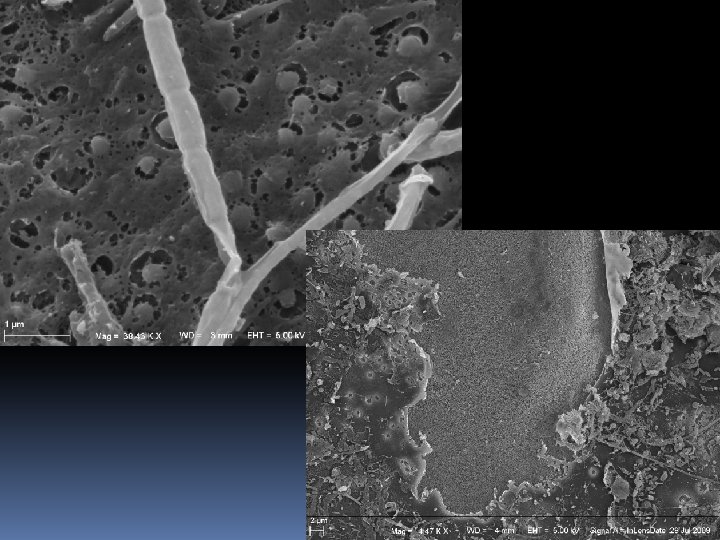
Lots of bacteria on the shell
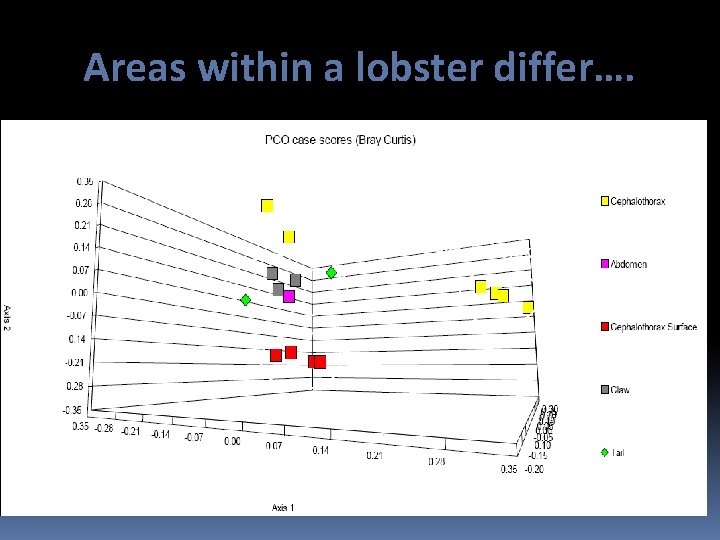
Areas within a lobster differ….
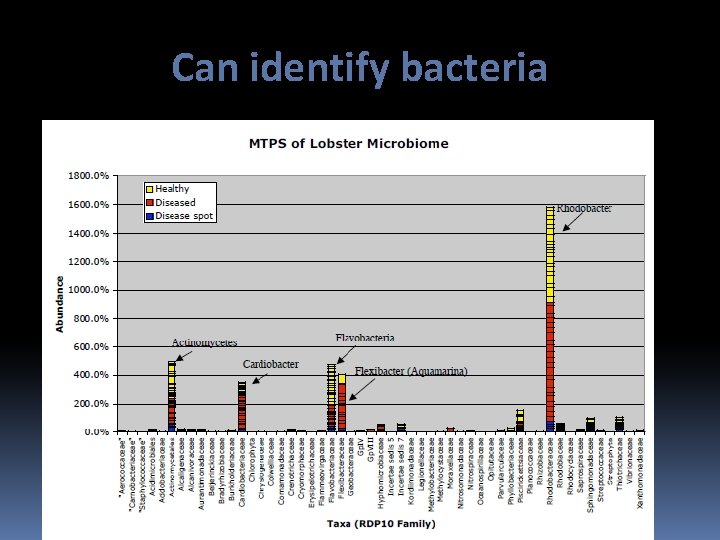
Can identify bacteria
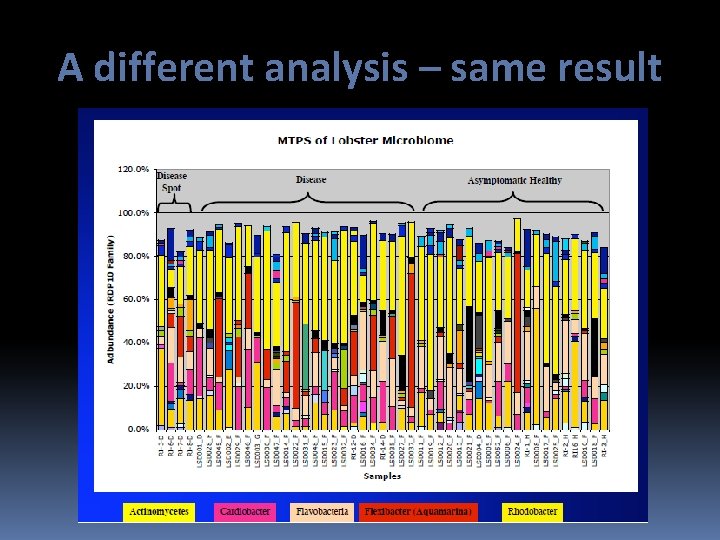
A different analysis – same result
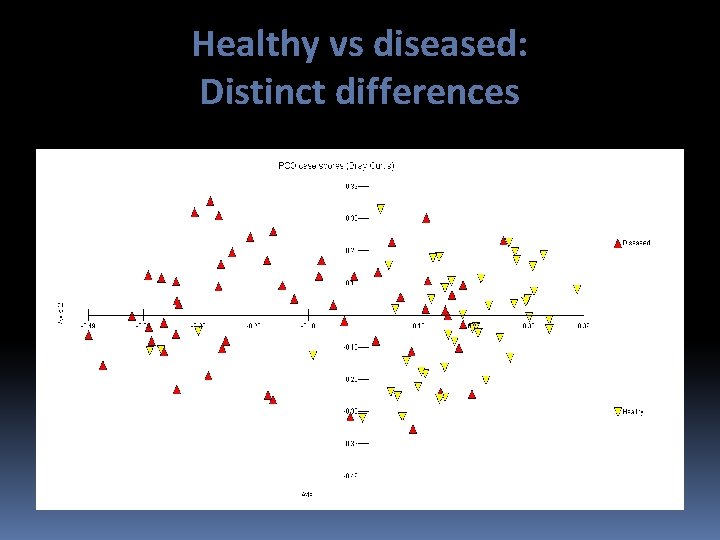
Healthy vs diseased: Distinct differences
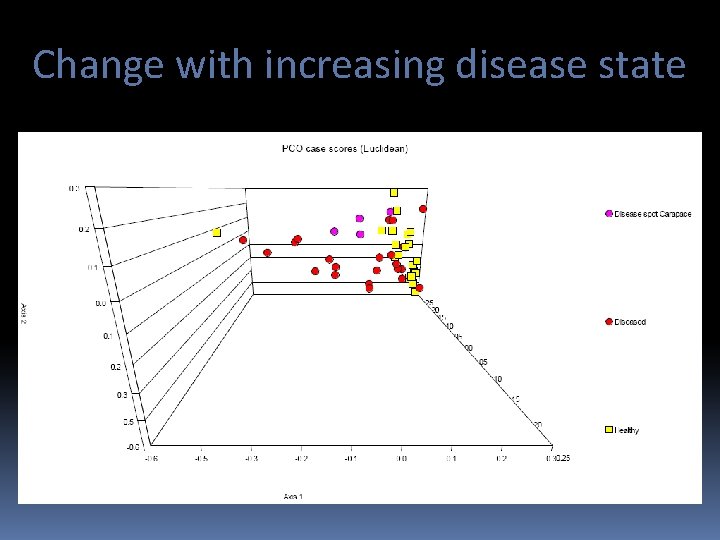
Change with increasing disease state
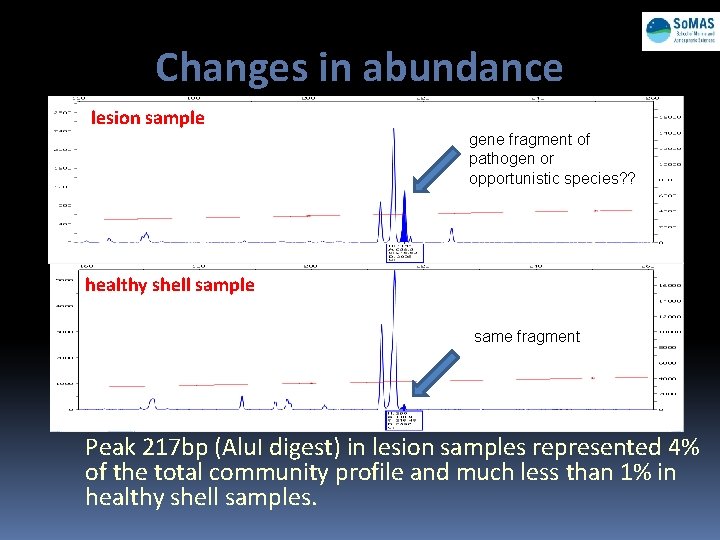
Changes in abundance lesion sample gene fragment of pathogen or opportunistic species? ? healthy shell sample same fragment Peak 217 bp (Alu. I digest) in lesion samples represented 4% of the total community profile and much less than 1% in healthy shell samples.
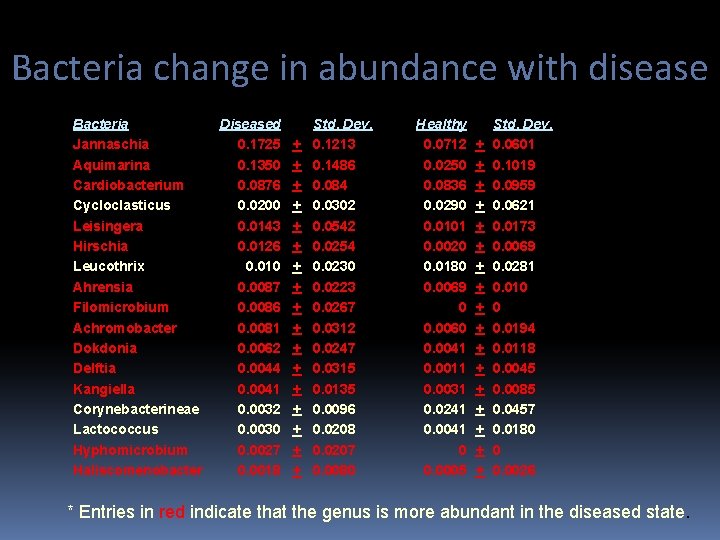
Bacteria change in abundance with disease Bacteria Jannaschia Aquimarina Cardiobacterium Cycloclasticus Leisingera Hirschia Leucothrix Ahrensia Filomicrobium Achromobacter Dokdonia Delftia Kangiella Corynebacterineae Lactococcus Hyphomicrobium Haliscomenobacter Diseased 0. 1725 0. 1350 0. 0876 0. 0200 0. 0143 0. 0126 0. 010 0. 0087 0. 0086 0. 0081 0. 0062 0. 0044 0. 0041 0. 0032 0. 0030 0. 0027 0. 0018 + + + + + Std. Dev. 0. 1213 0. 1486 0. 084 0. 0302 0. 0542 0. 0254 0. 0230 0. 0223 0. 0267 0. 0312 0. 0247 0. 0315 0. 0135 0. 0096 0. 0208 0. 0207 0. 0080 Healthy 0. 0712 0. 0250 0. 0836 0. 0290 0. 0101 0. 0020 0. 0180 0. 0069 0 0. 0060 0. 0041 0. 0011 0. 0031 0. 0241 0. 0041 0 0. 0005 + + + + + Std. Dev. 0. 0601 0. 1019 0. 0959 0. 0621 0. 0173 0. 0069 0. 0281 0. 010 0 0. 0194 0. 0118 0. 0045 0. 0085 0. 0457 0. 0180 0 0. 0026 * Entries in red indicate that the genus is more abundant in the diseased state.
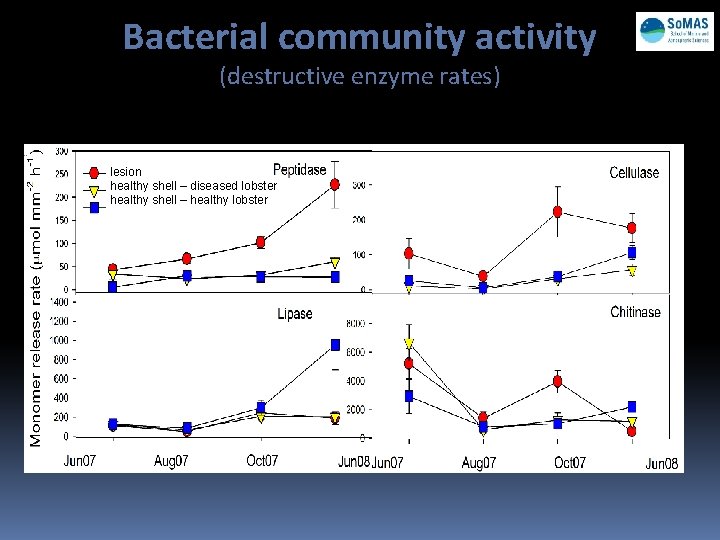
Bacterial community activity (destructive enzyme rates) lesion healthy shell – diseased lobster healthy shell – healthy lobster
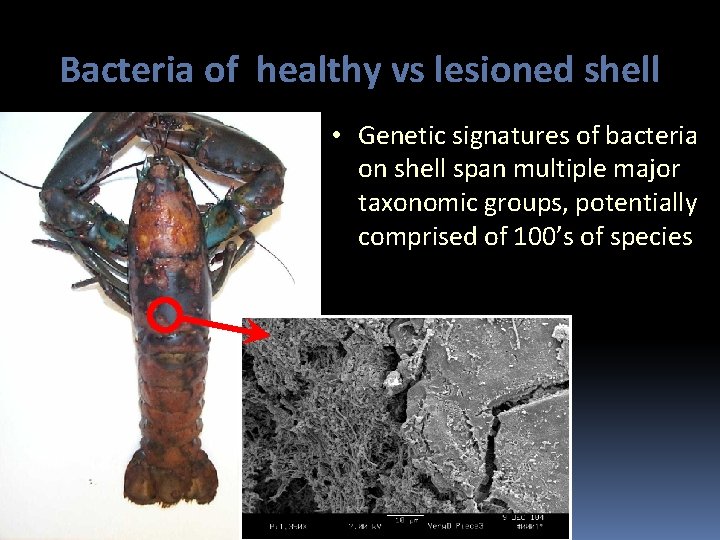
Bacteria of healthy vs lesioned shell • Genetic signatures of bacteria on shell span multiple major taxonomic groups, potentially comprised of 100’s of species
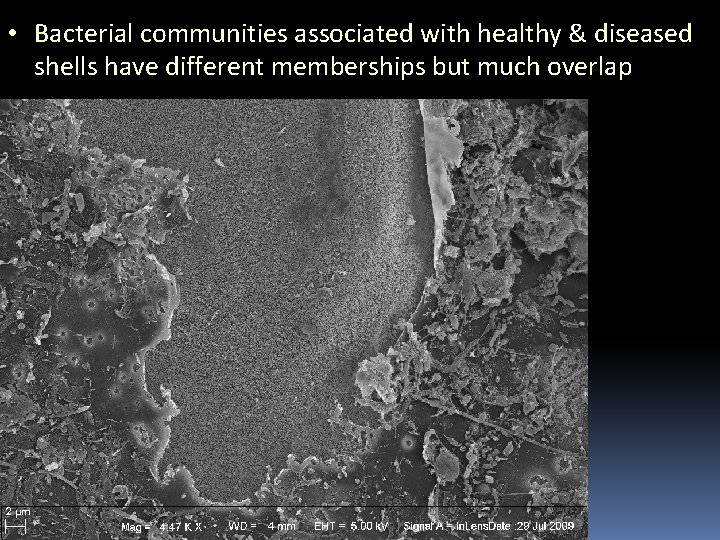
• Bacterial communities associated with healthy & diseased shells have different memberships but much overlap
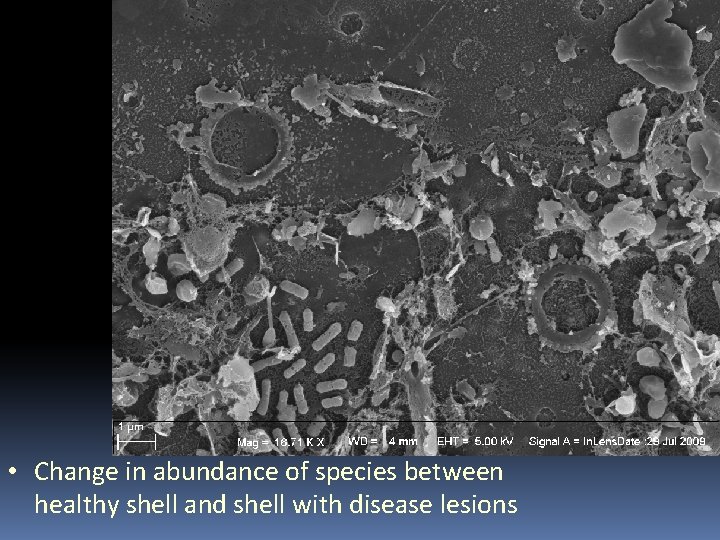
• Change in abundance of species between healthy shell and shell with disease lesions
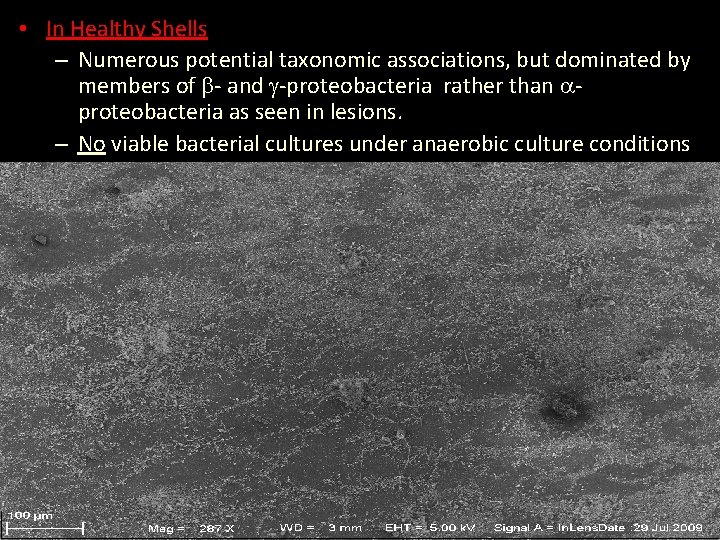
• In Healthy Shells – Numerous potential taxonomic associations, but dominated by members of - and -proteobacteria rather than proteobacteria as seen in lesions. – No viable bacterial cultures under anaerobic culture conditions
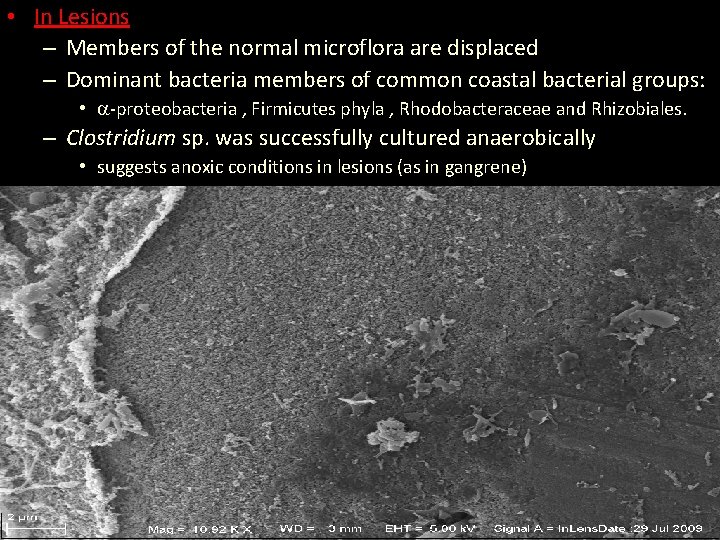
• In Lesions – Members of the normal microflora are displaced – Dominant bacteria members of common coastal bacterial groups: • -proteobacteria , Firmicutes phyla , Rhodobacteraceae and Rhizobiales. – Clostridium sp. was successfully cultured anaerobically • suggests anoxic conditions in lesions (as in gangrene)
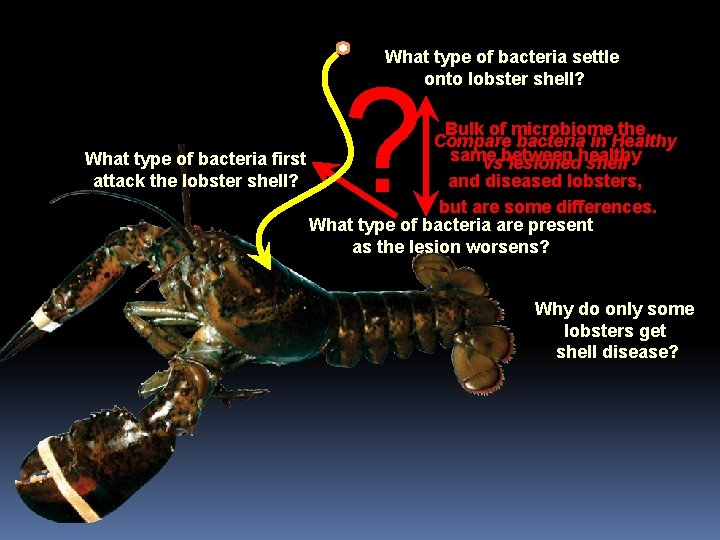
What type of bacteria settle onto lobster shell? ? Bulk of microbiome the Compare bacteria in Healthy same What type of bacteria first vsbetween lesionedhealthy shell attack the lobster shell? and diseased lobsters, but are some differences. What type of bacteria are present as the lesion worsens? Why do only some lobsters get shell disease?
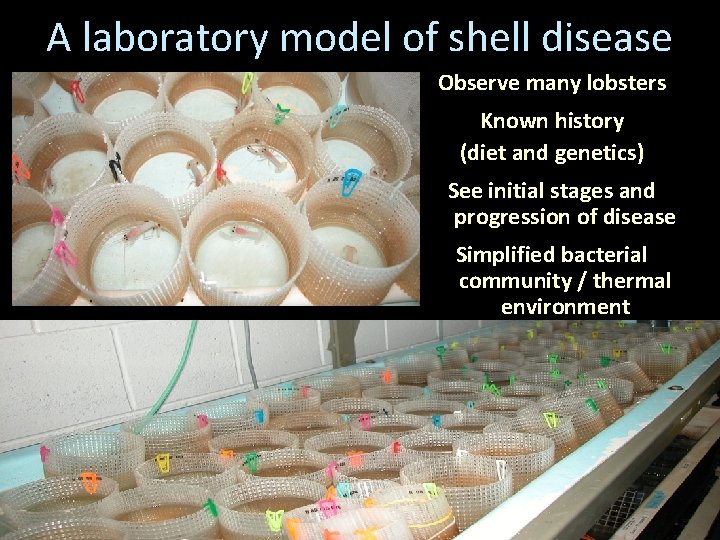
A laboratory model of shell disease Observe many lobsters Known history (diet and genetics) See initial stages and progression of disease Simplified bacterial community / thermal environment
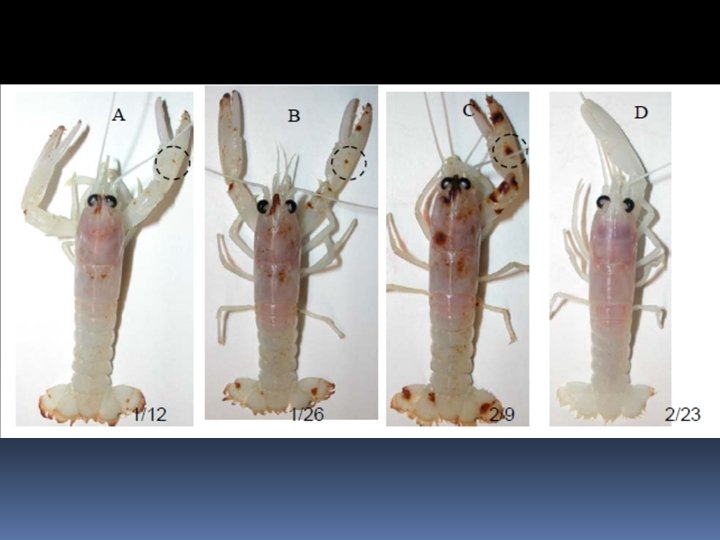
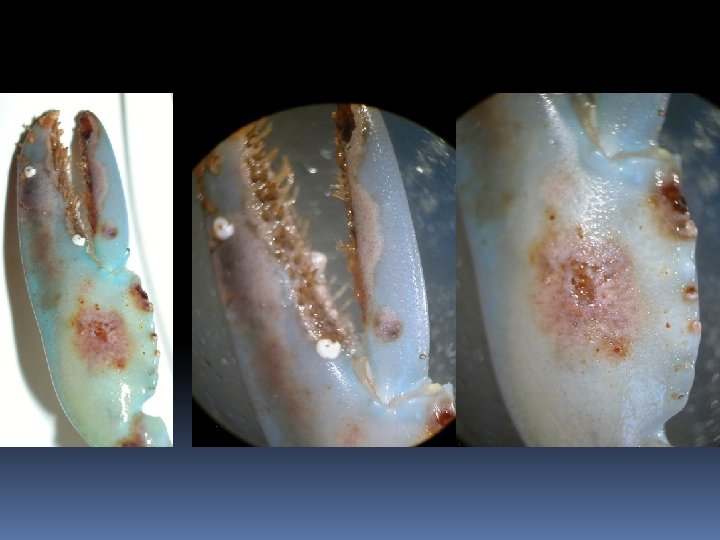
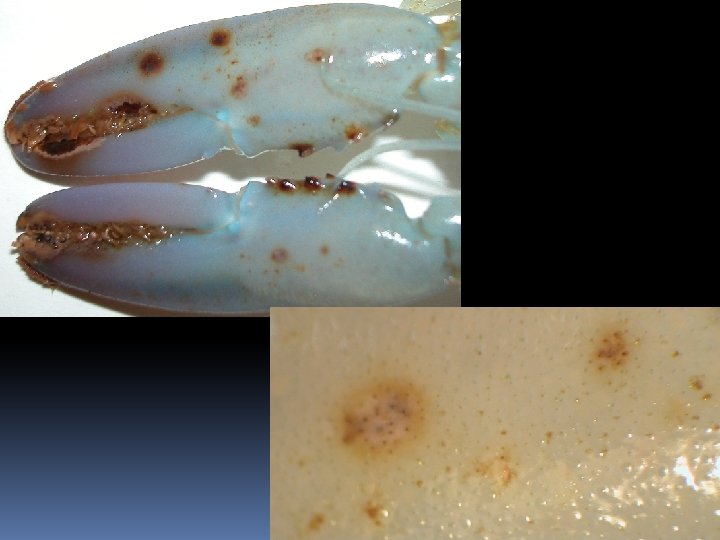
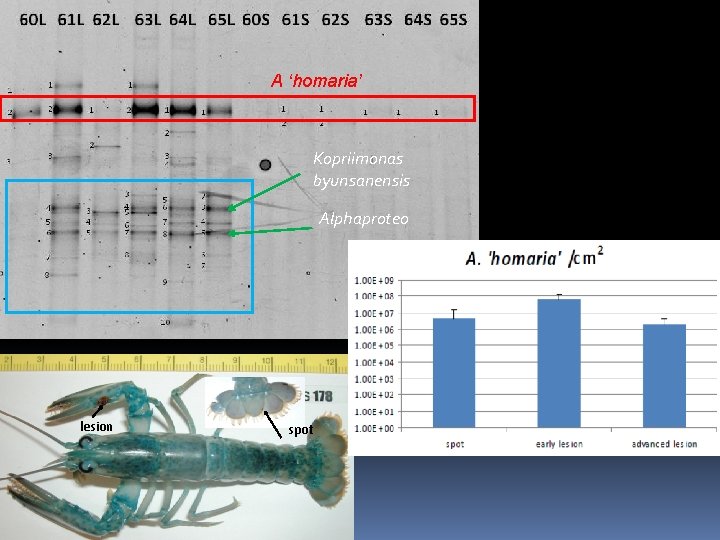
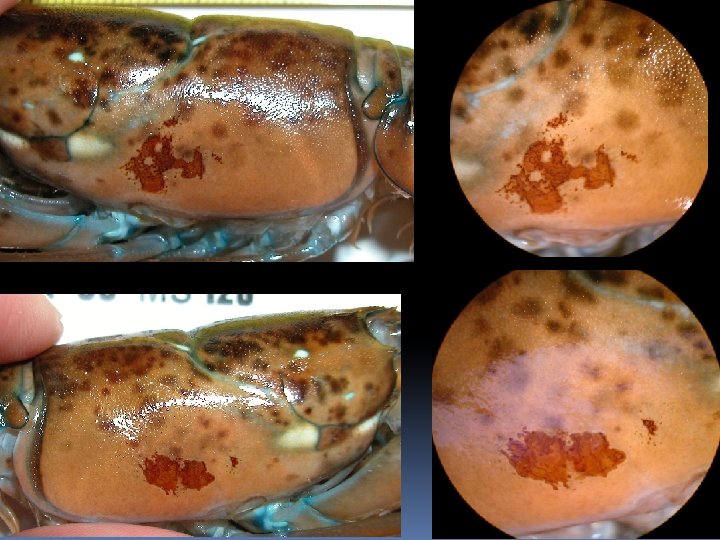
A ‘homaria’ Kopriimonas byunsanensis Alphaproteo lesion spot
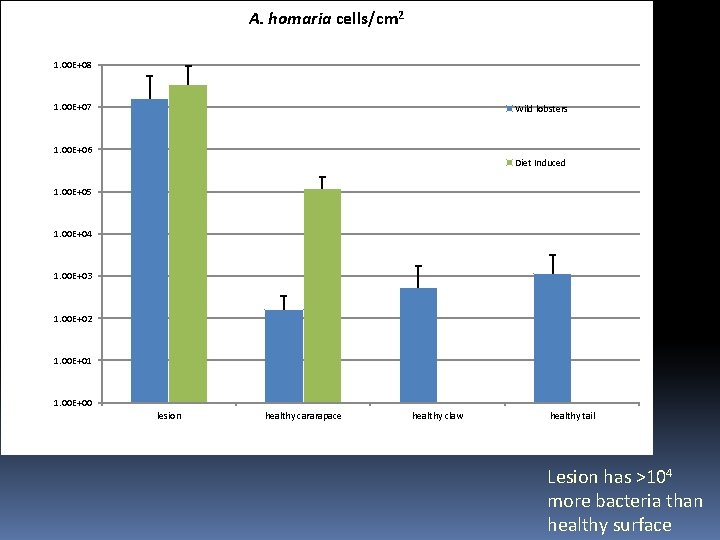
A. homaria cells/cm 2 1. 00 E+08 1. 00 E+07 Wild lobsters 1. 00 E+06 Diet Induced 1. 00 E+05 1. 00 E+04 1. 00 E+03 1. 00 E+02 1. 00 E+01 1. 00 E+00 lesion healthy cararapace healthy claw healthy tail Lesion has >104 more bacteria than healthy surface
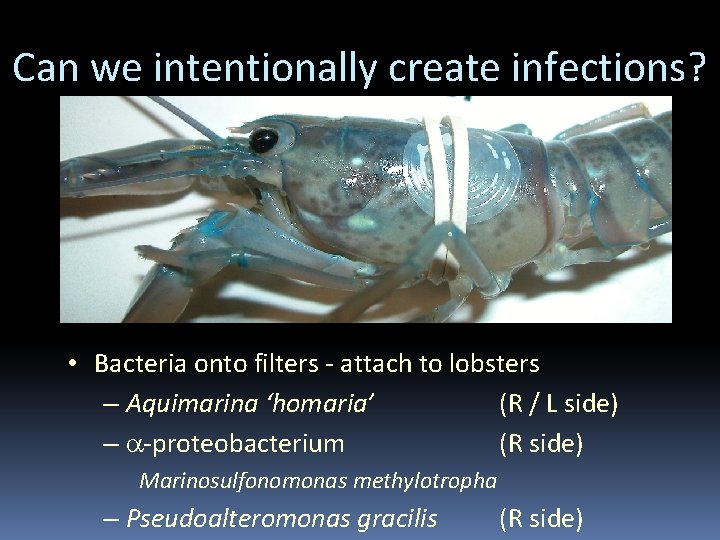
Can we intentionally create infections? • Bacteria onto filters - attach to lobsters – Aquimarina ‘homaria’ (R / L side) – -proteobacterium (R side) Marinosulfonomonas methylotropha – Pseudoalteromonas gracilis (R side)
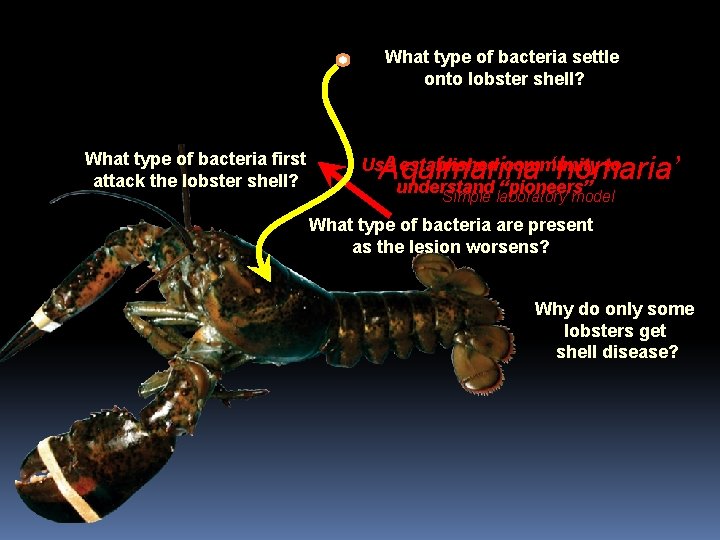
What type of bacteria settle onto lobster shell? What type of bacteria first attack the lobster shell? Aquimarina ‘homaria’ Use established community to understand “pioneers” Simple laboratory model What type of bacteria are present as the lesion worsens? Why do only some lobsters get shell disease?
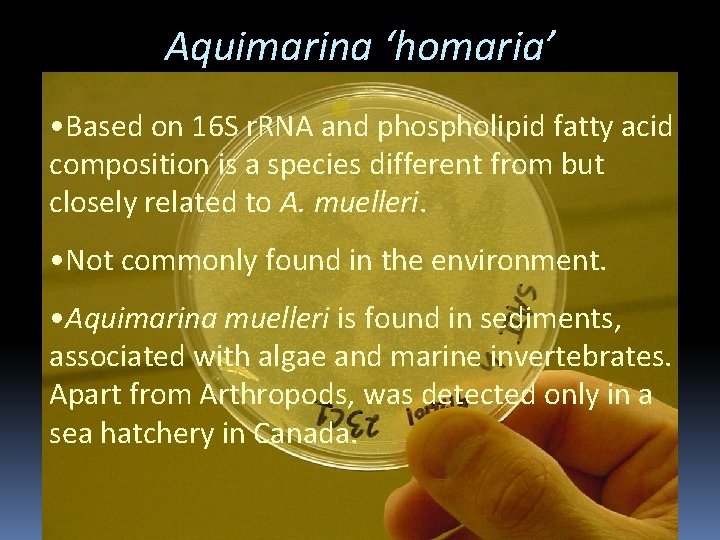
Aquimarina ‘homaria’ • Based on 16 S r. RNA and phospholipid fatty acid composition is a species different from but closely related to A. muelleri. • Not commonly found in the environment. • Aquimarina muelleri is found in sediments, associated with algae and marine invertebrates. Apart from Arthropods, was detected only in a sea hatchery in Canada.
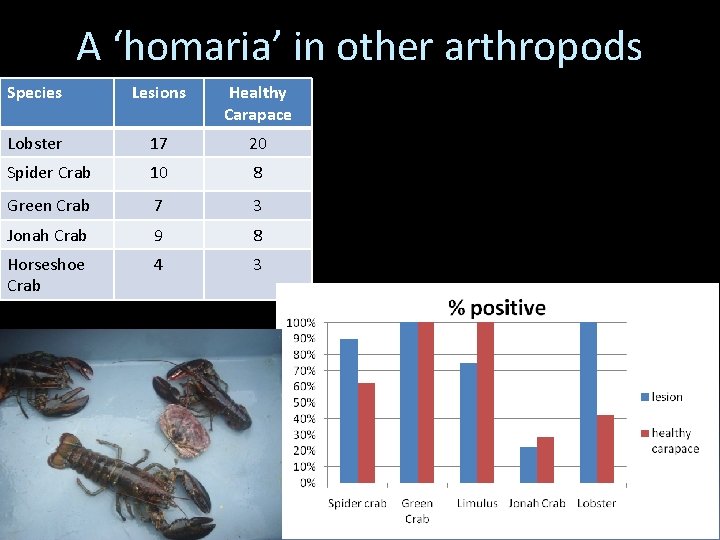
A ‘homaria’ in other arthropods Species Lesions Healthy Carapace Lobster 17 20 Spider Crab 10 8 Green Crab 7 3 Jonah Crab 9 8 Horseshoe Crab 4 3
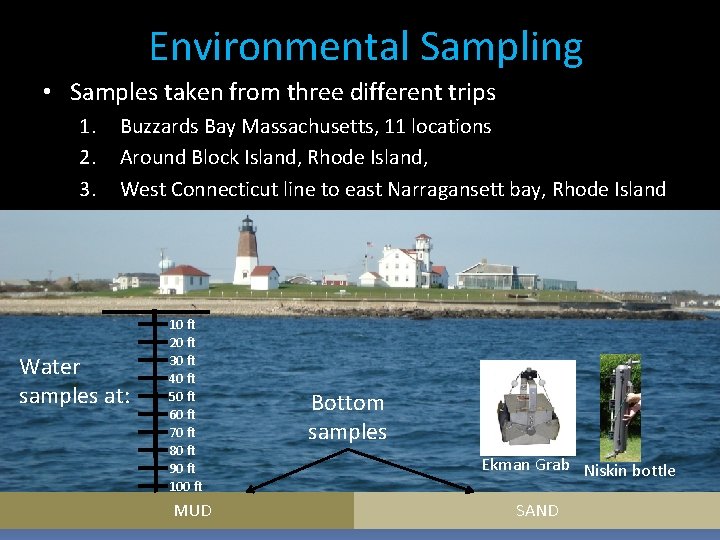
Environmental Sampling • Samples taken from three different trips 1. 2. 3. Buzzards Bay Massachusetts, 11 locations Around Block Island, Rhode Island, West Connecticut line to east Narragansett bay, Rhode Island Water samples at: 10 ft 20 ft 30 ft 40 ft 50 ft 60 ft 70 ft 80 ft 90 ft 100 ft MUD Bottom samples Ekman Grab Niskin bottle SAND
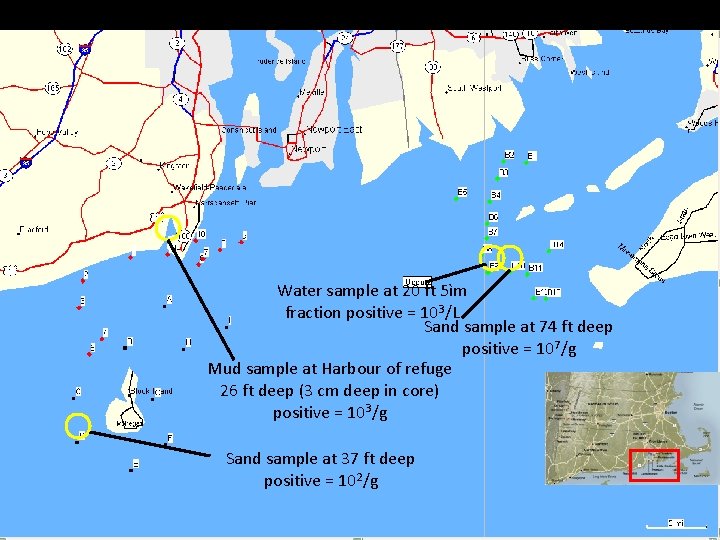
Water sample at 20 ft 5ìm fraction positive = 103/L Sand sample at 74 ft deep positive = 107/g Mud sample at Harbour of refuge 26 ft deep (3 cm deep in core) positive = 103/g Sand sample at 37 ft deep positive = 102/g
Environmental Sampling Summary • A. ‘homaria’ - detected on other invertebrates • A. ‘homaria’ - also detected on lobster bait (skate and haddock) • A. ‘homaria’ is not a common marine bacterium • Appears to be present in more off shore sand sediments • Unusual distribution in New England Aquarium
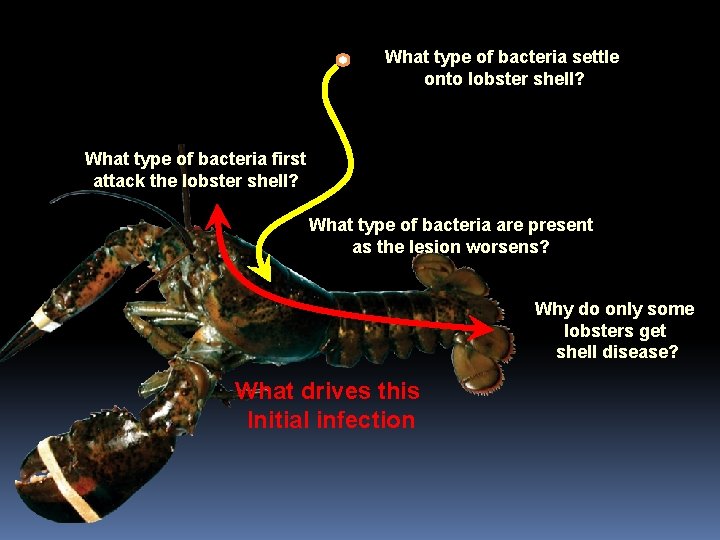
What type of bacteria settle onto lobster shell? What type of bacteria first attack the lobster shell? What type of bacteria are present as the lesion worsens? Why do only some lobsters get shell disease? What drives this Initial infection
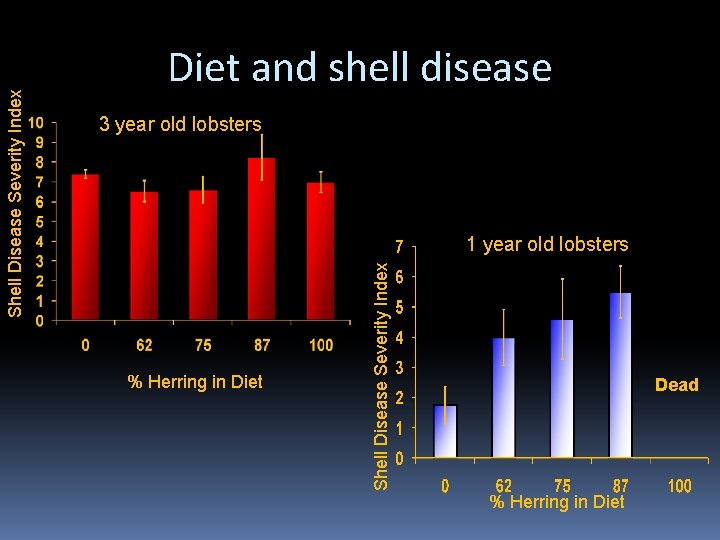
3 year old lobsters 1 year old lobsters % Herring in Diet Shell Disease Severity Index Diet and shell disease Dead % Herring in Diet
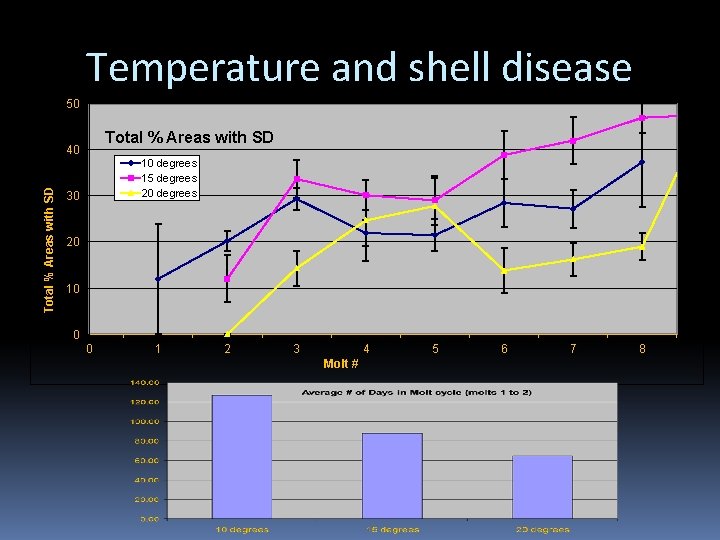
Temperature and shell disease 50 Total % Areas with SD 40 10 degrees 15 degrees 20 degrees 30 20 10 0 0 1 2 3 4 Molt # 5 6 7 8
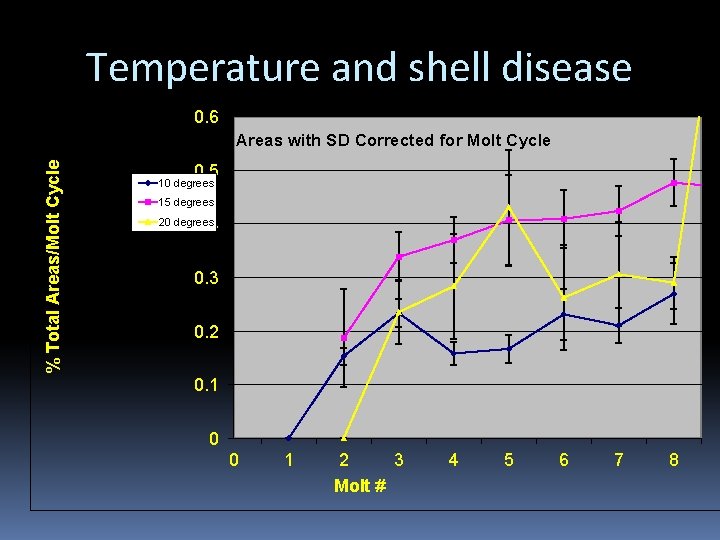
Temperature and shell disease 0. 6 % Total Areas/Molt Cycle % Total Areas with SD Corrected for Molt Cycle 0. 5 10 degrees 15 degrees 0. 4 20 degrees 0. 3 0. 2 0. 1 0 0 1 2 3 Molt # 4 5 6 7 8
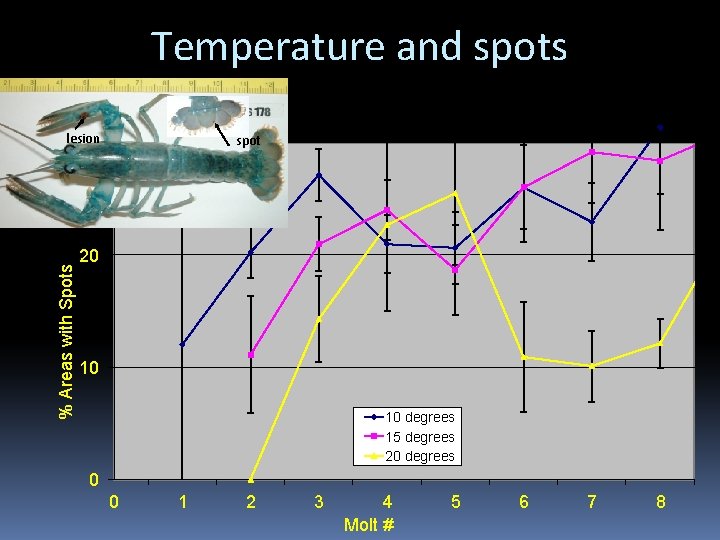
Temperature and spots % Areas with Spots lesion 30 spot 20 10 10 degrees 15 degrees 20 degrees 0 0 1 2 3 4 Molt # 5 6 7 8
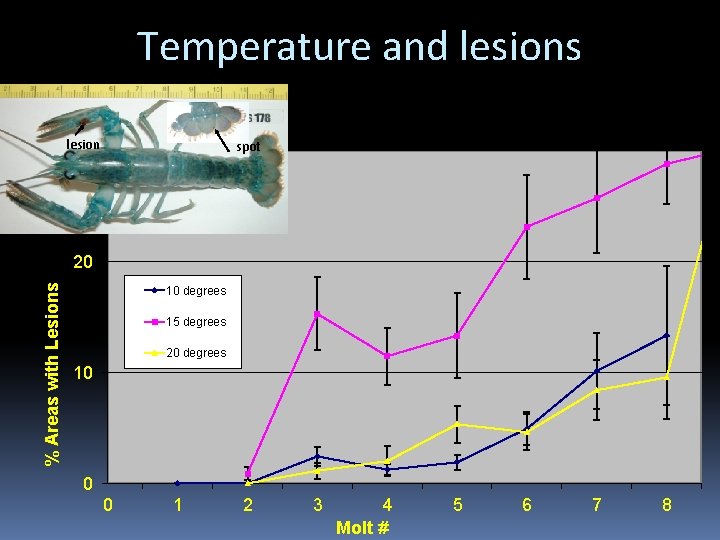
Temperature and lesions lesion spot 30 Lesions % Areas with Lesions 20 10 degrees 15 degrees 20 degrees 10 0 0 1 2 3 4 Molt # 5 6 7 8
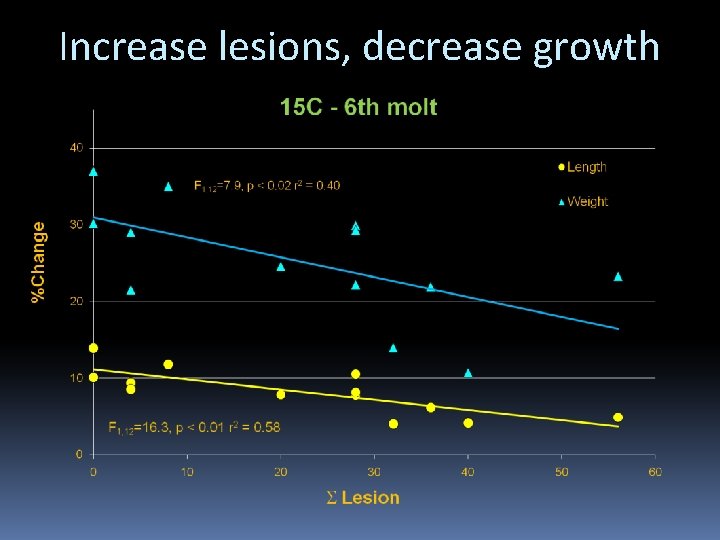
Increase lesions, decrease growth
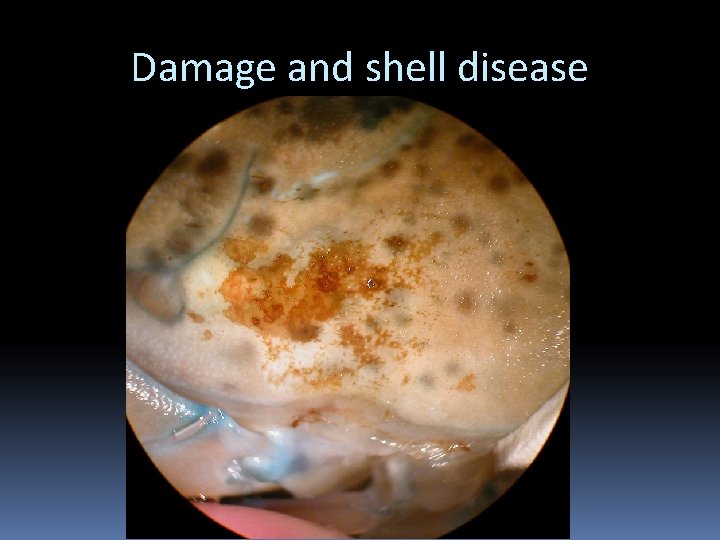
Damage and shell disease
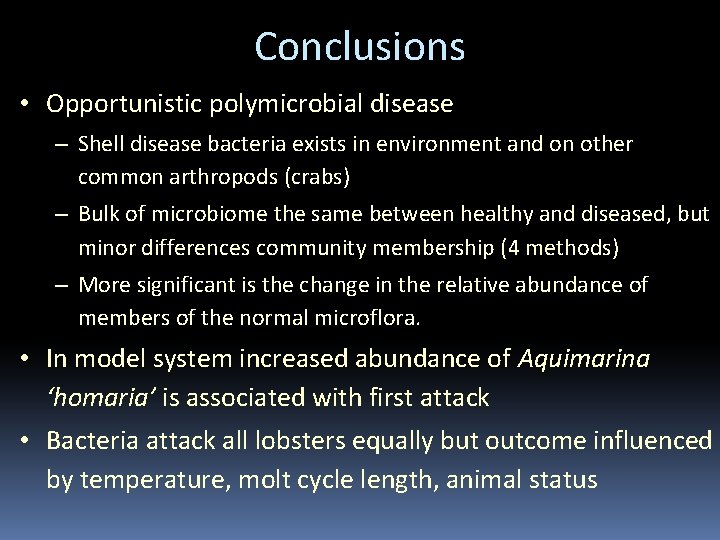
Conclusions • Opportunistic polymicrobial disease – Shell disease bacteria exists in environment and on other common arthropods (crabs) – Bulk of microbiome the same between healthy and diseased, but minor differences community membership (4 methods) – More significant is the change in the relative abundance of members of the normal microflora. • In model system increased abundance of Aquimarina ‘homaria’ is associated with first attack • Bacteria attack all lobsters equally but outcome influenced by temperature, molt cycle length, animal status
- Slides: 44