
MICROBIOLOGY Lecture Sterilization and disinfection IMPORTANT DOCTORS NOTES
MICROBIOLOGY Lecture : Sterilization and disinfection IMPORTANT. DOCTORS NOTES. EXTRA INFORMATION.
Objectives : 1 - Define the terms sterilization, disinfectant and antiseptic. 3 2 - Classify the different methods of sterilization (physical and chemical methods). 4 3 - Know and realizes that heat is the most important method of sterilization and its application in medical practice. 5 4 - Know dry heat as applied in hot air Oven and moist heat as applied in autoclaves. 7 5 - Know the principles of Autoclave function and monitoring methods of sterilization. 6 -9 6 - Know the importance of non heat sterilization methods and their use for sterilization of heat sensitive objects. 13 -15 7 -Know the difference between antiseptics and disinfectants. 16 8 - Know types and scope of function of the disinfectants and antiseptics and factors affecting their functions. 16 9 - Know the medical applications of different disinfections and antiseptics. 16
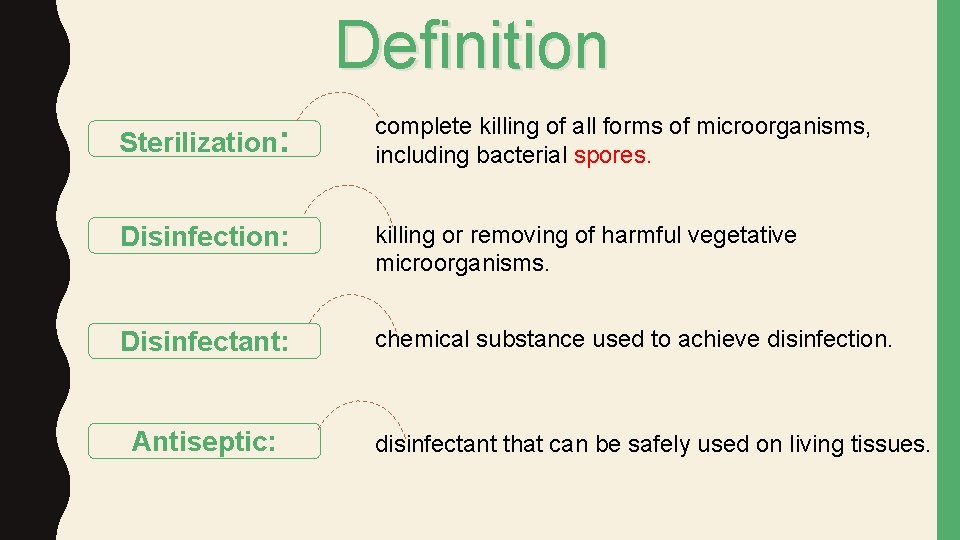
Definition Sterilization: complete killing of all forms of microorganisms, including bacterial spores. Disinfection: killing or removing of harmful vegetative microorganisms. Disinfectant: chemical substance used to achieve disinfection. Antiseptic: disinfectant that can be safely used on living tissues.

Methods of Sterilization Physical methods: Chemical method: (used for heat sensitive equipments) dry heat 1. 2. 3. 4. moist heat Heat U. V. Light Ionizing Radiation Filtration 1. 2. Ethylene Oxide Gluteraldehyde Simplest methods is to sterilize by naked flame
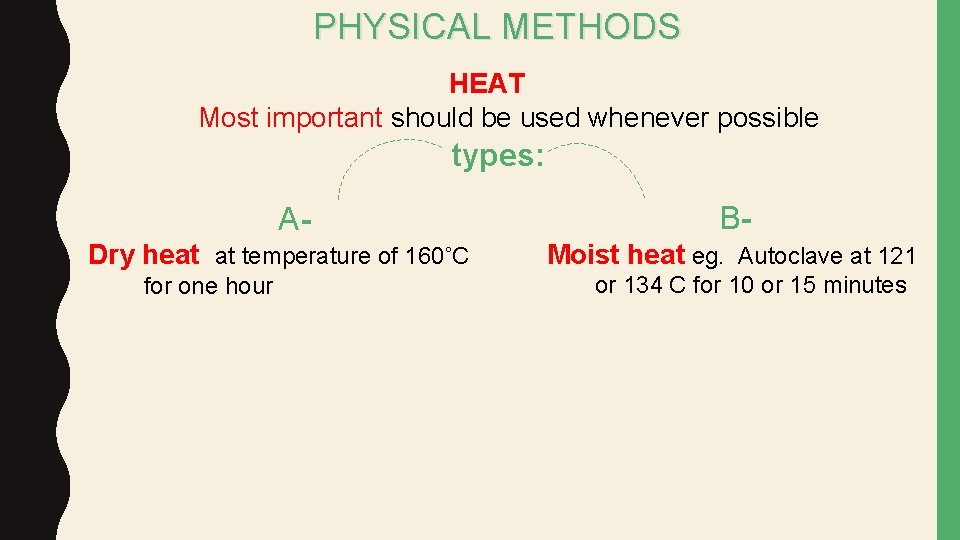
PHYSICAL METHODS HEAT Most important should be used whenever possible types: ADry heat at temperature of 160˚C for one hour BMoist heat eg. Autoclave at 121 or 134 C for 10 or 15 minutes
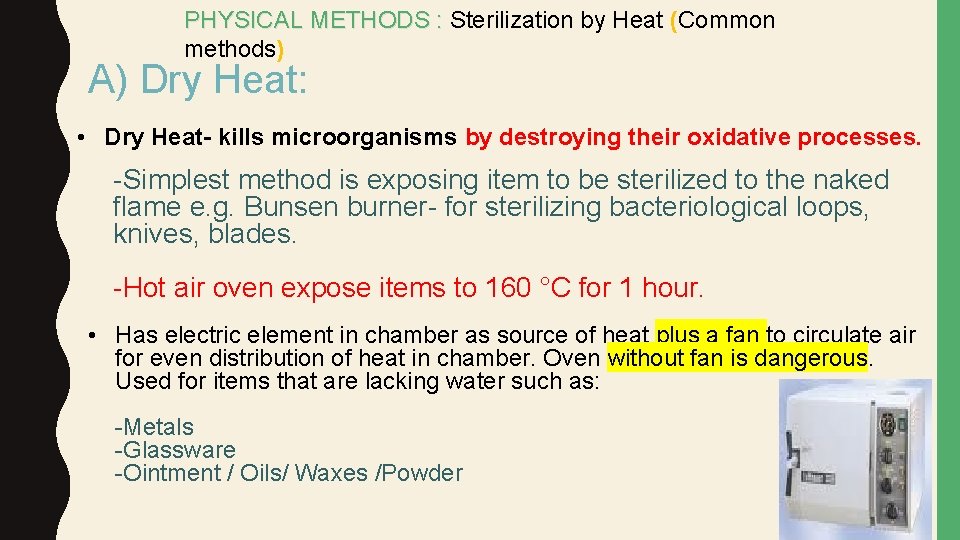
PHYSICAL METHODS : Sterilization by Heat (Common methods) A) Dry Heat: • Dry Heat- kills microorganisms by destroying their oxidative processes. -Simplest method is exposing item to be sterilized to the naked flame e. g. Bunsen burner- for sterilizing bacteriological loops, knives, blades. -Hot air oven expose items to 160 °C for 1 hour. • Has electric element in chamber as source of heat plus a fan to circulate air for even distribution of heat in chamber. Oven without fan is dangerous. Used for items that are lacking water such as: -Metals -Glassware -Ointment / Oils/ Waxes /Powder
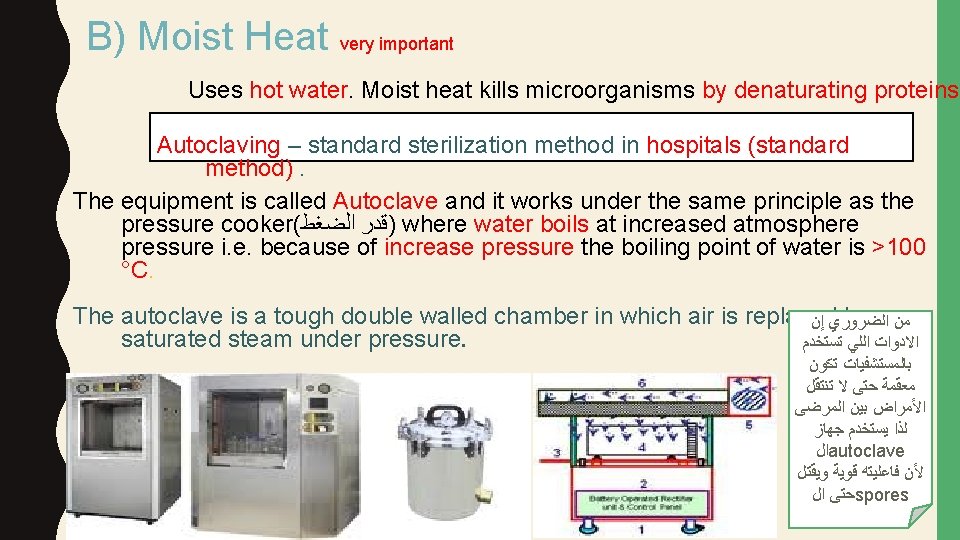
B) Moist Heat very important Uses hot water. Moist heat kills microorganisms by denaturating proteins. Autoclaving – standard sterilization method in hospitals (standard method). The equipment is called Autoclave and it works under the same principle as the pressure cooker( )ﻗﺪﺭ ﺍﻟﻀﻐﻂ where water boils at increased atmosphere pressure i. e. because of increase pressure the boiling point of water is >100 °C. The autoclave is a tough double walled chamber in which air is replaced by pure ﺍﻟﻀﺮﻭﺭﻱ ﺇﻥ ﻣﻦ saturated steam under pressure. ﺍﻻﺩﻭﺍﺕ ﺍﻟﻠﻲ ﺗﺴﺘﺨﺪﻡ ﺑﺎﻟﻤﺴﺘﺸﻔﻴﺎﺕ ﺗﻜﻮﻥ ﻣﻌﻘﻤﺔ ﺣﺘﻰ ﻻ ﺗﻨﺘﻘﻞ ﺍﻷﻤﺮﺍﺽ ﺑﻴﻦ ﺍﻟﻤﺮﺿﻰ ﻟﺬﺍ ﻳﺴﺘﺨﺪﻡ ﺟﻬﺎﺯ ﺍﻝ autoclave ﻷﻦ ﻓﺎﻋﻠﻴﺘﻪ ﻗﻮﻳﺔ ﻭﻳﻘﺘﻞ ﺣﺘﻰ ﺍﻝ spores
B) Moist Heat ﻳﺨﺮﺝ ﺍﻟﻬﻮﺍﺀ ﺧﺎﺭﺝ ﺍﻟﺠﻬﺎﺯ The air in the chamber is evacuated and filled with saturated steam. The chamber is closed tightly the steam keeps on filling into it and the pressure gradually increases. The items to be sterilized get completely surrounded by saturated steam (moist heat) which on contact with the surface of material to be sterilized condenses to release its latent heat of condensation which adds to already raised temperature of steam so that eventually all the microorganisms in what ever form are killed. The usual temperature ﻣﻦ achieved ﻣﻤﻜﻦ ﻳﺨﺘﻠﻒ is 121 °C , exposure time of only 15 minutes ( or 134 C for 10 minutes). ﺟﻬﺎﺯ ﻟﺠﻬﺎﺯ
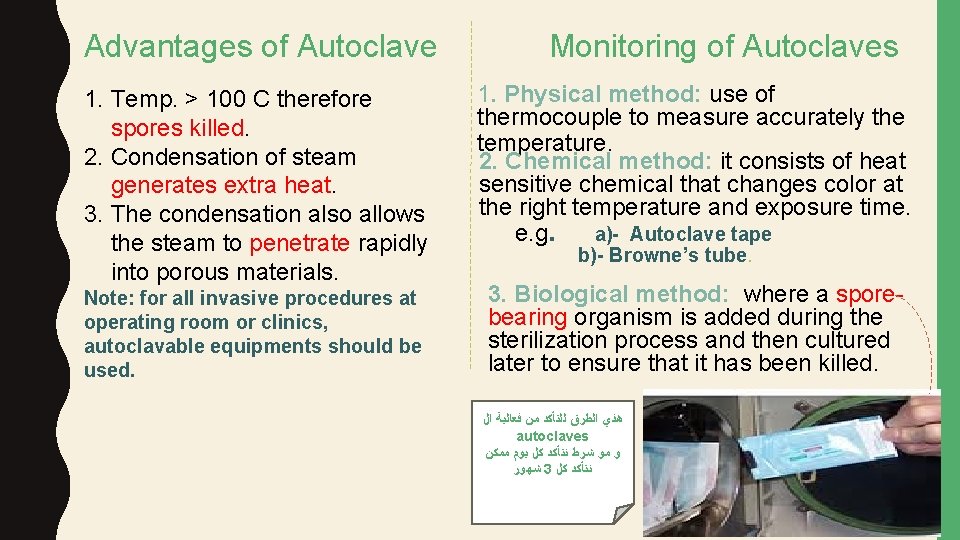
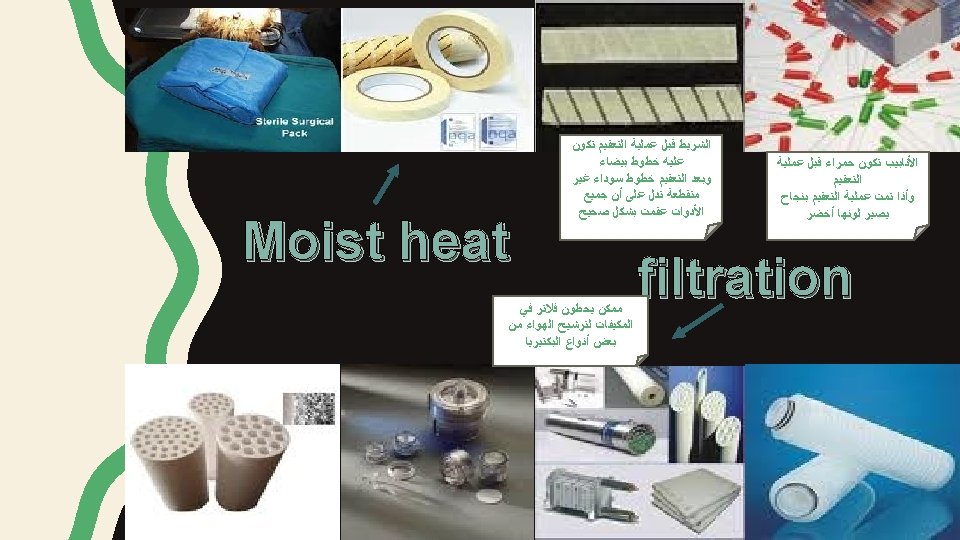
Advantages of Autoclave 1. Temp. > 100 C therefore spores killed. 2. Condensation of steam generates extra heat. 3. The condensation also allows the steam to penetrate rapidly into porous materials. Note: for all invasive procedures at operating room or clinics, autoclavable equipments should be used. Monitoring of Autoclaves 1. Physical method: use of thermocouple to measure accurately the temperature. 2. Chemical method: it consists of heat sensitive chemical that changes color at the right temperature and exposure time. e. g. a)- Autoclave tape b)- Browne’s tube. 3. Biological method: where a sporebearing organism is added during the sterilization process and then cultured later to ensure that it has been killed. ﻫﺬﻱ ﺍﻟﻄﺮﻕ ﻟﻠﺘﺄﻜﺪ ﻣﻦ ﻓﻌﺎﻟﻴﺔ ﺍﻝ autoclaves ﻭ ﻣﻮ ﺷﺮﻁ ﻧﺘﺄﻜﺪ ﻛﻞ ﻳﻮﻡ ﻣﻤﻜﻦ ﺷﻬﻮﺭ 3 ﻧﺘﺄﻜﺪ ﻛﻞ
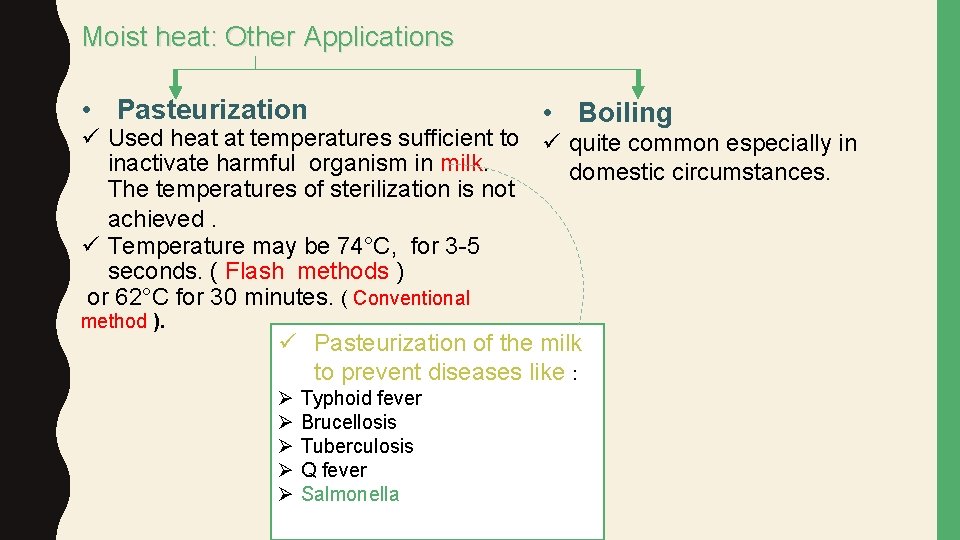
Moist heat: Other Applications • Pasteurization • Boiling ü Used heat at temperatures sufficient to ü quite common especially in inactivate harmful organism in milk. domestic circumstances. The temperatures of sterilization is not achieved. ü Temperature may be 74°C, for 3 -5 seconds. ( Flash methods ) or 62°C for 30 minutes. ( Conventional method ). ü Pasteurization of the milk to prevent diseases like : Ø Ø Ø Typhoid fever Brucellosis Tuberculosis Q fever Salmonella
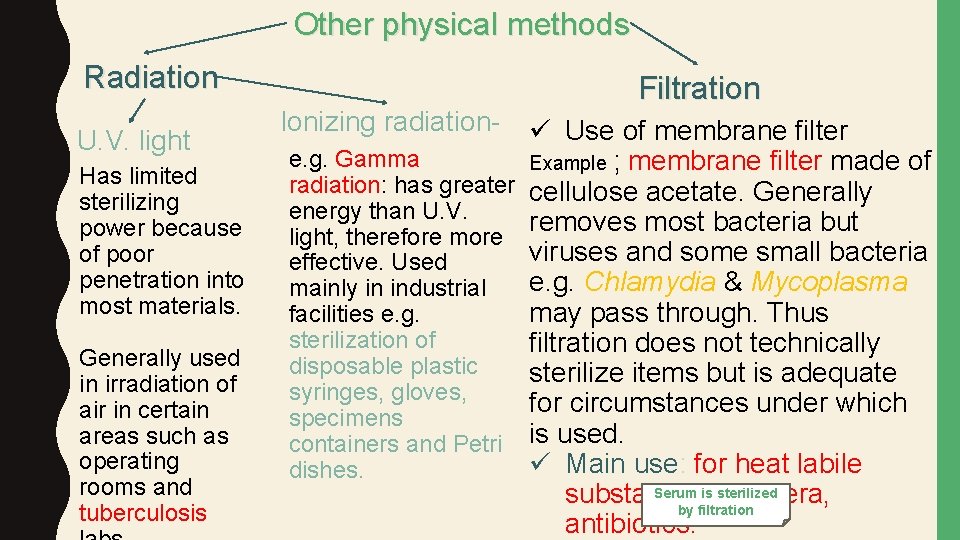
Other physical methods Radiation U. V. light Has limited sterilizing power because of poor penetration into most materials. Generally used in irradiation of air in certain areas such as operating rooms and tuberculosis Ionizing radiation- Filtration ü Use of membrane filter e. g. Gamma Example ; membrane filter made of radiation: has greater cellulose acetate. Generally energy than U. V. removes most bacteria but light, therefore more viruses and some small bacteria effective. Used e. g. Chlamydia & Mycoplasma mainly in industrial may pass through. Thus facilities e. g. sterilization of filtration does not technically disposable plastic sterilize items but is adequate syringes, gloves, for circumstances under which specimens containers and Petri is used. ü Main use: for heat labile dishes. Serum is e. g. sterilized substances sera, by filtration antibiotics.
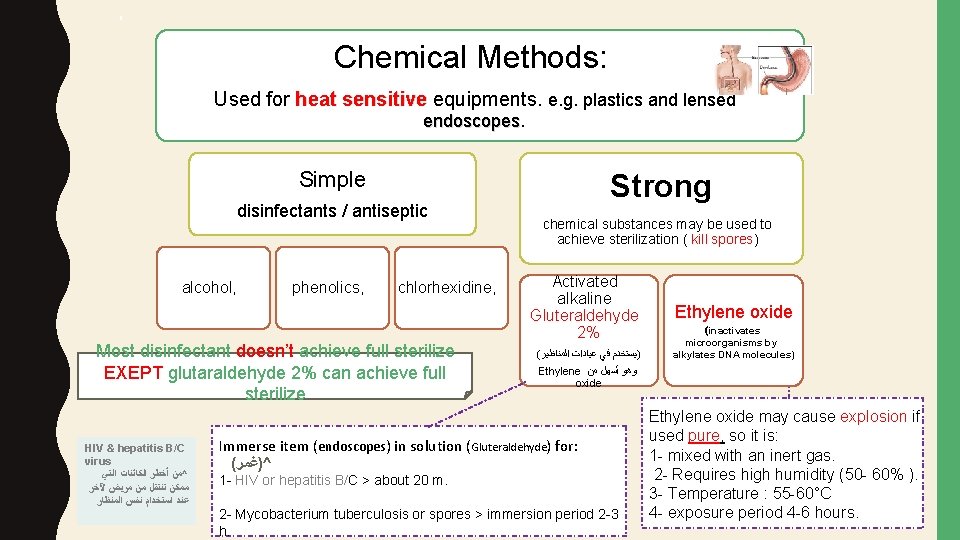
Chemical Methods: Used for heat sensitive equipments. e. g. plastics and lensed endoscopes. Simple disinfectants / antiseptic alcohol, phenolics, chlorhexidine, Most disinfectant doesn’t achieve full sterilize EXEPT glutaraldehyde 2% can achieve full sterilize HIV & hepatitis B/C virus ^ﻣﻦ ﺃﺨﻄﺮ ﺍﻟﻜﺎﺋﻨﺎﺕ ﺍﻟﺘﻲ ﻣﻤﻜﻦ ﺗﻨﺘﻘﻞ ﻣﻦ ﻣﺮﻳﺾ ﻵﺨﺮ ﻋﻨﺪ ﺍﺳﺘﺨﺪﺍﻡ ﻧﻔﺲ ﺍﻟﻤﻨﻈﺎﺭ Strong chemical substances may be used to achieve sterilization ( kill spores) Activated alkaline Gluteraldehyde 2% ( )ﻳﺴﺘﺨﺪﻡ ﻓﻲ ﻋﻴﺎﺩﺍﺕ ﺍﻟﻤﻨﺎﻇﻴﺮ Ethylene oxide (inactivates microorganisms by alkylates DNA molecules) Ethylene ﻭﻫﻮ ﺃﺴﻬﻞ ﻣﻦ oxide Immerse item (endoscopes) in solution (Gluteraldehyde) for: ( ^)ﻏﻤﺮ 1 - HIV or hepatitis B/C > about 20 m. 2 - Mycobacterium tuberculosis or spores > immersion period 2 -3 h. Ethylene oxide may cause explosion if used pure, so it is: 1 - mixed with an inert gas. 2 - Requires high humidity (50 - 60% ). 3 - Temperature : 55 -60°C 4 - exposure period 4 -6 hours.
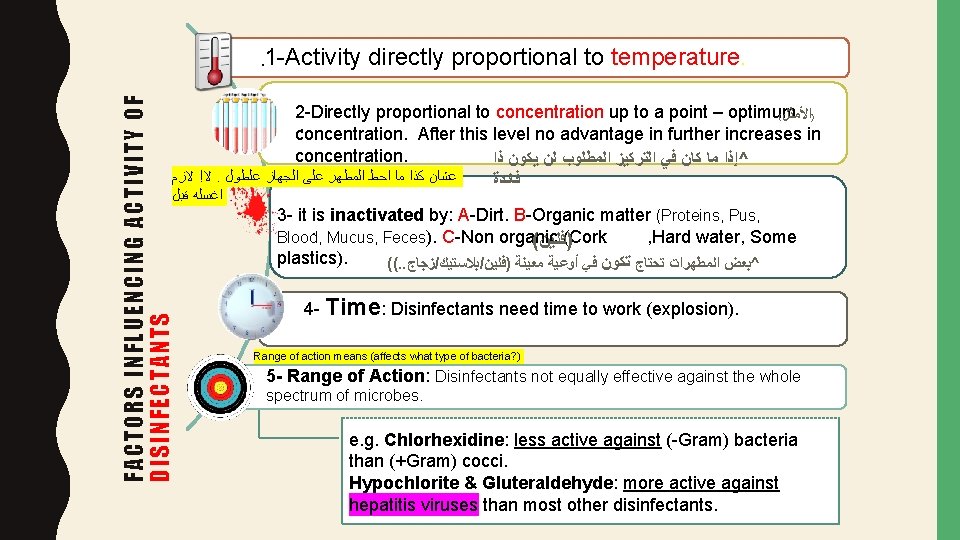
FACTORS INFLUENCING ACTIVITY OF DISINFECTANTS . 1 -Activity directly proportional to temperature. 2 -Directly proportional to concentration up to a point – optimum ( )ﺍﻷﻤﺜﻞ . concentration. After this level no advantage in further increases in concentration. ^ﺇﺫﺍ ﻣﺎ ﻛﺎﻥ ﻓﻲ ﺍﻟﺘﺮﻛﻴﺰ ﺍﻟﻤﻄﻠﻮﺏ ﻟﻦ ﻳﻜﻮﻥ ﺫﺍ ﻻ! ﻻﺯﻡ. ﻋﺸﺎﻥ ﻛﺬﺍ ﻣﺎ ﺍﺣﻂ ﺍﻟﻤﻄﻬﺮ ﻋﻠﻰ ﺍﻟﺠﻬﺎﺯ ﻋﻠﻄﻮﻝ ﻓﺎﺋﺪﺓ ﺍﻏﺴﻠﻪ ﻗﺒﻞ 3 - it is inactivated by: A-Dirt. B-Organic matter (Proteins, Pus, . Mucus, Feces). C-Non organic Blood, , Hard water, Some ( ()ﻓﻠﻴﻦ Cork plastics). ((. . ﺯﺟﺎﺝ / ﺑﻼﺳﺘﻴﻚ / ^ﺑﻌﺾ ﺍﻟﻤﻄﻬﺮﺍﺕ ﺗﺤﺘﺎﺝ ﺗﻜﻮﻥ ﻓﻲ ﺃﻮﻋﻴﺔ ﻣﻌﻴﻨﺔ )ﻓﻠﻴﻦ 4 - Time: Disinfectants need time to work (explosion). Range of action means (affects what type of bacteria? ) 5 - Range of Action: Disinfectants not equally effective against the whole spectrum of microbes. e. g. Chlorhexidine: less active against (-Gram) bacteria than (+Gram) cocci. Hypochlorite & Gluteraldehyde: more active against hepatitis viruses than most other disinfectants.
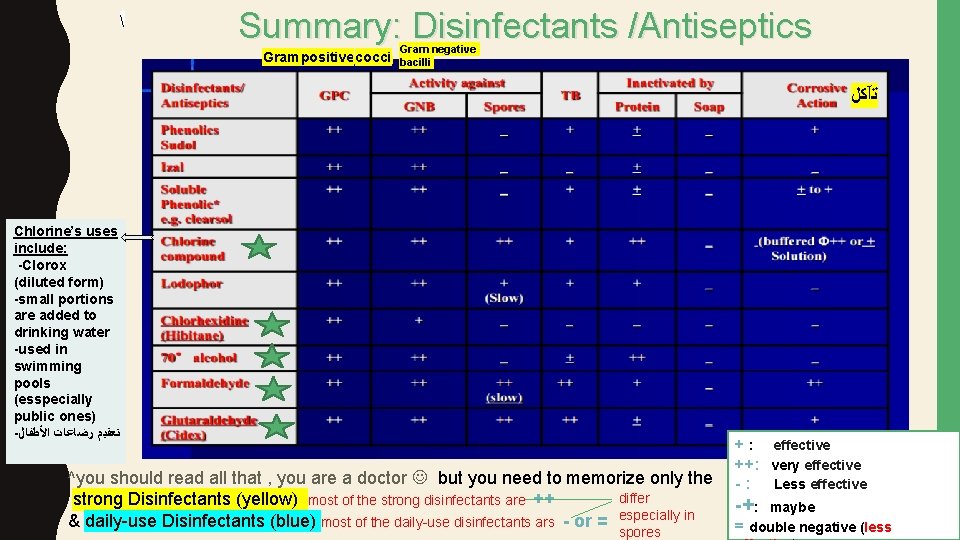
Summary: Disinfectants /Antiseptics Gram positive cocci Gram negative bacilli ﺗآﻜﻞ Chlorine’s uses include: -Clorox (diluted form) -small portions are added to drinking water -used in swimming pools (esspecially public ones) - ﺗﻌﻘﻴﻢ ﺭﺿﺎﻋﺎﺕ ﺍﻷﻄﻔﺎﻝ ^you should read all that , you are a doctor but you need to memorize only the differ strong Disinfectants (yellow) most of the strong disinfectants are ++ & daily-use Disinfectants (blue) most of the daily-use disinfectants ars - or = especially in spores + : effective ++: very effective - : Less effective -+: maybe = double negative (less
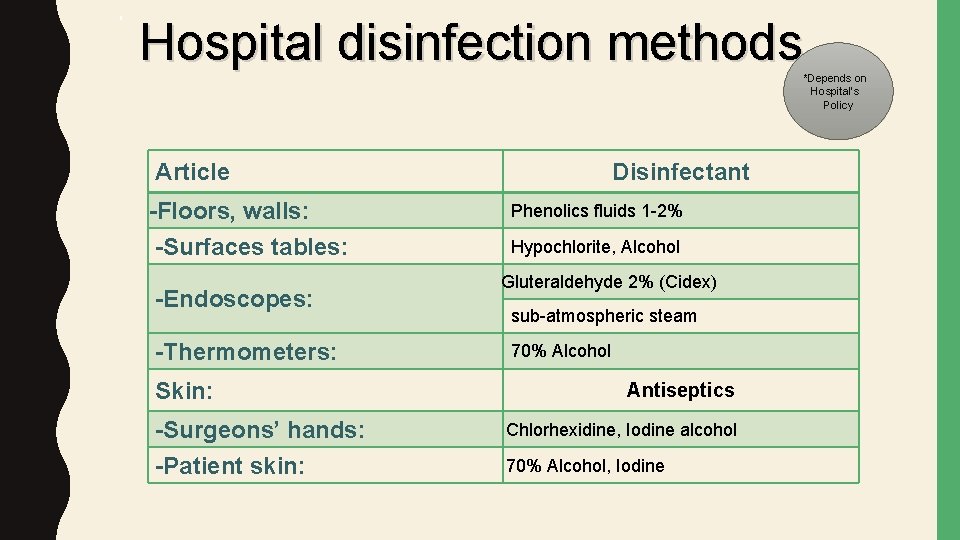
Hospital disinfection methods *Depends on Hospital‘s Policy Article -Floors, walls: -Surfaces tables: -Endoscopes: -Thermometers: Skin: -Surgeons’ hands: -Patient skin: Disinfectant Phenolics fluids 1 -2% Hypochlorite, Alcohol Gluteraldehyde 2% (Cidex) sub-atmospheric steam 70% Alcohol Antiseptics Chlorhexidine, Iodine alcohol 70% Alcohol, Iodine
Important points • Any instrument or item used for sterile body site should be sterile. • Any instrument or item used for non-sterile body site can be disinfected. • Hand washing is the most important to prevent hospital acquired infection. Online quiz https: //www. onlineexambuilder. com/microbiology-l 7 part 2/exam-106383
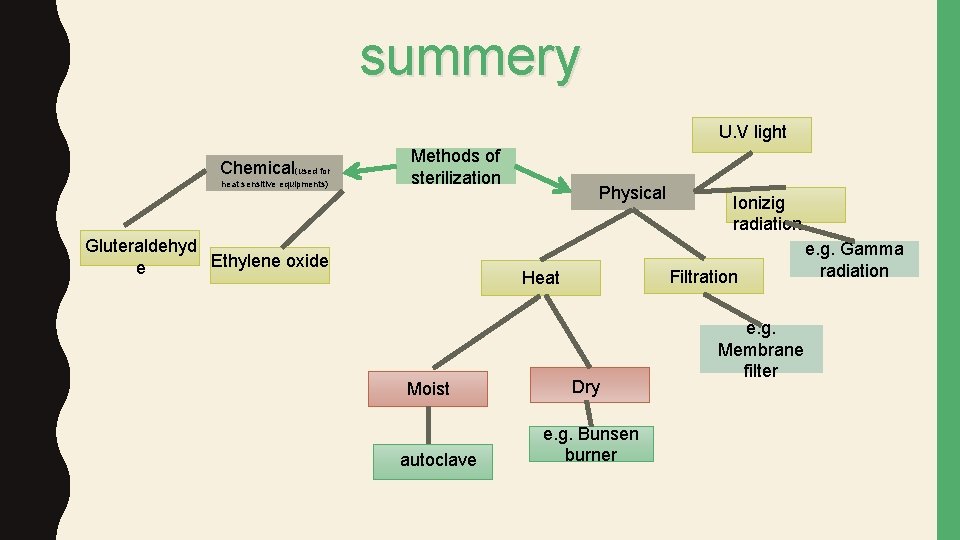
summery U. V light Chemical(used for heat sensitive equipments) Methods of sterilization Gluteraldehyd Ethylene oxide e Physical Filtration Heat Moist autoclave Ionizig radiation Dry e. g. Bunsen burner e. g. Membrane filter e. g. Gamma radiation
THE TEAM : • • • Waleed Aljamal Ibrahim Fetyani Meshal Eiaidi Khalid Alhusainan Hussam Alkhathlan Faisal Alqumaizi Contact us : 436 microbiologyteam@gmail. com Twitter : @microbio 436 THE TEAM : • • Shrooq Alsomali Hanin Bashaikh Jawaher Alkhayyal Reem Alshathri Rawan Alqahtani Ohoud Abdullah Ghadah Almazrou Lama Al-musallam
- Slides: 19