
MICROBIOLOGY Lecture HOST PARASITE RELATIONSHIP IMPORTANT DOCTORS NOTES
MICROBIOLOGY Lecture : HOST PARASITE RELATIONSHIP IMPORTANT. DOCTORS NOTES. EXTRA INFORMATION.
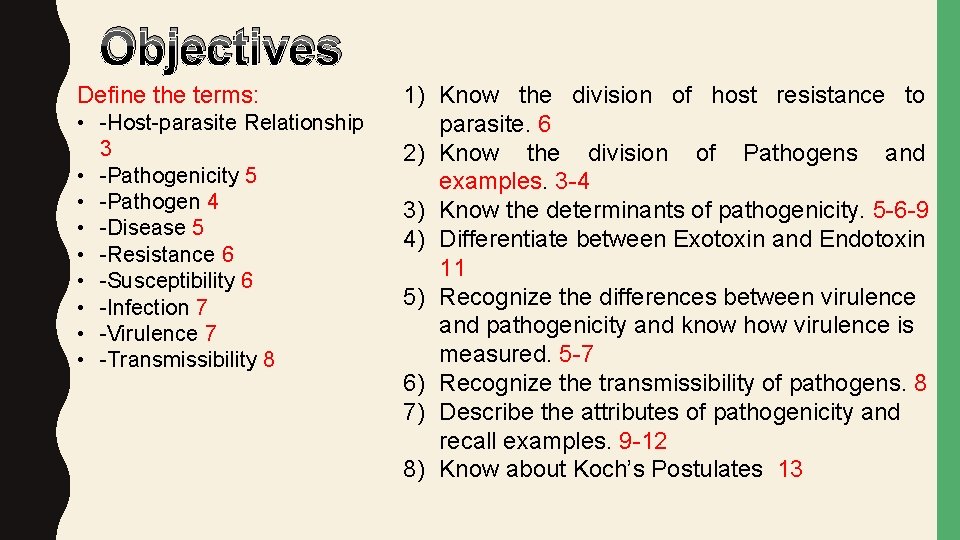
Objectives Define the terms: • -Host-parasite Relationship 3 • -Pathogenicity 5 • -Pathogen 4 • -Disease 5 • -Resistance 6 • -Susceptibility 6 • -Infection 7 • -Virulence 7 • -Transmissibility 8 1) Know the division of host resistance to parasite. 6 2) Know the division of Pathogens and examples. 3 -4 3) Know the determinants of pathogenicity. 5 -6 -9 4) Differentiate between Exotoxin and Endotoxin 11 5) Recognize the differences between virulence and pathogenicity and know how virulence is measured. 5 -7 6) Recognize the transmissibility of pathogens. 8 7) Describe the attributes of pathogenicity and recall examples. 9 -12 8) Know about Koch’s Postulates 13

Only in this slide : Males slides Females slides Human host is in contact with many microorganisms called normal flora or commensals but only a small number of these microorganism can cause disease and they called opportunistic pathogens and primary pathogens). Host parasite relationship can be discussed under: 1= Primary pathogens : strict pathogens or virulent Bacteria ( )ﺧﻄﻴﺮﺓ ﻭﻣﻤﺮﺿﺔ 2 -Non-Pathogenic bacteria: , they will never cause Disease ( ) ﻏﻴﺮ ﻣﻤﺮﺿﺔ ------------------------------1 -pathogenicity. ﻳﻌﻨﻲ ﺍﻟﻌﻼﻗﺔ ﺑﻴﻨﻨﺎ ﻭﺑﻴﻨﻬﻢ 2 - normal flora. . . )ﺍﻟﻤﺎﻳﻜﺮﻭﺍﻭﺭﻗﺎﻧﺰﻡ( ﺇﻣﺎ ﺗﻜﻮﻥ • ﺃﻮ ( • ﻋﻼﻗﺔ ﺳﻠﻤﻴﺔ ﻭﺗﻌﺎﻳﺶ )ﻣﻌﺎﻫﺪﺓ ( ﻋﻼﻗﺔ ﻫﺠﻮﻡ ﻭﺩﻓﺎﻉ )ﺣﺮﺏ • Host-parasite relationships: is characterized by fighting the organism to invade the body and the body defending itself by protective measures.

Pathogen : a microorganism having the capacity to cause disease in a particular host. Can be divided according to the degree of Pathogenecity into: a) Primary pathogens: -When the organism is able to produce disease even in an apparently healthy host -Cause disease in nonimmune host to that organism. e. g. - Bordetella species - Mycobacterium tuberculosis b) Opportunistic (secondary) pathogens: -When the organism causes disease only when the host’s defenses are impaired -Having low pathogenicity and infect people with low immunity. e. g. -Pseudomonas Pathoge n ﻓﻴﻪ ﻓﺮﻕ ﺑﻴﻨﻬﺎ ﻭﺑﻴﻦ ﺑﺤﻴﺚ ﻛﻠﻬﻢ ﺗﻜﻮﻥ ﻣﻤﺮﺿﺔ ﻭﻛﻠﻬﻢ ﺑﺠﺴﻢ ﺍﻟﺸﺨﺺ ﻟﻜﻦ ﺍﻷﻮﻟﻰ ﺗﻀﺮ ﺍﻟﺸﺨﺺ ﻧﻔﺴﻪ ﺑﻤﻌﻨﻰ ﺇﻥ ﺿﻌﻔﺖ ﺑﻴﻨﻤﺎ ﺍﻟﺜﺎﻧﻴﺔ ﻣﺎ ، ﻣﻨﺎﻋﺘﻪ ﺗﻬﺎﺟﻤﻪ ﻫﻮ ﺗﻀﺮ ﺍﻟﺸﺨﺺ ﻧﻔﺴﻪ ﺑﺤﻴﺚ ﻣﻤﻜﻦ ﺗﻜﻮﻥ ﺑﺠﺴﻤﻪ ﻭﻫﻮ ﻃﺒﻴﻌﻲ ﺟﺪﺍ ﻭﻣﺎ ﻋﻠﻴﻪ ﺃﻌﺮﺍﺽ ﻟﻜﻦ ﻣﻤﻜﻦ ﻳﻨﻘﻠﻬﺎ ﻟﻐﻴﺮﻩ ﻭﺗﻤﺮﺿﻪ potential pathogens ﺃﺤﻴﺎﻧﺎ
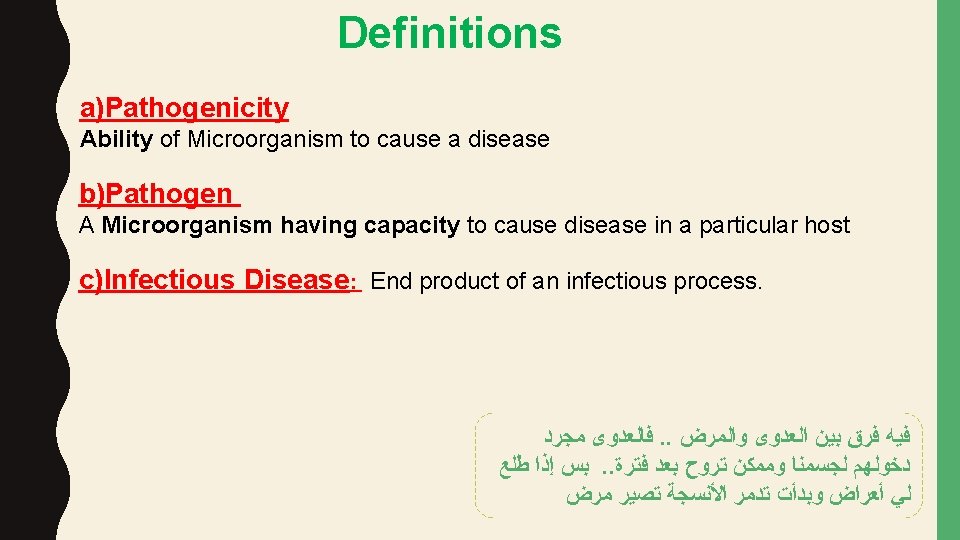
Definitions a)Pathogenicity Ability of Microorganism to cause a disease b)Pathogen A Microorganism having capacity to cause disease in a particular host c)Infectious Disease: End product of an infectious process. ﻓﺎﻟﻌﺪﻭﻯ ﻣﺠﺮﺩ. . ﻓﻴﻪ ﻓﺮﻕ ﺑﻴﻦ ﺍﻟﻌﺪﻭﻯ ﻭﺍﻟﻤﺮﺽ ﺑﺲ ﺇﺫﺍ ﻃﻠﻊ. . ﺩﺧﻮﻟﻬﻢ ﻟﺠﺴﻤﻨﺎ ﻭﻣﻤﻜﻦ ﺗﺮﻭﺡ ﺑﻌﺪ ﻓﺘﺮﺓ ﻟﻲ ﺃﻌﺮﺍﺽ ﻭﺑﺪﺃﺖ ﺗﺪﻣﺮ ﺍﻷﻨﺴﺠﺔ ﺗﺼﻴﺮ ﻣﺮﺽ

Ø A Pathogenicity Host Resistance to Parasite Invasion is Divided into: a)Non specific resistance: part of natural constitution of the host. e. g. 1. Competition by normal flora: compete over space and nutrients for example. GIT is relatively rich with normal flora compared to other parts of the body. 2. Skin mechanical barrier 3. Lysozymes 4. Ciliated epithelium of respiratory tract 5. Cough 6. Low p. H in the stomach 7. peristalsis(movement of intestines): 8. Neutrophils Disease in the host (just some terminology) b)Specific / Acquired resistance to certain organism: e. g. formation of antibodies Resistance: The ability of the host to prevent establishment of infection by using its defense mechanisms Susceptibility: Lack of this resistance and establishment of disease. ﻣﺜﻞ ﺇﻥ ﻛﺎﻧﺖ ﺍﻟﻌﺪﻭﻯ ﻗﺪ ﺟﺘﻨﺎ ﻣﻦ ﻗﺒﻞ ﻓﺨﻼﺹ ﺟﺴﻤﻨﺎ ﻛﻮﻥ ﻟﻬﺎ ﺃﺠﺴﺎﻡ ﻣﻀﺎﺩﺓ ﺃﻮ ﻋﻦ ﻃﺮﻳﻖ ﺍﻟﺘﻄﻌﻴﻤﺎﺕ ﻧﻔﺲ ﺍﻟﻔﻜﺮﺓ
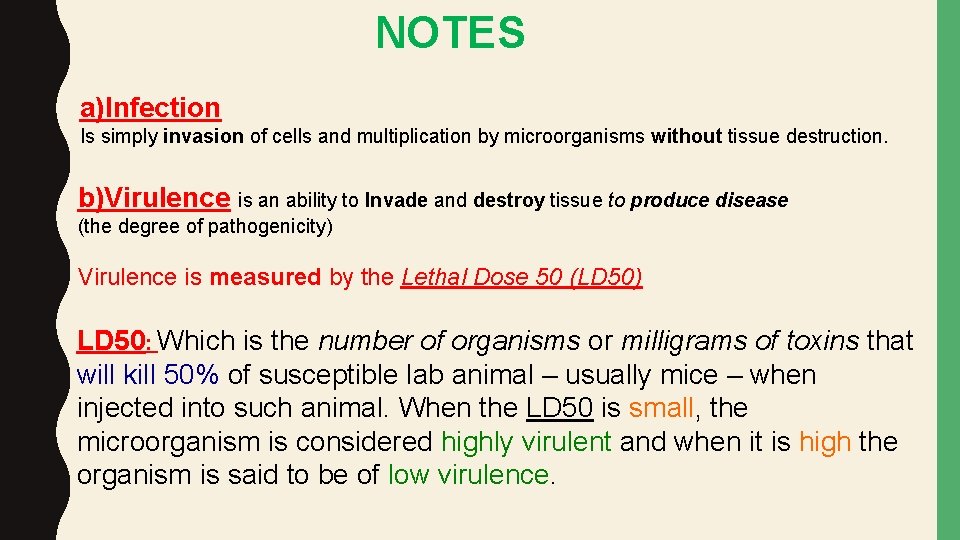
NOTES a)Infection Is simply invasion of cells and multiplication by microorganisms without tissue destruction. b)Virulence is an ability to Invade and destroy tissue to produce disease (the degree of pathogenicity) Virulence is measured by the Lethal Dose 50 (LD 50) LD 50: Which is the number of organisms or milligrams of toxins that will kill 50% of susceptible lab animal – usually mice – when injected into such animal. When the LD 50 is small, the microorganism is considered highly virulent and when it is high the organism is said to be of low virulence.

DETERMINANTS OF PATHOGENICITY Before causing disease a microorganism should have the ability to: Adherence (Adhesion, Colonization, Growth) Surviving (escape) the host natural defense mechanisms Multiply to large numbers Invasion Or Toxicity Tissue destruction: It is the ability to overcome host defense invade the tissues and cause destruction to Produce clinical disease = Infectious disease
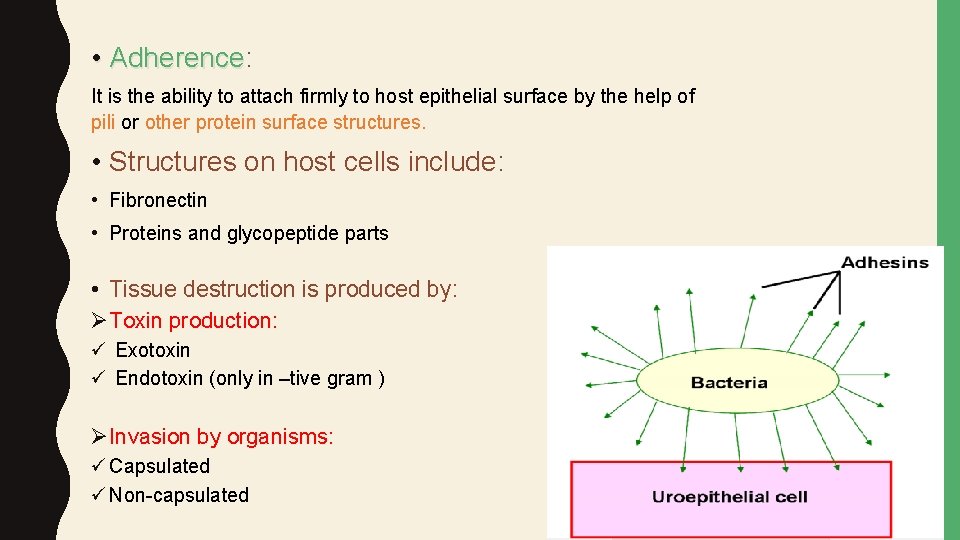
• Adherence: Adherence It is the ability to attach firmly to host epithelial surface by the help of pili or other protein surface structures. • Structures on host cells include: • Fibronectin • Proteins and glycopeptide parts • Tissue destruction is produced by: ØToxin production: ü Exotoxin ü Endotoxin (only in –tive gram ) ØInvasion by organisms: ü Capsulated ü Non-capsulated
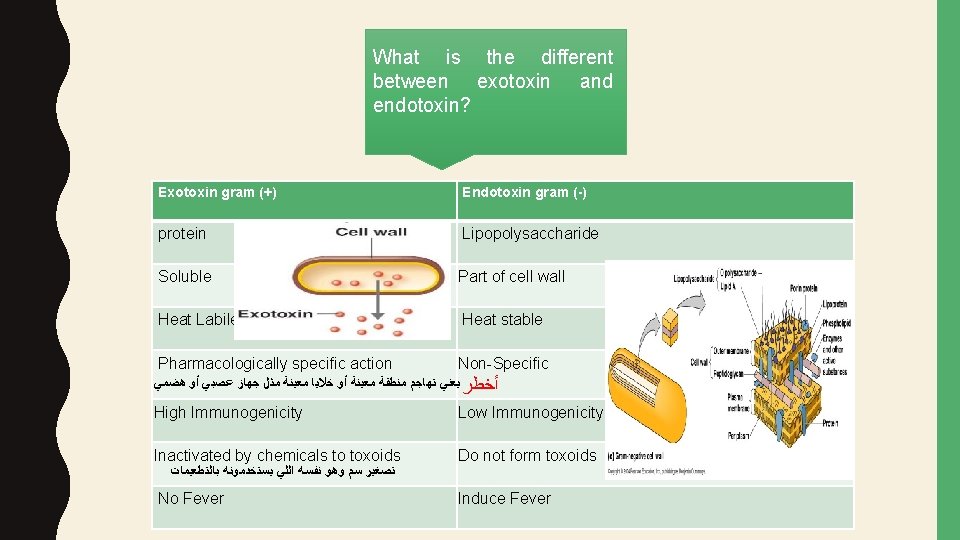
What is the different between exotoxin and endotoxin? Exotoxin gram (+) Endotoxin gram (-) protein Lipopolysaccharide Soluble Part of cell wall Heat Labile Heat stable Pharmacologically specific action Non-Specific ﺃﺨﻄﺮ ﻳﻌﻨﻲ ﺗﻬﺎﺟﻢ ﻣﻨﻄﻘﺔ ﻣﻌﻴﻨﺔ ﺃﻮ ﺧﻼﻳﺎ ﻣﻌﻴﻨﺔ ﻣﺜﻞ ﺟﻬﺎﺯ ﻋﺼﺒﻲ ﺃﻮ ﻫﻀﻤﻲ High Immunogenicity Low Immunogenicity Inactivated by chemicals to toxoids Do not form toxoids No Fever Induce Fever ﺗﺼﻐﻴﺮ ﺳﻢ ﻭﻫﻮ ﻧﻔﺴﻪ ﺍﻟﻠﻲ ﻳﺴﺘﺨﺪﻣﻮﻧﻪ ﺑﺎﻟﺘﻄﻌﻴﻤﺎﺕ
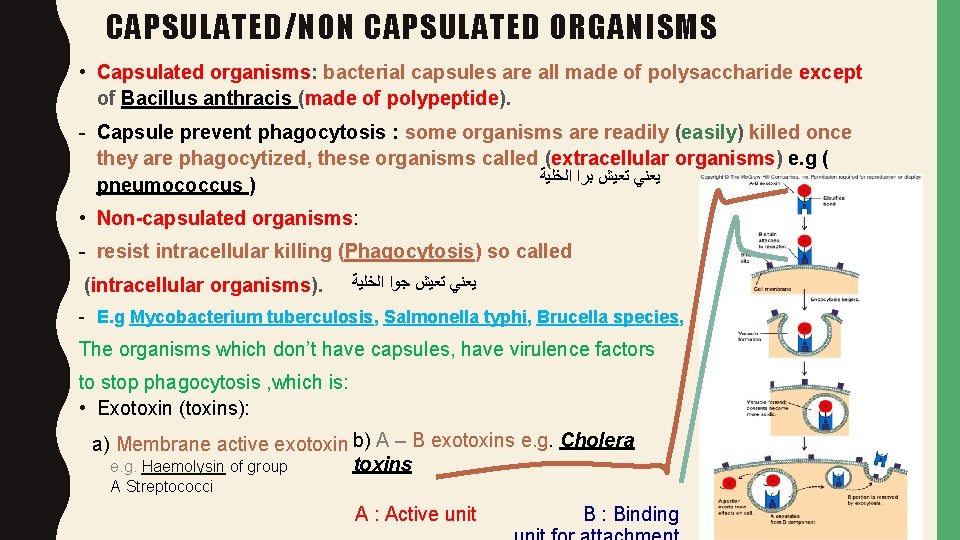
CAPSULATED/NON CAPSULATED ORGANISMS • Capsulated organisms: bacterial capsules are all made of polysaccharide except of Bacillus anthracis (made of polypeptide). - Capsule prevent phagocytosis : some organisms are readily (easily) killed once they are phagocytized, these organisms called (extracellular organisms) e. g ( ﻳﻌﻨﻲ ﺗﻌﻴﺶ ﺑﺮﺍ ﺍﻟﺨﻠﻴﺔ pneumococcus ) • Non-capsulated organisms: - resist intracellular killing (Phagocytosis) so called (intracellular organisms). ﻳﻌﻨﻲ ﺗﻌﻴﺶ ﺟﻮﺍ ﺍﻟﺨﻠﻴﺔ - E. g Mycobacterium tuberculosis, Salmonella typhi, Brucella species, The organisms which don’t have capsules, have virulence factors to stop phagocytosis , which is: • Exotoxin (toxins): a) Membrane active exotoxin b) A – B exotoxins e. g. Cholera toxins e. g. Haemolysin of group A Streptococci A : Active unit B : Binding
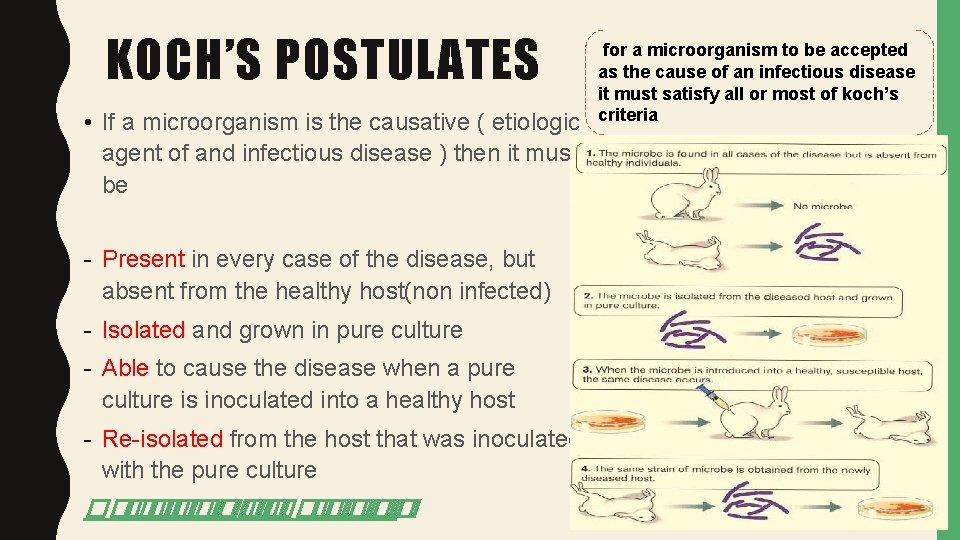
KOCH’S POSTULATES • If a microorganism is the causative ( etiologic agent of and infectious disease ) then it must be - Present in every case of the disease, but absent from the healthy host(non infected) - Isolated and grown in pure culture - Able to cause the disease when a pure culture is inoculated into a healthy host - Re-isolated from the host that was inoculated with the pure culture ����� ������� ��. for a microorganism to be accepted as the cause of an infectious disease it must satisfy all or most of koch’s criteria
quiz • A -Which of the following is a secondary pathogen? 1. Bordetella species 2. Pseudomonas 3. Mycrobacterium tuberculosis • B-The ability of a microorganism to cause a disease is known as : 1. Pathogen 2. Pathogenicity 3. Infectious disease C-Which of the following is not a part of Non-specific resisitance: 1. Lysozymes 2. High PH in the stomach 3. Peristalsis 4. ciliated epithelium of respiratory tract D-What helps in adhesion on bacterial cells? 1. Mesosomes 2. Flagella 3. pili E-What is a character of endotoxin: 1. Heat liable 2. High immunogenicity 3. Part of cell wall 4. No fever F-What is a character of exotoxin: 1. Soluble and diffusible 2. Do not form toxids 3. Lipopolysaccharide 4. Induce fever G-Lack of resistance and establishment of disease is known as: 1. Susceptibility 2. Resistance 3. Virulence 4. infection
H- Which is the correct statement? 1. When the LD 50 is high , the micro organism is considered highly virulent and when it is low The organism is said to be of low virulence I -What is the name of the bacteria the will never cause harm ? 2. When the LD 50 is small , the micro organism is considered highly virulent and when it is high The organism is said to be of low virulence 3. When the LD 50 is small , the micro organism is considered low virulent and when it is high The organism is said to be of high virulence answers F= 1 G= 1 H=2 I= NON-PATHOGENIC BACTERIA. A= 2 B= 2 C= 2 D= 3 E= 3
THE TEAM : • • • Waleed Aljamal Ibrahim Fetyani Meshal Eiaidi Khalid Alhusainan Hussam Alkhathlan Faisal Alqumaizi Contact us : 436 microbiologyteam@gmail. com Twitter : @microbio 436 THE TEAM : • • Shrooq Alsomali Hanin Bashaikh Jawaher Alkhayyal Reem Alshathri Rawan Alqahtani Ohoud Abdullah Ghadah Almazrou Lama Al-musallm
- Slides: 16