
MICROBIOLOGY Lecture 2 VIRAL STRUCTURE CLASSIFICATION IMPORTANT DOCTORS
MICROBIOLOGY Lecture : 2 VIRAL STRUCTURE CLASSIFICATION IMPORTANT. DOCTORS NOTES. EXTRA INFORMATION.
Objectives-viral structure and classification: § § § General characteristics of viruses Structure and symmetry of viruses Classification of viruses Steps of viruses replication Laboratory diagnosis of viral infections.
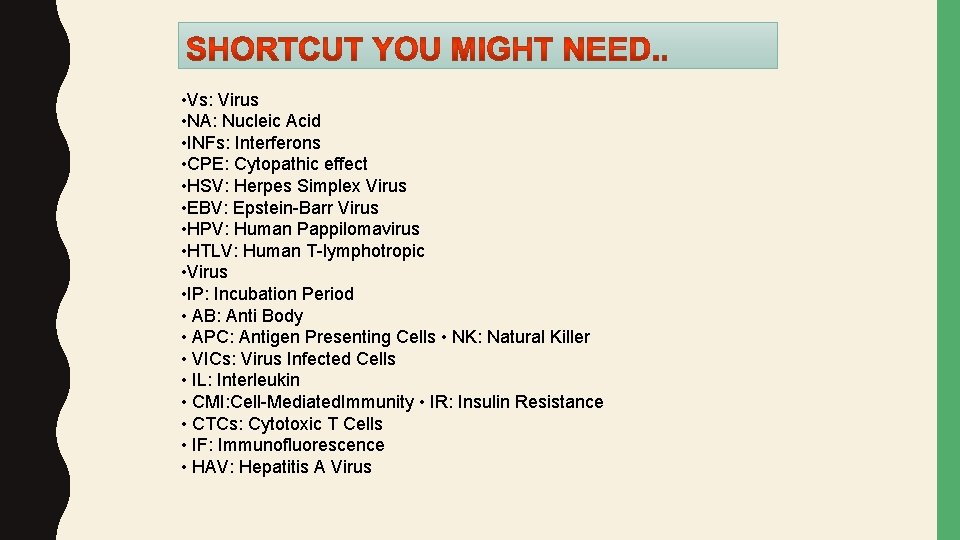
• Vs: Virus • NA: Nucleic Acid • INFs: Interferons • CPE: Cytopathic effect • HSV: Herpes Simplex Virus • EBV: Epstein-Barr Virus • HPV: Human Pappilomavirus • HTLV: Human T-lymphotropic • Virus • IP: Incubation Period • AB: Anti Body • APC: Antigen Presenting Cells • NK: Natural Killer • VICs: Virus Infected Cells • IL: Interleukin • CMI: Cell-Mediated. Immunity • IR: Insulin Resistance • CTCs: Cytotoxic T Cells • IF: Immunofluorescence • HAV: Hepatitis A Virus
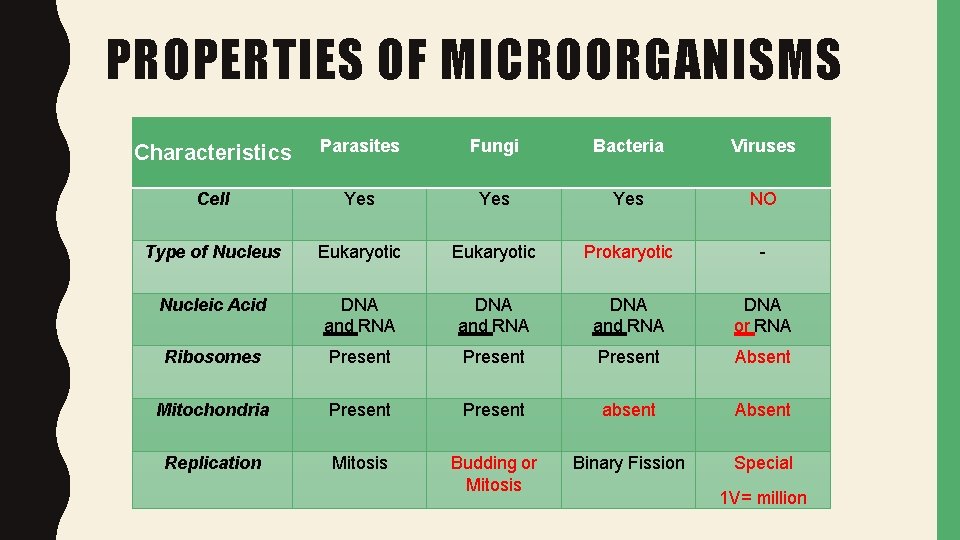
PROPERTIES OF MICROORGANISMS Characteristics Parasites Fungi Bacteria Viruses Cell Yes Yes NO Type of Nucleus Eukaryotic Prokaryotic - Nucleic Acid DNA and RNA DNA or RNA Ribosomes Present Absent Mitochondria Present absent Absent Replication Mitosis Budding or Mitosis Binary Fission Special 1 V= million
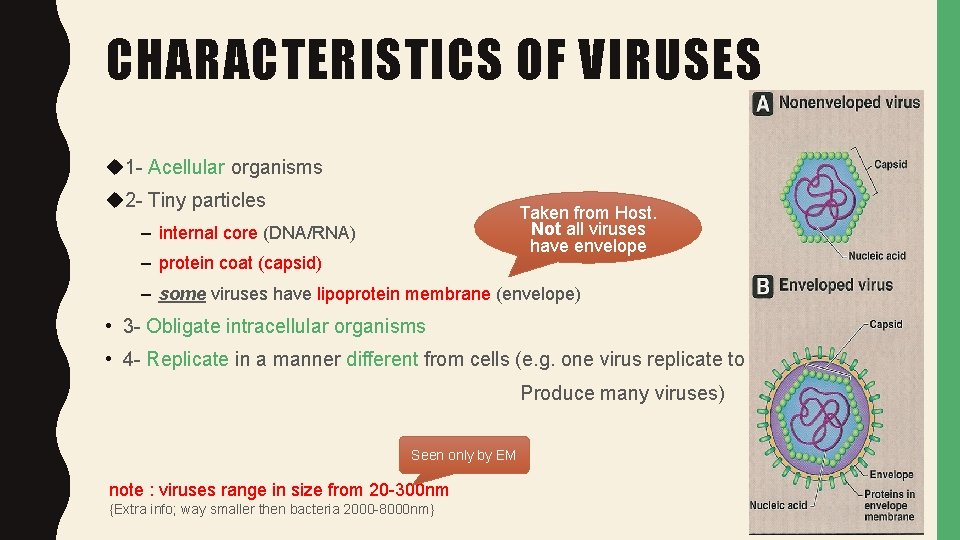
CHARACTERISTICS OF VIRUSES u 1 - Acellular organisms u 2 - Tiny particles Taken from Host. Not all viruses have envelope – internal core (DNA/RNA) – protein coat (capsid) – some viruses have lipoprotein membrane (envelope) • 3 - Obligate intracellular organisms • 4 - Replicate in a manner different from cells (e. g. one virus replicate to Produce many viruses) Seen only by EM note : viruses range in size from 20 -300 nm {Extra info; way smaller then bacteria 2000 -8000 nm}
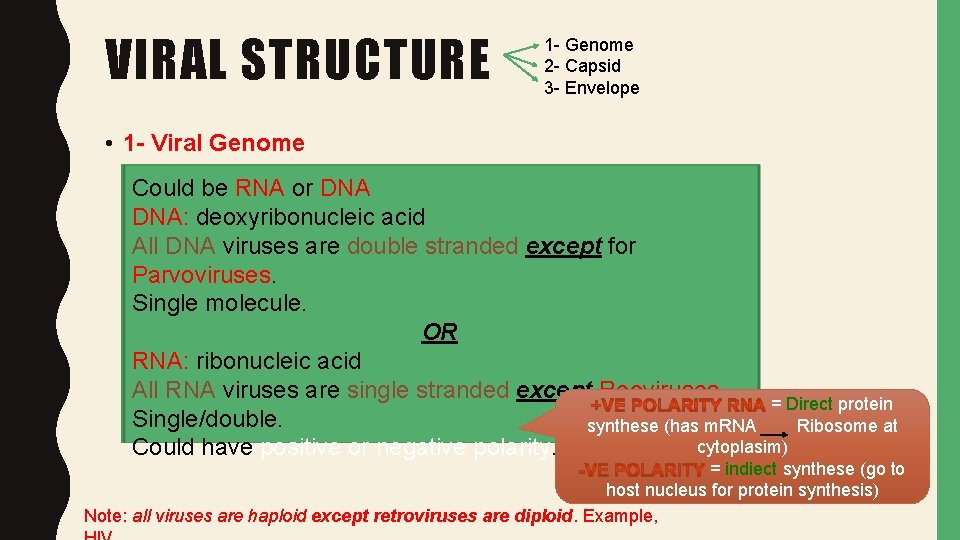
VIRAL STRUCTURE 1 - Genome 2 - Capsid 3 - Envelope • 1 - Viral Genome Could be RNA or DNA: deoxyribonucleic acid All DNA viruses are double stranded except for Parvoviruses. Single molecule. OR RNA: ribonucleic acid All RNA viruses are single stranded except Reoviruses. = Direct protein Single/double. synthese (has m. RNA Ribosome at cytoplasim) Could have positive or negative polarity. = indiect synthese (go to host nucleus for protein synthesis) Note: all viruses are haploid except retroviruses are diploid. Example,
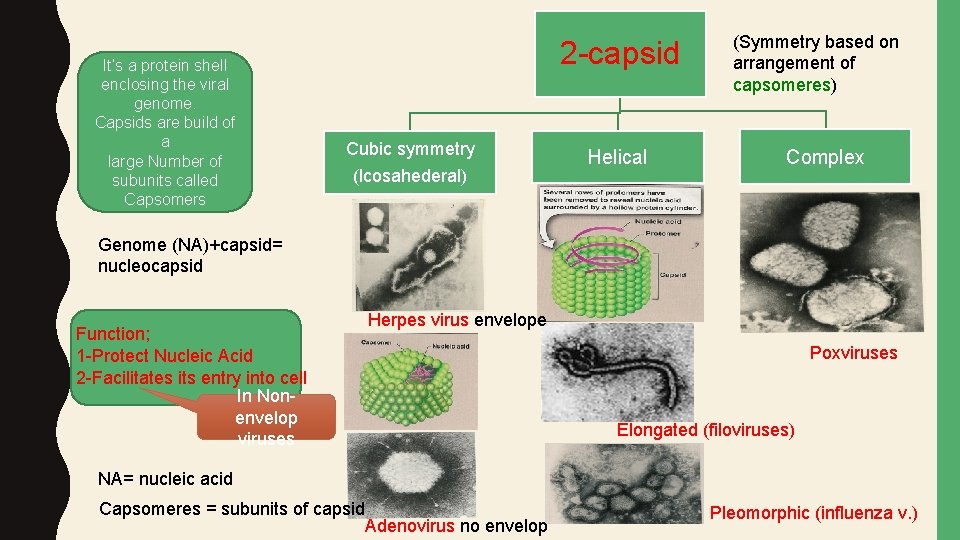
It’s a protein shell enclosing the viral genome. Capsids are build of a large Number of subunits called Capsomers 2 -capsid Cubic symmetry (lcosahederal) Helical (Symmetry based on arrangement of capsomeres) Complex Genome (NA)+capsid= nucleocapsid Function; 1 -Protect Nucleic Acid 2 -Facilitates its entry into cell In Nonenvelop viruses Herpes virus envelope Poxviruses Elongated (filoviruses) NA= nucleic acid Capsomeres = subunits of capsid Adenovirus no envelop Pleomorphic (influenza v. )
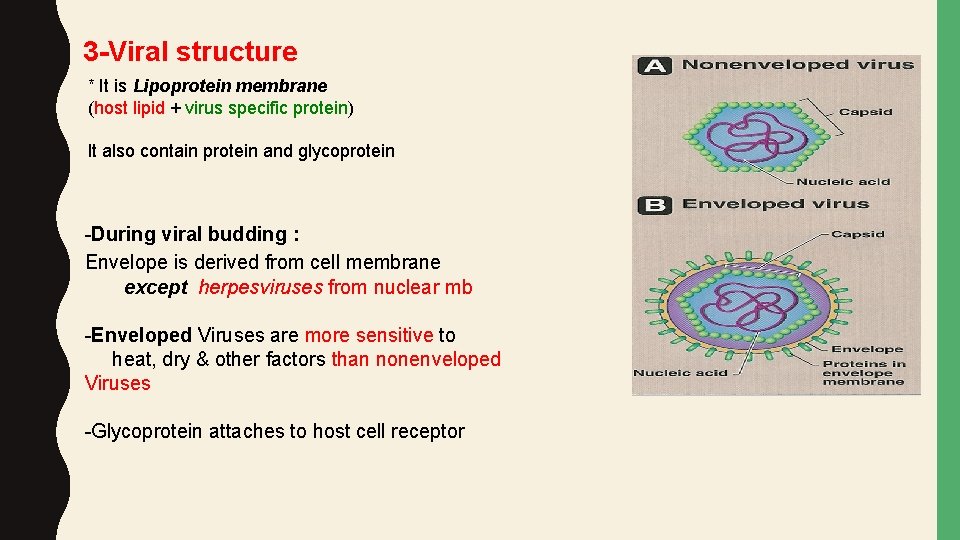
3 -Viral structure * It is Lipoprotein membrane (host lipid + virus specific protein) It also contain protein and glycoprotein -During viral budding : Envelope is derived from cell membrane except herpesviruses from nuclear mb -Enveloped Viruses are more sensitive to heat, dry & other factors than nonenveloped Viruses -Glycoprotein attaches to host cell receptor
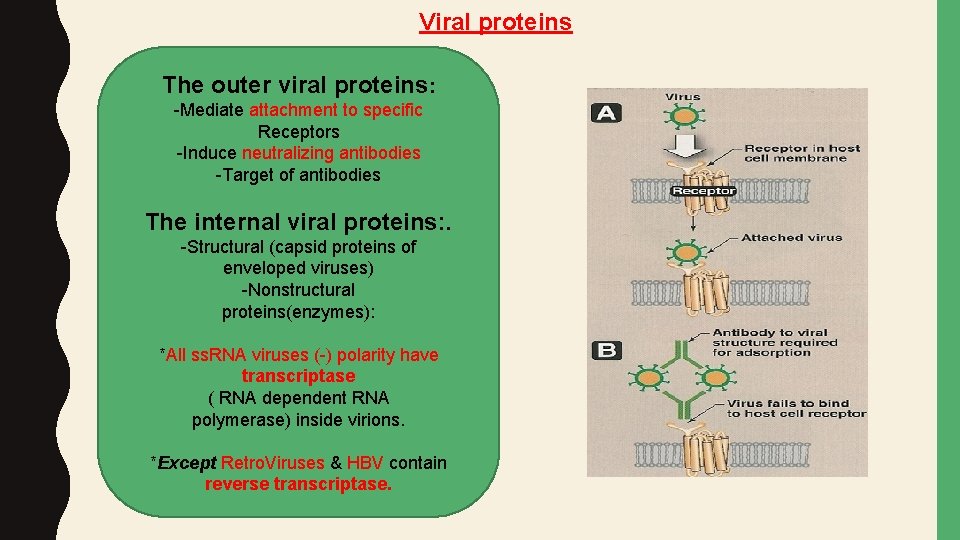
Viral proteins The outer viral proteins: -Mediate attachment to specific Receptors -Induce neutralizing antibodies -Target of antibodies The internal viral proteins: . -Structural (capsid proteins of enveloped viruses) -Nonstructural proteins(enzymes): *All ss. RNA viruses (-) polarity have transcriptase ( RNA dependent RNA polymerase) inside virions. *Except Retro. Viruses & HBV contain reverse transcriptase.
Classification of viruses �Type of Nucleic Acid (DNA or RNA) �The number stranded of strand: Double VS. single- �The polarity of viral genome: Positive (+) or negative (-) stranded RNA �The presence or absence of envelope �Type of symmetry
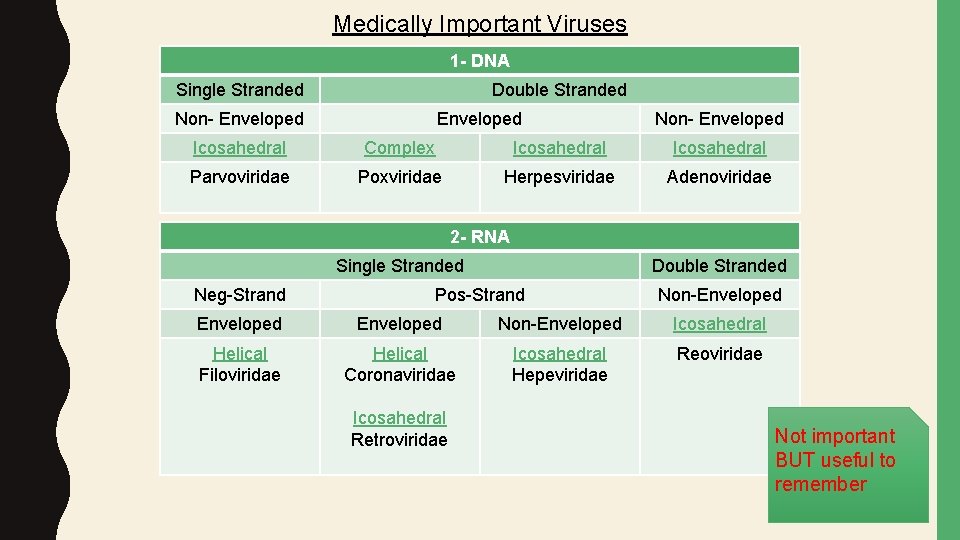
Medically Important Viruses 1 - DNA Single Stranded Double Stranded Non- Enveloped Icosahedral Complex Icosahedral Parvoviridae Poxviridae Herpesviridae Adenoviridae 2 - RNA Single Stranded Neg-Strand Double Stranded Pos-Strand Non-Enveloped Non-Enveloped Icosahedral Helical Filoviridae Helical Coronaviridae Icosahedral Hepeviridae Reoviridae Icosahedral Retroviridae Not important BUT useful to remember
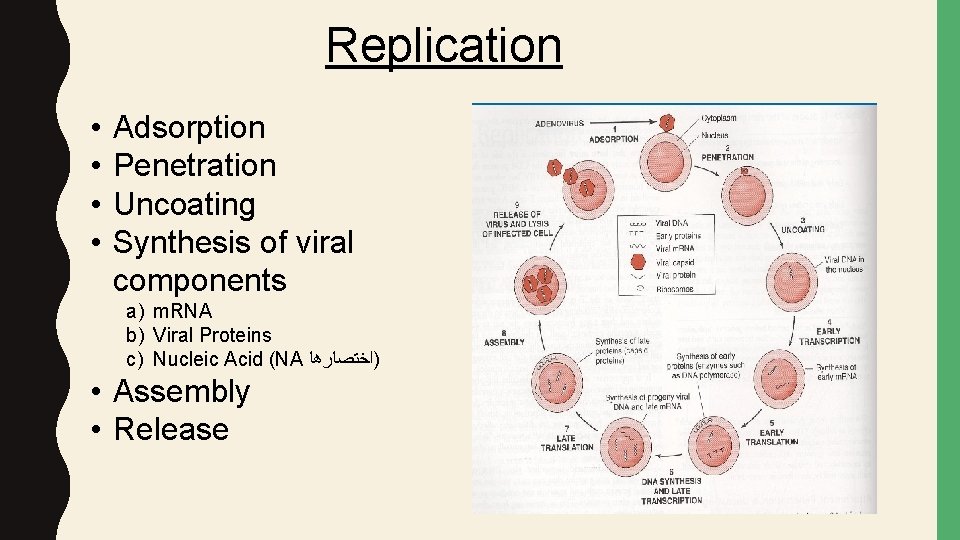
Replication • • Adsorption Penetration Uncoating Synthesis of viral components a) m. RNA b) Viral Proteins c) Nucleic Acid (NA )ﺍﺧﺘﺼﺎﺭﻫﺎ • Assembly • Release
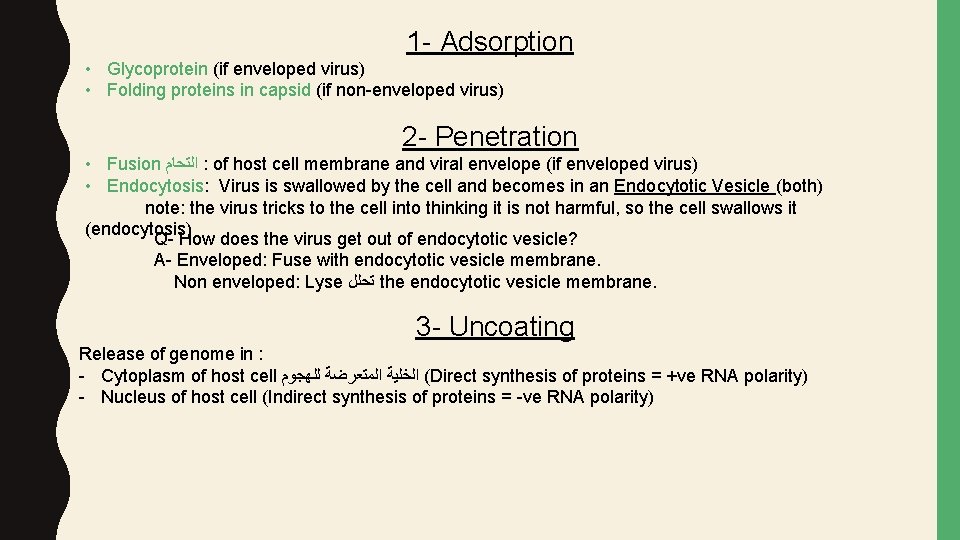
1 - Adsorption • Glycoprotein (if enveloped virus) • Folding proteins in capsid (if non-enveloped virus) 2 - Penetration • Fusion ﺍﻟﺘﺤﺎﻡ : of host cell membrane and viral envelope (if enveloped virus) • Endocytosis: Virus is swallowed by the cell and becomes in an Endocytotic Vesicle (both) note: the virus tricks to the cell into thinking it is not harmful, so the cell swallows it (endocytosis) Q- How does the virus get out of endocytotic vesicle? A- Enveloped: Fuse with endocytotic vesicle membrane. Non enveloped: Lyse ﺗﺤﻠﻞ the endocytotic vesicle membrane. 3 - Uncoating Release of genome in : - Cytoplasm of host cell ﻟﻠﻬﺠﻮﻡ ﺍﻟﻤﺘﻌﺮﺿﺔ ﺍﻟﺨﻠﻴﺔ (Direct synthesis of proteins = +ve RNA polarity) - Nucleus of host cell (Indirect synthesis of proteins = -ve RNA polarity)
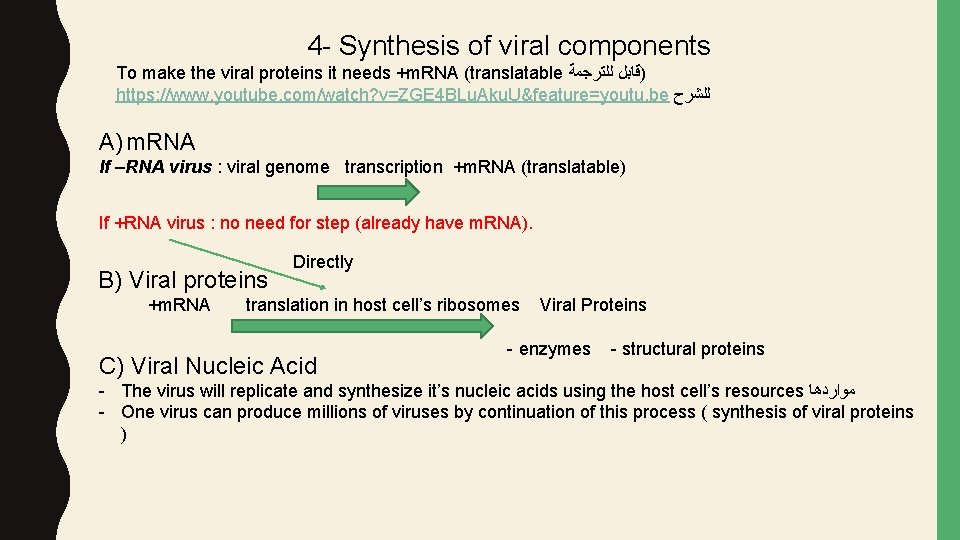
4 - Synthesis of viral components To make the viral proteins it needs +m. RNA (translatable ﻟﻠﺘﺮﺟﻤﺔ )ﻗﺎﺑﻞ https: //www. youtube. com/watch? v=ZGE 4 BLu. Aku. U&feature=youtu. be ﻟﻠﺸﺮﺡ A) m. RNA If –RNA virus : viral genome transcription +m. RNA (translatable) If +RNA virus : no need for step (already have m. RNA). Directly B) Viral proteins +m. RNA translation in host cell’s ribosomes Viral Proteins - enzymes - structural proteins C) Viral Nucleic Acid - The virus will replicate and synthesize it’s nucleic acids using the host cell’s resources ﻣﻮﺍﺭﺩﻫﺎ - One virus can produce millions of viruses by continuation of this process ( synthesis of viral proteins )
REPLICATION • Assembly: • The viral Proteins + Nucleic acid (DNA or RNA) assemble together = virion*. • Then the virion is released. *What is a virion? A virion is a complete virus particles, consisting of RNA or DNA surrounded by a protein shell. Basically it is the infective form of a virus.
RELEASE • It’s the last step of the replication cycle of the viruses. • Enveloped viruses: The Virion leaves the Cell and creates its Envelope by budding through the host’s cell membrane. Except Herpes V = budding host’s nuclear membrane • Non-Enveloped viruses: Cell lyses or rupture
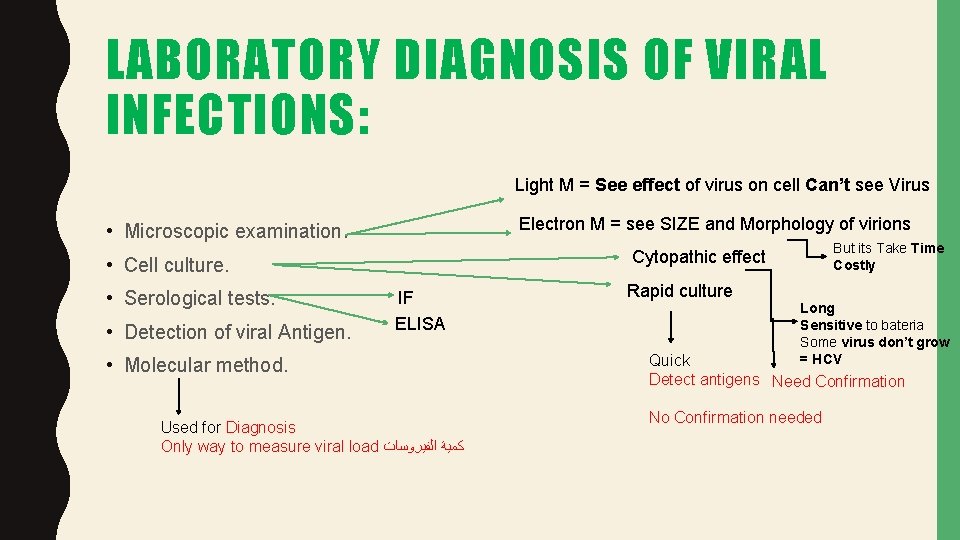
LABORATORY DIAGNOSIS OF VIRAL INFECTIONS: Light M = See effect of virus on cell Can’t see Virus Electron M = see SIZE and Morphology of virions • Microscopic examination. • Cell culture. • Serological tests. • Detection of viral Antigen. But its Take Time Costly Cytopathic effect IF ELISA • Molecular method. Used for Diagnosis Only way to measure viral load ﺍﻟﻔﻴﺮﻭﺳﺎﺕ ﻛﻤﻴﺔ Rapid culture Long Sensitive to bateria Some virus don’t grow = HCV Quick Detect antigens Need Confirmation No Confirmation needed
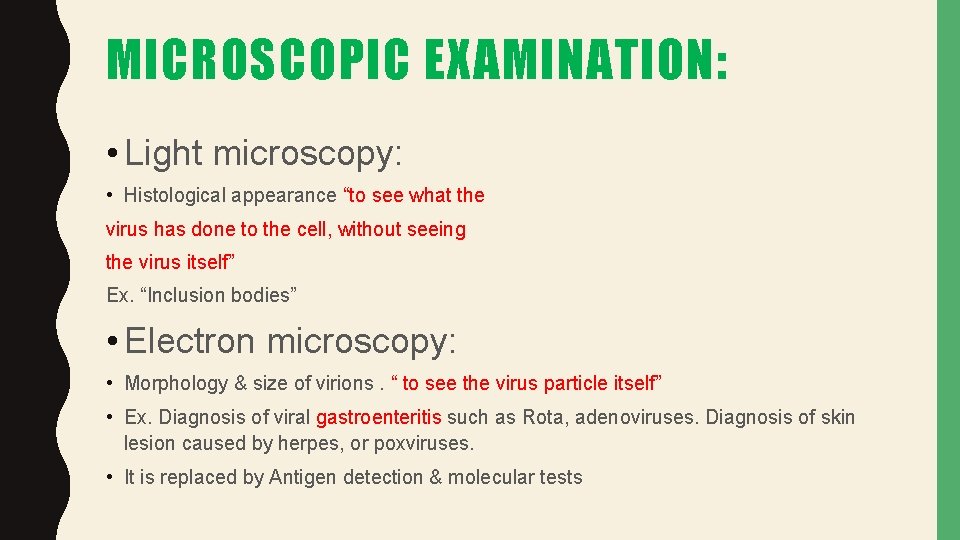
MICROSCOPIC EXAMINATION: • Light microscopy: • Histological appearance “to see what the virus has done to the cell, without seeing the virus itself” Ex. “Inclusion bodies” • Electron microscopy: • Morphology & size of virions. “ to see the virus particle itself” • Ex. Diagnosis of viral gastroenteritis such as Rota, adenoviruses. Diagnosis of skin lesion caused by herpes, or poxviruses. • It is replaced by Antigen detection & molecular tests
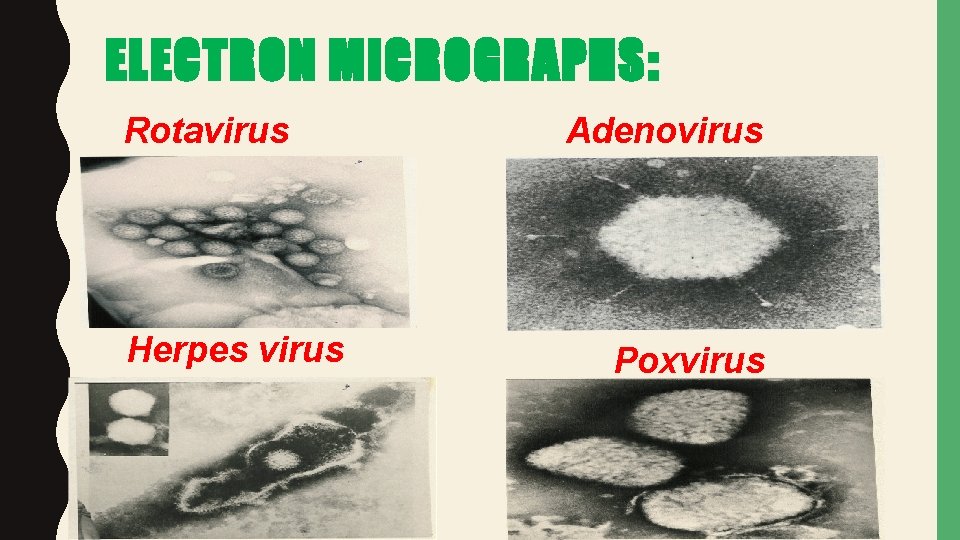
ELECTRON MICROGRAPHS: Rotavirus Herpes virus Adenovirus Poxvirus
VIRUS CULTIVATION • Laboratory animals • Embryonated eggs • Cell culture
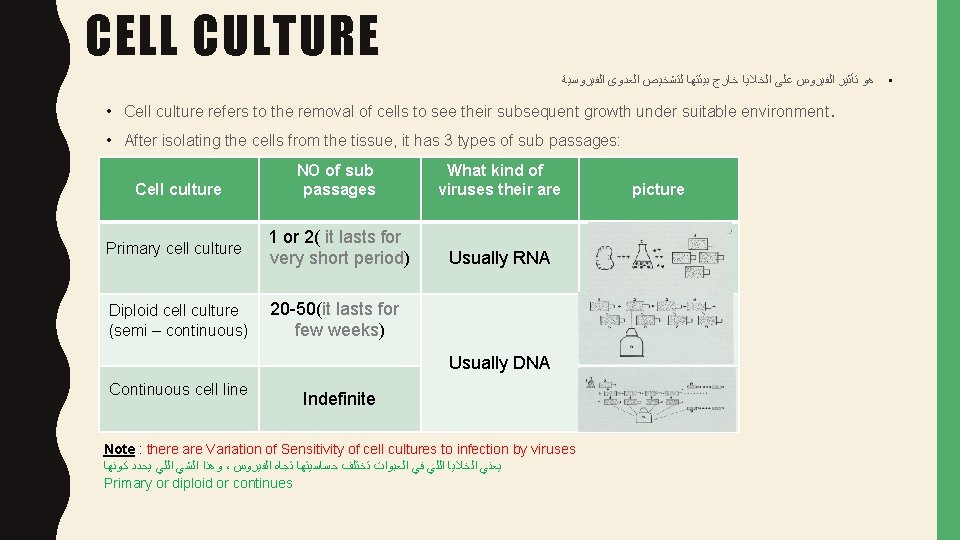
CELL CULTURE ﺍﻟﻔﻴﺮﻭﺳﻴﺔ ﺍﻟﻌﺪﻭﻯ ﻟﺘﺸﺨﻴﺺ ﺑﻴﺌﺘﻬﺎ ﺧﺎﺭﺝ ﺍﻟﺨﻼﻳﺎ ﻋﻠﻰ ﺍﻟﻔﻴﺮﻭﺱ ﺗﺄﺜﻴﺮ • ﻫﻮ • Cell culture refers to the removal of cells to see their subsequent growth under suitable environment. • After isolating the cells from the tissue, it has 3 types of sub passages: NO of sub passages What kind of viruses their are Primary cell culture 1 or 2( it lasts for very short period) Usually RNA Diploid cell culture (semi – continuous) 20 -50(it lasts for few weeks) Cell culture Usually DNA Continuous cell line Indefinite Note : there are Variation of Sensitivity of cell cultures to infection by viruses ﻛﻮﻧﻬﺎ ﻳﺤﺪﺩ ﺍﻟﻠﻲ ﺍﻟﺸﻲ ﻭﻫﺬﺍ ، ﺍﻟﻔﻴﺮﻭﺱ ﺗﺠﺎﻩ ﺣﺴﺎﺳﻴﺘﻬﺎ ﺗﺨﺘﻠﻒ ﺍﻟﻌﺒﻮﺍﺕ ﻓﻲ ﺍﻟﻠﻲ ﺍﻟﺨﻼﻳﺎ ﻳﻌﻨﻲ Primary or diploid or continues picture
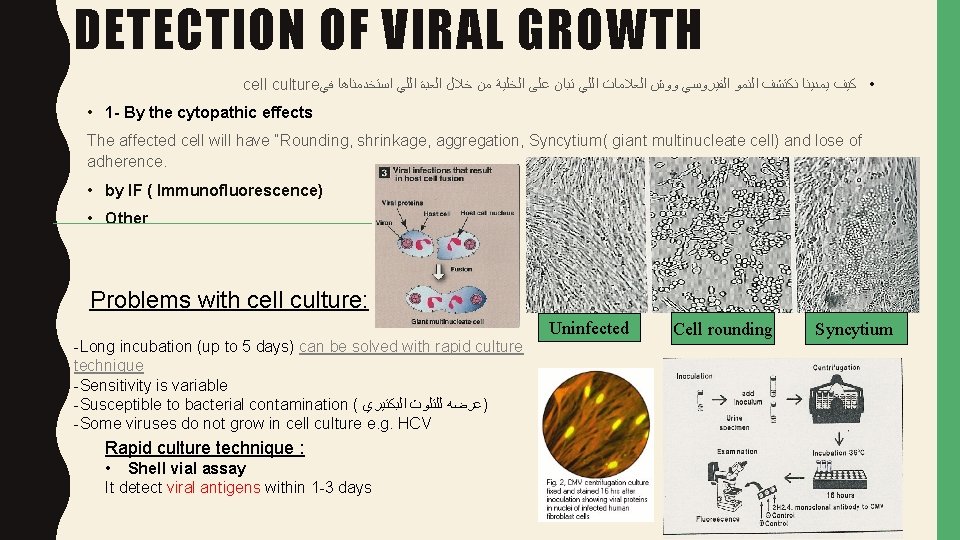
DETECTION OF VIRAL GROWTH cell culture ﻓﻲ ﺍﺳﺘﺨﺪﻣﻨﺎﻫﺎ ﺍﻟﻠﻲ ﺍﻟﻌﺒﺓ ﺧﻼﻝ ﻣﻦ ﺍﻟﺨﻠﻴﺔ ﻋﻠﻰ ﺗﺒﺎﻥ ﺍﻟﻠﻲ ﺍﻟﻌﻼﻣﺎﺕ ﻭﻭﺵ ﺍﻟﻔﻴﺮﻭﺳﻲ ﺍﻟﻨﻤﻮ ﻧﻜﺘﺸﻒ ﻳﻤﺪﻳﻨﺎ • ﻛﻴﻒ • 1 - By the cytopathic effects The affected cell will have “Rounding, shrinkage, aggregation, Syncytium( giant multinucleate cell) and lose of adherence. • by IF ( Immunofluorescence) • Other Problems with cell culture: -Long incubation (up to 5 days) can be solved with rapid culture technique -Sensitivity is variable -Susceptible to bacterial contamination ( ﺍﻟﺒﻜﺘﻴﺮﻱ ﻟﻠﺘﻠﻮﺙ )ﻋﺮﺿﻪ -Some viruses do not grow in cell culture e. g. HCV Rapid culture technique : • Shell vial assay It detect viral antigens within 1 -3 days Uninfected Cell rounding Syncytium
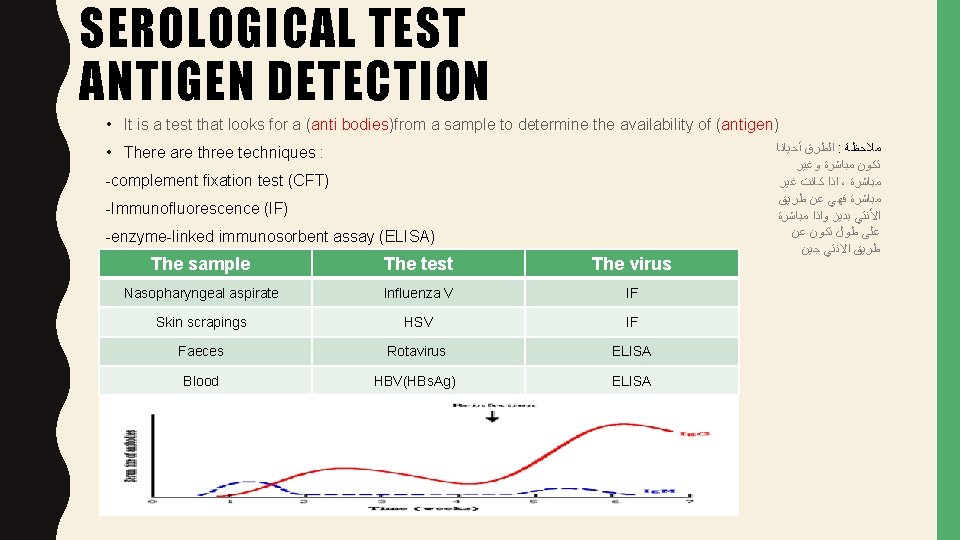
SEROLOGICAL TEST ANTIGEN DETECTION • It is a test that looks for a (anti bodies)from a sample to determine the availability of (antigen) • There are three techniques : -complement fixation test (CFT) -Immunofluorescence (IF) -enzyme-linked immunosorbent assay (ELISA) The sample The test The virus Nasopharyngeal aspirate Influenza V IF Skin scrapings HSV IF Faeces Rotavirus ELISA Blood HBV(HBs. Ag) ELISA ﺃﺤﻴﺎﻧﺎ ﺍﻟﻄﺮﻕ : ﻣﻼﺣﻈﺔ ﻭﻏﻴﺮ ﻣﺒﺎﺷﺮﺓ ﺗﻜﻮﻥ ﻏﻴﺮ ﻛﺎﻧﺖ ﺍﺫﺍ ، ﻣﺒﺎﺷﺮﺓ ﻃﺮﻳﻖ ﻋﻦ ﻓﻬﻲ ﻣﺒﺎﺷﺮﺓ ﻭﺍﺫﺍ ﺑﺪﻳﺰ ﺍﻷﻨﺘﻲ ﻋﻦ ﺗﻜﻮﻥ ﻃﻮﻝ ﻋﻠﻰ ﺟﻴﻦ ﺍﻻﻧﺘﻲ ﻃﺮﻳﻖ
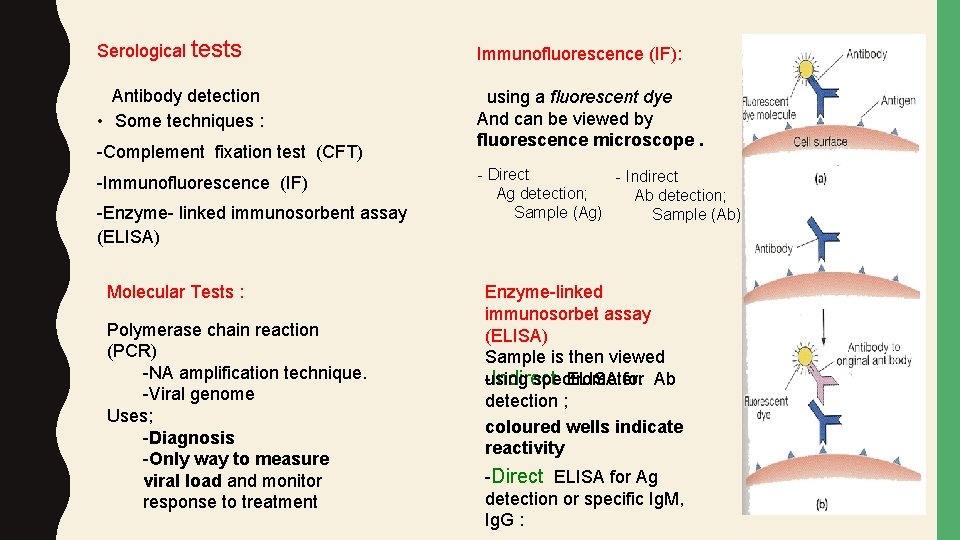
Serological tests Immunofluorescence (IF): Antibody detection • Some techniques : using a fluorescent dye And can be viewed by fluorescence microscope. -Complement fixation test (CFT) -Immunofluorescence (IF) -Enzyme- linked immunosorbent assay (ELISA) Molecular Tests : Polymerase chain reaction (PCR) -NA amplification technique. -Viral genome Uses; -Diagnosis -Only way to measure viral load and monitor response to treatment - Direct - Indirect Ag detection; Ab detection; Sample (Ag) Sample (Ab) Enzyme-linked immunosorbet assay (ELISA) Sample is then viewed -Indirect ELISA for Ab using spectrometer. detection ; coloured wells indicate reactivity -Direct ELISA for Ag detection or specific Ig. M, Ig. G :
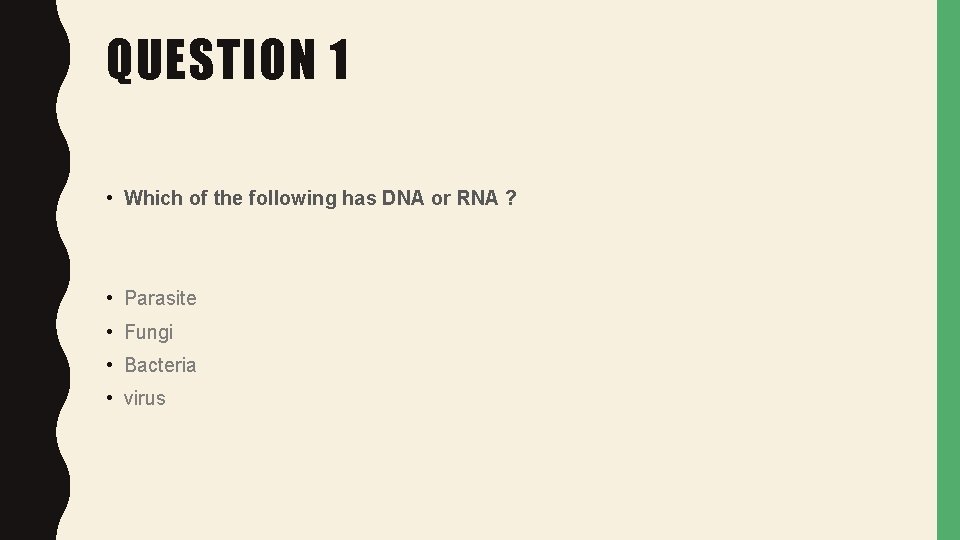
QUESTION 1 • Which of the following has DNA or RNA ? • Parasite • Fungi • Bacteria • virus
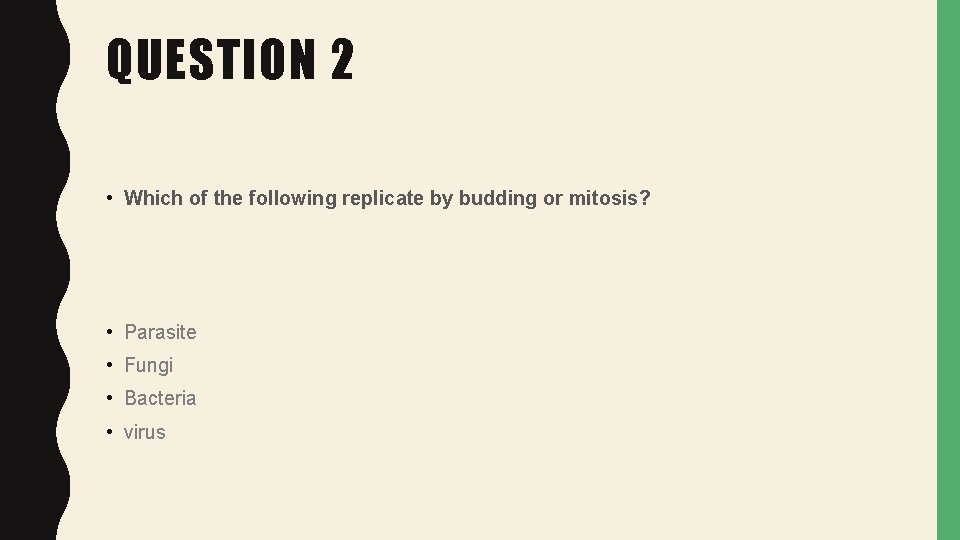
QUESTION 2 • Which of the following replicate by budding or mitosis? • Parasite • Fungi • Bacteria • virus
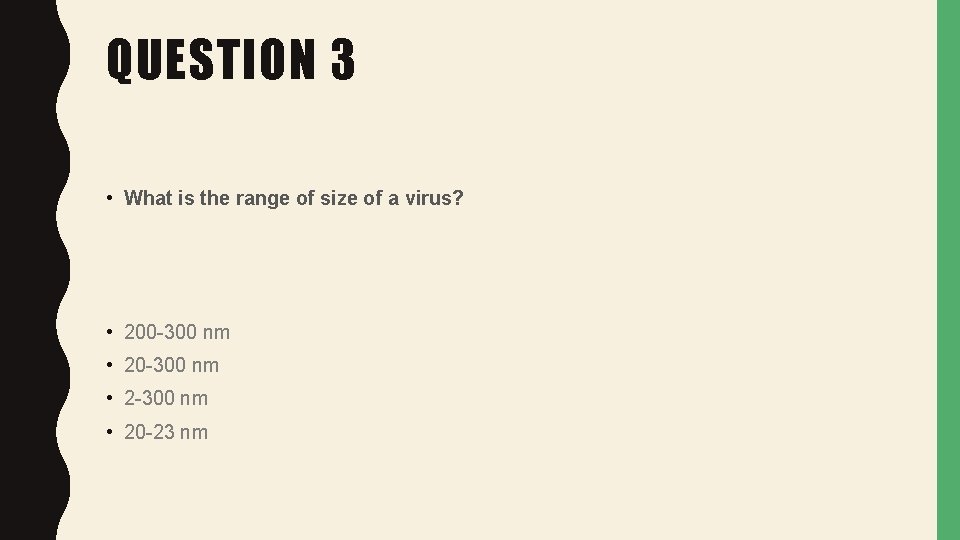
QUESTION 3 • What is the range of size of a virus? • 200 -300 nm • 2 -300 nm • 20 -23 nm
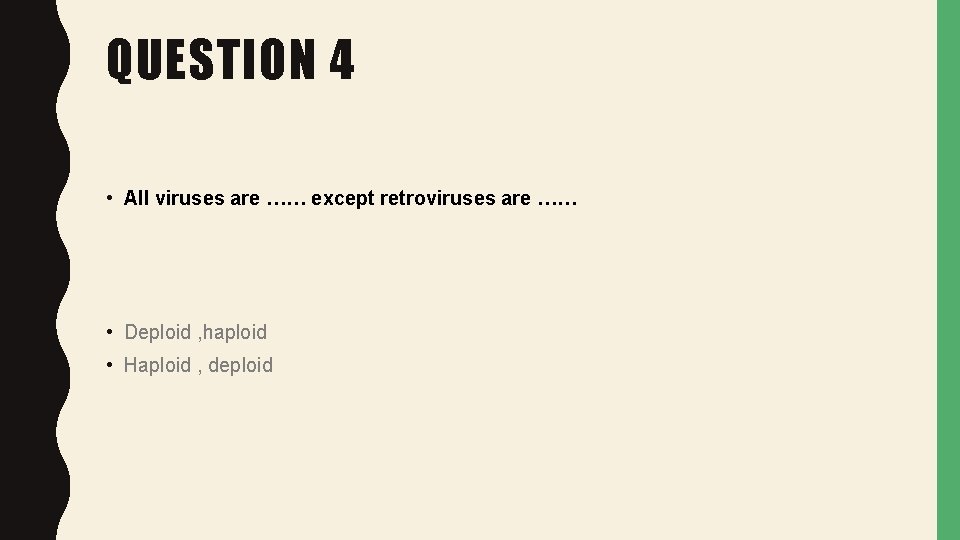
QUESTION 4 • All viruses are …… except retroviruses are …… • Deploid , haploid • Haploid , deploid
QUESTION 5 • Which of the following is helical symmtry • Proxvirus • Filoviruses • Adenivrus • Herpes virus
QUESTION 6 • All of the following can be used to classify viruses except: • Type of symmetry • Number of strands • The average count of ribosomes • The polarity

THE TEAM : • • • Waleed Aljamal Ibrahim Fetyanu Meshal Alhusainan Hussam Alkhathlan Faisal Alqumaizi Contact us : 436 microbiologyteam@gmail. com Twitter : @microbio 436 THE TEAM : • • Shrooq Alsomali Hanin Bashaikh Jawaher Alkhayyal Reem Alshathri Rawan Alqahtani Ohoud Abdullah Ghadah Almazrou Lama Al-musallm
- Slides: 31