
Microbiology in ICU Allison Keegan Critical Care Advanced

Microbiology in ICU Allison Keegan Critical Care Advanced Practitioner NMGH
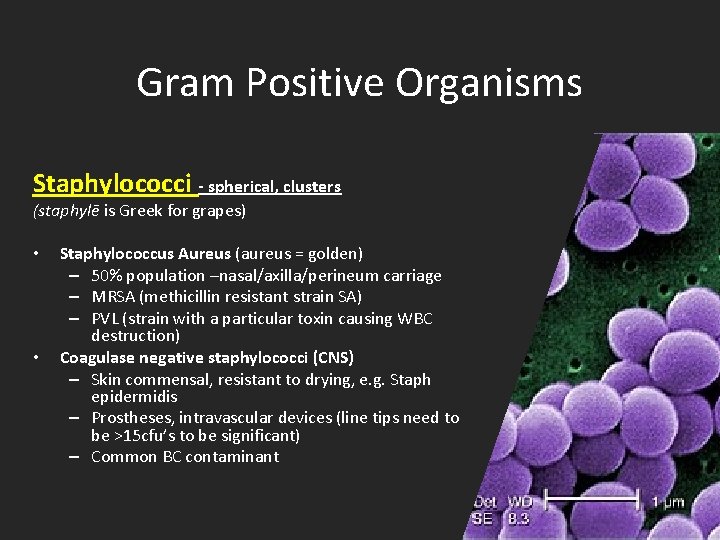
Gram Positive Organisms Staphylococci - spherical, clusters (staphylē is Greek for grapes) • • Staphylococcus Aureus (aureus = golden) – 50% population –nasal/axilla/perineum carriage – MRSA (methicillin resistant strain SA) – PVL (strain with a particular toxin causing WBC destruction) Coagulase negative staphylococci (CNS) – Skin commensal, resistant to drying, e. g. Staph epidermidis – Prostheses, intravascular devices (line tips need to be >15 cfu’s to be significant) – Common BC contaminant
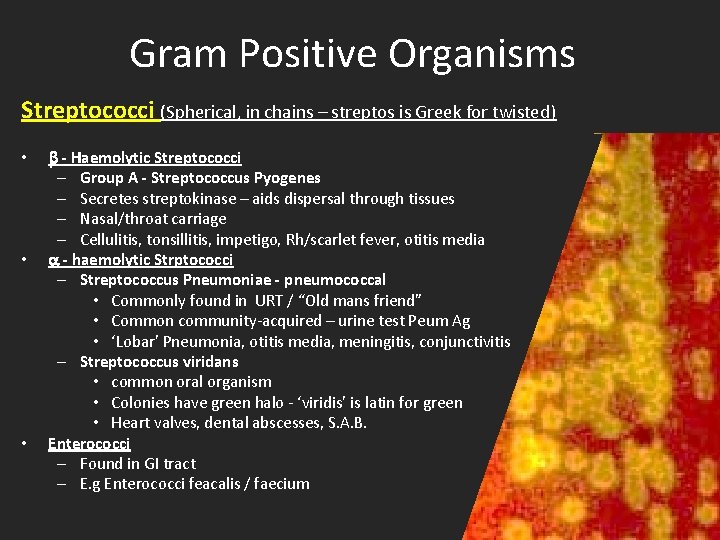
Gram Positive Organisms Streptococci (Spherical, in chains – streptos is Greek for twisted) • • • - Haemolytic Streptococci – Group A - Streptococcus Pyogenes – Secretes streptokinase – aids dispersal through tissues – Nasal/throat carriage – Cellulitis, tonsillitis, impetigo, Rh/scarlet fever, otitis media - haemolytic Strptococci – Streptococcus Pneumoniae - pneumococcal • Commonly found in URT / “Old mans friend” • Common community-acquired – urine test Peum Ag • ‘Lobar’ Pneumonia, otitis media, meningitis, conjunctivitis – Streptococcus viridans • common oral organism • Colonies have green halo - ‘viridis’ is latin for green • Heart valves, dental abscesses, S. A. B. Enterococci – Found in GI tract – E. g Enterococci feacalis / faecium
Other Gram Positive Organisms Gram-positive bacilli • rod shaped, can produce spores • Aerobes • Lactobacillus - probiotics • Bacillus anthracis - anthrax Clostridia • • rod shaped Anaerobes C. difficile C. perfrigens – gas gangrene, cellulitis • C. tetani, spores in soil – tetanus Mycobacterium • Aerobic, acid fast • TB • leprosy
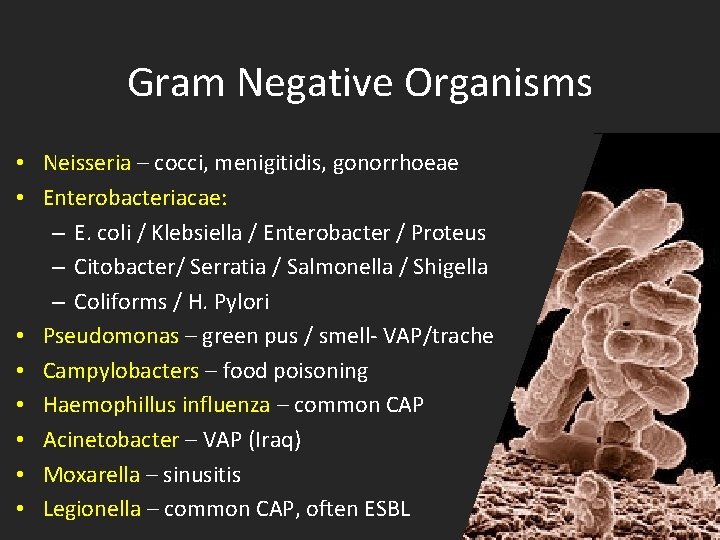
Gram Negative Organisms • Neisseria – cocci, menigitidis, gonorrhoeae • Enterobacteriacae: – E. coli / Klebsiella / Enterobacter / Proteus – Citobacter/ Serratia / Salmonella / Shigella – Coliforms / H. Pylori • Pseudomonas – green pus / smell- VAP/trache • Campylobacters – food poisoning • Haemophillus influenza – common CAP • Acinetobacter – VAP (Iraq) • Moxarella – sinusitis • Legionella – common CAP, often ESBL
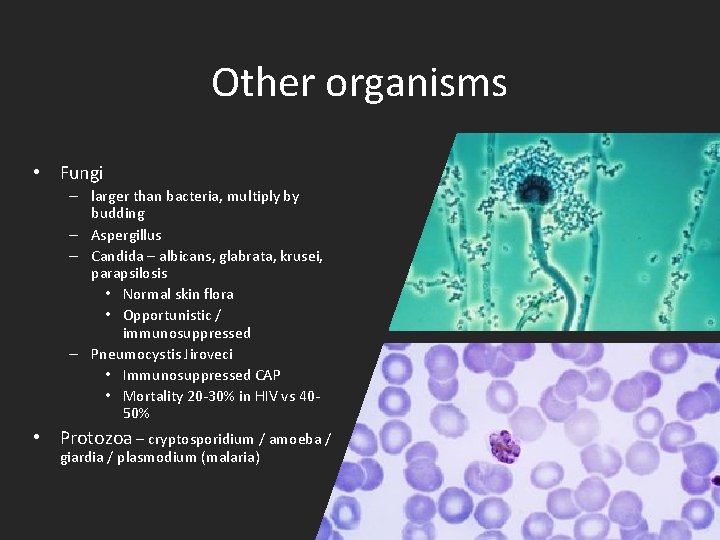
Other organisms • Fungi – larger than bacteria, multiply by budding – Aspergillus – Candida – albicans, glabrata, krusei, parapsilosis • Normal skin flora • Opportunistic / immunosuppressed – Pneumocystis Jiroveci • Immunosuppressed CAP • Mortality 20 -30% in HIV vs 4050% • Protozoa – cryptosporidium / amoeba / giardia / plasmodium (malaria)
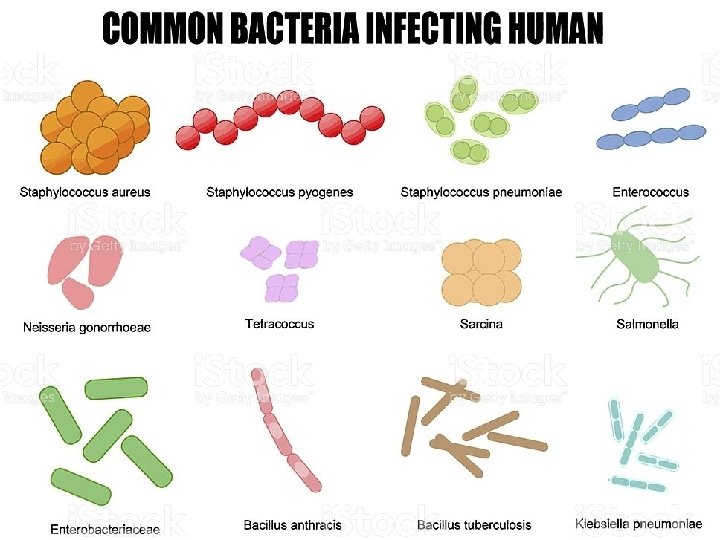

ICU-relevant Bacteria

Hospital-acquired Infection • 23% of all HAIs occur in ICU • Commonly: – HAP / VAP – Surgical site – UTI European data (2014): • 8% of ICU pts with LOS > 2 days acquired at least one ICU-HAI • 6% = pneumonia (mostly VAP) • 4% = bloodstream infection (48% CRBSI) • 3% = UTI (98% had catheter) • Most common organisms: – – VAP = Pseudomonas aeruginosa CRBSI = coagulase-negative Staphylococcus spp. UTI = Escherichia coli 25% of SA were MRSA
Common ICU Organisms • Serratia – • opportunisitic HAI, VAP/UTI/wound, often resistant Pseudomonas aeruginosa – likes moisture – common VAP - may need ‘double’ coverage & longer course (colistin) • • Proteus – grow quickly (Greek god) – UTI / wound Citrobacter - UTI / BSI Enterobacter – VAP / BSI Acinetobacter – common VAP – ‘outbreaks’ in ICU – staff colonisation, usually highly resistant – contaminated wounds – ‘Iraqibacter’ • • • Klebsiella – wounds / VAP Ecoli – commonest bacteraemia organism – 11 -12% resistance (2014) Staphlococcus epidermidis – BC contaminant Coagulase-negative staphylococci – line tips / BCs Stenotrophomonas Maltophilia – common VAP but usually just coloniser – resistant to all except Septrin – now some resistance developing
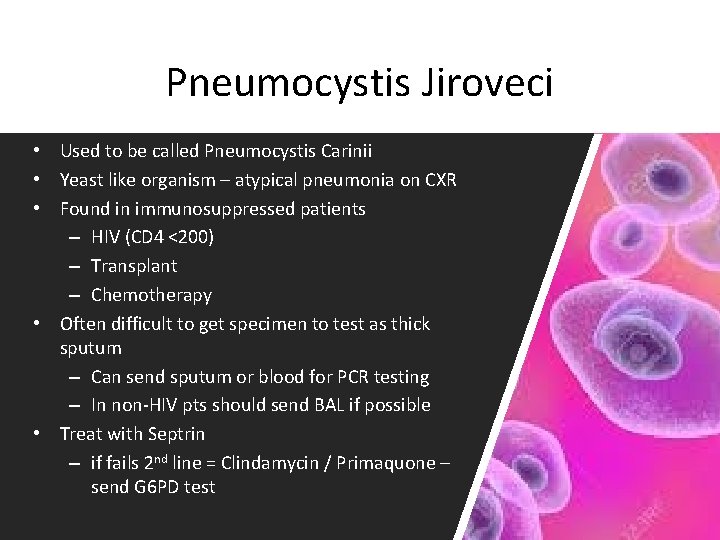
Pneumocystis Jiroveci • Used to be called Pneumocystis Carinii • Yeast like organism – atypical pneumonia on CXR • Found in immunosuppressed patients – HIV (CD 4 <200) – Transplant – Chemotherapy • Often difficult to get specimen to test as thick sputum – Can send sputum or blood for PCR testing – In non-HIV pts should send BAL if possible • Treat with Septrin – if fails 2 nd line = Clindamycin / Primaquone – send G 6 PD test
Fourniers Gangrene Necrotising fasciitis of the perineum High risk in diabetes, high BMI, alcohol XS Men 10 x women, age 60 -70 Used to be thought just caused by Streptococci • However often multi-bacteria – including strep / staph / enterobacter / anaerobes • •

PVL - Panton-Valentine leukocidin – Community-acquired – Usually previously healthy young people – Presents as necrotising skin and soft tissue infections or necrotising pneumonia – CAP carries a high mortality >60% – Antibiotic treatment = Linezolid + Clindamycin +/- IVIG + Rifampicin if toxic shock syndrome present – Increasing incidence last 5 years
Resistant Bacteria
Overview • 10 -12% increase in incidence of Ecoli bacteraemias & Klebsiella pneum. infections • Resistance profile generally stable but wide regional variations – London 2 -3 x worse • Some reduction in Strep / Pseudomonal infection since vaccine introduced 2010 • European data has shown that infection with a resistant organism will double mortality rate • Globally: – Superbugs will kill 'more than cancer' by 2050 – Cost will be $100 trillion /year
MRSA (FRSA) • Found in 20 -30% of the noses of normal healthy people • MRSA Methicillin-resistant staphylococcus Aureus - – Genetically altered so is resistant to the beta-lactam antibiotics, which include penicillins, cephalosporins and carbapenems - produces coagulase enzyme – protective fibrin barrier & penicillinase – destroys penicillin hence resistance • MRSA first reported in 1961 • Commonly found in hospitals or nursing homes • Community-acquired MRSA emerged worldwide in the late 1990 s • Many patients are ‘colonised’ rather than infected • Vancomycin-resistant (VRSA) cases in USA • Several cases of intermediately-resistant MRSA (VISA) in UK • NB Previously positive? – Check flag
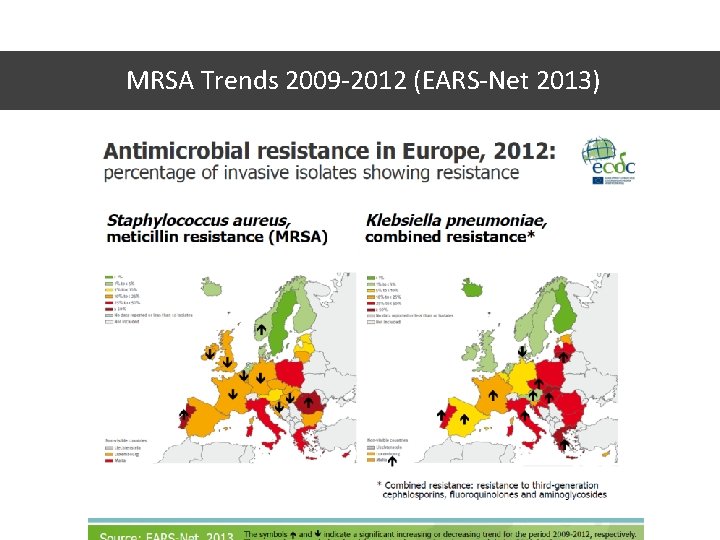
MRSA Trends 2009 -2012 (EARS-Net 2013)

UK MRSA Bacteraemia Incidence

Clostridium Difficile • • • Gram-positive anaerobic rod– protective spores Found in the bowel - often coloniser but can cause diarrhoea/ pseudomembranous colitis / toxic mega-colon C Two different toxins: – A – enterotoxin - causes fluid sequestration – B – cytotoxic High risk – antibiotic usage (cephlasporins, penicillin, clindamycin, ciprofloxacin), PPI, severity of illness, long LOS, NGT, elderly, ICU Testing: – Stool must be liquid! Type 5 -7 – Is CDT present (GDH) – Y / N – If Y – Is toxin present Y/N – Is toxin gene present Y / N – may go on to develop CDT toxin
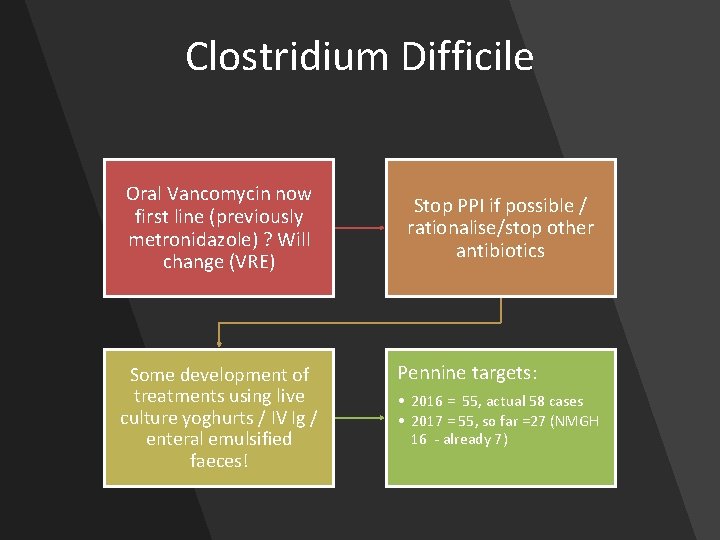
Clostridium Difficile Oral Vancomycin now first line (previously metronidazole) ? Will change (VRE) Some development of treatments using live culture yoghurts / IV Ig / enteral emulsified faeces! Stop PPI if possible / rationalise/stop other antibiotics Pennine targets: • 2016 = 55, actual 58 cases • 2017 = 55, so far =27 (NMGH 16 - already 7)
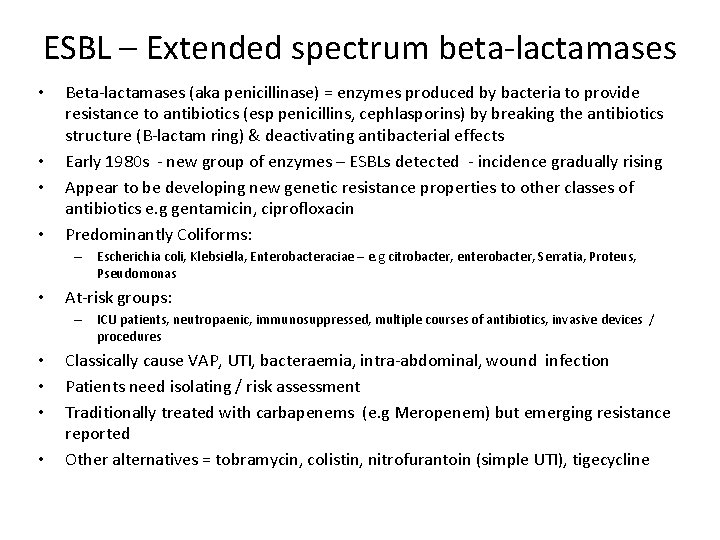
ESBL – Extended spectrum beta-lactamases • • Beta-lactamases (aka penicillinase) = enzymes produced by bacteria to provide resistance to antibiotics (esp penicillins, cephlasporins) by breaking the antibiotics structure (B-lactam ring) & deactivating antibacterial effects Early 1980 s - new group of enzymes – ESBLs detected - incidence gradually rising Appear to be developing new genetic resistance properties to other classes of antibiotics e. g gentamicin, ciprofloxacin Predominantly Coliforms: – Escherichia coli, Klebsiella, Enterobacteraciae – e. g citrobacter, enterobacter, Serratia, Proteus, Pseudomonas • At-risk groups: – ICU patients, neutropaenic, immunosuppressed, multiple courses of antibiotics, invasive devices / procedures • • Classically cause VAP, UTI, bacteraemia, intra-abdominal, wound infection Patients need isolating / risk assessment Traditionally treated with carbapenems (e. g Meropenem) but emerging resistance reported Other alternatives = tobramycin, colistin, nitrofurantoin (simple UTI), tigecycline
Amp. C • Another type of ‘beta-lactamase’ enzyme • Identified by resistance profile – predominantly resistant to cephlasporins • Lab can often identify ‘potential’ Amp-Cs – often suggest avoid certain antibiotics • Commonly Klebsiella / Ecoli
CPE - Carbapenemase-producing Enterobacteriaceae • Gram-negative bacteria • Nearly resistant to the last-line carbapenem class of antibiotics • Before 2007 - most CPE isolates imported from outside UK • Increase observed since 2007 includes UK transmission • There have been reported incidence of Klebsiella spp. (79%), E. coli (12%), and Enterobacter spp. (7%) • Likely due to overuse of Carbapenems – CQUIN now in place / need micro approval • Trustwide risk assessment / screening • Usually give Mero + Gent/Cipro/Colistin (AKI risk)/Tige (↑mortality) or Gent + Cipro / Colistin / Tige
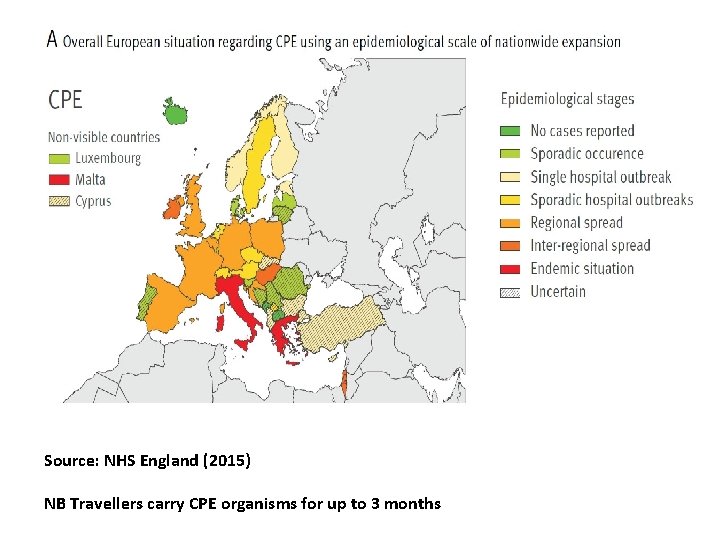
Source: NHS England (2015) NB Travellers carry CPE organisms for up to 3 months
VRE – Vancomycin Resistant Enterococci • Enterococci species – mainly E. faecalis and E. faecium (previously called Group D streptococci) • Normal gut /urinary /female genital flora • Low pathogenicity but high resistance to antibiotics • Develop in patients previously exposed to vancomycin, teicoplanin and aminoglycosides. • High risk = immunosuppressed, ICU, elderly, NG feeding • The species distinction is important: – E faecalis remains largely sensitive to amoxicillin, vancomycin and teicoplanin, – E. Faecium is resistant. Gut carriage can persist for months or even years Often multi-drug resistance VRE colonisation is common - may not always proceed to infection Can cause enteritis, BSI, wound infection, UTI Can be treated with linezolid, tigecycline, quinopristin-dalfopristin and daptomycin • Permanent clearance is difficult to achieve, as gut carriage can persist for months to years • • •
Resistant Bacteria Threats! Urgent • CDT / CPE / Drug-resistant gonorrhoea Serious • Drug resistant Acinetobacter / Campylobacter / Pseudomonas / Salmonella / TB / Strep Pneum • Fluconazole resistant candida • ESBLs / VRE / MRSA
Clinical Testing / Prescribing
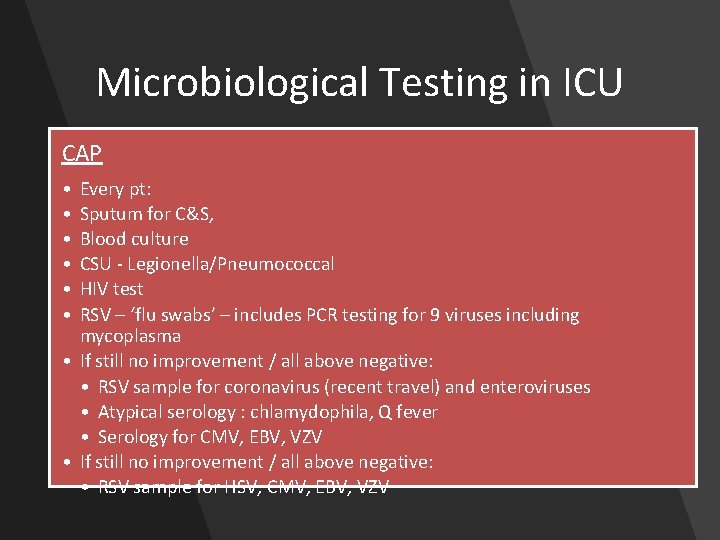
Microbiological Testing in ICU CAP • • • Every pt: Sputum for C&S, Blood culture CSU - Legionella/Pneumococcal HIV test RSV – ‘flu swabs’ – includes PCR testing for 9 viruses including mycoplasma • If still no improvement / all above negative: • RSV sample for coronavirus (recent travel) and enteroviruses • Atypical serology : chlamydophila, Q fever • Serology for CMV, EBV, VZV • If still no improvement / all above negative: • RSV sample for HSV, CMV, EBV, VZV

Candida in Critical Care Bedside risk assessment (CCM 2006): • TPN = 1 • Severe sepsis = 2 • Multi-site colonisation = 1 • Intrabdominal surgery = 1 • If score >2. 5 – start anti-fungal treatment & send Beta-D-Glucan • If BDG negative – stop anti-fungals • NB 15% Candida resistant to fluconazole (2014) • If BC +ve for Candida - need to change lines regardless – reduces mortality
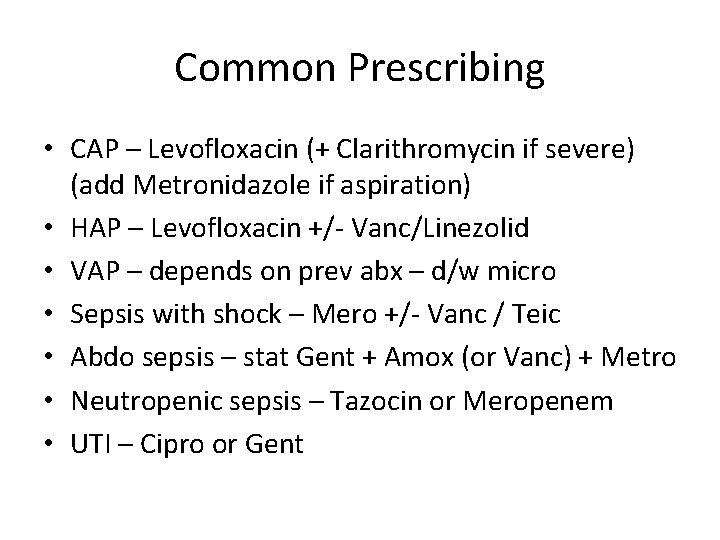
Common Prescribing • CAP – Levofloxacin (+ Clarithromycin if severe) (add Metronidazole if aspiration) • HAP – Levofloxacin +/- Vanc/Linezolid • VAP – depends on prev abx – d/w micro • Sepsis with shock – Mero +/- Vanc / Teic • Abdo sepsis – stat Gent + Amox (or Vanc) + Metro • Neutropenic sepsis – Tazocin or Meropenem • UTI – Cipro or Gent
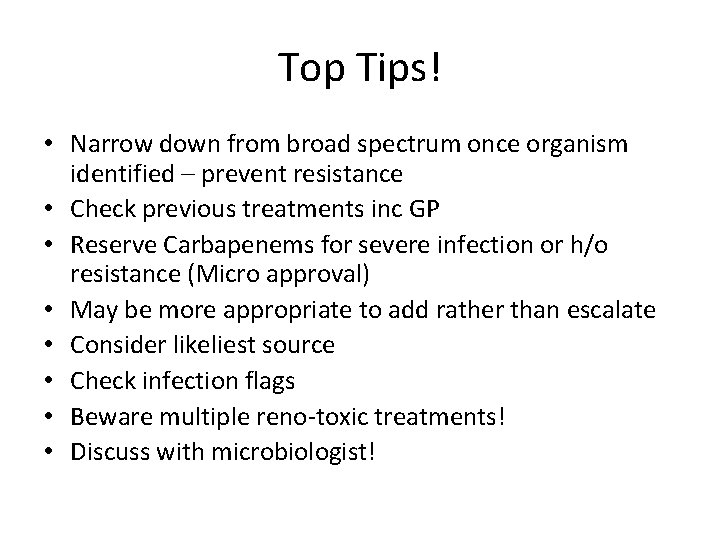
Top Tips! • Narrow down from broad spectrum once organism identified – prevent resistance • Check previous treatments inc GP • Reserve Carbapenems for severe infection or h/o resistance (Micro approval) • May be more appropriate to add rather than escalate • Consider likeliest source • Check infection flags • Beware multiple reno-toxic treatments! • Discuss with microbiologist!
- Slides: 31