
Microbiology Chapter 24 Diseases of the Urinary and
Microbiology Chapter 24 Diseases of the Urinary and Reproductive Systems © 2018 Pearson Education, Inc.
Structures of the Urinary and Reproductive Systems – SUMMARY • Females have distinct reproductive systems compared to men. • Women: • Men: vagina, uterus, oviducts, ovaries urethra, prostate, seminal ducts, testicles • In females, the urinary system and the reproductive system do not touch or mingle with each other • In 1: 20000 births, they are fused without or without additional rectal fusion (more precisely, the three failed to separate), forming a persistent cloaca • Male urinary and reproductive systems share some components. • Immediately distal to the urethral sphincter at the bladder, the ductus deferens (seminal duct) and seminal vesicles both drain into the urethra at the prostate gland. Both systems share a long urethra to exit the body by passing through the penis © 2018 Pearson Education, Inc.
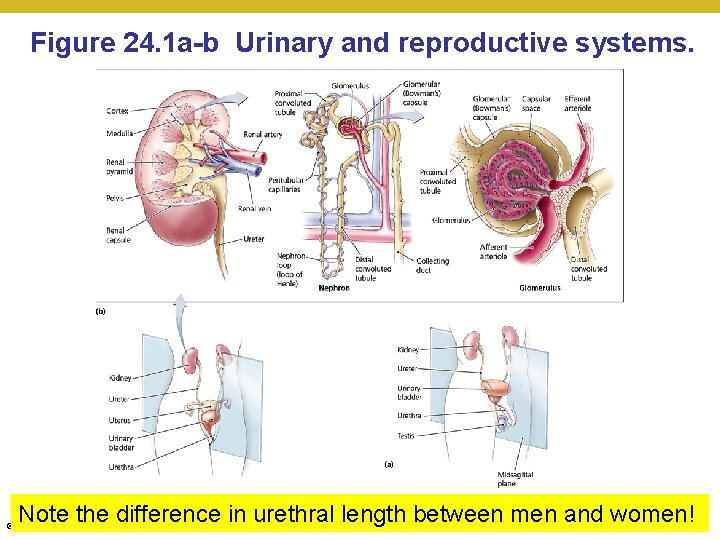
Figure 24. 1 a-b Urinary and reproductive systems. Note the difference in urethral length between men and women! © 2018 Pearson Education, Inc.
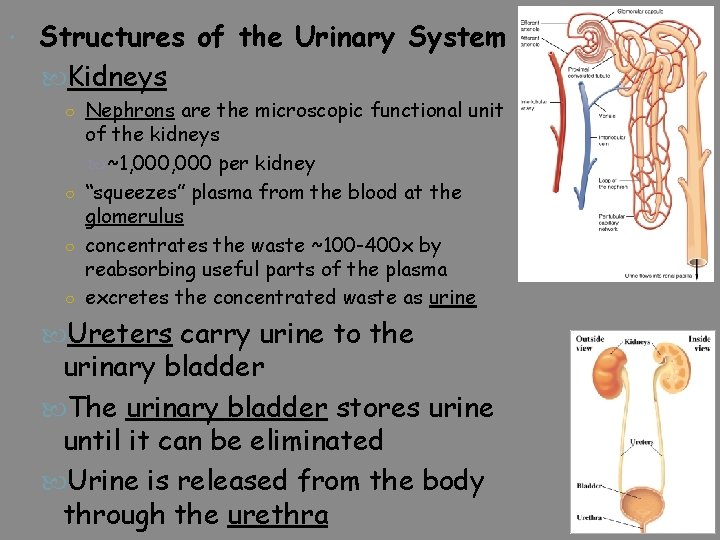
Structures of the Urinary System Kidneys ○ Nephrons are the microscopic functional unit of the kidneys ~1, 000 per kidney ○ “squeezes” plasma from the blood at the glomerulus ○ concentrates the waste ~100 -400 x by reabsorbing useful parts of the plasma ○ excretes the concentrated waste as urine Ureters carry urine to the urinary bladder The urinary bladder stores urine until it can be eliminated Urine is released from the body through the urethra
Structures of the Urinary and Reproductive Systems • Structures of the female reproductive system • • • Ovaries Uterine tubes (a. k. a. , oviducts, Fallopian tubes) Uterus Vagina Secretory glands (Skeen’s and Bartholin’s glands) External genitalia • Microorganisms enter through the vagina or the urethra • A few blood-borne pathogens enter through the kidney at the glomerulus © 2018 Pearson Education, Inc.
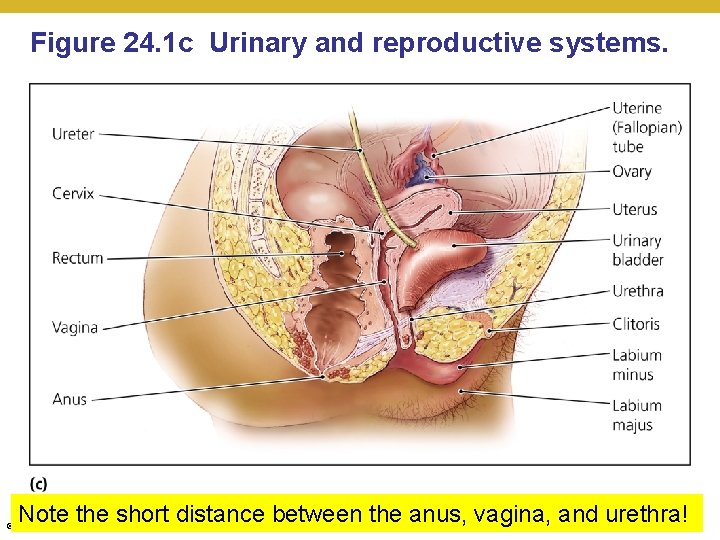
Figure 24. 1 c Urinary and reproductive systems. Note the short distance between the anus, vagina, and urethra! © 2018 Pearson Education, Inc.
Structures of the Urinary and Reproductive Systems • Structures of the male reproductive system • • Testes Scrotum System of ducts (epididymis, vas deferens, urethra) Accessory glands (seminal vesicles, prostate gland, and bulbourethral gland) • Penis • Microorganisms enter through the urethra and skin of the penis • A few blood-borne pathogens enter through the kidney at the glomerulus © 2018 Pearson Education, Inc.
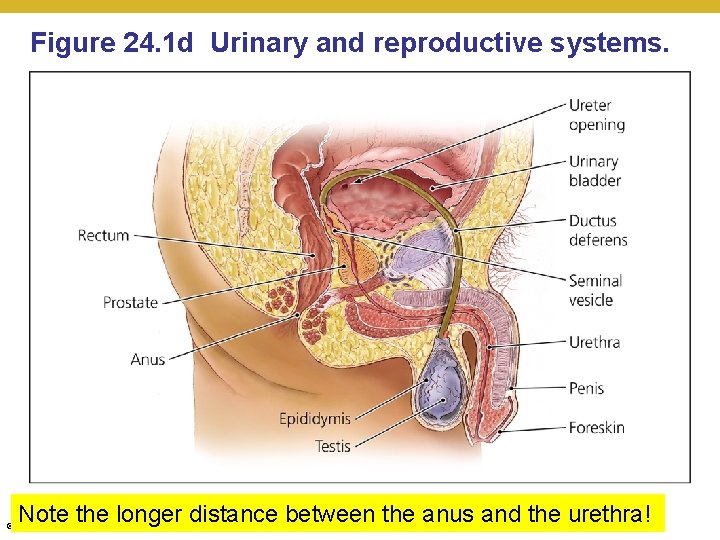
Figure 24. 1 d Urinary and reproductive systems. Note the longer distance between the anus and the urethra! © 2018 Pearson Education, Inc.
Microbiome of the Urinary and Reproductive Systems • Urinary system • Urethra supports colonization by some microorganisms • Include Lactobacillus and Staphylococcus • The other urinary organs (bladder, ureters, kidney) are sterile – too much fluid flow • Male reproductive system • Regions above the prostate are sterile • Female reproductive system • The vagina is colonized by various microorganisms, (esp. Lactobacillus) depending on hormone levels • Hormones promote glycogen release into mucus • Glycogen is fermented to generate acidic environment © 2018 Pearson Education, Inc.
Structures of the Urinary and Reproductive Systems • Microbiome of the Urinary and Reproductive Systems • UTI – urinary tract infection • Microorganisms in the urethra can move up to infect the kidneys. • Urination is the primary method of expelling pathogens and microbes from the kidney, ureters, bladder, and urethra • reduced water intake can promote UTIs • Opportunistic and sexually transmitted microbes can infect the reproductive system. © 2018 Pearson Education, Inc.
Bacterial Diseases of the Urinary Systems • Bacterial Urinary Tract Infections (UTIs) • Signs and symptoms • Frequent, urgent, painful urination • Urine may be cloudy with foul odor • Pathogens and virulence factors • Enteric bacteria are the most common cause • Escherichia coli causes most cases • Virulence factors include flagella and attachment fimbriae • Epidemiology • Often results when fecal bacteria are introduced into urethra • Proximity of rectum and urethra openings • More common in females than in males • shorter distance between openings © 2018 Pearson Education, Inc.
Bacterial Diseases of the Urinary Systems • Bacterial Urinary Tract Infections • Diagnosis, treatment, and prevention • Diagnosis is based on urinalysis • Many cases resolve without medicinal treatment • Frequent water drinking to induce frequent urination • Some treated with antimicrobial drugs • Prevented by limiting contamination by fecal microbes • Hygiene and safe practices • Clean clothes and bedding • Frequent healthy urination (drinking lots of water) © 2018 Pearson Education, Inc.
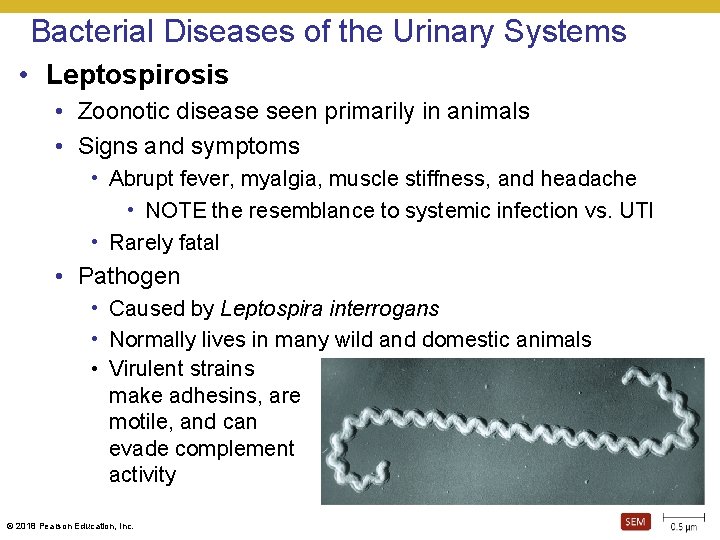
Bacterial Diseases of the Urinary Systems • Leptospirosis • Zoonotic disease seen primarily in animals • Signs and symptoms • Abrupt fever, myalgia, muscle stiffness, and headache • NOTE the resemblance to systemic infection vs. UTI • Rarely fatal • Pathogen • Caused by Leptospira interrogans • Normally lives in many wild and domestic animals • Virulent strains make adhesins, are motile, and can evade complement activity © 2018 Pearson Education, Inc.
Bacterial Diseases of the Urinary Systems • Leptospirosis • Pathogenesis • Transmitted by contact with urine of infected animal or urine-contaminated water (floods) • Spirochete enters through skin or mucosal breaks • Spirochete travels via the bloodstream through the body • Can cause kidney failure, liver failure, or meningitis • Epidemiology • Occurs throughout world but rare in the United States • Diagnosis, treatment, and prevention • Diagnosis is based on antibody test • Treated with antimicrobial drugs • Prevented by avoiding or sanitizing urine-contaminated water © 2018 Pearson Education, Inc.
Bacterial Diseases of the Urinary Systems • Streptococcal Acute Glomerulonephritis • Some antibody-antigen complexes against group A streptococci in the blood are not removed from the body • Complexes are deposited in the glomeruli of the kidneys • Clog the filipodia that function as sieve in glomerulus • Circulating immune cells bind immune complexes at the clog and initiate an inflammatory reaction of the glomeruli and nephrons • Can trigger hypertension (up to 25% of systemic blood flow goes through the kidneys and can be blocked) and low urine output • Irreversible kidney damage can occur in adults • Regenerative potential of kidneys decrease with age • Filipodia are notoriously resistant to regeneration © 2018 Pearson Education, Inc.

Nonvenereal Diseases of the Reproductive Systems • Staphylococcal Toxic Shock Syndrome (TSS) • Signs and symptoms • Sudden-onset fever, chills, vomiting, diarrhea, low blood pressure, confusion, and severe red rash • Individuals go into shock if untreated • Pathogen and virulence factors • Caused by some strains of S. aureus • These strains produce superantigen toxin • Toxin activates too many TCRs, almost none of which recognize S. aureus epitopes • Cause excessive cytokine production by too many activated T cells • Body believes it has a massive infection and shuts down blood flow to stop “rapid spread” © 2018 Pearson Education, Inc.
Nonvenereal Diseases of the Reproductive Systems • Staphylococcal Toxic Shock Syndrome • Pathogenesis and epidemiology • Absorption of toxin into blood triggers toxic shock syndrome • Most cases occur in menstruating females • Incomplete blood vessel clotting during menstruation, and preventing menstrual flow from uterine region, allows resident staphylococcus and their toxins to enter blood • Diagnosis, treatment, and prevention • Diagnosis is based on signs and symptoms • Considered medical emergency • Requires removal of foreign material and antimicrobial drugs • Risk can be lessened by avoiding tampons or using less absorbent tampons • absorbant tampons absorb and feed bacteria © 2018 Pearson Education, Inc.
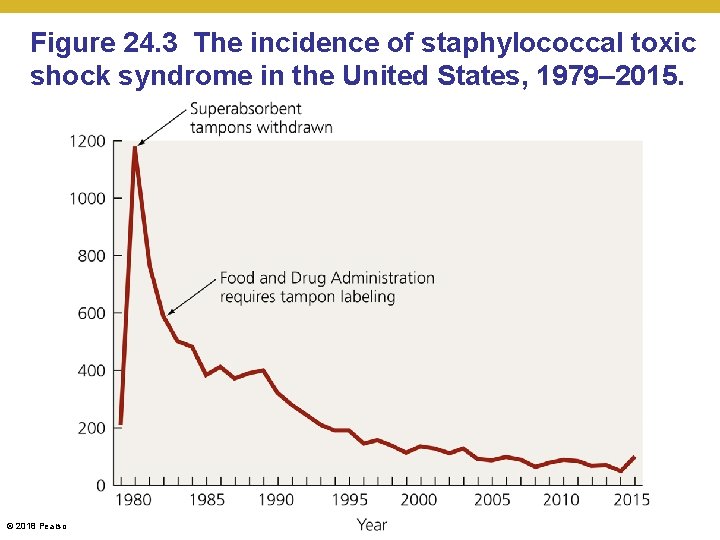
Figure 24. 3 The incidence of staphylococcal toxic shock syndrome in the United States, 1979– 2015. © 2018 Pearson Education, Inc.
Nonvenereal Diseases of the Reproductive Systems • Bacterial Vaginosis • Signs and symptoms • White vaginal discharge with a “fishy” odor • Pathogens • Caused by various anaerobic bacteria • Pathogenesis and epidemiology • Associated with multiple sexual partners (more transmission potential) and vaginal douching (eliminate protective flora and fluids) • Diagnosis, treatment, and prevention • Diagnosed is based on signs and symptoms • Treated with oral or vaginal metronidazole • Azoles can also slow protozoal growth (“trich”) © 2018 Pearson Education, Inc.
Nonvenereal Diseases of the Reproductive Systems • Vaginal Candidiasis • Signs and symptoms • Severe vaginal itching and burning • Pathogen • Most commonly caused by Candida albicans • Many other species of Candida also present • Candida are normal microbiota of skin and mucous membranes • Everyone carries Candida, but usually only at very low levels – microbial antagonism keeps yeast numbers too low to be dangerous © 2018 Pearson Education, Inc.
Nonvenereal Diseases of the Reproductive Systems • Vaginal Candidiasis • Pathogenesis and epidemiology • Healthy vaginal p. H is about 4. 0 (b/c Lactobacillus!) • Candida overgrows if vaginal p. H becomes neutral or alkaline or normal microbial populations are reduced • Can become systemic in immunocompromised people • Diagnosis, treatment, and prevention • Identification of Candida and presence of symptoms are diagnostic • Treated with azole, e. g. , fluconazole • Prevent by avoiding persistent moisture in genital external area (fungi like moist wet dark areas) • Also, reduced use of antibacterial drugs, use probiotics? ? © 2018 Pearson Education, Inc.
Sexually Transmitted Infections (STIs) and Diseases (STDs) • STIs occur from the sexual transmission of potential pathogens. • Resulting disease is the STD. • STDs are common worldwide. • Young people who experiment with sex are at risk. • Multiple transmission potentials • Presence of lesions from STDs is a risk factor for transmission of HIV • Lesions in skin (males) and especially mucous membranes (females) circumvent which line of defense? ? © 2018 Pearson Education, Inc.
Sexually Transmitted Infections (STIs) and Diseases (STDs) • Female adolescents are at risk because the cervical lining is prone to bacterial infection • Gets tougher with age and “experience” ~ callousing • Bacterial infections can cause pelvic inflammatory disease if left untreated • Prevention includes abstinence or mutual monogamy (No new partners) • Condoms must be used properly and consistently to provide protection from infection • No slipping, no holes, THROW OUT it expired or abused (in wallets, purses, or pants pockets) © 2018 Pearson Education, Inc.
Bacterial STDs • Gonorrhea – “The clap” • Signs and symptoms • Men SOMETIMES (30%) experience painful urination and a purulent discharge • Women are often (90%) asymptomatic • Pelvic inflammatory disease (chronic) may develop if left untreated • Pathogen and virulence factors • Caused by Neisseria gonorrhoeae • Virulence factors include fimbriae, capsule, and endotoxin © 2018 Pearson Education, Inc.
Bacterial STDs • Gonorrhea – “the clap” • Pathogenesis • Bacteria attach to epithelial cells of the mucous membranes. • Infections outside the reproductive tract also occur. • Babies delivered vaginally by infected mothers can become infected. • Infections of newborn or opportunistic skin or eyes • This can explain the myth of “going blind if one plays…” • Epidemiology • Gonorrhea occurs only in humans. • Cases in the United States have been declining. • Generally, improved health education and affordable treatment • Risk increases with frequency of sexual encounters. © 2018 Pearson Education, Inc.
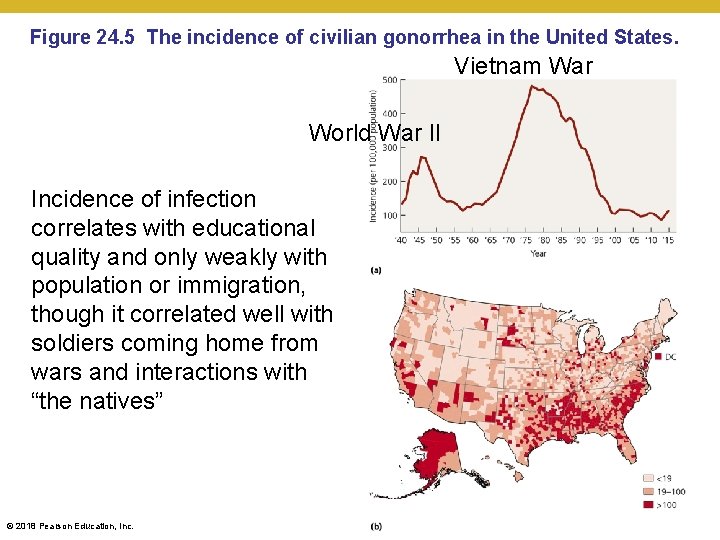
Figure 24. 5 The incidence of civilian gonorrhea in the United States. Vietnam War World War II Incidence of infection correlates with educational quality and only weakly with population or immigration, though it correlated well with soldiers coming home from wars and interactions with “the natives” © 2018 Pearson Education, Inc.

Bacterial STDs • Gonorrhea • Diagnosis, treatment, and prevention • Genetic probes are used to diagnose asymptomatic infection: “My partner hurts when…” • Treated with ceftriaxone and azithromycin • Spread of gonococcal strains resistant to many antimicrobials has complicated treatment • MDR strains uncommon, many stains resistant to a variety of single antibiotics more common • Many antibiotics may need to be tried to find the right one where sensitivity exists • Prevented with safe sex practices © 2018 Pearson Education, Inc.
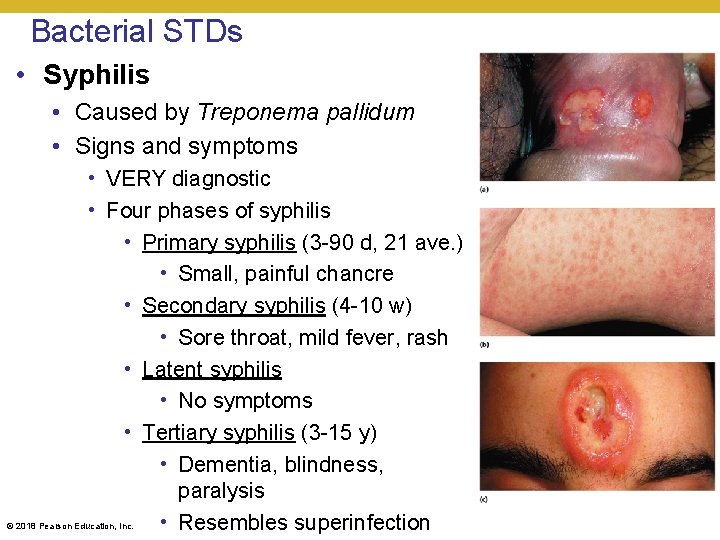
Bacterial STDs • Syphilis • Caused by Treponema pallidum • Signs and symptoms • VERY diagnostic • Four phases of syphilis • Primary syphilis (3 -90 d, 21 ave. ) • Small, painful chancre • Secondary syphilis (4 -10 w) • Sore throat, mild fever, rash • Latent syphilis • No symptoms • Tertiary syphilis (3 -15 y) • Dementia, blindness, paralysis • Resembles superinfection © 2018 Pearson Education, Inc.
Bacterial STDs • Syphilis • Pathogen and virulence factors • Treponema pallidum causes syphilis • Lives only in humans • Virulence factors have been difficult to identify • Pathogenesis • Transmitted mostly via sexual contact • Sometimes transmitted from mother to child • Most individuals do not develop tertiary syphilis • Earlier detection prevents progression to this stage • Tertiary syphilis has permanent tissue damage and 1060% fatality rate © 2018 Pearson Education, Inc.

Bacterial STDs • Syphilis • Epidemiology • Syphilis occurs worldwide • Endemic among sex workers, men who have sex with men, and users of illegal drugs • Diagnosis, treatment, and prevention • Antibody test is used to diagnose primary, secondary, and congenital syphilis • Tertiary syphilis is difficult to diagnose – other microbes may be at work • Penicillin G is used to treat all but tertiary syphilis – other microbes may be at work • Prevented with safe sex practices © 2018 Pearson Education, Inc.

Figure 24. 7 The incidence of syphilis in the United States. Correlates with educational quality and only weakly with population or immigration © 2018 Pearson Education, Inc.
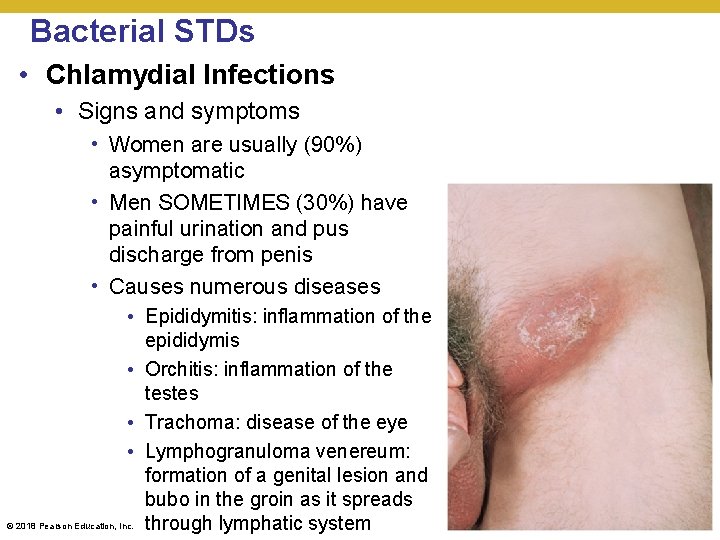
Bacterial STDs • Chlamydial Infections • Signs and symptoms • Women are usually (90%) asymptomatic • Men SOMETIMES (30%) have painful urination and pus discharge from penis • Causes numerous diseases • Epididymitis: inflammation of the epididymis • Orchitis: inflammation of the testes • Trachoma: disease of the eye • Lymphogranuloma venereum: formation of a genital lesion and bubo in the groin as it spreads © 2018 Pearson Education, Inc. through lymphatic system
Bacterial STDs • Chlamydial Infections • Pathogens and virulence factors • Caused by Chlamydia trachomatis • All strains but one are pathogens of humans • Grow only within vesicles inside host cells • Developmental cycle • Elementary bodies are the infective form • Reticulate bodies are the reproductive form © 2018 Pearson Education, Inc.
Bacterial STDs • Chlamydial Infections • Pathogenesis • • Microbes enter body through scrapes or cuts Infect conjunctiva or cells lining mucous membranes Spread to the lymphatic system, causing proctitis Adolescent infection increases cervical cancer risk • Probably due to common risk of polygamous sexual activity • Epidemiology • Most common reportable STD (1, 400, 000 cases) in the USA • Disease found primarily in developing countries, most prevalent in low socioeconomic groups © 2018 Pearson Education, Inc.
![Bacterial STDs • Chancroid [shank] Infections • Pathogens and virulence factors • Caused by](http://slidetodoc.com/presentation_image_h2/7e78fd69d7998a4983e4bda11caf5fed/image-35.jpg "Bacterial STDs • Chancroid [shank] Infections • Pathogens and virulence factors • Caused by")
Bacterial STDs • Chancroid [shank] Infections • Pathogens and virulence factors • Caused by Hemophilus ducreyi • Pathogenesis • H. ducreyi enters skin through microabrasions incurred during sexual intercourse. • A PAINFUL local tissue reaction leads to development of erythomatous papule, which progresses to pustule in 4– 7 days. • It then undergoes central necrosis to ulcerate. • Most individuals diagnosed with chancroid in the USA have visited countries or areas where the disease is known to occur frequently, although outbreaks have been observed in association with crack cocaine use and prostitution © 2018 Pearson Education, Inc.
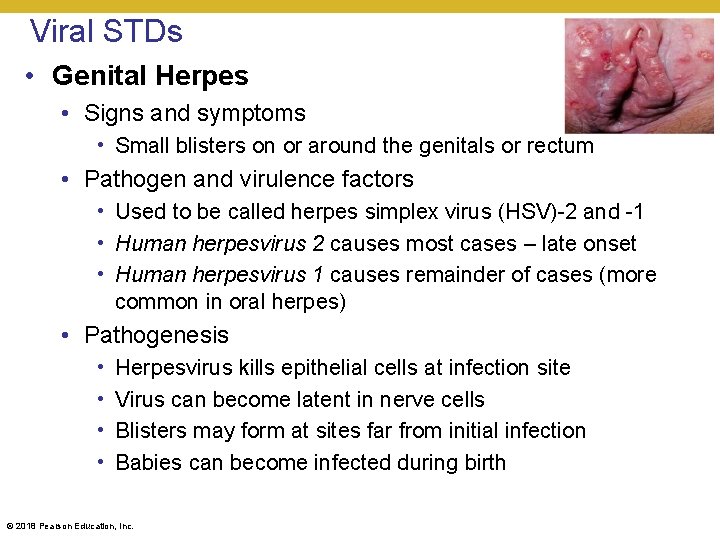
Viral STDs • Genital Herpes • Signs and symptoms • Small blisters on or around the genitals or rectum • Pathogen and virulence factors • Used to be called herpes simplex virus (HSV)-2 and -1 • Human herpesvirus 2 causes most cases – late onset • Human herpesvirus 1 causes remainder of cases (more common in oral herpes) • Pathogenesis • • Herpesvirus kills epithelial cells at infection site Virus can become latent in nerve cells Blisters may form at sites far from initial infection Babies can become infected during birth © 2018 Pearson Education, Inc.
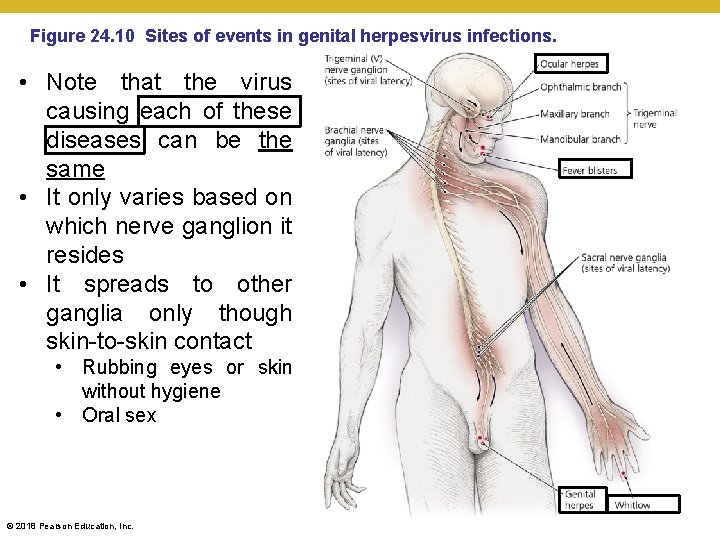
Figure 24. 10 Sites of events in genital herpesvirus infections. • Note that the virus causing each of these diseases can be the same • It only varies based on which nerve ganglion it resides • It spreads to other ganglia only though skin-to-skin contact • Rubbing eyes or skin without hygiene • Oral sex © 2018 Pearson Education, Inc.
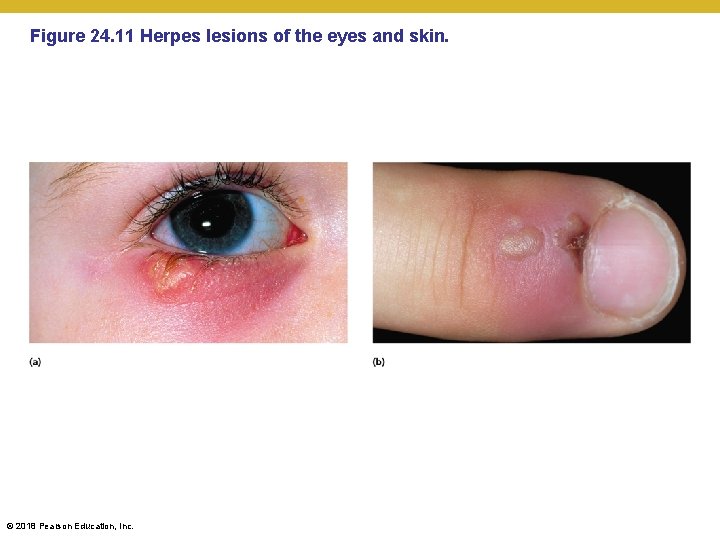
Figure 24. 11 Herpes lesions of the eyes and skin. © 2018 Pearson Education, Inc.
Viral STDs • Genital Herpes • Epidemiology • Genital herpes quadruples the risk of HIV infection. • 70% of USA has HHV-1, 16% of USA has HHV-2 • Diagnosis, treatment, and prevention • • Diagnosis is based on characteristic lesions. Acyclovir or other antiviral agents can lessen symptoms. Circumcised males are at lower risk of infection. Condoms often provide little protection (skin to skin transmission outside of condom) Laytex gloves essential for dentists/oral hygienists/ob-gyn Infected pregnant women should deliver by C-section. Prevention is done only through abstinence or monogamy No vaccine likely to be developed – no sequalae or mortality © 2018 Pearson Education, Inc.
Anogenital (and other) Warts • Pathogen, signs, and symptoms • Papillomas, or warts, are growths of skin epithelium • May form on the face, trunk, hands, feet, elbows, knees, genitalia, or anus • Large growths called condylomata acuminata • Caused by human papillomaviruses (HPV) • 90% of anogenital warts are caused by subtypes 6 and 11 • ~ 12 strains of HPV can cause various cancers • Cervical cancer – 70% by 16, 18 • Also anal, oropharyngeal, penile, vulvar, vaginal cancers • HPV vaccine protect against these highly carcinogenic strains • Cervarix – 16, 18 (protect against most carcinogenic) • Gardesil – 16, 18, 6, 11 (also other anogenital wart causes) • Gardesil 9 – 16, 18, 6, 11, 33, 45, 52, 58 (20% more inclusive for cervical cancer and other cancer causes) © 2018 Pearson Education, Inc.
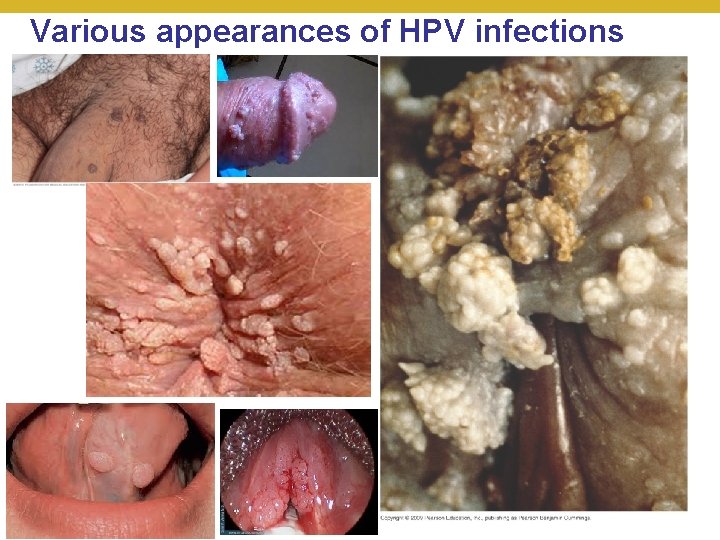
Various appearances of HPV infections © 2018 Pearson Education, Inc.
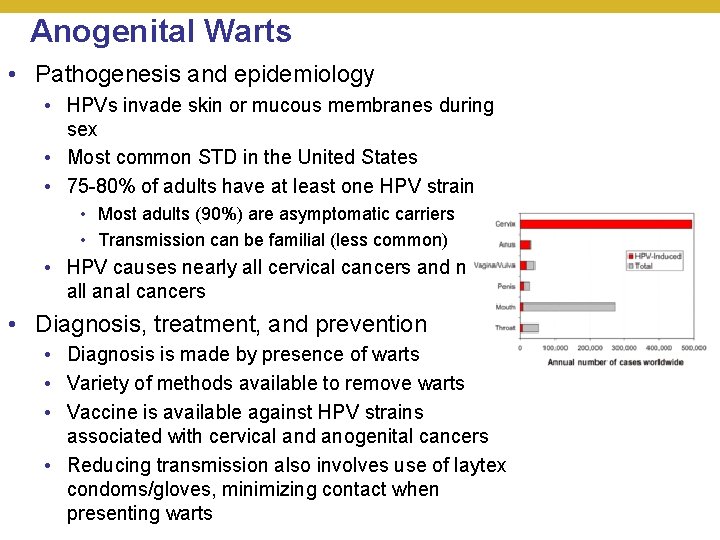
Anogenital Warts • Pathogenesis and epidemiology • HPVs invade skin or mucous membranes during sex • Most common STD in the United States • 75 -80% of adults have at least one HPV strain • Most adults (90%) are asymptomatic carriers • Transmission can be familial (less common) • HPV causes nearly all cervical cancers and nearly all anal cancers • Diagnosis, treatment, and prevention • Diagnosis is made by presence of warts • Variety of methods available to remove warts • Vaccine is available against HPV strains associated with cervical and anogenital cancers • Reducing transmission also involves use of laytex condoms/gloves, minimizing contact when presenting warts © 2018 Pearson Education, Inc.
Protozoan STDs • Trichomoniasis – “trich” • Signs and symptoms • Females (30%) have foul vaginal discharge (green/yellow), musty odor, and irritation • 70% of women and nearly all males are asymptomatic carriers • Pathogen and virulence factors • Caused by Trichomonas vaginalis • Pathogenesis and epidemiology • Transmitted primarily via sexual intercourse • Most common curable STD in women (1. 1 million cases/yr in USA) • Most easily treated STD – single oral dose works; treat partner too! • Trichomoniasis increases risk of infection by HIV • Shared risk factors for obtaining either disease • May increase risk for prostate cancer through subclinical chronic prostatitis • Various virulence factors contribute to disease © 2018 Pearson Education, Inc.
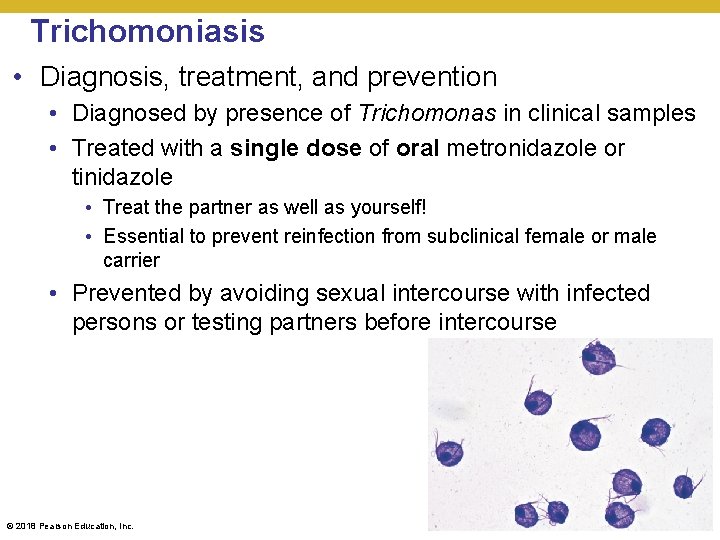
Trichomoniasis • Diagnosis, treatment, and prevention • Diagnosed by presence of Trichomonas in clinical samples • Treated with a single dose of oral metronidazole or tinidazole • Treat the partner as well as yourself! • Essential to prevent reinfection from subclinical female or male carrier • Prevented by avoiding sexual intercourse with infected persons or testing partners before intercourse © 2018 Pearson Education, Inc.
- Slides: 44