
MICROBIOLOGY Chapter 15 Microbial Mechanisms of Pathogenicity Dr
MICROBIOLOGY Chapter 15 Microbial Mechanisms of Pathogenicity Dr. Abdelraouf A. Elmanama Ph. D Microbiology Medical Technology Department, Faculty of Science, Islamic University-Gaza 2008
• Microbial Mechanisms of Pathogenicity The ability to cause disease • Virulence 2008 The extent of pathogenicity
Portals of Entry • Mucous membranes • Skin • Parenteral route 2008
Numbers of Invading Microbes • ID 50: Infectious dose for 50% of the test population • LD 50: Lethal dose (of a toxin) for 50% of the test population 2008
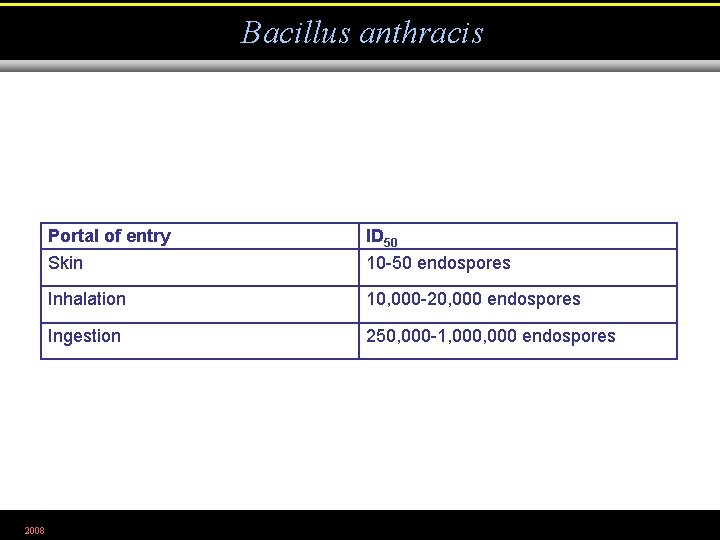
Bacillus anthracis 2008 Portal of entry Skin ID 50 10 -50 endospores Inhalation 10, 000 -20, 000 endospores Ingestion 250, 000 -1, 000 endospores
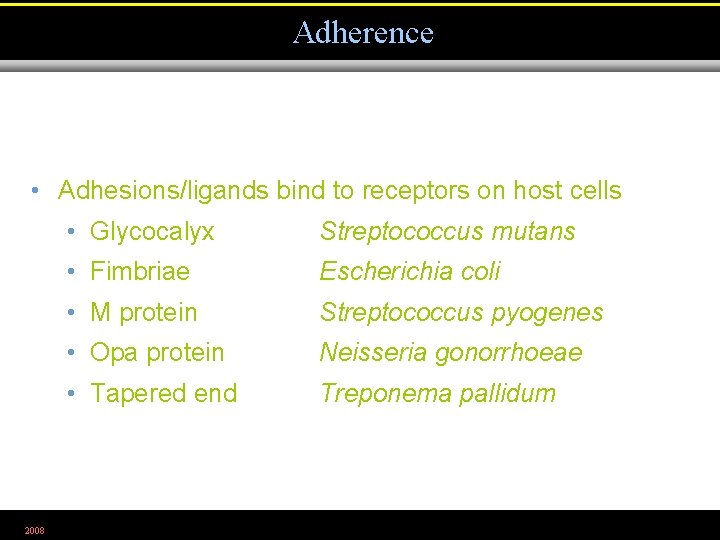
Adherence • Adhesions/ligands bind to receptors on host cells 2008 • Glycocalyx Streptococcus mutans • Fimbriae Escherichia coli • M protein Streptococcus pyogenes • Opa protein Neisseria gonorrhoeae • Tapered end Treponema pallidum
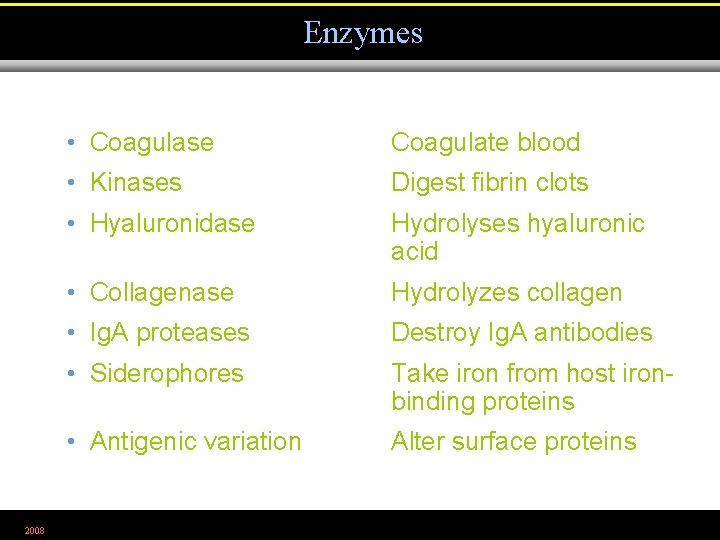
Enzymes 2008 • Coagulase Coagulate blood • Kinases Digest fibrin clots • Hyaluronidase Hydrolyses hyaluronic acid • Collagenase Hydrolyzes collagen • Ig. A proteases Destroy Ig. A antibodies • Siderophores Take iron from host ironbinding proteins • Antigenic variation Alter surface proteins

Penetration into the Host Cell 2008 Figure 15. 2
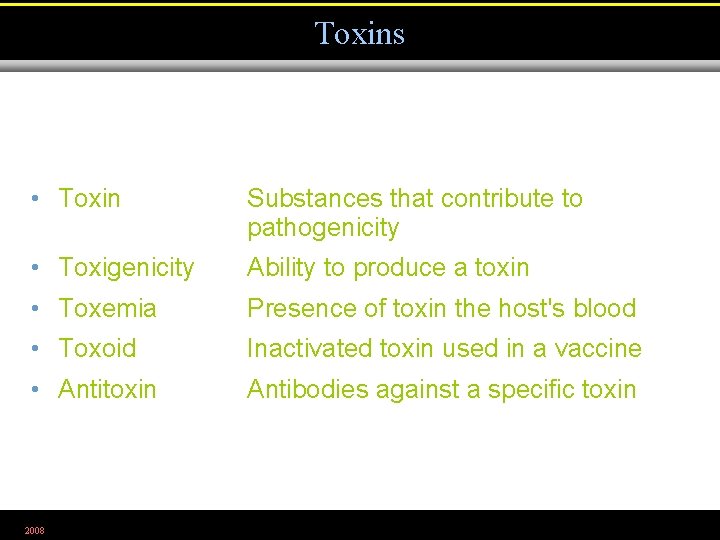
Toxins • Toxin Substances that contribute to pathogenicity • Toxigenicity Ability to produce a toxin • Toxemia Presence of toxin the host's blood • Toxoid Inactivated toxin used in a vaccine • Antitoxin Antibodies against a specific toxin 2008
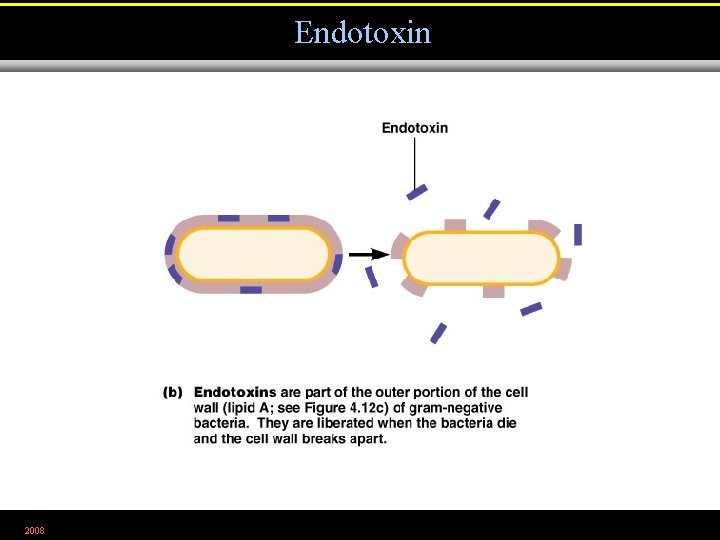
Endotoxin 2008 Figure 15. 4 b
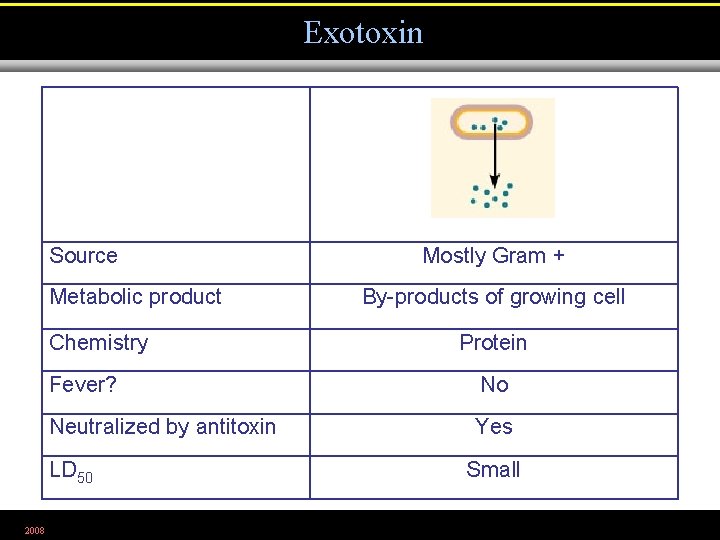
Exotoxin Source Metabolic product Chemistry By-products of growing cell Protein Fever? No Neutralized by antitoxin Yes LD 50 2008 Mostly Gram + Small
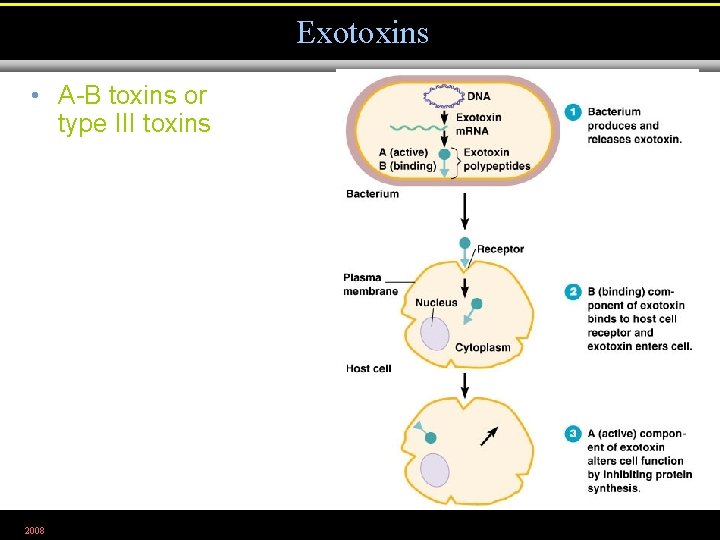
Exotoxins • A-B toxins or type III toxins 2008 Figure 15. 5
Exotoxins • Superantigens or type I toxins • Cause an intense immune response due to release of cytokines from host cells • Fever, nausea, vomiting, diarrhea, shock, death 2008
Exotoxins • Membrane-disrupting toxins or type II toxins • Lyse host’s cells by: • Making protein channels in the plasma membrane (e. g. , leukocidins, hemolysins) • Disrupting phospholipid bilayer 2008
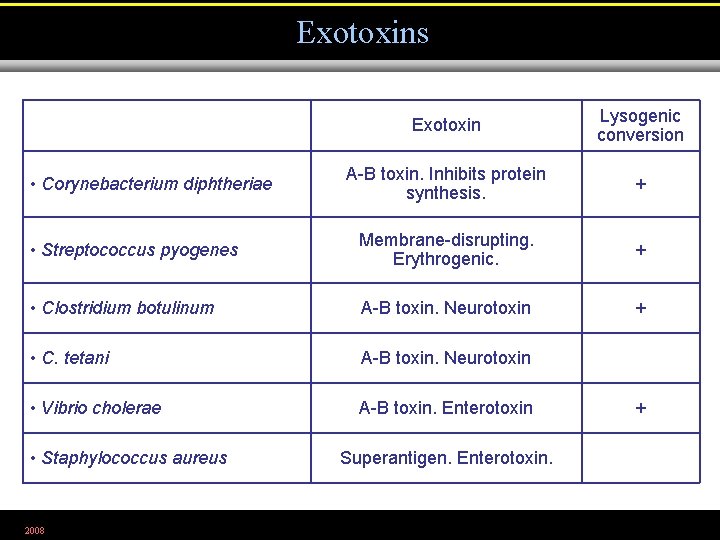
Exotoxins Exotoxin Lysogenic conversion A-B toxin. Inhibits protein synthesis. + • Streptococcus pyogenes Membrane-disrupting. Erythrogenic. + • Clostridium botulinum A-B toxin. Neurotoxin + • C. tetani A-B toxin. Neurotoxin • Vibrio cholerae A-B toxin. Enterotoxin • Corynebacterium diphtheriae • Staphylococcus aureus 2008 Superantigen. Enterotoxin. +
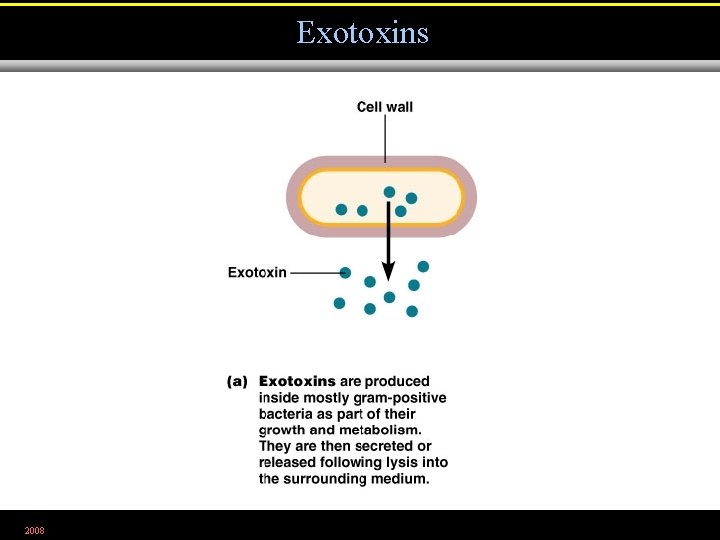
Exotoxins 2008 Figure 15. 4 a
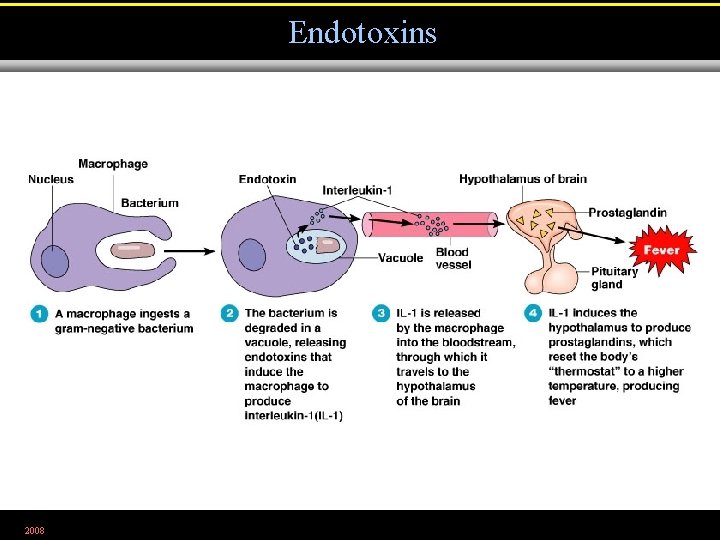
Endotoxins 2008 Figure 15. 6
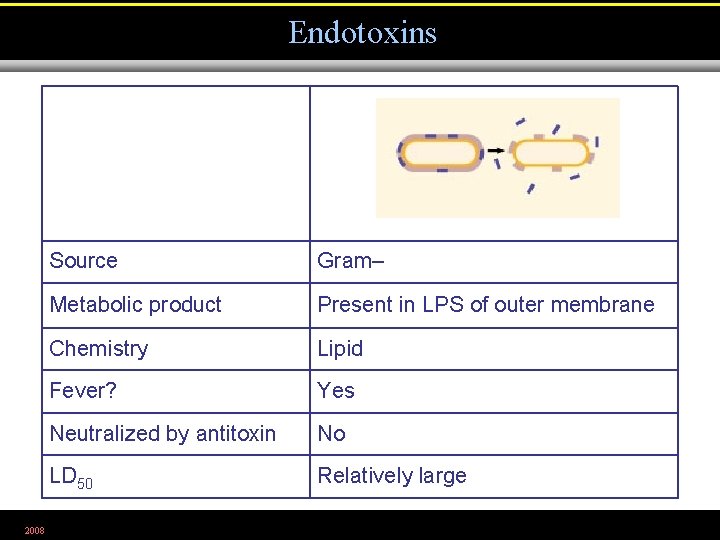
Endotoxins 2008 Source Gram– Metabolic product Present in LPS of outer membrane Chemistry Lipid Fever? Yes Neutralized by antitoxin No LD 50 Relatively large

Cytopathic Effects of Viruses 2008 Table 15. 4
Pathogenic Properties of Fungi • Fungal waste products may cause symptoms • Chronic infections provoke an allergic response • Tichothecene toxins inhibit protein synthesis • Fusarium • Proteases • Candida, Trichophyton • Capsule prevents phagocytosis • Cryptococcus • Ergot toxin • Claviceps 2008

Pathogenic Properties of Fungi • Aflatoxin • Aspergillus • Mycotoxins • Neurotoxins: Phalloidin, amanitin • Amanita 2008
Pathogenic Properties of Protozoa • Presence of protozoa • Protozoan waste products may cause symptoms • Avoid host defenses by • Growing in phagocytes • Antigenic variation 2008
Pathogenic Properties of Helminths • Use host tissue • Presence of parasite interferes with host function • Parasite's metabolic waste can cause symptoms 2008
Pathogenic Properties of Algae • Neurotoxins produced by dinoflagellates • Saxitoxin • Paralytic shellfish poisoning 2008
Portals of Exit • Respiratory tract • Coughing, sneezing • Gastrointestinal tract • Feces, saliva • Genitourinary tract • Urine, vaginal secretions • Skin • Blood • Biting arthropods, needles/syringes 2008

Mechanisms of Pathogenicity 2008 Figure 15. 9
- Slides: 26